
How to buy a used campervan in the UK without getting burned

Written by
Arthur
Arthur writes buying guides, comparisons, and in-depth explainers to help readers choose the right campervan or motorhome with confidence.

The short answer
Buying a used campervan is the smarter, value-savvy move for many UK buyers, because new prices now routinely start above £60,000 (and into the seventies once you add an automatic, diesel heating and solar) with almost no finance incentives. The good news is that used vans skip the steepest depreciation, and getting a great one is entirely within your control if you check properly: get a habitation damp check, verify the base-vehicle service history (the Ford Transit 2.0 EcoBlue wet-belt timing system in particular), weigh the van for real payload, test the electrics, gas and water, and budget for the true cost of ownership. Buy on evidence, not emotion, and a used camper can be the start of years of brilliant, affordable touring. Here is how to buy one without getting burned.

There is a moment in every campervan search where the numbers stop being exciting and start being sobering. You have done the configurator. You have played the options game. You have watched the base price climb by eight, ten, twelve thousand pounds as you ticked the boxes that any sensible person would tick. And then you have sat back, looked at the total, and thought: right.
For a lot of people, that moment is where the new campervan dream quietly folds itself up and goes back in the drawer. Not because the desire has gone. Because the maths does not work. New campervans in the UK now routinely start above sixty thousand pounds for anything with a proper bathroom, a decent kitchen, and the sort of equipment list that means you can actually tour rather than just exist. Add an automatic gearbox, diesel heating, and a solar panel, and you are deep into the seventies. Some models, ones that are not even particularly exotic, push past ninety.
That is the reality of the new market. Prices have risen sharply since 2021, finance incentives barely exist, and the industry has shown no meaningful sign of reversing the trend. If you are waiting for campervans to get cheaper, you may be waiting a very long time.
Which is exactly why the used market matters more now than it ever has.
A used campervan is not a consolation prize. Done well, it is a smarter entry point that puts you into a better specified vehicle than you could afford new, while keeping the financial risk at a level that does not keep you awake at night. Done badly, it is a very expensive way to discover that damp travels, that bodged electrics can ruin a holiday, and that the phrase "well looked after" covers a remarkable range of sins.
This is the honest guide. Where to look. What to check. What the real costs look like once you factor in the things nobody mentions in the listing. And how to tell the difference between a used campervan that will give you years of brilliant touring and one that is about to become somebody else's problem.
Why used can actually be the smarter buy
Before we get into the practical stuff, it is worth understanding why used campervans are not just the affordable option. In some cases, they are genuinely the better value option.
New campervans depreciate. Not as fast as new cars, but faster than most people expect. A campervan that cost seventy five thousand pounds two years ago might be listed at fifty eight to sixty two thousand today, depending on condition, mileage, and specification. That is a meaningful drop, and it is a drop that the first owner absorbed entirely.
What you get as the second buyer is the same vehicle, often with the same warranty remaining, sometimes with upgrades the first owner fitted, and almost always with a lower total cost of ownership even after you factor in the age and mileage. You also get something that is harder to put a number on: proof. A two year old campervan has already demonstrated whether it leaks, whether the electrics work properly, whether the habitation door seal holds up, and whether the furniture stays put after a few thousand miles of British B roads. A new one has not been tested by anything except a factory line.
There is also the specification question. The used market is full of campervans where the first owner ticked every option you would want but could not afford. Automatic gearbox. Diesel heating. Upgraded solar. Better alloys. Pop top roof. A paint colour that was a three thousand pound upgrade. Buying used often means buying someone else's fully loaded specification at a fraction of the original premium.
None of this means buying used is risk free. It is not. But the idea that new is always safer and used is always a gamble does not survive contact with reality. Some of the worst purchases people make are brand new vehicles with problems that only emerge once the honeymoon period ends. Some of the best purchases are three year old campervans that have already had their teething issues sorted under warranty.
Where to look, and which sources to trust
The UK used campervan market is spread across several channels, and they are not all equal.
Franchised dealers
Buying from an authorised dealer who represents the manufacturer is the closest thing the used market has to a safety net. You get legal consumer protection under the Consumer Rights Act 2015. You often get a warranty, either manufacturer backed or dealer backed. The vehicle has usually been inspected, serviced, and prepared for sale. And if something goes wrong, you have a physical premises and a business reputation to lean on.
The trade off is price. Dealers need margin. A campervan that might sell privately at fifty five thousand will often be listed at fifty nine to sixty two thousand at a dealer. That premium is not arbitrary. It covers their inspection, preparation, warranty, and the comfort of knowing you are not buying blind. Whether it is worth it depends on how confident you are in your own ability to assess a vehicle, and how much you value the ability to go back to someone if a problem appears.
Specialist independent dealers
There are independent dealers across the UK who focus specifically on used campervans and motorhomes. Some are excellent. Some are not. The difference between the two is often invisible from a website listing.
The good ones will have a proper workshop, a track record you can verify, reviews that feel genuine, and a willingness to let you inspect the vehicle thoroughly without rushing you. They will have documentation for the habitation side, not just the base vehicle. They will know the difference between a damp reading that is acceptable and one that needs further investigation.
The bad ones will have a forecourt, a pressure sales technique, and a warranty document that turns out to be worth very little once you read the exclusions.
Before you visit an independent dealer, check them. Companies House records are free. Google reviews are imperfect but useful. Facebook groups and forums dedicated to the specific brand will often tell you more than any official channel. If multiple people say the same thing about a dealer, whether good or bad, it is probably close to the truth.
Private sales
Buying privately will almost always get you the lowest price. It will also give you the least protection. You have no automatic right to a refund if the vehicle is not as described, beyond the basic requirement that the seller has the right to sell it and that it matches any specific claims made in the listing.
That said, private sales have one advantage that is easy to overlook: you get to meet the owner. You get to hear how they used it, where they toured, what went wrong, what they fixed, and why they are selling. A genuine private seller who clearly loves their campervan and is selling reluctantly because life has changed is a very different prospect from someone who is shifting a problem.
The key with private sales is preparation. You need to know what to check, you need to be willing to walk away, and you need to bring someone with you who can be objective when you are already mentally planning your first trip.
Online marketplaces and auction sites
AutoTrader, eBay, Caravansforsale.co.uk, and specialist sites like Quirky Campers all carry used listings. They are useful for research and price comparison, but they are not a substitute for seeing the vehicle in person. Photos hide damp. Descriptions omit problems. And the further you travel to view a vehicle, the harder it becomes to walk away empty handed, which is exactly the wrong mindset for a significant purchase.
Use online listings to narrow your search. Then go and see the vehicle with fresh eyes and a checklist.
What to check before you hand over any money
This is the section that saves you thousands. Or, more accurately, this is the section that stops you spending thousands you did not need to spend.
The habitation check: damp, damp, and more damp
Damp is the single biggest issue in used campervans and motorhomes. It can hide behind furniture, under flooring, in roof linings, and around window seals. Left unchecked, it rots timber frames, destroys insulation, and creates a repair bill that can exceed the value of the vehicle.
Every used campervan should come with a recent habitation check, or you should arrange one yourself before completing the purchase. The Approved Workshop Scheme, run through the National Caravan Council, provides a standardised habitation check that covers damp testing, gas safety, electrical safety, and a general condition assessment. It costs a couple of hundred pounds. That is nothing compared to what undetected damp will cost you later.
If you are viewing a vehicle and the seller says it has never had a damp problem, that is nice. But it is not evidence. A damp meter reading is evidence. Window seal condition is evidence. A dry, well ventilated interior with no musty smell is a good sign, but it is not proof. Check the usual suspects: around the roof lights, below the windows, behind the rear panel, under the sink, and anywhere that water might find a way in through sealant that has aged or cracked.
If you find damp, it does not automatically mean walk away. Minor ingress caught early can be repaired. But it does mean renegotiating the price, and it does mean understanding the full extent of the issue before you commit.
The base vehicle: not just a workshop stamp
Most used campervans sit on a Fiat Ducato, Ford Transit, Mercedes Sprinter, or VW Crafter base. Each has its own character, its own known issues, and its own maintenance schedule. If you have read our base vehicle comparisons, you will already have a sense of which platform suits your needs.
What matters at the point of purchase is evidence of proper servicing. Not a vague stamp in a book. Actual invoices. Actual oil specifications. Actual mileage at each service. For vehicles with a timing belt, whether wet or dry, you want proof of when it was last changed and confirmation that the correct interval has been followed.
For Ford Transit based campervans with the 2.0 litre EcoBlue engine, the wet belt timing system deserves particular attention. Ford revised the replacement interval to six years or one hundred thousand miles, and oil condition matters enormously. Ask about it directly. If the seller does not know what a wet belt is, that tells you something about the level of mechanical attention the vehicle has received.
The same principle applies to all base vehicles. A Mercedes Sprinter with a full dealer service history is a different proposition from one that has been serviced at a generic garage with no specialist knowledge of commercial vehicles. Not necessarily worse, but you need to see the detail.
Payload: the number that catches people out
Payload is the difference between the vehicle's maximum weight and its unladen weight. It is the amount of stuff you can put in the campervan, including people, water, gas, food, clothes, bikes, and everything else that makes touring possible.
Many campervans, especially those built on lighter platforms, have surprisingly little payload margin once you account for the habitation equipment that has already been fitted. A used campervan that has been modified by a previous owner, perhaps with a heavier battery bank, a second leisure battery, a bike rack, or additional water storage, may have even less remaining payload than the original specification suggests.
Get the vehicle weighed. A public weighbridge will tell you exactly what it weighs with everything currently fitted. Then compare that to the maximum allowable mass on the registration document. The difference is your real payload. If it is less than about three hundred kilograms for a couple touring, things will get tight. If it is less than two hundred, you are already in compromise territory and every packing decision becomes a trade off.
This is especially important if the campervan sits on a 3,500 kilogram chassis, which is the maximum you can drive on a standard Category B licence. Exceeding that limit is not a grey area. It is an offence, and it invalidates your insurance.
The electrical system: batteries, solar, and the quiet costs
The electrical system in a campervan ages in ways that are not always obvious. Leisure batteries lose capacity over time, especially if they have been deeply discharged or left sitting for months without use. A battery bank that was rated at two hundred amp hours when new might deliver significantly less after three or four years of regular cycling.
If the campervan has a lithium battery system, the news is better. Lithium batteries hold their capacity far longer and tolerate deeper discharge. But they are also more expensive to replace if something does go wrong, and the charge system needs to be properly set up for lithium, which is not always the case in older conversions or vehicles that have been upgraded piecemeal by previous owners.
Check what solar capacity is fitted and whether it is actually working. A solar panel on the roof means nothing if the regulator is faulty or the wiring has been done poorly. Ask to see the battery monitor in operation. If the system is healthy, you should be able to see charge coming in from the solar panel and a reasonable state of charge in the battery bank.
If the campervan has been sitting on a dealer forecourt for months without being plugged in, the leisure batteries may already be in poor condition. Ask whether the vehicle has been maintained on a mains hook up. If not, factor in the potential cost of new batteries. For a decent AGM battery bank, that is a few hundred pounds. For lithium, it could be well over a thousand.
Gas and water systems
The gas system should have a current gas safety certificate, ideally as part of a habitation check. Rubber hoses, regulators, and connections all have finite lifespans. A gas leak in a confined space is not a minor inconvenience. It is a safety issue.
The water system is less dangerous but equally capable of causing expensive problems. Check the fresh water tank for cleanliness. Run the taps. Check the water heater works. Look under the vehicle for signs of leaking pipes or corroded fittings. If the vehicle has a waste water tank, check that too. Tanks and pipes that have been left full over winter can crack if the water froze.
Cosmetic condition versus mechanical condition
It is surprisingly easy to fall for a campervan that looks immaculate on the surface but has mechanical or habitation problems underneath. Equally, a vehicle that looks a bit tired cosmetically might be mechanically perfect and structurally dry.
Try to separate the two in your assessment. A scuff on the bumper costs a few hundred to fix. A corroded chassis rail costs thousands. A faded decal is cosmetic. A delaminating sidewall is structural. Focus your attention on the things that are expensive and difficult to fix, and be relaxed about the things that are cheap and easy.
How to work out what a used campervan is actually worth
Pricing used campervans is more art than science, because no two are quite the same. But there are reference points that help.
Start with the original list price. Most manufacturers publish their price lists, and dealers can usually tell you what a specific vehicle cost when new, including the options fitted. That gives you a starting point for understanding how much depreciation has already occurred.
Then look at comparable listings. AutoTrader, dealer websites, and specialist marketplaces will show you what similar vehicles are being advertised at. Remember that advertised prices are not selling prices. Most used campervans sell for somewhere between five and ten percent below the asking price, sometimes more if the vehicle has been listed for a while.
Factor in the specification. An automatic gearbox, diesel heating, a pop top roof, upgraded solar, and premium paint all add value to a used vehicle. A well specified used campervan should command a higher price than a base model of the same age, even if the base model has lower mileage.
Factor in condition. A vehicle with a full service history, a current habitation check, new tyres, and no damp is worth more than one without those things, even if the age and mileage are identical.
And factor in what you would need to spend after purchase. If the tyres need replacing, if the leisure batteries are tired, if the habitation check reveals minor damp that needs resealing, those costs come off the price, either in negotiation or in your own budget.
The costs nobody mentions in the listing
When people budget for a used campervan, they tend to think about the purchase price and stop. The reality is that the first few months of ownership often come with additional costs that are predictable but rarely discussed.
Insurance for a campervan is not the same as car insurance. Specialist policies from providers like Caravan Guard, Adrian Flux, or Comfort Insurance cover the habitation equipment as well as the vehicle. Premiums vary enormously depending on the value, your age, where you park it, and whether you have previous campervan insurance history. Budget between four hundred and eight hundred pounds a year as a starting point, and get quotes before you buy so there are no surprises.
Storage is another cost that catches people out. If you cannot park a campervan on your driveway, you need somewhere to keep it. Secure storage facilities charge anywhere from fifty to one hundred and fifty pounds a month depending on location and whether the site is covered or open air. That is six hundred to eighteen hundred pounds a year, which is a meaningful addition to the overall cost of ownership.
Servicing covers both the base vehicle and the habitation side. A base vehicle service at a franchised dealer will cost three to five hundred pounds depending on what is due. A habitation service or check adds another two hundred or so. Budget for both annually.
Road tax, breakdown cover, and the small maintenance items that every campervan generates round out the picture. None of these are dramatic on their own, but together they can add two to three thousand pounds a year to the cost of owning and running a used campervan. Knowing that in advance is the difference between a comfortable first year and a stressful one.
When to walk away
The hardest skill in buying a used campervan is knowing when to stop.
You have driven two hours to see it. It looks good in the photos. The seller seems genuine. You can already picture yourself in it, kettle on, door open, somewhere with a view.
And then you find something. The damp meter spikes in one corner. The service history has a gap. The seller cannot explain a repair that shows up in the MOT history. The payload figure is lower than you expected. The price does not quite make sense for the specification.
Walk away.
There will be another one. There is always another one. The used campervan market in the UK is large enough that you will find something else within weeks, and the one you walk away from will quickly stop feeling like a missed opportunity and start feeling like a bullet dodged.
The purchases that go wrong are almost always the ones where the buyer knew something was not right but talked themselves into it anyway. Do not be that buyer. Be patient, be thorough, and be willing to say no.
The bottom line
Buying a used campervan is one of the most practical ways to get into campervan ownership without the financial shock of the new market. It puts better specified vehicles within reach, it lets someone else absorb the steepest depreciation, and it gives you a vehicle that has already proved itself in the real world.
But it is not a shortcut. It requires homework, patience, and a willingness to inspect properly, ask awkward questions, and walk away when something does not feel right. The money you save on the purchase price is only a saving if the vehicle is sound. A cheap campervan with hidden problems is not a bargain. It is an expensive lesson.
Get the habitation check done. Verify the service history. Weigh the vehicle. Test the electrics. Check the damp readings yourself. And budget for the real cost of ownership, not just the sticker price.
Do all of that, and a used campervan can be the start of years of brilliant, affordable touring. The sort where you pull into somewhere quietly perfect, put the kettle on, and think: this is enough.
And if the price still feels like a stretch, well, that is exactly why we run Campervan.win. Someone has to make these things accessible.
Common questions
Is it better to buy a used or new campervan?
For many buyers, used. New campervans in the UK now routinely start above 60,000 pounds for anything with a proper bathroom and kitchen, climbing into the seventies and beyond with an automatic, diesel heating and solar, with almost no finance incentives. A well-chosen used van skips that steepest early depreciation while delivering the same touring, provided you inspect it thoroughly.
Where should I buy a used campervan in the UK?
Franchised and specialist independent dealers offer the most protection (you get consumer rights under the Consumer Rights Act 2015 buying from a trader), while private sales and online marketplaces can be cheaper but carry more risk and fewer protections. Wherever you buy, the homework, the habitation check, the history and a damp test, matters more than the source.
What is the most important thing to check on a used campervan?
Damp, on the habitation side. It is the single biggest issue, since it quietly rots the structure while everything looks lovely, so a moisture-meter habitation check is essential. Alongside it, check the base vehicle's known weak spots (for a Ford Transit 2.0 EcoBlue, the wet-belt timing system deserves particular attention) and do the payload sum.
Why does the Ford Transit EcoBlue wet belt matter on a used campervan?
Because the 2.0-litre EcoBlue's wet-belt timing system can be a known weak spot if maintenance is neglected, and a failure is expensive. On a Transit-based campervan, look for a documented history of the relevant oil and belt servicing, which is exactly what turns a risky example into a sound one. Skip that check and you could inherit a costly repair.
How do I avoid getting burned buying a used campervan?
Get the habitation check done, verify the service history, weigh the vehicle for real payload, test the electrics, gas and water, check the damp readings yourself, and budget for the true cost of ownership rather than just the sticker price. Buy on evidence, not on emotion or pressure, and be willing to walk away. None of it is difficult, and all of it is cheaper than getting it wrong.
Are used campervan prices falling?
Used prices have softened slightly as discounted new-old stock from 2023 and 2024 reaches forecourts, which makes used buying more attractive. New prices, though, have risen sharply since 2021 with no real sign of reversing, so if you are waiting for new campervans to get cheaper you may wait a long time; a well-bought used van is the more realistic route.
The reachable bit
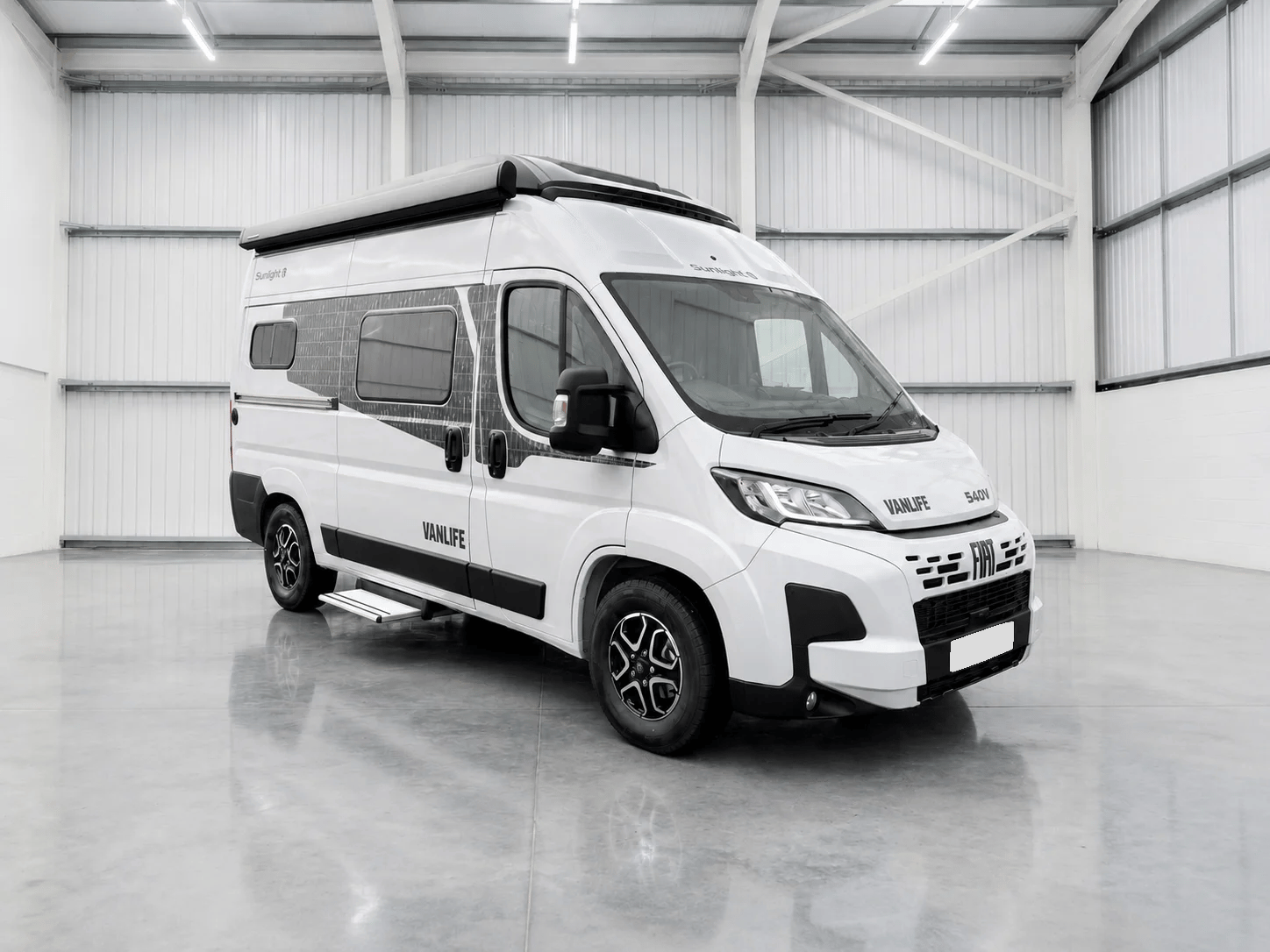
The camper you fall for is rarely the one you can afford. That gap is the whole reason Campervan.win exists. Right now we’re giving away the Sunlight Vanlife, worth around £65,000, and closing that gap is the point: capped entries so the odds stay honest, £10 a ticket, a maximum of five per person, £500 to a UK charity from every full draw, the winner picked by a public randomness beacon anyone can re-check, and one person driving away in the van itself.
Enjoyed this post?
Get more honest campervan guides like this one in your inbox.
You’re in!
Check your inbox. We’ve just sent you a welcome email.

About the author
Arthur
Arthur writes buying guides, comparisons, and in-depth explainers to help readers choose the right campervan or motorhome with confidence.
Keep Reading
Related Reading
Thoughtful articles that build on what you’ve just read.
Campervan Buying Guides
10 min read
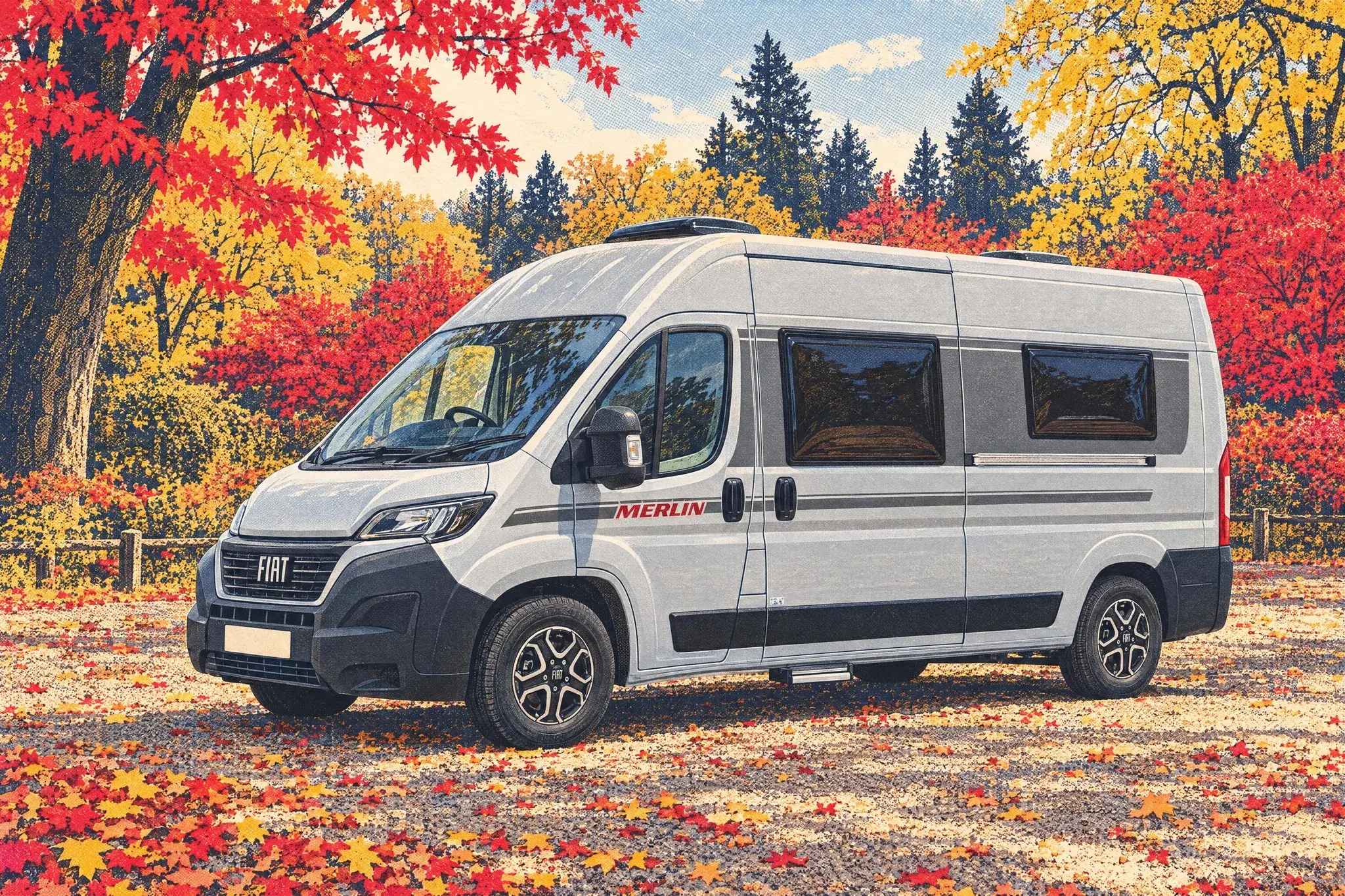
Swift Merlin 2027: nine layouts from £64,190 and how to pick the right one
Swift's all-new Merlin campervan arrives for 2027 with nine layouts on the Fiat Ducato panel van. We sort them into four families, work the payload sum on a four-seat version, and explain what the roof, the automatic and the prices mean for your choice.
Campervan Buying Guides
11 min read
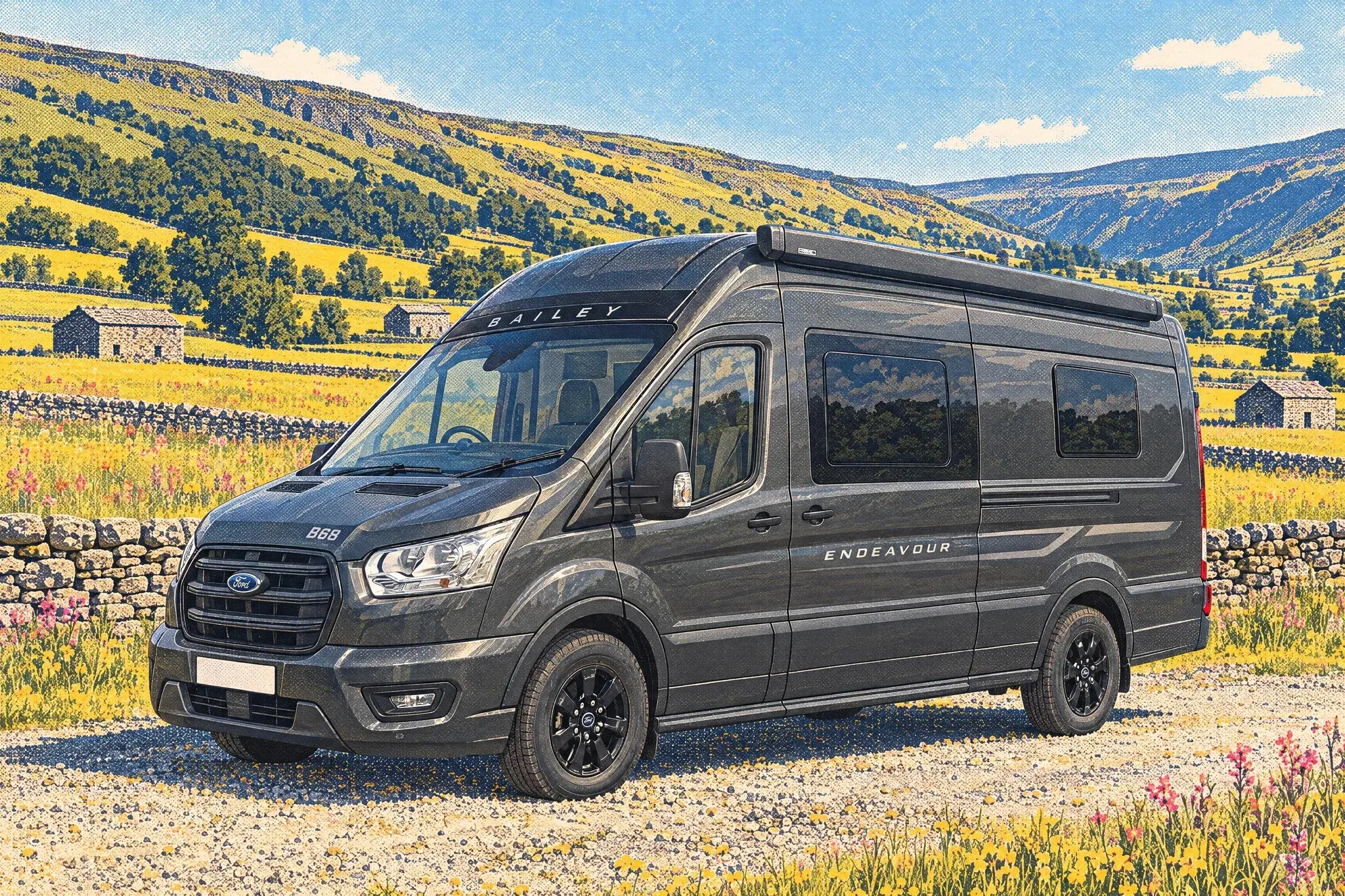
Bailey Endeavour B68: the end-lounge Transit campervan where the pop-top costs 143 kg
Bailey's new Endeavour B68 puts a rear lounge in a 5.98 m Ford Transit campervan. We compare it with the B65 and B62, check the 1.86 m bed, and do the payload sums if you add the £7,500 pop-top.

Campervan Buying Guides
12 min read
New campervans under £60,000 for 2027: what the NEC shows and what the price leaves out
A fair look at the new 2027 campervans listed under £60,000 ahead of the Motorhome and Caravan Show at the NEC, with each price given as its maker words it, and the differences between ex-works, delivered and German-retail-based figures explained so you can compare real on-the-road totals.
Campervan Buying Guides
14 min read
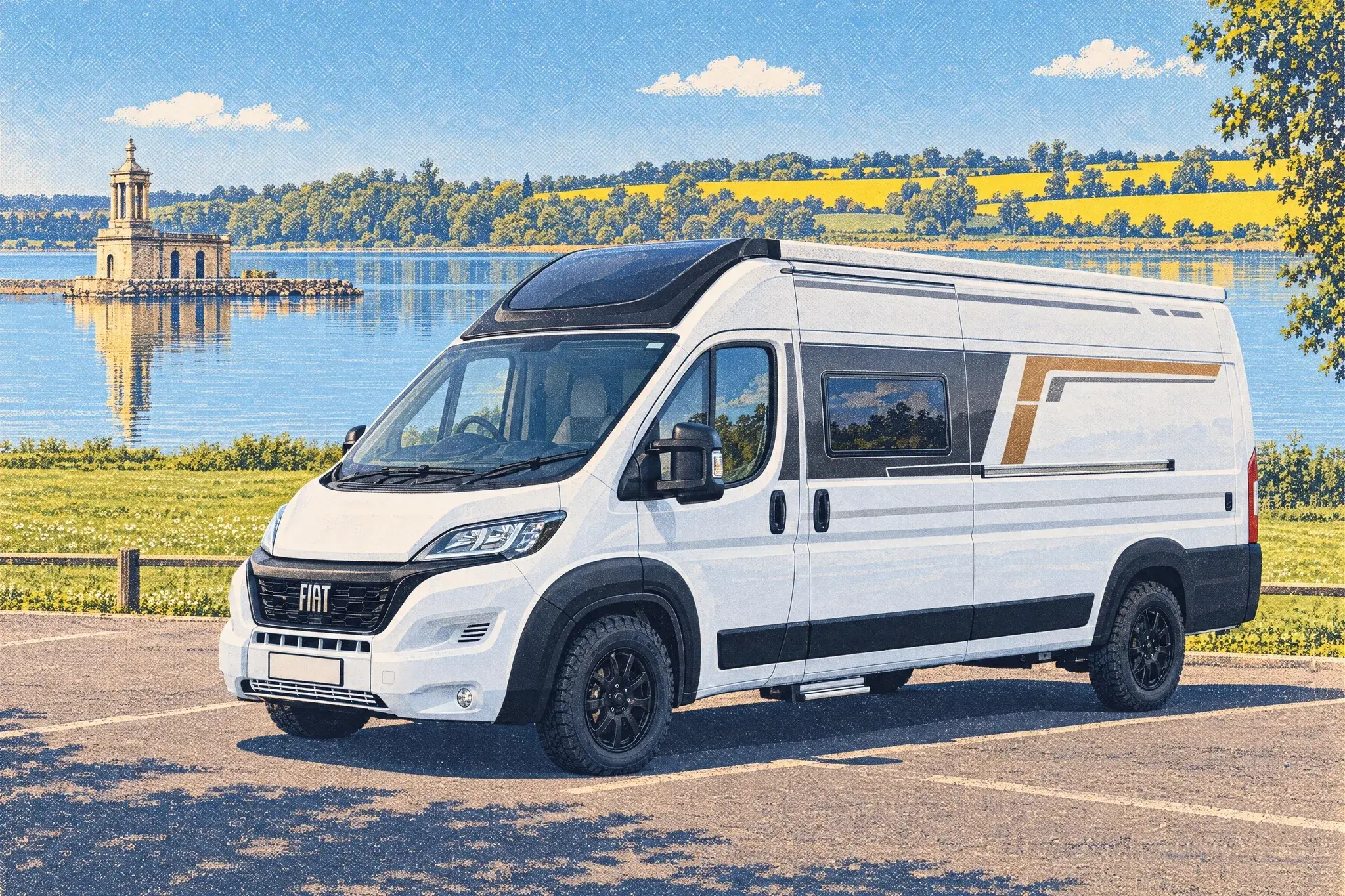
Eura Mobil Vancona 2027: a €57,400 campervan with just 84 to 118 kg left for options
Eura Mobil's new Vancona is a well-equipped Fiat Ducato campervan from €57,400, but its 84 to 118 kg options allowance means you need to order it with the weight sheet open. We explain what the figure means, what the 4.25 t uprate costs you in licence terms, and which options to prioritise.