
Dethleffs Just Van from £61,990: is this slim off-grid motorhome the best new van under £65k?

Written by
Jasper
Jasper writes campervan reviews, travel guides, and practical advice, with a focus on everyday use and relaxed touring around the UK.
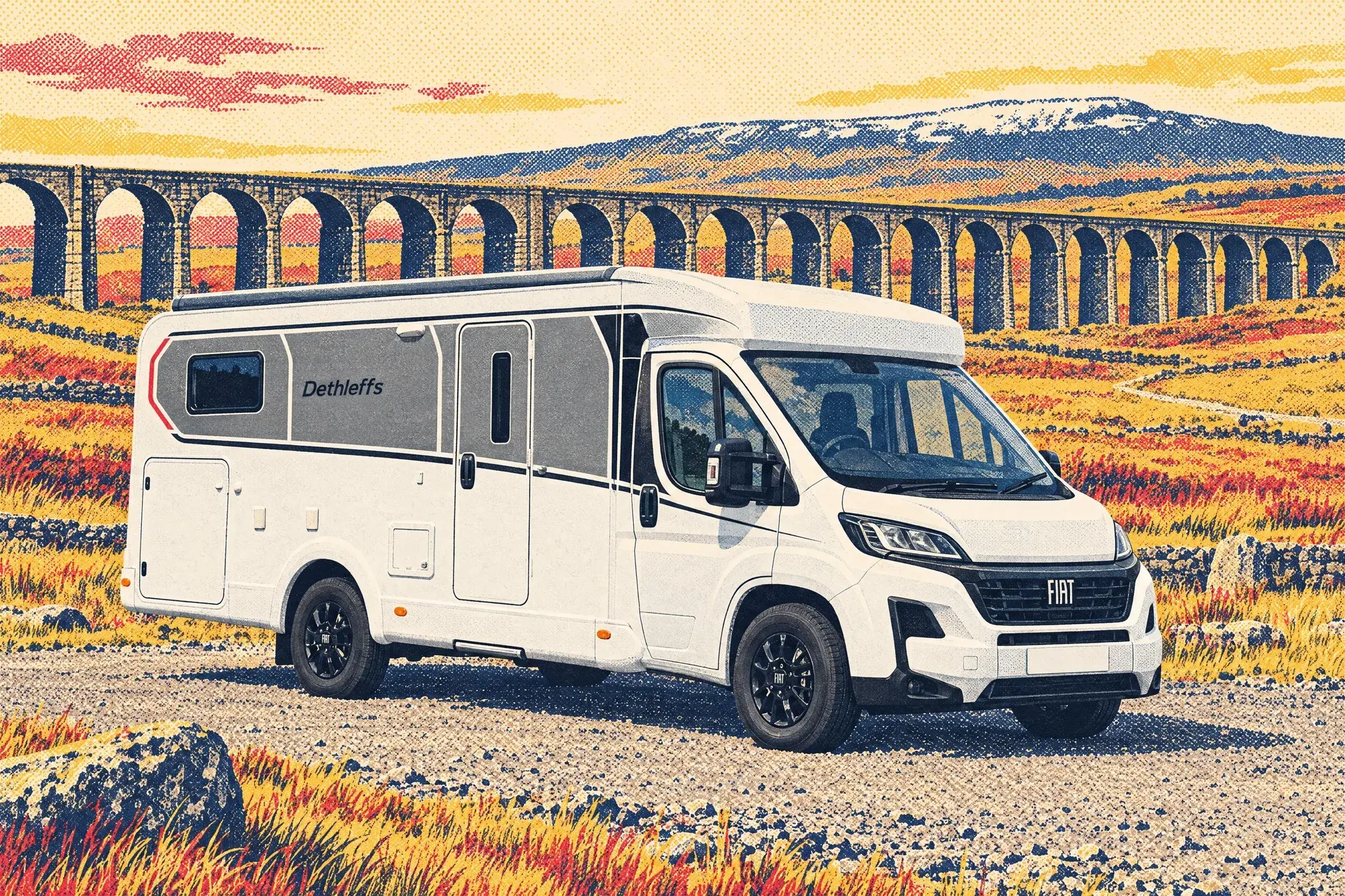
The short answer
The Dethleffs Just Van starts at £61,990 in the UK, according to Dethleffs UK. For that you get a 2.20 m wide panel van conversion from 5.99 m long, with diesel heating, a compressor fridge and a lithium leisure battery of up to 300 Ah. That off-grid spec is unusual at this price, where most new campervans still use a basic battery and gas heating, though payload, headroom for height barriers and the exact standard spec all need checking.

A new motorhome for a little over £60,000 is not a bargain in the everyday sense of the word. But among factory-built campervans and compact motorhomes, where prices have climbed steadily since 2020, £61,990 is a line that matters. That is the UK starting price Dethleffs has put on its new Just Van, according to Dethleffs UK. It lands the model just under the £65k mark where a great many real-world budgets stop. So the honest question is simple: for roughly £62,000, is this the right vehicle, and what else could that money buy?
What the Just Van actually is
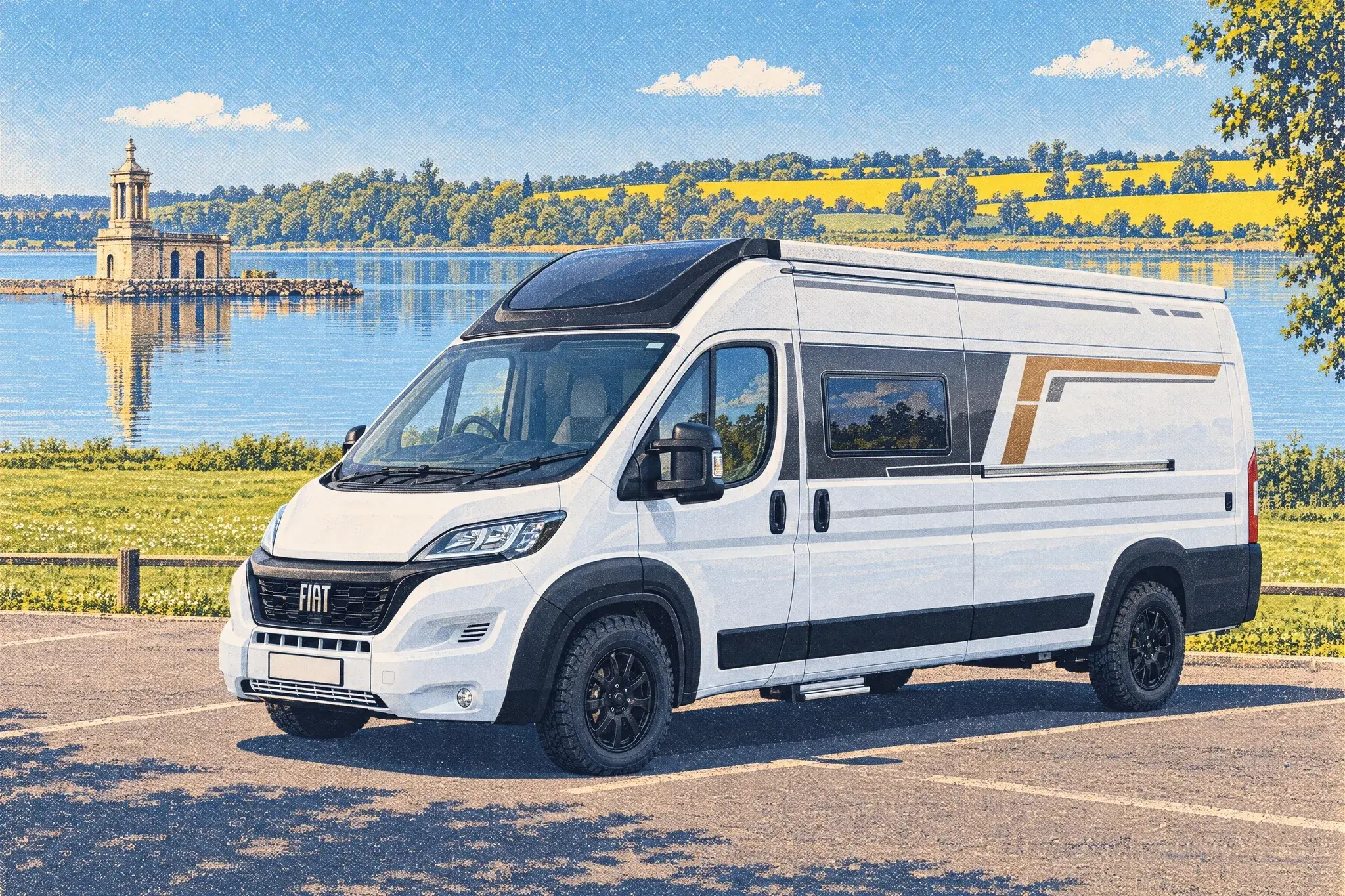
Despite the name, the Just Van is not a panel van conversion. Dethleffs lists it among its motorhomes and describes it as built on a van chassis with a streamlined habitation area. In plain terms, it is a compact semi-integrated, or low-profile coachbuilt: the van's cab up front, with a purpose-built living box behind it. Dethleffs UK calls it a compact off-grid specialist and lists three models: the 599 cm T 1 with a French bed, the T 4 with single beds, and the longer T 5. The figures the manufacturer publishes are worth having in your head before you look at anything else:
- Width: 220 cm. That is slim for a coachbuilt, though about 15 cm wider than a typical large panel van conversion on a Ducato-sized van, which sits at around 2.05 m.
- Length: from 599 cm on the T 1. The longer T 5 is listed at 698 cm, so the range spans roughly 6 m to 7 m depending on layout.
- Height: 273 cm on the T 5. There is no pop-top here; the standing room comes from the coachbuilt habitation body itself.
- Berths: up to three on the T 5.
- Maximum laden mass: 3,499 kg, so it sits inside the 3.5 tonne bracket that matters for licensing.
The equipment story is where Dethleffs wants your attention. The UK site lists a compressor fridge, diesel heating and a lithium leisure battery with up to 300 Ah of capacity. Dethleffs' own listing for the T 1 describes the heating as a 4 kW diesel hot air system with hot water. The company has also previewed a layout on social media, billed as a new arrival for 2027, with rear twin single beds and a front lounge that uses side-facing seats. That should give more usable living space than the usual two-seat dinette squeezed behind the cab.
A word on the base vehicle
Dethleffs has used more than one donor vehicle across its range in recent years, and UK dealer material refers to both Fiat Ducato and Citroen Relay underpinnings on different Dethleffs models. For the Just Van, the picture is clearer: recent UK video coverage of the range describes it as Fiat based, so it is understood to sit on the Fiat Ducato. Dethleffs' own specification page for the T 1 lists a 3,450 mm wheelbase and a 140 hp engine, and dealer guides note that current Ducato-based Dethleffs models use the 2.2-litre diesel with a manual gearbox or a 9-speed automatic as an option. Even so, engines, outputs and gearbox choices can change between model years and between UK and European specs, so ask the dealer to confirm the exact base vehicle, engine and gearbox for the van you are buying, in writing. Servicing costs, parts availability and resale all follow the badge on the bonnet, and the V5C is the final word.
What £62,000 buys in the wider UK market
To judge the Just Van fairly you need a sense of what else sits under £65,000 right now. Without naming names, the market broadly splits into five groups.
Factory-built panel van conversions
This is the Just Van's most obvious rival, even though it is a different kind of vehicle. Around £55,000 to £65,000 typically buys a 6 m high-roof panel van conversion with a rear transverse double bed, a compact kitchen, a wet room and a two-seat dinette. These vans are a little narrower than the Just Van and feel more like a big car to drive, but the living space is shaped by the van's own steel body, which usually means less headroom at the edges and less insulation than a purpose-built box. The common weak points at this price are the systems: a single lead-acid or AGM leisure battery of around 95 Ah, a three-way absorption fridge that struggles in hot weather and when the van is not level, and gas-fired heating that eats through cylinders if you camp in winter.
Compact entry-level coachbuilts
This is the Just Van's own category. A slim semi-integrated or low-profile coachbuilt gives you a squarer, more usable interior than a panel van of the same length, often with better insulation and more storage. Many entry-level coachbuilts are wider than the Just Van, though, and at this price they are often specified for campsite touring rather than living off-grid.
UK bespoke conversions
Smaller British converters working on medium or large vans will build you something very personal for similar money. You often get more say over colours, cabinetry and electrics, and many now fit lithium batteries as standard. What you may not get is a factory-level habitation warranty, a national dealer network, or the kind of resale recognition a well-known badge carries.
Nearly new and low-mileage used
£62,000 goes a long way on the used market. A two or three year old 7 m van conversion, or a larger coachbuilt with a proper fixed bed and a bigger garage, is realistic. You give up the new-vehicle warranty and the first registration glow, but you may gain a lot of vehicle.
Compact pop-top campers
At the other end, a new factory pop-top on a medium van sits in and around this budget. You lose the standing-height bathroom and most of the storage, but you gain a vehicle that fits under 2 m car park barriers and works as a daily driver.
Where the Just Van genuinely stands out
Three things make the Just Van's spec sheet unusual for its price, and they are all about living away from a hook-up.
Lithium power
A lithium leisure battery is still the exception rather than the rule on factory-built vans and motorhomes under £65,000. Compared with an AGM battery of the same nominal rating, lithium gives you roughly twice the usable capacity, charges faster from the engine and from solar, and lasts far more charge cycles. Dethleffs quotes up to 300 Ah, and those words 'up to' are important: the entry model may well come with a smaller pack, with the bigger capacity as an upgrade. Ask what is standard and what the step up costs. Even so, having lithium as the design baseline is a meaningful difference from the usual single AGM battery.
Compressor fridge
A compressor fridge runs on 12V alone, cools properly in a British heatwave, does not care whether you are parked level, and does not need a gas supply or an external vent. Pairing one with a lithium battery is the right way to do it, because a compressor fridge relies entirely on the battery when you are off hook-up, whereas an absorption fridge can switch to gas. On a conventional AGM set-up a compressor fridge can flatten the battery in a day or two of cloudy weather. With a decent lithium pack it is a non-issue.
Diesel heating
Diesel heating draws fuel from the vehicle's own tank, so you never run out of warmth because a gas cylinder emptied at 2am in February. It also frees the gas locker for cooking only, which can mean a smaller cylinder and more storage. For anyone planning off-season touring in Scotland, Wales or the Lakes, this is the single feature that does most to make a van usable twelve months a year.
Most vans at this price are equipped for summer on a campsite. The Just Van is specified for autumn in a car park. That is the real difference.
Where it is more ordinary, or needs a closer look
None of the following is a reason to walk away, but all of them are reasons to go in with your eyes open.
Height
At 273 cm, the Just Van will not fit under the 2.0 m to 2.1 m height barriers that guard many UK car parks and beach fronts. That is true of every coachbuilt and every high-roof panel van, so it is not a mark against the Just Van specifically, but if you were weighing it against a pop-top, this is the trade.
Berths and payload
Three berths on the T 5 is realistic for two adults and a child, not a family of four. More importantly, the 3,499 kg maximum laden mass is a ceiling, not a feature. A 7 m motorhome with a coachbuilt body, a lithium pack, a full water tank and two people on board uses up payload quickly. Ask for the mass in running order for the exact model and spec you are buying, subtract it from 3,499 kg, and make sure what is left covers your passengers, water, food, bikes and the awning you will inevitably add. As a rule of thumb, a payload under 400 kg for two people is tight; under 300 kg is a problem.
The from price
£61,990 is a starting figure. Factory-built vehicles are rarely sold at the base price because the options list is where the useful things live: the bigger battery, solar, an automatic gearbox, cab air conditioning, a towbar, a better cab seat. Build the vehicle you would actually want on the configurator before you decide it is affordable. Many buyers find the realistic drive-away figure is several thousand pounds above the headline.
The first model year
The Just Van is new. New products usually get refined after the first season as owners find the rattles and the awkward cupboard catches. That is normal and not a reason to avoid it, but it is a reason to insist on a thorough handover and to know exactly how warranty work is handled at your nearest dealer.
Just Van or Globetrail? The in-house question
Dethleffs already sells a panel van conversion at a similar price, the Globetrail. Recent UK video coverage lists it from £63,490 with nine layouts, including a 6.36 m version. So the first comparison many buyers will make is between two vehicles from the same maker that are built in quite different ways.
The way to think about it is this. The Globetrail is a true panel van: the living space sits inside the van's own steel body, it is a touch narrower, and it will feel more familiar if you are coming from cars or smaller campers. It is also the established range with the broader choice of floorplans, so if you have a very specific layout in mind, start there. The Just Van is a slim semi-integrated with its own habitation body, which typically means a squarer, roomier interior for the length. It is pitched as the more off-grid focused model at a slightly lower entry point, with a choice of a French bed, single beds or the twin rear beds and open front lounge previewed for 2027. Dethleffs also uses the Just name on its Just Camp motorhomes, and it looks intended to signal a focused specification at an accessible price rather than a long list of variations.
The difference between the two starting figures is £1,500, which is small enough that layout, body type and equipment should decide it, not money. Sit in both. Lie on both beds. Open every locker. The right van is the one where you stop noticing the van.
Driving, licensing and the UK practicalities
Licence
Because the Just Van's maximum laden mass is 3,499 kg, it can be driven on a standard category B car licence, including by people who passed their test after 1 January 1997. You do not need to worry about C1 or the medical renewal at 70 that comes with heavier vehicles.
Size on the road
At 2.20 m wide, the Just Van is narrow for a coachbuilt, and on Cornish and Devon lanes that is a real advantage over the wider bodies many coachbuilts use. Be realistic, though: it is noticeably wider than any family car, which typically measures well under 2 m, and around 15 cm wider than a Ducato-sized panel van conversion, so the tightest lanes still call for care and good use of the passing places. Length is the thing you feel most: a 6 m vehicle parks in a long supermarket bay with care, while a 7 m one usually needs two bays end to end or a dedicated motorhome space. Be honest about where you will keep it at home.
Speed limits
UK motor caravans with an unladen weight of 3,050 kg or less follow car speed limits. Heavier ones drop to 50 mph on single carriageways and 60 mph on dual carriageways. A fully kitted 7 m motorhome can sit either side of that line, so check the unladen figure for your spec rather than assuming.
Running costs
Dethleffs does not quote fuel economy in the material we have seen, so treat any figure as a rough guide: a van-based motorhome of this size on a steady run will usually return around 30 mpg, give or take, and less on hills and fast motorway runs. Insurance for a new £60k-plus motorhome typically runs from several hundred pounds to over £1,000 a year depending on where you live, where you store it and your history. Budget for an annual habitation check, which is often a warranty condition, on top of the usual MOT and service.
Before you buy: a ten-minute checklist
- Confirm the base vehicle, engine and gearbox for your model year, in writing. Expect a Fiat Ducato, but check the engine output and whether an automatic is offered.
- Get the mass in running order and payload for the exact specification, not the brochure average.
- Ask what battery capacity is standard and the price to reach 300 Ah, plus whether solar is included.
- Check the heating is diesel on the UK spec you are quoted, and that it also heats water on your chosen model.
- Measure your parking space against the real length, the 2.20 m width and the 2.73 m height.
- Price the model you want on the configurator, then compare that figure, not the headline, with alternatives.
- Read the warranty terms, particularly the habitation water ingress cover and what annual checks it requires.
- Test the bed in person. Twin singles suit some couples far better than a French or transverse double, and others hate them.
- Ask about delivery timing. New models often have long lead times in the first year.
- Compare with a two-year-old vehicle at the same price, just to be sure new is what you want.
The bottom line
At £61,990 the Dethleffs Just Van is not cheap, but it is specified in a way that most new campervans and compact motorhomes under £65,000 are not. Lithium power, a compressor fridge and diesel heating are the three upgrades experienced owners most often wish they had bought first time around, and here they are the starting point rather than the wish list. Against that, it carries the normal compromises of a slim semi-integrated on a 3.5 tonne chassis: too tall for barrier car parks, a little wider than a panel van, a hard weight limit that squeezes payload on the longer version, and a from price that will grow once you tick the boxes you actually want.
If your touring is mostly campsites with hook-up in summer, a simpler panel van conversion or a well-chosen used motorhome may give you more for the same money. If you want to spend October on a Northumberland clifftop with the heating on and the fridge cold, the Just Van has been built for you, and at this price that is a rare thing. Just confirm the base vehicle details, the payload and the standard battery before you fall for it.
Common questions
How much does the Dethleffs Just Van cost in the UK?
Dethleffs UK lists the Just Van from £61,990. That is the entry price for the base layout and specification, and options such as a larger lithium battery, solar or an automatic gearbox will add to it.
What base vehicle is the Dethleffs Just Van built on?
Dethleffs has not spelled this out in the published UK material we have seen, and the brand has used both Fiat Ducato and Citroen Relay bases on different models in recent years. Confirm the exact donor van, engine and gearbox with the dealer for your model year.
How many people can sleep in the Just Van?
The longer T 5 version is listed with a maximum of three berths. It is realistically a van for two adults, or two adults and one child, rather than a family of four.
Can I drive the Dethleffs Just Van on a normal car licence?
Yes. Its maximum laden mass is 3,499 kg, which keeps it within the 3.5 tonne limit for a standard category B licence, including for drivers who passed their test after 1 January 1997.
What makes the Just Van different from other campervans under £65k?
Its off-grid specification. Dethleffs fits a compressor fridge, diesel heating and a lithium leisure battery of up to 300 Ah, whereas most factory vans at this price still use a basic lead-acid battery, an absorption fridge and gas heating.
Should I buy the Just Van or the Dethleffs Globetrail?
The Globetrail starts at £63,490 with nine layouts, so it offers more floorplan choice, while the Just Van is the leaner, off-grid focused model at a slightly lower entry price. With only £1,500 between the starting prices, choose on layout and equipment rather than cost.
The reachable bit
The camper you fall for is rarely the one you can afford. That gap is the whole reason Campervan.win exists. Right now we’re giving away the Sunlight Vanlife, worth around £65,000, and closing that gap is the point: capped entries so the odds stay honest, £10 a ticket, a maximum of five per person, £500 to a UK charity from every full draw, the winner picked by a public randomness beacon anyone can re-check, and one person driving away in the van itself.

Enjoyed this post?
Get more honest campervan guides like this one in your inbox.
You’re in!
Check your inbox. We’ve just sent you a welcome email.

About the author
Jasper
Jasper writes campervan reviews, travel guides, and practical advice, with a focus on everyday use and relaxed touring around the UK.
Keep Reading
Related Reading
Thoughtful articles that build on what you’ve just read.
Campervan Buying Guides
10 min read
Swift Merlin 2027: nine layouts from £64,190 and how to pick the right one
Swift's all-new Merlin campervan arrives for 2027 with nine layouts on the Fiat Ducato panel van. We sort them into four families, work the payload sum on a four-seat version, and explain what the roof, the automatic and the prices mean for your choice.
Campervan Buying Guides
11 min read
Bailey Endeavour B68: the end-lounge Transit campervan where the pop-top costs 143 kg
Bailey's new Endeavour B68 puts a rear lounge in a 5.98 m Ford Transit campervan. We compare it with the B65 and B62, check the 1.86 m bed, and do the payload sums if you add the £7,500 pop-top.
Campervan Buying Guides
12 min read
New campervans under £60,000 for 2027: what the NEC shows and what the price leaves out
A fair look at the new 2027 campervans listed under £60,000 ahead of the Motorhome and Caravan Show at the NEC, with each price given as its maker words it, and the differences between ex-works, delivered and German-retail-based figures explained so you can compare real on-the-road totals.
Campervan Buying Guides
14 min read
Eura Mobil Vancona 2027: a €57,400 campervan with just 84 to 118 kg left for options
Eura Mobil's new Vancona is a well-equipped Fiat Ducato campervan from €57,400, but its 84 to 118 kg options allowance means you need to order it with the weight sheet open. We explain what the figure means, what the 4.25 t uprate costs you in licence terms, and which options to prioritise.