
Seats on tracks: why American campervans slide and remove them, and UK ones usually don't

Written by
Rowan
Rowan writes editorial features, comparisons, and industry context pieces that help readers understand the campervan and motorhome landscape.

The short answer
UK converters can and do use floor-track seating, but it is less common than in the US because of stricter type-approval and seatbelt-anchorage testing (ECE R14, R16 and R17), the tight 3,500kg weight limit that shapes most builds, smaller donor vans, and a long habit of fixed rock-and-roll beds. American vans are bigger, sold under a different rulebook, and lean into modular adventure layouts.

You have probably seen the photos. A big American van with a wide open floor, seats that slide back and forth on metal rails, clip out in seconds, and turn the whole space into a gym, a workshop or a flat bed. Then you look at a typical UK camper and the rear is a solid bench bolted to the floor, a fixed kitchen pod, and not much that moves. It is easy to assume the UK trade is just behind.
The truth is more interesting, and a lot less about laziness. UK converters can and do build track-mounted seating, and some have for years. But there are real reasons it is less common here, and most of them come down to rules, weight, van size and habit rather than anyone failing to spot a good idea.
What "seats on tracks" actually means
The phrase covers a few different things, and it helps to separate them.
- Cargo-style L-track or airline rail. This is the perforated aluminium rail you see bolted to floors and walls. Accessories, straps and seat feet lock into it with studs. Brilliant for securing gear, bikes and boxes.
- Certified seat-mounting rails. A heavier-duty floor rail system designed and crash-tested specifically so a belted seat can travel along it and lock at marked positions. This is an engineered safety part, not a luggage accessory.
- Quick-release seat legs. Mounts that let you lift a whole seat unit out of the van to free up space.
The first is everywhere, in both countries. The thing people are really pointing at is the second: rear seats that you can slide, reposition and remove, while still being legal and safe to sit in with a seatbelt on at motorway speeds. That is where the gap appears, and where the explanation lives.
The UK isn't as far behind as it looks
Before we explain the difference, it is worth correcting the premise a little. Floor-track seating absolutely exists in the UK. Several established conversion-component suppliers sell certified seat rail systems, and you will find them in plenty of VW Transporter, Ford Transit Custom and similar builds. The seat slides on rails, locks at fixed points, and the whole base can be removed to create a load space.
So the idea has crossed the Channel. It is just that here it tends to be one option among many, rather than the default look of the market. American adventure vans put modular, movable seating front and centre as a selling point. UK builds more often lean on a fixed rock-and-roll bed and built-in furniture. Both are deliberate choices shaped by their home market.
Reason one: the rulebook is genuinely different
This is the big one. Any seat that someone sits in while the vehicle is moving has to do two jobs: hold them in a crash, and anchor the seatbelt properly. In the UK and Europe that is governed by international regulations, broadly ECE R14 for seatbelt anchorage strength, R16 for the belts themselves, and R17 for seat strength and how it stays attached.
A track-mounted seat makes all of that harder to prove. The seat is not bolted straight to the body shell at a single fixed point. In a sudden stop the load has to travel through the seat frame, into the rail, into the floor, and into the chassis, at whatever position the seat is locked. Engineers have to be confident it holds at every usable lock point, not just one. That is a serious testing and documentation job.
The American and European safety frameworks are built differently. A system that is normal and approved over there is not automatically signed off here, even if the hardware looks identical.
On top of the seat itself, a finished UK camper usually needs to satisfy type approval. Volume converters work under a national or European scheme; smaller and one-off builds typically go through Individual Vehicle Approval, the IVA test, run by the DVSA. The inspector checks seatbelt anchorages, sharp edges, and whether travel seats are genuinely fit for purpose. A clever sliding seat that hasn't been engineered and certified for belted travel use will not pass simply because it is convenient. The result is that UK converters gravitate towards seat and bed units they can prove are compliant, and those tend to be the familiar fixed or near-fixed designs.
Reason two: weight, and the 3,500kg ceiling
The UK has a quiet but powerful constraint that shapes almost every camper sold here: the standard category B driving licence covers vehicles up to 3,500kg. Most people who passed their test after 1997 are limited to that figure unless they take an extra test for category C1.
That ceiling forces converters to obsess over payload. Every kilogram of furniture, water, battery and seating eats into the small margin between an empty van and a fully loaded one. A robust, crash-rated seat rail system adds metal to the floor and weight to each seat base. Fixed lightweight furniture, by contrast, lets a builder control weight tightly and still leave the owner enough payload for two people, a full water tank and a holiday's worth of kit.
American vans are often heavier as standard and are driven on licences without the same hard line at 3,500kg. They simply have more weight budget to spend on heavy-duty modular hardware. A UK builder making the same choice might hand the customer a van that is technically overweight before the kettle goes in, which is a real and common problem here, not a hypothetical one.
Reason three: the vans themselves are smaller
The signature US adventure van is built on a large, tall, long platform with a wide, flat floor. That floor is what makes flexible track layouts sing. You can slide a bench a long way, drop in a second row, or clear the whole back for bikes.
A huge share of UK campers are built on mid-size vans, the Transporter-class and Transit Custom-class vehicles, chosen because they fit normal parking spaces, drive like a car, and slip under height barriers at supermarkets and car parks. In a van that size there simply isn't the floor length to make sliding seats transformative. Once you have fitted a kitchen, a bed and somewhere to sit, the seat has only a short distance it could ever travel. The modular magic that works in a long-wheelbase American van has far less room to express itself in a compact UK camper.
Reason four: the rock-and-roll bed habit
The UK developed its own elegant answer to the small-van problem decades ago: the rock-and-roll bed. It is a rear bench that seats belted passengers when driving and folds flat into a double bed at night. One piece of furniture does two jobs, and good ones are crash-tested for exactly that.
Because that design solves the core problem so neatly in a small footprint, the whole UK trade and customer base grew up around it. Suppliers refined it, buyers expect it, and resale values reward it. A movable track seat that does not also become the bed is, in a compact van, often a step backwards: you gain flexibility you can't really use and lose the most space-efficient piece in the vehicle. American layouts more often separate the seating from the sleeping, which leaves room for the seats to be modular without losing the bed.
Reason five: cost and certification economics
Certifying a seating system is expensive, and the cost has to be spread across the number of units sold. A large overseas manufacturer building hundreds of similar vans can justify engineering and crash-testing a bespoke track system. A typical UK converter builds in smaller numbers, often semi-bespoke, and leans on proven, already-certified components from specialist suppliers.
Those off-the-shelf certified parts are mostly swivel cab seats, rock-and-roll beds and a smaller selection of approved seat rails. So the path of least cost and least risk for a UK builder is to assemble certified parts that already exist, rather than develop and test a new modular system. That is sensible business, not timidity. It also means that when a UK builder does offer track seating, it tends to be a recognised, certified system rather than something improvised.
So what can you actually buy in the UK?
Plenty, if you know what to ask for. The realistic options here are:
- Certified seat rail systems. Available through the conversion trade, mainly on VW and Ford platforms. The rear seat slides and locks at set points and the base can usually be removed. Ask specifically whether the belted positions are crash-rated and approved for travel.
- Removable rock-and-roll beds. Many use a quick-release floor plate so you can lift the whole bed out to turn the camper into a load-carrier for a tip run or a bike weekend.
- Cargo L-track for gear. Easy to add yourself for securing kit, even if your seats are fixed. This is a cheap, high-value upgrade.
- Swivel cab seats. Not on rails, but they massively increase how flexibly the front of the van works with the living space, which is often what people are really after.
Questions to ask a converter
- Is this rear seat crash-tested and approved for use with a seatbelt while driving, and at which lock positions?
- Will the finished van have type approval or pass IVA?
- What is the real payload once the seating is fitted, with water and people on board?
- Can the seat or bed be removed without tools, and how heavy is it to lift out?
- If I add cargo track, is it bolted into the chassis or just the floor panel?
Should you actually want it?
Be honest with yourself about how you will use the van. Track seating earns its keep if you genuinely swap between people-carrying, cargo-hauling and camping, and if your van is big enough for the seats to move a useful distance. For a compact weekender that mostly does two-up touring, a well-made rock-and-roll bed will probably serve you better and weigh less.
If flexibility is the dream, the bigger long-wheelbase vans on the UK market are where track-based ideas start to make real sense, because there is finally floor to play with. Just keep one eye on weight and one on certification, because both can quietly catch you out.
The bottom line
UK converters are not behind on the idea of seats on tracks. They are working inside a tighter rulebook, a hard 3,500kg weight ceiling, smaller vans, and a market that grew up around the rock-and-roll bed. American builders enjoy bigger vehicles, more weight budget and a different safety framework, so modular seating became their default and their headline feature.
The good news is that certified track and removable seating does exist here, and the gear culture of cargo rails is easy to add to almost any van. So if you want a flexible floor, you can have a lot of it. Just buy it from someone who can show you the paperwork, check your payload before you commit, and match the ambition to the size of the van you are actually driving.
Common questions
Are sliding seats on tracks legal in a UK campervan?
Yes, if the system is properly engineered and certified. Any seat used with a belt while driving must meet seatbelt anchorage and seat strength rules and pass type approval or IVA. Approved seat rail systems exist, but improvised cargo track is not a legal travel seat.
Why do American vans have movable seats and UK ones often don't?
American adventure vans are usually bigger, sold under a different safety framework, and not bound by the UK's hard 3,500kg licence limit. That gives builders more floor space and weight budget for heavy modular seat systems, so it became their default selling point.
Can I just bolt airline or L-track to my van floor and fit seats?
You can fit L-track for securing cargo, bikes and gear, and that is a great upgrade. But you should never mount a seat used while driving to ordinary cargo track. Belted travel seats need a crash-rated, certified rail system bolted into the chassis.
Does removable seating affect my campervan's payload?
Yes, in both directions. Heavy certified rail hardware adds weight, while being able to lift seats out lowers the weight when you carry cargo instead of passengers. Always ask for the real payload with seating fitted, plus water and people on board.
Is a rock-and-roll bed better than track seating?
In a compact UK van, often yes. A rock-and-roll bed seats belted passengers and folds into a double bed, doing two jobs in one space-efficient unit. Track seating shines mainly in larger long-wheelbase vans where seats can travel a useful distance.
The reachable bit
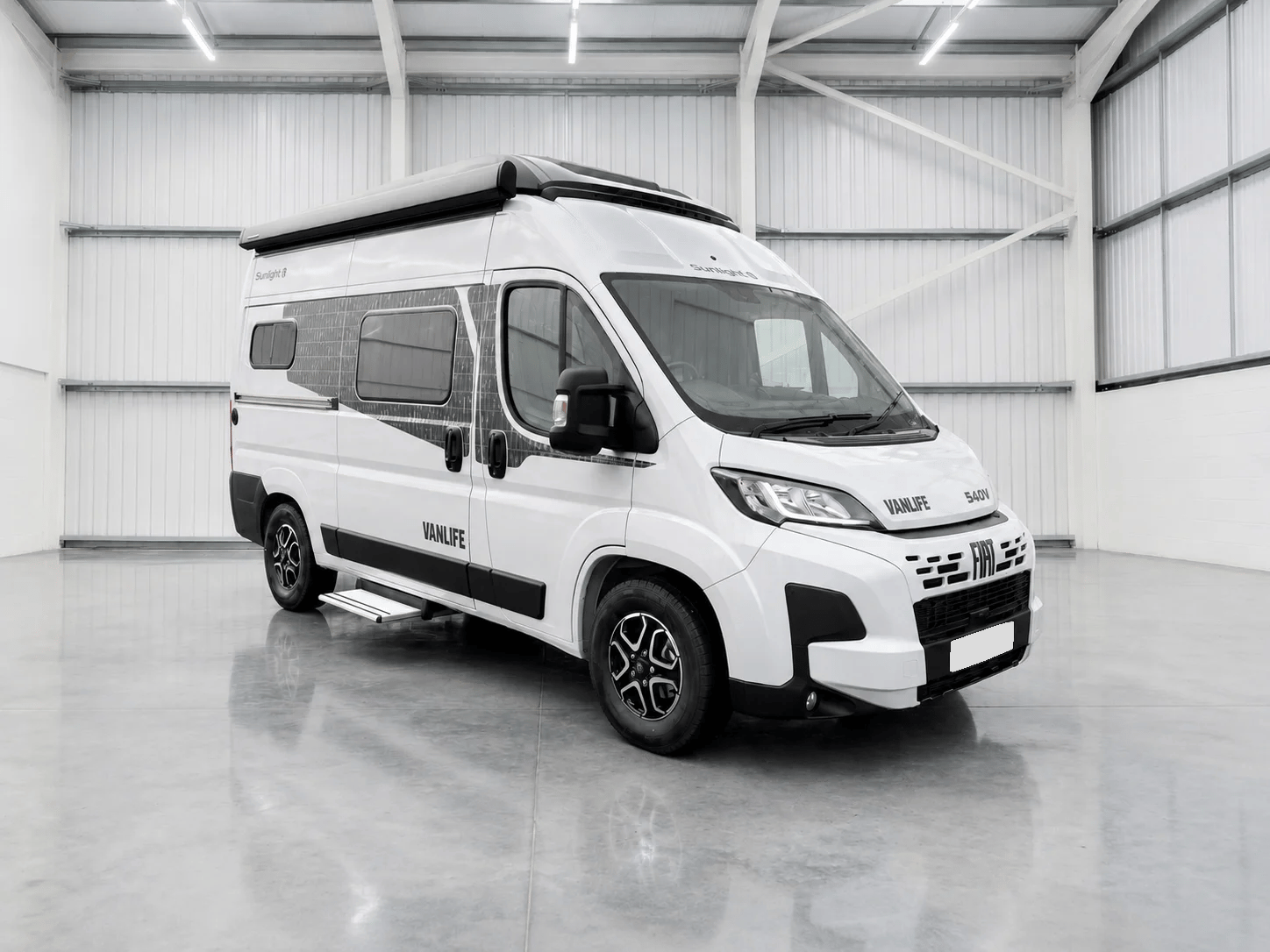
The camper you fall for is rarely the one you can afford. That gap is the whole reason Campervan.win exists. Right now we’re giving away the Sunlight Vanlife, worth around £65,000, and closing that gap is the point: capped entries so the odds stay honest, £10 a ticket, a maximum of five per person, £500 to a UK charity from every full draw, the winner picked by a public randomness beacon anyone can re-check, and one person driving away in the van itself.
Enjoyed this post?
Get more honest campervan guides like this one in your inbox.
You’re in!
Check your inbox. We’ve just sent you a welcome email.

About the author
Rowan
Rowan writes editorial features, comparisons, and industry context pieces that help readers understand the campervan and motorhome landscape.
Keep Reading
Related Reading
Thoughtful articles that build on what you’ve just read.

Design, Layout & Living Space
11 min read
2027 Bürstner Habiton HM 6.1: can a transverse-bed campervan really work for taller UK couples?
The new Habiton HM 6.1 widens the back of a Mercedes Sprinter to fit a transverse bed quoted at around two metres. We look honestly at whether that solves the old problem of taller people sleeping sideways in a van.

Design, Layout & Living Space
8 min read
What is the best colour for a campervan? The honest answer
A practical look at campervan colours: which ones run cooler, hide dirt, hold value and stay safe on the road, and why that moody all-black look is harder to live with than it looks.

Design, Layout & Living Space
30 min read
Natural light in a motorhome: how rooflights and windows transform van living
Light is the quiet thing that makes a van feel like a home rather than a metal box. Here is an honest, detailed guide to rooflights, windows, glazing and placement, with real UK numbers and the trade-offs nobody mentions.

Design, Layout & Living Space
20 min read
The clever staircase: how the Sunlight Vanlife 540 lives like a small flat
Most compact campervans force you to choose between a fixed bed and a proper living space. The Sunlight Vanlife 540 refuses the choice with one unusual idea: a permanent staircase up to the bed, which frees the whole rear of the van for a lounge. Here's why it works so well.