
Atom Motorhomes explained: the new British-built VW Crafter campervans from £61,940

Written by
Rowan
Rowan writes editorial features, comparisons, and industry context pieces that help readers understand the campervan and motorhome landscape.
The short answer
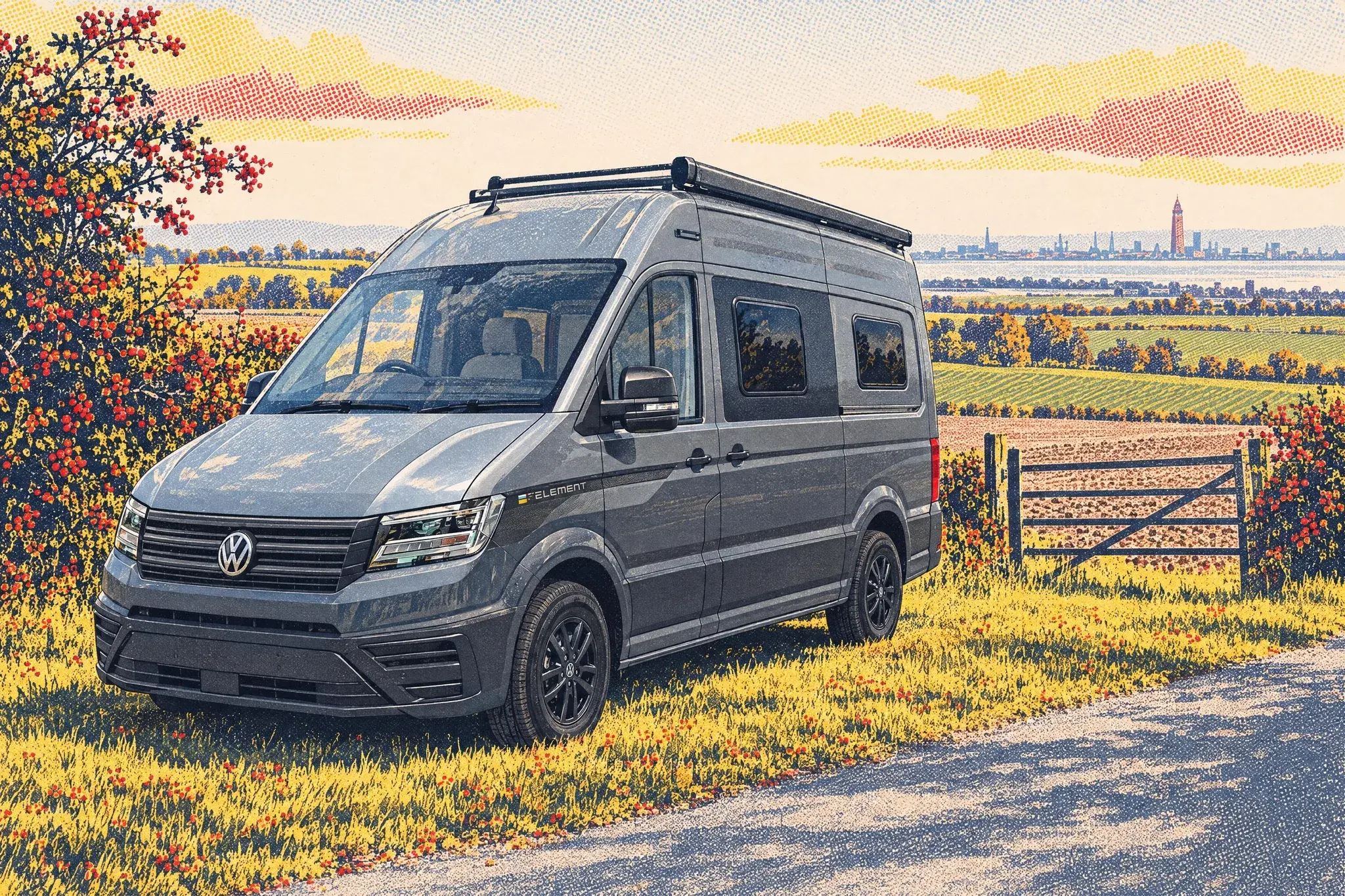
Atom Motorhomes is a new UK campervan brand launched on 28 August 2026 by the Trigano Group through Auto-Trail. It sells four two-berth, 5.986 m Volkswagen Crafter conversions (Core and Element, in rear-lounge B and twin-bed G layouts) direct online, from £61,940 on the road. Every van includes a kitchen, shower room, Truma heating, solar and a tracker; Element adds 340Ah lithium, a 3,000 W inverter, roof rack and awning.

A new British campervan brand does not come along very often. Atom Motorhomes is one, and it arrived with a clear idea: a Volkswagen Crafter campervan that is properly finished from the first model up, sold directly to you online, for a price that starts in the low sixties rather than the eighties. This piece is the brand story. We will cover who is behind Atom, why it exists, how buying works, what every van includes, and the gaps in what has been published so far. Detailed looks at each model follow in separate posts, so the model detail here is deliberately short.
Who is behind Atom
Atom launched on 28 August 2026. It is a new brand, not a new company. Legally, Atom is a brand of Auto-Trail VR Ltd, which is the name on the conversion warranty, and Auto-Trail in turn is part of the Trigano Group, one of the largest leisure vehicle groups in Europe. Practical Motorhome reported on 17 September 2026 that the vans are built at Auto-Trail's factory in Grimsby but that Atom is run and marketed as a separate operation with its own identity.
That separation shows in the way the brand presents itself. There are no traditional dealers. The head office is at Melton, near Hull, and it is open by appointment only. The person most associated with the brand on the sales side is Andy Dimmock, Atom's brand sales manager, who has been involved since the design stage rather than joining once the vans were finished. For a buyer that matters a little: the person answering your questions has followed the van since the drawing board.
Why a motorhome giant wants a small VW campervan
Trigano claims around 34 per cent of UK motorhome sales, which is a very large share of the market. Yet one corner of that market it has barely touched is the Volkswagen-based campervan. Auto-Trail's managing director, Shane Devoy, told Practical Motorhome that Atom is Trigano's move into exactly that space.
It makes sense when you look at how people shop. Plenty of buyers want a VW badge on the front, a van-sized footprint for everyday driving, and a proper washroom inside, and they do not necessarily want a coachbuilt motorhome. Atom is a way to meet those buyers without stretching an existing motorhome brand into a shape it was never designed for.
What Atom says it is trying to do
Atom states two aims. The first is to modernise the vans themselves. The second is to modernise the way people buy them. Its own line sums up the first aim neatly:
"A lower starting price should not mean starting with an incomplete campervan."
Anyone who has priced up a campervan knows why that sentence exists. A headline price often buys a van with a long list of options still to add, and the real figure only appears once heating, solar, an awning and a decent leisure battery have been ticked. Atom's approach is to put the essentials in every van from the outset so that the entry-level Core is a complete, usable campervan rather than a starting point.
The second aim, the buying process, is the bigger break with tradition. Atom sells direct only. You configure the van online, place the order online, and deal with the brand rather than a dealer. We will come back to exactly how that works, because it changes a few things you might take for granted.
The range at a glance
At launch there are four vans, built on the 5.986 m Volkswagen Crafter panel van with the 140 PS 2.0-litre diesel and a six-speed manual gearbox as standard; a 177 PS engine (£2,652) and Volkswagen's automatic gearbox (£2,628) are options. All four are two-berth. Because they are panel van conversions, they keep the Crafter's own steel body, so the width is a shade over two metres excluding mirrors, which is narrower than a coachbuilt and easier to live with on narrow lanes and in car parks.
There are two trim levels and two layouts, and every combination is available:
- Core 600 B: from £62,600 on the road
- Core 600 G: from £61,940 on the road
- Element 600 B: from £68,925 on the road
- Element 600 G: from £68,260 on the road
The letters describe the layout. B is a rear lounge with two long facing benches, the classic sociable campervan arrangement. Practical Motorhome reports that both Atom layouts sleep in single beds, so ask whether the benches can also make up a double. G gives you two single beds over a rear garage, which suits couples who prefer their own bed and anyone who carries bikes or bulky kit. The G is slightly cheaper in both trims.
At the time of writing Atom is running a winter sale that takes £1,945 off, which brings the Core 600 G down to £59,995 on the road. Sale pricing is by definition temporary, so treat the list prices above as the baseline.
What every Atom includes, and what Element adds
This is where the "complete campervan" idea becomes concrete. Every Atom, Core included, comes with:
- A full kitchen
- A private washroom with a shower and a toilet
- Truma heating
- Solar panel charging
- A fitted tracker
That list is worth pausing on. A shower room, heating and solar as standard on the cheapest model is not something you can assume on a six-metre VW campervan at this price. The tracker is a quiet bonus too, because insurers often ask for one on a vehicle of this value.
Stepping up to Element adds roughly £6,300 and brings the kit that off-grid campers tend to add anyway:
- 340Ah of lithium battery capacity
- A 3,000 W inverter
- A roof rack
- A wind-out awning
A 3,000 W inverter paired with 340Ah of lithium is a serious electrical setup for a two-berth van. It is enough to run a kettle, a toaster or a hairdryer without plugging into a campsite, and to work from the van with laptops charging all day. If you mostly use hook-up sites, Core will do the job. If you like to park up away from facilities for a few nights, Element is where the value is: Atom charges £899 to fit the same 340Ah battery to a Core, and adding the Element's other kit to a Core as options (reversing camera, Wi-Fi, LED headlights, alloys, awning and more) comes to about £7,000, more than the £6,300 step up. A Core cannot have the inverter or roof rack at all.
How buying an Atom actually works
Because Atom sells direct, the process is different from walking into a dealership. Here is how it runs:
- Configure online. You pick trim, layout and options on atommotorhomes.com.
- Pay a deposit. This is £2,500 or 4 per cent of the price, whichever is lower. The deposit is non-refundable, so be sure before you click.
- On-the-road charges. £445 covers the first registration fee, a year's vehicle excise duty and number plates. The prices quoted above are on-the-road figures.
- Wait for the build. Practical Motorhome reports a build time of 14 to 16 weeks from order.
- Finance by phone, for now. Atom's online finance quotes are paused at the time of writing, so if you want to borrow you will need to speak to the brand directly.
A couple of honest points. The non-refundable deposit is the part most people will want to think about. In a traditional dealer purchase there is often a little more flexibility, and a change of heart can sometimes be absorbed. With Atom, £2,500 is committed once you order, so you need to have seen enough and asked enough questions first. The appointment-only HQ near Hull exists partly for that reason, and if you are spending sixty thousand pounds it is reasonable to make the trip or to ask the brand what viewing options it offers closer to you.
The other point is simply that there is no local dealer to pop into for a warranty niggle. That is not unusual for direct-sale brands, but you should ask Atom how warranty work and servicing on the conversion side are handled in your area before you buy.
Warranty, and the obvious comparison
The warranty splits in two, as it does with almost any converted van. The Volkswagen base vehicle carries VW's own two-year warranty, with three years of roadside assistance. The conversion and body integrity are covered for three years by Auto-Trail VR Ltd, which is the company that legally stands behind the Atom brand.
The comparison most readers will make is with Volkswagen's own factory campervan on the same six-metre Crafter, the Grand California 600. It is fair to set the two side by side because they share a base and a length. VW's van starts at £84,208, comes with an automatic gearbox, and carries a five-year warranty. Atom's Core 600 G starts at £61,940, has a manual gearbox as standard (Volkswagen's automatic is a £2,628 option) and the shorter two-year base warranty plus three years on the conversion.
Neither is simply better. If an automatic as standard and a longer factory warranty matter most to you, that is a real difference and it costs real money. If a complete, British-built van with a shower room, heating and solar for around £22,000 less is the priority, Atom's proposition is easy to understand. Just make sure you are comparing like with like on equipment once you have both configured.
What Atom has not published yet
A new brand launching with a website rather than a showroom means some details are still thin, and it is better to say so than to guess. As of 5 October 2026, Atom's site does not publish:
- Bed dimensions for either layout. Ask for exact lengths and widths, especially if you are tall, and whether the B's benches can make up a double.
- Fresh and waste water tank sizes. These shape how long you can stay off-grid, and they vary a lot between conversions.
- Overall height. Atom's Core pages list 2,170 mm, which looks too low to be the outside height of a Crafter with standing room, so ask for the overall figure; the Element's roof rack will add to it. For reference, Eriba's Car 600 on the same Crafter is 2.70 m tall. Check before you assume it fits a height barrier or your driveway.
None of these are reasons to worry. They are simply questions to ask by phone or at a viewing, and we would expect the specification sheets to fill out as deliveries begin.
Our take
Atom is a sensible idea executed by people with the factory, the buying power and the experience to make it work. The combination of a VW Crafter base, a genuinely complete standard specification, a British build and a sub-£62,000 starting price is a strong one, and the direct-sales model keeps the headline figures honest. The compromises are real but clear: an automatic costs extra, the base-vehicle warranty is two years, the deposit is non-refundable, and the brand is too new to have a track record. If you are comfortable with those, it deserves a close look.
Atom calls these four vans its first models, which is a telling choice of words. Practical Motorhome reports that the brand is already looking at introducing four-berth versions. Nothing has been announced, and we would not want to put dates or layouts in anyone's mouth, but we will admit to hoping. A six-metre VW campervan that families can afford, built in Grimsby with a shower room and heating included, is the kind of van a lot of people have been waiting for. For now, the two-berth range is a confident start, and we will look at each model in detail in the posts that follow.
Common questions
Who makes Atom campervans?
Atom is a brand of Auto-Trail VR Ltd, part of the Trigano Group. Practical Motorhome reports the vans are built at Auto-Trail's factory in Grimsby, while Atom is run and marketed separately from a head office at Melton, near Hull.
How much does an Atom campervan cost?
Prices start at £61,940 on the road for the Core 600 G and rise to £68,925 for the Element 600 B. A winter sale at the time of writing takes £1,945 off, bringing the cheapest model to £59,995.
What is the difference between Atom Core and Element?
Every Atom includes a kitchen, shower room with toilet, Truma heating, solar and a tracker. Element adds 340Ah of lithium battery, a 3,000 W inverter, a roof rack and an awning for around £6,300 more.
Can I buy an Atom campervan from a dealer?
No. Atom sells direct only. You configure and order online, pay a non-refundable deposit of £2,500 or 4 per cent (whichever is lower), and the build takes around 14 to 16 weeks according to Practical Motorhome.
What warranty comes with an Atom campervan?
The Volkswagen Crafter base vehicle has VW's two-year warranty plus three years of roadside assistance. The conversion and body integrity are covered for three years by Auto-Trail VR Ltd.
Does Atom make a four-berth campervan?
Not yet. The launch range is four two-berth models, but Practical Motorhome reports the brand is already looking at introducing four-berth versions. Nothing has been formally announced.
The reachable bit
The camper you fall for is rarely the one you can afford. That gap is the whole reason Campervan.win exists. Right now we’re giving away the Sunlight Vanlife, worth around £65,000, and closing that gap is the point: capped entries so the odds stay honest, £10 a ticket, a maximum of five per person, £500 to a UK charity from every full draw, the winner picked by a public randomness beacon anyone can re-check, and one person driving away in the van itself.

Enjoyed this post?
Get more honest campervan guides like this one in your inbox.
You’re in!
Check your inbox. We’ve just sent you a welcome email.

About the author
Rowan
Rowan writes editorial features, comparisons, and industry context pieces that help readers understand the campervan and motorhome landscape.
Keep Reading
Related Reading
Thoughtful articles that build on what you’ve just read.
New & Noteworthy
12 min read
Knaus Boxtime 600 ME (2027): twin singles in 6 m, and the payload figure to question
Knaus's new Boxtime 600 ME squeezes two lengthways single beds into a 5.99 m van from £81,725. We lay out what that layout gives a couple, run the weight sums with Knaus's own figures, and explain why the 211 kg 'maximum payload' line needs a question before you sign.
New & Noteworthy
10 min read
Swift Carrera goes gas-free for 2027: 340Ah lithium, diesel heat and induction cooking
Swift has taken the gas out of its Carrera campervan for 2027, swapping bottles for a 340Ah lithium battery, diesel heating and an induction hob. Here is what that means across a real UK year, how it compares with the cheaper Merlin, and the one question to ask at the NEC.
New & Noteworthy
10 min read
British campervan converters at the NEC 2026: who builds on what, and for how much
A stand-by-stand map of the British campervan converters at the Motorhome and Caravan Show 2026: the vans they build on, their from-prices, seats, roofs and lead times, plus the four questions to put to every one of them.

New & Noteworthy
9 min read
Plug-in hybrid campervans at the NEC: what a PHEV gives you and why full EVs are rare
Four UK converters have hybrid campers at or around the Motorhome and Caravan Show this October, while fully electric campers remain scarce. Here is what a plug-in hybrid camper does well, what the sellers rarely tell you, and the questions to ask on the stand.