
Elddis Autoquest GT and Whirlwind GT for 2027: what a reported move to German production means for UK buyers

Written by
Rowan
Rowan writes editorial features, comparisons, and industry context pieces that help readers understand the campervan and motorhome landscape.
The short answer
The 2027 Elddis Autoquest GT and Whirlwind GT are built in Germany within the Erwin Hymer Group rather than at Elddis's Consett factory, so they are British by badge and heritage rather than by assembly. Elddis has been German-owned since 2017 anyway. What matters to UK buyers is whether the vans keep right-hand drive, a nearside habitation door, UK layouts, 3,500 kg weights and UK gas and electrics, so check those on the actual spec sheet.

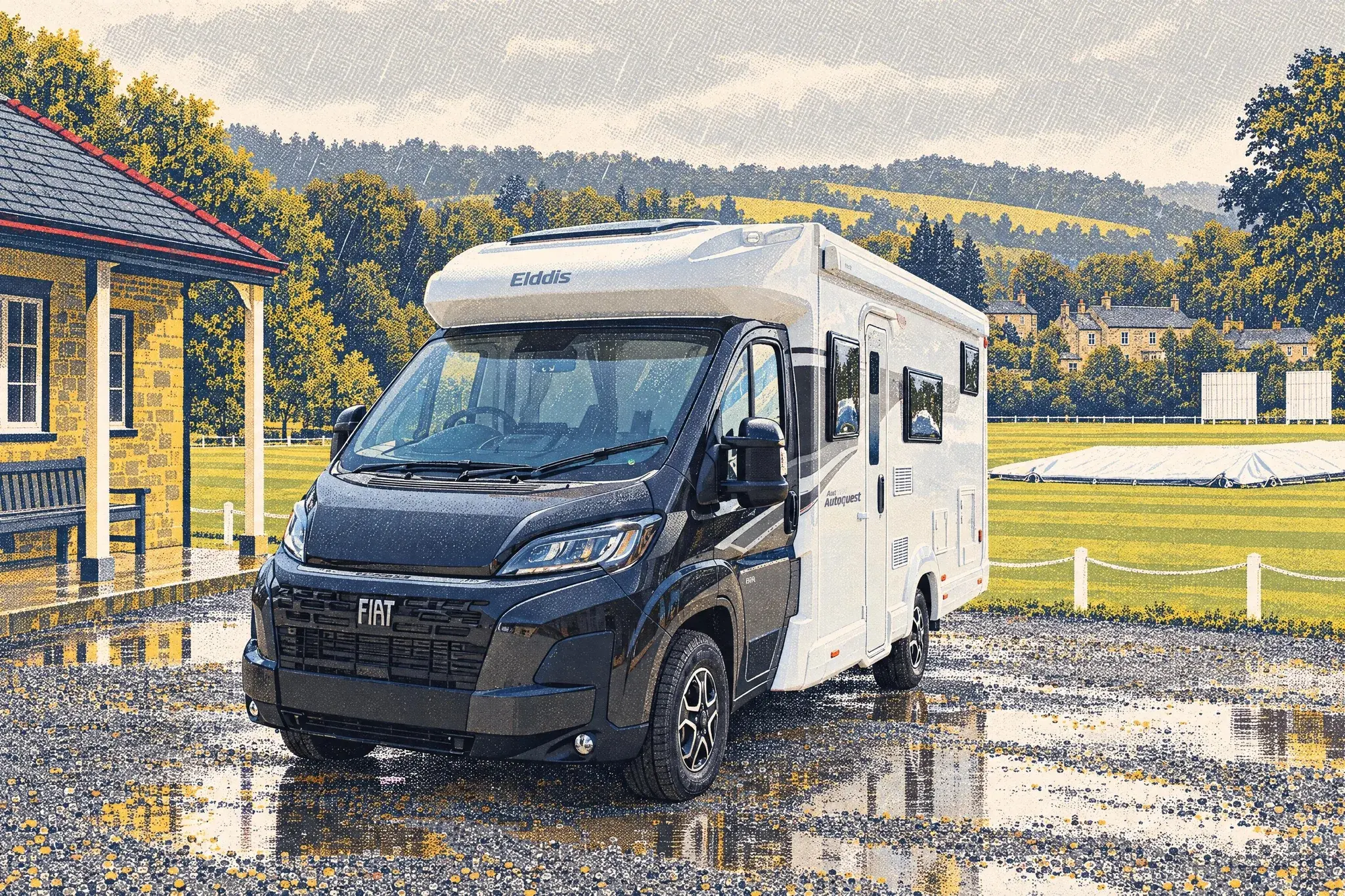
Elddis has confirmed two motorhome ranges for the 2027 season: the Autoquest GT and the Whirlwind GT. Its own website already lists layouts including the Autoquest GT 74 DS, the Whirlwind GT 70 DS and the Whirlwind GT 74 DI. Less firmly sourced, but widely reported, is where they will be built. Factory-visit coverage says production of the Autoquest and Whirlwind motorhomes has moved, and reports place it at Erwin Hymer Group plants in Germany rather than Consett, County Durham, where Elddis has built vans for decades. If that is right, it is a big change for a badge that has traded on being British. It also raises a fair question: if the van is put together in Germany, is it still a British motorhome? The honest answer is more interesting than a simple yes or no, and it matters less than the practical checks that come with it. Here is the calm version.
What we know, and what we do not
First, the confirmed part. Elddis has confirmed the Autoquest GT and Whirlwind GT ranges for 2027, and the model pages on elddis.co.uk give the base vehicles and weights, which we cover in detail below. Those are no longer rumours.
The build location is a different matter. The move to German production comes from factory-visit video coverage, and at the time of writing we have not seen an official Elddis or Erwin Hymer Group statement setting out exactly where the 2027 motorhomes are assembled. So please treat the German build location as reported rather than settled. We will update this article, and link to the source, as soon as there is an official statement. Until then, the useful part of this piece is the bit that does not depend on the headline: what to check on any Elddis motorhome, wherever it is built.
The ownership story is on firm ground. Elddis is based in Consett, where it was founded in 1964 by Siddle Cook. Over the decades the site built caravans and, later, motorhomes, including the Autoquest coachbuilts that became one of the most familiar sights on UK campsites. Elddis is part of the Erwin Hymer Group, the German company that bought the Explorer Group (Elddis's parent) in 2017. Erwin Hymer Group itself has been owned by the American firm Thor Industries since 2019.
What would actually change
The reported move is about where the motorhomes are assembled, not who sells them. If it is as described, the Autoquest GT and Whirlwind GT come from Erwin Hymer Group facilities in Germany rather than the Consett line. The reports we have seen concern the motorhome ranges, not the caravans, and Elddis continues to be sold and supported through its UK dealer network. In other words, the brand, the name, the dealers and the warranty route stay British-facing. The factory building the motorhomes may not.
A small note on the names. Autoquest and Whirlwind are both established Elddis badges, and the Elddis site still lists ranges such as the Autoquest GTV and the Whirlwind GTS. Carrying those names into 2027 is a fairly clear signal that the heritage is meant to travel with the vans, even if the production line does not.
How British was Elddis anyway?
It is worth being straight about this. If British means owned by a British company, Elddis stopped being British in 2017. If it means ultimately owned from Britain, it stopped being that too, because the chain of ownership runs through Germany to the United States. None of this is unusual. Very few mass-market motorhome or caravan brands sold in the UK are independently British-owned today, and plenty of things we think of as British are built abroad, while plenty of things built here are foreign-owned.
What Elddis kept after 2017 was the thing most buyers actually cared about: British design for British buyers, built in Britain. A move to German assembly keeps the first part and changes the second. That is the honest frame for the whole debate. The question is not really about flags. It is about whether a van designed for how we tour, and built around our quirks, survives a move to a factory that spends most of its time building for continental Europe.
What a British motorhome has really meant to UK buyers
Strip away the sentiment and British-built motorhomes have differed from continental ones in a handful of very practical ways. These are the things worth protecting, and the things to check.
Right-hand drive designed in, not adapted
UK-built motorhomes have always been designed around right-hand drive from the start, with the cab, swivel seats and living area planned together. Continental bodies sold here sit on right-hand-drive base vehicles too, which is routine and perfectly fine, but the habitation layout was often drawn first for left-hand-drive markets. That can affect how the cab swivel seats line up with the dinette and what you see from the habitation door. The good news is that Elddis lists both GT ranges as right-hand drive for the UK, so the question is about how the living area has been planned around that cab.
The habitation door on the nearside
This is the big one, and it is often overlooked until you own the van. British motorhomes put the habitation door on the left, the kerb side on UK roads, so you step out onto the pavement or the grass rather than into traffic. Many continental bodies put the door on the right, because that is the kerb side on the continent. On a UK-market version of such a body, that door opens onto the road side. Some manufacturers build a genuine UK-specific body with a left-side door; others do not. Find out which approach the 2027 Elddis motorhomes take before you fall for a layout. Stand next to one at a dealer and picture where you will be parked on a laneside stopover or a campsite pitch.
Layouts that suit British touring
UK buyers have long favoured the rear lounge, the big front lounge with a half dinette, the French bed with a corner washroom, and the fixed island bed with the washroom across the back. Continental ranges lean more towards drop-down beds over a front dinette, garage layouts and transverse rear beds. None of these are wrong, and tastes have been converging for years, but if you are buying an Elddis because you want a British-style floorplan, check the 2027 layouts on the Elddis site and in the brochure rather than assuming.
UK gas, UK sockets, UK heating habits
Small things become big things on a wet February weekend: a gas locker that takes standard UK cylinders without fuss, 13-amp three-pin sockets rather than two-pin, a mains hook-up lead and consumer unit set up for UK sites, and a heating system specified for people who use their van in a British winter rather than a Mediterranean spring. Erwin Hymer Group already sells plenty of vans into the UK market, so none of this should be new territory, but it is still your job to confirm it on the specific model.
Construction and the body warranty
Elddis has made a lot of its SoLiD construction method over the last decade, a bonded, timber-free body backed by a long body-integrity warranty. Whether a German-built range uses the same system, a group-wide system or something new is exactly the kind of detail to ask about in writing. What you want to see is the warranty length on the body and on water ingress, the service schedule you must follow to keep it valid, and which dealers can carry out the annual habitation check.
Base vehicle, weight and your licence
Here the picture is clear, because Elddis publishes it. According to the Autoquest GT model pages on elddis.co.uk, the Autoquest GT is built on the Fiat Ducato, plated at 3,499 kg, with the MultiJet 140 engine (2.2 litres, 103 kW, 140 hp), a 6-speed manual gearbox and right-hand drive. According to the Whirlwind GT pages, the Whirlwind GT sits on the Peugeot Boxer, also at 3,499 kg, with the same MultiJet 140 engine and 6-speed manual gearbox, again right-hand drive for the UK.
That is useful to know, but it is not the whole story. The headline chassis tells you what the van can legally weigh, not how much you can put in it. Ask the dealer for the exact specification of the layout you want, check whether an automatic gearbox is offered on it, and look at the V5C or plate of a demonstrator if you want certainty. Above all, ask for the payload for that exact layout and options.
Weight matters more than the badge on the grille. The practical limits are these:
- If you passed your car test on or after 1 January 1997, your standard category B licence covers vehicles up to 3,500 kg maximum authorised mass. Heavier vans need C1 entitlement, which means a medical and an extra test.
- Both 2027 GT ranges are plated at 3,499 kg, according to Elddis, so they can be driven on a standard post-1997 car licence. That is a real plus for younger buyers and anyone who never took C1.
- If you passed before 1997, you usually have C1 already, but it needs renewing with a medical from age 70.
- A 3,499 kg plate is a ceiling, not an allowance. On a family layout the payload can be tight once you add a second battery, an awning, bikes, water and people. Ask for the mass in running order and the payload for the exact layout and options you want, not a headline brochure figure.
- Some motorhomes can be offered with a chassis upgrade to a higher plated weight for buyers with C1. If you need more payload, ask whether that is available on the GT layout you like. It costs money and can change your speed limits, tolls and some ferry prices, but it can transform the usefulness of a larger family van.
Wherever a van is built, a UK-style layout with a heavy rear lounge and a big fridge can eat payload quickly. Weigh your own van once it is loaded. Public weighbridges are cheap and it is a ten-minute job.
The upside of a German-built Elddis
It would be unfair to write this as a lament. If the reported move is right, there are genuine potential positives for buyers, and a calm friend would list them.
- Scale and process. Erwin Hymer Group runs large-scale production in Germany, and consistency of fit and finish is one of the things big, well-organised plants tend to do well.
- Access to group technology. Heating, electrical systems, furniture construction and body technology developed across a very large group can filter into a British-badged van more easily when it is built alongside the others.
- Supply of parts. Components shared across a group often stay available for longer, which matters when you own a van for ten or fifteen years.
- Model continuity. The alternative to building Elddis motorhomes in Germany might not have been building them in Consett forever. A badge that keeps going, with a UK dealer network behind it, is better for existing owners' resale values than a badge that fades out.
Price, euros and the trade question
Where a van is built changes how it is priced. A German-built motorhome sold in the UK is priced in sterling but carries euro costs, so exchange rate swings can nudge list prices between seasons more than they would for a van built here from parts bought in pounds. Motorhomes imported from the EU to the UK are generally tariff-free under the current trade agreement, provided they meet the rules of origin, so you should not expect a tariff line on your invoice. What you may see is a different delivery or pre-delivery inspection charge from the one you remember, since the van travels further to reach the dealer. Ask for the on-the-road price broken down, and ask what is included in the UK-market specification so you are comparing like with like.
The badge says where the van comes from in spirit. The spec sheet says where it comes from in practice. Buy from the spec sheet.
What to check before you order a 2027 Elddis motorhome
If you are seriously considering an Autoquest GT or Whirlwind GT, this is the list to take to the dealer or the show stand.
- Build location. The model names are confirmed, but ask the dealer to confirm, ideally in writing, where your specific van is built.
- Habitation door side. Nearside (left) or offside (right) on the UK version? Walk around a real van.
- Base vehicle details. Fiat Ducato for the Autoquest GT, Peugeot Boxer for the Whirlwind GT, both listed with the MultiJet 140 and a 6-speed manual. Check the exact layout matches, and ask whether an automatic is offered.
- Weights. Both ranges are plated at 3,499 kg. Ask for the mass in running order, the payload for your layout with your options, and whether a higher plating is available.
- Layouts. Are the British-style floorplans you want actually in the range, or is it a continental line-up with a UK badge?
- Body construction and warranty. What system, how many years on the body and water ingress, and what you must do to keep it valid.
- UK specification. Gas locker and cylinder type, 13-amp sockets, hook-up, heating output and whether it runs on gas, electric or both.
- Servicing and parts. Which UK dealers are approved for habitation servicing, and how parts are supplied.
- Insurance. Give your insurer the exact model and build location. Some ask, most do not, but it avoids surprises.
- Delivery timing. Imported vans can arrive on a different schedule. If you want yours for Easter, ask what happens if it slips.
So, would it still be British?
By ownership, Elddis has not been British since 2017, and very few people who bought an Autoquest since then noticed or minded. By design intent, dealer network and the name on the door, it remains a British brand. By place of assembly, if the reported move to German production is confirmed officially, the 2027 motorhomes would be German. Whether that makes it a British motorhome depends entirely on which of those three things you were buying.
Our view is simple. The things that made a British motorhome genuinely better for British touring were never about the postcode of the factory. They were the nearside door, the layouts we actually use, the right weights for the licences we hold, and heating and gas sorted for our weather and our cylinders. On weight, the 2027 GT ranges already tick the box, with both plated at 3,499 kg for a standard car licence. If they keep the rest, the badge is still doing its job and the build location is a footnote. If they quietly drop them, the van is a continental motorhome with a familiar name, and you should judge it on exactly those terms, without the nostalgia. Either way, the spec sheet will tell you more than the flag. Read it carefully, stand in the van, check the payload, and buy the one that fits your life.
Common questions
Where are the 2027 Elddis Autoquest GT and Whirlwind GT built?
They are built in Germany at Erwin Hymer Group facilities rather than at Elddis's traditional factory in Consett, County Durham. The brand, UK dealer network and warranty support remain UK-facing.
Who owns Elddis?
Elddis has been part of the German Erwin Hymer Group since it bought the Explorer Group in 2017. Erwin Hymer Group has in turn been owned by the American company Thor Industries since 2019.
Why does the habitation door side matter on a German-built motorhome?
British-built motorhomes put the habitation door on the nearside so you step out onto the kerb. Many continental bodies place it on the right, which on UK roads is the traffic side, so check which side the UK-spec GT models use.
Can I drive a 2027 Elddis Autoquest GT on a standard car licence?
If the van is plated at 3,500 kg or less, yes, a standard category B licence covers it. Anything heavier needs C1 entitlement, which post-1997 drivers must take a test and medical to obtain.
Will a German-built Elddis cost more than a UK-built one?
Not necessarily, but pricing now carries euro exposure, so exchange rates can move list prices between seasons. Motorhomes built in the EU are generally imported tariff-free under the current UK-EU agreement, though delivery charges may be higher.
Is Elddis still making anything in Consett?
As things stand, the Consett site remains the home of Elddis caravans. The 2027 change affects where the motorhomes are assembled, not the caravan range.
The reachable bit
The camper you fall for is rarely the one you can afford. That gap is the whole reason Campervan.win exists. Right now we’re giving away the Sunlight Vanlife, worth around £65,000, and closing that gap is the point: capped entries so the odds stay honest, £10 a ticket, a maximum of five per person, £500 to a UK charity from every full draw, the winner picked by a public randomness beacon anyone can re-check, and one person driving away in the van itself.

Enjoyed this post?
Get more honest campervan guides like this one in your inbox.
You’re in!
Check your inbox. We’ve just sent you a welcome email.

About the author
Rowan
Rowan writes editorial features, comparisons, and industry context pieces that help readers understand the campervan and motorhome landscape.
Keep Reading
Related Reading
Thoughtful articles that build on what you’ve just read.
New & Noteworthy
12 min read
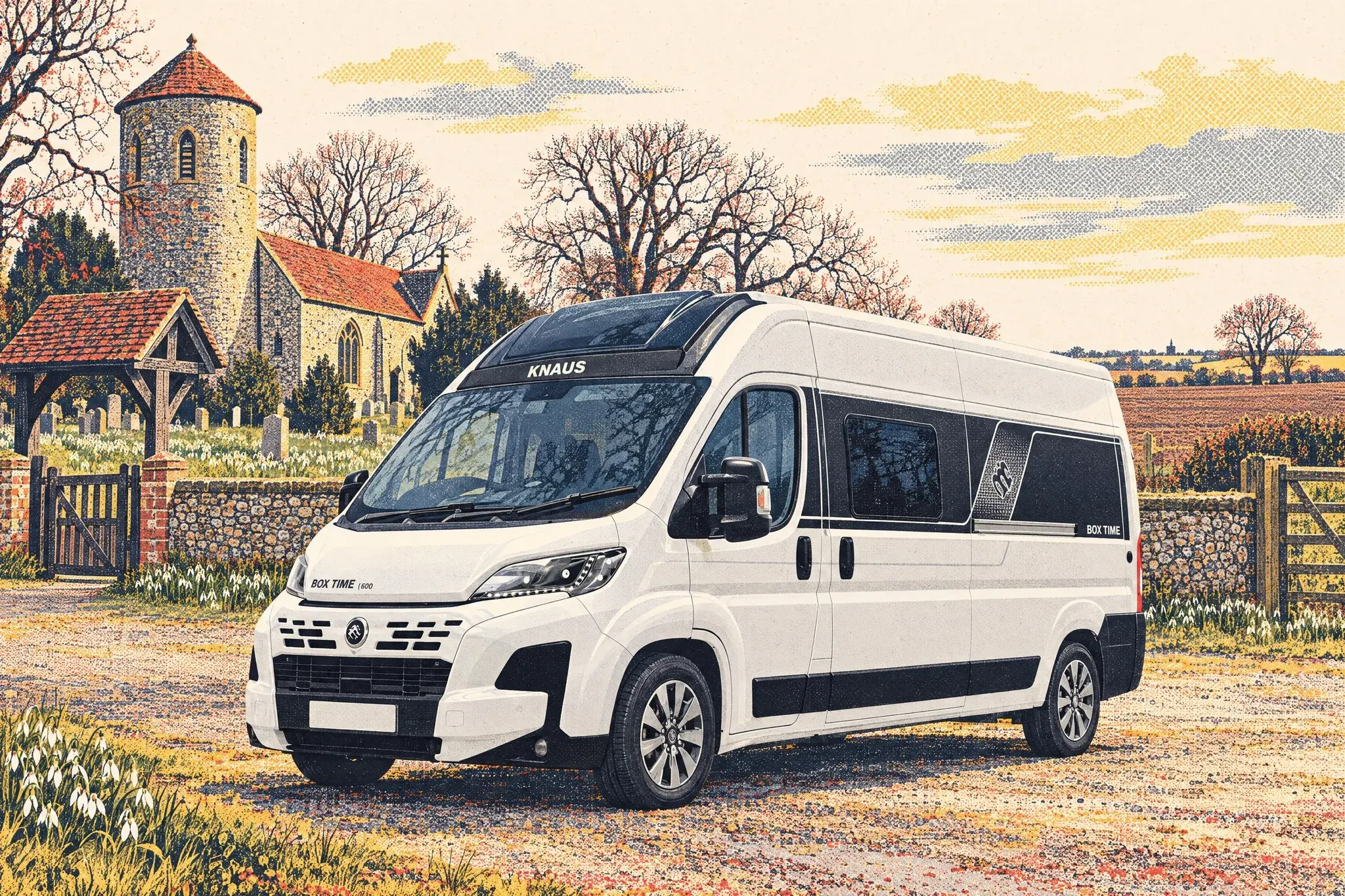
Knaus Boxtime 600 ME (2027): twin singles in 6 m, and the payload figure to question
Knaus's new Boxtime 600 ME squeezes two lengthways single beds into a 5.99 m van from £81,725. We lay out what that layout gives a couple, run the weight sums with Knaus's own figures, and explain why the 211 kg 'maximum payload' line needs a question before you sign.
New & Noteworthy
10 min read
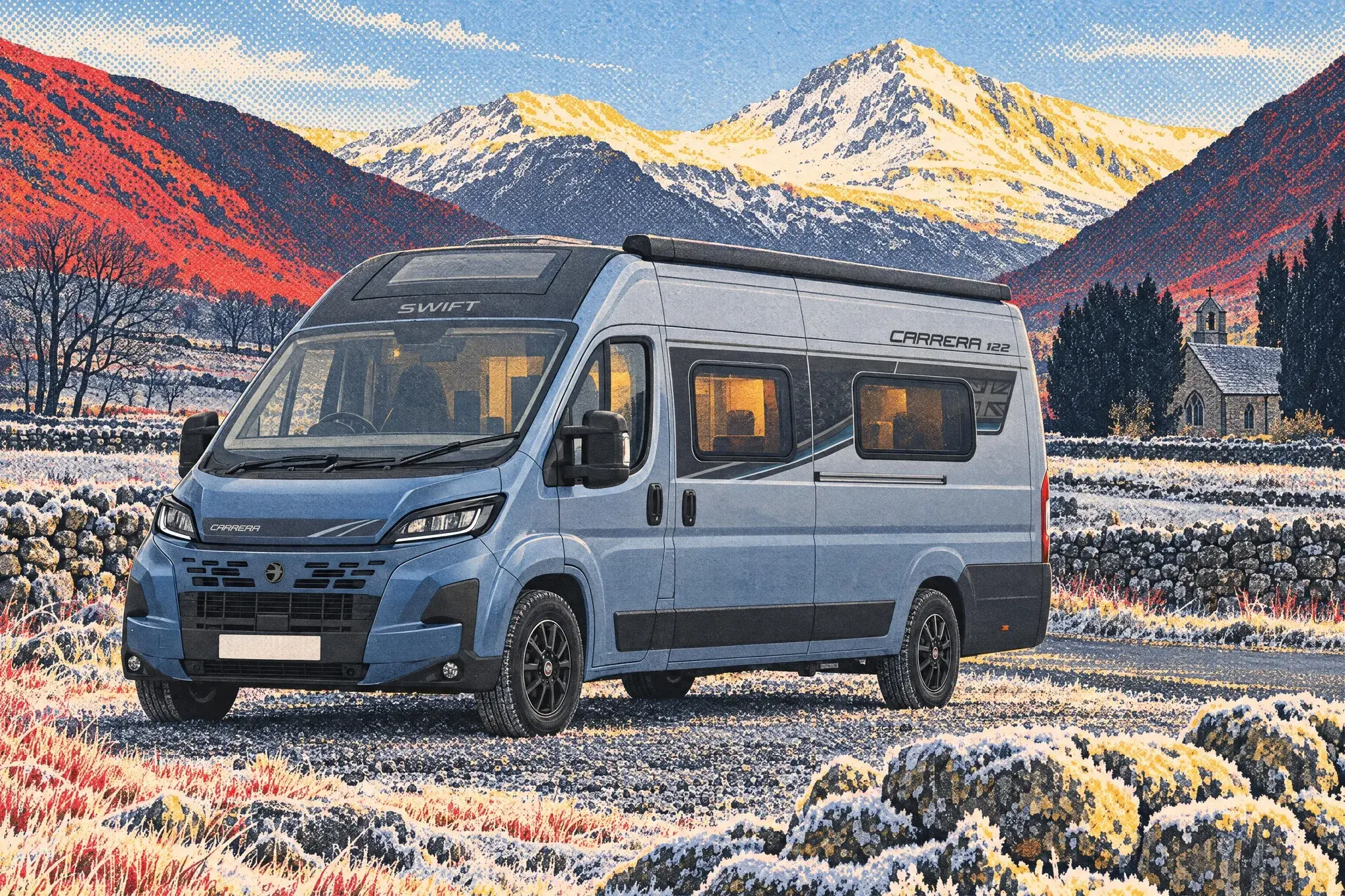
Swift Carrera goes gas-free for 2027: 340Ah lithium, diesel heat and induction cooking
Swift has taken the gas out of its Carrera campervan for 2027, swapping bottles for a 340Ah lithium battery, diesel heating and an induction hob. Here is what that means across a real UK year, how it compares with the cheaper Merlin, and the one question to ask at the NEC.
New & Noteworthy
10 min read
British campervan converters at the NEC 2026: who builds on what, and for how much
A stand-by-stand map of the British campervan converters at the Motorhome and Caravan Show 2026: the vans they build on, their from-prices, seats, roofs and lead times, plus the four questions to put to every one of them.
New & Noteworthy
9 min read
Plug-in hybrid campervans at the NEC: what a PHEV gives you and why full EVs are rare
Four UK converters have hybrid campers at or around the Motorhome and Caravan Show this October, while fully electric campers remain scarce. Here is what a plug-in hybrid camper does well, what the sellers rarely tell you, and the questions to ask on the stand.