
Ace Motorhomes: Swift's Budget Brand Is Back, Sun Living Has Drifted, and the Real Competition Might Surprise You

Written by
Arthur
Arthur writes buying guides, comparisons, and in-depth explainers to help readers choose the right campervan or motorhome with confidence.
The short answer
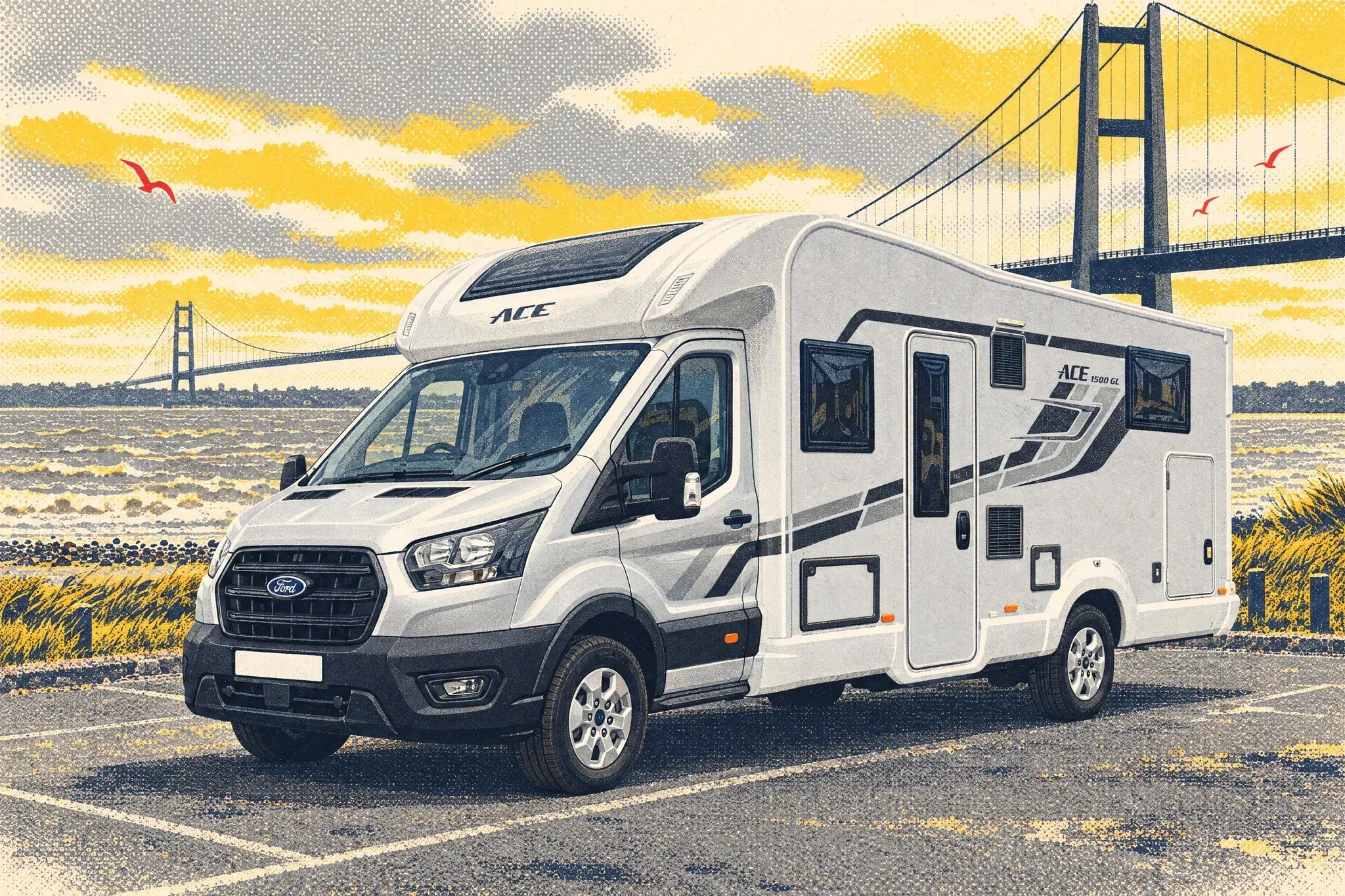
Ace is a revived British leisure-vehicle brand, well known in the early 2000s and relaunched for 2026 by the Swift Group in East Yorkshire to fill the widening gap at the budget end of the UK market, which is genuinely good news for value buyers. The Ace 1200 campervans sit on the Fiat Ducato (2.2 140hp) with 3M Thinsulate insulation; the Ace 1500 coachbuilt motorhomes use the Ford Transit (130hp, or a 165hp auto for £1,895 more), with every model on a 3,500kg chassis for a category B licence. A realistically specced 1500 lands around £68,000, which tellingly now sits level with the former budget benchmark, Sun Living. The one open question is execution: whether the build quality and aftersales match the brochure. Here is where Ace fits, and the rivals that might surprise you.

If you went to the Caravan, Camping and Motorhome Show at the NEC Birmingham in February 2026, you might have noticed a name on a stand that looked new but sounded familiar. Ace. Not a startup. Not an import. A revival. A British brand that was well known in the early 2000s, quietly disappeared, and has now returned with a completely new range of campervans and motorhomes built by Swift Group in East Yorkshire.
The timing is not an accident. The UK leisure vehicle market has a gap at the bottom end that has been widening for years, and Swift has clearly decided that somebody needs to fill it before the European brands take it entirely. The question is whether Ace is genuinely the answer, or whether the gap has already been filled by competitors that most UK buyers have not heard of yet.
This is the honest look. What Ace is offering. Who it is really aimed at. How it compares to the brand it is most obviously trying to challenge. And what else is out there if you are shopping in this part of the market.
What Ace is and where it comes from
Ace Motorhomes was a familiar name in the UK motorhome scene around the turn of the millennium. It was discontinued in late 2008 when Swift streamlined its range, some years after Swift had taken the brand on, and for the best part of two decades, the name sat dormant while Swift focused on its main brands: Swift, Bessacarr, Escape, and the various caravan ranges that dominate UK dealer forecourts.
The 2026 revival is not a nostalgia exercise. It is a strategic move. Swift has launched Ace as a separate brand with its own identity, its own dealer network, its own website, and a deliberately distinct position in the market. Where Swift's own motorhome ranges, the Escape, Voyager, and Kon-Tiki, sit in the mid range to premium bracket, Ace is positioned below all of them. It is Swift's entry level. Their accessible range. Their answer to the question that first time buyers and younger couples keep asking: is there anything good that does not cost seventy thousand pounds?
The answer, according to Ace, is yes. And it starts at fifty nine thousand eight hundred and five pounds.
The Ace 1200: campervans on the Fiat Ducato
The Ace 1200 range is the campervan side of the brand. All three models are built on the Fiat Ducato with the 2.2 litre 140 horsepower Euro 6E engine and a six speed manual gearbox. They use 3M Thinsulate insulation, which is the same approach used in a lot of professional van conversions, wrapping the interior in a material that manages both thermal performance and condensation without the bulk of traditional rigid insulation boards.
There are three layouts. The 1200 RL is the only six metre model and features a front half dinette with a full height walkthrough to the cab, Isofix on the forward facing bench, and a second lounge at the rear. The 1200 GL has an oversized transverse double bed at the rear measuring 188 by 165 centimetres with storage for bikes underneath. The 1200 SL offers single beds at the rear. Both the GL and SL are built on the longer 6.36 metre Ducato.
All three campervans come with a kitchen that includes a microwave as well as a two burner hob and a compressor fridge. All three offer an optional pop top roof. And all three start from that headline price of fifty nine thousand eight hundred and five pounds.
That is a meaningful number. Not because it is cheap in absolute terms, nothing about a sixty thousand pound vehicle is cheap, but because it is cheaper than almost everything else on a UK dealer forecourt that offers a proper bathroom, a proper kitchen, and a habitation interior that has been designed rather than improvised.
The Ace 1500: coachbuilt motorhomes on the Ford Transit
The more interesting side of the range, and the one that will generate most of the competitive conversation, is the Ace 1500. These are low profile coachbuilt motorhomes built on the Ford Transit chassis cab with Swift's own SMART construction system. That means GRP bodyshell with timberless framing, high grade insulation, and a build process that has been refined across decades of Swift production.
The base specification starts with Ford's 130 horsepower 2.0 litre EcoBlue diesel and a six speed manual gearbox, but the upgrade to 165 horsepower with the eight speed automatic is available for an additional one thousand eight hundred and ninety five pounds. That is a sensible upgrade path and it is priced competitively. Every model sits on a 3,500 kilogram chassis, which keeps everything within the standard Category B driving licence.
There are six layouts in the 1500 range. The shorter models, the 1500 GL and 1500 ET, measure around seven metres. The longer models, the 1500 SL and 1500 DB, stretch to 7.8 metres. The SL offers single beds, the DB has a fixed island bed, the GL has a transverse double, and the ET features an electric drop down bed over the front lounge. Some models are available as two berth or four berth, with the four berth option adding foldaway Aguti rear travel seats for an additional one thousand nine hundred and ninety five pounds.
Standard equipment across the 1500 range includes Truma CombiNeo heating with instant hot water, a Thetford Triplex combination oven and grill with a three burner hob, a 133 litre Dometic fridge, a separate shower, a panoramic sunroof, and a 120 watt solar panel. The Comfort Pack, which adds Moondust Silver paint, 16 inch alloys, a 12 inch media screen with reversing camera, cab blinds, and habitation carpets, costs one thousand and ninety five pounds and is expected to be fitted to virtually every vehicle leaving the factory.
Prices start at sixty four thousand nine hundred and ninety five pounds. A realistically specified 1500 with the automatic gearbox and Comfort Pack lands at around sixty eight thousand pounds. That is a fully equipped, UK built, coachbuilt motorhome with Truma heating, a proper kitchen, a separate shower, solar, and a Ford Transit base with an eight speed auto. For under seventy thousand pounds.
The Sun Living question: what happened to the budget benchmark
To understand why Ace exists, you need to understand what happened to Sun Living.
Sun Living is Adria's budget brand. It is manufactured by Adria Mobil in Slovenia, on the same production lines and using the same construction techniques as Adria's premium ranges. The idea, when Sun Living launched in the UK, was straightforward: take Adria's build quality and strip back the specification to offer a simpler, cheaper alternative. Fewer trim options. Fewer gadgets. Fewer decisions. Just a well built motorhome at an accessible price.
For a while, that worked beautifully. Sun Living was the brand that dealers would point first time buyers towards when the Adria price list made them wince. It was genuinely affordable, genuinely capable, and genuinely well built. The Adria construction quality, including the Composite Construction system and Thermo-build insulation, was present throughout. You were not buying a lesser product. You were buying a simpler version of a good product.
Then the prices crept up.
Sun Living coachbuilt motorhomes in the UK now start from around sixty eight thousand pounds. That is not a typo. The brand that was positioned as the affordable entry point to motorhome ownership now costs roughly the same as a mid specification Ace 1500, and more than a base specification Ace 1500. The gap between Sun Living and mainstream Adria has narrowed to the point where the budget positioning feels increasingly difficult to justify.
This is not entirely Adria's fault. The same forces that have pushed prices up across the entire industry, base vehicle costs, materials, emissions compliance, and post-pandemic supply chain adjustments, have affected Sun Living too. But the result is that the brand has drifted into a no man's land. It is no longer cheap enough to be the obvious first timer's choice, and it is not specified highly enough to compete directly with the mid range brands that sit just above it.
That is the gap Ace is driving into. A UK built coachbuilt motorhome from sixty four thousand nine hundred and ninety five pounds, backed by Swift's dealer network and construction expertise, positioned squarely at the buyers who would have looked at Sun Living three years ago and now find themselves priced out of it.
How Ace compares to Sun Living directly
On paper, the comparison is straightforward and it favours Ace in several important areas.
Price is the most obvious one. The Ace 1500 starts at sixty four thousand nine hundred and ninety five pounds. Sun Living coachbuilts start at around sixty eight thousand. That is a gap of roughly three thousand pounds before options, which is enough to cover the automatic gearbox upgrade on the Ace and still have change left over.
Construction is where it gets more interesting. The Ace 1500 uses Swift's SMART construction with GRP bodyshell and timberless framing. Sun Living uses Adria's Composite Construction with the Thermo-build insulation system. Both are proven, both are well regarded, and both have track records measured in decades of production. This is not a case of one being dramatically better than the other. It is two different approaches from two experienced manufacturers, both resulting in motorhomes that are properly insulated and structurally sound.
Base vehicle is a genuine differentiator. The Ace 1500 sits on the Ford Transit, which means UK servicing through Ford's extensive dealer network and the option of a 165 horsepower engine with an eight speed automatic gearbox. Sun Living uses the Fiat Ducato, which is the more common platform across the European motorhome industry but has a smaller UK specific dealer network for base vehicle servicing. The Ducato's 140 horsepower engine is adequate but less refined than the Transit at higher speeds, and the automatic gearbox options on the Ducato have historically been less smooth than Ford's eight speed unit.
Dealer network is where Ace has a structural advantage that is easy to underestimate. Swift Group has one of the largest dealer networks in the UK, and Ace has launched with over twenty retailers already signed up, including established names like Lowdhams, Wandahome, Yorkshire Caravans, and Spinney. Sun Living is available through a smaller number of specialist Adria dealers. For aftersales, warranty support, and the general convenience of having a dealer within reasonable distance, that breadth matters.
Where Sun Living still holds an edge is in the continental European market. If you tour extensively in France, Spain, Italy, or Scandinavia, the Adria and Sun Living service network across Europe is significantly larger than Swift's. A UK built motorhome serviced through UK dealers is brilliant if you tour in Britain. It is less convenient if you spend six months a year on the continent.
The alternatives that most people overlook
Ace and Sun Living are not the only options at this end of the market. In fact, if you are willing to look beyond the brands that UK dealers push hardest, there are some genuinely interesting alternatives that deserve consideration.
Roller Team Kronos Compact 590
Roller Team is part of the Trigano Group, which is one of the largest leisure vehicle manufacturers in Europe. The Kronos Compact 590 was highly commended at the Practical Motorhome Awards and offers an end washroom layout with a large face to face lounge and a drop down bed above, all for around fifty seven thousand nine hundred and ninety pounds. That is seven thousand pounds less than the cheapest Ace 1500 and over ten thousand less than a Sun Living coachbuilt. The trade off is build quality that some owners report as less robust than the best European competitors, and a dealer network that is smaller than Swift's. But on pure specification per pound, it is hard to beat.
Rimor Sailer 56 Plus
Rimor won the best budget motorhome award at the Practical Motorhome Awards 2026 with the Sailer 56 Plus. It is an Italian built low profile on the Ducato platform, and it won because the end kitchen layout is genuinely innovative, offering a huge L shaped kitchen that would not look out of place in a small apartment. Rimor sits at the budget end of the European market, which means the interior finish is simpler than an Ace or a Sun Living, but the fundamentals are solid and the layouts are designed with real cooking and living in mind rather than just brochure photography.
Chausson S514 Sport Line and Chausson 520
Chausson is part of the Trigano family alongside Roller Team, and it occupies a slightly higher rung on the budget to mid range ladder. The S514 Sport Line and the 520 have both featured in budget motorhome roundups, and Chausson's reputation for innovative layouts and decent build quality at competitive prices makes them a natural comparison for anyone looking at Ace. Prices are broadly similar to the Ace 1500 range, but the layouts and the continental European construction approach offer a different flavour.
Etrusco and Weinsberg
These are the sub brands of the Hymer Group and Knaus Group respectively, positioned in the same way that Sun Living is to Adria: take the parent company's engineering and offer a simpler, cheaper product. Etrusco campervans and motorhomes have been gaining a following in the UK for their honest specification and competitive pricing. Weinsberg, Knaus's budget brand, offers similar value. Both use the same Ducato platform and the same fundamental construction techniques as their parent brands, just with less elaborate interior trim and fewer optional extras.
Itineo and Giottiline
Itineo is owned by Rapido and originally made its name with budget A class motorhomes, which is a niche that barely exists elsewhere. Its low profile range has expanded and offers genuinely surprising specification for the money. Giottiline, another Italian brand, appeared in the Practical Motorhome Awards shortlist and represents the kind of European manufacturer that UK buyers rarely encounter unless they actively go looking. Both are worth investigating if you are open to brands that do not have household name recognition in Britain.
The real question: is Ace actually good, or just cheap
This is the question that matters more than any price comparison.
Ace benefits enormously from being built by Swift. The SMART construction system is not new. It has been refined over years of production across the Swift, Escape, Voyager, and Kon-Tiki ranges. The Truma CombiNeo heating system, which delivers instant hot water and efficient space heating, is the same unit fitted to motorhomes costing considerably more. The Ford Transit base vehicle is proven, well supported in the UK, and offers a driving experience that most owners find more refined than the equivalent Ducato.
The Ace 1200 campervan won an award at its debut show. Over twenty dealers signed up before the range had been publicly revealed. The first sale at the NEC happened within hours of the doors opening. These are signals of market confidence, not just marketing hype.
But there are honest limitations to acknowledge. The base engine on the Ace 1500 is Ford's 130 horsepower unit, which is adequate but not generous for a loaded coachbuilt motorhome. The automatic gearbox is an option rather than standard. The interior styling, while clean and modern with granite inspired soft furnishings and premium fabric wall coverings, is deliberately restrained. This is not a vehicle that is trying to wow you with luxury. It is trying to offer you everything you need and nothing you do not.
That philosophy is either exactly what you want or slightly underwhelming, depending on your expectations. If you are coming from a caravan or upgrading from an older motorhome, the Ace 1500 will feel fresh, spacious, and well thought through. If you are comparing it directly against a fully loaded Swift Escape or a mid spec Hymer, you will notice the places where the specification has been simplified to reach the price point.
And that is fine. That is what budget brands are supposed to do. The question is not whether the Ace is as good as a vehicle that costs fifteen thousand pounds more. The question is whether it is good enough at the price it charges. Based on the specification, the construction quality, and the standard equipment list, the answer is yes.
Who should buy an Ace
Ace makes the most sense for buyers who tick several of these boxes. You are new to motorhome ownership and want a straightforward, well supported purchase from a UK dealer network you can rely on. You tour primarily in the UK and want a vehicle that can be serviced at any Ford dealer for the base vehicle and through Swift's established network for the habitation side. You want a coachbuilt motorhome under seventy thousand pounds with genuine all season capability, a proper kitchen, a separate shower, and enough specification to tour comfortably without adding thousands in optional extras. You value simplicity over complexity and you do not want to navigate a confusing hierarchy of trim levels, packs, and upgrade paths.
Ace also makes sense for families. The four berth 1500 models with Isofix points and Aguti travel seats are designed around the reality of travelling with children, and the layouts have been thought through with daily family use in mind rather than optimised for a couple who tour once a month.
Who should look elsewhere
If you tour extensively in continental Europe and want a service network that extends beyond the UK, Sun Living or one of the European budget brands will serve you better. If you want the absolute lowest price regardless of brand recognition or UK dealer support, the Roller Team Kronos Compact or a Rimor will get you into a coachbuilt motorhome for several thousand pounds less. If you want an automatic gearbox as standard and you do not want to pay extra for it, several European competitors include it in the base specification at similar price points. And if you want the Fiat Ducato platform specifically, whether for familiarity, for parts commonality with a previous vehicle, or simply because you prefer the driving position, the Ace 1500 on its Ford Transit base is not the right fit.
The bigger picture: what Ace tells us about the UK market in 2026
The launch of Ace is not just a product announcement. It is a signal.
It tells us that Swift, the largest UK leisure vehicle manufacturer, believes the entry level market is underserved. It tells us that Sun Living's price drift has created a gap big enough for a major manufacturer to drive a new brand into. It tells us that there is demand for motorhomes under sixty five thousand pounds that are properly built, properly specified, and properly supported, demand that the existing market was not meeting.
It also tells us that the competition at this end of the market is about to intensify. Roller Team, Rimor, Chausson, Etrusco, and others have been quietly building their UK presence for years, and the arrival of Ace from Swift will force them to sharpen their own propositions. That is good for buyers. More competition at the budget end means better value, more innovation, and more pressure on manufacturers to deliver genuine quality rather than just low numbers on a price tag.
The next twelve months will show whether Ace can deliver on its promise. The product looks right. The pricing looks right. The dealer network is in place. The question now is execution: whether the vehicles that arrive at dealers match the specification on the brochure, whether the build quality holds up over thousands of touring miles, and whether the aftersales experience lives up to Swift's broader reputation.
If it does, Ace will not just be Swift's answer to Sun Living. It will be the new benchmark for what a budget UK motorhome should be.
And if the cost of even a budget motorhome still feels like a stretch, well, that is exactly why we run Campervan.win. Someone has to make these things accessible.
Common questions
What is Ace Motorhomes?
Ace is a British leisure-vehicle brand, well known in the early 2000s, that quietly disappeared and has now been revived for 2026 by the Swift Group in East Yorkshire, with a completely new range of campervans and motorhomes. It is aimed at the widening gap at the budget end of the UK market, before European brands take it entirely.
What is the Ace 1200, and what is it built on?
The Ace 1200 is the campervan side of the range, with three models on the Fiat Ducato (the 2.2-litre 140hp Euro 6E with a six-speed manual) and 3M Thinsulate insulation, the same approach used in many professional conversions. The 1200 RL is the six-metre model; the GL (with a transverse double bed) and SL (single beds) are on the longer 6.36-metre Ducato.
What is the Ace 1500?
The Ace 1500 is the coachbuilt motorhome range, built on the Ford Transit (a 130hp 2.0 EcoBlue manual, or 165hp with an eight-speed automatic for 1,895 pounds more), in six layouts from around seven metres up to 7.8m. Standard kit includes Truma CombiNeo heating, a Thetford oven and three-burner hob, a 133-litre Dometic fridge, a separate shower and a 120W solar panel.
What licence do I need for an Ace motorhome?
A standard category B car licence. Every Ace model, campervan and motorhome, sits on a 3,500kg chassis, which keeps everything within the ordinary licence, so no C1 entitlement is needed. As always, watch the payload once loaded, since keeping a well-equipped motorhome under 3,500kg leaves a tighter allowance than the headline suggests.
How much does an Ace motorhome cost?
A realistically specified Ace 1500 with the automatic gearbox and the 1,095-pound Comfort Pack lands at around 68,000 pounds. Tellingly, that is roughly the same as a mid-spec Ace and more than a base one, and the former budget benchmark, Sun Living, has drifted upmarket to similar money, leaving the genuine budget gap Ace is trying to fill.
Is Ace actually good, or just cheap?
On paper the product, pricing and dealer network look right, but the answer depends on execution: whether the vehicles that arrive match the brochure spec, whether the build quality holds up over thousands of touring miles, and whether the aftersales lives up to Swift's broader reputation. If it delivers, Ace could be the new benchmark for a budget UK motorhome; the next twelve months will tell.
The reachable bit
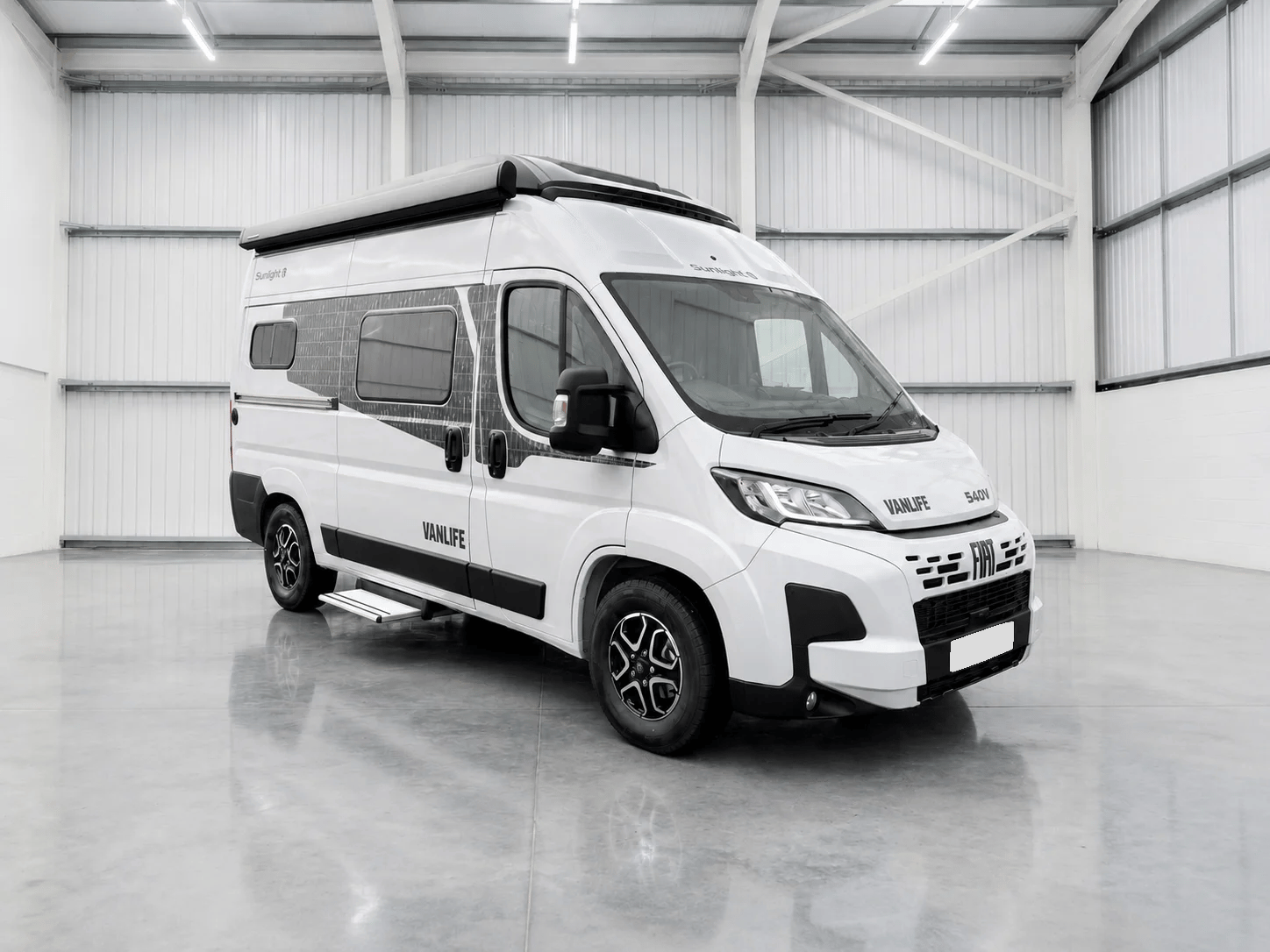
The camper you fall for is rarely the one you can afford. That gap is the whole reason Campervan.win exists. Right now we’re giving away the Sunlight Vanlife, worth around £65,000, and closing that gap is the point: capped entries so the odds stay honest, £10 a ticket, a maximum of five per person, £500 to a UK charity from every full draw, the winner picked by a public randomness beacon anyone can re-check, and one person driving away in the van itself.
Enjoyed this post?
Get more honest campervan guides like this one in your inbox.
You’re in!
Check your inbox. We’ve just sent you a welcome email.

About the author
Arthur
Arthur writes buying guides, comparisons, and in-depth explainers to help readers choose the right campervan or motorhome with confidence.
Keep Reading
Related Reading
Thoughtful articles that build on what you’ve just read.
New & Noteworthy
12 min read
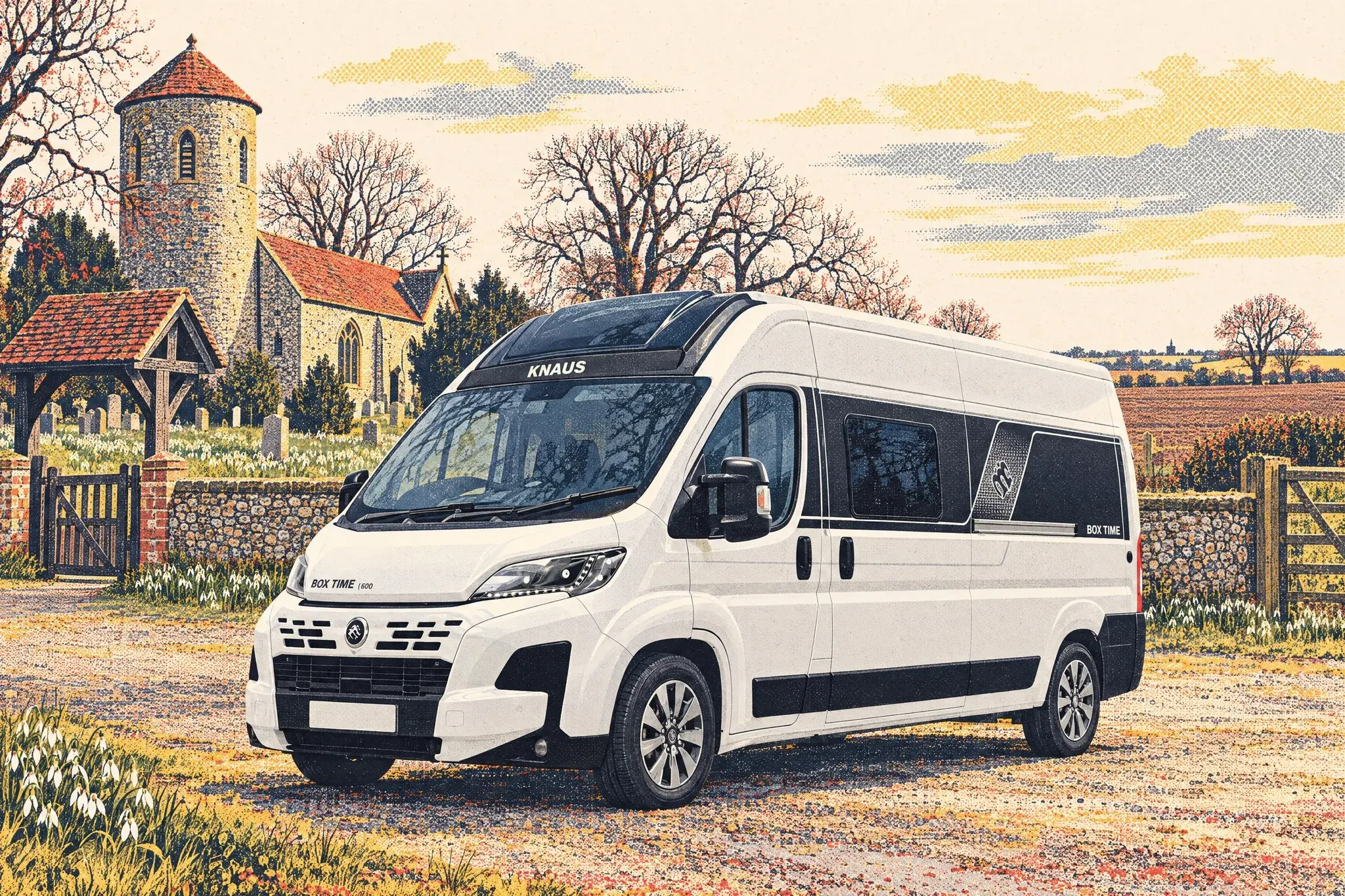
Knaus Boxtime 600 ME (2027): twin singles in 6 m, and the payload figure to question
Knaus's new Boxtime 600 ME squeezes two lengthways single beds into a 5.99 m van from £81,725. We lay out what that layout gives a couple, run the weight sums with Knaus's own figures, and explain why the 211 kg 'maximum payload' line needs a question before you sign.
New & Noteworthy
10 min read
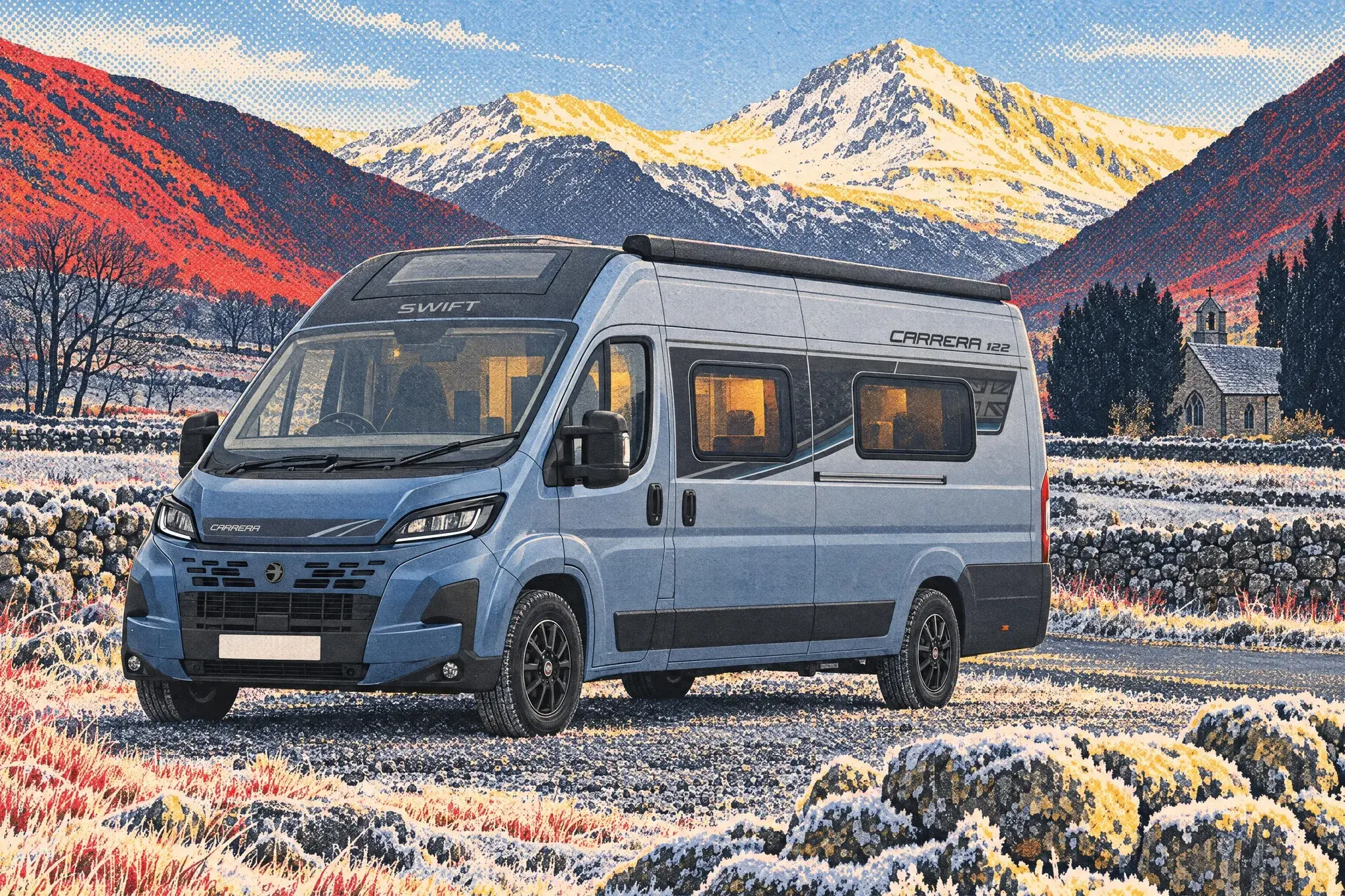
Swift Carrera goes gas-free for 2027: 340Ah lithium, diesel heat and induction cooking
Swift has taken the gas out of its Carrera campervan for 2027, swapping bottles for a 340Ah lithium battery, diesel heating and an induction hob. Here is what that means across a real UK year, how it compares with the cheaper Merlin, and the one question to ask at the NEC.
New & Noteworthy
10 min read
British campervan converters at the NEC 2026: who builds on what, and for how much
A stand-by-stand map of the British campervan converters at the Motorhome and Caravan Show 2026: the vans they build on, their from-prices, seats, roofs and lead times, plus the four questions to put to every one of them.
New & Noteworthy
9 min read
Plug-in hybrid campervans at the NEC: what a PHEV gives you and why full EVs are rare
Four UK converters have hybrid campers at or around the Motorhome and Caravan Show this October, while fully electric campers remain scarce. Here is what a plug-in hybrid camper does well, what the sellers rarely tell you, and the questions to ask on the stand.