
Malibu Genius Performance 4x4: the off-grid Mercedes 4x4 camper, and what it costs

Written by
Felix
Felix covers campervan technology, layouts, and modern conversions, with a focus on design-led thinking and practical performance
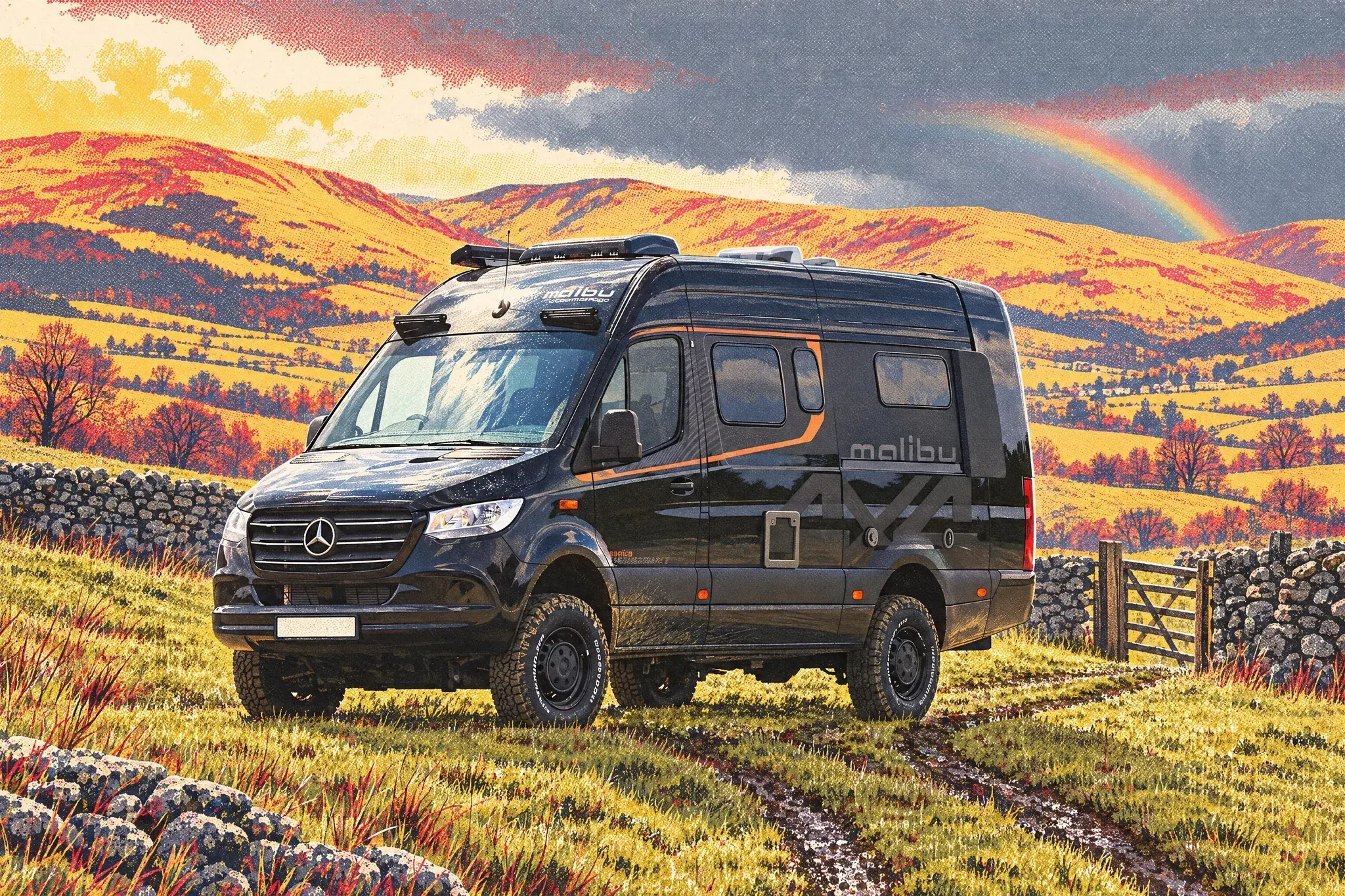
The short answer
The Malibu Genius PERFORMANCE 4X4 is a panel-van campervan built on a light-commercial base with an added all-wheel-drive system and an upgraded off-grid spec, meaning a larger lithium leisure battery, more solar and self-sufficient heating and water. It is aimed at people who want to leave campsites behind and reach colder, rougher or more remote pitches, not at hardcore off-roading.

Updated 6 October 2026: we have corrected the Sunlight IBEX price mentioned below to Sunlight's published UK price.
Every few seasons a van comes along that makes people stop and stare at the spec sheet. The Malibu Genius Performance 4x4 is one of them. It takes a Mercedes Sprinter, adds genuine factory four-wheel drive, stretches the body for a clever rear layout, and loads it with the kind of lithium power and diesel heating that lets you park well away from hook-up posts for days at a time. On paper it sounds like the answer to every wild-camping daydream.
The reality is more interesting, and more nuanced, and now that the full specification and UK price are confirmed we can be properly specific about it. So let's go through what this van actually is, what the four-wheel drive and the off-grid label really buy you, the weight and licence catch that trips people up, and what it costs in the UK. The aim is the honest version: genuinely capable in the ways that matter, with a couple of trade-offs worth knowing before the idea runs away with you.
What the Genius Performance 4x4 actually is
Malibu is a German brand within the wider Carthago group, pitched as the slightly more value-minded sibling to Carthago's premium motorhomes, and its range runs from conventional two-room vans like the Malibu Van first class to the Genius van campers (the panel-van-derived vehicles the trade calls Kastenwagen). The headline model here is the Genius Performance 4x4 641 LE, and it is worth naming precisely, because the detail is the whole story.
It is built on the Mercedes-Benz Sprinter 419 CDI, with a 2.0-litre diesel producing 190 hp through Mercedes' nine-speed automatic gearbox. Crucially, the four-wheel drive is Mercedes' own factory all-wheel-drive system, a permanent set-up derived from the same "torque on demand" technology Mercedes uses elsewhere, not a specialist aftermarket conversion bolted on afterwards. That matters for confidence and for servicing: it is engineered and warranted as part of the base vehicle rather than added by a third party. The "Performance" in the name is not a separate trim grade; it is Malibu's label for this uprated four-wheel-drive, high-energy package.
The clever structural trick is what makes the 641 LE more than just a Sprinter with traction. Malibu extends the standard 5.93-metre Sprinter to 6.41 metres with a moulded fibreglass (GRP) rear section, and uses that extra length for two lengthways single beds at the back, sitting above a large rear garage of around 1,400 litres. So you get fixed beds you never have to make up, and a cavernous, properly tall load bay underneath for bikes, kit, or the paraphernalia of a long trip. It is a genuinely thoughtful piece of packaging, and it is the reason this van can carry the off-grid hardware and your gear without feeling like a compromise.
What "4x4" really means on a van like this
This is the part most likely to be misunderstood, so let's be straight about it. All-wheel drive on a campervan is not the same as a proper off-road expedition truck, even when, as here, it is a proper factory system. You are not going to be crawling over boulders or fording rivers. What the Mercedes 4x4 gives you is traction, and that is genuinely useful in the situations real touring throws at you:
- Wet grass and muddy pitches. The single most common reason a van gets stuck is a soft field after rain. Power to all four wheels makes a huge difference here.
- Loose gravel and forest tracks. Many of the best quiet park-ups are at the end of an unsealed track. All-wheel drive takes the anxiety out of the last mile.
- Snow and ice. For winter touring in the Alps, the Highlands or anywhere with a real cold season, traction on a slippery slope is reassuring rather than dramatic.
- Steep, low-grip launches. Slipways, sloped car parks and that one diagonal climb out of a campsite all become non-events.
Notice what is missing from that list: extreme terrain. A 6.4-metre, high-roofed, fully-loaded van is heavy and long, and it has limited ground clearance compared with a purpose-built off-roader, with standard road tyres rather than chunky all-terrain rubber. The factory four-wheel drive is excellent insurance for keeping you moving when grip runs low; it is not a licence to go rock-crawling. Set your expectations there and you will be delighted. The advantage of it being Mercedes' own permanent system, rather than a bolt-on, is that it behaves predictably and is supported by the regular dealer network, which is exactly what you want in something you will rely on a long way from home.
Think of the all-wheel drive as a confidence upgrade for the places normal campervans hesitate, not as a way to turn the van into something it isn't.
The off-grid side: what "Performance" buys you
The more compelling story for many buyers is the off-grid specification, and this is where the Performance package earns its name. Being able to drive somewhere remote is only half the dream; the other half is staying there comfortably. That comes down to four systems working together, and Malibu has specified the big two generously.
Electrical power
Off-grid living rises or falls on your battery and how you recharge it, and the Genius Performance 4x4 is set up for genuine self-sufficiency: it carries two 150 amp-hour lithium batteries, 300 amp-hours in total, rather than a single small lead-acid unit. Lithium matters because it gives you far more usable capacity for the same weight and copes better with being drained and recharged daily, and 300 amp-hours is a serious bank for a van this size. Recharging off-grid comes from three sources: solar on the roof, charging from the engine as you drive, and mains hook-up when you find it. The van comes pre-wired for solar, so confirm the panel wattage actually fitted to the specific vehicle, along with whether it has a DC-to-DC charger for fast top-ups while driving, because those two numbers, with the battery capacity, decide how long you can really last between hook-ups. With 300 amp-hours of lithium as the foundation, the bones are there for properly extended off-grid stays.
Heating and hot water
For a van meant to go to cold and remote places, heating is not a luxury, it is the whole point. The Genius Performance 4x4 uses a Truma Combi 6 D+E system, which is the combined heating and hot-water unit running on diesel and electric. That is the right choice for off-grid use: the diesel draws from the van's own fuel tank, so you are not constantly hunting for gas refills, and it sips fuel slowly, while the electric element lets you heat cheaply when you are plugged in. It is one of the details that tells you this van is built for genuine cold-weather, away-from-the-post touring rather than just summer weekends.
Water and waste
Fresh and waste water tank sizes set your real off-grid limit as much as the battery does, so confirm the exact capacities for the specific build, and ask whether the tanks are insulated or heated. That last point matters if you genuinely plan to be out in the cold, because a frozen water system ends the adventure quickly, and it is exactly the sort of winter detail a van like this should get right.
Insulation and winter readiness
The body itself needs to keep heat in. Look for double-glazed windows, a properly insulated floor, and ducted warm air reaching both the bed and the living area. A van that is theoretically capable of remote winter trips but cold and damp inside will not get used that way for long, so it is worth checking the winter detailing as carefully as the headline battery and heating figures.
The spec, at a glance
| Specification | Detail |
|---|---|
| Model | Malibu Genius Performance 4x4 641 LE |
| Base vehicle | Mercedes-Benz Sprinter 419 CDI |
| Engine | 2.0-litre diesel, 190 hp |
| Gearbox | 9-speed automatic (9G-Tronic) |
| Drive | Factory permanent four-wheel drive |
| Length | 6.41 m (extended from the 5.93 m Sprinter via a GRP rear section) |
| Beds | Two lengthways single beds at the rear |
| Rear garage | Large load bay, around 1,400 litres, beneath the beds |
| Leisure battery | 2 x 150 Ah lithium (300 Ah total) |
| Heating / hot water | Truma Combi 6 D+E (diesel and electric) |
| Solar | Pre-wired (confirm fitted panel wattage) |
| Plated weight | 4,100 kg (needs a C1 licence) |
| UK price | from around £128,000 (typical build nearer £133,000 to £134,000 on the road) |
Living space and layout
Because this starts as a panel-van-derived vehicle, the interior space is defined by the van's own dimensions, but the GRP rear extension changes the maths in the buyer's favour. The 641 LE's layout centres on those two lengthways single beds across the back, with the big garage beneath, a kitchen along one side and a combined washroom. The twin single beds are a sensible choice for a couple: each person gets their own made-up bed they can fall straight into, with no nightly rebuild, and the beds can usually be bridged into a larger sleeping area if you prefer. The high roof gives proper standing room through the living area, which transforms how a wet day feels.
The trade-off compared with a big coachbuilt motorhome is the usual one: you get a more compact, more car-like vehicle that is easier to drive, easier to park and far less conspicuous when you pull up somewhere quiet, in exchange for less sheer floor area. But the rear-bed-over-garage design is exactly how you square that circle, because the single most useful thing on a long trip is somewhere generous to put all the gear, and the 1,400-litre garage swallows bikes, boards, chairs and boxes that would otherwise clutter the living space. For two people travelling with a lot of kit, this layout is close to ideal, and it is the heart of why the 641 LE makes sense as the off-grid, go-further model.
Weight, payload and your driving licence
This is the part that catches people out, and it deserves real attention, because the Genius Performance 4x4 is not a 3,500-kilogram van. Adding the factory four-wheel-drive system, the 300 amp-hours of lithium, the heating and the bigger body all adds weight, and Malibu plates this model at 4,100 kilograms. That has two important consequences in the UK.
- Licence. A standard category B car licence (for anyone who passed their test on or after 1 January 1997) covers vehicles only up to 3,500 kilograms. At 4,100 kilograms, the Genius Performance 4x4 needs the C1 entitlement, which involves a medical and a separate test. Drivers who passed before 1 January 1997 usually hold C1 under grandfather rights, but it is worth checking the categories on your own licence rather than assuming. This is not a footnote: if you do not hold C1 and are not willing to get it, this van is not an option, full stop.
- Payload. The flip side of the higher plating is good news: at 4,100 kilograms there is meaningfully more payload to play with than a 3,500-kilogram van would offer once it carries the same kit, which is part of why Malibu plates it there. Even so, payload is what is left for your water, gas, passengers and belongings, so ask for the exact figure in writing and do the sums for how you actually load up, especially with a big garage that positively invites you to fill it.
The honest summary is that the 4,100-kilogram plate is sensible engineering for a van carrying this much capability, but it changes who can drive it. Settle the C1 question before you fall for anything else.
Driving and using it in the UK
On the road, the Genius Performance 4x4 has one big advantage over many import-flavoured campers: it is a Mercedes Sprinter underneath, which means a mainstream, widely-supported base with a strong UK dealer and parts network. The 190 hp diesel and the smooth nine-speed automatic make it relaxed to drive for its size, and the factory four-wheel drive adds security rather than drama. A few practical realities to plan for, though. Fuel: a big, tall, all-wheel-drive van is no sipper, so budget for modest real-world diesel economy, especially loaded on a motorway. Dimensions: at 6.41 metres and high-roofed, it is too tall for the typical car-park height barrier and long enough to demand awareness on narrow lanes, so check heights and widths before you commit to any barrier or tight pitch. Clean-air zones: a current Sprinter should meet today's UK low-emission-zone standards, but rules vary by city and change, so check the specific zone rather than assuming. None of it is a deal-breaker; it is the normal price of a large, capable van, eased by the reassurance of the Mercedes base.
What it costs in the UK
Now the question everyone actually wants answered, with real numbers rather than a shrug. The Genius Performance 4x4 is sold new in the UK through Malibu's dealer network, which runs to around fifteen outlets, and it sits firmly at the premium end of the van-camper market.
The official Malibu list price for the 2026 641 LE starts from around £128,000. In practice, a typical new build on the road lands closer to £133,000 to £134,000 once delivery and options are added: one UK dealer currently lists a new 2026 example at £133,765 on the road. For context, that is comparable to other factory-four-wheel-drive, Mercedes-based off-grid vans, and it reflects exactly what you are buying: a genuine factory 4x4 system, a 300 amp-hour lithium set-up, diesel-electric heating and that clever extended body, all on a premium base. As ever, treat these as a guide rather than a quote, because prices, specifications and options move; confirm the current figure for the exact van with a UK Malibu dealer before you commit.
It is worth being clear-eyed that this is a lot of money, comfortably more than a conventional 3,500-kilogram panel-van camper. What justifies it is the combination of genuine all-wheel-drive capability, serious off-grid hardware and the practical rear-bed-and-garage layout, on a Mercedes base you can have serviced anywhere. Whether that is worth it to you comes down to the next question.
Who this van is genuinely for
The Genius Performance 4x4 is not trying to be all things to all people, and that focus is its strength. It makes the most sense if you recognise yourself here:
- You want to leave the campsite behind. If your idea of a good trip is a quiet forest clearing or a remote coastal pull-in rather than a serviced pitch, the off-grid spec earns its keep.
- You travel in the shoulder seasons and winter. The factory traction and the diesel heating combine to make autumn and winter touring realistic rather than a battle.
- You travel as a couple with a lot of kit. The twin single beds and the huge garage are made for two people who bring bikes, boards or boots.
- You hold (or will get) a C1 licence. At 4,100 kilograms, this is non-negotiable.
- You will actually use the capability. Four-wheel drive and 300 amp-hours of lithium are worth paying for only if your trips genuinely call for them.
If you mostly stay on serviced sites with hook-up, on tarmac, in the warmer months, and you have only a standard car licence, you are looking at the wrong van: you would be paying for capability you cannot fully use and a licence category you do not hold. A simpler, lighter, 3,500-kilogram camper would suit you better and leave more in the bank. There is no shame in that; it is just a question of matching the van to the trips you really take. And if the go-anywhere idea appeals but you want a lighter, keener-priced take on it, our Sunlight Ibex review looks at a VW-based 4x4 camper listed at £86,690.
What to check before you buy
Now that the headline specification is confirmed, the due-diligence list is less about "what even is this van" and more about pinning down the specific vehicle and your own situation:
- Confirm your C1 licence (or your willingness to gain it), because the 4,100-kilogram weight makes this the first hurdle, not the last.
- Get the real payload figure in writing and decide whether it works for how you load up, garage and all.
- Note the fitted solar wattage and whether there is a DC-to-DC charger, to judge true off-grid endurance alongside the 300 amp-hours of lithium.
- Confirm the fresh and waste water tank sizes and whether they are insulated or heated for winter use.
- Check height and length against your driveway, your usual ferries, and the car parks and barriers you actually use.
- Confirm servicing, parts and warranty support, easier here than on many imports thanks to the Mercedes base, but still worth establishing for the habitation side.
- Get the official, on-the-road price in writing, including VAT and any options, before comparing it to anything you read here.
The honest bottom line
The Malibu Genius Performance 4x4 is a thoughtful, genuinely capable answer to a specific question: how do you get a comfortable, self-sufficient campervan to the quieter, colder, slightly trickier places, with a couple's worth of beds and a serious amount of gear, without towing a big motorhome up a muddy track? The Mercedes factory four-wheel drive, the 300 amp-hour lithium bank, the diesel-electric heating and the clever extended body answer that well, and the Sprinter base keeps it usable and supportable the rest of the time.
Just keep your expectations grounded. It is a traction and self-sufficiency van, not an off-road expedition vehicle, and at 4,100 kilograms it asks for a C1 licence and a budget that starts around £128,000 and climbs from there. Confirm the details on the actual van, sort the licence, and be honest with yourself about how often you will use what you are paying for. Get that right and this is one of the more convincing go-anywhere, stay-anywhere campervans you can buy.
Common questions
Is the Malibu Genius PERFORMANCE 4X4 a proper off-road vehicle?
No. The all-wheel drive gives you reliable traction on wet grass, gravel tracks, snow and steep launches, which covers most real touring situations. It is not designed for extreme off-road terrain, rock crawling or river crossings, and a converted panel van has limited ground clearance.
How long can it stay off-grid without a hook-up?
That depends on its battery capacity, solar wattage, whether it charges from the engine, and the size of its water tanks. A well-specified version with a large lithium battery, roof solar and diesel heating can comfortably manage several days, but always ask for the actual figures for the specific van.
Will I need a special licence to drive it?
If the van is plated at or under 3,500kg and you passed your car test on or after 1 January 1997, a standard category B licence covers it. Heavier versions need additional entitlement, so check the van's gross weight against your licence before buying.
Does adding 4X4 and off-grid kit reduce the payload?
Yes. An all-wheel-drive system, a large lithium battery, extra solar and bigger tanks all add weight, which leaves less spare payload for passengers, water and your own gear. Always get the payload figure in writing and check it works for how you load the van.
What base vehicle is it built on?
Panel-van campers like this are built on various light-commercial donor vans depending on the model year and market, and the all-wheel-drive conversion is usually fitted by a specialist. Rather than rely on general information, confirm the exact base vehicle, engine and drivetrain in writing for the specific van you are considering.
The reachable bit
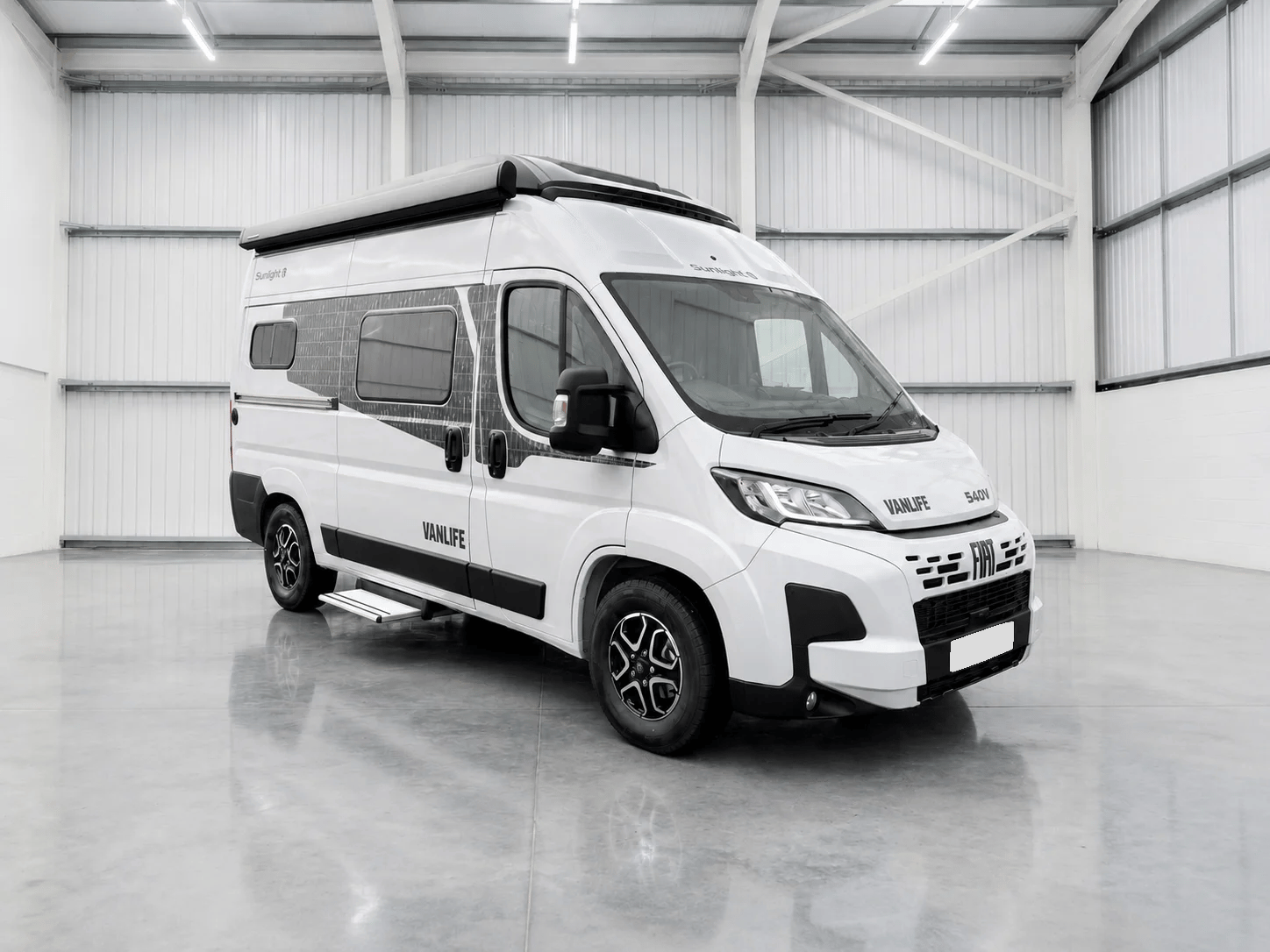
The camper you fall for is rarely the one you can afford. That gap is the whole reason Campervan.win exists. Right now we’re giving away the Sunlight Vanlife, worth around £65,000, and closing that gap is the point: capped entries so the odds stay honest, £10 a ticket, a maximum of five per person, £500 to a UK charity from every full draw, the winner picked by a public randomness beacon anyone can re-check, and one person driving away in the van itself.
Enjoyed this post?
Get more honest campervan guides like this one in your inbox.
You’re in!
Check your inbox. We’ve just sent you a welcome email.

About the author
Felix
Felix covers campervan technology, layouts, and modern conversions, with a focus on design-led thinking and practical performance
Keep Reading
Related Reading
Thoughtful articles that build on what you’ve just read.
New & Noteworthy
12 min read
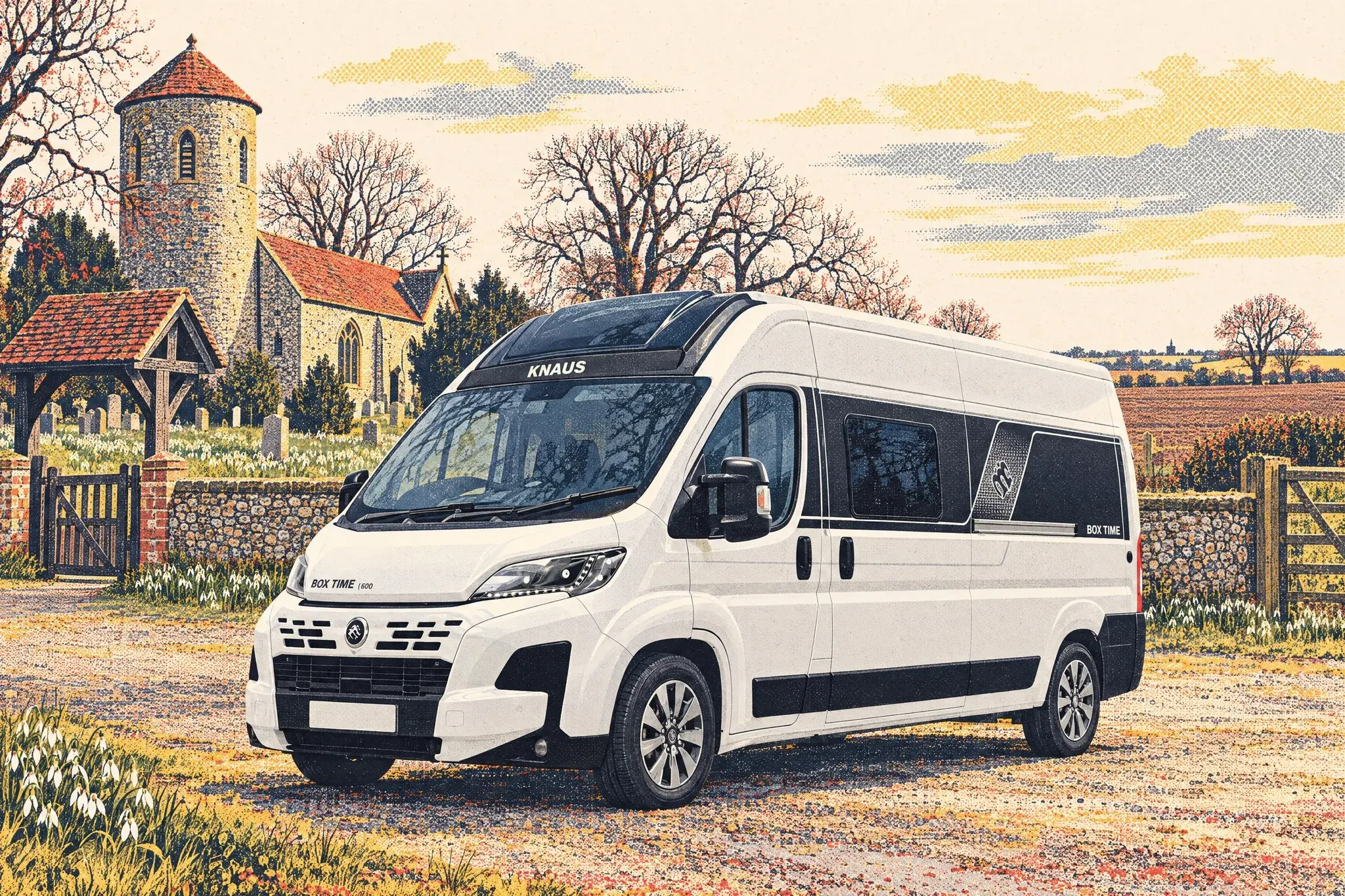
Knaus Boxtime 600 ME (2027): twin singles in 6 m, and the payload figure to question
Knaus's new Boxtime 600 ME squeezes two lengthways single beds into a 5.99 m van from £81,725. We lay out what that layout gives a couple, run the weight sums with Knaus's own figures, and explain why the 211 kg 'maximum payload' line needs a question before you sign.
New & Noteworthy
10 min read
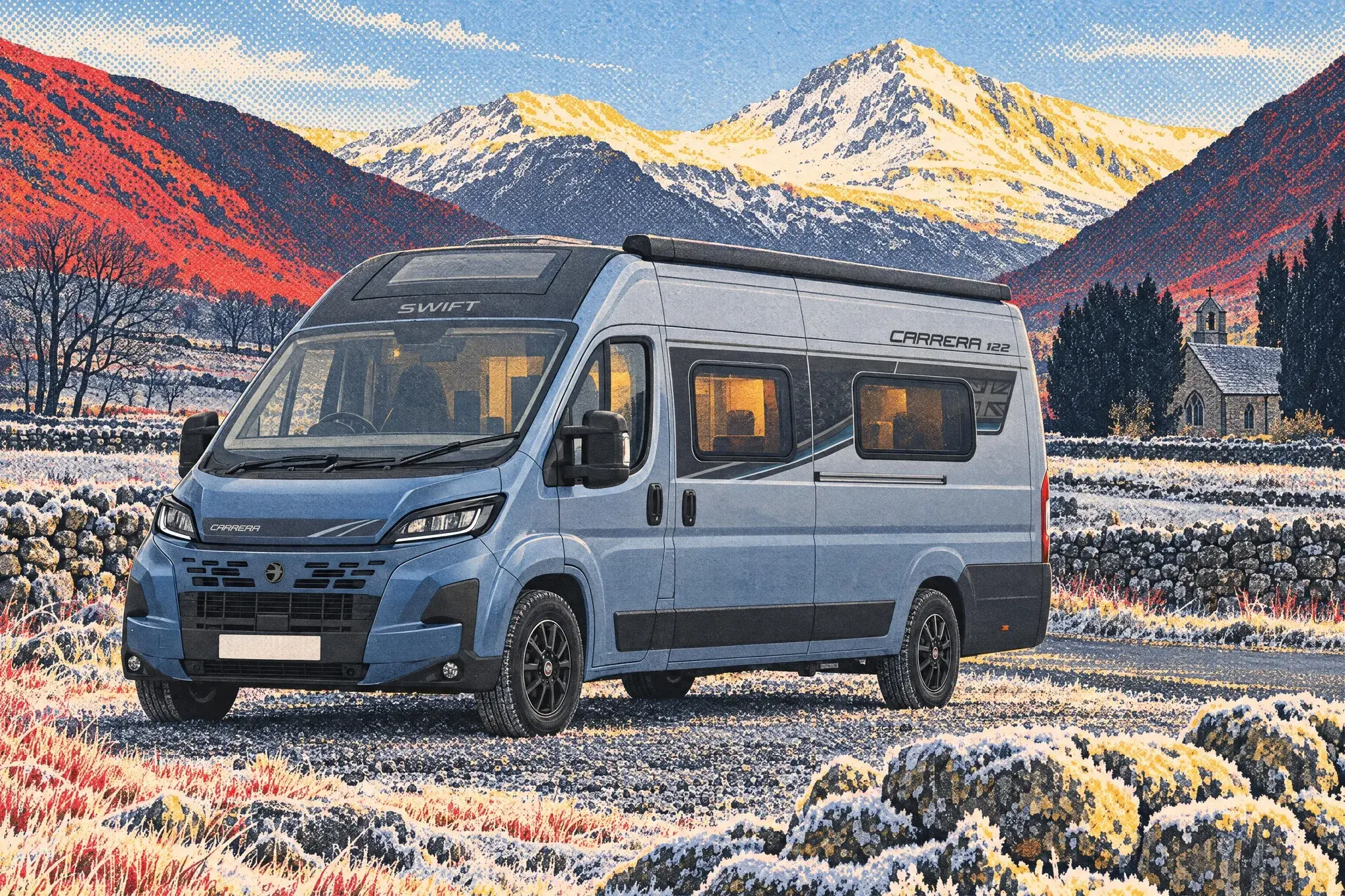
Swift Carrera goes gas-free for 2027: 340Ah lithium, diesel heat and induction cooking
Swift has taken the gas out of its Carrera campervan for 2027, swapping bottles for a 340Ah lithium battery, diesel heating and an induction hob. Here is what that means across a real UK year, how it compares with the cheaper Merlin, and the one question to ask at the NEC.
New & Noteworthy
10 min read
British campervan converters at the NEC 2026: who builds on what, and for how much
A stand-by-stand map of the British campervan converters at the Motorhome and Caravan Show 2026: the vans they build on, their from-prices, seats, roofs and lead times, plus the four questions to put to every one of them.

New & Noteworthy
9 min read
Plug-in hybrid campervans at the NEC: what a PHEV gives you and why full EVs are rare
Four UK converters have hybrid campers at or around the Motorhome and Caravan Show this October, while fully electric campers remain scarce. Here is what a plug-in hybrid camper does well, what the sellers rarely tell you, and the questions to ask on the stand.