
Piaggio Néo Campeur at around €70k: what a shower, heated cabin and 88L tank in 4.73m really mean

Written by
Felix
Felix covers campervan technology, layouts, and modern conversions, with a focus on design-led thinking and practical performance
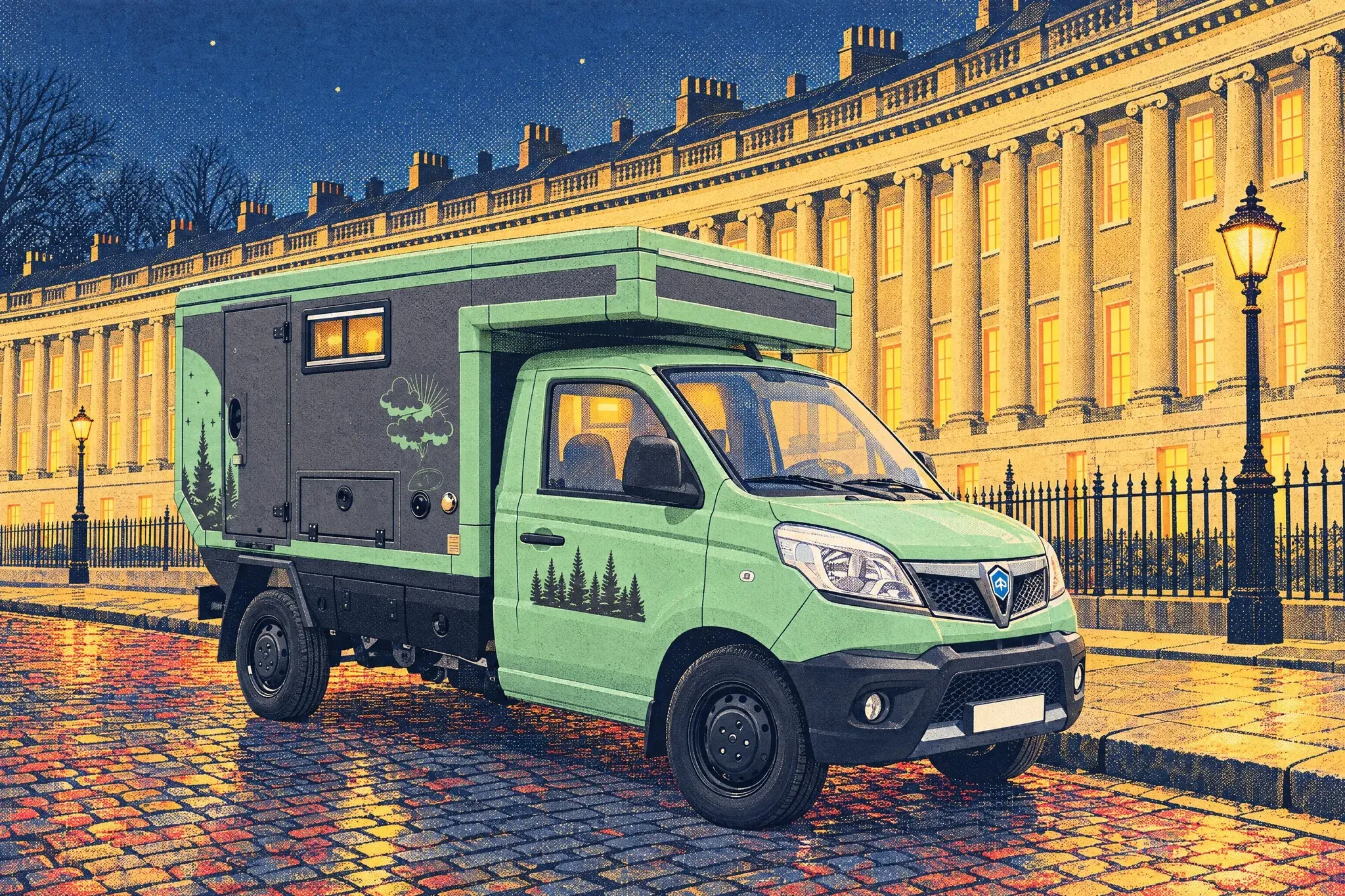
The short answer
The Piaggio Néo Campeur is a compact camper reported at around 4.73m long and roughly €70,000 (about £60,000 depending on exchange rates). Its headline features, a shower, a heated cabin and an 88-litre fresh-water tank, matter because they turn a small, easy-to-park van into something you can genuinely use in cold weather and off-grid for several days, not just a fair-weather day van.

A camper you can park like a normal car, use through a British winter, and go a few days without a tap. That is the promise behind the numbers attached to the Piaggio Néo Campeur: a shower, a heated cabin and an 88-litre fresh-water tank, all inside a van reported at just 4.73 metres, for a price of roughly €70,000.
Numbers on a spec sheet are easy to skim past. But those three in particular change how a small camper actually feels to live in. Below is an honest look at what each one really means day to day, what the length gives and takes away, and how to read that price if you are watching from the UK.
What the Néo Campeur actually is
In plain terms, it is a compact camper. At a reported 4.73 metres long it sits well below the length of most established camper conversions, closer to the footprint of a large estate car or family SUV than a traditional motorhome. That short body is the whole point of the vehicle, and everything else is designed around keeping the practical kit while giving up as little of that compactness as possible.
One honest caveat before we go further. Compact campers like this are typically built on a light-commercial or small-van base, and manufacturers change donor vehicles more often than you would think. Unless you have seen the exact documented base for the version you are looking at, it is worth confirming the chassis, the drivetrain and the unladen weight directly rather than assuming. Those three things affect how it drives, how much you can load, and whether it fits your licence, so they are worth a phone call before anything else.
What we can talk about with confidence is what the headline features mean, because the physics of water, heat and space are the same whatever badge is on the front.
What 4.73 metres really means
Length is the single biggest lifestyle decision in any camper, and 4.73m puts this firmly in the small camp. For comparison, a lot of popular fixed-roof campervans sit closer to 4.9m to 5.0m, and coachbuilt motorhomes often start above 5.5m. Shaving off even 20 to 30 centimetres sounds trivial until you are trying to park.
The upsides
- Everyday parking. At under 4.8m you can use most standard car parking bays, multi-storey car parks (height permitting) and town-centre spaces without stress. That is the difference between a camper you use only on trips and one you can actually run as a second car.
- Driving confidence. A shorter, narrower vehicle is far less intimidating on single-track lanes, in supermarket car parks and on ferries. Nervous drivers get comfortable faster.
- Access to the good spots. Plenty of the best UK park-ups, small coastal car parks and rural pubs are effectively closed to anything over about 5.5m. A compact camper simply fits.
The trade-offs
Space is conserved, not created. In 4.73m you do not get a fixed bed, a big wardrobe and a lounge all at once. You get clever, convertible space where the bed becomes the seating, the table folds away and the shower doubles as something else when it is dry. Compact campers reward tidy people who are happy to convert the interior morning and night. If you want to leave the bed made and sprawl, a van this short will frustrate you.
A shower in a van this small: what to expect
Fitting any kind of shower into 4.73m is genuinely impressive, and it is worth understanding what "a shower" means at this size, because it is rarely a separate tiled cubicle.
In compact campers, the shower is almost always one of two things:
- A wet room, where the toilet compartment is fully sealed and the whole small room becomes the shower. You wash standing over the loo, then wipe or squeegee everything dry afterwards.
- A convertible or slide-out arrangement, where a curtain or folding wall creates a temporary wet space that packs away when not in use.
Both work. Neither is a rainfall shower at home. The honest reality is that an onboard shower in a small camper is best thought of as a proper rinse, a genuine luxury when you are off-grid, wild-parked or arriving muddy from a walk, rather than a daily 10-minute soak. Used sensibly it transforms comfort. Used like a home shower it will empty your water tank and fill your grey tank alarmingly fast.
The value of an onboard shower is not the length of your wash. It is the freedom to stop caring whether the campsite has open facilities.
That freedom matters more than people expect. It means you can choose quieter, cheaper, facility-light stopovers, and you are not planning your day around shower blocks.
The heated cabin: why this is the feature that extends the year
Plenty of small campers are lovely from May to September and near-useless in January. A heated cabin is what turns a fair-weather day van into something you can use across a British autumn and winter, and it is arguably the most valuable of the three headline features.
Heating in campers usually comes in a few forms, and it is worth knowing which you are getting:
- Diesel or gas air heating blows warm air around the living space and warms up quickly. It is the most common way to make a compact camper properly usable in the cold.
- Water-based heating systems that warm the van and the hot water together, more common in larger motorhomes.
- Electric heating, which is comfortable on hook-up but a heavy drain off-grid.
What "heated cabin" should mean in practice is a van that holds a comfortable temperature overnight in single-digit weather without you burying yourself under three duvets. Confirm the heat source and, crucially, how it is fuelled, because that dictates your running costs and how long you can stay warm without plugging in or refilling.
Why heating and insulation go together
A heater is only half the story. Warmth you generate leaks straight out through thin walls, single-glazed windows and gaps around the roof. When you look at any camper claiming winter capability, ask about insulation and glazing as much as the heater itself. A modest heater in a well-insulated van beats a powerful one in a draughty box every time. This is also where condensation lives: warm, damp air from breathing and cooking hits cold surfaces and drips. Good ventilation and insulation matter as much as raw heat output.
The 88-litre water tank: doing the real maths
Here is where the Néo Campeur's numbers get genuinely interesting. Many compact campers carry surprisingly little fresh water, sometimes as little as 20 to 30 litres, because water is heavy and space is tight. A reported 88-litre fresh tank is generous for this size, and it is the feature that makes the shower usable rather than theoretical.
So what does 88 litres actually buy you? Rough real-world daily use for two people living carefully looks something like this:
- Drinking and cooking: around 4 to 6 litres a day.
- Washing up: around 5 to 10 litres a day.
- Hand and face washing, teeth: a few litres.
- A short, sensible shower: often 10 to 20 litres each, depending on how disciplined you are.
Add that up and two people showering daily might get through roughly 40 to 60 litres a day, which means 88 litres is comfortably a couple of days of full use, or considerably longer if you shower at facilities some days and use the van's shower as a treat. Skip the daily showers and you can stretch it to the best part of a week.
One thing the spec sheet may not shout about: your grey water (waste) tank. Every litre you use has to go somewhere. If the fresh tank is 88 litres but the grey tank is much smaller, the grey tank becomes your real limit, because you cannot keep using water once you have nowhere to put the waste. Always check both numbers together, and always empty grey water responsibly at proper disposal points, never down a random drain or onto the ground.
What around €70,000 really buys
Roughly €70,000 converts to somewhere around £60,000 at typical recent exchange rates, though that figure moves, so treat it as a ballpark rather than a fixed price. For a UK buyer there are a few honest realities to sit with.
- Exchange rate and import. If the van is sold in euros and not through a UK dealer, the sterling cost depends on the rate on the day, plus any import, VAT and registration steps. That can add meaningfully to the headline number, and it is worth pricing properly before you fall in love.
- Availability. Some European compact campers are not officially sold in the UK, or arrive in small numbers. Servicing, parts and warranty support are much easier when there is a local network, so it is a fair question to ask early.
- What you are paying for. At this money you are paying for engineering into a small space. Fitting a shower, a proper heater and a large water tank into 4.73m is harder than fitting the same kit into a big motorhome, and that clever packaging is a real part of the cost.
Is it expensive? For a compact camper, it sits at the premium end. But price-per-metre is the wrong way to judge these vans. The right question is whether the small footprint plus genuine four-season, off-grid ability is worth it to you, because that specific combination is rare and it is exactly what commands the price.
Licence and weight: the quick checks that matter
Compact campers like this are usually built to stay under 3,500kg, which means a standard UK car licence (category B) covers them for most drivers. That is one of the quiet advantages of going small. Do confirm the actual maximum authorised mass and, more importantly, the payload, the spare weight left for you, your water, your gear and your passengers once the van is built.
Payload is where small campers catch people out. Fill an 88-litre water tank and you have already added 88kg. Add two adults, bedding, food, bikes and kit, and a modest payload disappears fast. Ask for the figure in writing and do the sum honestly before you buy.
Who this kind of camper suits
A van built on these priorities, small outside, surprisingly capable inside, is a very particular tool. It suits:
- Couples or solo travellers who value driving and parking ease above interior sprawl.
- People who want to use a camper year-round, not just in summer.
- Anyone who wants to wild-park and stay off-grid for a few days without hunting for facilities.
- Buyers happy to convert the living space morning and night in exchange for a van they can use as everyday transport.
It suits less well anyone who wants a fixed made-up bed, generous storage, or room for a family of four to lounge in the wet. Those things need length, and length is exactly what this design trades away.
The bottom line
The clever bit about the Piaggio Néo Campeur is not any single feature. It is the combination. A shower, a heated cabin and an 88-litre tank are each ordinary on their own. Packed together into 4.73m, they turn a small, easy van into one you can genuinely live in, in cold weather, away from facilities, for several days at a stretch. That is a rare and useful trick.
Just go in clear-eyed. Confirm the base vehicle, the drivetrain, the weights and the payload directly rather than assuming. Check the grey tank as well as the fresh one. Price the sterling cost, import and servicing properly if it is a euro-priced import. Do that, and you will know exactly whether the compact, four-season freedom on offer is worth around €70,000 to you. For the right person, spending on space they will actually use rather than space they will only store, it very well might be.
Common questions
Is the Piaggio Néo Campeur available in the UK?
Some compact European campers are not sold officially through UK dealers, or arrive in very small numbers, so availability should be checked directly. If it is a euro-priced import, factor in exchange rates, VAT, registration and how easy servicing, parts and warranty support will be near you.
How many days can you go on an 88-litre water tank?
For two people showering daily, expect roughly two to three days, as full use with showers often runs to 40 to 60 litres a day. Skip the daily showers and use facilities sometimes and 88 litres can last close to a week. Your grey (waste) tank size can be the real limit, so check both.
Can you really shower comfortably in a 4.73m camper?
Yes, but it is usually a wet-room-style or convertible space rather than a separate cubicle, meaning you wash in a small sealed area and dry it afterwards. Treat it as a proper rinse and a genuine off-grid luxury rather than a long daily soak, and it transforms comfort without draining your water too quickly.
Is around €70,000 expensive for a compact camper?
It sits at the premium end for its size, roughly £60,000 depending on exchange rates. But price-per-metre is the wrong measure. You are paying for engineering a shower, proper heating and a large water tank into a very small footprint with year-round, off-grid ability, which is a rare combination.
Do you need a special licence to drive it?
Compact campers like this are usually built to stay under 3,500kg, so a standard UK category B car licence typically covers them. Always confirm the actual maximum weight and, importantly, the leftover payload for water, gear and passengers, as small campers can run out of spare weight quickly.
The reachable bit
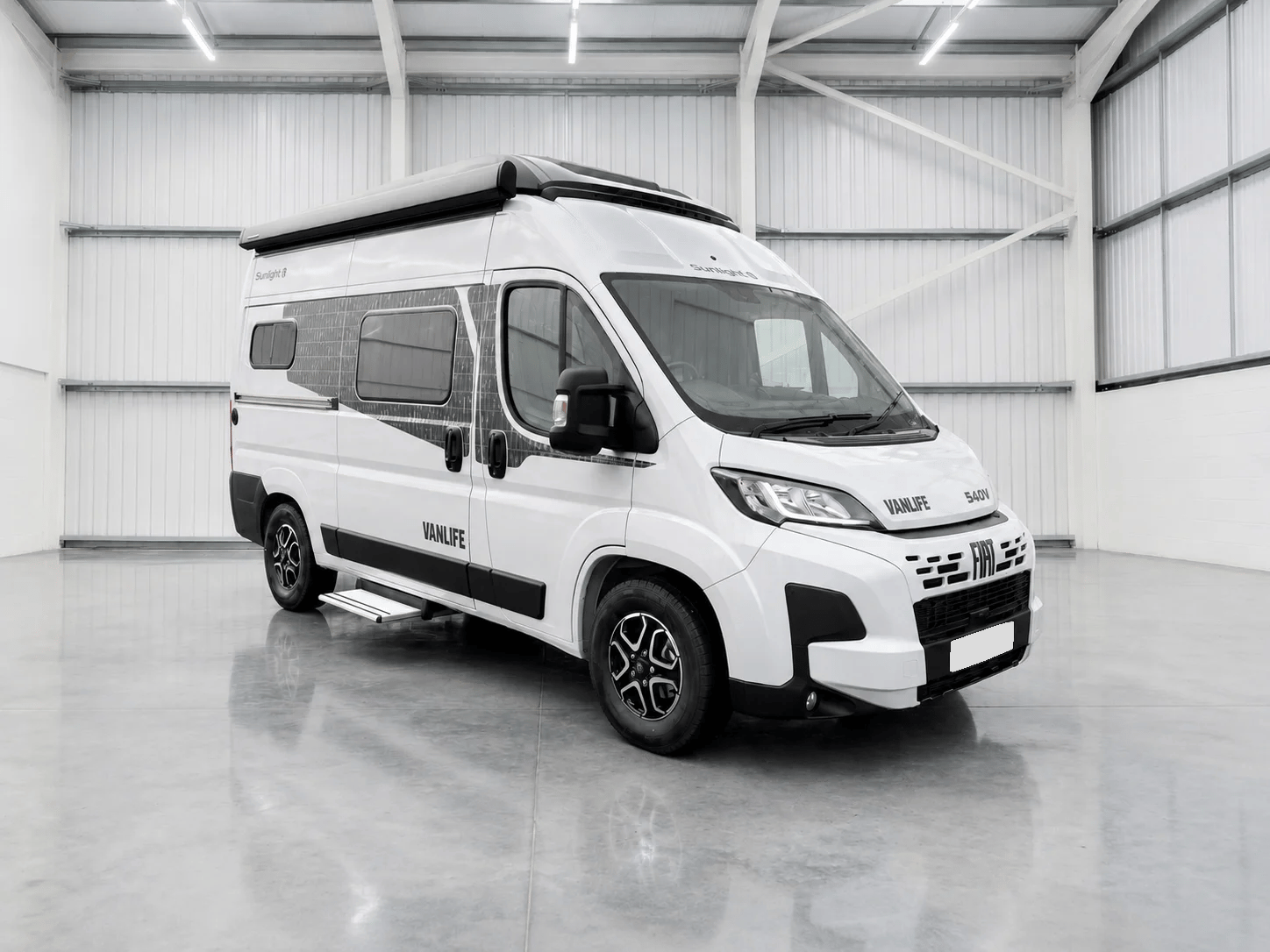
The camper you fall for is rarely the one you can afford. That gap is the whole reason Campervan.win exists. Right now we’re giving away the Sunlight Vanlife, worth around £65,000, and closing that gap is the point: capped entries so the odds stay honest, £10 a ticket, a maximum of five per person, £500 to a UK charity from every full draw, the winner picked by a public randomness beacon anyone can re-check, and one person driving away in the van itself.
Enjoyed this post?
Get more honest campervan guides like this one in your inbox.
You’re in!
Check your inbox. We’ve just sent you a welcome email.

About the author
Felix
Felix covers campervan technology, layouts, and modern conversions, with a focus on design-led thinking and practical performance
Keep Reading
Related Reading
Thoughtful articles that build on what you’ve just read.
New & Noteworthy
12 min read
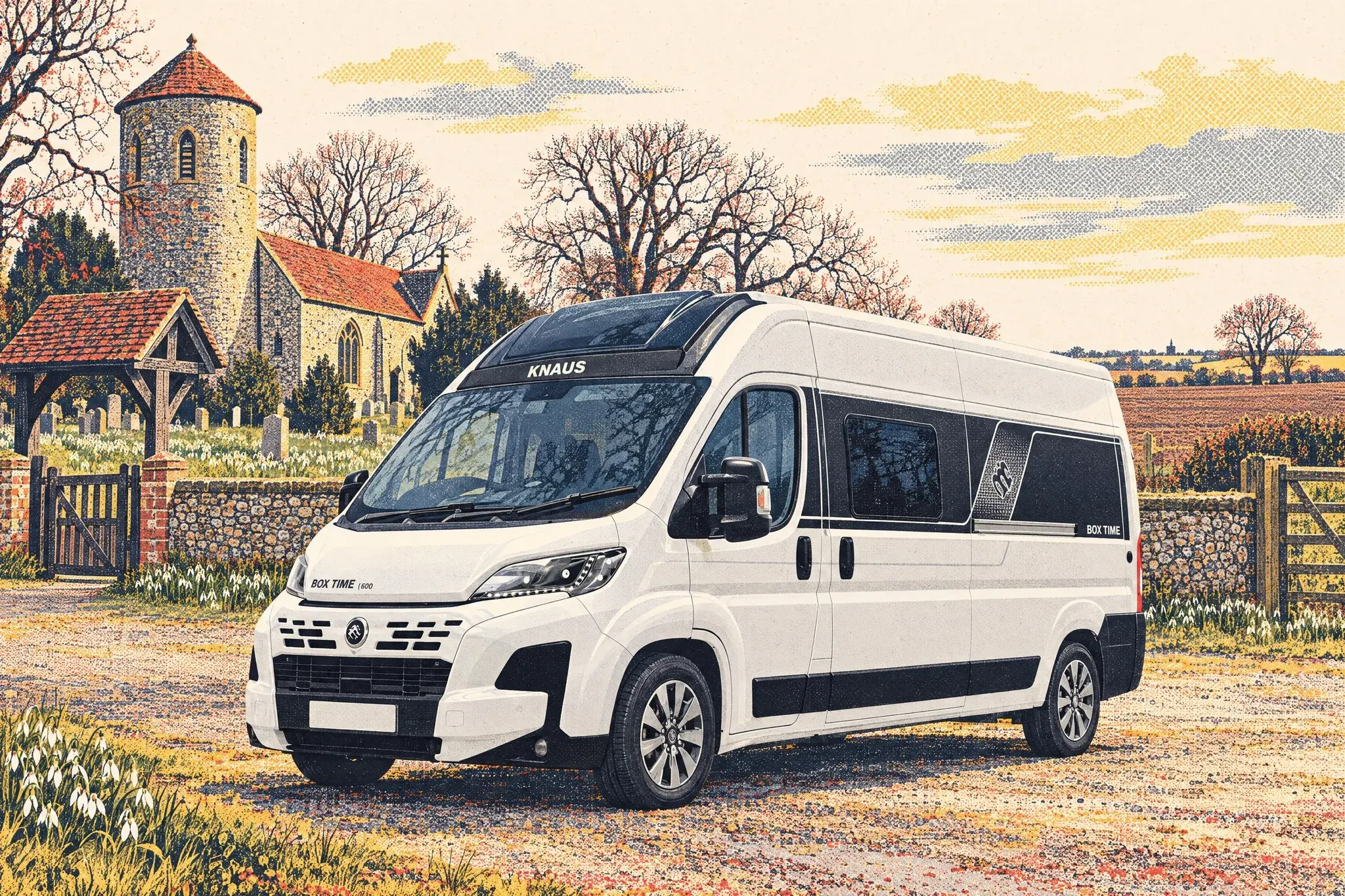
Knaus Boxtime 600 ME (2027): twin singles in 6 m, and the payload figure to question
Knaus's new Boxtime 600 ME squeezes two lengthways single beds into a 5.99 m van from £81,725. We lay out what that layout gives a couple, run the weight sums with Knaus's own figures, and explain why the 211 kg 'maximum payload' line needs a question before you sign.
New & Noteworthy
10 min read
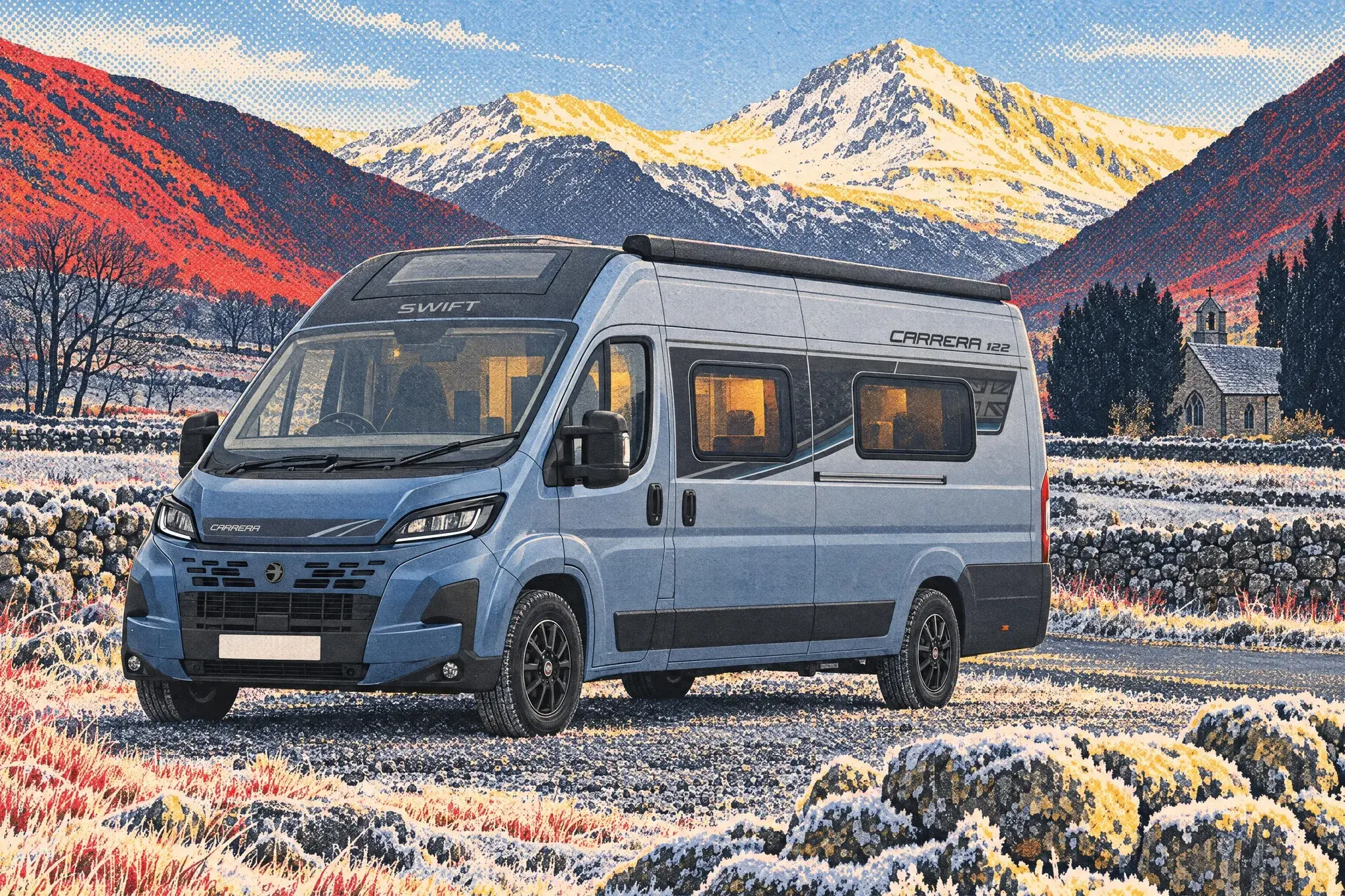
Swift Carrera goes gas-free for 2027: 340Ah lithium, diesel heat and induction cooking
Swift has taken the gas out of its Carrera campervan for 2027, swapping bottles for a 340Ah lithium battery, diesel heating and an induction hob. Here is what that means across a real UK year, how it compares with the cheaper Merlin, and the one question to ask at the NEC.

New & Noteworthy
10 min read
British campervan converters at the NEC 2026: who builds on what, and for how much
A stand-by-stand map of the British campervan converters at the Motorhome and Caravan Show 2026: the vans they build on, their from-prices, seats, roofs and lead times, plus the four questions to put to every one of them.

New & Noteworthy
9 min read
Plug-in hybrid campervans at the NEC: what a PHEV gives you and why full EVs are rare
Four UK converters have hybrid campers at or around the Motorhome and Caravan Show this October, while fully electric campers remain scarce. Here is what a plug-in hybrid camper does well, what the sellers rarely tell you, and the questions to ask on the stand.