
VW Grand California Dune: now on sale in the UK, with prices, spec and the 4x4 option

Written by
Arthur
Arthur writes buying guides, comparisons, and in-depth explainers to help readers choose the right campervan or motorhome with confidence.
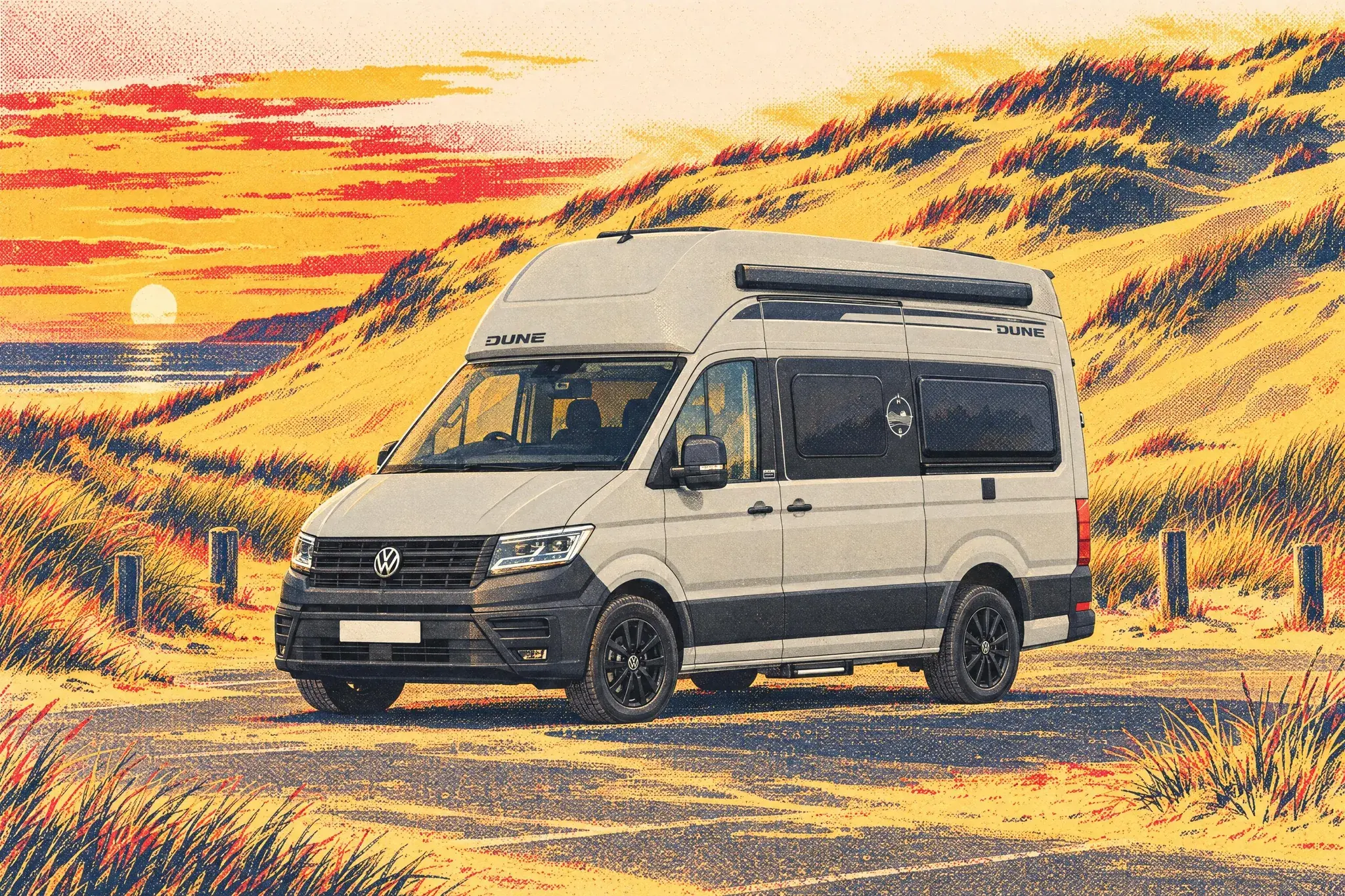
The short answer
The VW Grand California Dune is on sale in the UK. Volkswagen UK's price list of 30 September 2026 puts it at £85,408 for the 600 at 3.5 tonnes, £86,080 for the 600 at 3.88 tonnes, £88,186 for the front-drive 680 and £96,250 for the 680 4MOTION, £1,200 more than the matching standard van in each case. It is the large Crafter-based Grand California in a single-tone, sand-styled Ascot Grey look with black 17-inch alloys, LED headlights, automatic air conditioning, a rear-view camera and ambient lighting. In the UK, 4MOTION comes on the 680 only, and only the 600 at 3.5 tonnes can be driven on a post-1997 car licence.

Updated 6 October 2026: Volkswagen UK has now published Grand California Dune prices, so we have replaced our estimate with the official figures and corrected the weights, payloads, layouts and equipment details below.
It has happened. After plenty of speculation about whether Volkswagen would bring the desert-styled Grand California Dune to British driveways, UK dealers were confirming in June that the special edition was coming here, and now it's official: Volkswagen UK published Dune prices in its price list of 30 September 2026, and the Dune is open for order. We wrote about the Dune once before and asked, fairly bluntly, why Britain could not buy it. That question now has an answer.
So this is the detailed follow-up, and it needs to be detailed, because the Dune is widely misunderstood. It is not the rugged off-roader the looks imply. The longer model does not have the bunk beds people assume. And it can be ordered with four-wheel drive that many write-ups miss entirely, though in the UK only on the 680. We have gone through Volkswagen's own German and Austrian specifications, and now its UK price list and brochure, to get this right: what the Dune actually is, what it adds over a standard Grand California, the optional 4MOTION four-wheel drive, the all-important 600-versus-680 layouts, the weight and licence trap, and the official UK prices.
One thing to be straight about up front. When we first wrote this, VW UK had not published UK prices, so we gave a clearly labelled estimate built from the German figures. VW UK has now published its prices (price list of 30 September 2026) and its UK brochure, so the UK prices below are Volkswagen's own, and we have corrected the details that differ in the UK.
What the Grand California Dune actually is
Start with the foundation, because this is where most of the confusion begins. Volkswagen makes two factory campers with "California" in the name, and they are very different vehicles.
The standard California (Beach, Coast and Ocean) is the compact one, built on the Transporter-sized van, with a pop-up roof and a small pull-out kitchen. The Grand California is the big one, built on the much larger VW Crafter, which is why it can carry a proper fixed bed, a separate enclosed wet room with a toilet and shower, and a full kitchen. It behaves like a small motorhome while still driving like a (large) van. If you want the full picture of the standard vehicle, our Grand California 600 and 680 review covers it. This piece is about the Dune special edition.
And that is the key word: the Dune is a special edition, not a new model. It takes the existing Grand California, dresses it in a distinctive look, and bundles in a generous list of equipment that is normally optional. Think of it as the Grand California in its best outfit, with a kit list assembled for you. Importantly, Volkswagen offers the Dune on both lengths, the 600 and the 680, so it is a trim-and-styling package across the range rather than a single one-off.
What it is not is a re-engineered vehicle. The bones, the chassis, the drivetrain and the layout are all standard Grand California. The Dune changes how it looks and how it is equipped, not what it fundamentally is.
The Dune look, in detail
The styling is the whole point of the Dune, so it is worth getting the specifics right rather than waving at "desert vibes".
The paint is a single, solid, non-metallic colour called Ascot Grey, a light, chalky, sand-toned grey chosen to evoke dunes and beaches. It is one colour, not a two-tone finish, which is a common misconception. The desert look comes from the contrast between that pale body and a set of deliberately dark details: anthracite plastic cladding along the sides, and bumpers left in unpainted anthracite plastic rather than colour-coded, which leans into the rugged aesthetic. On top of that sit 17-inch black alloy wheels (Volkswagen's "Lismore" design), wrapped, and this matters, in ordinary 235/60 R17 road tyres, not chunky all-terrain rubber.
The badging is graphic rather than chrome: "DUNE" lettering on both flanks and an additional "DUNE" on the front, plus a compass motif worked into the window line, part of VW's wider California styling language.
Inside, the Dune uses the light "Atami Bamboo" wood-look decor on the table, kitchen worktop and floor, with matte-black kitchen fittings. One honest caveat there: that Atami Bamboo interior is the 2026-model-year look across the whole Grand California range, not a Dune exclusive, so the Dune's real distinctiveness is on the outside. If someone tells you the Dune has a unique cabin, gently correct them. It shares the current interior, and earns its identity through the paint, the wheels, the cladding and the graphics.
The 4x4 option everyone misses
Here is the detail most write-ups get wrong, including, frankly, the earlier version of this article: the Grand California Dune can be ordered with four-wheel drive. It is not front-wheel-drive only.
In Germany and Austria, Volkswagen offers its 4MOTION all-wheel-drive system as an option on the Dune in both lengths, for around €6,150 in Germany. In the UK it is offered on the 680 only, as a separate version costing £8,064 more than the front-drive 680, and a rear differential lock is a further £756 option on the 680 4MOTION for extra traction on slippery ground.
But, and this is the crucial part to be honest about, 4MOTION does not turn the Dune into an off-roader. There is no raised suspension, and no all-terrain tyres: it keeps the standard ride height and those 235/60 R17 road tyres. What you get is on-demand all-wheel drive that sends power rearwards when the front wheels start to slip, which is genuine traction insurance for a wet grass pitch, a muddy field gateway, a slippery slipway or a snowy road, the situations a big camper actually meets. It is not a system for green-laning, and it has no low-range gearing.
The Dune's look writes a cheque its hardware politely declines to fully cash: it is dressed for the desert, but engineered for the campsite, with a useful traction safety net if you tick the 4MOTION box.
For most buyers that is exactly the right amount of capability. Just go in understanding what it is. There is a knock-on worth flagging now and returning to later: in the UK, 4MOTION comes only on the 680, which is plated at 3,880 kilograms whichever drive you choose, and the system adds 117 kilograms, which comes straight off the payload. That has real licence and payload consequences. Hold that thought for the weights section.
What the Dune bundles in
A special edition lives or dies on whether the bundled kit justifies the premium, so here is what the Dune adds as standard over a base Grand California, in VW's German terms:
- Driver Assistance Pack "Advanced": adaptive cruise with stop-and-go, Travel Assist, Lane Assist, Emergency Assist and Intelligent Speed Assist.
- LED headlights with LED daytime running lights: brighter, more modern lighting.
- "Rear View" reversing camera: a genuine help when reversing a six-metre-plus van.
- Electric folding door mirrors: powered fold and adjust.
- "Air Care Climatronic" automatic climate control: auto cab air conditioning.
- Ambient lighting: indirect lighting in the living area.
- Camping table and chairs: the California-branded outdoor set.
- The Dune styling: Ascot Grey paint, 17-inch black Lismore alloys, anthracite cladding and bumpers, DUNE graphics and the compass motif.
The UK specification differs a little. Adaptive cruise control and lane keeping are already standard on every UK Grand California, and in the UK the Dune adds the Ascot Grey paint, Dune decals, black bumpers, 17-inch gloss black Lismore alloys, LED headlights with LED daytime running lights, automatic headlights, Climatronic automatic air conditioning (the standard van has manual Climatic), a rear-view camera and ambient lighting.
This is where a special edition can quietly make sense. On the German price list, the Dune's bundle is reckoned to save up to around €3,600 versus specifying the same equipment piece by piece on a standard van, so a chunk of the Dune premium buys kit you might well have added anyway. The styling, in effect, comes at a discount once you account for the equipment.
Whether that maths works for you depends on whether you actually wanted those options, which is the honest test of any special edition. If you would have ticked most of those boxes regardless, the Dune is good value. If you would have run a stripped-back van, you are paying for a look.
600 or 680: the layouts, correctly
This is the section the old article got most wrong, so let us be precise, because it flips the intuition most people start with. The Grand California comes in two lengths, and they are not "small couple's van" and "big family van" in the way you might assume. If anything, it is the other way round.
The 600 is the family one
The 600 is just under six metres long (5.99 m) and has the taller fibreglass high roof, which gives 2.18 to 2.20 metres of standing room inside and, crucially, the space for an optional second bed that slides out internally from over the cab. This is not a pop-up roof bed (the Grand California has a fixed roof, not an elevating one). It is a bed that pulls out from a stowed position above the cab.
So the 600's sleeping goes like this: a transverse double bed across the rear (1.93 by 1.36 m), plus, if you add that over-cab bed (£2,754), room for two children at the front: VW quotes space for two children and a 150 kg limit, so it is not a second double for adults. That makes the 600 an up-to-four-berth family van, and it carries four with proper travel seatbelts (two swivelling cab seats plus a two-person rear bench with belts and ISOFIX). The shorter Grand California, in other words, is the more family-capable one.
The 680 is the couples' one
The 680 is much longer at 6.84 metres but has a lower roof, and here is the key correction: it does not have bunk beds. It has a large lengthways double bed at the rear, 1.67 m wide and 2.00 m long on the right-hand side, 1.90 m on the left. It sleeps two. It is a couples' van, which is exactly how VW positions it ("for travelling couples"), and there is no over-cab bed option because the lower roof leaves no room for one.
Like the 600, the 680 has four belted seats (two swivelling cab seats plus a rear bench with two three-point belts and Isofix), but it sleeps two. So the longer, more expensive Grand California is the two-berth, and the shorter one is the family four-berth. Get that the wrong way round, as a lot of coverage does, and you could buy the wrong van entirely.
In short: choose the 600 if you ever need to sleep more than two, want the tall roof and standing height, and like the option of beds for two children. Choose the 680 if it is the two of you, you want the longer, lower, sleeker van with its big longitudinal bed, and you do not need beds for children. The Dune styling is available on either.
The spec that matters
Underneath the special-edition wrapping, the Dune is the current, facelifted Grand California, and the mechanical and habitation specification is worth knowing in detail. The headline numbers:
- Base vehicle: VW Crafter (large van).
- Engine: 2.0-litre TDI diesel, 163 PS, 410 Nm.
- Gearbox: eight-speed automatic.
- Drive: front-wheel drive standard, 4MOTION all-wheel drive optional (680 only in the UK).
- Length: 5.99 m (600) or 6.84 m (680).
- Berths: 2 to 4 (600, with over-cab bed) or 2 (680).
- Fresh and waste water: 110 litres and 90 litres.
- Fuel tank: 75 litres.
- Fridge: 70-litre compressor, drawer-style with inside and outside access.
- Hob: two-burner gas.
- Heating: Truma Combi, 6 kW, 10-litre hot water, gas and mains as standard (diesel and mains is a £720 option).
- Washroom: enclosed wet room with shower and swivel cassette toilet.
The engine is the single 2.0-litre TDI diesel with 163 PS and 410 Nm, driving through an eight-speed automatic. Note that figure: 163 PS is the current car. The older, pre-facelift Grand California had 177 PS, so if you read "177" anywhere about a current van, it is out of date.
The facelift, in the Grand California since mid-2024, also brought a thoroughly modernised cab: digital instruments (Digital Cockpit Pro), a free-standing 10.4-inch touchscreen (a 12.9-inch is optional), VW's IDA voice assistant with ChatGPT integration, an electronic parking brake in place of the old lever, a column-mounted gear selector, and a fuller suite of driver-assistance systems. There is also a digital control panel in the living area for the heating and the tank and battery levels.
On the habitation side, the wet room is a proper enclosed bathroom with a shower (the basin area doubles as the shower) and a swivel cassette toilet, the single biggest practical leap over a smaller camper. The kitchen has a two-burner gas hob, a sink and a 70-litre compressor fridge with a clever drawer design you can reach from inside or outside. Water capacity is 110 litres fresh and 90 litres waste, and heating is by a 6 kW Truma Combi system (hot water and blown air) that can run on gas or, depending on specification, diesel. It comes with a 92 Ah AGM leisure battery as standard (VW UK's £1,740 Off Grid Package adds a roof solar panel and swaps the AGM for two lithium batteries), and it is well insulated for three to four seasons of use.
In short, it is a fully self-contained small motorhome, and the Dune changes none of that. It just wraps it in the desert look and the bundled kit.
Weights, payload and the licence catch
This is the part that genuinely catches UK buyers out, and the old article was too vague about it, so here is the precise picture, because it is more nuanced (and more important) than "it is heavy".
Only the 600 can be had at 3,500 kilograms, which is the limit for an ordinary post-1997 category B car licence. The 600 is also sold at 3,880 kilograms (£672 more), and every 680 is 3,880 kilograms, so in the UK the 600 at 3.5 tonnes is the only Grand California you can drive on a normal post-1997 car licence. Two things are worth knowing:
- The 600's tight payload at 3.5 tonnes. VW quotes a payload of 397 kilograms for the Dune 600 at 3,500 kg (its figures allow for a 75 kg driver). That has to cover water, gas, food, kit and passengers, and it disappears fast. The 3,880 kg version lifts it to 774 kilograms, and the front-drive Dune 680 has 603 kilograms, but both need C1 on a post-1997 licence.
- The 4MOTION option. In the UK, four-wheel drive comes only on the 680, which is 3,880 kilograms whichever drive you choose. The system adds 117 kilograms, cutting the Dune 680's payload from 603 to 486 kilograms.
Here is what that means in practice for a UK buyer:
- If you passed your car test on or after 1 January 1997, your standard licence covers up to 3,500 kg. That gets you the 600 at 3.5 tonnes, and only that version.
- To drive a version plated above 3,500 kg, up to 7,500 kg, you need the C1 entitlement, which involves a medical and a separate test. That includes the 600 at 3.88 tonnes and every 680, front-drive or 4MOTION.
- If you passed your test before 1 January 1997, you most likely already hold C1 under grandfather rights, but check the categories on your licence.
So before you fall for the Dune, decide three things together: which length, whether you want 4MOTION, and what payload you actually need. Those choices determine whether you stay on a car licence or need C1, and whether the van can legally carry your life. It is a five-minute check that prevents a very expensive mistake. The single most overlooked figure is the 600's payload at 3.5 tonnes, so interrogate it hard.
Driving and living with it in the UK
On the road, the Grand California drives the way a large, tall van does: calm and undramatic once you have made peace with its size. The 163 PS diesel pulls cleanly and the eight-speed automatic does the thinking in traffic, so on the move it asks far less of you than its dimensions suggest. A few practical realities to plan for, though.
Fuel. A vehicle this big and tall is no sipper, so budget for modest real-world diesel economy, especially loaded on a motorway.
Dimensions. Both are too tall for the typical 2.0 to 2.1-metre car-park height barrier (the 600 stands close to three metres tall with its high roof, the 680 a little lower but longer), so multi-storeys are out and you become very aware of width restrictors, low branches and tight lanes. None of it is a deal-breaker, just an adjustment you make.
Clean-air zones. A current Euro 6 diesel Grand California should meet today's UK clean-air and low-emission zone standards, but the rules vary by city and change over time, so check the specific zone rather than assuming.
Servicing. Being built on the mainstream Crafter commercial base is a real ownership advantage, because the mechanicals are widely understood and supported, which keeps running costs more predictable than something on a rare chassis.
Living in it is the Grand California's strong suit, and the Dune changes none of it. The 110-litre fresh tank, 70-litre compressor fridge and 6 kW Truma heating make it a genuinely self-sufficient base for several days off-grid, helped by a leisure battery and, with the optional Off Grid Package, roof solar for time away from hook-ups. The enclosed wet room means a proper indoor loo and hot shower wherever you stop, which is the single thing that most separates this from a smaller camper, with no hopping outside on a wet night. The fixed bed (or beds) stay made up, the kitchen lets you actually cook rather than reheat, and the whole thing is insulated well enough for three to four seasons of use.
It is, in the ways that matter day to day, a small motorhome that you can still drive without special training, provided you have kept it to a car-licence weight. That blend of motorhome living and van-like usability is exactly why the Grand California has the following it does, and why a handsome, well-equipped special edition of it is worth taking seriously.
What it costs in the UK
Now the question everyone clicked for. Volkswagen UK's price list of 30 September 2026 gives these on-the-road prices, including VAT:
- Grand California Dune 600, 3.5 tonnes: £85,408.
- Grand California Dune 600, 3.88 tonnes: £86,080.
- Grand California Dune 680 (front-wheel drive): £88,186.
- Grand California Dune 680 4MOTION: £96,250.
Each is £1,200 more than the matching standard Grand California, which now costs £84,208, £84,880, £86,986 and £95,050 respectively. The same list cut the standard van's prices by £1,200, and the Dune took over the old price points. There is no 600 4MOTION in the UK.
For comparison, the German prices (recommended retail, including German VAT) are:
- Grand California Dune 600 (front-wheel drive): from €88,964.
- Grand California Dune 680 (front-wheel drive): from €91,886.
- Grand California Dune 600 with 4MOTION: €96,366 (not offered in the UK).
- Standard Grand California 600 (for reference): from €79,314.
- Standard Grand California 680 (for reference): from €82,175.
When we first wrote this, we built an estimate from the German prices, and it pointed to the low-to-mid £90,000s for the front-wheel-drive 600, rising past £100,000 with 4MOTION. That was too high, as the official prices above show.
One nuance that softens the headline: remember the Dune bundles equipment that is otherwise optional, with VW reckoning a price advantage of up to around €3,600 over speccing it separately. So you are not paying a pure styling premium, you are paying for a look plus a stack of kit. Whether that is good value still comes down to whether you wanted the kit.
Why the German prices were a poor guide
For the record, our estimate followed four steps:
- Take the official German Dune list price including VAT.
- Convert it to pounds at the current rate.
- Work out the real UK uplift by comparing the standard Grand California's German and UK prices.
- Apply that uplift percentage to your converted Dune figure.
That method assumed the Dune would carry a similar premium over the standard van in both countries. It doesn't: in Germany the Dune 600 costs around €9,650 more than a standard 600, while in the UK the gap is £1,200. Now that VW UK has published its prices, use those.
Is the Dune worth the premium over a standard van?
It is worth doing the sum, because the Dune's value is more nuanced than a simple "special editions cost more for no reason". In the UK the sum is short: the Dune costs £1,200 more than the matching standard van, and on the standard van, LED headlights alone are a £1,248 option and a rear camera £306, both standard on the Dune. The German sum is bigger. On the German list, the Dune 600 is about €88,964 against roughly €79,314 for a standard 600, a premium of around €9,650. But the Dune bundles in equipment, the Advanced driver-assistance pack, LED headlights, the reversing camera, electric folding mirrors, automatic climate control, ambient lighting and the camping furniture, that you would otherwise pay for individually. Volkswagen reckons that bundle represents a saving of up to around €3,600 versus speccing those options on a standard van. Net it off and the true cost of the Dune's unique look, the Ascot Grey paint, the black Lismore alloys, the anthracite cladding and the graphics, is closer to €6,000 than €9,650.
So the honest framing is this. If you would have ticked most of those option boxes anyway, the Dune is close to a fair deal: you get the desert styling for a modest real premium on top of kit you wanted. If you would have run a stripped-back, lightly optioned standard van, the Dune is asking you to pay for equipment and a look you did not need, and a plainer standard Grand California will save you real money.
The test is simple: price up a standard 600 or 680 with exactly the options you actually want, then compare that to the Dune. If the gap is small, take the Dune and enjoy the looks. If it is large, you did not want the Dune's kit, and that tells you something. The right comparison is the Dune against your ideal standard spec, not the Dune against a base van, because the base van is not what most people actually end up buying.
Who the Dune is really for
Be honest with yourself about why you want it. If you want a Grand California and you love the desert look, the Dune is a genuinely lovely way to own one, and the bundled equipment means the premium is softer than the styling alone would suggest. You are paying for a finish you cannot otherwise specify and a kit list assembled for you, at a slight discount to building it yourself.
If you are relaxed about the colour and the graphics, a carefully specified standard Grand California can give you the same capability, possibly for less, so it is worth pricing a standard van with your chosen options against the Dune before deciding.
And on the 4MOTION question: choose it only if you genuinely expect to need traction on wet grass, mud or snow, and accept that in the UK it means the 680, which needs C1 on a post-1997 licence anyway, at £8,064 more than the front-drive 680, in exchange for security rather than true off-road ability. For a lot of buyers, the front-wheel-drive Dune 600 at 3.5 tonnes, on a car licence, is the sweet spot. For some, the all-wheel-drive peace of mind is worth the licence and the money. Neither is wrong. It is about being clear-eyed on what the 4MOTION does and does not do.
What to check before you order
UK order books are open, so work through this list before you commit:
- The exact plated weight (maximum authorised mass) of your chosen length, plating and drivetrain, checked against your licence.
- The real payload once the van is built, especially on the 600 at 3,500 kg, where VW quotes 397 kg for the Dune.
- Whether you want 4MOTION, knowing that in the UK it means the 680 (a C1 van) at £8,064 more, and whether you want the rear diff lock, a separate £756 option.
- Exactly what the Dune package includes as standard versus what is still a cost option, item by item.
- Length, height and width against your driveway, your usual ferries and the car parks and barriers you actually use.
- The official UK price in writing, including VAT and any options.
- Lead times, since big campers and special editions can have long factory waits and limited initial allocations.
The bottom line
The headline is good news for anyone who has admired the Grand California Dune from afar: it is on sale in the UK, with official prices in Volkswagen UK's price list of 30 September 2026. It is the same well-sorted, Crafter-based small motorhome that already has a loyal following, wrapped in a single-tone Ascot Grey desert look with black Lismore alloys, anthracite cladding and a generous bundle of standard kit, and available, unusually, with optional 4MOTION four-wheel drive (on the 680 only in the UK) that adds wet-weather traction without pretending to be a true off-roader.
Get three things straight and you will buy well. First, the layouts: the 600 sleeps up to four, two of them children in the optional over-cab bed (it is the family-friendly one), while the longer 680 is a two-berth couples' van, no bunks; both carry four. Second, the weight and licence: only the 600 at 3.5 tonnes can be driven on a post-1997 car licence, and its payload is tight at 397 kg; the 600 at 3.88 tonnes and every 680 need C1. Third, the price: from £85,408 for the 600 to £96,250 for the 680 4MOTION, before options, £1,200 more than the matching standard van. Do that, check the weight and licence before you fall in love, and you will know exactly whether the Dune is the right kind of expensive for you.
Common questions
Is the VW Grand California Dune on sale in the UK?
It is here. Volkswagen UK published Dune prices in its price list of 30 September 2026, and the Dune is open for order in both lengths, the 600 and the 680. VW says customer orders may take a number of weeks.
How much does the Grand California Dune cost in the UK?
As of Volkswagen UK's price list of 30 September 2026: £85,408 for the 600 at 3.5 tonnes, £86,080 for the 600 at 3.88 tonnes, £88,186 for the front-drive 680 and £96,250 for the 680 4MOTION, on the road including VAT. Each is £1,200 more than the matching standard Grand California. Our earlier estimate, in the low-to-mid £90,000s, was too high.
What makes the Dune different from a standard Grand California?
The Dune is a styling and equipment special edition, not a new model. It features single-tone Ascot Grey paint, 17-inch black Lismore alloys, anthracite cladding and DUNE graphics, plus a package of normally optional features fitted as standard. The cabin is the current 2026 range interior, not a Dune exclusive. In the UK it costs £1,200 more than the matching standard van and adds LED headlights, automatic headlights, Climatronic automatic air conditioning, a rear-view camera and ambient lighting.
Can the Grand California Dune be ordered with four-wheel drive?
Yes, but in the UK only on the 680. The Dune 680 4MOTION costs £96,250, £8,064 more than the front-drive 680, and a rear differential lock is a further £756 option; Germany and Austria also sell a 600 4MOTION. It adds genuine wet-grass, mud and snow traction but keeps standard ride height and road tyres, so it is traction insurance rather than off-road ability. It also adds 117 kg, cutting the Dune 680's payload from 603 kg to 486 kg.
Which is the family one, the 600 or the 680?
The shorter 600 (5.99 m) is the family van. Its tall roof allows an optional over-cab bed with space for two children (£2,754), so it can sleep up to four. The longer 680 (6.84 m) has one large lengthways double bed, sleeps two and has no bunks, positioned by VW as a couples' van. Both carry four, with belts.
Do I need a special licence to drive the Grand California Dune?
It depends on the version. Only the 600 at 3,500 kg can be driven on a normal post-1997 car licence. The 600 at 3,880 kg and every 680, front-drive or 4MOTION, exceed 3,500 kg and need the C1 entitlement if you passed your test on or after 1 January 1997. Check the exact weight against your licence before ordering.
The reachable bit
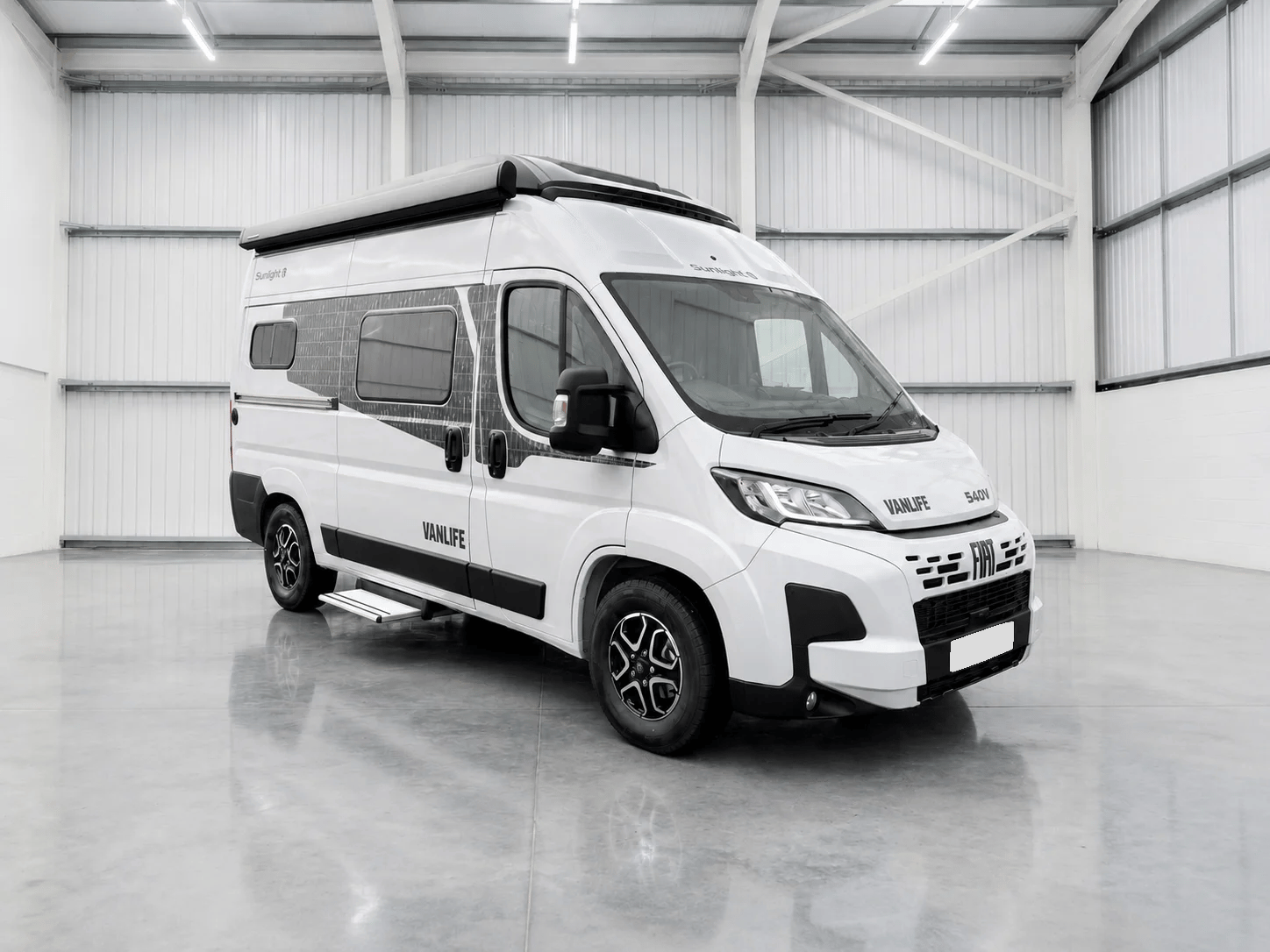
The camper you fall for is rarely the one you can afford. That gap is the whole reason Campervan.win exists. Right now we’re giving away the Sunlight Vanlife, worth around £65,000, and closing that gap is the point: capped entries so the odds stay honest, £10 a ticket, a maximum of five per person, £500 to a UK charity from every full draw, the winner picked by a public randomness beacon anyone can re-check, and one person driving away in the van itself.
Enjoyed this post?
Get more honest campervan guides like this one in your inbox.
You’re in!
Check your inbox. We’ve just sent you a welcome email.

About the author
Arthur
Arthur writes buying guides, comparisons, and in-depth explainers to help readers choose the right campervan or motorhome with confidence.
Keep Reading
Related Reading
Thoughtful articles that build on what you’ve just read.
New & Noteworthy
12 min read
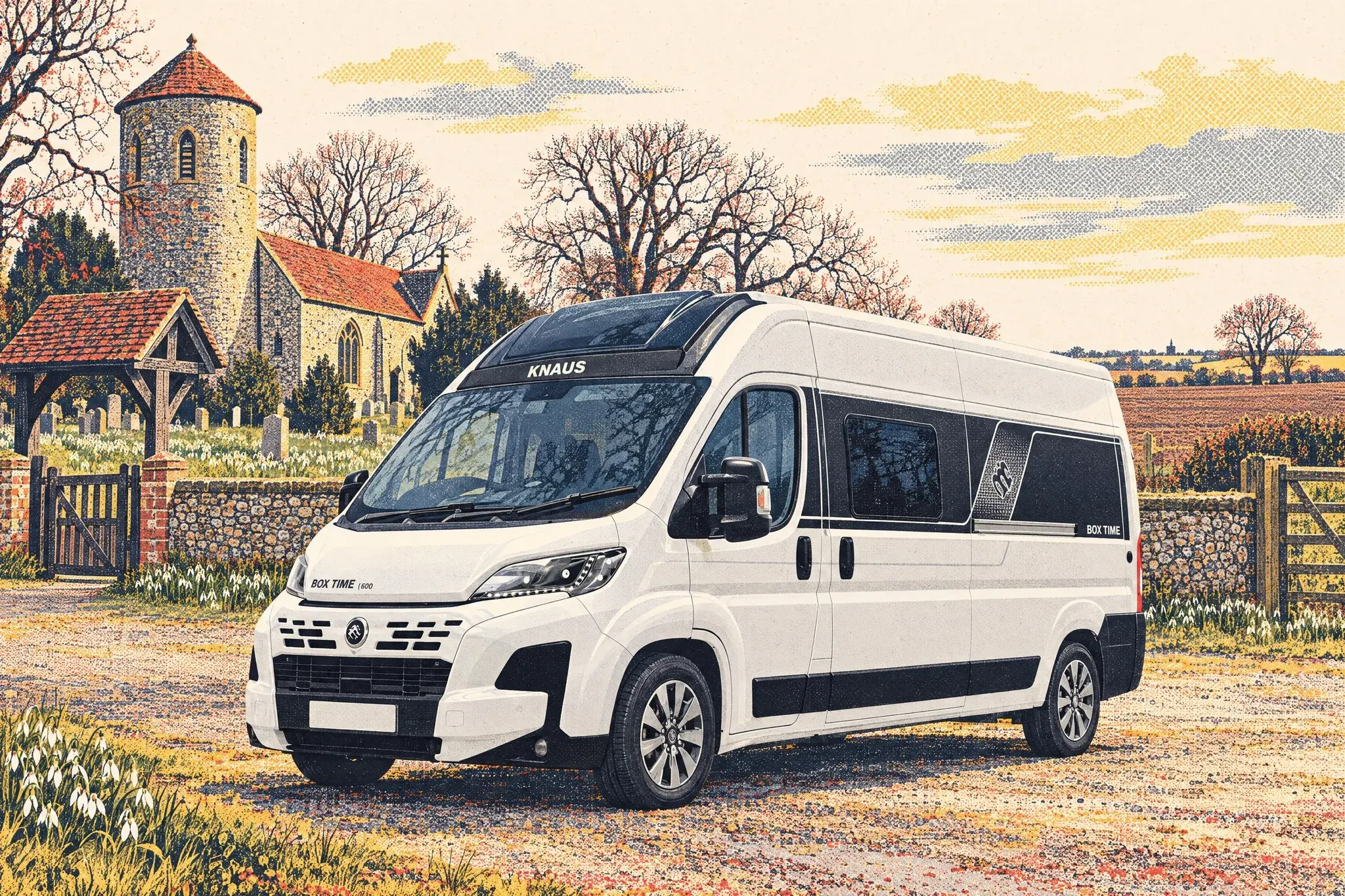
Knaus Boxtime 600 ME (2027): twin singles in 6 m, and the payload figure to question
Knaus's new Boxtime 600 ME squeezes two lengthways single beds into a 5.99 m van from £81,725. We lay out what that layout gives a couple, run the weight sums with Knaus's own figures, and explain why the 211 kg 'maximum payload' line needs a question before you sign.
New & Noteworthy
10 min read
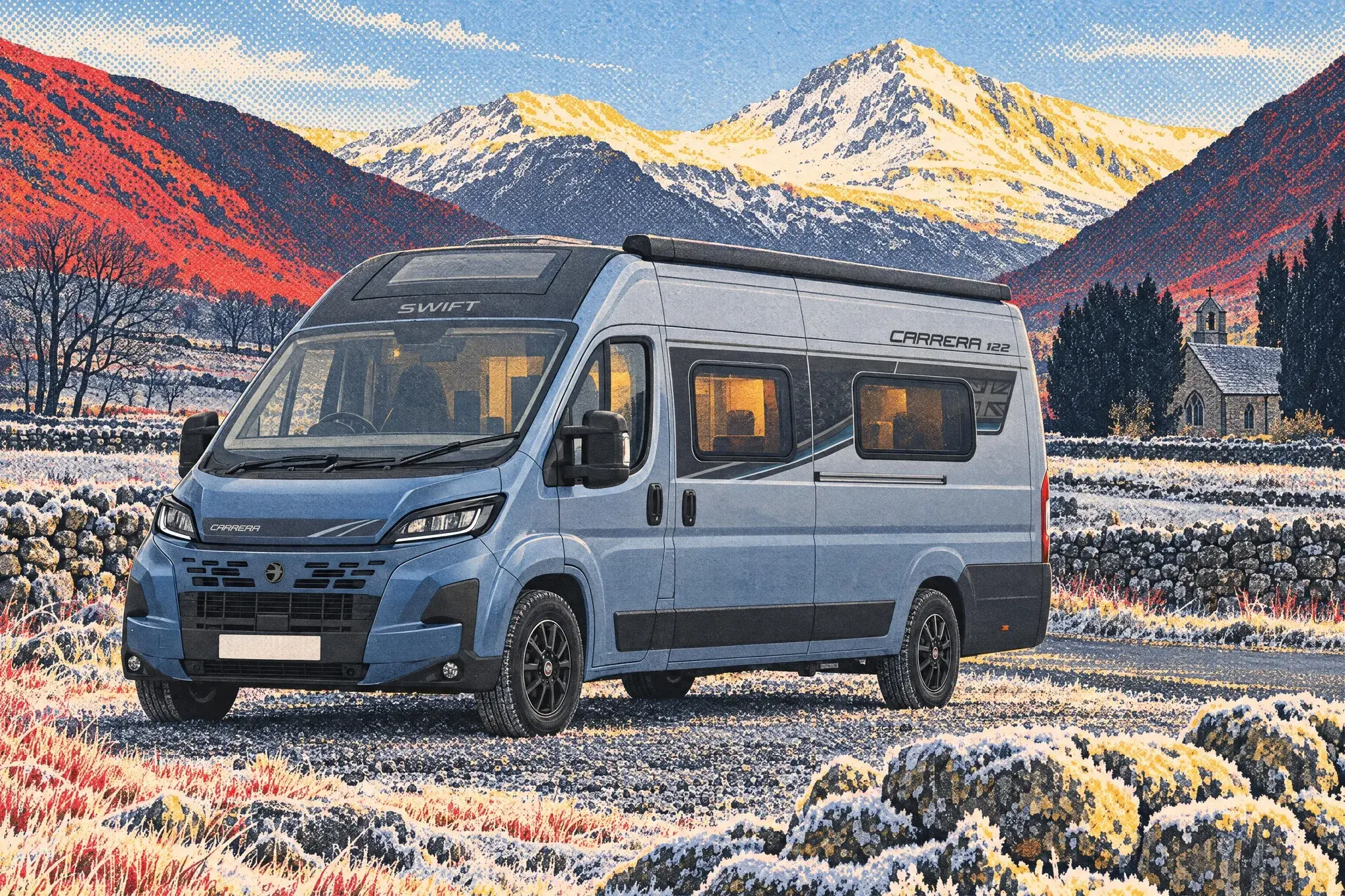
Swift Carrera goes gas-free for 2027: 340Ah lithium, diesel heat and induction cooking
Swift has taken the gas out of its Carrera campervan for 2027, swapping bottles for a 340Ah lithium battery, diesel heating and an induction hob. Here is what that means across a real UK year, how it compares with the cheaper Merlin, and the one question to ask at the NEC.
New & Noteworthy
10 min read
British campervan converters at the NEC 2026: who builds on what, and for how much
A stand-by-stand map of the British campervan converters at the Motorhome and Caravan Show 2026: the vans they build on, their from-prices, seats, roofs and lead times, plus the four questions to put to every one of them.
New & Noteworthy
9 min read
Plug-in hybrid campervans at the NEC: what a PHEV gives you and why full EVs are rare
Four UK converters have hybrid campers at or around the Motorhome and Caravan Show this October, while fully electric campers remain scarce. Here is what a plug-in hybrid camper does well, what the sellers rarely tell you, and the questions to ask on the stand.