
Ahorn campervan conversions explained, and will they reach the UK on the new Renault Master?

Written by
Rowan
Rowan writes editorial features, comparisons, and industry context pieces that help readers understand the campervan and motorhome landscape.
The short answer
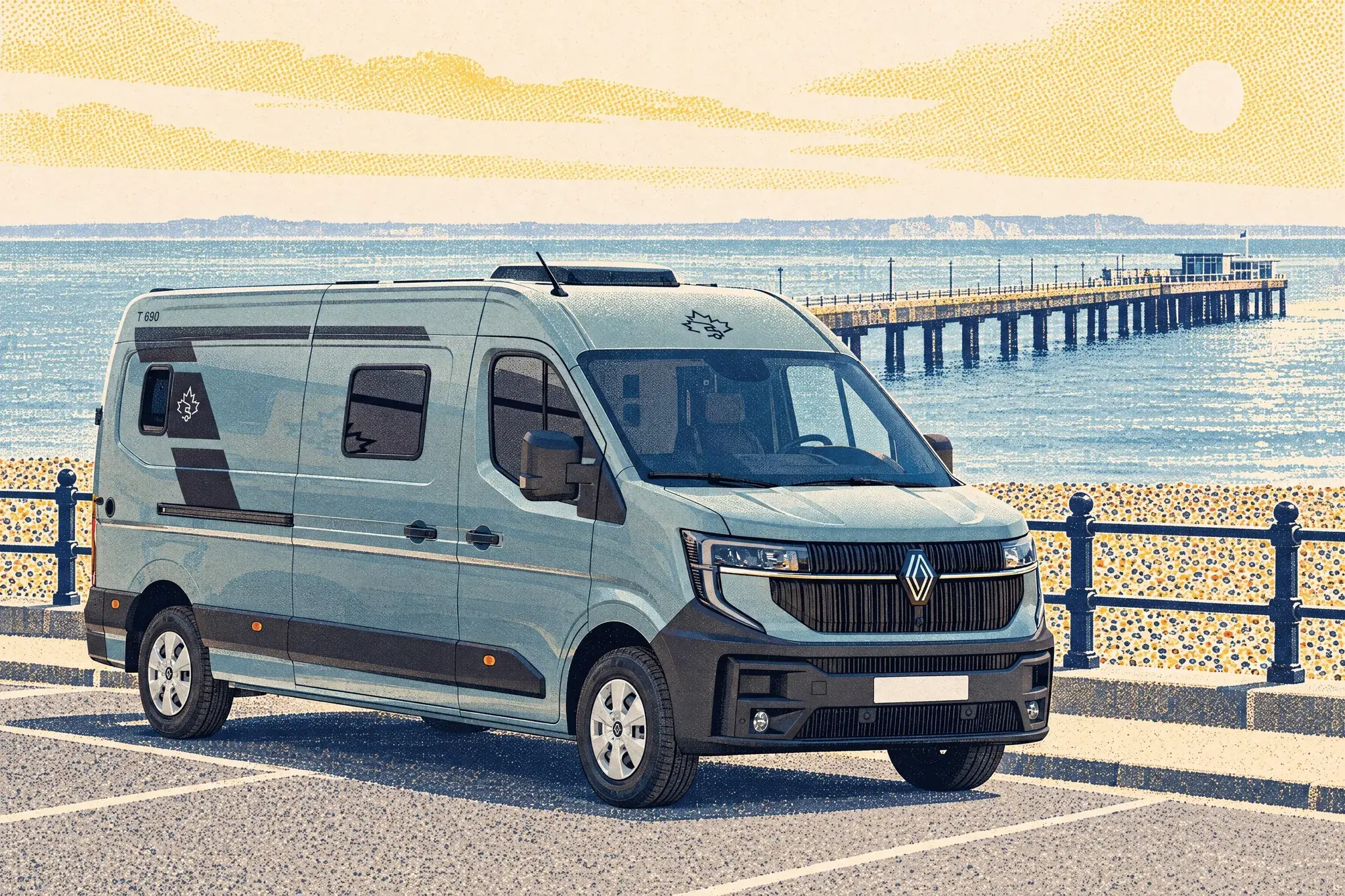
Ahorn is a German value brand that builds its whole range on the Renault Master, and from 2025 its all-new Master range, around nine motorhomes and two campervans, is built in series by the Erwin Hymer Group. UK right-hand-drive supply is not yet confirmed, so the realistic route here is still an import. The new Master is also a strong base for UK converters.

If you have been browsing campervan forums lately, you may have seen the name Ahorn pop up next to photos of clean, simple, sensibly priced motorhomes. You may also have seen the new Renault Master described as the next big base vehicle. The two are closely linked, because Ahorn builds its entire range on the Renault Master, and its all-new Master range is now built in series with the Erwin Hymer Group. So the real question for a British reader is not whether Ahorn use the Master, they do, but whether those vehicles will reach the UK in right-hand drive, and whether any UK converters are building on the new Master too.
This is an honest, detailed guide to all of that. We will explain who Ahorn are and what they actually build, look closely at the new Renault Master as a base vehicle, and give you a clear, realistic view of UK availability. Some of this is settled fact. Some of it is genuinely uncertain, and where it is, we will say so rather than pretend otherwise. The aim is simple. By the end you should understand the whole picture well enough to make a sensible decision, whether that means waiting, importing, or buying something else entirely.
Who are Ahorn?
Ahorn is a German leisure-vehicle brand. The name comes from the German word for maple, and the products sit firmly in the value end of the European market. The pitch is straightforward: give buyers a lot of usable motorhome for less money than the premium German marques, using familiar mechanical bases and conventional layouts that people already understand.
That positioning matters because the European motorhome market is enormous and crowded. Germany alone registers tens of thousands of new leisure vehicles a year, and within that market there is a clear split. At the top you have the heavily engineered, beautifully finished coachbuilts that cost serious money. At the bottom you have brands competing hard on price, offering honest, functional vans that do the job without the showroom polish. Ahorn lives in that second group, and it has built a following precisely because it does not pretend to be something it is not.
For a British reader, the closest mental shortcut is this: think of Ahorn as a no-nonsense, budget-conscious continental brand that wants to get families and couples on the road for as little outlay as possible. That is the appeal, and it is a genuine one. It is also the source of most of the questions people have, because value brands tend to make very specific choices about where they spend money and where they save it.
Where Ahorn sits in the wider market
Most established motorhome brands fall into one of a few camps. There are the premium builders chasing fit and finish. There are the volume mainstream brands that sell in big numbers across Europe. And there are the value players who keep prices keen by simplifying the build, choosing cost-effective materials, and sticking to proven layouts rather than reinventing the interior every year.
Ahorn is a value player. That is not a criticism. A well-built simple van that you can actually afford is worth far more than a clever one you cannot. But it does shape what you get, and it shapes the questions you should ask before buying. We will come back to those.
What does Ahorn actually make?
Ahorn builds its whole range on the Renault Master, and has used Renault platforms since 2014, across two generations of the Master. The line-up has long been led by coachbuilt motorhomes and low-profile models, and from 2025 it also includes panel-van campervans on the new Master. In plain terms, a coachbuilt is built on a bare chassis cab, with a habitation body bonded on top, often with an overcab bed or a sleek low-profile roofline. These are bigger, roomier vehicles than a typical panel-van conversion, and they tend to offer fixed beds, proper washrooms, and generous storage. A campervan keeps more of the original van bodywork and stays compact.
So when people say "Ahorn campervan conversions", there is an important distinction to draw. Ahorn does now build campervans, but on the large Renault Master, not on a small van. If your mental image is a Volkswagen-sized van with a pop-top roof, that is not what Ahorn make. Their campervans are full-length Master panel vans, and the bulk of the range is still family-sized coachbuilt motorhomes with a permanent bed and a separate shower. Either way, the van underneath is a Renault Master.
Typical Ahorn layouts
Across the value motorhome market, a handful of layouts dominate because they work and they sell. You will commonly see:
- Rear fixed bed layouts, with a transverse or longitudinal double at the back, a central washroom, and a front lounge that converts or stays as seating.
- Rear washroom layouts, where the bathroom spans the back of the van and the beds sit ahead of it, often as a drop-down or dinette-convert arrangement.
- Twin single beds at the rear, popular with couples who like their own space and value the huge garage area underneath.
- Overcab beds on the taller coachbuilt models, which add berths without eating into the living area.
These are the bread-and-butter layouts of European touring, and a value brand sensibly leans on them. There is little point in a budget builder gambling on an experimental layout when proven ones sell reliably and cost less to engineer.
Build approach and materials
Value brands keep prices down in consistent ways. Furniture tends to use lighter, cost-effective board rather than solid timber. Soft furnishings are functional rather than plush. The number of optional extras may be smaller, with more bundled into fixed specifications. None of this is hidden. It is simply how the price gets to where it is.
What you should check on any value motorhome, Ahorn included, is the things that cause real-world grief later: the quality of the habitation door seal, the robustness of drawer runners and catches, how the floor is constructed and insulated, and how well the build resists damp over the years. These are the areas where build decisions show up after a few seasons of British weather, and they matter far more than the colour of the upholstery.
The base vehicle question, and why it matters so much
Here is the single most important thing to understand about any motorhome or campervan. The leisure brand builds the living space, but the van underneath it is made by a vehicle manufacturer, and that base vehicle determines how the whole thing drives, how reliable it is over the long term, how easy it is to service, and how it copes with weight.
For decades, the dominant base vehicle in European motorhomes has been one particular large Italian-built van platform, used across a huge number of brands. It is so common that parts, servicing knowledge, and habitation experience are everywhere. Other large vans from the major European manufacturers also feature, and each has its loyalists.
The base vehicle decision affects:
- Driveability, including ride comfort, steering feel, and how settled the van is at motorway speeds in a crosswind.
- Payload, because the chassis rating sets how much you can legally carry once the habitation body and your gear are added.
- Servicing, since you need a dealer network that can handle the vehicle, and ideally one used to motorhome-length wheelbases.
- Resale, because buyers care about the badge on the front as well as the layout in the back.
- Running costs, through fuel economy, insurance grouping, and parts pricing.
That is why the arrival of a genuinely new large van is a big deal in this world. It does not happen often, and when it does, converters and brands take years to fully adopt it. Which brings us to the Renault Master.
The new Renault Master, properly explained
Renault launched a new generation of the Master, its large van, and it is a meaningful step rather than a mild facelift. For motorhome buyers, the interesting parts are aerodynamics, efficiency, the electric option, and the practical dimensions that decide what kind of habitation body will sit on it.
Aerodynamics and efficiency
The headline engineering story is aerodynamics. Renault redesigned the front end and bodywork to cut drag significantly compared with the previous Master, with a redesigned, more aerodynamic shape that Renault says cuts its drag area by more than 20 percent versus the old Master. That is a strong figure for a big, boxy vehicle, and the reason it matters to motorhome buyers is fuel. A more slippery shape at motorway speed translates into better real-world economy, and economy is one of the genuine pain points of touring in a tall, heavy vehicle.
Now, an honest caveat. A coachbuilt motorhome body changes the aerodynamics completely. Once you bond a tall box and an overcab pod onto a chassis cab, the clean shape of the factory van is gone. So the aerodynamic gains are most relevant to panel-van conversions, where the original Renault bodywork is largely retained, and less relevant to big coachbuilts where the habitation body dominates the airflow. It is still a positive, but set your expectations by the type of build.
Engines and the electric version
The new Master is offered with updated diesel engines across a range of power outputs, typically spanning from around 105 horsepower up to roughly 170 horsepower in the stronger versions, paired with manual or automatic transmissions depending on specification. For a heavy motorhome, the higher-output engines and an automatic gearbox make a real difference to relaxed driving, especially on hills and when loaded.
There is also a fully electric version, the Master E-Tech. Renault quotes a usable range that, in the most efficient van configurations, reaches into the region of 400 kilometres on the official cycle. That is a strong claim for a large electric van. As always with electric vehicles, the official figure and the real-world figure diverge, and they diverge most when the vehicle is tall, heavy, fully loaded, and travelling at motorway speed in cold weather. A motorhome is the worst possible case for electric range, because it is all of those things at once.
We will come back to the electric question, because it is one of the most interesting and most misunderstood parts of this whole subject.
Sizes, weights, and payload
The Master is offered in multiple lengths and roof heights, with front-wheel-drive and rear-wheel-drive configurations, and gross vehicle weights that climb into heavy-duty territory on the chassis-cab versions used for coachbuilts. Panel-van payloads on the larger variants can reach well over a tonne and a half in the most capable specifications, though the exact figure depends heavily on the precise model, engine, and equipment.
Payload is the number that ruins more motorhome holidays than any other, so it deserves a moment. When a brand builds a habitation body onto a chassis, the weight of that body, the furniture, the water, the gas, and the fitted equipment all eat into the chassis allowance. What is left is your payload, and that is what you have to play with for passengers, luggage, food, bikes, awnings, and the contents of every cupboard. A van with a generous chassis rating gives a brand more room to build a comfortable interior while still leaving you a usable payload. A tight chassis rating forces compromises.
This is exactly why the base vehicle and its weight ratings matter as much as the layout. A clever interior on a marginal chassis can leave you carrying almost nothing once two adults sit in the front seats.
Why the Renault Master matters for the conversion world
A new large van platform is an opportunity and a challenge for converters at the same time.
The opportunity is obvious. A more aerodynamic, more efficient base with a credible electric option and modern driver-assistance systems is a genuinely better starting point than an older platform. Buyers notice fuel economy, comfort, and safety kit. A converter that builds on a strong, modern base can offer something that feels current.
The challenge is that converting at scale takes time. Brands and converters build relationships with base manufacturers over years. They develop chassis-cab versions, electrical integration, body-mounting methods, and habitation wiring for a specific platform. Switching or adding a new base is a serious engineering and commercial commitment, not a quick decision. So even when a promising new van arrives, you should expect a lag of a couple of years or more before it appears widely under habitation bodies, and longer still before it dominates.
The rule of thumb in this industry is simple. A new van appears, the panel-van converters adopt it first because the engineering is lighter, and the big coachbuilt brands follow more slowly because they need the chassis-cab version and the supporting parts to mature.
That pattern tells you roughly what to expect for the wider UK conversion trade, where panel-van campervans on the new Master will appear before full coachbuilts. Ahorn are the clear exception, because they were ready early. From summer 2025 they put a complete range on the all-new Master, around nine motorhome models and two campervans, built in series by the Erwin Hymer Group at its plant in San Casciano in Italy under a five-year cooperation. So the new Master already carries a full coachbuilt range from one established brand, even while most other converters are still at the panel-van stage.
Will Ahorn campervan conversions come to the UK?
This is the question most people actually care about, so let us treat it carefully and honestly.
The right-hand-drive problem
The single biggest barrier to any continental motorhome brand selling properly in the UK is right-hand drive. Britain drives on the left, and that means the base van ideally needs a right-hand-drive cab, and the habitation layout needs to be mirrored or designed so that the habitation door opens onto the kerb side, which in the UK is the left.
This is not trivial. A left-hand-drive European motorhome has its habitation door on the right-hand side, which in the UK puts your step out into the road rather than onto the pavement or the grass. For occasional touring some owners live with this, but it is a real safety and convenience compromise, and it is the main reason left-hand-drive motorhomes sell at a discount in the UK.
For a value brand whose entire business model depends on building in volume and keeping costs low, producing a right-hand-drive, UK-specific version is a significant investment. It only makes sense if the brand believes the UK market is big enough and committed enough to justify a dedicated production run, a UK distribution arrangement, and after-sales support. That is a high bar.
What a proper UK presence actually requires
For any continental brand to "come to the UK" in a meaningful sense, several things need to line up:
- Right-hand-drive base vehicles, or at the very least a credible plan to supply them.
- A UK importer or dealer network willing to stock, sell, and crucially service the vehicles.
- Habitation servicing support, because a motorhome needs annual habitation checks and warranty work, not just engine servicing.
- Parts availability, so that a broken catch, a failed heater, or a damaged window can be sorted without shipping parts across a continent.
- UK compliance, including the right lighting, registration, and any required type-approval paperwork.
Without those pieces, a brand might appear in the UK as the occasional grey import, but that is very different from a supported, warrantied presence with dealers you can walk into.
The honest answer
Here is the honest position as things stand. Ahorn build their new Master range in series and are rolling it out across Europe through their own branches and Renault Pro+ dealers, starting in Germany. What has not been confirmed is a firm, fully supported, right-hand-drive Ahorn dealer presence in the UK in the way there is for the long-established mainstream brands sold here. That does not mean an individual van cannot be found here. Plenty of continental motorhomes reach the UK through private imports and specialist importers. But a private import is a very different proposition from buying a properly supported, right-hand-drive vehicle from a UK dealer with local warranty and servicing.
If your hope is to walk into a UK showroom, sit in a right-hand-drive Ahorn on the new Master, agree a price, and have it serviced down the road, you should treat that as not confirmed for now and check the latest situation directly rather than assuming. A new series range and a fresh production partner can change a brand's plans quickly, so the only reliable way to know is to contact Ahorn and any UK importer directly and ask three blunt questions: is it offered in right-hand drive, who services it in the UK, and how do warranty claims work.
Buying a left-hand-drive continental motorhome in the UK
Because the realistic route to owning a continental value brand in the UK is often an import, it is worth understanding what that actually involves. Plenty of people do it successfully, but it pays to go in with your eyes open.
The practical realities of left-hand drive
Driving a left-hand-drive vehicle in the UK is perfectly legal and many people do it for years without drama. The main daily friction points are overtaking on single-carriageway roads, where your view of oncoming traffic is reduced, and toll booths, car park ticket machines, and drive-through barriers, which are all on the wrong side. None of these is a dealbreaker, but they add up, and on a long touring vehicle they take getting used to.
The habitation door is the bigger consideration. With the door on the right, stepping out at a UK campsite pitch can mean stepping toward the access road rather than your pitch. On many sites it is fine. On some it is awkward. For wild camping or aires it varies. This is a genuine quality-of-life factor, not a trivial one, and it is the reason left-hand-drive motorhomes hold less value here.
Registration, compliance, and paperwork
Importing a vehicle into the UK involves registering it with the DVLA, paying any applicable VAT and duty if it has not already been accounted for, and ensuring the vehicle meets UK requirements. Lighting is the classic catch. Continental headlights are set for driving on the right, and they need adjusting or replacing so they do not dazzle oncoming UK traffic. Rear fog lights and other small details may also need attention. There may be type-approval or individual approval steps depending on the vehicle and how it is brought in.
None of this is impossible, but it is paperwork and cost, and you need to budget time and money for it. A specialist importer will handle much of this; a fully private import puts it on you.
Insurance and servicing
Insuring an imported, left-hand-drive motorhome is doable, but expect a smaller pool of insurers and possibly higher premiums. Get quotes before you commit, not after. Servicing the base vehicle is usually straightforward, because the manufacturer has a dealer network across Europe and often in the UK too. Habitation servicing is the trickier part, because UK habitation engineers are most familiar with the brands sold here. A good independent habitation specialist can usually work on any van, but warranty work for an imported brand can be a headache if there is no UK support structure.
Resale value
Be realistic about resale. A left-hand-drive motorhome from a brand without a strong UK presence will appeal to a narrower set of buyers when you come to sell. That tends to mean a softer resale value and a longer time to find a buyer. If you plan to keep the van for many years and run it into the ground, this matters less. If you might change vehicles in a few seasons, factor it into the sums.
Are any UK companies building on the new Renault Master?
Now to the other half of the question, and a more encouraging one. The new Renault Master is a mainstream large van sold through Renault's UK commercial vehicle network, which means right-hand-drive examples are genuinely available to British converters. That removes the single biggest barrier that holds back continental brands. A UK converter can buy a UK-spec, right-hand-drive Master and build on it here.
Why the new Master is attractive to converters
For a UK converter, a few things make the new Master appealing as a base:
- Right-hand drive as standard, sold and serviced through an established UK network.
- Improved aerodynamics and efficiency, which matter to buyers watching fuel costs.
- A modern cab with current safety and driver-assistance systems, which makes the conversion feel up to date.
- The electric option, which gives converters a route into the growing interest in low-emission and zero-emission leisure vehicles, particularly for buyers who tour close to home or within clean-air zones.
- A range of sizes, so converters can pick a wheelbase and roof height to suit a particular layout.
The realistic timeline
Here is the honest framing. When a new van platform arrives, UK converters do not all switch overnight. They tend to run their established conversions on the platforms they already know, and they introduce builds on a new base over time as they develop the tooling, the electrical integration, and confidence in the vehicle. The smaller, more agile conversion specialists often move first because they can adapt quickly, while larger operations take longer because their processes are built around volume.
So the realistic picture is that the new Renault Master is a base UK converters can and increasingly will use, with adoption building gradually rather than arriving all at once. If you are specifically set on a new-Master conversion, the right approach is to contact converters directly and ask what base vehicles they currently offer, because that list changes as new platforms are adopted. Do not assume any particular converter is or is not using it. Ask.
How to find out who is actually using it right now
Rather than relying on a snapshot that will be out of date almost immediately, here is a method that will always give you the current answer:
- Decide your build type first. Panel-van campervan or larger coachbuilt? That narrows the field dramatically, because new platforms reach panel-van conversions sooner.
- Contact converters directly and ask which base vehicles they currently build on, and whether the new Renault Master is one of them.
- Ask about lead times. A converter may offer a base in principle but have a long waiting list, which affects your real-world timeline.
- Ask about the electric version specifically if that interests you, because building on an electric base raises extra questions about heating, leisure power, and habitation electrics.
- Visit shows. The big UK motorhome and campervan shows are where converters display their newest builds, and they are the fastest way to see new-platform conversions in the metal.
The electric Renault Master question for campervans
Because the electric Master is one of the most talked-about parts of the new range, it deserves an honest, separate look, especially for anyone imagining an electric campervan.
The appeal
An electric campervan sounds wonderful. No fuel cost at home if you charge off your own supply, no exhaust emissions, free entry to clean-air and low-emission zones, near-silent driving, and the smug satisfaction of a leisure vehicle that fits a low-carbon lifestyle. For a certain kind of touring, close to home, with predictable distances and good charging, it can genuinely work.
The reality check
Now the honest part. A motorhome or large campervan is close to the hardest possible job for an electric drivetrain. It is tall, so it pushes a lot of air. It is heavy, especially once loaded with water, gear, and passengers. And touring usually means long motorway runs, often in cold or wet weather, which are exactly the conditions where electric range falls furthest below the official figure.
So while the official range figure for the electric Master van is strong, the usable range of a heavy, tall, fully loaded conversion travelling at motorway speed in winter will be considerably lower. Add the time spent charging on a long trip, and the practicalities of finding a charger you can actually fit a long, tall vehicle into, and the picture becomes more complicated than the brochure suggests.
This is not a reason to dismiss electric campervans. It is a reason to match the vehicle to the use. If your touring is mostly local, mostly in milder weather, with charging available where you stay, an electric base can be a brilliant fit. If your idea of touring is a 400-mile dash to the Highlands in November, fully loaded, a diesel base remains the sensible choice today.
Heating and habitation power on an electric base
One subtlety that is easy to miss. On a diesel campervan, you can run a diesel heater from the same fuel tank that drives the vehicle, which is efficient and simple. On an electric base, the conversion needs to think carefully about heating, because you do not want habitation heating draining the drive battery. Converters building on electric vans typically keep a separate leisure battery system and may still use a fuel-fired heater with its own small tank, or a high-capacity battery and electric heating where the use case supports it. The point is simply that an electric base changes the habitation design, and a good converter will have thought it through rather than bolting a standard interior onto a different drivetrain.
How to judge any value-brand motorhome before you buy
Whether you are looking at an Ahorn, an imported continental brand, or a UK conversion on a new base, the same checks apply. Value brands reward careful inspection because the savings come from specific choices, and you want to know which ones affect you.
Payload, in writing
Ask for the actual payload of the specific vehicle, with the actual options fitted, in writing. Then do the sum honestly. Subtract the weight of two adults in the front, full water, full gas, and the gear you genuinely carry. If what remains is uncomfortably tight, the van is not big enough on paper for your real life, no matter how nice the layout looks.
Damp resistance and body construction
Ask how the body and floor are constructed, what insulation is used, and how the joints are sealed. Damp is the long-term enemy of any motorhome, and value builds can be more vulnerable if corners are cut on sealing. Ask about the warranty against water ingress and what the annual habitation check involves to keep it valid.
Fit, finish, and the small stuff
Open and close every drawer, door, and locker. Sit on every seat, lie on every bed, and sit on the loo with the door shut to check there is room. Run the water, light the hob, fire up the heater. The small stuff is where value builds show their choices, and it is far better to find a flimsy catch or an awkward washroom in the showroom than on a wet night in the Lake District.
Servicing and support before you commit
Confirm where the base vehicle will be serviced, where the habitation will be serviced, and how warranty claims work. For an imported or less-common brand, this is the part people skip and later regret. A cheap purchase price stops being cheap if a fault means shipping parts across Europe and waiting months.
The total cost, not the sticker
Value brands win on sticker price. Make sure you compare the total cost of ownership: insurance, servicing, likely repairs, and resale. A keenly priced van that costs more to insure, is harder to service, and resells for less can end up costing more over five years than a dearer van with strong support and steady values. The sticker is the start of the conversation, not the end of it.
Campervan or motorhome, which question are you really asking?
It is worth stepping back, because the original question mixes two slightly different things, and getting clear on which you want will save a lot of confusion.
If you want a compact campervan
If your dream is a manageable, drive-anywhere campervan, the new Renault Master in its medium or larger panel-van form is a credible base, and UK converters can build right-hand-drive examples on it. This is the area where new platforms appear soonest, so it is the most realistic route to a modern-base van. Ahorn do build two campervans on the new Master, but they are full-length Master vans rather than small ones, and UK right-hand-drive supply is not yet confirmed, so for a properly supported compact campervan a UK converter is the more realistic answer.
If you want a family-sized motorhome
If you want a roomy coachbuilt with a fixed bed, a proper washroom, and space for the family, that is Ahorn's core territory, and their new Master range, built in series by the Erwin Hymer Group, is aimed squarely at it. The catch for a UK buyer is the right-hand-drive and UK-support question, which is not yet settled for the new range. For now the established UK-supported brands remain the path of least resistance, and an Ahorn realistically means an import with all the caveats above, unless and until a UK right-hand-drive route is confirmed.
If you want a low-emission van for local touring
If your touring is local and you care about clean-air zones and home charging, the electric Master is genuinely interesting, and a thoughtful UK converter can build something that suits that life well. Just be honest about range and matching the vehicle to short, predictable journeys rather than epic cross-country runs.
Common myths to clear up
A few misunderstandings come up again and again on this topic. Let us deal with them plainly.
"A new base means everyone will be using it straight away"
No. Adoption takes years. A new platform appears in panel-van conversions first and trickles into coachbuilts later. Expect a gradual build-up, not an overnight switch.
"A cheap continental brand is the same van for less money"
Not quite. The savings are real, but they come from specific build choices and from a lighter UK support structure. The van can be excellent value, but you are buying a different proposition, not the identical thing at a discount.
"Left-hand drive is fine, loads of people do it"
Many people do, and it can work well. But the habitation door on the road side, the overtaking compromise, the insurance pool, and the softer resale are all real. Go in knowing them, not discovering them later.
"Electric range will be the same as the brochure"
It will not, especially in a tall, heavy, loaded van at motorway speed in winter. The official figure is a best case in ideal conditions. Plan around the real-world figure, which is lower.
A simple decision framework
Here is a clear way to turn all of this into a decision.
- Define your touring honestly. Distances, seasons, number of people, and where you will stay. This decides everything else.
- Choose campervan or coachbuilt. Compact and drive-anywhere, or roomy and family-sized?
- Decide diesel or electric based on your real journeys, not the dream ones.
- Match the base vehicle and brand to the above. For a modern compact campervan, the new Renault Master via a UK converter is a strong candidate. For a coachbuilt, lean toward UK-supported options unless you are happy to import.
- Verify support in writing. Servicing, habitation checks, warranty, and parts. No exceptions.
- Do the payload sum for the specific vehicle. If it is tight, walk away.
- Compare total cost of ownership, not just the sticker price.
Follow that and you will not be swayed by a shiny brochure or a tempting price into something that does not fit your life.
The bottom line
Ahorn is a German value motorhome brand that builds its whole range on the Renault Master, with a longer line of coachbuilts and, from 2025, two campervans as well. Its all-new Master range is built in series by the Erwin Hymer Group in Italy and is rolling out across Europe. As things stand, there is no confirmed, fully supported right-hand-drive Ahorn presence in the UK in the way there is for the long-established brands sold here, so the realistic route to owning one is an import, with all the practical considerations that come with left-hand drive, registration, lighting, insurance, servicing, and resale. If you are interested, contact the brand and any importer directly and ask the blunt questions about right-hand drive, UK servicing, and warranty before you commit a penny.
The new Renault Master is a genuinely strong modern base vehicle, with improved aerodynamics, efficient diesel options, a credible electric version, and right-hand-drive availability through Renault's UK network. That last point is the key one. Because UK-spec Masters are readily available, British converters can and increasingly will build on it, with panel-van campervans appearing first and adoption growing over time. If you want a modern-base campervan, that is your most realistic and best-supported path. The only reliable way to know exactly who is building on it at any given moment is to ask converters directly and visit the shows, because that list keeps changing as the platform matures.
The deeper lesson sits underneath all of it. In the motorhome world, the badge on the living space matters less than the van underneath, the support behind it, and the honest match between the vehicle and the way you actually travel. Get those three right and you will be happy for years. Chase a low price or a clever spec without them and you may spend more time worrying than touring. Pick the van for your real life, check the support in writing, do the payload sum, and the rest tends to look after itself.
Common questions
Who are Ahorn?
Ahorn is a German leisure-vehicle brand, the name being the German word for maple, sitting firmly at the value end of the European market. It builds its whole range on the Renault Master and has used Renault platforms since 2014. The line-up is led by affordable coachbuilt motorhomes, and from 2025 it also includes two campervans on the all-new Master.
Can you buy an Ahorn motorhome in the UK?
Not easily through a full UK dealer network. Ahorn build their new Master range in series and are rolling it out across Europe, starting in Germany, but a confirmed, fully supported right-hand-drive UK presence has not been announced, so the realistic route is a left-hand-drive import. Contact the brand and any importer directly and ask the blunt questions about right-hand drive, UK servicing and warranty before committing.
Is the new Renault Master a good campervan base?
Yes, it is a genuinely strong modern base. Renault redesigned the front and bodywork to cut drag significantly, with a more aerodynamic shape that Renault says cuts drag area by more than 20 percent versus the old model, and offers updated diesels from roughly 105 to 170 horsepower plus a credible electric version. Crucially it has right-hand-drive availability through Renault's UK network, which is what lets British converters build on it.
Is there an electric Renault Master campervan?
There is a credible electric Master, with Renault quoting a usable range reaching into the region of 400 kilometres on the official cycle in the most efficient van configurations. Real range is lower, especially loaded and in winter, so for a 400-mile dash to the Highlands in November a diesel base remains the sensible choice today, while electric suits local, lower-mileage touring.
Are UK companies building campervans on the new Renault Master?
Because UK-spec Masters are readily available, British converters can and increasingly will build on it, with panel-van campervans appearing first and adoption growing as the platform matures. The only reliable way to know exactly who is using it at any moment is to ask converters directly and visit the shows, because that list keeps changing.
Should I import a left-hand-drive Ahorn or buy a UK-built van?
For most UK buyers a well-supported UK-built van, including one on the new right-hand-drive Renault Master, is the more realistic and lower-hassle path. Ahorn's new Master range is sold across Europe, but until UK right-hand-drive support is confirmed, owning one here means an import, with the realities of driving, registration, lighting, insurance, servicing and resale. The badge on the living space matters less than the van underneath, the support behind it, and the honest match to how you travel.
The reachable bit
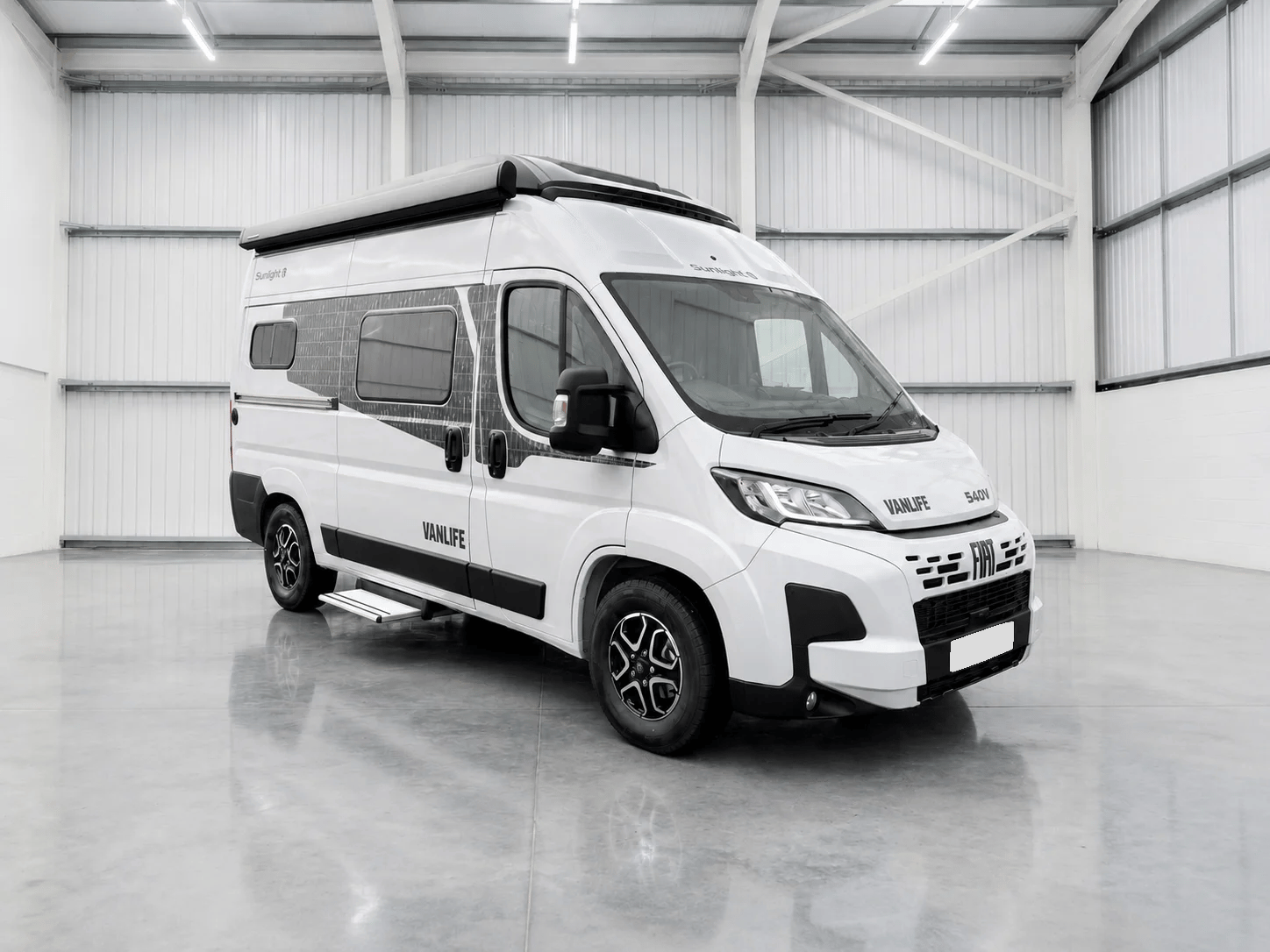
The camper you fall for is rarely the one you can afford. That gap is the whole reason Campervan.win exists. Right now we’re giving away the Sunlight Vanlife, worth around £65,000, and closing that gap is the point: capped entries so the odds stay honest, £10 a ticket, a maximum of five per person, £500 to a UK charity from every full draw, the winner picked by a public randomness beacon anyone can re-check, and one person driving away in the van itself.
Enjoyed this post?
Get more honest campervan guides like this one in your inbox.
You’re in!
Check your inbox. We’ve just sent you a welcome email.

About the author
Rowan
Rowan writes editorial features, comparisons, and industry context pieces that help readers understand the campervan and motorhome landscape.
Keep Reading
Related Reading
Thoughtful articles that build on what you’ve just read.
New & Noteworthy
12 min read
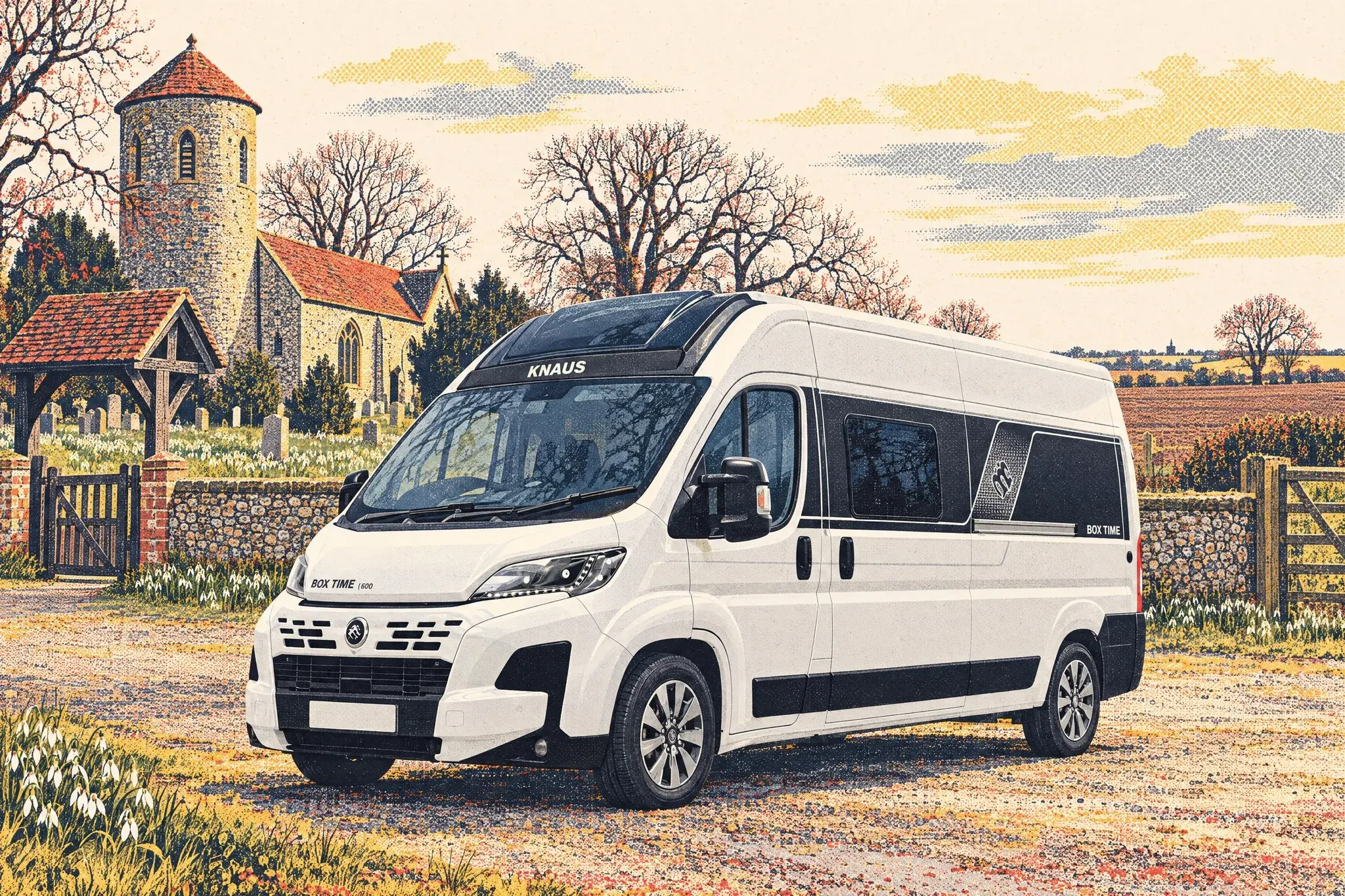
Knaus Boxtime 600 ME (2027): twin singles in 6 m, and the payload figure to question
Knaus's new Boxtime 600 ME squeezes two lengthways single beds into a 5.99 m van from £81,725. We lay out what that layout gives a couple, run the weight sums with Knaus's own figures, and explain why the 211 kg 'maximum payload' line needs a question before you sign.
New & Noteworthy
10 min read
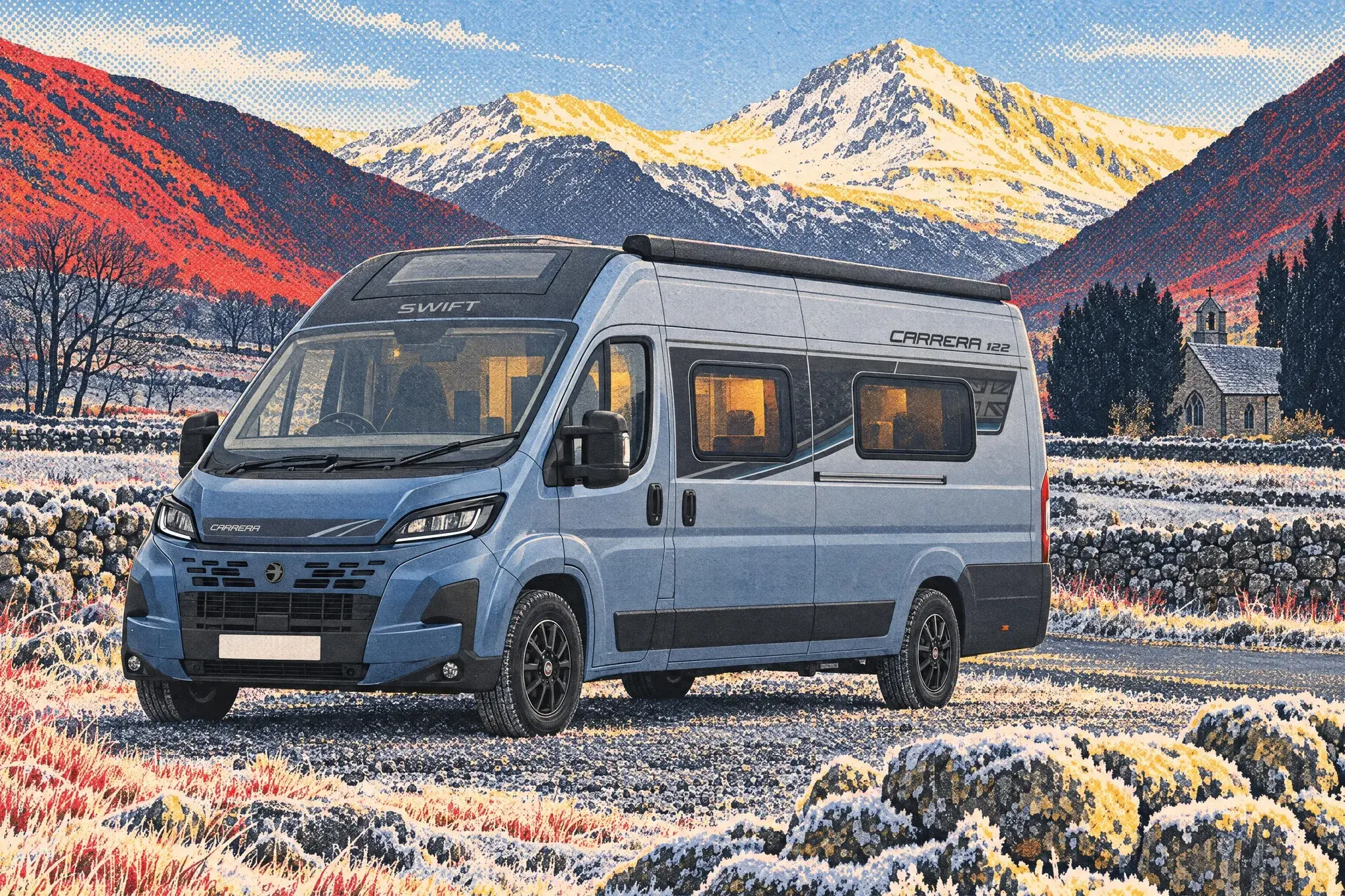
Swift Carrera goes gas-free for 2027: 340Ah lithium, diesel heat and induction cooking
Swift has taken the gas out of its Carrera campervan for 2027, swapping bottles for a 340Ah lithium battery, diesel heating and an induction hob. Here is what that means across a real UK year, how it compares with the cheaper Merlin, and the one question to ask at the NEC.
New & Noteworthy
10 min read
British campervan converters at the NEC 2026: who builds on what, and for how much
A stand-by-stand map of the British campervan converters at the Motorhome and Caravan Show 2026: the vans they build on, their from-prices, seats, roofs and lead times, plus the four questions to put to every one of them.
New & Noteworthy
9 min read
Plug-in hybrid campervans at the NEC: what a PHEV gives you and why full EVs are rare
Four UK converters have hybrid campers at or around the Motorhome and Caravan Show this October, while fully electric campers remain scarce. Here is what a plug-in hybrid camper does well, what the sellers rarely tell you, and the questions to ask on the stand.