
Amandaland’s VW WestFalia Campervan and the Unsexy Truth About Campervan Toilets

Written by
Jasper
Jasper writes campervan reviews, travel guides, and practical advice, with a focus on everyday use and relaxed touring around the UK.
The short answer
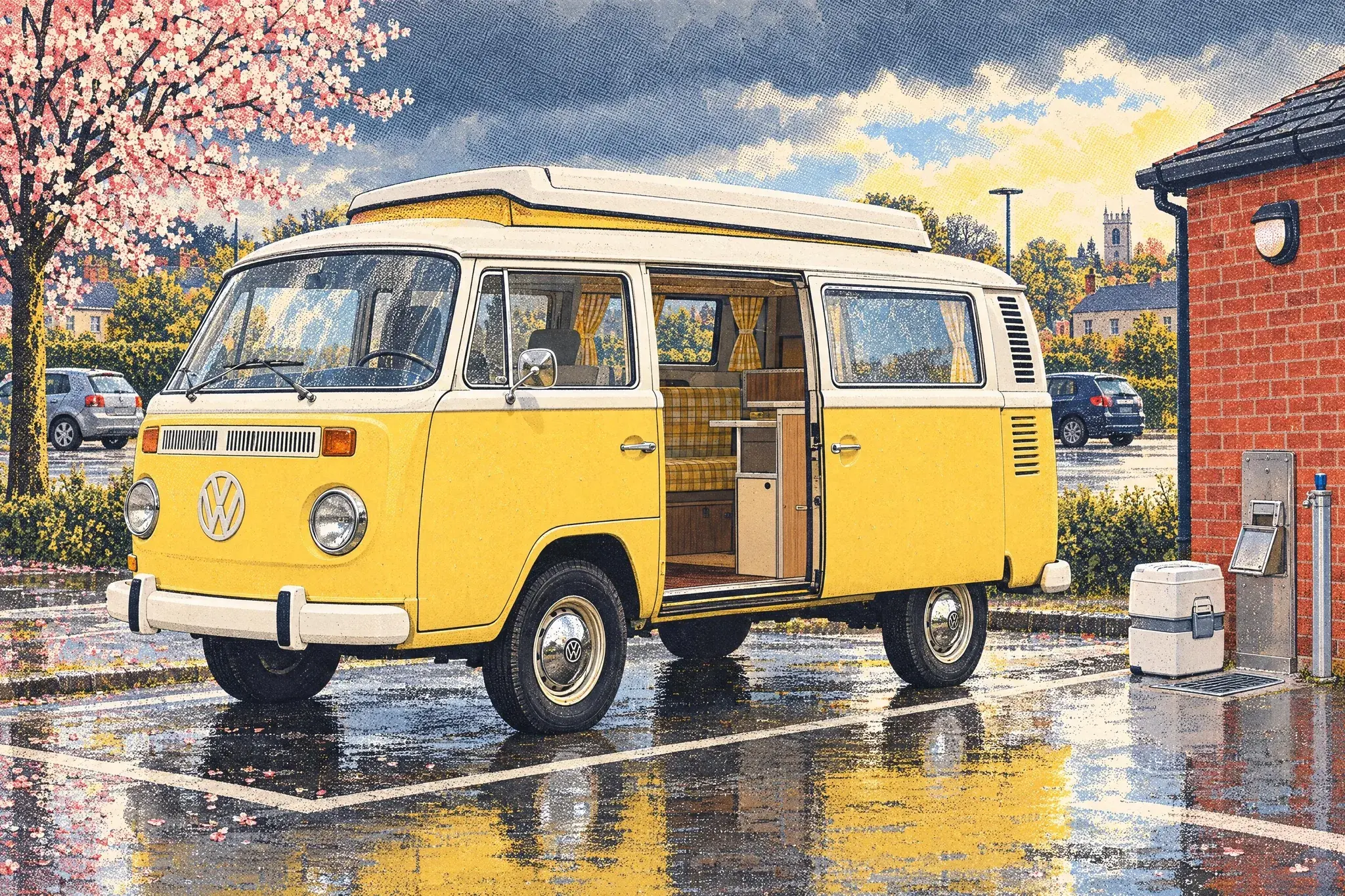
The campervan in the sitcom Amandaland is a classic VW Westfalia, the rounded, pop-top Volkswagen Type 2 most people picture when they think campervan, and the running joke about it lacking a toilet lands because it is true: classic Westfalias often have no loo, which matters rather a lot at 2am in the rain. The happy fix is simply choosing a toilet setup that matches how you actually travel. The main options are a built-in cassette toilet (the motorhome classic), a portable chemical Porta Potti (cheap and flexible for small vans), a urine-separating composting toilet (no chemicals, but a learning curve), bag-sealing toilets, and black-tank or macerator systems in larger motorhomes. For a small van, a dependable portable loo is often the answer. Here is the unsexy but useful truth about campervan toilets.

There are two types of campervan and motorhome moments.
The first is the postcard one: kettle on, door open, somewhere green, a chair that’s inexplicably comfortable even though it cost £12 and lives in a bag.
The second is the one nobody puts on the postcard: 2:17am, cold feet, you’re half awake, and your bladder has decided it’s running the show now. The campsite toilet block is technically “just over there”, but “just over there” is doing a lot of work when it’s raining sideways and you can’t find your torch because it’s migrated into the same parallel universe as socks.
Amandaland (specifically the “Camping” episode) hangs its comedy on exactly that sort of reality: Amanda hires a campervan on the strict understanding that she can stay civilised, only to discover the campervan doesn’t have a toilet. What follows is not just funny. It’s also painfully recognisable to anyone who’s ever assumed “it’ll be fine” and then realised, too late, that “fine” is a campsite loo with a door that doesn’t lock properly.
And the campervan itself? The episode names it: a VW Westfalia.
So let’s talk about two things properly:
- What a VW Westfalia is, and why it makes perfect sense (as a prop and as a choice) for that episode.
- Why toilets matter in campervans and motorhomes far more than people like to admit, and what your realistic options are, from cassette toilets to bag sealing systems, with the pros, cons, and what I’d actually recommend depending on how you travel.
Because “having a toilet” isn’t about being precious. It’s about making travel easier. Calmer. More flexible. And, crucially, more likely to happen again next weekend.
The campervan in Amandaland: the VW Westfalia, and why it’s the perfect choice
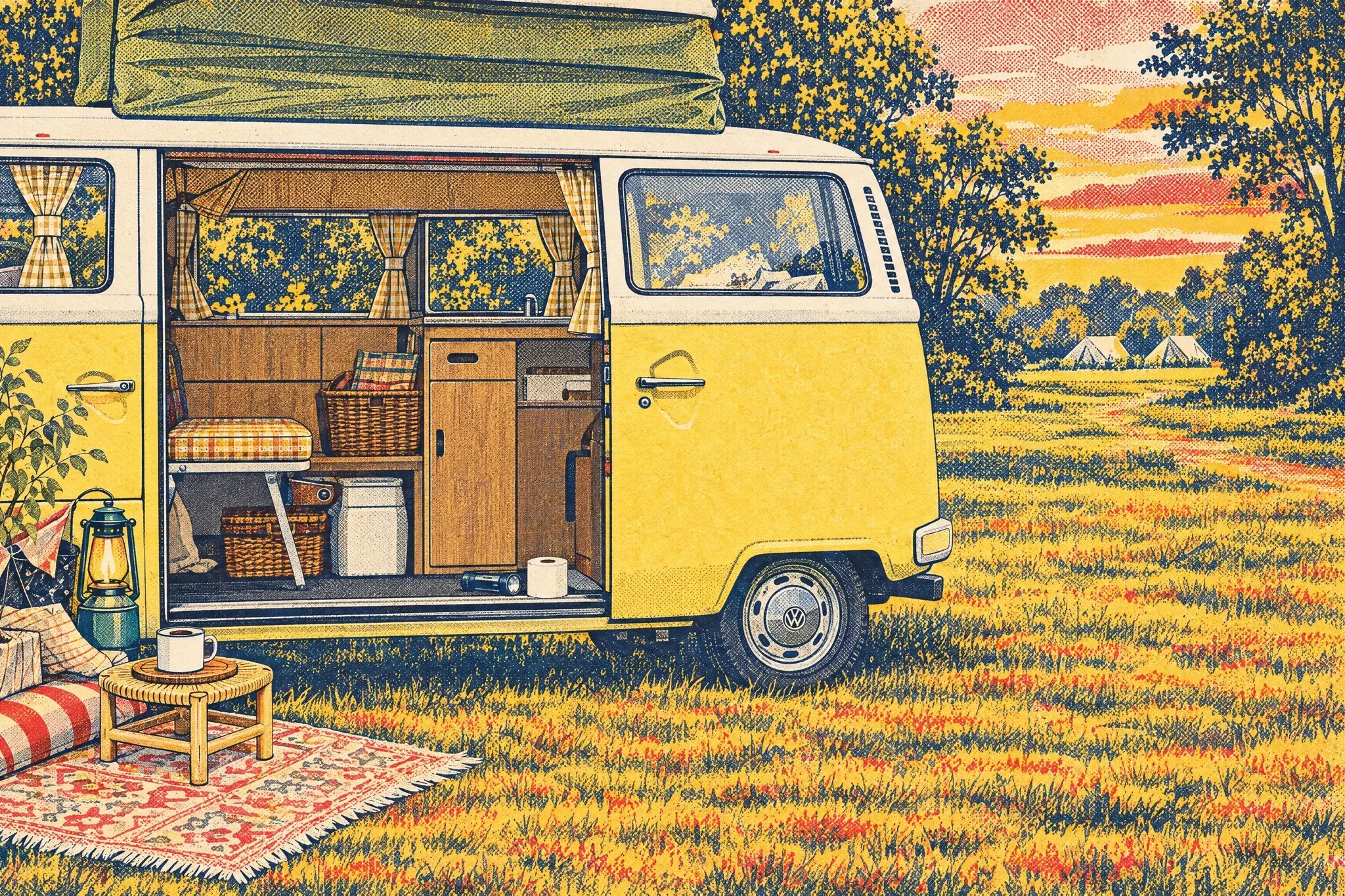
When someone says “classic campervan”, nine times out of ten they’re picturing some flavour of Volkswagen Type 2: the rounded nose, big windows, and a pop top roof that turns a parking space into a tiny house. In Amandaland the campervan is described as a VW Westfalia.
“Westfalia” is the name of the German company that became the most famous converter of VW Transporters into campervans. It’s so well known that “Westy” has basically become shorthand for the classic layout: pop top, clever cupboards, a rock and roll bed, and just enough space to feel both delighted and mildly trapped at the same time.
Why a Westfalia often doesn’t have a toilet (and why that matters)
A classic Westfalia is a small campervan by modern standards. Brilliant for charm, parking, nostalgia, and that particular smug feeling you get when you’ve reverse parked something from the 1970s on the first try.
But space is space, and in a traditional Westfalia layout the square footage is spent on:
- a seating and bed system
- a compact kitchen unit
- storage you can only access if you first move three other things
- a pop top bed or roof space
A built in toilet room, like you’d expect in many motorhomes, simply isn’t part of the deal. If you wanted a toilet, you generally carried something portable, or you used campsite facilities. That’s why the episode’s central problem lands: the campervan looks like “the nice option”, but it doesn’t automatically deliver the convenience Amanda expects.
The quiet realism underneath the comedy
There’s a bit in the wider write up of the episode that mentions the filming location and even calls out Amanda’s “iconic pastel yellow campervan” as part of the camping set up.
And that’s the point: the campervan is visually iconic. It signals a certain lifestyle.
But the toilet question is what separates the aesthetic from the lived experience.
Because once you’re actually out there, New Forest or anywhere else, your trip is shaped by small practicalities: how you sleep, how you warm up, how you wash up, and yes, how you wee.
Why having a toilet changes everything (even if you swear you “don’t really need one”)
Let’s be honest. People resist the toilet conversation because it’s not the fun bit. It’s not the bit where you choose paint colours or compare coffee machines or argue about whether you’re a “rock and roll bed person” or a “fixed bed person”.
But toilets in campervans and motorhomes aren’t a luxury add on. They’re a stress reducer. A flexibility tool. Sometimes a relationship saver.
The real benefits, in plain language
It makes nights easier.
The midnight wee is the make or break moment for a lot of people. If you’ve got kids, it’s not even midnight. It’s “right now, and it’s urgent, and I’m also scared of the dark”.
It gives you options when campsites are… not great.
Most UK campsites are perfectly fine. Some are spotless. Some are… a character building experience. A toilet in your campervan or motorhome means you’re not stuck with whatever the site’s offering that weekend.
It makes quick stopovers more viable.
If you’re doing a long drive and you’re trying to avoid turning a “two hour hop” into a full service station saga, a toilet helps. Still follow the rules on where you can stop overnight, obviously.
It helps when you’re ill, injured, pregnant, or just not feeling brave.
UTIs and camping are not strangers. Nor are dodgy tummies and rainy weekends. There’s a reason the episode hints at urinary misery: if you’re anxious about using facilities, you hold on, and that can be a genuine problem.
It’s a privacy thing, not a posh thing.
Some people don’t want to walk across a field in their pyjamas. Completely fair. Some people have mobility issues. Some people just want dignity at 3am. Also fair.
So: if a toilet matters to you, it’s not you being fussy. It’s you designing your trips so they actually work.
Now let’s get into the options.
Campervan and motorhome toilet options, explained like a normal person
There are loads of toilet types, but most fall into a handful of real categories. The key differences are:
- where the waste goes
- what you do with it afterwards
- how it smells (or doesn’t)
- how much space it takes
- what it costs to buy and to run
I’ll start with the most common and work outwards.
1) Built in cassette toilets (the classic motorhome set up)
What it is
A fixed toilet inside the vehicle, usually in its own washroom. Waste drops into a removable cassette (a sealed tank) that slides out through an external hatch. You carry it to an Elsan point (chemical disposal point) to empty, rinse, and dose with toilet fluid.
You see this in a lot of motorhomes and in larger campervans with washrooms.
Pros
It feels most like a “proper” toilet.
It’s stable, comfortable enough, and doesn’t feel like you’re improvising.
It’s contained and usually well sealed.
A decent cassette toilet, used properly, is not the horror show people imagine.
Good for families and regular touring.
If you’re out a lot, the routine becomes… not enjoyable, but normal.
Works in all weather.
This matters more than you think, because the UK does what it likes.
Cons
You have to empty it.
This is the big one. Some people are fine with it. Some people would rather walk barefoot across a Lego factory.
You need access to proper disposal points.
In the UK, you should be using designated Elsan points or proper chemical disposal facilities, not dumping waste anywhere else. That’s both etiquette and environmental responsibility.
Chemicals cost money and can be a faff.
There are different fluids and tabs; some are kinder to systems than others. It’s another consumable to remember.
Space and weight.
A washroom takes up room, and in a campervan that can be the difference between “airy” and “tight”.
Who it suits
- Motorhome owners
- People doing longer trips or touring frequently
- Anyone who wants the simplest “home like” experience inside the vehicle
My take
If you can fit one, and you’ll genuinely use it, a cassette toilet is still the most straightforward all round option. It’s not glamorous, but it’s reliable. It also keeps you from doing the campsite toilet block dash in your socks, which is never a proud moment.
2) Portable chemical toilets (Porta Potti style)
What it is
A self contained plastic toilet with two sections: a freshwater flush tank on top and a waste tank underneath. No external hatch. You carry the whole waste tank to an Elsan point when it needs emptying.
This is the most common “add a toilet” solution for smaller campervans, including classic VW style campers like a Westfalia.
Pros
You can add one to almost any campervan.
This is why they’re so popular. You can tuck it under a bed, in a cupboard, or strap it behind a seat.
Lower cost than a built in washroom.
It’s a relatively affordable upgrade to your comfort.
Decent comfort and stability.
Not the same as a household loo, but not dreadful either.
No installation.
Which is a relief for everyone involved, including your sanity.
Cons
Storage is the challenge.
You need somewhere to keep it, and you need a plan for privacy. In a classic Westfalia, that often means a curtain, a pop up privacy tent, or very good communication with whoever you’re travelling with.
Emptying is more hands on.
You’re physically carrying the waste tank. If you’re squeamish, you’ll notice.
Smell can be an issue if it’s cheap, poorly sealed, or badly maintained.
Rinsing properly matters. So does using it correctly.
Who it suits
- Classic campervans (including VW Westfalia style layouts)
- Weekend tourers who want night time convenience
- Anyone who doesn’t want to commit vehicle space to a full washroom
My take
For small campervans, this is the sweet spot for most people. If you’re watching Amandaland thinking, “I would simply never risk hiring a campervan without a toilet,” this is probably what you mean: not a full bathroom, just a dependable portable loo that saves you the 3am trek.
3) Composting toilets (usually urine separating)
What it is
“Composting” in campervan and motorhome terms often really means separating: liquids go into one container, solids into another (usually with a dry medium like coconut coir). The idea is to reduce smell by keeping the two apart.
There are purpose built units and DIY-ish approaches, but the principle is the same.
Pros
Less chemical use.
Some people prefer avoiding chemical additives, and that’s understandable.
Smell can be surprisingly low when used properly.
Because the worst smells often come from liquids mixing with solids.
Can be better for longer off grid stretches.
Especially if you’re disciplined about emptying and you have a sensible system for disposal.
Cons
It’s not “set and forget”.
You need to understand how it works and stick to the routine.
It can be bulky.
Some units take up more space than you’d like, particularly in a compact campervan.
Disposal still needs thought.
Urine can be disposed of at suitable facilities; solids need careful handling and must be disposed of responsibly. You still need access to proper waste routes. This is not a magic “no emptying” solution.
Cost.
Good units aren’t cheap.
Who it suits
- People touring for longer periods
- People who dislike chemical toilets
- Owners who are happy to learn a system and maintain it
My take
When these work, they work very well. But they’re not always the best first step for new campervan owners. If you’re still working out whether you like sleeping in a pop top in February, you might not want your toilet to be a hobby as well.
4) Vacuum seal / bag sealing toilets (the “plastic bag sealing” approach)
What it is
These toilets seal waste into individual bags, often using a liner system and a mechanism that wraps and seals after each use. The appeal is simple: no liquids sloshing around in a tank, no Elsan emptying in the traditional sense, and a very contained “one use, one seal” method.
There are also simpler versions: a sturdy portable toilet frame with a bag and absorbent system (often sold for camping). Different products vary wildly in quality and practicality, but the category is essentially: waste goes into a bag, the bag is sealed, and later disposed of appropriately.
Pros
Very contained per use.
If you’re anxious about dealing with a cassette or a tank, this can feel more manageable.
No chemical tank emptying routine.
You’re not carrying a cassette to an Elsan point and doing the rinse and repeat.
Good as a back up toilet.
Particularly for emergencies, night time use, or when someone is unwell.
Cons
Ongoing consumable cost.
You need bags and liners, and you’ll go through them.
Waste disposal must be done responsibly and legally.
You can’t just treat it like ordinary rubbish without understanding the product’s instructions and local waste rules. This is where people get it wrong. The whole point is containment; it still needs proper disposal.
Not always the most comfortable.
Some are great; some feel like a compromise you only want to make once.
Capacity and storage of used bags.
If you’re away for more than a night or two, you need a plan for storing sealed waste until you can dispose of it correctly.
Who it suits
- People who really, truly cannot face emptying a cassette
- As a secondary or emergency toilet option
- Very occasional campers, festival style weekends, or vehicles with no space for a tank
My take
Bag sealing systems are far better than the snigger suggests, but they shine as a deliberate choice with clear boundaries: short trips, emergency use, or as a back up. If you’re touring regularly, you may find the consumables and disposal logistics become the new faff you were trying to avoid.
5) Black tanks and macerator toilets (more common in larger motorhomes)
What it is
A fixed toilet drains into a larger onboard waste tank. Emptying is done via a hose connection at a proper dump point, sometimes with a macerator system.
Pros
Higher capacity.
You can go longer between emptying, which can be genuinely useful.
Less frequent handling of waste.
You’re not carrying a cassette around.
More “domestic” feel.
Often paired with a proper washroom.
Cons
More complex systems.
More plumbing, more things that can go wrong, and winterisation matters.
You need the right facilities.
Dump points are the non negotiable part of this.
Not really a campervan solution.
This is more a motorhome thing, where space and payload allow it.
Who it suits
- Larger motorhome owners
- People doing long tours and wanting fewer emptying trips
My take
Brilliant when you have the vehicle and the travel style for it. Overkill (and usually impossible) for smaller campervans.
The hidden factor: privacy and positioning (the bit nobody mentions until it’s too late)
Toilet choice isn’t only about the toilet. It’s about where you put it and how you use it.
In a motorhome with a washroom, that’s simple: shut the door, job done.
In a campervan, especially a classic VW Westfalia layout, it’s usually one of these:
- pulled into the aisle at night, then stored away
- used inside with a curtain or screen
- used in an awning or privacy tent
- used as an emergency option only
If you’re travelling as a couple, or with kids, this isn’t awkward in a dramatic way. It’s awkward in a mundane way. And mundane awkwardness is exactly the kind that can quietly stop people using their campervan at all.
So when you’re choosing a toilet, you’re also choosing a privacy strategy. Be honest about that. If you can’t picture using it, you won’t use it.
What I’d recommend (depending on how you actually travel)
I’m not going to pretend there’s a single “best” option. There isn’t. There’s the option that fits your vehicle, your tolerance for faff, and the kind of trips you really do, not the kind you like imagining.
If you’ve got a small campervan (classic VW Westfalia style included)
Recommendation: a good quality portable chemical toilet, plus a simple privacy plan.
Why: it’s the best blend of comfort, cost, and practicality. It also mirrors the reality of what the episode is poking fun at: the campervan is charming, but you need to bring your own comfort if you want it.
Add a small privacy tent (or a curtain setup) and suddenly you’ve turned a “camping toilet anxiety” weekend into a normal weekend away.
If you tour regularly and you’ve got a motorhome (or a large campervan with a washroom)
Recommendation: built in cassette toilet (or black tank if your motorhome is set up for it).
Why: you want a system that becomes routine. The more you tour, the more you value “boring and reliable”.
If you hate chemicals and you’re happy to learn a system
Recommendation: a proper urine separating composting style toilet.
Why: done well, these are low smell and can suit longer trips. But go in with your eyes open: it’s a system, not a miracle.
If you only need a back up (or you’re extremely squeamish about emptying tanks)
Recommendation: bag sealing toilet as a secondary option, not your only plan.
Why: it’s contained and can be a sanity saver, but the ongoing consumables and disposal realities can become the new headache if you rely on it full time.
A quick word on etiquette (because it’s part of the freedom)
A toilet in your campervan or motorhome gives you independence, but it also comes with responsibility.
Use proper disposal points. Keep things clean. Don’t dump anything where it doesn’t belong. The UK campervan and motorhome community only stays welcome in places if we act like adults about the less glamorous parts of travel.
Bringing it back to Amandaland: the joke lands because it’s true
The episode works because it’s not really about a toilet. It’s about expectations.
Amanda hires a VW Westfalia thinking she’s buying a neat, contained version of “outdoorsy” where the messy bits stay off screen, only to find the outdoors has opinions.
That’s campervan travel in miniature: it’s brilliant, but it rewards preparation. A toilet is one of those preparations that quietly makes everything else better. It makes mornings less tense. Nights less dramatic. It makes you more likely to say yes to the last minute weekend because you’re not mentally rehearsing a cold walk to a toilet block at 2am.
And if you’ve ever watched a comedy plot about a missing toilet and thought, “That’s not funny, that’s my worst nightmare,” then you already know the moral of the story.
Pick the toilet set up that matches your real life, not your fantasy self. Your future self, warm, dry, and not sprinting across a field in the rain, will be very grateful.
Common questions
What campervan is in Amandaland?
It is a classic VW Westfalia, the rounded, pop-top Volkswagen Type 2 most people picture when they imagine a campervan. It is the natural choice for the show because of its charm, parking-friendly size and nostalgia, and the running joke about it lacking a toilet works because classic Westfalias genuinely often do not have one.
Why does a classic VW Westfalia often not have a toilet?
Because it is a small, classic camper built around charm, sleeping and a tiny kitchen rather than a full bathroom; there simply is not the space for a fixed washroom. That is fine for many trips, but it matters at 2am in the rain when the campsite toilet block feels a very long way away, which is exactly the realism the comedy is playing on.
What are the campervan toilet options?
Five main types: a built-in cassette toilet (the classic motorhome setup), a portable chemical toilet like a Porta Potti (cheap, flexible, ideal for small vans), a urine-separating composting toilet (no chemicals, but a learning curve), bag-sealing or vacuum-seal toilets, and black-tank or macerator systems in larger motorhomes. Each suits a different size of van and attitude to emptying.
What is the best toilet for a small campervan?
Usually a portable chemical toilet, a Porta Potti style. It is affordable and flexible, needs no plumbing, and gives you dignity at 3am without a cold walk to the toilet block, which makes you far more likely to say yes to a last-minute weekend. For a classic Westfalia-style van with no fixed washroom, it is often the sensible answer.
How do I choose a campervan toilet?
Match it to your real life, not your fantasy self. A built-in cassette suits regular motorhome touring; a portable Porta Potti suits a small van or an occasional back-up; a composting toilet suits those happy to learn a chemical-free system; and macerator or black-tank systems suit larger motorhomes. Also think about privacy and positioning, which nobody mentions until it is too late.
The reachable bit
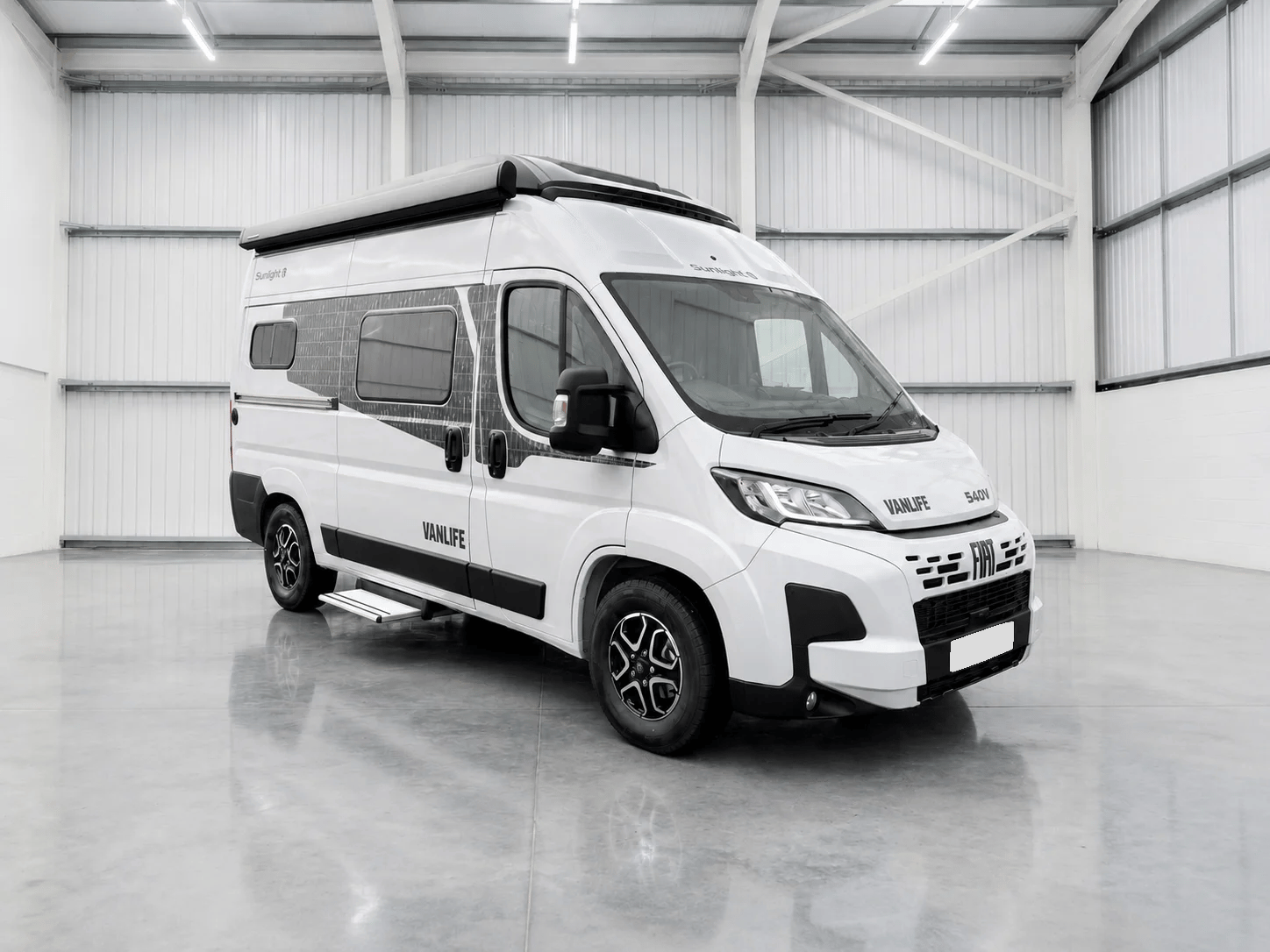
The camper you fall for is rarely the one you can afford. That gap is the whole reason Campervan.win exists. Right now we’re giving away the Sunlight Vanlife, worth around £65,000, and closing that gap is the point: capped entries so the odds stay honest, £10 a ticket, a maximum of five per person, £500 to a UK charity from every full draw, the winner picked by a public randomness beacon anyone can re-check, and one person driving away in the van itself.
Enjoyed this post?
Get more honest campervan guides like this one in your inbox.
You’re in!
Check your inbox. We’ve just sent you a welcome email.

About the author
Jasper
Jasper writes campervan reviews, travel guides, and practical advice, with a focus on everyday use and relaxed touring around the UK.
Keep Reading
Related Reading
Thoughtful articles that build on what you’ve just read.
Costs, Running & Reality
26 min read
Motorhoming on a budget: the real ways to cut costs without cutting trips
An honest, detailed guide to spending less on motorhome life without staying home, from cheaper park-ups and smarter fuel use to insurance, maintenance and clever kit choices.
Costs, Running & Reality
15 min read
Should you buy a campervan, or just hire one? The honest maths
Should you buy a campervan or just hire one when you need it? The honest answer hinges on a single number most people get wrong: how many weeks a year you'll really use it. Here's the real maths, the hidden costs of owning, and the decision laid out plainly.
Costs, Running & Reality
10 min read
A Campervan Gets You to the Coast. Surfers Against Sewage Is Fighting to Keep It Worth the Drive.
A campervan gets you to the coast. It can't make the water clean once you're there. Here's why £500 from this draw goes to Surfers Against Sewage.

Costs, Running & Reality
10 min read
The Real Barrier to Campervan Ownership Isn't the Price. It's the Finance.
New campervan prices have risen 15-23% since 2021, and the industry offers almost no finance incentives to help buyers. No 0% deals, no deposit contributions, no manufacturer-subsidised rates. The real barrier to ownership is not the price tag but the complete absence of accessible finance.