
Mercedes Sprinter engines for campervans and motorhomes: which one should you choose in the UK?

Written by
Felix
Felix covers campervan technology, layouts, and modern conversions, with a focus on design-led thinking and practical performance
The short answer
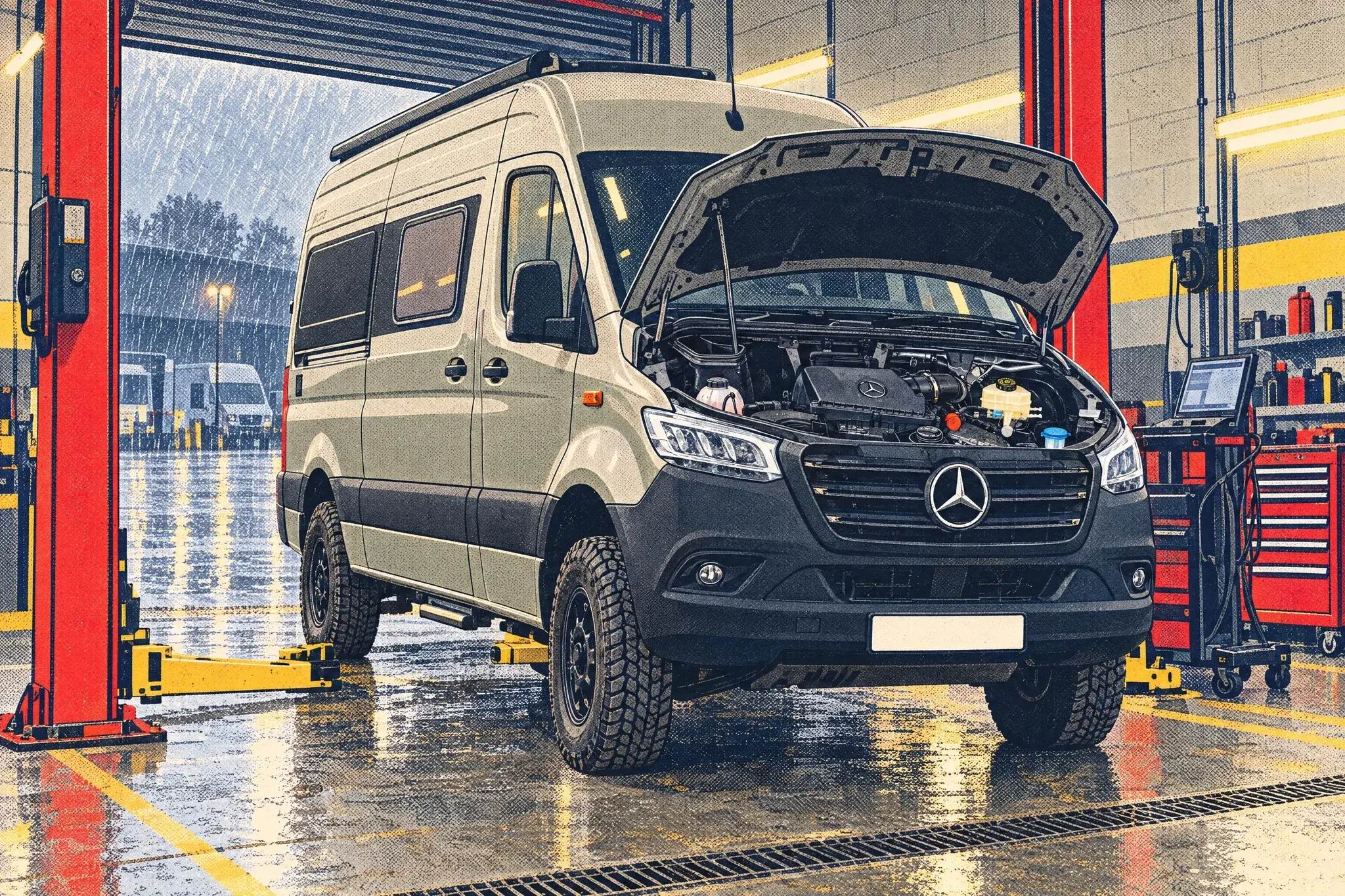
For a campervan or motorhome on a Mercedes Sprinter base, the engine choice is a touring decision, not a bragging-rights game, and the reassuring news is that for most UK buyers the sweet spot is the same: the 170hp diesel, ideally with the 9G-TRONIC automatic. All three mainstream outputs (150, 170 and 190hp) share the same 2.0-litre OM654 four-cylinder, and the economy between them is closer than people expect. The 170hp makes a heavy van's weight quietly disappear without pushing into payload and cost concerns; the 150hp is genuinely enough for lighter, gently driven vans; the 190hp earns its keep on heavy, long-wheelbase motorhomes, towing or hilly routes. The best engine is the one you barely notice. Here is how to pick the right one for the way you tour.

The engine choice is not a bragging rights game, it is a touring decision
When you are buying campervans or motorhomes on a Mercedes Benz base, the engine choice can feel oddly emotional. You are staring at a list of power outputs and torque figures, and a little voice in your head starts whispering things like, “You will regret not getting the bigger one” or “You will hate yourself at the pumps”.
Most of the time, neither is true.
The best engine choice is the one that makes the motorhome feel relaxed, keeps fuel spend sensible, and does not make future repairs a drama. It is also the one that suits how you tour in the UK, which is rarely a straight line. It is A roads that suddenly become lanes. It is hills that arrive without warning. It is stop start traffic near the coast because someone has parked a horse box in the only passing place.
Mercedes Benz Sprinter based motorhomes usually offer three mainstream diesel outputs in the current line up: 150 hp, 170 hp, and 190 hp, with the same 1,950 cc four cylinder layout and modern emissions kit.
So which one is best?
For most UK buyers of campervans and motorhomes, the sweet spot is the 170 hp diesel, ideally paired with the 9G TRONIC automatic gearbox if it is available on your chosen base. It is the engine that feels least stressed, gives you useful torque where you actually drive, and rarely costs much more in real world fuel than the smaller option.
There are exceptions. Plenty of them. We will get to those.
First, it helps to understand what Mercedes has been doing with its diesel engines over the last few years, because the name on the badge is not the whole story anymore.
The modern Mercedes diesel story in one breath
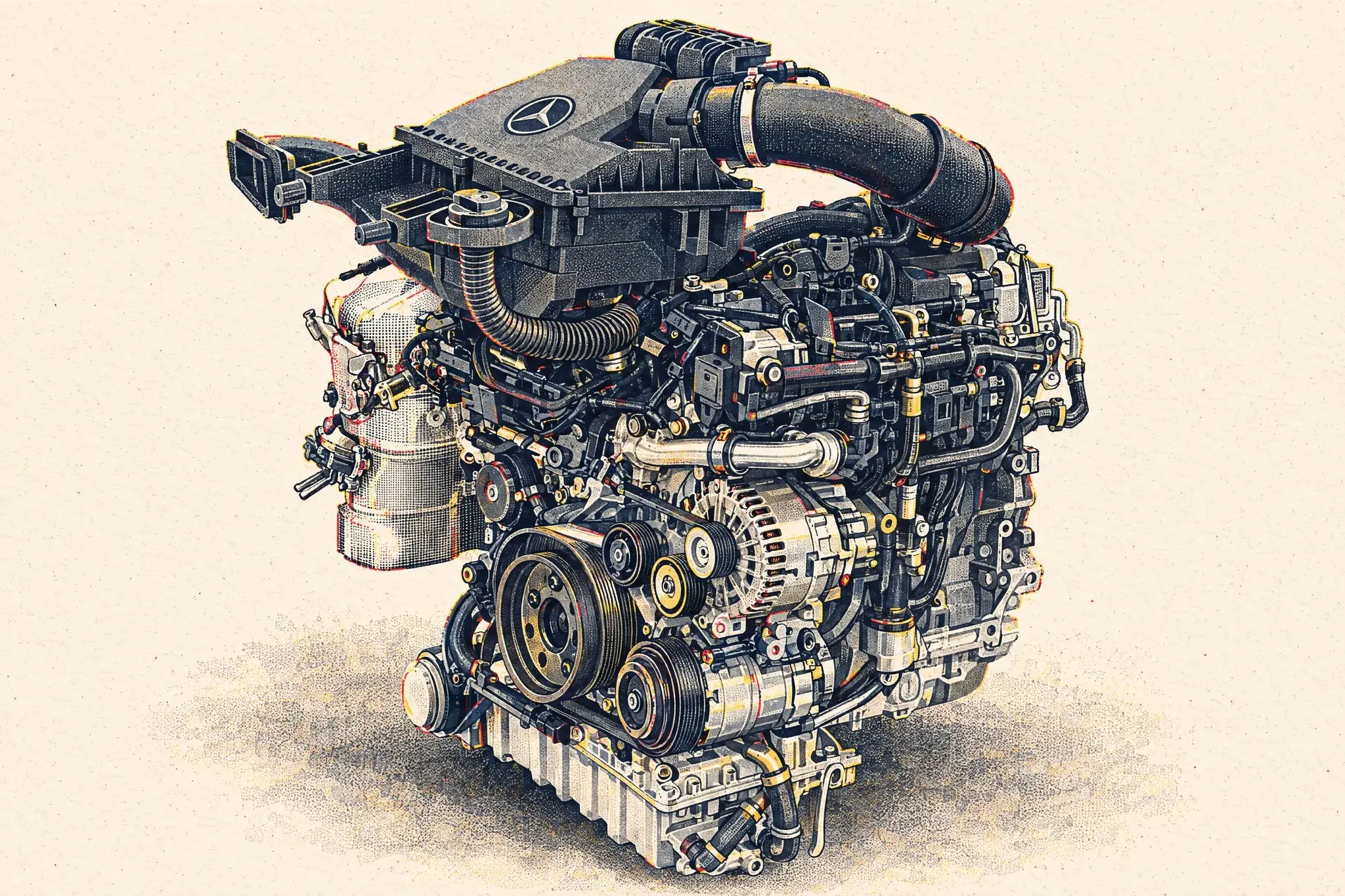
Older Sprinters used the 2.1 litre OM651 engine for years, and it became familiar to converters and mechanics. More recently, Mercedes has been moving Sprinter diesels to the 2.0 litre class OM654 family, which was introduced as a new generation four cylinder diesel and positioned as more efficient and more future proof in emissions terms.
Mercedes has also leaned into integrating the exhaust aftertreatment close to the engine and pairing the 2.0 litre diesel with the 9G TRONIC automatic for improved drivability and efficiency.
In plain English, the engine is only part of the experience now. The gearbox and emissions system are equally important to how the vehicle drives, how it drinks fuel, and what it might cost when something needs attention.
The three main power choices you actually see on motorhomes
Mercedes Benz pricing and naming can vary by market and by model year, and converters sometimes describe the same output using different badges. For a straightforward comparison, the Sprinter UK brochure shows the Sprinter diesel engine and gearbox section with these max outputs:
- 150 hp with 340 Nm
- 170 hp with 400 Nm
- 190 hp with 400 Nm
All are listed with the same 1,950 cc capacity and common rail direct injection with twin stage turbocharging, and both Euro 6e and Euro VI emissions categories are mentioned depending on duty category.
That torque spread matters more than the horsepower numbers.
Horsepower helps you maintain speed when you are already rolling. Torque is what stops the motorhome feeling like it is dragging a caravan behind it every time you meet a hill.
And because most touring in the UK includes hills, roundabouts, short motorway slip roads, and plenty of overtakes where you have a narrow window, torque is the figure you feel every single day.
The best all round choice: 170 hp
Why 170 hp tends to feel “right” in real touring
The 170 hp version sits in the middle, which sounds like a compromise until you drive it.
At 400 Nm, it offers a useful bump over the 150 hp engine, and it does it without pushing into the higher output territory where you tend to pay more and, in some cases, run closer to the limits of payload and tyre choice on certain builds.
In a typical coachbuilt motorhome, you are carrying a lot of constant weight. Water, furniture, insulation, tanks, batteries, and all the stuff you pretend you do not pack until you are loading it into the garage at home. That weight does not come and go. It is always there.
A 170 hp engine tends to make that constant weight disappear in the background. You find yourself driving more gently because you are not constantly chasing momentum. It feels less frantic on gradients and less breathless when you join a motorway.
The other quiet benefit is this: a motorhome that is not working hard all the time tends to feel calmer. Less noise. Less gear hunting. Less of that sense that you are pushing the vehicle, rather than it carrying you.
Economy: the surprise is how similar it can be
A lot of buyers assume the 150 hp engine will be meaningfully cheaper to run.
In reality, the difference is often smaller than you expect, because a more powerful engine can sit at lower revs for the same work. That does not always translate into better fuel use, but it can stop the big vehicle from spending its life in the wrong part of the rev range.
The Sprinter UK brochure fuel figures for panel vans show the 315 and 317 variants sitting very close together in WLTP combined consumption, depending on body length and height. For example, for an L2 H2 rear wheel drive van, the combined figure is shown as 9.0 l per 100 km for the 315 and 8.9 l per 100 km for the 317.
A motorhome is not a panel van, and the conversion weight and aerodynamics change everything. But the broader point holds: the middle engine is not automatically the thirstier one. In some conditions it can be the calmer one, and calm can be efficient.
Repairability and long term ownership
Repairability is a complicated word now, because modern diesels are not just engines. They are engines plus sensors, exhaust aftertreatment, and software.
The OM654 family is designed as a modern, efficient diesel engine platform, and Mercedes talks about it in the context of efficiency and emissions development.
The key ownership lesson is that the “engine” part is rarely the thing that strands people. The common pain points on modern diesels, across many brands, are usually emissions related components such as NOx sensors, AdBlue systems, EGR valves, and diesel particulate filters. Mercedes itself has carried out mandatory recall work on diesel vehicles involving software updates, and sometimes replacing NOx sensors where required.
That does not mean you should fear the engine choice. It means you should choose an engine output that is common, well supported, and not a niche.
The 170 hp unit is often the most popular specification for higher end campervans and mid sized motorhomes, which means it tends to have the best ecosystem. More familiarity at dealers. More examples on the road. More owners talking about real faults and fixes, which sounds trivial until you are on a wet pitch and your dashboard is flashing like a Christmas tree.
When the 150 hp engine makes the most sense
You tour light, and your motorhome is genuinely not huge
If you are buying a compact motorhome or a lighter campervan conversion, and you do not routinely carry heavy kit, 150 hp can be perfectly satisfying.
The 150 hp figure is not weak. It is simply the engine that asks you to be more deliberate. You plan overtakes. You give yourself a bit more space on slip roads. You accept that you will sometimes sit in the left lane and enjoy the scenery rather than hunting the fast lane.
In return, you get a simpler psychological experience at purchase time. You are not paying for power you do not use.
You prioritise economy and gentle driving
Some people drive in a way that is naturally economical. They do not rush. They do not brake late. They do not accelerate hard. They tour like they are already on holiday, not like they are trying to win the M5.
If that is you, the 150 hp engine is often enough. The Sprinter fuel tables show that consumption varies more by length and configuration than by the step between some engine variants.
So the economy case for 150 hp is real, but it is rarely dramatic. It is not the difference between a cheap holiday and an expensive one. It is more like the difference between feeling slightly smug and feeling slightly less smug.
You want the easiest payload story
This depends heavily on your specific motorhome, its plated weight, and its options. But in general, lower output versions sometimes come with fewer standard extras, and that can mean slightly more headroom for payload once the conversion weight is counted.
That said, modern motorhomes are often the victims of option creep, not engine output. The extra battery, the bigger fridge, the awning, the bike rack, the second solar panel, the automatic levelling, and the fancy wheels will eat your payload far faster than choosing the middle engine.
When the 190 hp engine is worth it
Heavy motorhomes, long wheelbases, and serious towing
If you are buying a larger coachbuilt motorhome, especially one with a substantial rear garage, a big water capacity, and a realistic touring payload, you might find 190 hp feels like money well spent.
The Sprinter brochure shows the 190 hp version at 450 Nm.
That torque is what matters when you are fully loaded and the road tilts up, or when you are towing something that adds meaningful weight. It is not about speeding. It is about reducing effort.
You will also feel the benefit in strong headwinds, which in Britain are basically a season.
You tour in places where gradients are part of the plan
There is a certain kind of touring where you end up in steep places on purpose. Scottish glens. Welsh valleys. The Peak District in winter. Coastal routes with short sharp climbs that arrive one after another.
In those conditions, a higher output engine can make the day feel easier, and it can reduce the amount of gear shifting or rev chasing. With an automatic gearbox, that can mean the vehicle feels less busy.
You are the sort of driver who keeps a motorhome for a long time
If you plan to keep the motorhome for years, and you tour a lot, the extra cost of the 190 hp engine can fade into the background compared to total ownership cost.
That is not a licence to overspend. It is simply acknowledging that if you are putting tens of thousands of miles on a motorhome, your comfort and fatigue levels matter.
A relaxed motorhome is one you want to use more often.
Gearboxes matter almost as much as engines
It is difficult to talk about “best engine” without talking about the gearbox, because it changes how usable the engine feels.
Mercedes has paired its modern 2.0 litre diesel with the 9G TRONIC automatic transmission as part of its updated Sprinter drive technology, and it has positioned that pairing as a comfort and efficiency improvement.
In the UK Sprinter brochure pricing section, 9G TRONIC is listed as an option in the equipment overview.
In a motorhome, an automatic gearbox brings three everyday benefits:
First, it reduces fatigue. You arrive less tired, especially in traffic or on hilly routes.
Second, it helps keep the engine in a more efficient zone more of the time, which can narrow the economy difference between the engine outputs.
Third, it can make the motorhome feel smoother, which matters more than you think when you are carrying a fridge full of milk and a cupboard full of mugs.
If you have a choice between 150 hp automatic and 170 hp manual, the automatic might be the bigger quality of life upgrade. If you can have 170 hp plus 9G TRONIC, that is the point where a Sprinter based motorhome starts feeling genuinely premium.
Reliability: what “reliable” actually means in a modern diesel
People ask whether an engine is reliable as if the answer is a simple yes or no.
In a modern diesel motorhome base, reliability is really four questions:
Will the engine itself last if serviced properly?
Will the emissions system behave if you use the vehicle in the right way?
Will parts and expertise be easy to find in the UK?
Will software and sensors cause nuisance faults that ruin trips?
The OM654 family is a modern engine platform designed around efficiency and emissions development.
But the more meaningful reliability reality for UK touring is this: emissions systems are happiest when the vehicle gets properly hot and stays hot for a while. If you only do short local hops, lots of idling, and repeated cold starts, you are making life harder for the DPF and EGR systems.
That matters for campervans and motorhomes because some owners use them like weekend cottages. Ten miles to the storage yard, ten miles back. A little run to the supermarket. Then it sits for weeks.
If that sounds like you, build a habit of giving the motorhome a proper run. Get it properly warm. Do a sustained drive. It is not glamorous advice, but it is the sort of thing that prevents small annoyances turning into expensive workshop visits.
Mercedes has carried out diesel related recall activity involving software updates and, where necessary, NOx sensor replacement on certain vehicles.
That is not a reason to panic. It is simply proof of what modern diesel ownership looks like: sensors and software are part of the system.
Repairability: what you can fix, and what you realistically cannot
Many people buying campervans or motorhomes dream of being self sufficient. It is part of the appeal.
The uncomfortable truth is that modern base vehicles are not built for driveway repairs in the way older vans were. Even something as simple as a sensor fault can require specialist diagnostics.
That does not mean ownership is miserable. It means you should choose a specification that reduces your risk of obscure faults.
Here is what helps, regardless of engine output:
Choose a common engine and avoid niche specifications
The 150, 170 and 190 hp outputs are all common, but the middle option tends to be the most popular in higher spec builds, which can translate into more shared knowledge and parts familiarity.
Keep the servicing straightforward and on schedule
A modern diesel will often tolerate neglect for a while and then punish it all at once. Motorhomes are particularly prone to missed service intervals because they do low annual mileage, so owners assume they can stretch time based servicing. Often, they cannot.
Treat AdBlue like a normal consumable, not an inconvenience
The Sprinter brochure lists AdBlue capacity at 22 litres.
That is useful context because it tells you the tank is not tiny. But you still need to keep it topped up. Running low can trigger warnings and, depending on the system, restrict starting if ignored.
Avoid silly shortcuts
It should not need saying, but anything marketed as an emissions delete for road use is a bad idea. It is illegal, it risks MOT failure, and it can create a mess of knock on problems. It also undermines the whole point of buying a modern base vehicle.
If you want a simpler diesel with fewer systems, the answer is not to remove systems. It is to choose an older vehicle knowingly, and accept the trade offs.
Innovations and updates: what has actually changed over time?
If you have been around campervans and motorhomes for a while, you have seen the shift.
The changes are not only about power. They are about how engines meet emissions rules without making the vehicle miserable to drive.
Mercedes describes the OM654 as part of a new family of engines aimed at exemplary efficiency and emissions performance, positioning it as future proof.
On the Sprinter side, Mercedes has highlighted pairing the state of the art 2.0 litre diesel with the 9G TRONIC automatic transmission, and placing exhaust aftertreatment close to the engine to work with less heat loss.
From a motorhome buyer’s perspective, the most meaningful innovations are:
Better gearbox behaviour, especially with modern automatics.
More usable torque lower down, making heavy vehicles easier to drive.
Emissions systems that work best with correct use, but can be sensitive to the wrong use.
More driver assistance and integrated technology, which does not make the engine better, but makes long touring days less tiring.
Also, the UK Sprinter brochure notes that the panel van range is available in two emissions categories, Euro 6e and Euro VI, which reflects the broader split between light duty and heavy duty applications.
For most private owners of motorhomes, the key takeaway is simple: do not fixate on the badge. Confirm the actual engine output, confirm the gearbox, and confirm the vehicle’s plated weight and payload.
A practical guide: match the engine to your touring life
This is the part most people skip, then regret.
If you tour mostly as a couple, stay on campsites, and do mixed driving
Choose 170 hp. It will feel effortless without being over the top.
If you drive gently, avoid heavy loads, and want the simplest purchase decision
Choose 150 hp, especially if your campervan conversion is compact and you are honest about how you travel.
If you have a big motorhome, carry lots of kit, or tow regularly
Choose 190 hp, and make sure the rest of the specification supports it, including tyres, brakes, and payload.
If you do lots of short trips and little proper driving
It is not an engine output question, it is a usage question. Consider whether a modern diesel motorhome base suits your life at all. If it does, commit to giving it regular proper runs.
Why this matters to us at Campervan.win
The reason people agonise over engine choice is not because they are obsessed with horsepower. It is because buying campervans and motorhomes has become expensive enough that every decision feels permanent.
We want touring to feel possible for more people. Not in a fantasy way, but in a real way. That is part of why we exist.
Engine choice is one of those decisions that can make touring feel easy for years, or slightly irritating for years. The right choice does not turn a motorhome into a bargain, but it can stop you spending money to fix a problem that was really a specification mismatch.
The verdict: the best Mercedes Benz motorhome engine is usually the one you barely notice
For most UK buyers, the 170 hp diesel is the best all round option on a Mercedes Benz Sprinter base, especially when paired with the 9G TRONIC automatic gearbox where available.
It has enough torque at 400 Nm to make heavy touring feel relaxed, without tipping you into the highest output where you are paying for performance you may not often use.
The 150 hp engine is a sensible choice for lighter campervans and for drivers who tour slowly and pack lightly. The 190 hp engine earns its keep in heavier motorhomes, towing scenarios, and hilly touring where effortless progress is part of the enjoyment.
Whichever you choose, remember that modern diesel ownership is as much about how you use the vehicle as what you buy. Give it proper runs. Keep on top of servicing. Treat AdBlue and emissions systems as normal parts of the touring routine.
Do that, and the best engine choice will feel like the simplest one: the one that gets you to the coast, up the hills, and home again without drama.
Common questions
Which Mercedes Sprinter engine is best for a campervan or motorhome?
For most UK buyers, the 170hp diesel, ideally paired with the 9G-TRONIC automatic. The Sprinter offers three mainstream outputs (150, 170 and 190hp) all on the same 2.0-litre OM654 four-cylinder, and the 170hp sits in the middle as the all-rounder: it makes a heavy van feel relaxed without pushing into the higher cost and payload concerns of the 190hp.
Is the 150hp Sprinter engine enough for a motorhome?
Often, yes. The 150hp is not weak, and it suits buyers with a compact motorhome or lighter campervan who do not routinely carry heavy kit, who drive gently, and who want the easiest payload story. People who tour as though they are already on holiday rather than racing up the M5 are usually well served by it.
When is the 190hp Sprinter engine worth it?
For heavy motorhomes, long wheelbases and serious towing, for touring in places where steep gradients are part of the plan, and for drivers who keep a motorhome for a long time and want effortless reserves. If your van is genuinely big and heavy or you tow regularly, the 190hp earns its extra cost; for most lighter campervans it is more than you need.
Do the different Sprinter engines really differ in fuel economy?
Less than people assume. All three share the same 2.0-litre OM654 diesel, and the brochure WLTP figures sit very close: for an L2 H2 rear-wheel-drive van, for example, the 315 (150hp) and 317 (170hp) are about 9.0 and 8.9 litres per 100km. So choosing the smaller engine purely to save fuel rarely pays off; pick the output that suits how you tour.
What makes a modern Sprinter diesel reliable and repairable?
Using it properly and choosing a common spec. Give it proper runs rather than only short trips, keep servicing on schedule, treat AdBlue and the emissions systems as normal consumables rather than an inconvenience, and avoid silly shortcuts. Choosing a popular engine like the 170hp also means the best ecosystem of converters and mechanics who know it well.
The reachable bit
The camper you fall for is rarely the one you can afford. That gap is the whole reason Campervan.win exists. Right now we’re giving away the Sunlight Vanlife, worth around £65,000, and closing that gap is the point: capped entries so the odds stay honest, £10 a ticket, a maximum of five per person, £500 to a UK charity from every full draw, the winner picked by a public randomness beacon anyone can re-check, and one person driving away in the van itself.
Enjoyed this post?
Get more honest campervan guides like this one in your inbox.
You’re in!
Check your inbox. We’ve just sent you a welcome email.

About the author
Felix
Felix covers campervan technology, layouts, and modern conversions, with a focus on design-led thinking and practical performance
Keep Reading
Related Reading
Thoughtful articles that build on what you’ve just read.
Costs, Running & Reality
26 min read
Motorhoming on a budget: the real ways to cut costs without cutting trips
An honest, detailed guide to spending less on motorhome life without staying home, from cheaper park-ups and smarter fuel use to insurance, maintenance and clever kit choices.
Costs, Running & Reality
15 min read
Should you buy a campervan, or just hire one? The honest maths
Should you buy a campervan or just hire one when you need it? The honest answer hinges on a single number most people get wrong: how many weeks a year you'll really use it. Here's the real maths, the hidden costs of owning, and the decision laid out plainly.
Costs, Running & Reality
10 min read
A Campervan Gets You to the Coast. Surfers Against Sewage Is Fighting to Keep It Worth the Drive.
A campervan gets you to the coast. It can't make the water clean once you're there. Here's why £500 from this draw goes to Surfers Against Sewage.

Costs, Running & Reality
10 min read
The Real Barrier to Campervan Ownership Isn't the Price. It's the Finance.
New campervan prices have risen 15-23% since 2021, and the industry offers almost no finance incentives to help buyers. No 0% deals, no deposit contributions, no manufacturer-subsidised rates. The real barrier to ownership is not the price tag but the complete absence of accessible finance.