
Fiat Ducato vs Mercedes Sprinter for campervans and motorhomes: what actually matters in 2026

Written by
Leo
Leo covers campervan technology, maintenance, kit, and ownership advice, with a clear, practical focus on how things work in real life.
The short answer
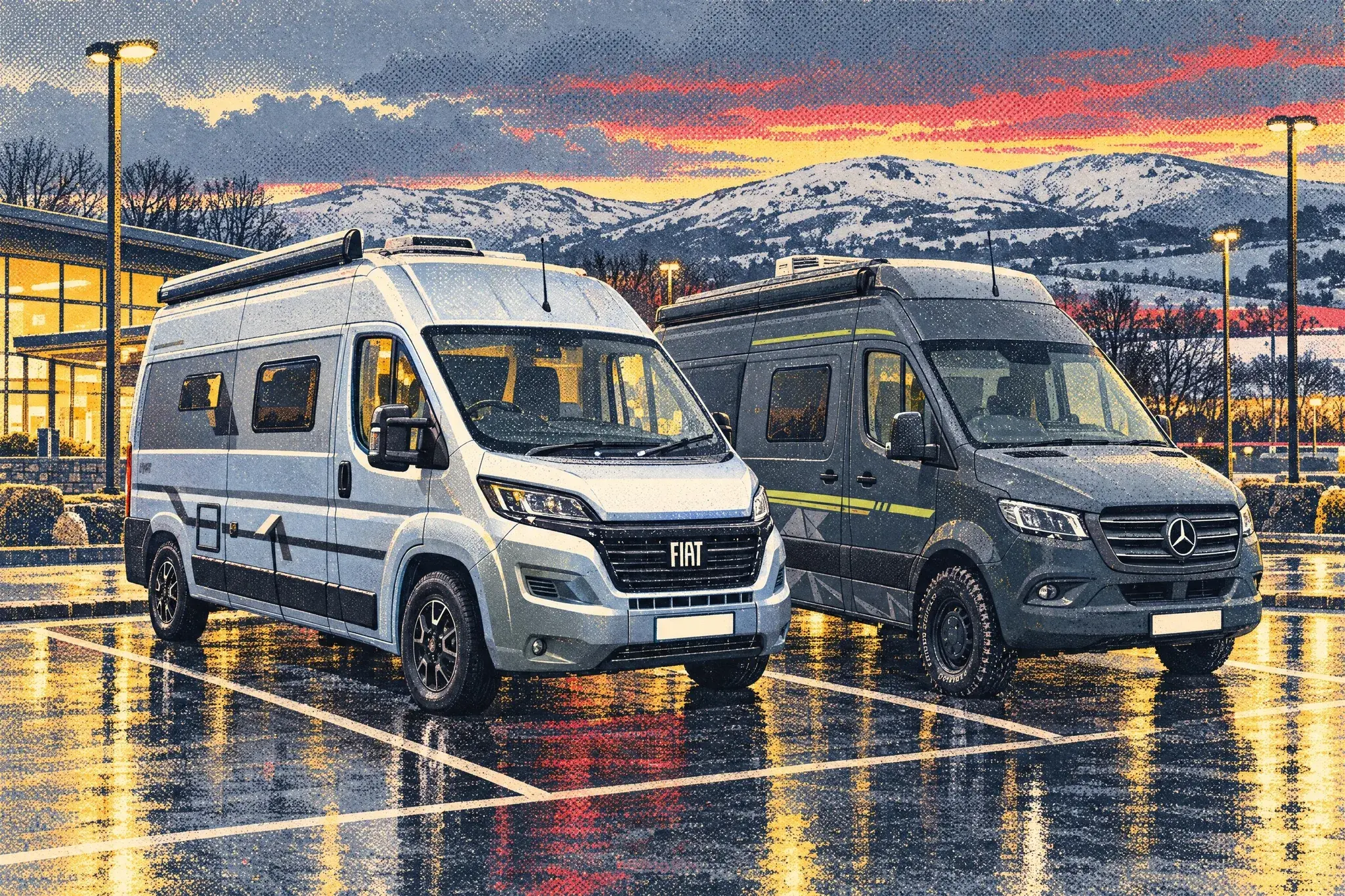
For a campervan or motorhome, the base vehicle shapes daily life more than the badge, and the good news is that neither the Fiat Ducato nor the Mercedes Sprinter is simply better, so you can choose with confidence. The Ducato is wider inside (a 1,870mm load width against the Sprinter's 1,787mm), so converters get more usable space and it tends to be better value; it now offers an 8-speed automatic with 120 to 180hp Euro 6E diesels. The Sprinter usually wins on ride, refinement and long-day calm, with up to 140kW and the 9G-TRONIC automatic, but it costs more. The right answer is simply the one that makes touring feel easier for how you travel. Here is what actually matters between them in 2026.

There is a moment that happens to almost everyone shopping for campervans and motorhomes. You have narrowed down the layout, you have pictured the kettle on, you have convinced yourself the bike will fit, and then somebody asks the question that changes the tone of the whole conversation.
“Is it on a Fiat base, or a Mercedes base?”
It sounds like a badge question, but it is not really about badges. The base vehicle shapes everything you live with day to day, especially once the honeymoon period wears off. It affects how calm it feels on the motorway, how it behaves on wet grass, how tiring a long day at the wheel is, how easy it is to find help when something pings up on the dash, and how much usable space the converter has to play with inside.
It also affects the price far more than it used to. Fiat based campervans used to be the obvious value option. Mercedes based models were the premium pick, often priced accordingly. Lately, that gap has been narrowing. In a few corners of the market, Fiat based vans are creeping up to Mercedes money, and occasionally going beyond it once the options stack up and the dealer spec sheet gets enthusiastic.
So, let’s put the myths to one side and talk about what you actually gain, and what you actually give up, when you choose Fiat Ducato versus Mercedes Sprinter as the base for your next campervans or motorhomes.
The base vehicle is half the holiday
A converter can build a beautiful interior, but your base vehicle is what you trust at 6am in sideways rain when you need to get moving. It is what you sit in for hours when Wales decides it is going to be windy all day. It is what you are paying to maintain for years, long after the soft close drawers stop feeling like a novelty.
The base affects four big things:
First, space and packaging. How wide is it, how tall is it, how square are the walls, and how high is the floor.
Second, drivability. Steering feel, ride comfort, engine response, gearbox behaviour, stability in gusts, and how relaxed it feels at 60 or 70.
Third, running costs. Fuel economy, tyres, servicing, parts costs, and the sort of issues you are likely to deal with as the miles build.
Fourth, price and value. Not just the headline figure, but what you get for your money and what it might be worth later.
None of these is fixed in stone. Converters can improve ride with suspension upgrades and better tyre choices. They can squeeze a lot out of interior design. But the base gives them the starting point.
Fiat Ducato and Mercedes Sprinter in plain English
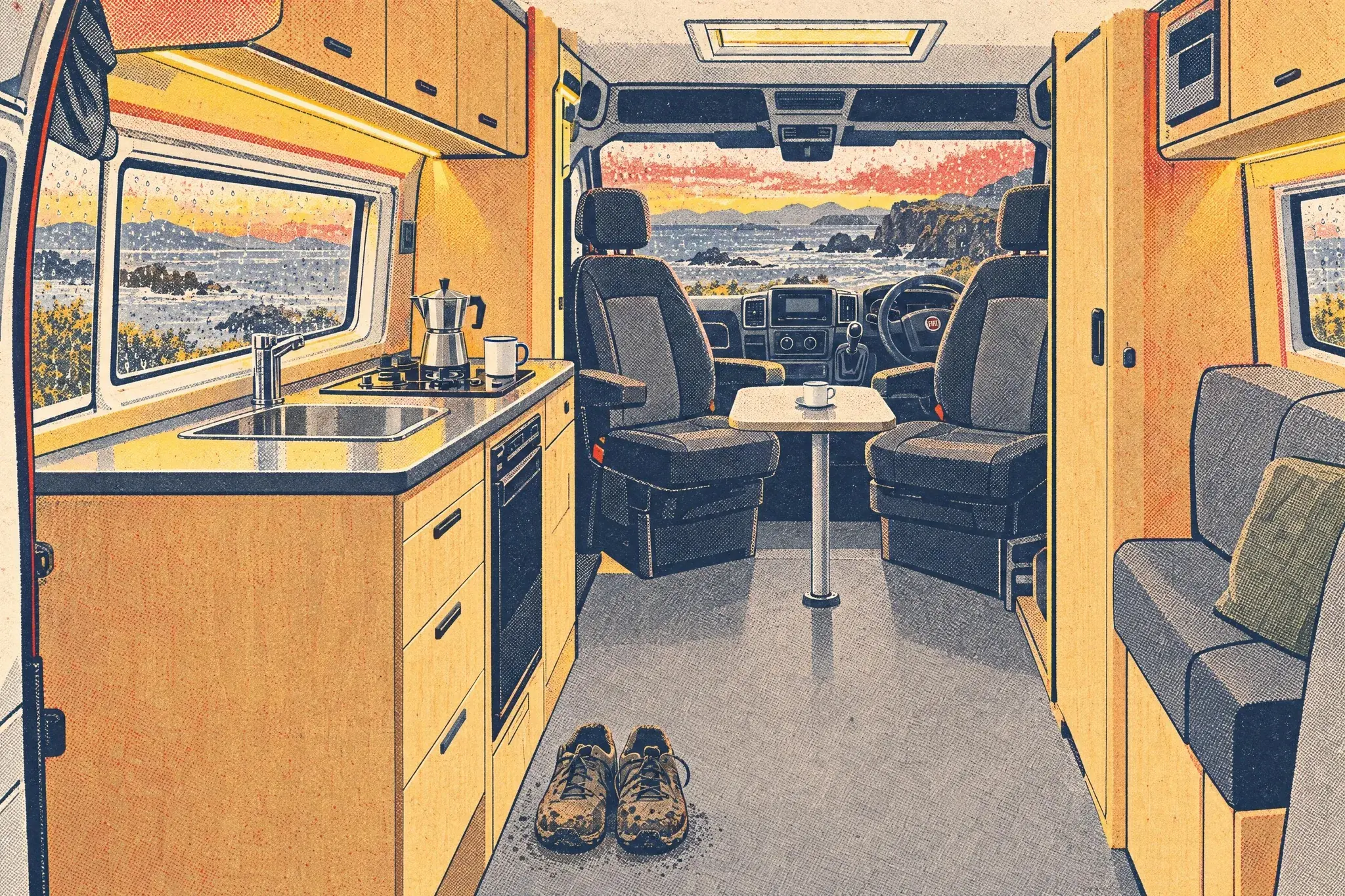
Most Fiat based campervans and motorhomes use a front wheel drive layout. The engine sits at the front and drives the front wheels. The advantage is a lower, flatter floor and a wide, boxy load area that converters love. It can feel very practical and very efficient.
Most Mercedes Sprinter based campervans and motorhomes in the UK use rear wheel drive, or sometimes all wheel drive. The engine is at the front, power goes to the rear wheels, and the vehicle tends to feel more planted when it is heavy. It often drives with a slightly more “car like” confidence, particularly at speed and in crosswinds, and it handles higher weights very comfortably.
There are exceptions, but as a broad rule, that layout difference explains a lot of the real world pros and cons people notice.
Dimensions and why Fiat often feels bigger inside
Converters pick Ducato and Sprinter for a reason. Both are available in the lengths and heights that suit campervans and motorhomes, and both can be plated to the weights that matter in this world.
Fiat Ducato base dimensions and length options
On the current UK Ducato range, the common panel van lengths used for campervan conversions are:
L2, 5,413 mm overall length
L3, 5,998 mm overall length
L4, 6,363 mm overall length
The key number many people care about is width. Ducato is 2,050 mm wide (vehicle width), and the load area can be very generous across the sides. In the same UK data, max load width is listed as 1,870 mm.
That extra width matters in real life. It is often the difference between:
A bed you can sleep across the van widthways, versus needing lengthways beds that eat more floor space.
A kitchen that feels usable without feeling like you are cooking in a corridor.
A washroom that can be cleverly compact without feeling like a phone box.
It is not just about comfort either. Wider vans can make it easier to design storage that is not constantly intruding into your walkway.
Mercedes Sprinter base dimensions and length options
On the Sprinter side, one of the most common motorhome and campervan bases in the UK market is the roughly 5.93 m and 6.97 m family of panel van sizes. In the Mercedes UK brochure, a rear wheel drive Sprinter panel van is listed at 5,932 mm (L2 H2 in that section), and 6,967 mm for longer bodies.
The Sprinter load area max width in that same brochure section is shown as 1,787 mm.
So yes, in pure packaging terms, Ducato usually gives converters more room to play with. That is why so many of the classic UK layouts exist primarily on Fiat and its siblings.
But packaging is only one side of the story.
Ride and driving feel, where Mercedes often earns its reputation
If you have driven a few different campervans and motorhomes back to back, you will have felt it. Some feel calm and settled, some feel busy, some feel like they are being blown around more than they should, and some feel like they do not mind carrying weight at all.
Ducato on the road
Ducato is often described as easy to place on the road. The driving position tends to be upright and practical, with good visibility. Front wheel drive can make it feel nimble in towns, and the turning circle is often friendly enough for campsite lanes and petrol stations.
The downside is that front wheel drive has to do a lot of work when the vehicle is heavy. It is steering and pulling and coping with bumps all at once. On a wet slope, or when pulling away on damp grass, you can sometimes feel the front tyres work hard. It is not a deal breaker, but it is a real behaviour you notice if you tour year round.
The good news is that the current Ducato has been evolving. Fiat has been pushing efficiency and refinement, including a newer automatic gearbox option for motorhomes.
Sprinter on the road
Sprinter tends to feel more relaxed when loaded. Rear wheel drive is part of that. The front wheels concentrate on steering, the rear wheels do the pushing, and the vehicle often feels less flustered when you are at higher weights or you are towing.
In crosswinds, a well set up Sprinter based motorhome can feel very planted. That is not magic. It is a mixture of chassis design, suspension tuning, and the way weight sits over the driven axle when loaded.
The trade off is that Sprinter based campervans can feel slightly narrower inside, and the step in can be a touch higher depending on spec and converter choices.
Engine choices, what you actually need and what you do not
Most people do not need the biggest engine available. What you need is the engine that makes your touring easy.
That means:
Enough torque to climb without constantly hunting gears
Enough power to merge safely
Not so stressed that it feels noisy and thirsty all the time
Fiat Ducato engines and the new automatic story
Fiat Camper is now talking about a Multijet Euro 6E engine range for Ducato, with outputs from 120 to 180 hp.
The big recent talking point is the shift to an 8 speed automatic transmission option for the new Ducato, including the camper variant. Stellantis has explicitly said the 8 speed automatic will also be available for the Ducato Camper and suitable for motorhomes up to 5 tonnes gross vehicle weight.
Fiat Camper’s own 2024 update also notes that the new 8 speed automatic can be paired with Euro 6e turbo diesel engines in 140 hp or 180 hp versions.
That matters because automatics are no longer a luxury in this sector. They are a comfort and fatigue reduction tool, and for some people they are the difference between using the vehicle a lot and using it less than they hoped.
If you are mostly touring the UK, carrying a normal holiday load, and you want relaxed progress, the mid power options are often the sweet spot. On Ducato, that usually means looking closely at 140 hp unless you know you will be heavy, mountainous, or towing regularly. The 180 hp option makes sense for higher weights, for towing, and for drivers who simply want the engine to feel unbothered.
Mercedes Sprinter engines and gearboxes
The Mercedes Sprinter UK brochure lists several diesel power outputs, including 84 kW, 110 kW, 125 kW, and 140 kW, with torque figures rising up to 440 Nm on the higher output option.
Mercedes also offers the 9G TRONIC automatic gearbox as an option in the UK brochure, which is a useful pairing for a heavy campervan or motorhome, particularly if you tour a lot or do long motorway days.
In the real world, the mid to upper outputs are popular for motorhomes because they make the vehicle feel less strained. Again, you are not buying bragging rights, you are buying calm.
Economy, what to expect and what affects it most
Fuel economy in campervans and motorhomes is not just about the engine. It is about weight, aerodynamics, tyre choice, wind, and how you drive. Two identical vehicles can return very different figures depending on whether they are used for fast motorway touring or relaxed A road wandering.
That said, some patterns are consistent.
Fiat Ducato, with front wheel drive and a wide, relatively aerodynamic shape for a big van, can be quite efficient when driven steadily. The newer automatic is designed with efficiency in mind as well as comfort, although in any automatic the right foot matters more than the brochure.
Mercedes Sprinter can also return strong economy for its size, particularly with the right gearing and the automatic keeping the engine in a lazy part of the rev range. But Sprinter based motorhomes are often heavier in comparable trims, and weight always wins the argument.
A practical way to think about economy is this:
If you tour lightly, do shorter trips, and spend a lot of time on slower roads, the difference between bases may be less dramatic than you expect.
If you tour heavily, do long motorway stints, or tow, then the engine and gearbox pairing matters more, and the Sprinter’s relaxed loaded behaviour can help you keep a steadier pace without working it as hard.
Repairability and servicing, which one is easier to live with
This is the part nobody wants to talk about when they are falling in love with a layout, but it matters.
Fiat servicing and support
Fiat Camper leans hard into the support side, including camper specific assistance and a large service network across Europe. Their own materials talk about a broad workshop network and camper focused services.
In the UK, Ducato based vehicles also benefit from the sheer volume of Fiat and Fiat Professional parts in circulation. Ducato and its close relatives are everywhere in the motorhome world, which tends to make parts availability good and independent specialist knowledge common.
Mercedes servicing and support
Mercedes servicing in the UK is generally strong, with a large dealer network and good diagnostics. The flip side is cost. Mercedes labour rates tend to be higher, and the overall experience can feel more “main dealer” than “friendly local garage”, depending on where you go.
Sprinter systems can also be more complex in some trims, particularly around driver assistance, infotainment, and integration with the converter’s systems. Complexity is not automatically bad, but it does mean you want the right people working on it.
A useful rule of thumb is this:
If you plan to keep the vehicle a long time, buy the base you can get properly serviced and repaired without drama where you live, not just the base you like on paper.
Reliability, the honest version
Neither base is immune to the realities of modern diesel emissions systems. If you buy a new or nearly new campervan or motorhome in 2026, you are living in the world of AdBlue, DPFs, sensors, and increasingly clever software. Most of the time it is fine. When it is not fine, it can feel annoying because the vehicle may still drive perfectly while it is insisting it wants attention.
The reliability conversation tends to get muddy because it is full of individual anecdotes. The truth is usually more boring.
Most base vehicle reliability comes down to:
Proper servicing
Correct fluids
Not ignoring warning lights
Driving style that actually gets the system hot often enough to do its job
Campervans and motorhomes can have an odd life. Some do huge trips. Some do short runs and then sit. Short runs and long storage periods are not always friendly to modern diesels.
If you want to tip the odds in your favour, focus less on brand folklore and more on how you will actually use the vehicle.
Interior space, layouts, and why converters often prefer Fiat
You can see the Ducato advantage clearly when you look at how many classic UK layouts exist on Fiat.
Width helps with:
Transverse rear beds that do not steal floor space
Wider washrooms
More generous kitchens
Better shoulder room around the lounge
Sprinter conversions often respond with smarter design and more premium interiors, and many owners happily trade a bit of width for the way it drives.
It is a genuine preference question.
If you are tall, broad shouldered, or you like a more open feel inside, a Ducato conversion can feel immediately spacious.
If you care most about the drive and you are happy with a slightly more tailored interior, Sprinter can feel like the right tool.
The price gap, and why it is shrinking
Here is the blunt starting point. The base vehicles are priced differently.
In the current Mercedes Sprinter UK brochure, a Sprinter 315 Van L2 H2 in PRO trim is shown at £48,965 excluding VAT and £58,758 including VAT.
In the current Fiat Ducato UK price list, a Ducato panel van 35 L2 H2 140 manual is shown at £32,865 excluding VAT and £39,444 including VAT.
That is a meaningful gap. Roughly speaking, the Mercedes base is around £19,000 more on those like for like style examples before you start adding conversion costs and options.
So why are Fiat based campervans getting closer to Mercedes based prices?
Because the base vehicle is not the whole bill.
Once a converter has added insulation, windows, rooflights, wiring, furniture, heating, hot water, seating, upholstery, appliances, and all the labour that turns a van into a proper living space, that extra £19,000 can become a smaller slice of the final retail price than people assume.
Then you add the modern reality:
Automatics are popular and cost money on both bases.
Safety packs and tech packs add cost.
Material costs have risen.
Labour has risen.
Some brands are positioning Fiat based models as premium, not budget.
A real example of how close it can look
Hymer’s own 2026 price list shows a Fiat Ducato based campervan, the Free Campus 600, at 80,490 euros, with length 5,995 mm, width 2,080 mm, height 2,680 mm.
In the same document, a Mercedes Sprinter based model, the Grand Canyon S Xperience, is listed at 100,490 euros, with length 6,970 mm, width 2,060 mm, height 2,820 mm.
Those are not directly comparable models in size or spec, but they show the market reality. Fiat based Hymer campervans are not “cheap vans” any more. They are proper, premium products.
And if you look at UK dealer pricing for a Mercedes based campervan like the Grand Canyon S, you can see how the numbers land once converted into the real world of sterling and UK spec. For example, one UK dealer listing shows a 2026 Hymer Grand Canyon S from £94,110.
The point is not that Fiat and Mercedes are the same price. They are not. The point is that the gap is no longer always big enough to settle the argument on its own.
Which base is better value, and for who
Value is not just the cheapest starting price. Value is buying the right thing once.
Fiat Ducato tends to be better value if
You want maximum living space for the footprint.
You want a classic layout that relies on width.
You are cost conscious, but you still want a modern automatic option available.
You want wide availability of parts and knowledge in the motorhome world.
Mercedes Sprinter tends to be better value if
You do a lot of long distance touring and you care about fatigue and calm driving.
You tour at higher weights or tow.
You want rear wheel drive stability and the feel of a more planted chassis.
You are happy to pay more for the base vehicle because you plan to keep it, or because you believe it will hold value better.
There is no moral superiority to either choice. There is just fit.
The UK touring angle, real life details people forget
In the UK, a big chunk of touring is wet, narrow, and slightly chaotic. You are dealing with farm shop car parks, tight lay bys, gusty exposed roads, and the occasional muddy campsite pitch where you reverse twice and still end up with your shoes soaked.
That is why I always bring the decision back to what your trips look like.
If you mostly do weekends, you might value a Ducato conversion’s space and easy daily usability more than the last word in motorway refinement.
If you do long runs to Scotland, Cornwall, or the Continent, you might start valuing the Sprinter’s calm manners and the way it carries itself when loaded.
Why we talk about this at Campervan.win
At Campervan.win, we spend a lot of time thinking about value because value is what makes touring possible for more people.
The uncomfortable truth is that both Fiat based and Mercedes based campervans and motorhomes have become expensive. Even the “budget” end of new vehicles can feel like it has wandered off into another world.
That is one of the reasons we run competitions. Not as a gimmick, but as a practical attempt to make campervans and motorhomes feel within reach again. The dream is not meant to be reserved for the people who can casually absorb six figure price tags.
But if you are buying, or dreaming of buying, the base vehicle decision is still worth getting right. It is one of the few choices that you live with every single day you use the vehicle.
A simple way to decide without overthinking it
If you are torn, do this.
Pick two campervans or motorhomes with layouts you genuinely like, one on Fiat and one on Mercedes. Drive both for long enough to get past the first impression. Sit in both with the door shut and imagine a rainy Tuesday evening. Stand at the kitchen and picture making something simple while somebody else walks past. Climb into the bed and look at where your feet actually go.
Then ask yourself:
Which one makes touring feel easier for the way you travel.
If that answer surprises you, believe it. The best base is the one that makes you use your campervans and motorhomes more, not the one that wins an argument online.
Common questions
Is a Fiat Ducato or Mercedes Sprinter better for a campervan?
Neither is simply better; the base vehicle shapes daily life more than the badge, and the right one depends on how you travel. The Ducato is wider inside and usually better value, so converters often prefer it; the Sprinter is generally more refined to drive on long days and on poor surfaces. Pick the one that makes touring feel easier for you rather than the one that wins an online argument.
Why do converters often prefer the Fiat Ducato?
Mainly interior space and value. The Ducato is 2,050mm wide with a generous load area (max load width around 1,870mm versus the Sprinter's roughly 1,787mm), so it often feels bigger inside and gives the converter more room to work with. It also tends to cost less, which is why so many European campervans and motorhomes are built on it.
Why is the Mercedes Sprinter more expensive?
It generally offers a more refined drive, with steering feel, ride comfort and stability that many find more relaxing on long motorway days and in poor weather, plus the badge and dealer network. A Sprinter 315 Van L2 H2 in PRO trim, for example, is listed around 48,965 pounds excluding VAT (58,758 pounds including VAT), and that premium over a comparable Ducato base is part of the trade-off.
Does the Fiat Ducato have an automatic gearbox now?
Yes. The big recent change is an 8-speed automatic option for the new Ducato, including the camper variant, which Stellantis says suits motorhomes up to 5 tonnes gross weight. It can be paired with the Euro 6E Multijet turbo diesels in 140hp or 180hp versions, closing much of the gap to the Sprinter's long-established 9G-TRONIC automatic.
What engine should I choose on a Ducato or Sprinter?
On the Ducato, the 140hp Multijet suits most buyers unless you will be heavy, mountainous or towing regularly, where the 180hp makes sense. The Sprinter offers several outputs up to 140kW with torque to 440Nm; the mid-range options paired with the 9G-TRONIC automatic suit a heavy van and long motorway days. Match the engine to your real weight and routes rather than badge pride.
Which base vehicle is better value, Ducato or Sprinter?
The Ducato tends to be better value if you want more interior space and a lower price and do mostly normal UK touring; the Sprinter tends to be better value if you cover big motorway miles, want the most refined drive, or value the dealer and resale strength. The price gap has been shrinking, so compare real, like-for-like specs rather than assuming.
The reachable bit
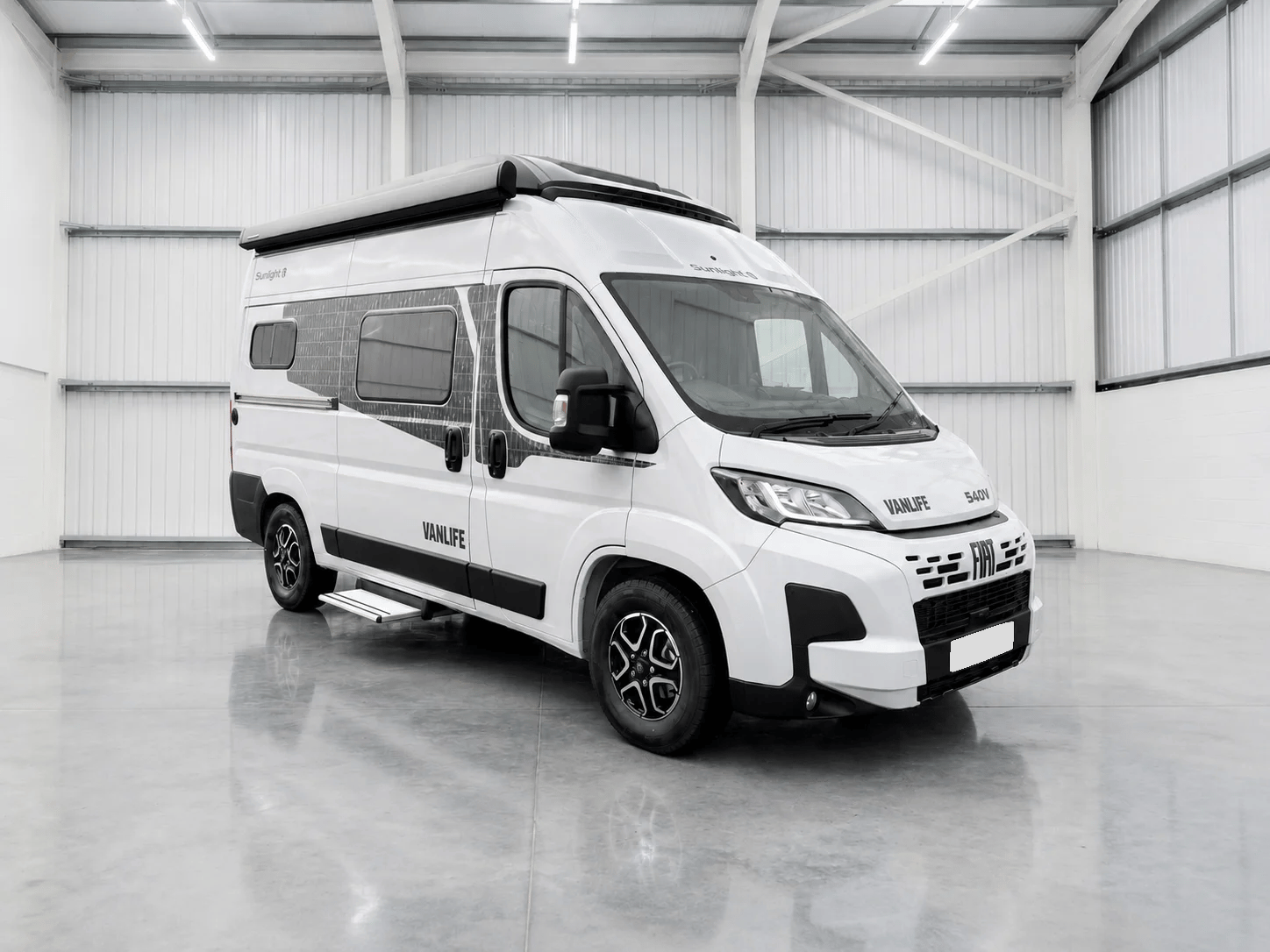
The camper you fall for is rarely the one you can afford. That gap is the whole reason Campervan.win exists. Right now we’re giving away the Sunlight Vanlife, worth around £65,000, and closing that gap is the point: capped entries so the odds stay honest, £10 a ticket, a maximum of five per person, £500 to a UK charity from every full draw, the winner picked by a public randomness beacon anyone can re-check, and one person driving away in the van itself.
Enjoyed this post?
Get more honest campervan guides like this one in your inbox.
You’re in!
Check your inbox. We’ve just sent you a welcome email.

About the author
Leo
Leo covers campervan technology, maintenance, kit, and ownership advice, with a clear, practical focus on how things work in real life.
Keep Reading
Related Reading
Thoughtful articles that build on what you’ve just read.
Campervan Buying Guides
13 min read
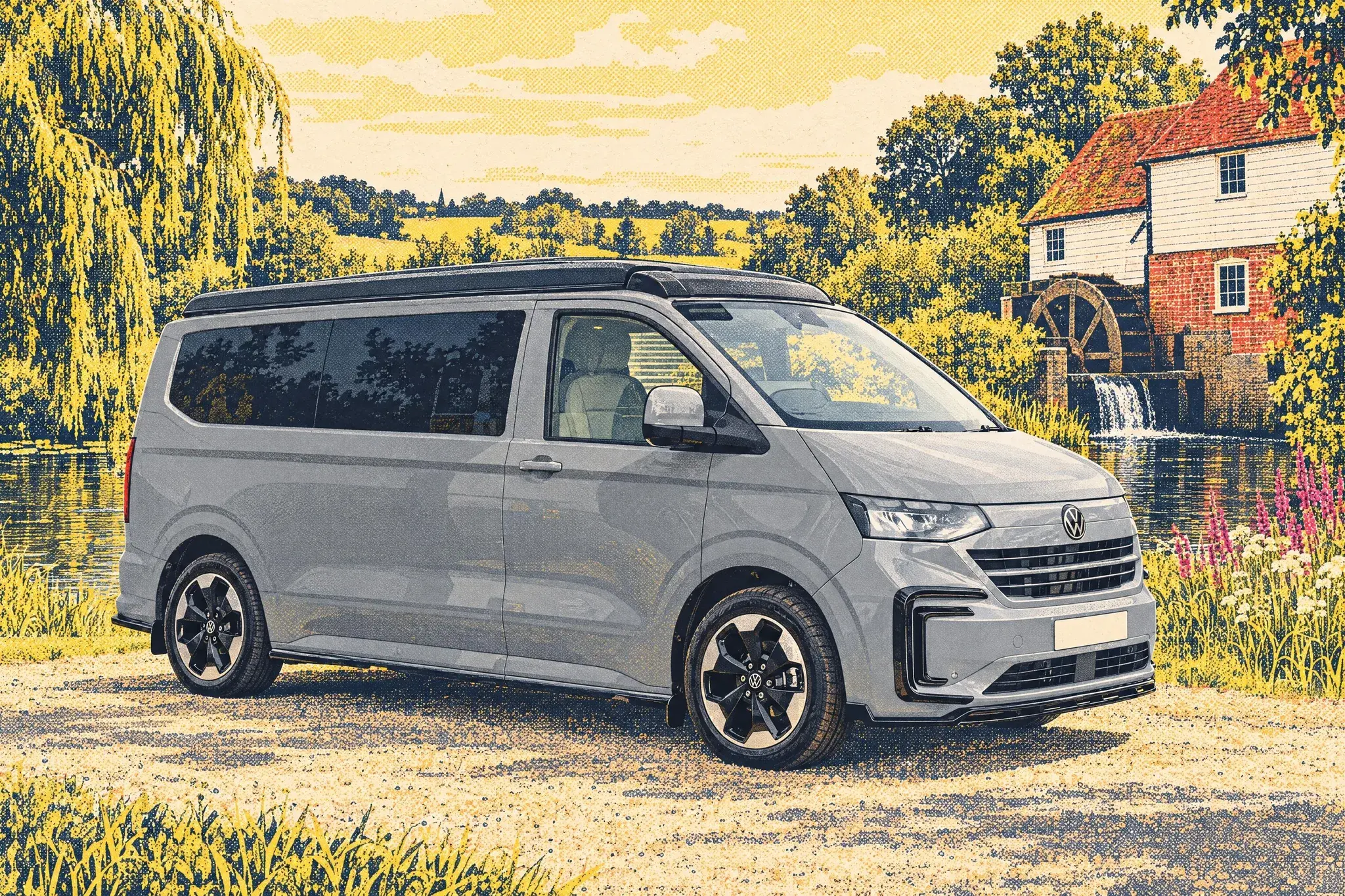
Rolling Homes of Shrewsbury: VW-qualified campers from the Columbus to the Crafter Darwin
A plain-English profile of Rolling Homes, the Shrewsbury family converter with Volkswagen's Motorhome Qualified Converter status: what it builds on, what each model in the range is for, the 13 October 2026 prices, and what to ask before you put a deposit down.
Campervan Buying Guides
11 min read
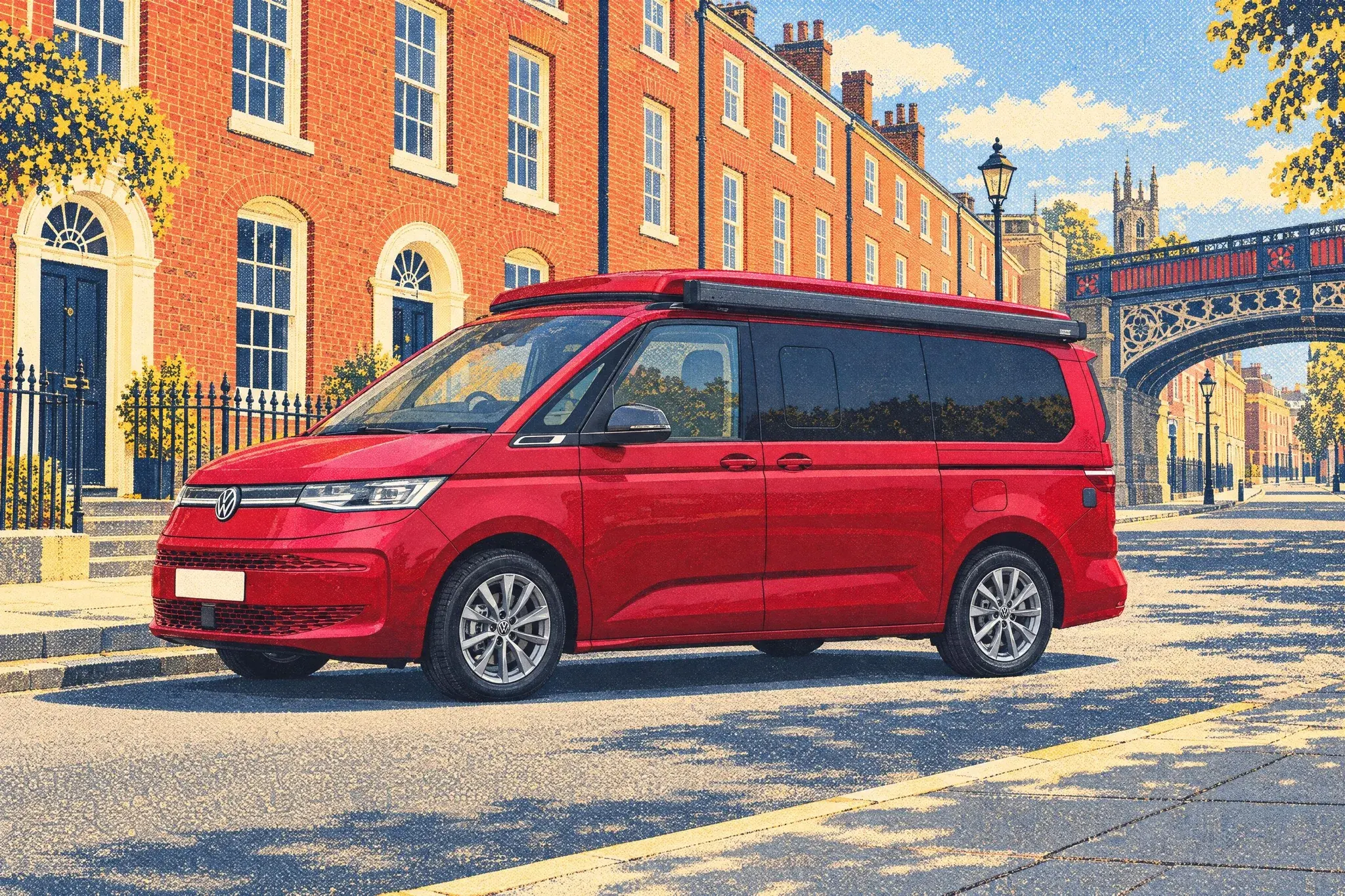
Bilbo's explained: the Surrey VW converter since 1977, now on the T7 and Transit Custom
A plain profile of Bilbo's, the Surrey converter that has been putting raising roofs on Volkswagen Transporters since 1977 and now builds its Celex layout on both the T7 and the Ford Transit Custom. The range, the in-stock prices on 13 October 2026, the warranty, the owner-voted awards, and what to ask before you order.
Campervan Buying Guides
12 min read
Hillside Leisure explained: Derby's type-approved VW converter with a hybrid Multivan
A plain profile of Hillside Leisure of Derby: what the company builds on, every model with its published from-price, the approvals most buyers never ask about, and who it suits.
Campervan Buying Guides
10 min read
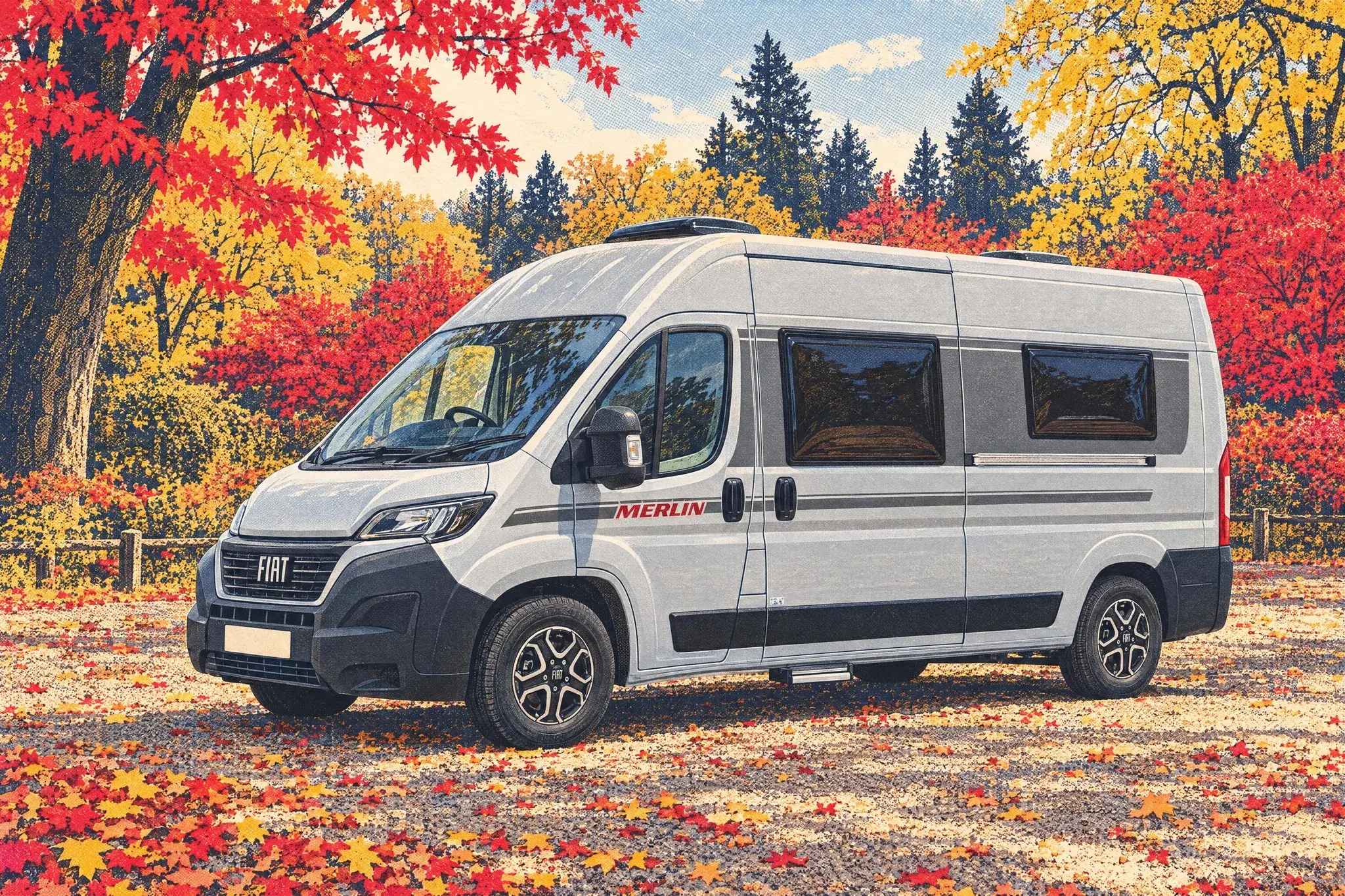
Swift Merlin 2027: nine layouts from £64,190 and how to pick the right one
Swift's all-new Merlin campervan arrives for 2027 with nine layouts on the Fiat Ducato panel van. We sort them into four families, work the payload sum on a four-seat version, and explain what the roof, the automatic and the prices mean for your choice.