
Pop Top Roofs on Large Campervans: Brilliant Extra Space or Expensive Headache?

Written by
Iris
Iris writes travel guides, road trips, and park-up features, with a focus on slower UK touring, living space, and how campervans are used day to day.
The short answer
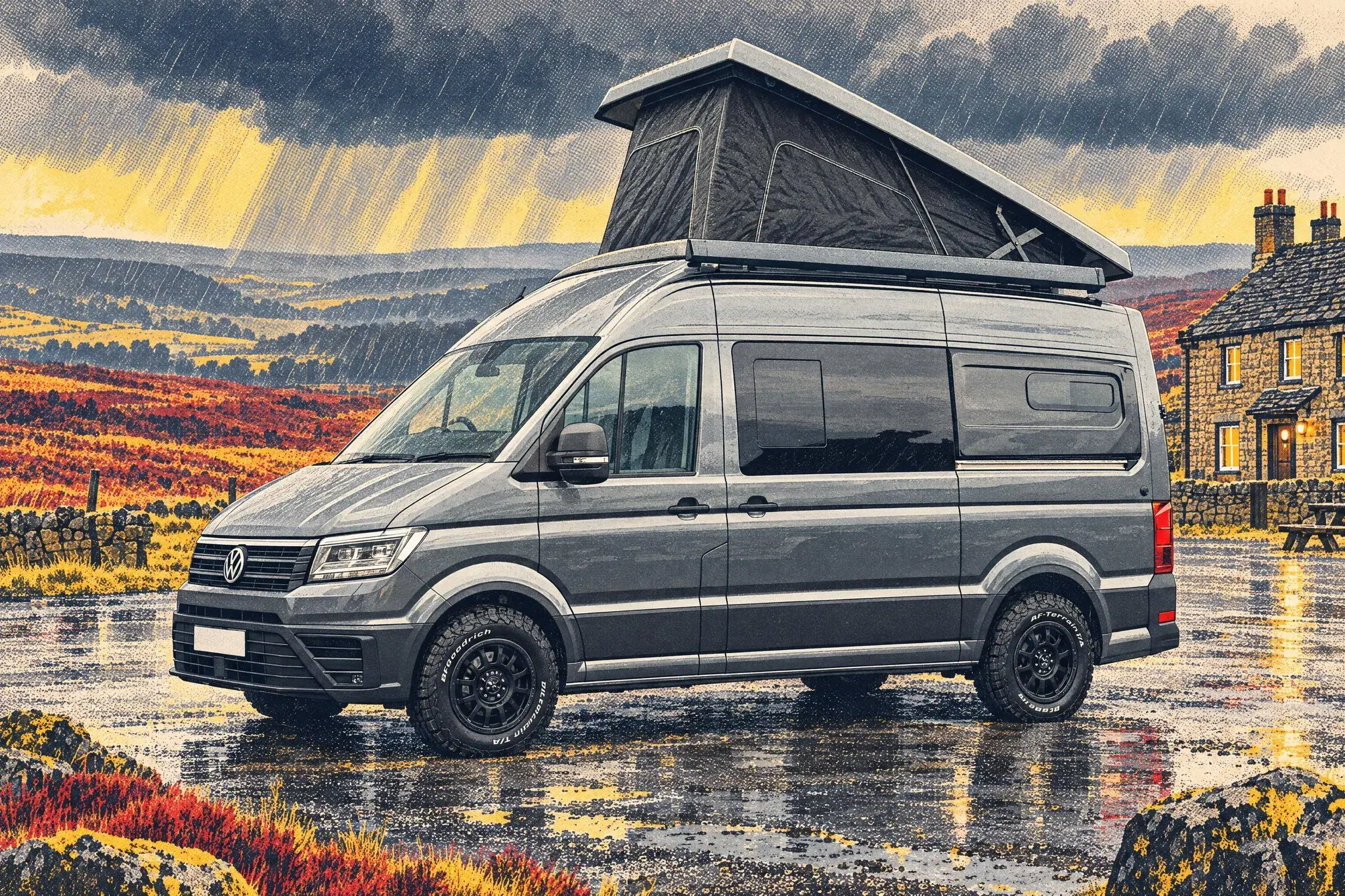
A pop-top roof on a larger campervan is one of the great value-adds: it gives you a genuine second bed and standing height without stealing the daytime layout or turning the van into a seven-metre motorhome, and it keeps the overall height lower than a fixed high-top. The downsides that matter on UK trips are real and worth knowing: fabric walls are noisier and colder, wet weather means drying the canvas before you pack, and the cost is climbing (a fitted Crafter pop-top is around £3,750, a premium Sprinter elevating roof up to £10,599, with factory sleeping roofs around £4,430). It also adds a system that needs a little care. It is well worth it if you will use the extra bed and treat it kindly. Here are the honest pros and cons.

There is a particular kind of quiet that only happens when you are sleeping up high in fabric walls, with a little bit of air moving through the mesh and the first pale light turning the whole roof space into a soft lantern. It is not a luxury hotel feeling. It is better than that, in a slightly scruffier, more human way. It feels like you are camping properly, but with your kettle five steps away and your shoes not soaked through.
That, in a nutshell, is why pop top roofs keep creeping from “nice idea” into “must have” territory, especially on larger campervans where a bit of extra height and a genuine extra bed can transform how the whole layout works.
But pop tops are not magic. They can be loud, cold, and awkward when the weather turns. They can also cost more than you expect, and they add one more system that needs care if you want it to last.
So this is a grounded look at the pros and cons of a pop top roof on a large panel van campervan. Not the brochure version. The version where it is blowing a hoolie at midnight, you are trying to get out early, and the canvas is damp because you folded it down in a hurry.
Along the way, we will talk money, real usability, health and sleep, security, and what I think the “ideal” family friendly layout could look like if manufacturers ever decide to go properly ambitious.
What counts as a pop top roof on a large campervan
When most people say “pop top”, they mean an elevating roof section with fabric sides. You lift it up and it gives you extra standing height and often a bed platform. On a large panel van campervan that usually means something Sprinter, Crafter, Ducato, Boxer, Relay sized, typically close to six metres long or more.
There are a few variations that matter because they change the day to day experience.
Some pop tops are mainly for standing height and ventilation, with a simple sleeping platform. Others are clearly designed as a proper second bedroom, with a more supportive bed base, better canvas, and small details like internal lighting, pockets and proper fly screens.
Then there is the question of how it opens.
Manual pop tops are lighter, usually cheaper, and generally more reliable in the long run because there is less to go wrong. Electric pop tops feel a bit glamorous at first, and they can be genuinely helpful if you struggle with lifting, but they add weight, complexity, and a dependency on battery power.
In a large campervan, that weight and complexity matters more than people expect, because you are already juggling payload, centre of gravity, and the reality that modern campervan kit is heavy.

The real reasons people love pop tops
You get a second sleep space that does not steal your daytime layout
This is the big one. In a large campervan, a pop top roof can allow you to keep the main bed as a lounge or a dinette during the day.
If you have ever toured with kids, friends, or even just a partner who likes a different sleep schedule, you will know the feeling of having your day held hostage by the bed. Pop top sleeping means someone can go up early with a book, or sleep in, while the rest of the van stays usable.
It is also a genuinely tidy way to travel. In many pop top designs, bedding can stay up there. Not always with a thick duvet, but often with pillows and a decent sleeping bag or quilt. That means fewer daily resets. Fewer damp cushions shoved around. Less faff.
And when you have the option to keep the inside bed as a table and chairs, that extra sleep space becomes the difference between a campervan that feels like a tiny flat and one that feels like a slightly cramped tent with a steering wheel.
Waking up to the world feels good for you, not just romantic
There is a reason people sleep well in tents, even when the ground is not ideal. A bit of fresh air, a softer connection to the outside, and the natural light nudging you awake rather than your phone screaming at you.
I spent many months sleeping in a bell tent over a summer, and I have never slept so well. It was not because the tent was perfect. It was because my sleep got simple. Cool air at night, dawn light in the morning, and the day’s rhythm telling my body what to do.
A pop top roof can offer a small slice of that, but with actual comfort. You are off the ground, you have a proper mattress base, and you can still make tea without putting on shoes.
If you are in a quiet spot, and you can leave the mesh panels open, you often wake up feeling more restored. Not always. It depends on wind, rain, and where you are parked. But when it works, it really works.
It adds a separate space for downtime, work, and sanity
This is the under discussed benefit, especially for families. A big panel van campervan can feel roomy compared to smaller campervans, but it is still one shared space.
A pop top roof gives you somewhere to retreat to. A teenager can climb up with headphones. Someone can sit up there with a laptop while the rest of the van cooks and chats. If you are touring for more than a weekend, that extra mental space matters.
In summer, the roof can become the best seat in the van. It is brighter, breezier, and feels less boxed in. You can sit and read, watch the sky change, and feel a bit like you have got a balcony.
It can keep the overall vehicle height lower than a high roof conversion
This depends on the design, but many pop tops keep the van relatively low when closed compared with some fixed high roof builds.
That can help with certain height barriers, older car parks, and the general stress of driving a tall vehicle in the UK. It will not turn a big campervan into a supermini, but it can make life less twitchy in places with trees, signage and awkward entrances.
Four berths without turning the whole vehicle into a seven metre motorhome
For some people, a motorhome is the right tool. For others, it is simply too big, too expensive, or too awkward to park and use regularly.
A pop top roof is one of the few ways a large campervan can genuinely sleep four without feeling like a compromise on wheels. That is why it shows up again and again on family friendly layouts.
The downsides that actually matter on UK trips
Noise pollution is real, and it is not just the wind
In a fixed roof campervan, you have insulation, rigidity and mass. In a pop top roof, you have fabric sides, poles, zips, and sometimes a slightly drummy roof shell.
Wind can make it flap. Rain can sound louder. Nearby road noise feels closer. And on busy sites, you can hear other people more clearly. If you are sensitive to sound, this can be the deciding factor.
There are ways to reduce it. Good tensioning, quality canvas, sensible pitching, and even simple earplugs. But it is worth being honest. A pop top roof will never be as quiet as a solid roof.
Cold weather comfort is a question of mindset and kit
You can use a pop top roof in winter, but you need to treat it like camping.
You will feel the temperature change faster than you do downstairs. You will notice draughts. Condensation can be worse. If the wind is up, it can feel exposed.
Some roofs have insulation options, thermal liners, or better fabric. Some have heated roof sleeping areas as part of the design. That helps, but it does not turn fabric into a wall.
If you tour mainly in late spring to early autumn, you will probably love a pop top. If you tour through winter and you want that sealed cocoon feeling, you might find yourself sleeping downstairs more often than you expected.
Wet weather means drying, and drying means time
This is the one that catches people out. If you close the roof when the canvas is wet, you need to open it again and dry it properly.
Not “it will be fine”. Properly.
If you do not, you risk mildew, smells, and fabric deterioration. On a UK trip, especially in shoulder season, you can easily have several wet closures in a week. That becomes a routine. Open it at lunch. Pop it up when you get home. Find a dry day and air everything.
If you are the sort of person who enjoys kit maintenance, fine. If you are already stretched and you want a simple life, that extra job can start to irritate.
Cost is climbing, and it can feel disproportionate
Pop top roofs have always been expensive. They are structural, they require proper engineering, and they change the whole roof of your vehicle. But the current reality is that they can add a large chunk to your build cost.
To give you a sense of the spread in the UK right now, here are a few reference points.
A fitted pop top roof for a VW Crafter from one UK supplier is listed at £3,750.
At the other end of the scale, a Mercedes Sprinter SCA 252 elevating roof supplied and professionally installed with colour match paint is listed at £10,599.
That is a huge gap, and it is before you start adding extras like bed upgrades, lighting, scenic canvas, roof rails or solar.
There are also kit only options. One UK roof supplier lists Sprinter elevating roof kits in the low two thousands plus VAT, but that is not the same thing as a finished, fitted roof you can sleep in safely.
Factory options sit somewhere else again. As one example, a Hymer configuration document lists a sleeping roof in vehicle colour at £4,430.
Different manufacturers price these options differently, and sometimes the roof is bundled into packs that include lighting, trim, and other equipment.
The important point is not the exact number. It is that a pop top roof is often one of the most expensive single upgrades you can choose, and it does not always add obvious resale value in proportion to what you spend.
Security and quick exits are worth thinking about, not ignoring
A pop top roof changes how “sealed” you feel at night. That is personal. Some people sleep like a log. Others feel more exposed.
The reality is that fabric is not a barrier. It is a psychological boundary, not a physical one.
That does not mean pop tops are unsafe. It means you should think about how and where you park, and how you would respond if something felt wrong.
There is also the practical issue of a quick departure. If you need to move quickly because of safety, illness, or just a situation that feels off, you cannot drive with the roof up. That means you are closing a wet roof in a hurry, or you are dealing with bedding and ladders while your heart rate is up.
Most of the time, nothing happens. But touring is about being comfortable with the “what if” moments, and a pop top roof adds a couple of extra steps at exactly the wrong time.
Longevity, leaks, and the truth about maintenance
A well designed pop top roof can last for years. The roof shell is typically tough and the canvas is replaceable. Seals can be replaced too.
Leaks do happen, but they are often down to neglected seals, damaged canvas, poor fit, or repeated closure when the fabric is folded badly. The roof itself is not inherently doomed.
What matters is your willingness to treat it like a system. Inspect seals. Keep drainage paths clear. Clean the canvas. Dry it. Do not force it shut when the fabric is caught.
If you are buying used, you want to look closely at the canvas corners, the stitching, the zips, and any signs of staining. You also want to open and close it several times and listen for anything that sounds strained or misaligned.
Pop tops and the way you actually tour
The question is not “are pop tops good”. The question is “do they suit how you travel”.
If you mainly do weekends
A pop top roof can be brilliant for weekends because it increases flexibility without turning the vehicle into something you only use twice a year.
You can nip away on a Friday, sleep four, and still have a proper place to sit and eat breakfast. For families, it can mean the difference between feeling like a squeezed sardine tin and feeling like you have a workable routine.
The downside for weekends is the drying issue. If you come home on a Sunday night in the rain and you are tired, you still need a plan to dry it. Even if that plan is “open it on the drive for two hours tomorrow”.
If you tour for longer trips
On longer trips, a pop top roof often becomes more valuable, not less. The extra space gives everyone more breathing room, and that reduces friction.
The routine becomes normal. You get used to popping it up while the kettle boils. You learn how to orient the van to reduce wind flap. You stop seeing it as a gimmick and start seeing it as your upstairs room.
But longer trips also mean more weather, more damp closures, and more wear. It is worth factoring in a little ongoing care as part of your touring rhythm.
If you tour all year
This is where you need to be honest with yourself.
Some people happily use the roof all year with the right sleeping bag, a thermal liner, and a calm attitude. Others end up using it mainly for storage in winter and sleeping downstairs.
Neither is wrong. But if you are paying several thousand pounds for a roof, you probably want to feel you are using it.
If your touring is mostly winter weekends, you might be better served by a fixed roof campervan with a clever drop down bed, or a motorhome layout that gives you a second bed without fabric.
Practical tips that make pop top life easier
Learn the fold before you learn the view
Most pop tops fail in small ways because of poor closure habits. Fabric gets pinched. Corners fold badly. Seals get compressed unevenly.
Spend time learning how your roof wants to fold. Do it slowly in daylight. Make sure the canvas is tucked in evenly. Get into the habit of a quick walk around before you latch it down.
It is boring advice. It also saves you money.
Treat condensation like a routine, not a surprise
Condensation will happen. Mesh ventilation helps. Leaving a small vent open helps. Wiping down in the morning helps.
If you sleep up top in cool weather, you will usually wake up to some dampness. A small microfibre cloth and a two minute wipe can stop a lot of long term grief.
Plan for wet closures
If you know you are travelling in unsettled weather, plan for the drying moment.
That might mean stopping at lunch and popping it up for half an hour. It might mean choosing a campsite with a bit more space so you can open it even if it is windy. It might mean arriving home and opening it again before you go to bed.
The key is not letting damp closures become a habit.
Decide what stays upstairs and what does not
If you want the roof bed to feel easy, keep it simple.
Light bedding can stay up there. Heavy duvets usually become annoying. Pillows are fine if they compress. A small storage bag for night time bits can be helpful.
The more you treat the roof as a second bedroom with its own kit, the less it will feel like a daily puzzle.
Think about ladders and night time loo trips
This is the unglamorous reality. Someone sleeping up top might need the loo at 3am.
If your ladder is awkward, noisy, or blocks the aisle, you will notice. If you are touring with children, you really notice.
Look for roof designs with sensible ladder placement and a safe climb. If it feels sketchy in a showroom, it will feel worse at night.
The money question, and what “best value” actually means
When you are spending thousands on a roof, value is not just about the cheapest option. It is about what you get for the money and how much it changes your experience.
A cheaper fitted roof can still be great if it is well engineered and suits your van.
A premium roof with proper installation and paint can be worth it if you are building a long term family touring vehicle and you need confidence in the fit and finish.
Factory roofs often sit in the middle, and their value comes from integration. They are designed as part of the vehicle, they may have better trim and sealing, and they can be reflected in finance and warranty. A listed factory sleeping roof option at £4,430 is a good example of that middle ground.
But here is the bit people forget.
A pop top roof also has an opportunity cost. If you spend £8,000 on a roof, that is money you are not spending on better batteries, better heating, better tyres, or simply more trips.
If your touring is mainly summer, and you already have a comfortable layout, you might be happier putting that money into travel. If your touring is family heavy and you need real extra berths, the roof can be the best money you spend.
Safety, theft, and peace of mind
It is worth separating actual risk from how you feel.
A pop top roof makes you feel more like you are camping. That is part of the appeal. But it can also make you feel less protected.
If you are staying in busy places, city edges, or anywhere you have a wobble about, you may prefer sleeping downstairs with the roof shut. That is a perfectly sensible choice. The roof does not have to be used every night.
If you are touring in quieter spots, rural sites, or well chosen aires, you might feel completely relaxed up top. The key is not forcing yourself into a setup that makes you tense, because poor sleep is the quickest way to ruin a trip.
A practical tip is to build a simple “quick close” routine. Know where your torch is. Know where keys live. Keep the ladder accessible. Make sure nothing blocks the aisle. If you ever do need to move quickly, familiarity matters.
The dream layout: pop top plus drop down beds and a proper lounge
In an ideal world, there would be both a campervan and a motorhome layout that gives you all the flexibility without daily compromises.
This is what that looks like in my head.
At the rear, a proper dinette that feels like a real seating area, not a token bench. Above it, a large comfortable electric drop down bed.
Up front, an L shaped dinette that can work with swivelling cab seats to make a big social space. Above that, another electric drop down bed.
And then, because we are dreaming, a pop top roof as well.
At that point, you have sleeping for a group, separate spaces, and the ability to keep beds out of the way during the day. You also have the option of sleeping in the roof when the weather is kind, which is often the nicest sleep of all.
Realistically, you are into seven metres or seven and a half metres, because you need space for mechanisms, headroom, and the structural reinforcement that all these openings require. You also need to manage weight carefully, because drop down beds and roof systems add up quickly.
It is probably more likely in a motorhome, but I can see it working in a long van conversion if someone gets brave.
Could the skylight and shower roof space be combined?
There is also a clever thought here about how roof openings overlap.
Some campervans already put a central roof light above a compact toilet and shower area, sometimes with a roller style enclosure. If a manufacturer could align the pop top opening with an area that already needs a roof aperture, you might reduce structural complexity.
It would not be simple, because the pop top needs a specific opening size and reinforcement, but the idea of centralising roof architecture is interesting. It could also make the interior feel brighter and more open.
So, should you get a pop top roof on a large campervan?
If your trips are mostly warmer months, you like fresh air sleeping, you want a true extra bed, and you value flexible daytime space, a pop top roof can be one of the most satisfying upgrades you make.
If you tour in winter, hate noise, want zero faff when wet, or feel uneasy sleeping behind fabric, you might find the roof becomes a rarely used feature that you still have to maintain.
The best way to decide is not by reading another opinion, even mine. It is by imagining one wet week in Wales, one windy night on the east coast, and one sunny weekend where you wake up to a calm view and you can hear birds before anyone else is up.
If that last one makes you smile and the others feel manageable, you are probably a pop top person.
And if you do go for it, treat it kindly. Dry it. Fold it well. Make it part of your routine. It will pay you back in the kind of sleep that makes you feel like your head has finally stopped buzzing.
Common questions
What are the benefits of a pop-top roof on a large campervan?
It adds a second sleeping space that does not steal your daytime layout, gives standing height and a brighter, airier feel, and provides a separate zone for downtime or work. It keeps the overall vehicle lower than a fixed high-top conversion, and it lets you have four berths without turning the van into a seven-metre motorhome.
What are the downsides of a pop-top roof?
Several that matter on UK trips: the fabric walls are noisier in wind and rain and colder on a cold night, wet weather means drying the canvas before you can pack (which takes time), the cost is climbing and can feel disproportionate, and it adds one more system that needs maintenance to avoid leaks. Security and quick night-time exits are also worth thinking about.
How much does a pop-top roof cost on a large campervan?
Quite a range. A fitted pop-top for a VW Crafter from one UK supplier is listed at around 3,750 pounds, while a premium Mercedes Sprinter SCA 252 elevating roof, supplied and professionally installed with colour-match paint, is around 10,599 pounds. A factory sleeping-roof option in vehicle colour sits in the middle at around 4,430 pounds, a good example of the mid-ground.
Are pop-top roofs cold in winter?
The raised fabric section is the least insulated part of the van, so yes, it is the coldest spot and where condensation gathers on a cold night. Insulated bellows, a thermal roof cap and good ventilation all help, but no fabric roof matches a solid one for warmth, so many owners use the roof bed in summer and sleep lower down in the coldest months.
Is a pop-top roof on a large campervan worth it?
It is worth it if you will genuinely use the extra bed and standing room and are happy to treat it kindly, drying and folding it well and managing condensation as routine. If you mainly do weekends and value the second berth and lower height, it makes sense; if you tour all year and dislike the faff and cold, the money might be better spent on batteries, heating, tyres or simply more trips.
The reachable bit
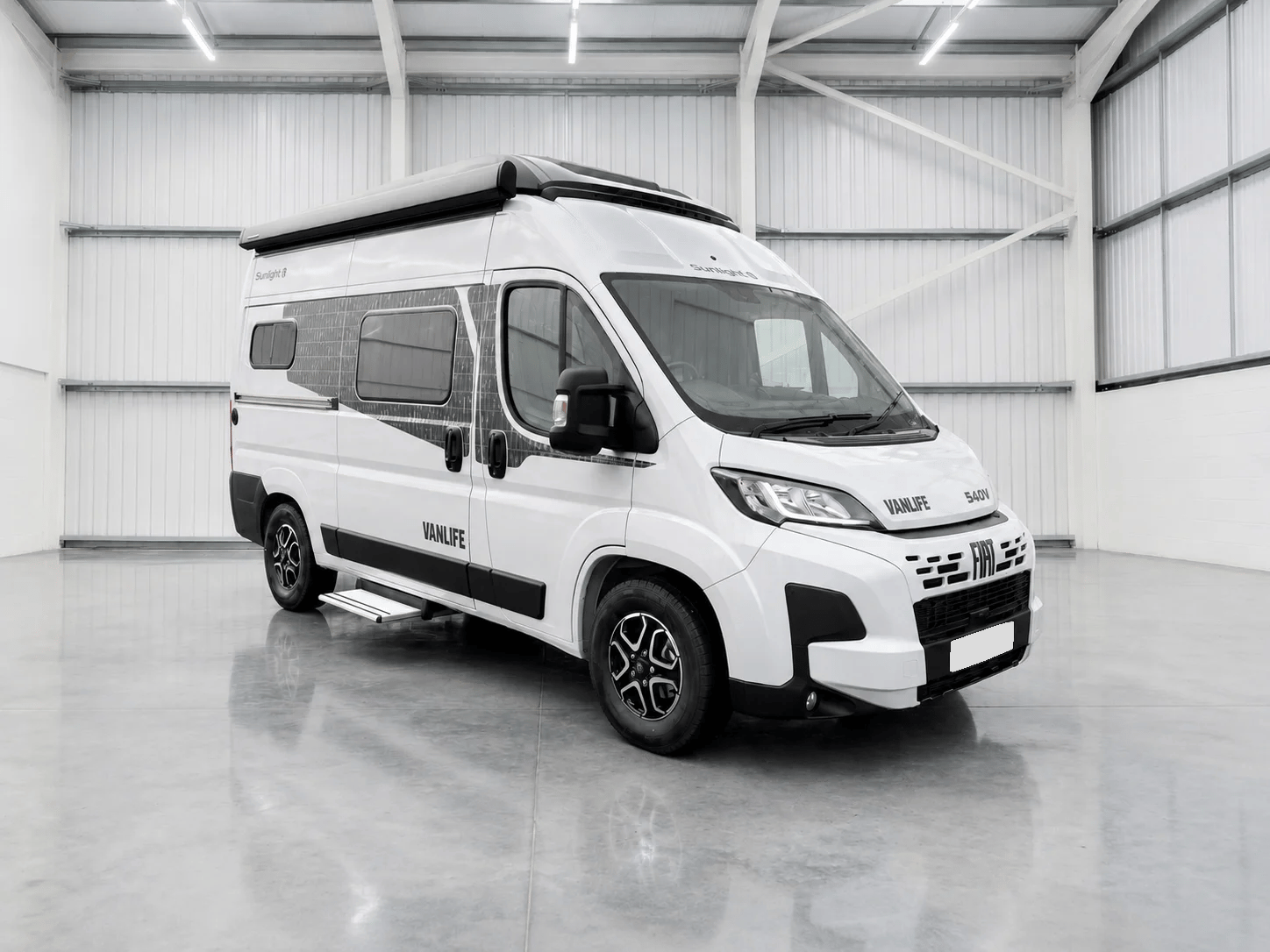
The camper you fall for is rarely the one you can afford. That gap is the whole reason Campervan.win exists. Right now we’re giving away the Sunlight Vanlife, worth around £65,000, and closing that gap is the point: capped entries so the odds stay honest, £10 a ticket, a maximum of five per person, £500 to a UK charity from every full draw, the winner picked by a public randomness beacon anyone can re-check, and one person driving away in the van itself.
Enjoyed this post?
Get more honest campervan guides like this one in your inbox.
You’re in!
Check your inbox. We’ve just sent you a welcome email.

About the author
Iris
Iris writes travel guides, road trips, and park-up features, with a focus on slower UK touring, living space, and how campervans are used day to day.
Keep Reading
Related Reading
Thoughtful articles that build on what you’ve just read.
Design, Layout & Living Space
11 min read
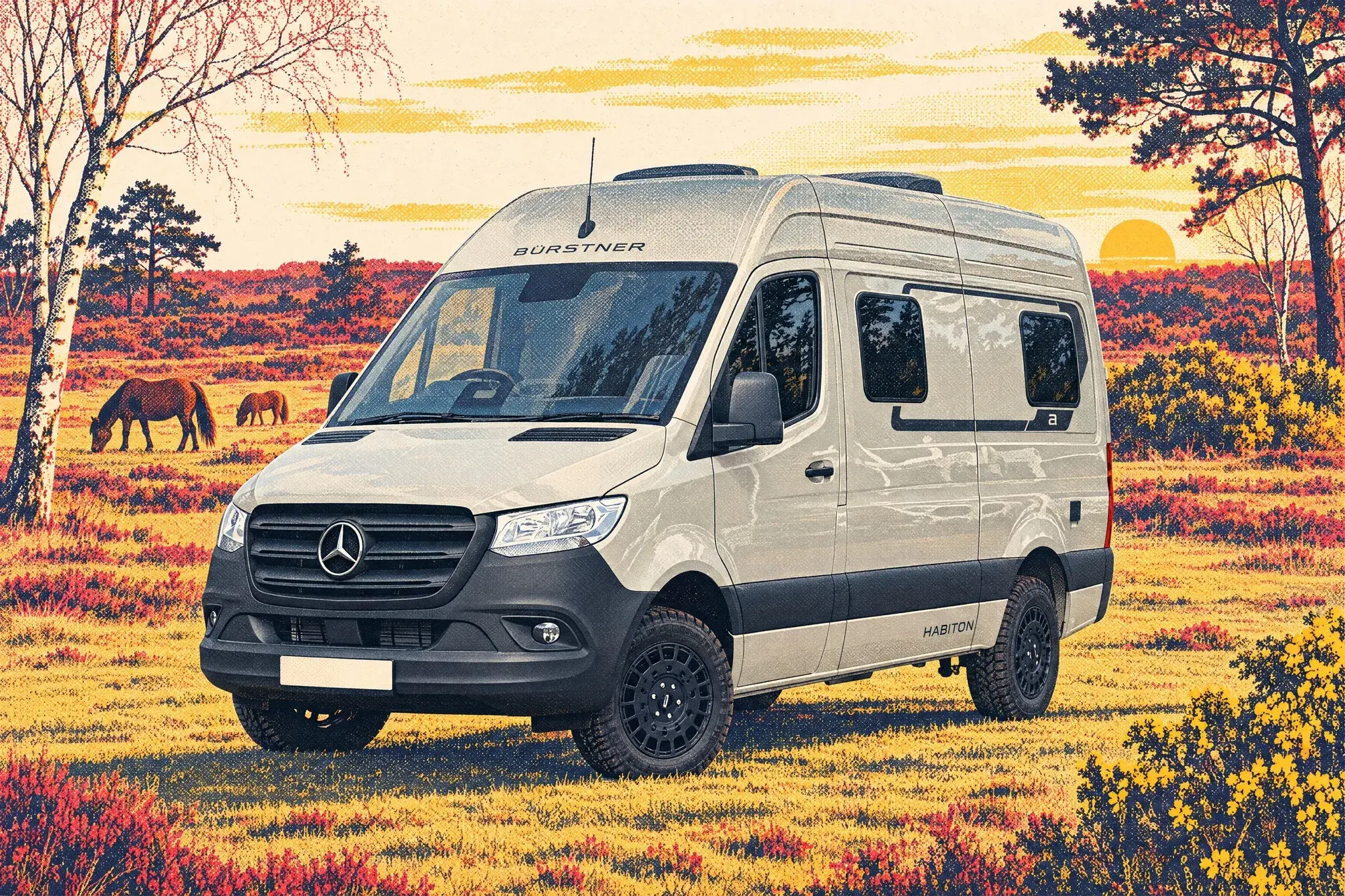
2027 Bürstner Habiton HM 6.1: can a transverse-bed campervan really work for taller UK couples?
The new Habiton HM 6.1 widens the back of a Mercedes Sprinter to fit a transverse bed quoted at around two metres. We look honestly at whether that solves the old problem of taller people sleeping sideways in a van.
Design, Layout & Living Space
8 min read
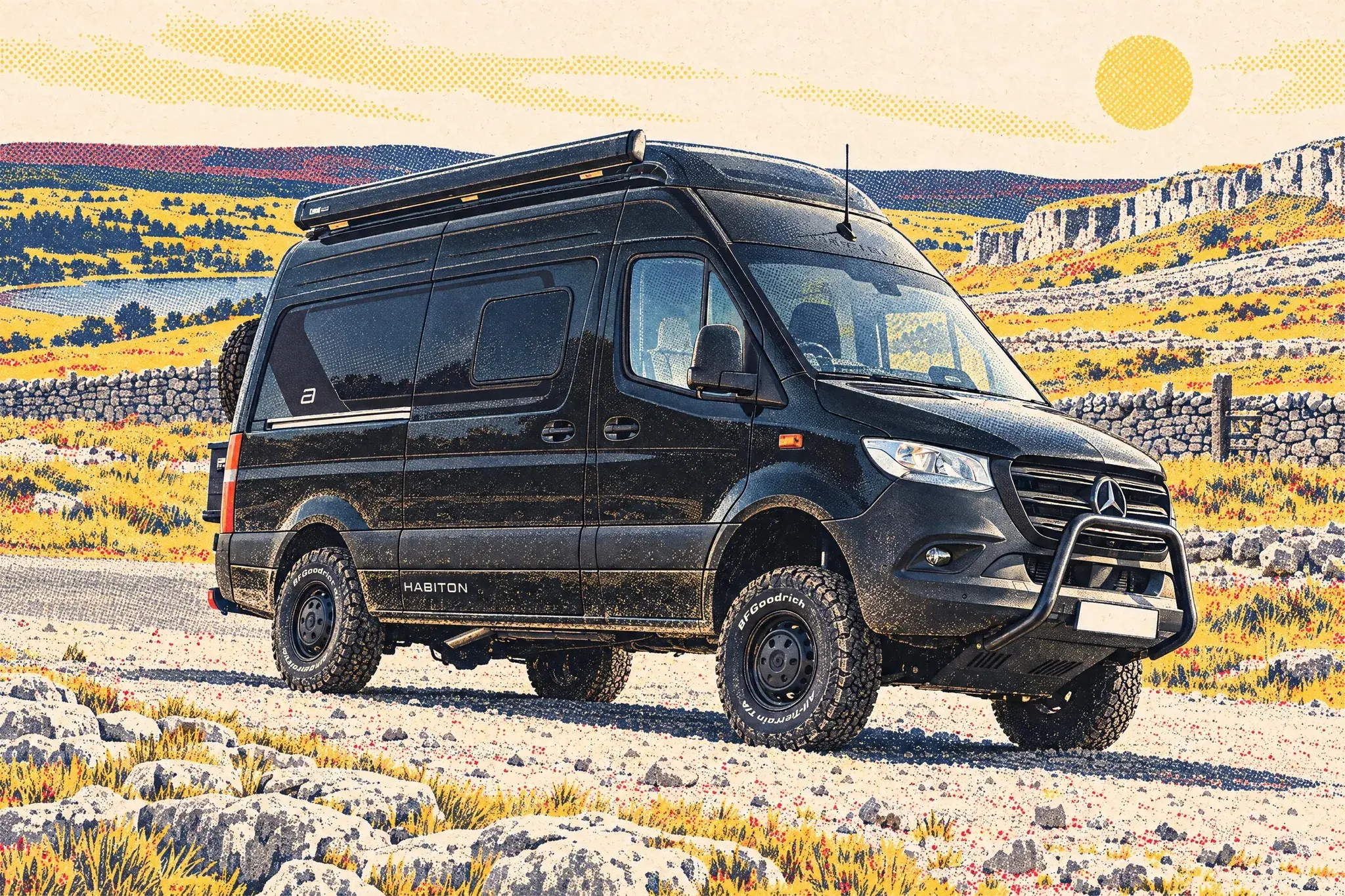
What is the best colour for a campervan? The honest answer
A practical look at campervan colours: which ones run cooler, hide dirt, hold value and stay safe on the road, and why that moody all-black look is harder to live with than it looks.
Design, Layout & Living Space
9 min read
Seats on tracks: why American campervans slide and remove them, and UK ones usually don't
American adventure vans often have rear seats that slide, lock and lift out on floor tracks. UK conversions usually feel more fixed. Here's the honest reason why, and what you can actually get over here.
Design, Layout & Living Space
30 min read
Natural light in a motorhome: how rooflights and windows transform van living
Light is the quiet thing that makes a van feel like a home rather than a metal box. Here is an honest, detailed guide to rooflights, windows, glazing and placement, with real UK numbers and the trade-offs nobody mentions.