
Bailey Endurance E65 Review: the Rugged, Affordable Campervan That Gets More Right Than Wrong

Written by
Felix
Felix covers campervan technology, layouts, and modern conversions, with a focus on design-led thinking and practical performance

The short answer
The Bailey Endurance E65 is a rugged, affordable adventure-styled campervan from Bailey of Bristol: a two-berth with four travel seats on a Ford Transit, 5.98 metres long, on a 3,500kg chassis for a category B licence, at £69,999 on the road. The pleasant surprise is that it wraps Bailey's proven six-metre formula in off-road styling without skimping on substance: a fixed high roof with 1.96m headroom, strong off-grid kit (twin 80Ah batteries, up to 200W of solid solar with the Adventure Pack, diesel Truma heating), a 100-litre water tank and Grade III four-season insulation. Compared with the Swift Trekker X it genuinely offers more for less if your priorities are off-grid and storage. Here is the full review, and why it gets more right than wrong.

Bailey of Bristol has been building leisure vehicles for over 75 years. In that time, the company has mostly played it safe. Solid engineering, sensible layouts, competitive pricing. The Endeavour range of campervans follows that tradition closely. Clean, capable, and deliberately unflashy.
The Endurance E65 is something different. Not revolutionary, but a deliberate shift in tone. Bailey has taken its proven six metre formula and wrapped it in off-road styling, rugged accessories, and a marketing pitch aimed squarely at the adventure crowd. The question is whether this is a genuine capability upgrade or just a Grey Matter paint job and some chunky graphics.
Having gone through the specification in detail and compared it against what else is available in this size bracket, I think Bailey has actually built something genuinely interesting here. Not perfect. But interesting enough that it deserves a proper look.
What the Endurance E65 actually is
At its core, the Endurance E65 is a two berth campervan with four designated travel seats, built on a Ford Transit panel van in Grey Matter with the Trail front grill, skid plate, and beefed up bumpers. It measures 5.98 metres long, sits under the 3,500 kg maximum weight limit for a standard Category B licence, and costs £69,999 on the road.
That price includes the first registration fee, number plates, road tax, and delivery to your dealer. No hidden surprises on collection day, which is more than you can say for some manufacturers.
Under the bonnet sits Ford’s 2.0 litre 165 bhp engine with a six speed manual gearbox as standard. The optional eight speed automatic adds £1,850 to the bill. If you have read our Swift Trekker X review, you already know my feelings on the automatic question. Just get it. The manual is fine, but a campervan loaded with holiday kit in stop start traffic on the way to Cornwall is not where you want to be rowing through gears all afternoon.
The solid roof: why it matters more than you think
Here is where the Endurance starts to separate itself from the competition. Bailey has deliberately chosen not to fit a pop top roof. Instead, the E65 has a fixed high roof profile (H3 Transit) giving 1.98 metres of internal headroom. That is tall enough for most people to stand comfortably without hunching, and it means the roof is a solid, insulated, watertight surface rather than a fabric concertina.
That solid roof is the foundation for the optional Adventure Pack, which is where the Endurance really comes alive. For £1,250, Bailey will fit a Rhino roof rack with ladder, additional roof mounted off road lighting, and a pair of 100 watt solid Truma solar panels that replace the standard 130 watt flexible panel.
A proper roof rack on a campervan is more useful than people realise. It gives you somewhere to carry bikes, kayaks, surfboards, or additional storage boxes without eating into your living space inside. The metal ladder means you can actually get up there safely and securely, rather than wobbling on a folding step. And the additional lighting is a genuine practical benefit if you are arriving at sites in the dark or need to set up camp after sunset.
The upgrade from the standard flexible solar panel to two solid 100 watt panels is worth thinking about too. Flexible panels are lighter and sit flush, but they tend to have a shorter lifespan and are more vulnerable to degradation. Solid panels on a roof rack sit slightly raised, which means better airflow underneath and cooler operating temperatures. That translates to better efficiency over time and longer service life. For anyone planning to spend extended periods off grid, the solid panels are the smarter long term investment.
The TentBox roof tent: brilliant flexibility, one missed trick
If you spec the Adventure Pack, you unlock another option. The TentBox Cargo 2.0 roof tent in Sunset Orange, available as a factory fit for £2,790. This takes the Endurance from a two berth campervan to a four berth setup, with the roof tent providing a proper double bed, built in mattress, LED light bar, anti bug mesh, roof pockets, and vents.
The tent takes about 30 seconds to set up. Undo a couple of clips, push it open, and you have a sleeping platform above the van. It is far quicker than making up a bed inside and gives you genuine separation between sleeping spaces, which matters enormously if you are travelling with teenagers or friends who want their own space.
The real strength of this approach compared to a traditional pop top is flexibility. You are not locked into a single roof bed design chosen by the manufacturer. If the TentBox wears out or you want to upgrade, you can swap it for a different brand or model. The roof rack is a standard Rhino system, so compatibility is wide open. You could also choose to remove the tent entirely for solo trips or winter touring when you do not need the extra berths, reducing height and weight in one move.
There is one area where I think Bailey could have done better though. Access to the roof tent is via an external ladder. You climb up from outside the van. In decent weather, that is fine. On a wet November night in the Brecon Beacons when you need the bathroom at 2am, it is less appealing. A pop top roof lets you climb up from inside, which is simply more practical in the British climate where rain at bedtime is not an occasional inconvenience but a near certainty.
That said, this is partly the trade off you accept for the flexibility of a separate roof tent system. A pop top is integrated but fixed. A roof tent is removable but external. Neither is perfect, and for people who value the ability to customise their setup and use the roof rack for other purposes when the tent is not fitted, the Endurance approach makes more sense.
Interior design: better looking than you expect from Bailey
Bailey interiors have traditionally been functional rather than fashionable. The Endurance changes that. The combination of Natural Oak, Lunar Grey, and Moonstone furniture finishes with black hardware throughout gives the living space a contemporary feel that actually looks like someone under 60 designed it.
The seat upholstery in the Stratos fabric is a step up from what you typically see in this price bracket. The colour and design feel considered rather than chosen from a catalogue of safe options. If you have sat in a few campervans at a show, you know the usual palette. Beige on beige with a hint of beige. The Endurance is noticeably different.
The overhead locker doors in Moonstone with black finish handles look clean and modern. The positive door catches throughout are a small detail that matters more than it should. Nothing ruins a morning like the sound of a cupboard emptying itself over the kitchen worktop because you took a roundabout at normal speed.
The washroom: compact but clever
In a campervan this size, the washroom is always going to be a compromise. Bailey has handled it well. The space saving revolving tambour partition screen is a smarter solution than a solid door, which would eat into the living area every time you opened it.
Inside you get a proper shower with a fitted tray, twin drainage points, wall mounted riser bar, and a protective curtain. The Thetford electric flush toilet has a removable cassette on wheels, which makes the emptying process slightly less grim than wrestling a heavy cassette out of a low hatch.
The detail I like is the shower floor infill. When the washroom is not in use, this fills in the shower tray area and gives you extra floor space in the kitchen zone. It is a clever bit of space management that shows Bailey has thought about how people actually use a small campervan day to day, not just when they are showing it off at the NEC.
Rear storage: the metal flooring is a standout
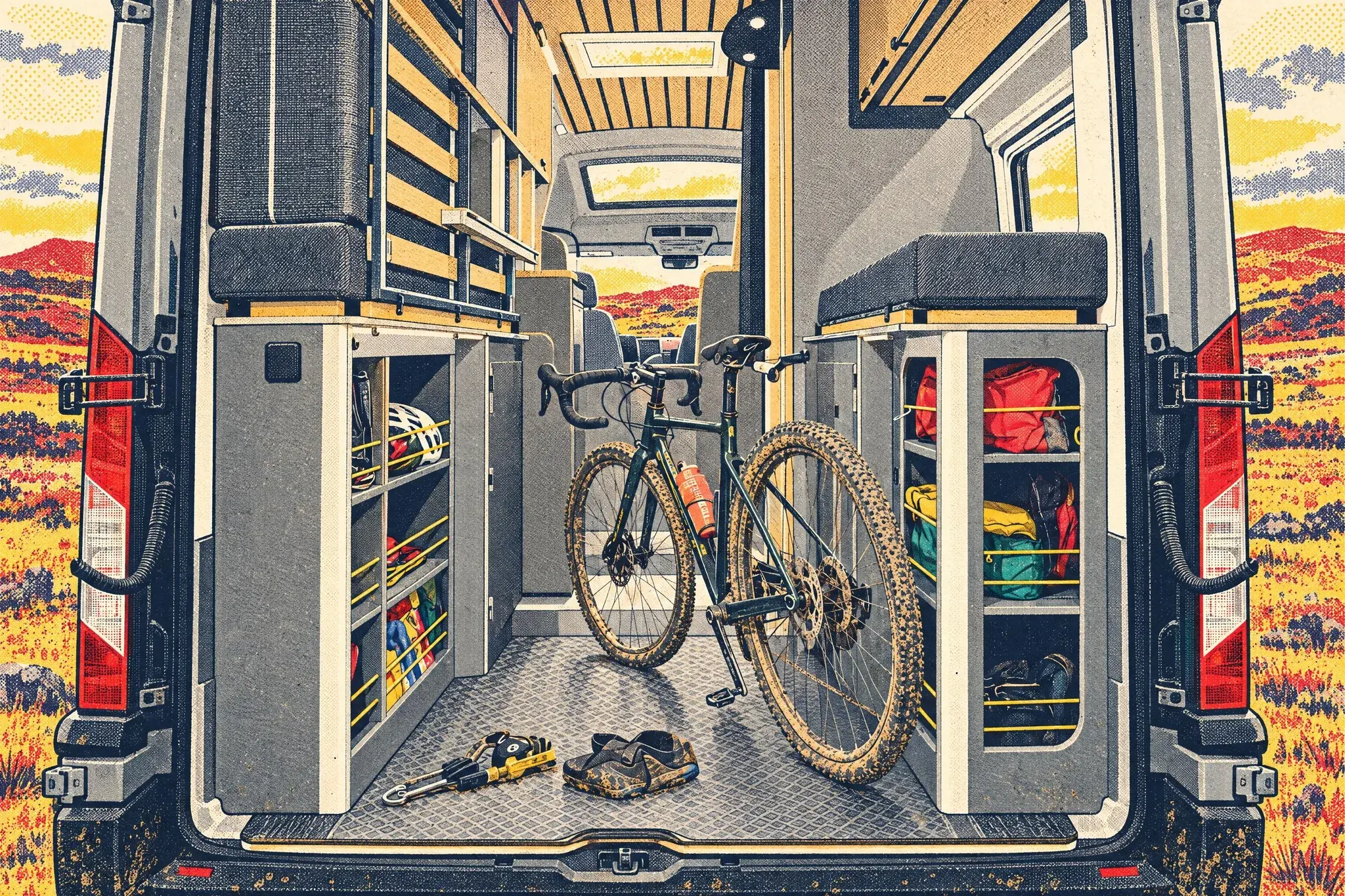
The rear of the Endurance is set up as a combined bedroom and garage space. The transverse double bed folds away to reveal a proper storage area underneath, complete with floor mounted lashing rings for securing larger items.
What stands out is the heavy duty metal checker plate flooring in the garage area. This is the kind of detail that separates a campervan designed for actual outdoor use from one designed to look like it is. Metal tread flooring is hard wearing, easy to clean, and does not care about muddy boots, wet wetsuits, sandy camping chairs, or the general chaos that accumulates at the back of any vehicle used for proper adventures.
If you have ever tried to clean mud out of carpet tiles or watched a vinyl floor develop mysterious stains from wet gear, you will understand why this matters. The metal flooring just works. Hose it down, wipe it off, carry on. It is one of those features that sounds minor in a brochure but makes a material difference in daily use.
The cold water shower point in the rear garage area is another practical touch. After a beach day or a muddy walk, you can rinse off gear and boots before bringing anything inside. Small thing, big quality of life improvement.
Off grid capability: genuinely strong for the price
Even in standard trim, the Endurance is well set up for time away from hookup. Twin 80 Ah AGM leisure batteries give you 160 Ah of stored power. The 130 watt Truma solar panel keeps them topped up during the day. The Truma Diesel Combi D4E heating system runs on diesel from the vehicle tank rather than gas, which means you do not need to worry about finding Calor Gas dealers in remote locations.
With the Adventure Pack fitted, you jump to 200 watts of solid solar across two panels. That is a meaningful amount of generation for a campervan, enough to keep lights, phone charging, the fridge, and the water pump running without too much anxiety about battery levels.
The 100 litre fresh water tank is generous for a van this size. Many competitors offer 70 to 80 litres. That extra capacity translates directly into longer stays between fill ups, which is the whole point of going off grid.
Grade III thermal insulation (EN 1646-1) means the Endurance is rated for genuine four season touring. Combined with the diesel heating, all weather tyres, and the well insulated bodyshell with its 100mm thick bonded floor, this is a campervan you can use in January, not just July.
How it compares to the Swift Trekker X
The natural comparison for the Endurance E65 is the Swift Trekker X. Both are built on the Ford Transit, both measure just under six metres, both have four travel seats, and both target the same kind of buyer who wants a capable, well specified campervan without needing to move up to a coachbuilt motorhome.
The differences are meaningful though, and they reflect genuinely different philosophies about what a campervan should be.
Price
The Endurance E65 starts at £69,999 on the road. The Swift Trekker X starts at around £76,390 for a manual and £78,285 for the automatic. That is a gap of over six thousand pounds before you start ticking options on either vehicle. Even if you add the Adventure Pack (£1,250) and the automatic gearbox (£1,850) to the Endurance, you are still spending less than the base price of a manual Trekker X.
Sleeping and berths
The Trekker X is a four berth campervan as standard thanks to its pop top roof. The Endurance is a two berth in base form. To get four berths in the Endurance, you need the Adventure Pack and the TentBox, adding £4,040 to the bill. Even with those extras, the total price of a fully kitted Endurance with automatic gearbox, Adventure Pack, and roof tent comes to roughly £75,889. That is still cheaper than a base Trekker X automatic.
The pop top versus solid roof question
This is the fundamental difference between these two campervans and the choice that should drive your decision. The Trekker X pop top gives you internal access to the upper bed, a lower overall height when the roof is closed, and a more traditional campervan profile. The Endurance solid roof gives you a permanent roof rack capability, the option for solid solar panels, better insulation in the fixed roof section, and the flexibility to choose your own roof tent or use the rack for cargo instead.
If you tour mainly in the UK with children and want four berths available at all times with internal access, the Trekker X pop top makes more sense. If you are a couple who occasionally need extra sleeping space, or if you want a roof rack for outdoor gear and the ability to customise your setup, the Endurance approach offers more versatility.
Interior and design
Both campervans have modern, well finished interiors. The Trekker X uses Swift’s established Kashmire and white locker combination with chrome inlay, which is clean and bright. The Endurance goes darker and more contemporary with its Moonstone and black hardware scheme. This comes down to taste, but the Endurance feels more current. The seat fabric design in the Endurance is more distinctive and has a character that the Trekker X does not quite match.
Off grid and solar
The Trekker X comes with a 200 watt solar panel as standard for 2026, which is better than the Endurance’s standard 130 watts. However, the Endurance with Adventure Pack gets 200 watts of solid panels on a proper roof rack, which is arguably the better long term setup. The Endurance also has twin 80 Ah batteries as standard, giving it a stronger base for off grid camping.
Storage and practicality
The metal checker plate flooring in the Endurance rear garage is a clear win over the Trekker X for anyone who regularly loads dirty or wet gear. The Endurance cold water shower point in the rear garage adds another practical advantage for outdoor types. The Trekker X has its own rear storage and a new flyscreen for 2026, but the Endurance feels more deliberately designed around the idea of carrying proper outdoor equipment.
Who should buy the Endurance E65
The Endurance makes the most sense for couples or pairs who want a well built, off grid capable campervan with the flexibility to add a roof tent when they need extra berths. It suits active outdoor types who need roof rack space for bikes, boards, or boxes. It suits people who want the rugged look without paying the enormous premium that comes with genuine 4x4 campervans from manufacturers like Hymer or Eura Mobil.
It is also worth considering for anyone who does a lot of winter touring. The Grade III insulation, diesel heating, and solid roof make it a genuinely four season vehicle in a way that pop top campervans, by their nature, can struggle to match.
At £69,999, it undercuts most of its direct competitors by a meaningful margin. That either means you save money or you spend the same amount but get more kit. Either way, it is a strong value proposition from a manufacturer with a 75 year track record and proper warranty support.
Who should look elsewhere
If you need four berths as standard without optional extras, the Trekker X or similar pop top campervans are a better fit. If you want internal access to an upper bed for children or for convenience in bad weather, a pop top is the way to go. And if you have no interest in roof racks, outdoor gear, or the rugged aesthetic, the Bailey Endeavour range offers similar build quality and engineering without the adventure tax.
The bottom line
The Bailey Endurance E65 is not trying to be everything to everyone. It is a two berth campervan that can become a four berth when you need it. It is a daily driver that can handle a fire road when the mood takes you. It is a weekend tourer that can do a full winter in Scotland without complaint.
The solid roof rack system, the metal checker plate flooring, the strong off grid specification, and the competitive pricing make it one of the more compelling new campervans on the UK market right now. The TentBox roof tent option adds genuine flexibility, even if the lack of internal access is a missed opportunity.
Compared to the Swift Trekker X, it offers more for less money if your priorities lean towards off grid capability, outdoor gear storage, and design. Compared to the proper expedition vehicles from Hymer and Eura Mobil, it offers 80 percent of the look and feel at less than half the price.
That is a combination worth paying attention to. And if the price still feels like a stretch, well, that is exactly why we run Campervan.win. Someone has to make these things accessible.
Common questions
What is the Bailey Endurance E65?
It is a rugged, adventure-styled campervan from Bailey of Bristol: a two-berth with four travel seats on a Ford Transit panel van, 5.98 metres long, finished in Grey Matter paint with a Trail front grille, skid plate and beefed-up bumpers. It takes Bailey's proven six-metre formula and gives it genuine off-road styling and strong off-grid kit at a competitive price.
How much does the Bailey Endurance E65 cost?
It costs 69,999 pounds on the road, with a Ford 2.0-litre 165bhp engine and a six-speed manual as standard; the eight-speed automatic adds 1,850 pounds. Option packs like the 1,250-pound roof rack with off-road lighting and twin 100W solid solar panels, or the 2,790-pound TentBox roof tent, add to that. It is keenly priced for what it offers in this size bracket.
Does the Bailey Endurance E65 have a pop-top?
No, it has a fixed high roof (an H3 Transit) giving 1.98 metres of internal headroom, rather than a pop-top. That keeps a clean, insulated profile for four-season use, and an optional TentBox Cargo 2.0 roof tent (2,790 pounds, set up in about 30 seconds) adds sleeping flexibility, though it has no internal access, which is less appealing for a 2am bathroom trip in winter.
Is the Bailey Endurance E65 good for off-grid use?
Yes, genuinely strong for the price. It has twin 80Ah AGM leisure batteries (160Ah), a 130W Truma solar panel as standard rising to 200W of solid solar with the Adventure Pack, diesel Truma Combi heating from the vehicle tank (so no Calor Gas hunting), a generous 100-litre fresh water tank, and Grade III (EN 1646-1) thermal insulation rated for genuine four-season touring.
Do you need a special licence for the Bailey Endurance E65?
No. At 5.98 metres it sits under the 3,500kg maximum weight for a standard category B car licence, so no C1 entitlement is needed. As with any well-equipped six-metre van, check the real payload once loaded, since the off-road kit and full interior use up some of the allowance.
How does the Bailey Endurance E65 compare with the Swift Trekker X?
It offers more for less money if your priorities lean towards off-grid capability, outdoor gear storage and design: the solid roof rack system, metal checker-plate rear flooring and strong off-grid spec stand out. Against proper expedition vehicles from Hymer and Eura Mobil, it gives perhaps 80 percent of the look and feel at less than half the price, which is a compelling combination.
The reachable bit
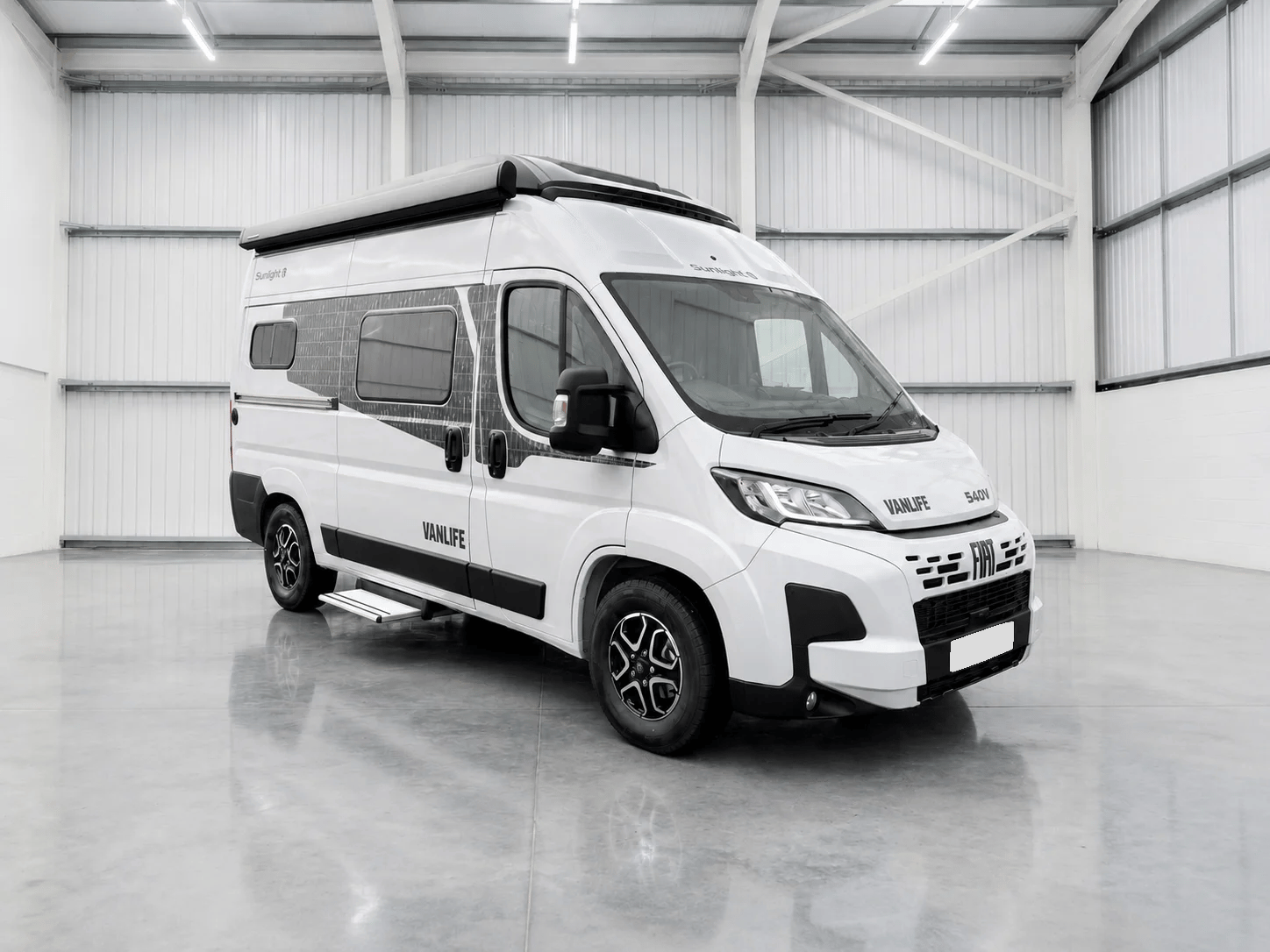
The camper you fall for is rarely the one you can afford. That gap is the whole reason Campervan.win exists. Right now we’re giving away the Sunlight Vanlife, worth around £65,000, and closing that gap is the point: capped entries so the odds stay honest, £10 a ticket, a maximum of five per person, £500 to a UK charity from every full draw, the winner picked by a public randomness beacon anyone can re-check, and one person driving away in the van itself.
Enjoyed this post?
Get more honest campervan guides like this one in your inbox.
You’re in!
Check your inbox. We’ve just sent you a welcome email.

About the author
Felix
Felix covers campervan technology, layouts, and modern conversions, with a focus on design-led thinking and practical performance
Keep Reading
Related Reading
Thoughtful articles that build on what you’ve just read.
Campervan Reviews
12 min read
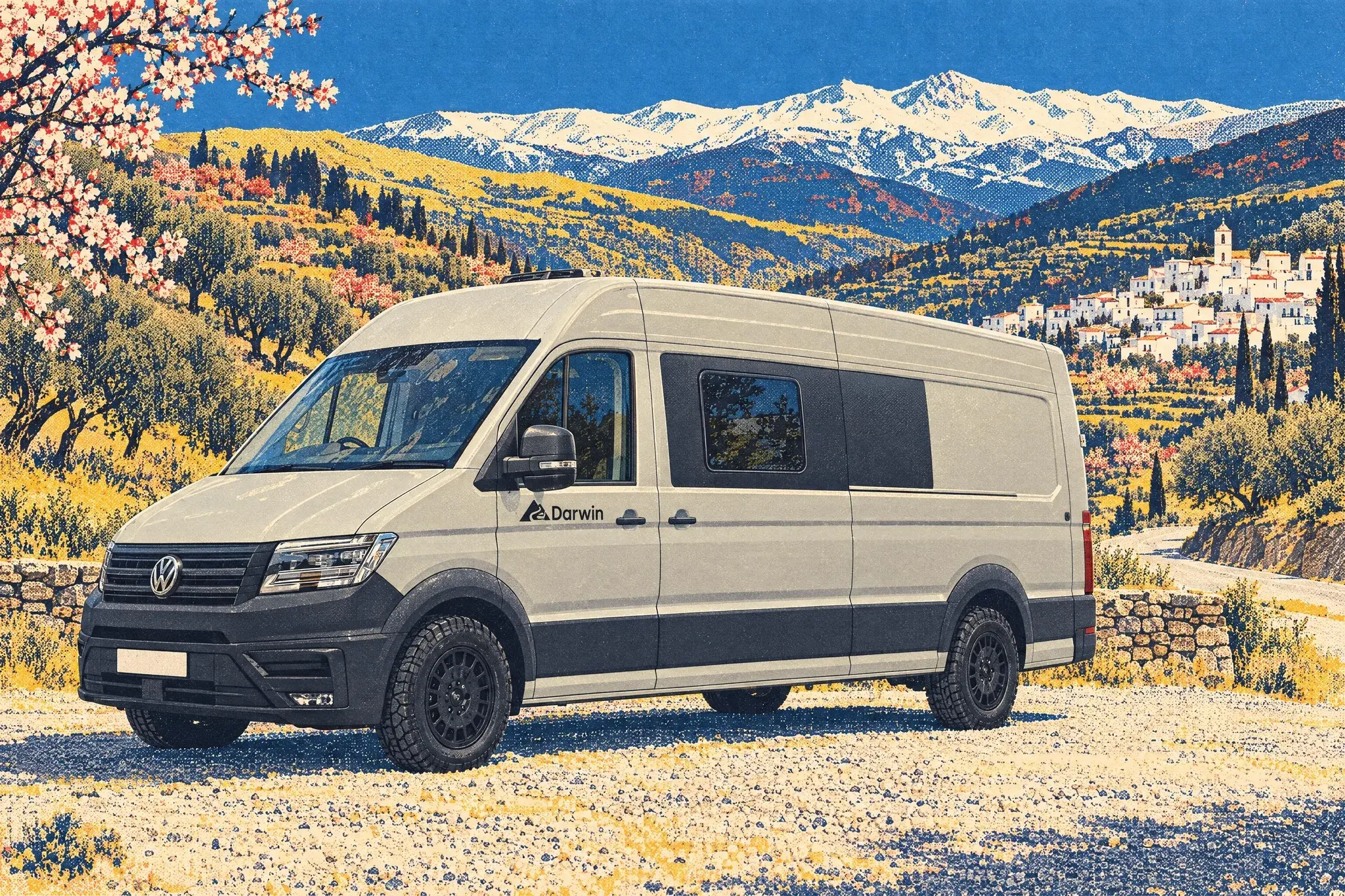
Rolling Homes Darwin review: the long Crafter camper with a proper washroom
The Darwin is Rolling Homes' step up from the Transporter: a long-wheelbase VW Crafter two-berth with an enclosed washroom. We set out what is published, what the price does, and who it suits.

Campervan Reviews
13 min read
Jerba Cromarty review: the long-wheelbase five-seater with two double beds
The Jerba Cromarty is a 5.45 m Scottish-built camper on a VW T7 or Ford Transit Custom that seats five in belts and sleeps two as standard, or four with the optional roof bed. We look at how it lives, what the from-price buys, the published weights and who it suits.

Campervan Reviews
12 min read
Bilbo's Nexa+ T7 review: a rear kitchen, a cassette toilet and the new Low-Lie roof
The Nexa+ is the Bilbo's for people who want a fitted toilet in a Volkswagen Transporter. We go through the rear-kitchen layout, the beds, the power and heating as published, the T7 base, the £77,930 in-stock price and who it suits.
Campervan Reviews
13 min read
Hillside MVX review: the Multivan camper from £70,995, or £78,995 as an eHybrid 4MOTION
Hillside's MVX puts a four-berth pop-top conversion on the Volkswagen Multivan, with a plug-in hybrid and all-wheel drive at the top of the range. Here is what it offers, what it leaves to the Transporter-based Cromford, and where the 2026 Club judges placed it.