
Hymer GT S review: the pricey motorhome that still makes surprisingly good sense

Written by
Martha
Martha writes about interiors, ownership stories, and the everyday realities of campervan life, with a focus on comfort, cost, and how vans are used over time.
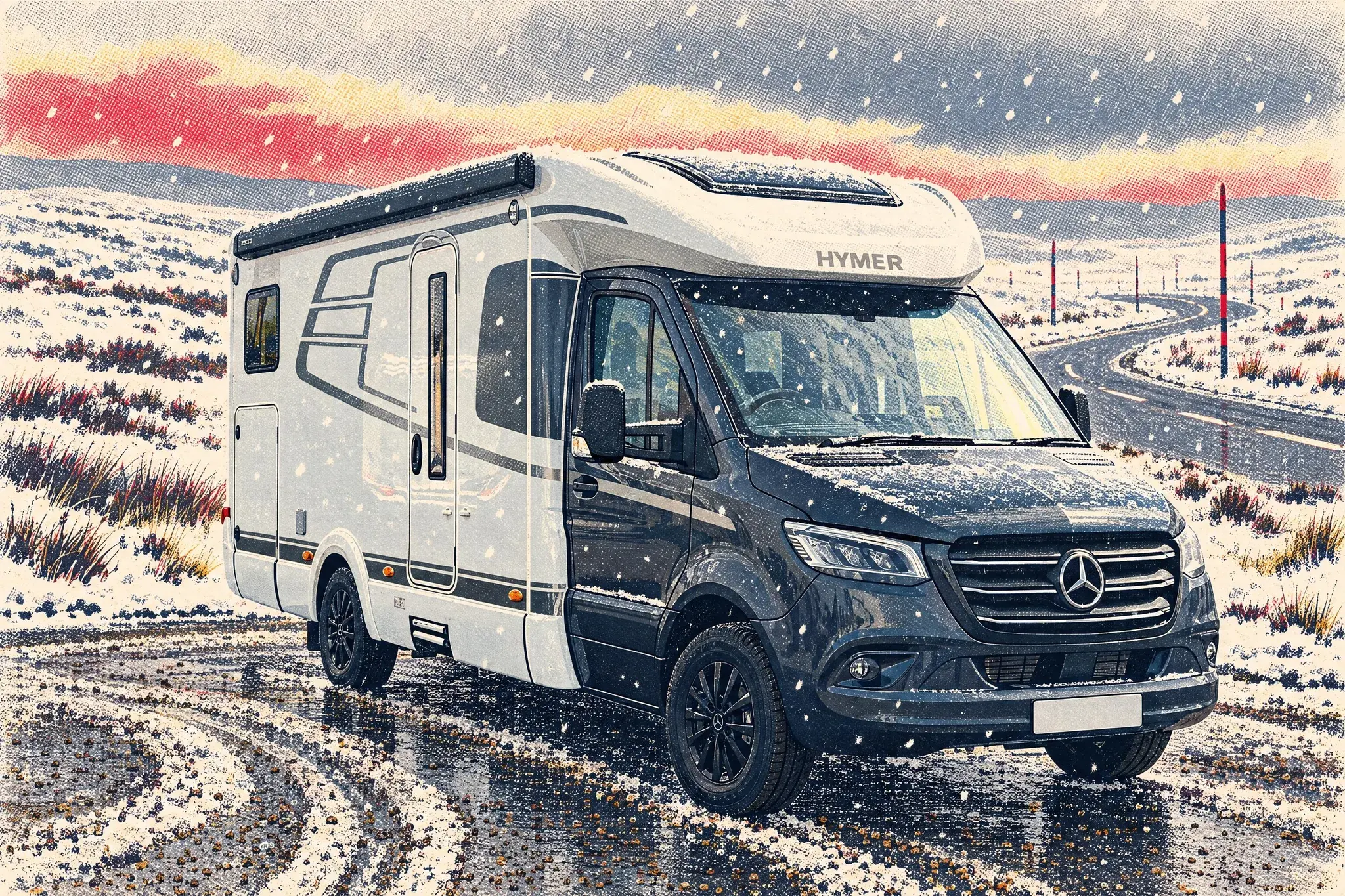
The short answer
The Hymer GT S is the brand's entry into the premium motorhome class, and it makes a surprisingly strong case: a calm, well-resolved coachbuilt on the Mercedes Sprinter (315 CDI, 150hp, 9G-TRONIC automatic) in two lengths, the 600 (7.09m) and 685 (7.39m), both plated at 3,500kg to keep the licence question simpler. UK pricing starts at £92,510 (600) and £93,370 (685). It wins on calm competence rather than theatre: a clever lowered floor, strong heating and water systems (heated 110-litre fresh and 100-litre waste tanks), a 136-litre fridge, and genuinely useful Hymer Connect. The 685 is the sweet spot for its separate shower and toilet. It is expensive, yes, but for the right buyer it is money well spent. Here is the full review, and why it makes such good sense.

The Hymer GT S is expensive. It is also one of the clearest arguments for spending the money.
There are motorhomes that impress you with sheer size. There are motorhomes that win you over with clever packaging. And then there are motorhomes like the new Hymer GT S, which quietly changes the mood of the conversation.
It does not try to be a rolling penthouse. It does not shout about ruggedness with bolt on body cladding and a ladder you will use twice. Instead, it aims at something that is weirdly rare at this price: calm competence.
That sounds like a line from a brochure, but spend a few minutes looking at how this motorhome is put together and you start to see what the money is doing. The GT S is pitched as Hymer’s entry into the premium class. In UK pricing, the GT S 600 starts at £92,510 and the GT S 685 starts at £93,370.
Those are numbers that will stop most of us mid scroll. They also sit in a slightly awkward place. Too expensive to be a casual upgrade. Not expensive enough to be a no compromise flagship where you stop asking questions. The GT S has to justify itself.
So this review is about exactly that: where the value is, where it is not, and why Hymer has managed something genuinely interesting here, even if it still feels out of reach for most people.
And yes, that is part of why we do what we do at Campervan.win. A lot of campervans and motorhomes are drifting into the territory of “nice idea, maybe next life”. If you love touring, you should not need to be the sort of person who casually owns a second home on wheels. Competitions are not everyone’s cup of tea, but the principle matters: putting campervans and motorhomes within reach of more people, not fewer.
Now, back to the GT S.
What is the Hymer GT S, actually?
The GT S is a low profile coachbuilt motorhome on the Mercedes Sprinter, using a front wheel drive Sprinter chassis. Hymer’s pitch leans heavily into a “Gran Turismo” idea, meaning premium travel without the excess.
In practical terms, the big idea is this: front wheel drive allows a lower floor, which allows a flatter, more open interior. Hymer specifically calls out the level floor and over two metres of standing height as part of the spacious feel.
Two layouts are listed on Hymer’s UK site:
- GT S 600: length 709 cm, width 229 cm, height 298 cm, berths 2 to 5
- GT S 685: length 739 cm, width 229 cm, height 298 cm, berths 2 to 5
Both are plated at 3,500 kg in the published technical data, which is important in the UK because it keeps the licence question simpler for many drivers. The GT S 600 has a quoted mass in running order of 3018 kg, while the GT S 685 is 3036 kg, both with the usual legal tolerance.
This is where reality starts creeping in, in a good way and a bad way. The good way is you are not buying a huge overbuilt thing and then paying again in fuel and ferry tickets. The bad way is you will need to think carefully about payload once you add people, kit, water, bikes, awnings and the options you will inevitably want.
Hymer is unusually transparent about weights and the idea of a manufacturer specified mass for optional equipment, and it is worth paying attention to. The GT S 600 has 126 kg listed for optional equipment allowance, and the GT S 685 has 190 kg.
That is not a lot.
If you are the kind of tourer who travels light, you can make it work. If you are the kind of tourer who likes an e bike rack, a second battery module, an inverter, an awning and a few comfort packs, you will want to have an honest chat with your dealer about uprating and what that means for your licence and your use.
The thing that makes the GT S feel different: the floor
You can spot the GT S logic the moment you imagine day to day life in it.
A level floor sounds like a detail. In use, it is one of those details that changes everything. It affects how you move, how you cook, how you get changed, how you carry a mug of tea without bracing yourself like you are on a ferry.
Hymer makes a big point of the continuous flat floor connecting the cab and the rear, and the over two metres of headroom.
If you have toured in motorhomes where you are constantly stepping up and down, dodging wheel arch boxes, and doing that little sideways shuffle past the kitchen, you will understand why this matters. It is not luxury in the shiny sense. It is luxury in the “my knees are not doing a daily obstacle course” sense.
It also influences the interior layout choices. The GT S leans into a front lounge arrangement with facing seating, more like a small living room than a corridor with cushions.
Hymer describes it as a “facing seating area” with a lounge atmosphere, designed for conversation and planning.
You can roll your eyes at that, until you have spent a wet evening in a layout where one person always ends up sitting sideways on a bench, perched like a spare passenger.
A proper facing lounge changes the feel of a motorhome, especially if you travel as a couple and actually use the space. It becomes somewhere to sit and read, eat, work, and watch weather fronts march across the window without feeling like you are in a narrow tube.
Mercedes Sprinter base: what you get in the UK, and why it matters
A lot of value in this price bracket is hidden in the base vehicle.
The GT S uses the Mercedes Sprinter and, in Hymer’s own wording, combines a “proven” Mercedes front wheel drive chassis with the driving experience that does not feel far off a Sprinter campervan.
That is a key point for UK buyers, because many of us do not live on wide open roads. We do tight lanes, awkward junctions, supermarket car parks, and the sort of coastal towns where someone has decided that a flower planter is traffic calming.
The GT S 685 technical data lists a Mercedes Sprinter 315 CDI, 110 kW (150 hp), Euro VI E, with the 9G TRONIC automatic transmission as standard equipment.
That gearbox alone is a daily quality of life upgrade, especially in stop start traffic and hilly areas where a manual can feel like a leg workout by lunchtime.
There is also a long list of driver assistance systems included in the standard equipment listing, including Active Distance Assist DISTRONIC, Active Brake Assist, Active Lane Keeping Assist, Attention Assist, Crosswind Assist, Traffic Sign Assist, and a reversing camera through the MBUX system.
Those features are not just gadgetry. In a motorhome, they reduce fatigue. They make a long motorway run less tense. They also make you more likely to arrive with enough energy left to actually enjoy the place you have driven to.
Reliability is always a tricky topic because any vehicle can have a bad day, and motorhomes add complexity on top of the base vehicle. But the practical benefit of the Sprinter in the UK is not only the engineering. It is the support ecosystem. Mercedes dealerships, parts availability, and a broad knowledge base among mechanics and recovery services all make ownership feel less like a gamble.
Hymer also highlights that Mercedes based motorhomes can be specified with a wide range of assistance systems and multimedia features to Mercedes standards.
That matters if you keep your motorhome for years. Technology ages badly when it is awkward and half integrated. When it is built into the base vehicle properly, it tends to stay usable for longer.
Front wheel drive in a motorhome: is it a compromise?
For some buyers, front wheel drive still sounds like the budget option. In the van world, it is often associated with lower load floors and good efficiency, rather than off road credibility.
In the GT S, that is the point. A front wheel drive Sprinter configuration can allow a lower loading height than rear wheel drive, and in van applications it has been associated with a lower floor.
For a motorhome, a lower floor can mean:
- Easier entry and exit
- More headroom without making the whole vehicle taller
- A more stable feel, because weight sits lower
- A more open interior, because you lose some of the internal steps and interruptions
Hymer explicitly links the lower floor to comfortable entry, more headroom, and improved weight distribution.
Where is the downside? If you are dreaming of muddy tracks and wet grass pitches with steep exits, you might prefer rear wheel drive or four wheel drive for traction. But most touring in the UK is not an expedition. It is campsites, farm sites, CLs, a bit of winter touring, and the occasional questionable field. Good tyres, sensible driving and weight management get you a long way.
If your touring life genuinely demands traction, Hymer has other models aimed at that. The GT S is more about confident road travel with premium comfort.
Layout choice: GT S 600 vs GT S 685
If you are looking at the GT S range, the layout decision will probably be the first real fork in the road.
The GT S 600 is slightly shorter at 7.09 m, and the GT S 685 is 7.39 m.
That extra 30 cm does not sound like much, but it can change storage, bathroom arrangement, and bed feel.
From the published internal measurements, you can see differences in the sleeping and washroom details.
The GT S 685 lists:
- Rear bed dimensions: 202 x 83 cm and 205 x 83 cm
- Bathroom: 90 x 81 cm, plus a separate shower at 73 x 68 cm
- Kitchen: 97 x 78 x 93 cm
- Fridge: 136 litres with 15 litre freezer compartment
The GT S 600 lists multiple rear bed lengths depending on configuration and options, and a bathroom listed at 105 x 85 cm, but without the separate shower measurement shown in the same way.
What does that mean in real touring life?
If you like a separate shower and toilet arrangement, the 685 looks like it is aiming at that classic premium touring comfort: you can use the toilet while someone else showers, and the main bathroom stays less damp.
If you travel mostly on campsites with facilities and you want a slightly shorter body for manoeuvrability, the 600 may appeal. But if you are spending money like this, you probably care about self contained comfort on a wet Tuesday in February, not only August weekends.
For many UK buyers, the 685 will likely be the sweet spot.
Kitchen and day to day living: where premium shows up
A motorhome kitchen does not need to be a chef’s dream. It needs to be calm.
Calm means: enough worktop for a chopping board, a sink you can actually use, storage that does not throw itself open on roundabouts, and a fridge that is not a constant compromise.
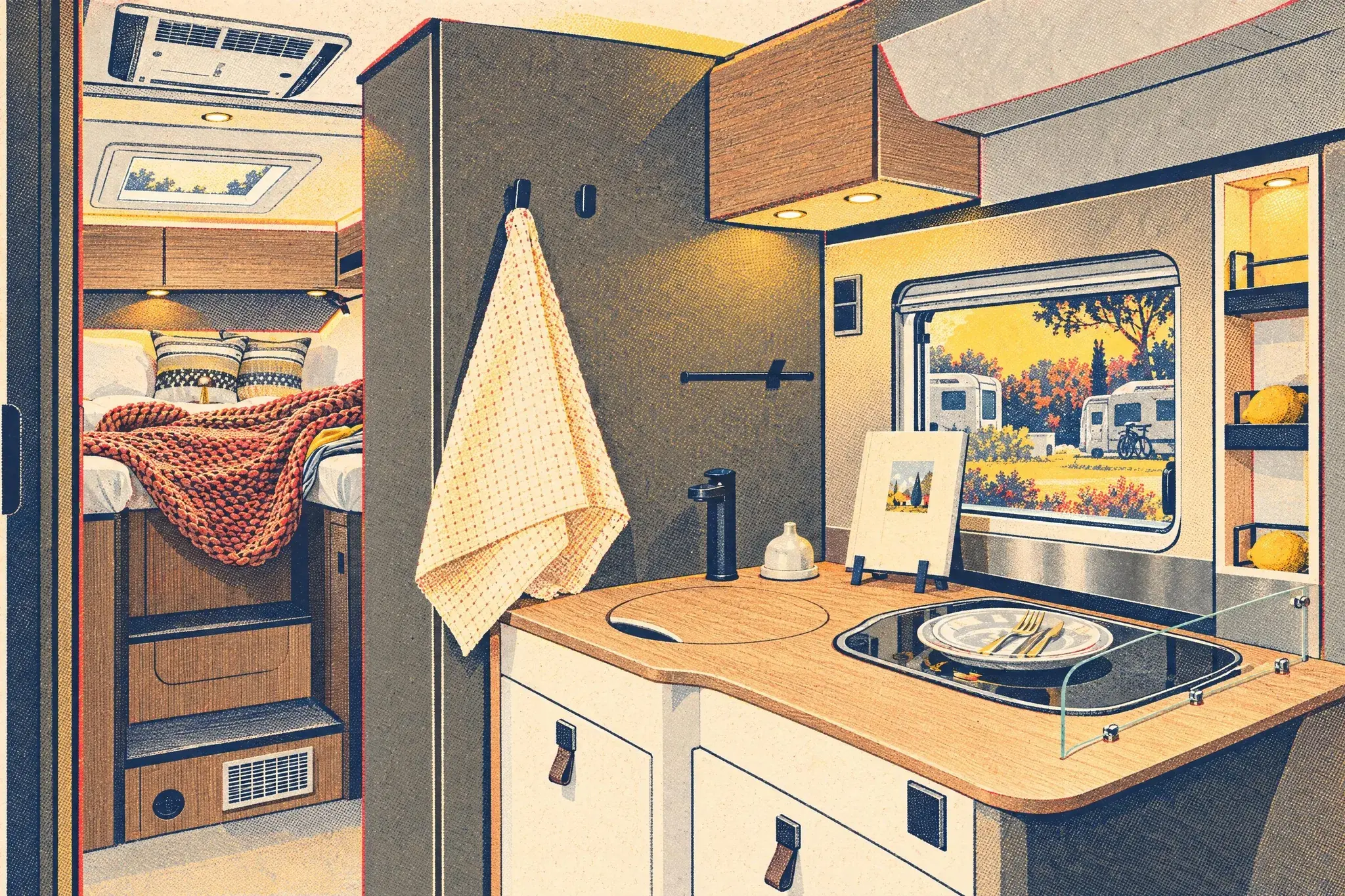
The GT S 685 listing includes an extra deep sink with a tight fitting chopping board, plus wide kitchen drawers.
That kind of detail is exactly where Hymer tends to justify its price. A chopping board that fits properly is not glamorous, but it is the difference between cooking feeling like a faff and cooking feeling like a normal part of the day.
The 136 litre compressor fridge is also a solid touring choice.
Compressor fridges generally cope well with variable temperatures and do not demand the same level of levelling as absorption fridges. In the UK, where you might stop for lunch in a lay by that is not remotely flat, that is quietly brilliant.
In photos and renders, Hymer interiors often look deliberately restrained. Less caravan sparkle, more modern apartment. The risk with that is it can feel cold. The GT S tries to avoid that by leaning on lighting. Hymer talks about light scenarios and colour temperature control through the Connect system.
If you have ever sat under a single harsh ceiling light in a motorhome, you will understand why this matters more than it sounds.
Heating, water, and the boring bits that make touring easy
This is where the GT S starts looking like good value, even with the price tag.
The GT S technical data lists diesel warm air heating at 6 kW as standard, and the standard equipment for the 685 includes a diesel warm air heating system with a 10 litre warm water boiler and an atmospheric pressure sensor, which is useful if you tour at altitude.
It also lists an insulated and heated 110 litre fresh water tank and an insulated and heated 100 litre waste water tank, plus electric waste water drainage.
In the UK, heated tanks are one of those features you think you do not need until you actually tour in cold weather. When you do, you realise it is the difference between extending a trip and cutting it short.
The numbers themselves are sensible for touring:
- 110 litres fresh water total, with 20 litres in the driving position
- 100 litres waste water
You can do a couple of days comfortably as a couple if you are not treating the shower like a home bathroom. If you are careful, you can stretch it. If you are not, you will be looking for a service point sooner than you would like.
The presence of a diesel heating system also takes pressure off gas. The GT S still has a gas bottle storage listed as 1 x 5 kg.
That is enough for cooking and some backup use, without dedicating half the garage to gas.
Hymer Connect: genuinely useful, not just a gimmick
Hymer Connect is one of those features that could be irritating if it is done badly. Nobody wants an app for the sake of an app.
Hymer positions it as control of essential functions like lighting and heating via smartphone, plus monitoring of tank levels and battery status.
On the GT S 685, the standard equipment listing includes Hymer Connect plus a 7 inch touch display for control and monitoring.
In practice, this sort of system is valuable in small, real moments:
- Checking water levels before you commit to a remote overnight stop
- Turning the heating down from bed without doing a little walk of shame in your socks
- Knowing whether your battery is coping before you run the coffee machine
- Setting lighting that feels like evening rather than a hospital corridor
Hymer also describes app based control including lighting and other systems, plus a knowledge base and dealer location features.
Is it essential? No. Does it become part of the daily rhythm if it works well? Yes, absolutely.
Sleeping: it is not only the mattress, it is the space around it
A lot of motorhome reviews talk about bed sizes like it is a contest. In real life, the experience is as much about access, ventilation, and whether you can get up in the night without stepping on someone.
The GT S 685 lists rear bed lengths in the low 200 cm range with 83 cm width per side.
That suggests longitudinal single beds in many configurations, which is a touring favourite for couples who actually want their own space. It also usually creates a usable rear garage underneath, which Hymer highlights with a garage load up to 350 kg.
The GT S also includes nice quality of life details like skylights with blinds and insect screens, and a large panoramic skylight in the living room with LED lighting.
This is where premium is felt. Not because you will brag about a skylight, but because you will sit under it with a brew and realise the interior feels less closed in.
Storage and garage: the truth about touring clutter
Touring looks romantic until you have tried to find your levelling blocks in the rain.
The GT S 685 has a large garage door on the right side and an external storage flap on the left, plus that quoted garage load figure.
The important thing here is not the headline. It is the usability. How low is the loading lip. How easy is it to reach the back. How sensible are the tie down points. Those details vary by build and options, and they are why a dealer visit matters.
If you are planning to carry bikes, you will also want to think about rear axle load. Hymer explicitly notes axle load in relation to the garage.
This is another reason why the value conversation matters. A cheaper motorhome that is permanently close to its limits can end up being more stressful than an expensive one that gives you a bit more margin.
So why call it “exceptional value” when it starts at over £92,000?
Because value is not the same as cheap.
At this level, you are paying for three things:
- The base vehicle and driving experience
- The engineering of the habitation part, including insulation and winter capability
- The standard equipment list, meaning how much you need to add before it feels complete
The GT S is compelling because it tries to deliver a finished experience close to the starting price.
Compare it to something like the Hymer ML T. In Hymer’s 2025 UK price list, an ML T 580 is listed from £103,660.
The ML T is a brilliant motorhome in its own right, and it offers rear wheel drive or all wheel drive capability depending on specification.
But if your touring is mostly road based and you want that low floor, open interior feel, the GT S offers a premium experience at a lower starting point.
That difference can become even more meaningful once you start adding options. A lot of premium motorhomes start at a price that looks almost reasonable, then become eye watering once you add the packs that make it feel complete.
The GT S still has options, of course. It has packs like a chassis package, winter package, living comfort package and autonomy package XL listed on the GT S page.
If you tick every box, you will make it expensive quickly. But the baseline is not bare.
And that is where the value argument lands: you are getting a premium Mercedes based motorhome with a thoughtful interior concept, strong winter spec elements, and modern connectivity at a starting price that undercuts other Mercedes based Hymer motorhomes.
Is it still wildly expensive? Yes. Is it still outside most people’s reach? Also yes.
But if you are shopping in this bracket, the GT S makes a rational case rather than an emotional one.
What is it like to drive?
A detailed driving review normally requires seat time, and this is an editorial review rather than a road test with measured braking distances.
But you can make a solid judgement about the likely driving feel based on the platform and the equipment.
Hymer positions Mercedes based motorhomes as close to a Sprinter campervan in driving experience, and the GT S is based on a front wheel drive Sprinter chassis.
You also have:
- Automatic transmission
- A long list of driver assistance systems that reduce fatigue
- A lower floor and improved weight distribution as part of the concept
In UK touring terms, I would expect the GT S to feel stable on the motorway, less top heavy than some taller coachbuilts, and more relaxing on long days. The lower entry height is also a daily joy, especially if you are in and out all day on a road trip.
The width is 229 cm.
That is normal for this class, but you will still notice it on narrow lanes. You are not going to thread it through Cornish hedge lines with the same ease as a panel van campervan. That is the trade off for the proper interior space.
The UK ownership picture: dealers, service, and why Hymer tends to be a safer bet
There are two parts to owning a premium motorhome in the UK.
The first is build quality, which Hymer leans on as “Made in Germany” premium finish.
The second is support. This matters even more. Something will need attention at some point. It might be a door latch. It might be a sensor. It might be something boring like a blind that refuses to behave.
Hymer’s dealer search page notes more than 300 Hymer service partners and dealers worldwide.
That is not the same as saying you will always have a convenient workshop around the corner in rural Britain. But it does speak to a mature service network.
Hymer warranty arrangements can vary by market and model year, so I will not quote a single number as if it is universal, but it is common for manufacturers to require annual habitation checks to maintain warranty and water ingress cover, and UK dealers often stress this.
In plain English: budget for maintenance, and plan your servicing like you plan your touring. Do not leave it until the week before a big trip.
Who is the GT S actually for?
The honest answer is: not everyone, and that is okay.
The GT S makes the most sense for:
- Couples who tour regularly and want a living space that feels genuinely comfortable
- Drivers who care about relaxed road manners and modern assistance systems
- People who want winter capability without turning the motorhome into a bunker
- Anyone who likes the idea of premium design that is more calm than flashy
It is less ideal for:
- Anyone who needs serious off road traction as a core part of their touring
- People who carry heavy kit and want limitless payload without uprating
- Large families who need lots of belted travel seats and sleeping spaces without making the lounge feel compromised
Hymer lists the GT S 685 as having 3 to 4 permitted seats depending on configuration and options.
So yes, it can handle the occasional extra passenger, but it is not primarily a family bus.
The uncomfortable bit: price, options, and what you will really spend
The base price is only part of the story.
The GT S starts at £92,510 for the 600 and £93,370 for the 685, including VAT and on the road charges as described by Hymer.
Then you start thinking about how you will actually use it.
If you tour off grid, you will look at battery expansions, solar, and an inverter. The GT S 685 standard equipment includes an 80 Ah LFP habitation battery module, with options listed for additional LFP modules and other electrical upgrades.
If you tour in winter, you will look at the winter package. If you like comfort, you will look at the living comfort package. If you want it to feel like the motorhome you imagined when you started browsing, you will probably add several things.
This is not a criticism of Hymer. It is simply the reality of premium motorhomes. The configurator exists because people want different things.
The key is that the GT S already includes a lot of the expensive fundamentals. You are not starting with something stripped and then paying to make it tolerable.
Why this matters to us at Campervan.win
A motorhome like the GT S is a reminder of two truths that exist at the same time.
First, the technology and comfort available in modern campervans and motorhomes is genuinely brilliant. Heated tanks, clever insulation, usable layouts, driver assistance systems, proper connectivity. If you tour often, these things change how easy your life is on the road.
Second, the price creep is real. A starting price in the £90,000 range is not a casual purchase. It is a major life decision. For lots of people, it is simply not going to happen, no matter how much they love the idea.
That is why we talk about putting campervans and motorhomes within reach of everyone. Not because everyone should own a £90,000 motorhome, but because the joy of touring should not become something reserved for a narrowing slice of people.
The Hymer GT S is a beautiful example of where the industry is capable of going. Our job is to keep the door open behind it.
Final thoughts: the GT S is premium done with restraint, and that is why it feels like value
If you want a motorhome that looks expensive, plenty exist. If you want a motorhome that feels expensive in the ways that matter at 7am on a wet pitch, fewer stand out.
The GT S stands out because it is built around daily ease: a level floor, a modern lounge layout, proper heating and tank insulation, strong standard equipment, and the driving confidence of the Mercedes base.
The price is still steep. It is still a motorhome for people who have done the sums and decided touring is not just a hobby, it is a lifestyle.
But if you are in this bracket and you want premium without theatre, the Hymer GT S is one of the most coherent arguments for spending the money.
Common questions
What is the Hymer GT S?
It is Hymer's entry into the premium motorhome class: a calm, well-resolved coachbuilt on the Mercedes Sprinter, in two lengths, the GT S 600 (7.09 metres) and GT S 685 (7.39 metres). Rather than impressing with size or bolt-on ruggedness, it aims at calm competence, with a clever lowered floor, strong systems and a high-quality, restrained interior.
How much does the Hymer GT S cost?
In UK pricing the GT S 600 starts at 92,510 pounds and the GT S 685 at 93,370 pounds. It is a steep price, but it is pitched as premium done with restraint, and the argument is that the money buys genuine engineering, a refined Sprinter base and well-resolved systems rather than showroom theatre.
Should I buy the Hymer GT S 600 or 685?
For many UK buyers the 685 is the sweet spot. Its extra 30cm of length allows a classic premium arrangement with a separate shower and toilet, so one person can shower while another uses the loo and the bathroom stays less damp, plus more storage. The 600 suits those who tour mostly on serviced sites and want a slightly shorter body for manoeuvrability.
Do you need a C1 licence for the Hymer GT S?
No, in its published form. Both the GT S 600 and 685 are plated at 3,500kg, which keeps them within a standard category B car licence for many drivers, a deliberate move on a seven-metre-plus motorhome. The running weights are around 3,018kg (600) and 3,036kg (685), so the optional-equipment allowance is modest (126kg and 190kg), which is worth watching.
What is the Hymer GT S like for heating and off-grid systems?
Well sorted. It has 6kW diesel warm-air heating with a 10-litre water boiler and, on the 685, an atmospheric-pressure sensor useful at altitude, plus an insulated and heated 110-litre fresh and 100-litre waste tank with electric drainage, and a 136-litre compressor fridge. There is a single 5kg gas bottle. The systems are built to make four-season touring easy rather than fiddly.
Who is the Hymer GT S for?
Buyers in the premium bracket who want refinement without theatre: people who have decided touring is a lifestyle rather than an occasional hobby, who value a calm, well-engineered Sprinter-based motorhome, a separate shower and toilet (on the 685), and the reassurance of Hymer's UK dealer and service network.
The reachable bit
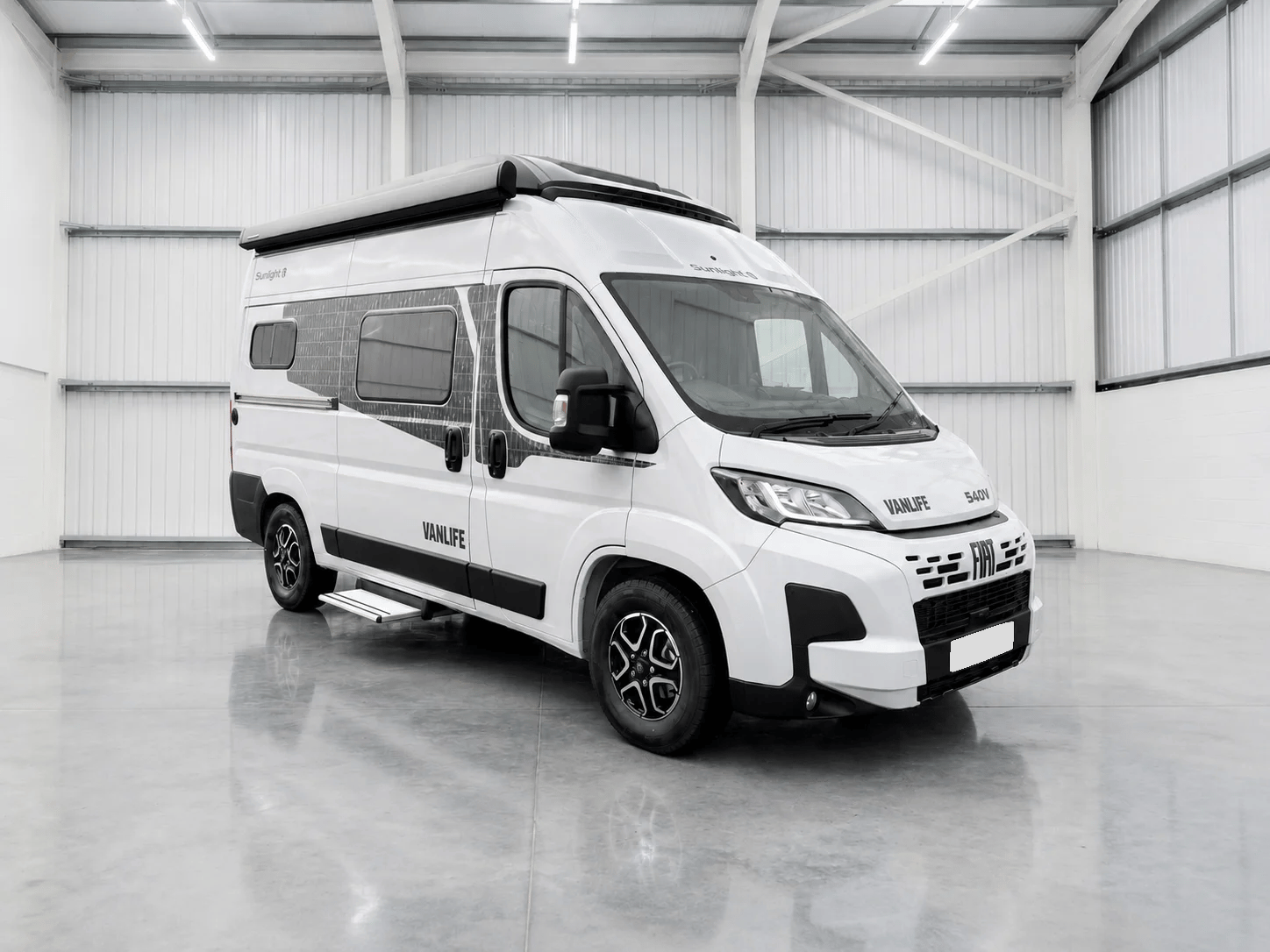
The camper you fall for is rarely the one you can afford. That gap is the whole reason Campervan.win exists. Right now we’re giving away the Sunlight Vanlife, worth around £65,000, and closing that gap is the point: capped entries so the odds stay honest, £10 a ticket, a maximum of five per person, £500 to a UK charity from every full draw, the winner picked by a public randomness beacon anyone can re-check, and one person driving away in the van itself.
Enjoyed this post?
Get more honest campervan guides like this one in your inbox.
You’re in!
Check your inbox. We’ve just sent you a welcome email.

About the author
Martha
Martha writes about interiors, ownership stories, and the everyday realities of campervan life, with a focus on comfort, cost, and how vans are used over time.
Keep Reading
Related Reading
Thoughtful articles that build on what you’ve just read.
Motorhome Reviews
12 min read
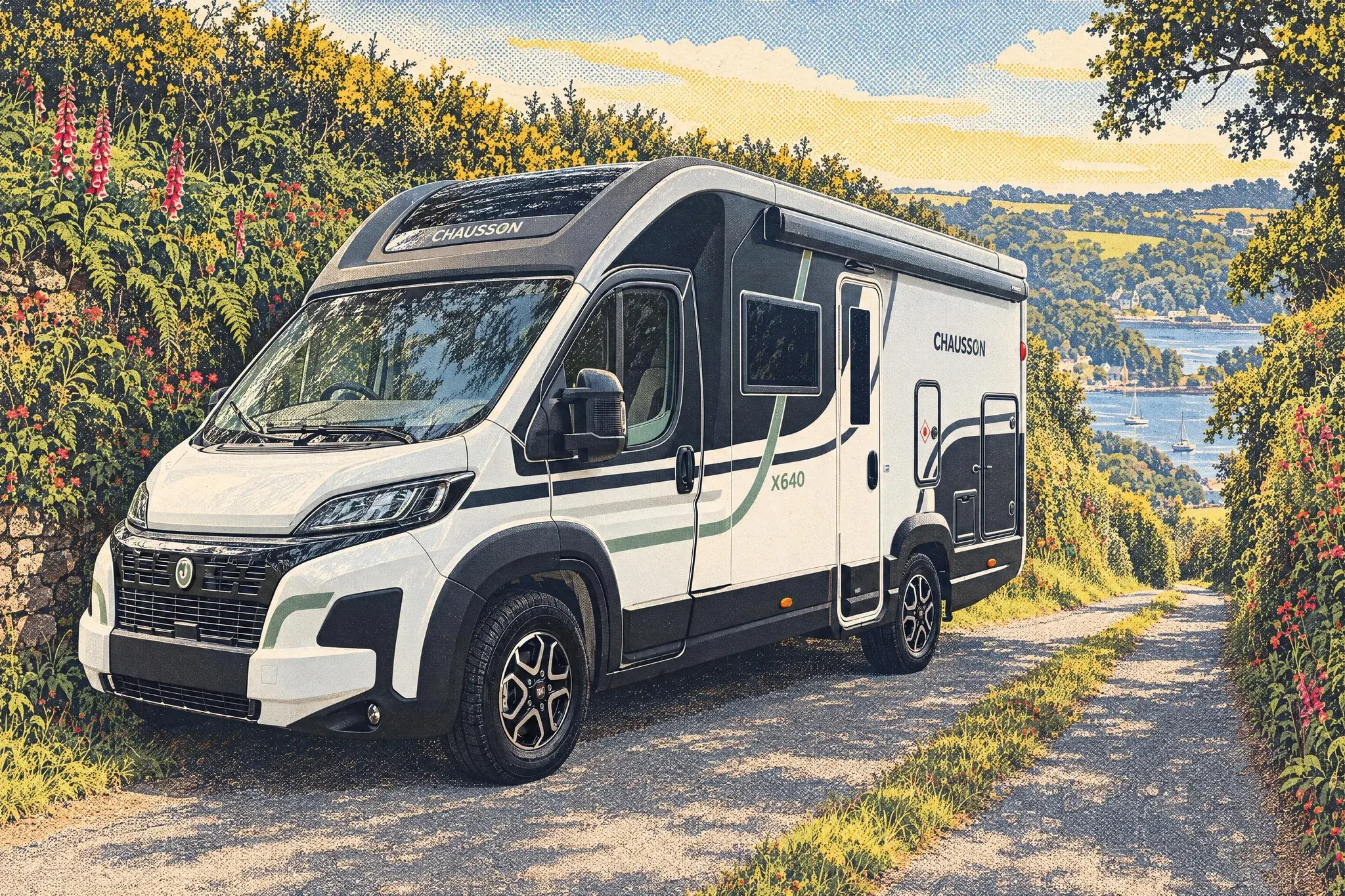
Chausson X640: is a 2.1 m wide coachbuilt from £74,990 the answer for UK lanes?
Chausson's new X640 squeezes a drop-down double, a full-width garage and 1.98 m of headroom into a body only 2.10 m wide. We run the real numbers on width, weight, licences and price to see who it suits.
Motorhome Reviews
13 min read
Dethleffs Globebus Performance 4x4 T16: a 6.25m VW Crafter 4x4 under 3.5t, judged for UK use
Dethleffs has put four-wheel drive under a compact coachbuilt motorhome. We look at what the 2027 Globebus Performance 4x4 T16 actually is, what the VW Crafter 4x4 base gives you, and whether a 6.25m, 3.5-tonne, roughly £98,000 all-wheel-drive motorhome makes sense on British roads.
Motorhome Reviews
10 min read
Rapido 8096dF: an honest look at this island-bed A-class for UK touring couples
A clear-headed guide to the Rapido 8096dF, a large island-bed A-class motorhome, and whether its layout, weight and running costs really suit a UK touring couple.
Motorhome Reviews
29 min read
Swift Trekker 594 review: a full-size family coachbuilt for UK touring
An honest review of the Swift Trekker 594, a full-size four-berth coachbuilt motorhome about 7.85m long on the rear-wheel-drive Ford Transit, with a fixed rear island bed, centre washroom and a 3,500kg category B weight.