
Bürstner Habiton 4x4: why it is the best value all wheel drive campervan arriving in 2026

Written by
Oliver
Oliver is the founder of Campervan.win and writes about campervans, travel, and the life-changing freedom that comes with getting out on the road.
The short answer
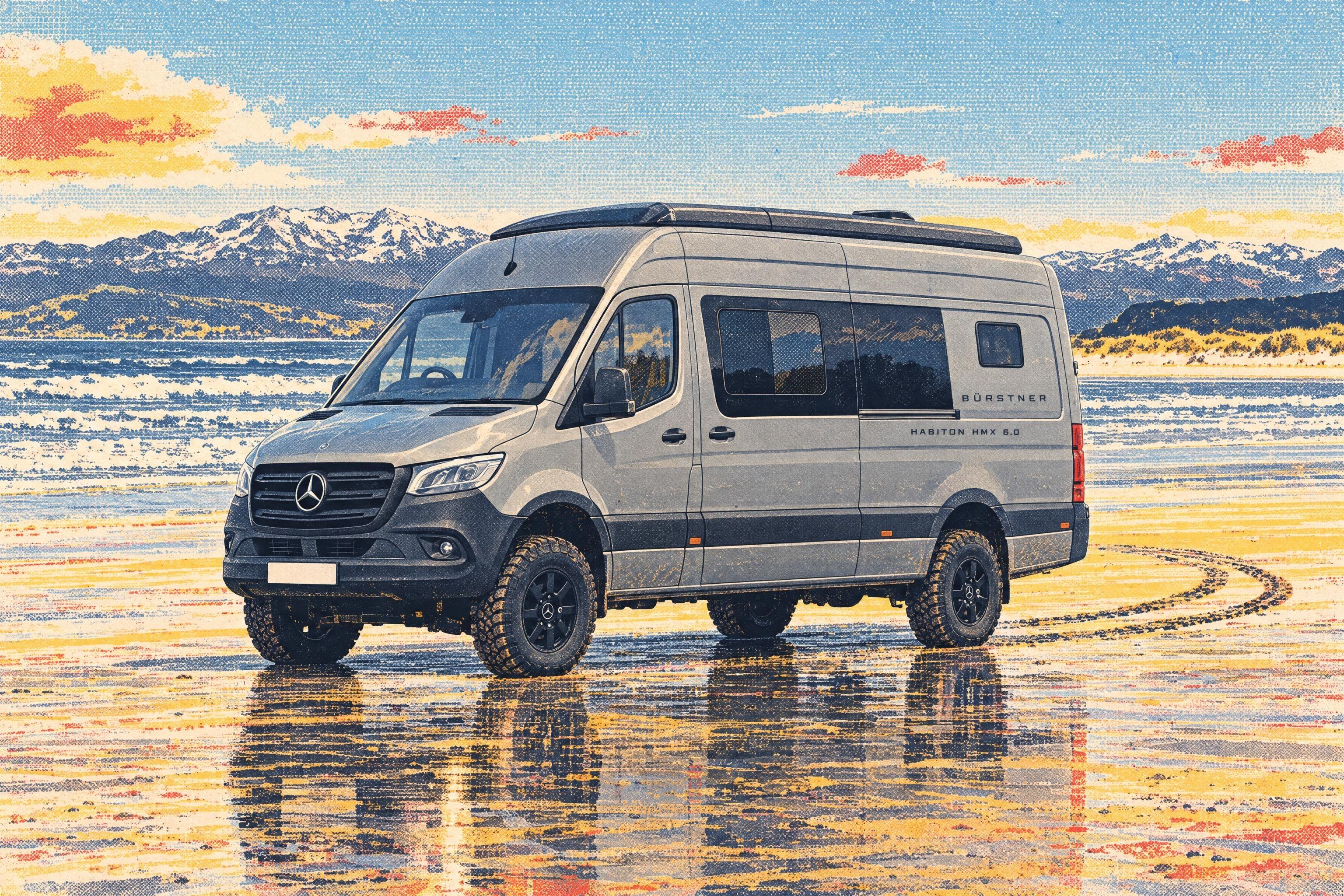
The Bürstner Habiton HMX 6.0 is shaping up to be the best-value all-wheel-drive campervan arriving in 2026, and it is a genuinely exciting prospect: a 4x4 on the excellent Mercedes Sprinter that squeezes a layout usually needing a longer body into under six metres, with a clever moving bathroom, single beds and a real kitchen. The base UK price is £80,795, and with a little restraint you can reach a genuinely special spec around £84,000, though options can push past £100,000. That undercuts its nearest rival, the Hymer Grand Canyon S 4x4 (base around the mid-£90,000s). One thing to check: the 4x4 version is plated around 3,880kg and needs a C1 licence, with lighter 3,500kg variants by layout. Here is why it looks like the value pick of 2026.

There is a certain kind of conversation that happens every winter, usually around a kitchen table, with a mug you keep warming up and forgetting to drink. Someone says they want a proper all wheel drive campervan. Not a sticker and a stance. Not a lifestyle prop. A real one. Something that can get up a wet farm track without drama, sit on a windy headland without shivering the cupboards loose, and still feel civilised when you are stuck in traffic on the M6.
Then the price gets mentioned. Someone laughs. Someone sighs. Someone opens a tab on their phone and quietly closes it again.
All wheel drive campervans on a Mercedes Sprinter base have always been a bit like that. They make sense in the UK in a very practical way, especially if you travel in shoulder season, use small sites, park on grass, or spend time in places where roads turn into “roads”. But the numbers have tended to sprint away long before you have even chosen a colour.
That is why the Bürstner Habiton HMX 6.0 matters. It is not just another 4x4 Sprinter conversion with a handsome brochure and a price that makes your eyes water. It is a genuinely clever layout wrapped around a compact footprint, and it arrives into the UK market with a base starting price that undercuts its obvious rivals. Even better, it does it while bringing some properly useful innovations that are not just marketing garnish.
Yes, once you start ticking options it is very easy to wander beyond £100,000. That is the reality of modern campervans and motorhomes, particularly on a premium base vehicle. But if you really want a 4x4 campervan on an excellent Sprinter, and you are willing to be sensible, there is a realistic path to a Habiton spec that feels special at around the £84,000 mark. That is the kind of number that changes the whole conversation.
Let’s talk about why.
The Habiton in plain terms
The Habiton is a compact campervan on a Mercedes Sprinter chassis, and the HMX version brings all wheel drive and a more adventure oriented stance. The headline is simple: it squeezes a layout that usually needs a longer body into a length under 6 metres, and it does it without feeling like you are living inside a narrow corridor.
That matters because under 6 metres is a sweet spot in the UK. Ferries are easier. Parking is easier. Single track lanes feel less like a negotiation. You can still pop into a village car park to buy bread without the sensation that you are steering a small bungalow.
Bürstner leans hard into three core ideas with the Habiton:
- A patented sliding bathroom that makes the washroom feel bigger than it has any right to.
- Single beds in a compact length, with the option to extend them into a larger sleeping area.
- A heated sleeping roof, which makes the extra berths feel like a real feature rather than a cold compromise.
Those are not small details. They are the bits that decide whether a campervan feels like a weekend toy or a proper touring home.
The pricing point that makes people sit up
The base starting price for the Habiton HMX 6.0, as presented in the UK configurator information, lands at £80,795. That is with on the road charges included in the recommended retail price, including delivery, registration and PDI, with import duties handled separately if applicable.
That figure is important because it is unusually low for a Sprinter based all wheel drive campervan with this level of layout ambition. It effectively resets the entry point.
In real life, almost nobody buys the absolute base spec. You choose a paint finish. You choose wheels. You choose a pack because it wraps up half the things you wanted anyway. The Habiton is no different, and that is where the honest conversation begins.
If you go in with restraint, you can land a genuinely gorgeous spec at about £84,000.
The one that will be on a lot of dream lists is the almost glow in the dark green. It looks playful in photos, but it also has that rare quality of making a tall vehicle look friendly. If you want to play it safe, stone grey does the premium thing without shouting.
Add the chunky BFGoodrich style all terrain look with black rims, and it suddenly feels like a proper off road tool rather than a delivery van in a nice jacket. You can picture it on a wet Scottish forestry track or the edge of a Welsh lay by without it looking out of place.
Then there is the small but satisfying money saving move: you can save £750 by sticking with the standard tyres and rims. That gives you a spare set of summer tyres for later, which is the kind of practical benefit that only becomes obvious when you have owned a campervan long enough to be annoyed by tyre costs.
None of this changes the bigger reality, which is that options can push you well above £100,000. That is particularly true if you add big packs, extra batteries, fancy upholstery, and all the touring tech. But value is not about the cheapest number on paper. It is about what you get before you even start adding the expensive extras.
And on that measure, the Habiton is extremely hard to ignore.
The nearest obvious rival and why the Habiton looks sharp beside it
The comparison most people will make is with the Hymer Grand Canyon S. It is the best known all wheel drive Sprinter based campervan in the UK market, and it has a well earned reputation for a solid touring experience.
The problem, if you can call it that, is price. UK listings for the Grand Canyon S show base model starting figures around £94,110 including on the road charges. Another UK dealer listing shows a base vehicle figure at £95,000 before the real world spec pushes the total higher.
That is not a small gap. If you are comparing a Habiton base starting around £80,795 to a Grand Canyon S base hovering around the mid £90,000s, you are into a difference big enough to cover a year of fuel, ferries, site fees, and a few very decent meals where you do not have to wash up afterwards.
But it is not just about the gap. The Habiton also arrives with innovations that are genuinely distinctive in this segment.
Hymer does many things well, but it does not have this exact combination of features:
- A patented sliding bathroom concept designed to create space where you actually use it.
- A seating group with extra legroom achieved by the sliding mechanism, which is a rare bit of real world comfort engineering.
- The heated sleeping roof concept, which makes four berths more plausible outside of July.
You can have a lovely campervan without any of those. Plenty of people do. But when you are paying serious money, it is fair to ask what makes one model feel like a step forward rather than just a new trim level.
In that context, the Habiton’s value case becomes clearer. It is not merely cheaper. It is cheaper while also offering a few genuinely smart layout and comfort solutions.
Why Bürstner feels different right now
Bürstner has always had a particular feel. In the UK, it has sometimes been seen as a brand that does comfort well, interiors that feel like a living space rather than a technical pod, and layouts that lean towards everyday usability. But in recent years the wider market has become brutally competitive. Buyers are more knowledgeable. Social media tours are relentless. People expect better. They also expect manufacturers to back up the promise with aftersales support and sensible engineering.
Over the past year, Bürstner has made changes that suggest a sharper focus and a willingness to reorganise. The company announced a restructuring with Hubert Brandl appointed as Chairman of the Management Board, with cross divisional decision making authority, as part of a reorganisation within the Erwin Hymer Group.
That matters on two levels.
First, it indicates that Bürstner is not simply coasting. Restructures are rarely about keeping everything exactly the same. They are a sign of intent, and often a sign that the group wants the brand to be clearer about what it stands for.
Second, Brandl’s background connects directly to Niesmann and Bischoff, a name that still carries weight when you talk about premium motorhomes. Bürstner’s own press material notes that he previously held responsibility at Niesmann and Bischoff.
When people talk about “connections with Niesmann”, what they usually mean is a transfer of know how and standards inside the same wider group. It is not that a Habiton suddenly becomes a luxury liner. It is that thinking from higher end motorhomes can influence how a more compact model is executed.
You can see this kind of influence in a few places with the Habiton. The sliding bathroom is a prime example. It is the sort of engineering that feels more like motorhome thinking than a typical van conversion trick. The interior also looks like Bürstner trying to be more deliberate about lighting, space perception, and the simple pleasure of being inside the thing when it is raining for the third day running.
None of this guarantees perfection, and it is always wise to judge a campervan and motorhome on what arrives at dealers, not what is promised online. But the direction of travel is encouraging.
The layout and why it feels like a step forward
Many all wheel drive campervans fall into one of two traps.
They either focus so much on rugged style that the inside feels like an afterthought, or they focus so much on interior comfort that the off road promise feels like a badge rather than a capability.
The Habiton tries to avoid both.
The seating area and that extra legroom trick
If you have toured in a campervan for any length of time, you know the truth about seating. You can cope with a smaller kitchen. You can cope with a smaller fridge. You can even cope with a slightly awkward bed set up if it is comfortable at night. But if the seating is cramped, you notice it every single day.
Bürstner’s seating group uses the patented sliding mechanism to create extra legroom. That might sound like a small thing, but it is the sort of feature that changes the feel of a winter evening. You sit down with your feet up, and you do not feel like your knees are trying to meet your chin.
It is also the sort of thing that makes a campervan more comfortable for two adults who actually plan to spend time inside, not just sleep and drive.
The bathroom that moves instead of apologising
Bathrooms in campervans are usually a negotiation. You accept a tiny wet room, you learn how to shower without soaking everything, and you tell yourself it is part of the charm.
The Habiton’s sliding bathroom concept aims to give you a washroom that is larger than expected by moving it on rails, so it can be available in its full size when you need it.
This is not about luxury for its own sake. It is about making the shower and toilet actually usable. In the UK, where a week of wet weather can happen in May and again in August, a usable bathroom can be the difference between enjoying a trip and spending it sulking.
The kitchen that understands real cooking
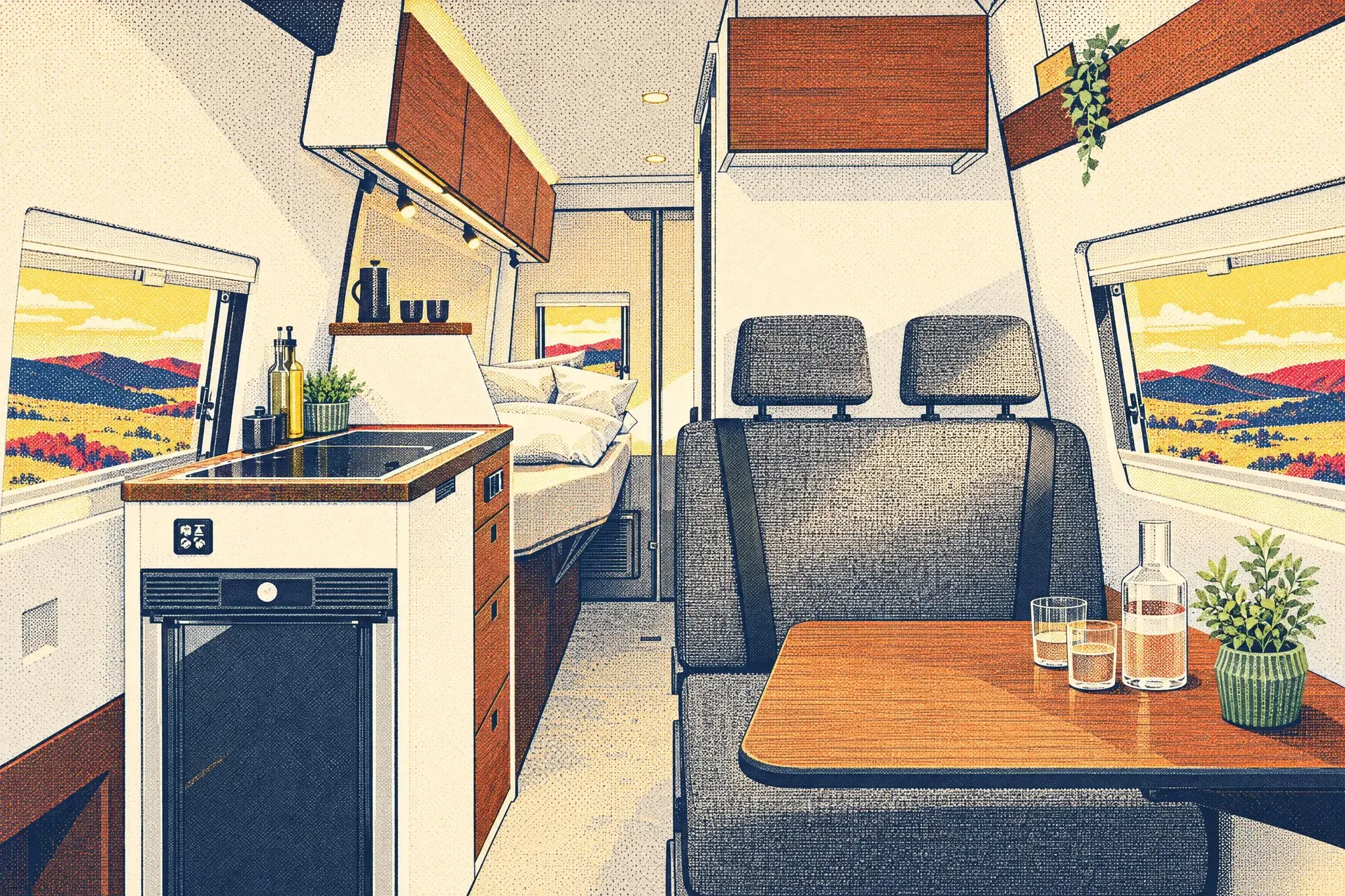
The Habiton’s kitchen pitch is nicely grounded. Two hobs and a sink, with a 69 litre compressor fridge and freezer compartment. It is not pretending to be a domestic kitchen. It is just trying to be a good campervan kitchen.
The best part is the way a sliding door opening can turn cooking into an outdoor feeling setup without you having to stand outside in the drizzle. That is very much a UK touring reality. You stand half in, half out, looking at the view, trying to keep the wind from blowing your chopping board into the footwell.
Sleeping under 6 metres, without the usual compromises
Single beds in a campervan under 6 metres are a big deal. They let two adults get in and out without climbing over each other, and they tend to make night time comfort easier. Bürstner also highlights that the longitudinal beds can be extended into a larger sleeping area.
Then there is the sleeping roof. Bürstner’s point is not merely that it exists, but that it is heated, and the standard hot water diesel heater also heats the roof sleeping area.
That is the difference between extra berths you actually use and extra berths you show friends once and then quietly ignore.
The Sprinter base and why it is still the one people want
There are other bases that can do all wheel drive, and some are excellent. But the Sprinter remains the one that makes many buyers feel calm. The driving position is good. The ride can be very composed for a tall vehicle. The automatic gearbox suits touring. And on UK roads, that combination of refinement and capability counts.
The Habiton HMX is presented with a technically permissible maximum laden mass in the region of 3,880 kg in the configuration information provided, and the model overview also references variants from 3,500 kg depending on layout and configuration. This is where the grown up part of buying a 4x4 campervan begins.
All wheel drive kit adds weight. Packs add weight. Bikes add weight. Extra passengers add weight. Water adds weight. Then you put food in it, and suddenly you are doing mental maths in a lay by.
If you are new to this, the simplest advice is to treat payload as a first class feature, not an afterthought. Ask a dealer to walk you through the numbers. Insist on clarity about what is included in the mass in running order. If you are planning to carry e bikes, a dog, and the sort of outdoor kit that seems to multiply on every trip, you will want to stay on top of it early.
The good news is that the Habiton’s compact length means you are not automatically buying a huge amount of extra bodywork that you then have to haul around. The bad news is that every “just one more option” eats into the margin.
The off road package and what it is really for
Most UK touring is not off road in the cinematic sense. It is muddy access tracks to small sites. It is grass pitches after rain. It is rough forestry car parks. It is the last mile to a quiet beach where the tarmac gives up.
That is where all wheel drive shines. Not in hero moments, but in the lack of drama.
Bürstner positions the Habiton HMX with increased ground clearance and specific off road features, aimed at keeping you confident when the road is not really a road. The off road pack list includes things like downhill speed regulation for off road operation, plus protection for the engine and underbody, and an electric off road step that retracts and extends.
That last one sounds like a detail until you have watched someone forget their step and try to drive away. It is also useful in UK touring because a step can catch on uneven entrances and rough ground.
A small but important speed related note also appears in the configuration details you provided: selecting block pattern or all terrain tyres may require an adjustment to permitted maximum speed, with different limits depending on maximum authorised mass. That is the kind of detail people skip right up until they are reading the small print at handover. It is worth asking a dealer to confirm how your final spec affects this.
How the Habiton makes sense as a real touring tool
Value is a slippery word. For some, it means cheapest. For others, it means least regret.
The Habiton’s value proposition is that it gives you a genuinely clever layout, a compact footprint, and a premium base vehicle at a starting price that is unusually low for this niche.
But it also makes sense in daily touring in a few ways that are easy to overlook when you are just looking at photos.
It is short enough to be spontaneous
With a longer motorhome, you plan around the vehicle. With a compact campervan, you plan around the weather and your mood. That difference is real.
Under 6 metres, you can decide on a Friday afternoon to head for the Northumberland coast, or the edges of the Lakes, or a quieter corner of Devon, and you do not feel like you are committing to an expedition. You can still pull into a normal sized supermarket car park, park at the end, and do a quick shop without feeling like you are inconveniencing everyone.
It is built for wet weather reality
A usable bathroom. A heated roof sleeping area. A diesel heater that covers both hot water and warmth. These are not glamorous features, but they are the features that stop you going home early when the forecast turns.
Bürstner leans into gas free heating and hot water through a diesel system, framed as space saving and practical. For UK touring, that can be a genuine convenience, particularly if you dislike dealing with gas bottles or want simpler winter readiness.
It still feels like a living space
Some adventure styled campervans lean so hard into rugged materials that they feel cold. The Habiton looks like it wants to be pleasant to spend time in. Lighting matters. Soft surfaces matter. The sense that you can sit, read, and not feel like you are waiting for morning matters.
That is where Bürstner’s long standing interior instincts still show, and where the recent shift in focus and management direction gives some confidence that the brand wants to keep improving.
The £84,000 sweet spot and how to think about options
Let’s be honest about the options spiral.
You start with a base price. Then you see a pack that saves you money compared to adding items individually. Then you add an extra battery because you want independence. Then you add something for comfort. Then you add something for safety. Then you add wheels because the standard ones look a bit plain. And suddenly you are not comparing a Habiton to a Grand Canyon S anymore, you are comparing it to a small flat.
The Habiton’s key advantage is that it starts from a low enough point that you can choose where to spend, rather than being forced into a high entry price before you have done anything.
If you want the “looks like a proper 4x4” spec, you can go for the vivid green or stone grey, plus the BFGoodrich style all terrain look with black rims. That is the version that feels like it matches the HMX idea.
If you want to be clever, you can stick to the standard tyres and rims and save £750, effectively buying yourself a second set of tyres for later. That is not glamorous, but it is very sensible.
The best advice I can give is this: decide what you need for how you actually travel, not how you imagine travelling.
If you spend most nights on sites with hook up, you may not need the biggest battery setup. If you mainly travel as a couple, you may not need to chase every four berth comfort upgrade. If you know you rarely leave paved roads, you may not need the full off road pack, but you might still value all wheel drive for wet grass and winter security.
Value comes from choosing options that match your habits.
Habiton versus Grand Canyon S: the quiet differences that matter
When two campervans are both based on the Sprinter and both offer all wheel drive, the decision often comes down to daily living details rather than headline spec.
Here is how I would frame the differences, in a way that matches real touring.
Space perception and comfort
The Habiton’s sliding bathroom and legroom concept are all about changing the feel of the interior without making the vehicle longer. If you find most campervans feel tight, the Habiton may surprise you.
The Grand Canyon S, by comparison, is a more conventional interpretation of a high end campervan layout. That is not a criticism. Conventional can be very good. But it does mean the Habiton has a clearer “this is what makes us different” story.
Pricing and how it shapes your spec
The Grand Canyon S starts significantly higher in UK listings, around £94,110 on the road for a base model in one dealer listing. The Habiton’s lower entry point means you can build a comfortable spec while still staying closer to the £90,000 line, depending on choices.
If your budget ceiling is fixed, that difference can decide whether you get the extras you actually care about, like battery capacity, a nicer finish, or a particular comfort pack.
The emotional bit
This is the part nobody likes admitting, but it matters.
The Habiton in that vivid green looks like fun. It feels like a fresh idea. The Grand Canyon S feels more like a known quantity. Both are valid. One is for people who want the safe choice, and the other is for people who want something that feels new.
The small print that matters, and why you should actually read it
Every manufacturer puts a disclaimer on configurators, and most buyers skim it. With modern campervans and motorhomes, it is worth slowing down.
The images and descriptions on the Bürstner website and in the configurator may include optional equipment available at extra cost. The images shown may differ from the actual product. Design, specification and scope of delivery are subject to change. All information is for guidance only and may vary, so for exact details you should confirm with a dealer.
Weight information is also critical. Manufacturing tolerances can cause variation in mass in running order, and optional equipment reduces payload. The technically permissible maximum mass and axle limits must not be exceeded. In plain English, this means you cannot assume the brochure payload is what you will have on the road once you have added packs, passengers, water, and your own kit.
If you take one practical step from this article, let it be this: ask for a proper weight breakdown of the exact vehicle you are ordering, including every option, and talk through how that fits your travel style.
Why calling it “best value” is not just hype
The phrase “best value” can be nonsense. It gets thrown around to mean “cheapest” or “best deal” when neither is really true.
In the Habiton’s case, it is a specific claim with a clear basis:
- It is an all wheel drive Sprinter based campervan with a base starting price that appears lower than obvious rivals in UK listings, including the Grand Canyon S.
- It brings distinctive layout innovations, particularly the patented sliding bathroom and the way that mechanism improves living space and legroom.
- It offers a compact under 6 metre footprint, which is a real world advantage in the UK, not a brochure number.
- It pairs that with comfort features that suit UK touring reality, like the heated roof sleeping area and diesel based heating and hot water approach.
If you want the lowest ticket price for any 4x4 campervan, you can find cheaper platforms. But if you want this specific combination of premium base vehicle, genuine touring comfort, clever space engineering, and a realistic entry price, the Habiton looks unusually strong.
Who the Habiton HMX 6.0 is actually for
Not everyone needs a 4x4 campervan. In fact, most people do not. But for the right traveller, it is a lovely kind of reassurance.
The Habiton HMX makes the most sense if:
You tour outside peak summer.
You use small sites, grass pitches, and rural locations where traction matters.
You like the idea of getting to quieter places without stressing about the last mile.
You want a compact vehicle that still feels comfortable to live in for more than a weekend.
You want the Sprinter driving experience, but you do not want to pay the higher entry price that has become normal for that segment.
If you mainly stay on big hardstanding sites, travel only in July and August, and never leave the A roads, you might not need the HMX at all. The standard Habiton could be the smarter buy. But if your trips involve muddy entrances, winter ferry ramps, or the sort of rural parking that turns into porridge after rain, all wheel drive can be the difference between relaxing and constantly scanning the ground like a sheepdog.
A calm conclusion, with a bit of excitement allowed
It is easy to become cynical about new campervans and motorhomes. Prices rise, options multiply, and manufacturers often seem to chase trends rather than solving real problems.
The Bürstner Habiton HMX 6.0 feels like a more honest proposition. It solves real layout challenges with a proper bit of engineering. It keeps the length sensible. It looks like Bürstner is taking a clearer direction as a brand, with leadership changes and a stronger connection to premium motorhome thinking inside the wider group.
Most of all, it turns the all wheel drive Sprinter conversation into something you can have without immediately giving up. A base starting price around £80,795 is not cheap, but in this particular niche it is meaningfully lower than the nearest obvious rival, and it gives you room to choose options without automatically crashing through £100,000.
If you want a 4x4 campervan on an excellent Sprinter, and you like the idea of a layout that feels genuinely new, the Habiton is shaping up to be the best value all wheel drive campervan arriving in 2026.
Just remember the simplest truth of configuring any campervan or motorhome: the best value is the one you will still love on a wet Tuesday in October, when the view is lovely but the kettle takes ages, and you are deciding whether to stay one more night.
Common questions
What is the Burstner Habiton HMX 6.0?
It is an all-wheel-drive campervan on the Mercedes Sprinter, arriving for 2026, that squeezes a layout usually needing a longer body into under six metres, with a clever moving bathroom, single beds and a proper kitchen (two hobs, a 69-litre fridge). Under six metres is a sweet spot in the UK, letting you be spontaneous and use small sites and grass pitches a longer van would struggle with.
How much does the Burstner Habiton HMX 6.0 cost?
The base UK price is 80,795 pounds, and with restraint you can land a genuinely gorgeous spec at around 84,000 pounds, including small savings like 750 pounds for sticking with standard tyres and rims. As with any 4x4 camper, options can push you well above 100,000 pounds, so configure sensibly to keep it in the value zone.
Why is the Habiton called the best-value 4x4 campervan?
Because it undercuts the obvious rival, the Mercedes-based Hymer Grand Canyon S 4x4, by a meaningful margin: the Habiton base starts around 80,795 pounds against the Grand Canyon S's mid-90,000s, a difference big enough to cover a year of fuel, ferries, site fees and a few good meals. For a genuine 4x4 on an excellent Sprinter with a fresh layout, that makes it the value pick of 2026.
What licence do you need for the Burstner Habiton 4x4?
Check it carefully, because the 4x4 version is presented with a technically permissible maximum laden mass around 3,880kg, which is over the 3,500kg category B limit and needs a C1 entitlement. The model overview also references lighter 3,500kg variants depending on layout and configuration, so confirm the plated weight of the exact spec against your licence before committing.
What is special about the Habiton's layout?
It fits a layout that usually needs a longer van into under six metres without feeling like a narrow corridor: a bathroom that moves to reconfigure the space rather than cramming into a fixed corner, single beds (a genuine rarity under six metres), and a kitchen that understands real cooking, with an extra-legroom trick in the seating area. That clever packaging is much of its appeal.
Habiton or Hymer Grand Canyon S, which is better?
Both are Mercedes Sprinter 4x4 campers, but the Habiton's argument is value and a genuinely new layout under six metres, starting around 80,795 pounds against the Grand Canyon S's mid-90,000s base. The Grand Canyon S has its own strengths in space perception and comfort, but if you want a 4x4 Sprinter with a fresh layout and the sharper price, the Habiton looks the better value of 2026.
The reachable bit
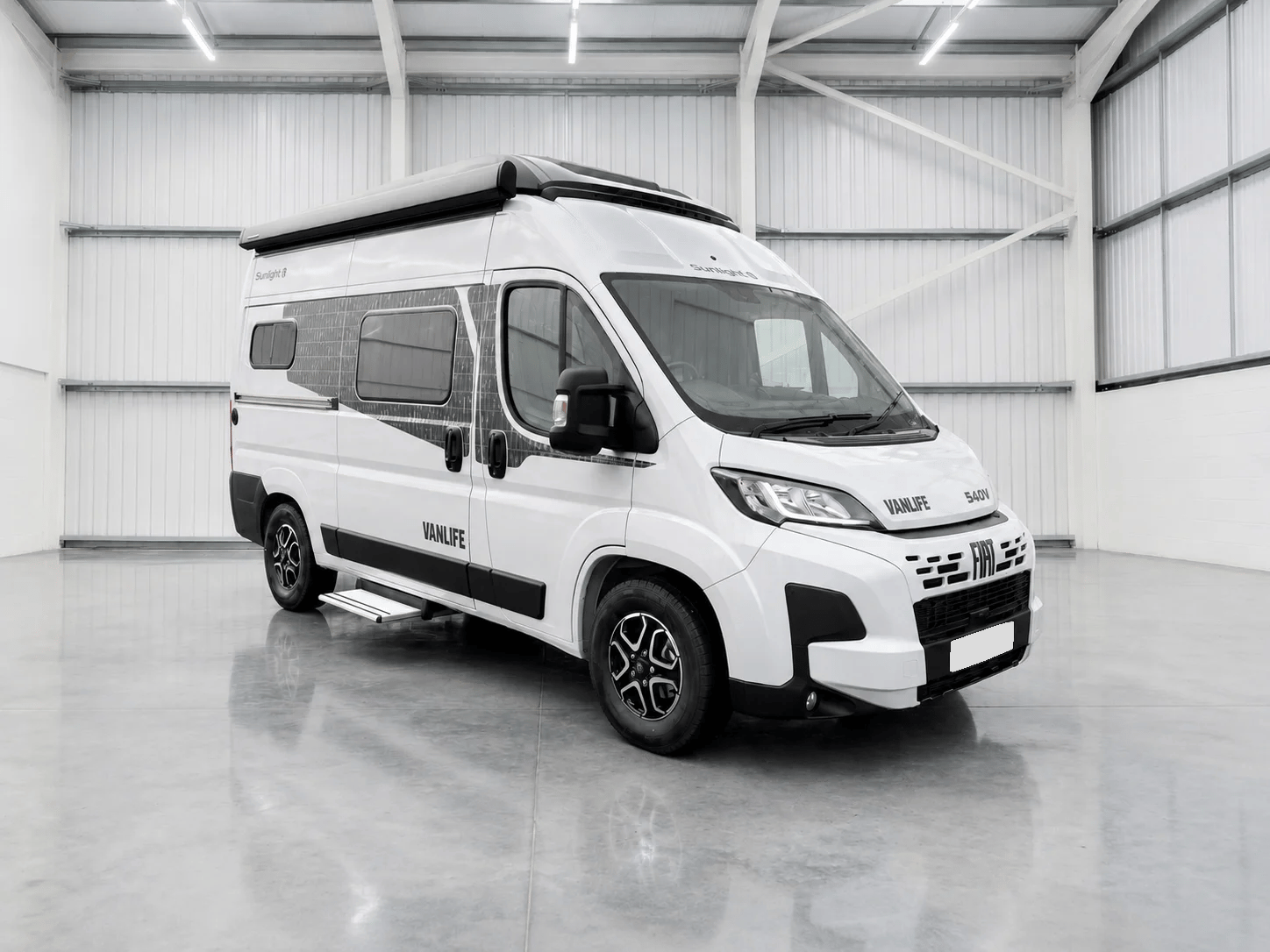
The camper you fall for is rarely the one you can afford. That gap is the whole reason Campervan.win exists. Right now we’re giving away the Sunlight Vanlife, worth around £65,000, and closing that gap is the point: capped entries so the odds stay honest, £10 a ticket, a maximum of five per person, £500 to a UK charity from every full draw, the winner picked by a public randomness beacon anyone can re-check, and one person driving away in the van itself.
Enjoyed this post?
Get more honest campervan guides like this one in your inbox.
You’re in!
Check your inbox. We’ve just sent you a welcome email.

About the author
Oliver
Oliver is the founder of Campervan.win and writes about campervans, travel, and the life-changing freedom that comes with getting out on the road.
Keep Reading
Related Reading
Thoughtful articles that build on what you’ve just read.
Campervan Reviews
12 min read
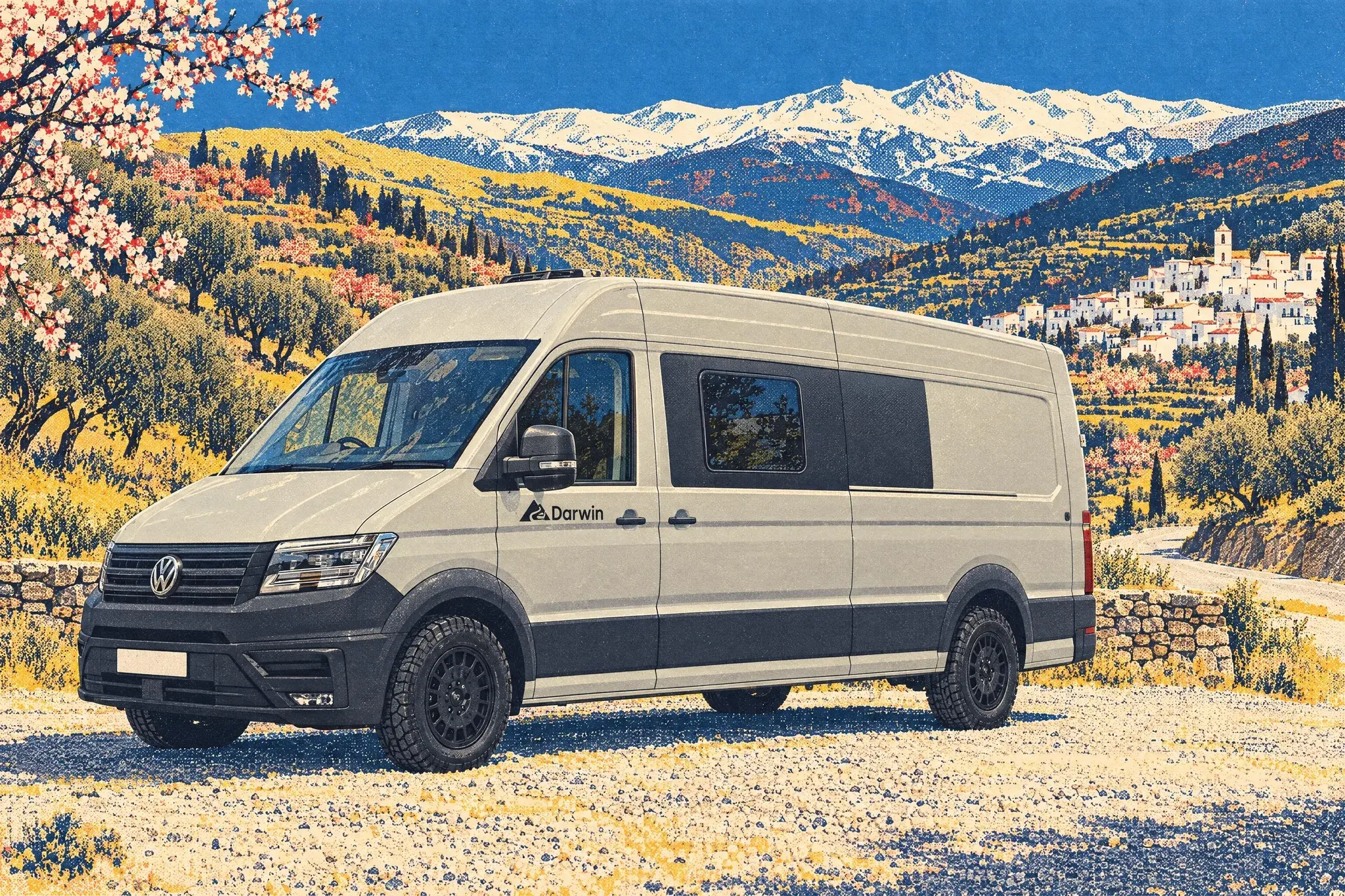
Rolling Homes Darwin review: the long Crafter camper with a proper washroom
The Darwin is Rolling Homes' step up from the Transporter: a long-wheelbase VW Crafter two-berth with an enclosed washroom. We set out what is published, what the price does, and who it suits.
Campervan Reviews
13 min read
Jerba Cromarty review: the long-wheelbase five-seater with two double beds
The Jerba Cromarty is a 5.45 m Scottish-built camper on a VW T7 or Ford Transit Custom that seats five in belts and sleeps two as standard, or four with the optional roof bed. We look at how it lives, what the from-price buys, the published weights and who it suits.
Campervan Reviews
12 min read
Bilbo's Nexa+ T7 review: a rear kitchen, a cassette toilet and the new Low-Lie roof
The Nexa+ is the Bilbo's for people who want a fitted toilet in a Volkswagen Transporter. We go through the rear-kitchen layout, the beds, the power and heating as published, the T7 base, the £77,930 in-stock price and who it suits.
Campervan Reviews
13 min read
Hillside MVX review: the Multivan camper from £70,995, or £78,995 as an eHybrid 4MOTION
Hillside's MVX puts a four-berth pop-top conversion on the Volkswagen Multivan, with a plug-in hybrid and all-wheel drive at the top of the range. Here is what it offers, what it leaves to the Transporter-based Cromford, and where the 2026 Club judges placed it.