
Eriba Car 600 and 602: the new pop top option, and why the metallic finish makes the manual roof the sweet spot

Written by
Jasper
Jasper writes campervan reviews, travel guides, and practical advice, with a focus on everyday use and relaxed touring around the UK.
The short answer
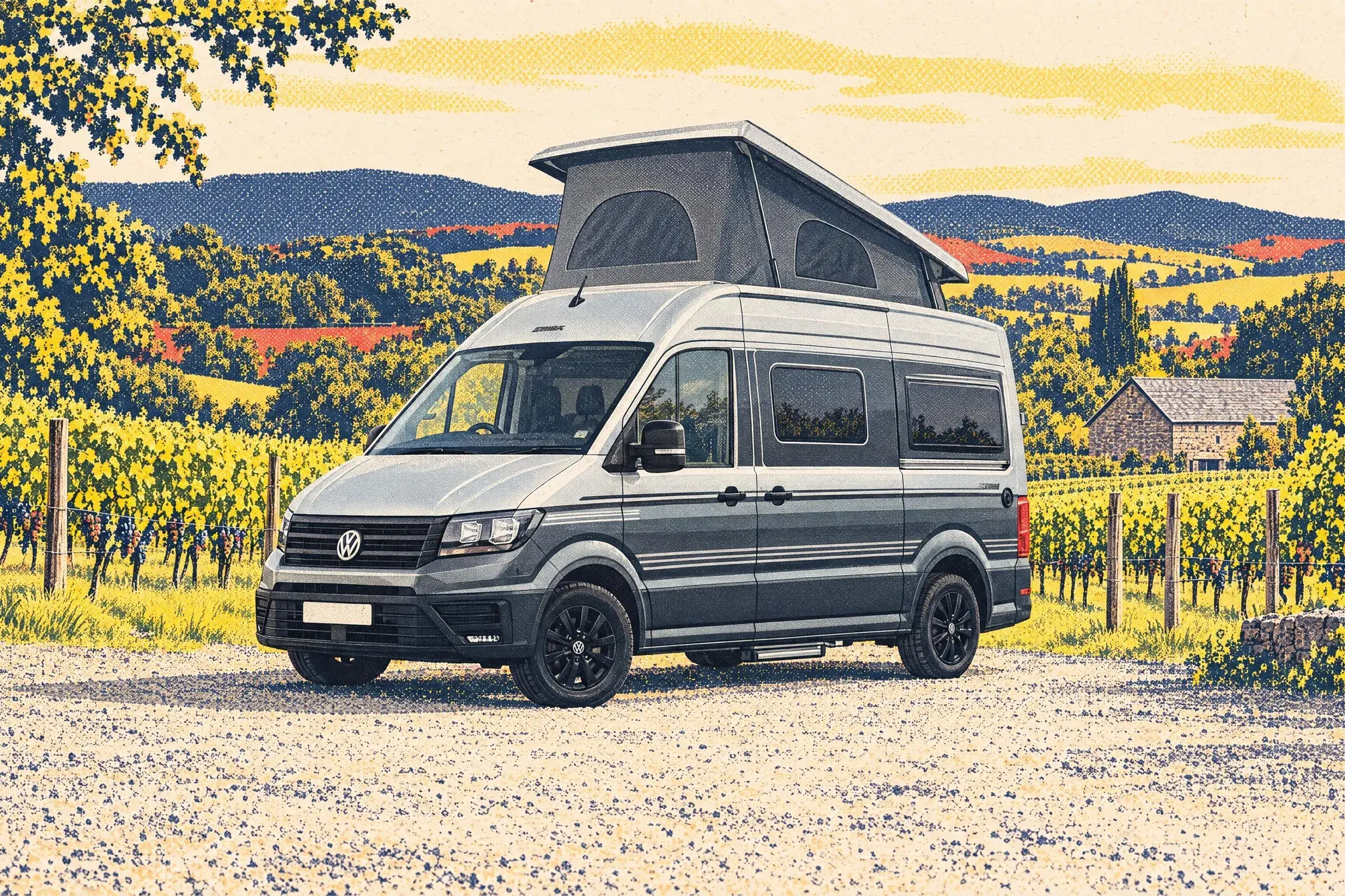
Eriba has added a pop-top roof option to its Car 600 and 602 Crafter-based campervans, and it genuinely changes the conversation: a second sleeping zone and a brighter daytime feel that make the Eriba Car a more compelling alternative to a larger motorhome. The smart buy is the manual pop-top paired with the bicolour metallic paint, the metallic finish feels almost like a free upgrade that lifts the perceived class, while choosing manual rather than electric roof operation saves money without losing any sleeping flexibility, unless you need electric for accessibility. The lovely thing about the Eriba Car is how little you have to add, since it feels properly finished as standard. Here is why the manual metallic roof is the sweet spot.

The campervan market has a habit of making you feel slightly unreasonable.
You start with a sensible thought. Something like: “We just want a comfortable little home on wheels, not a space shuttle.” Then you look at a few price lists, add one or two practical options, and suddenly you are in the realm of four figure extras for things that, in normal life, would be considered basic human decency.
So when a manufacturer comes along with a campervan that feels properly finished as standard, looks like someone has actually used the kitchen, and does not require you to remortgage your future to tick the obvious boxes, it stands out.
That is why the Eriba Car 600 and Eriba Car 602 have been quietly building a reputation as some of the most likeable, best judged premium campervans on the UK market. They take the Volkswagen Crafter base, then layer on Eriba’s design sense and practical thinking in a way that feels deliberate rather than showy. The result is a campervan that is modern and airy, but also properly touring minded.
Now Eriba has announced something that, in real world terms, changes who these campervans suit. Both layouts will be offered with an optional pop top roof, with manual or electric operation.
On paper that might sound like a small tweak. In practice it is the difference between a very good two berth campervan and a campervan that can genuinely flex into family use, occasional guests, or just the kind of touring where you want to leave the lounge set up and still have another sleeping space ready to go.
It also makes the Eriba Car one of the more interesting value plays right now, because the underlying standard equipment list is already strong, and because Eriba’s approach to paint and packages is refreshingly sane. The headline example is the bicolour paint finish, including the metallic silver and grey combination, which is not priced as a big luxury upgrade. In the UK price list it is shown as a no cost choice.
That matters. Not because paint is the most important thing in the world, but because it tells you how the brand thinks. Either everything becomes an opportunity to add margin, or the core product is priced properly and the options exist for personal fit rather than financial gymnastics.
In this piece I am going to do three things.
First, explain the differences between the Eriba Car 600 and the Eriba Car 602 in plain English, including the stuff that only becomes obvious once you imagine day to day touring.
Second, talk about the new pop top option and why it changes the appeal of both models.
Third, walk through the configuration you have shared, and why I agree with your logic, particularly your choice of metallic paint and the manual pop top for metallic. It is, as configured, an unusually good value way to end up with a genuinely premium campervan.
Eriba Car 600 versus Eriba Car 602: same idea, two very different ways of living
Both the Eriba Car 600 and Eriba Car 602 share the same broad philosophy.
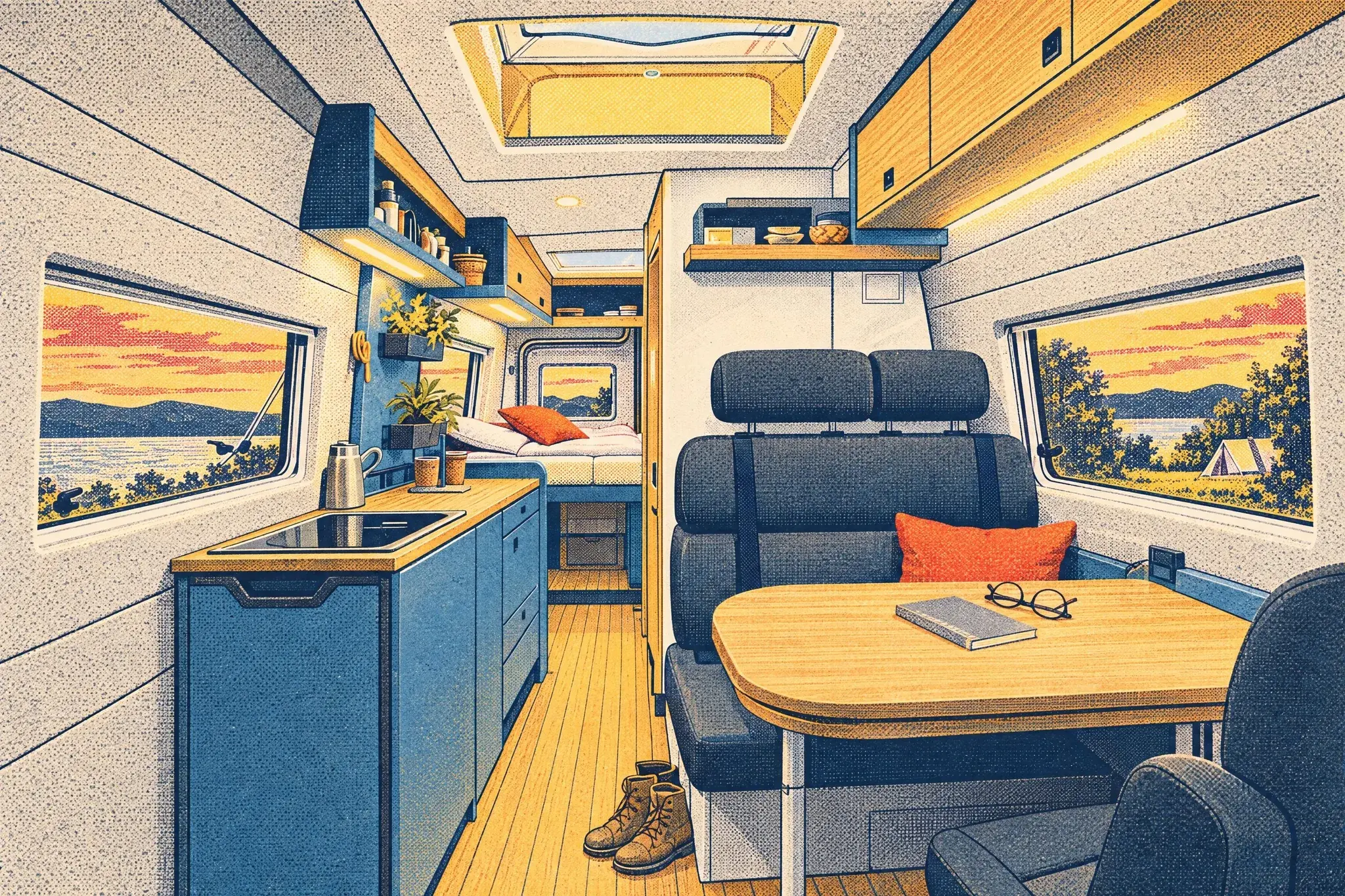
They are just under six metres long, and they major on feeling open and calm inside. Eriba leans hard into clear sight lines, open storage, warm felt lined walls, and a kitchen that looks like it belongs in a modern tiny flat rather than a white plastic box.
They also share a lot of the practical bones. The Eriba Car page itself makes a point of the compact bathroom solutions, including a foldaway washbasin that gives you more usable space without turning the basin into a postage stamp.
Where the two models diverge is in the rear of the vehicle, and in what that means for your touring rhythm.
Eriba Car 600: fixed rear bed, classic touring flow
The Car 600 layout is the one most people instinctively understand. It gives you a fixed rear bed across the back of the vehicle. In the UK price list, the rear bed is listed at 200 cm by 136 cm.
That fixed bed does three very important things.
It makes night time easy. You do not have to convert anything, you do not have to negotiate who is sitting where at 10pm, and you can keep bedding in place. If you are a quick getaway couple, the kind of people who want to arrive, make a brew, and be done, fixed beds are a huge part of why campervan travel feels relaxing.
It also makes cold weather touring simpler. Faff is multiplied by rain. Anything that requires lifting cushions, shuffling tables, and doing a small furniture dance in a wet coat becomes less charming in November.
Finally, it makes storage predictable. Under bed storage tends to be the most useful storage in a campervan. You can put bulky stuff in there and not regret it later.
The trade off is that fixed beds can make the living space feel less flexible. For most couples, that is fine. You sit, you eat, you lounge, you sleep. If you regularly want to host friends for a rainy afternoon, or you like the idea of a big lounge you can sprawl in, the 602 starts to make more sense.
The Car 600 also allows for an additional middle bed option in the UK list, shown at 170 cm by 100 cm.
That is useful for occasional third berth use, particularly for a child, but it is not the same as having a proper second sleeping zone.
Eriba Car 602: rear lounge, two single beds, a different mood
The Car 602 is the more interesting layout, and for some people it will feel like the more grown up choice.
The UK price list describes the rear bed arrangement for the 602 as two single beds made from the rear lounge, listed as 200 cm by 75 cm and 190 cm by 75 cm.
That matches what reviews highlight as the alternative layout, with a rear lounge that converts into twin singles.
This layout changes how the campervan feels in daily use.
You get a proper lounge at the back. That can feel more spacious and more social, especially if you like sitting facing each other rather than side by side. It also means your “nice seats” are not your “driving seats”, which matters more than it sounds. Cab seats are fine, but a purpose made lounge has a softer feel, and it is easier to settle in for the evening.
The price you pay is conversion. You will be making the beds each night, and then putting the lounge back in the morning, unless you leave it in bed mode and accept that your daytime seating will be compromised.
The 602 also has a different travel seat arrangement. The UK list shows the permitted seats including driver as two for the 602, compared with four for the 600.
That alone will be a dealbreaker for some people, and totally irrelevant for others.
So the decision between 600 and 602 is less about which is “better”, and more about how you actually travel.
If you like simple nights, early starts, and the ability to stop for a brew without rearranging your life, the 600 is the comfortable default.
If you value a proper lounge and you mostly travel as a couple, the 602 can feel more like a small apartment on wheels.
Why the pop top option changes the whole conversation
A fixed roof campervan that sleeps two is one thing. A campervan that can, when needed, offer an extra sleeping space up top is something else.
Eriba, via the Hymer group, has stated that the Eriba Car will soon be offered in both layouts with an optional pop top roof, available with either manual or electric control, and that it provides additional sleeping space.
That matters for a few very practical reasons.
It creates a second sleeping zone
If you have ever tried to tour with a child in a two berth campervan, you know the problem. Somebody goes to bed, everybody goes to bed. It is manageable, but it changes the evenings. You stop lingering. You stop reading. You stop sitting with a glass of something while the rain taps the roof.
A pop top roof changes that. You can put a child up top, or you can use it as guest sleeping. It is not just about capacity, it is about keeping the lounge as a lounge.
For couples, it can also be used as a “spare room”. That sounds grand, but it is genuinely useful if one person snores, or one person is ill, or you simply want the option of separate spaces without turning a holiday into an awkward negotiation.
It improves the daytime feel too
Pop tops are not only about sleeping. They also improve the sense of airiness inside. A campervan that already leans into open shelves and clear lines of sight tends to benefit from more headroom and more light.
That said, you do need to think about when you will actually put the roof up. If you spend most of your nights on aires, drive throughs, and quick overnight stops where raising the roof feels like a chore, you might not use it as much as you imagine. If you tend to stay on sites, or you enjoy a lazy camp set up, you will use it constantly.
It makes the Eriba Car a more compelling alternative to larger motorhomes
A pop top option means you can keep the driveability and everyday usability of a campervan, while gaining some of the sleeping flexibility people normally chase by buying bigger and heavier vehicles.
And because the Eriba Car sits at 3.5 tonnes maximum permitted weight in the UK list, it remains in the more broadly accessible category for many drivers.
You still have to be weight aware, which we will come to, but the basic size and weight format is part of the appeal.
The underrated part of the Eriba Car story: standard equipment that feels like somebody actually tried to live in it
If you strip away the paint, the marketing photos, and the fact that it looks expensive, the Eriba Car is interesting because it is generously specified from the start.
The UK list of standard equipment is long, and it reads like a set of choices made by people who know what makes touring smoother.
Rather than repeat every line, I want to highlight the bits that matter in day to day use, and the bits that quietly add up to value.
The interior build and comfort choices
Eriba makes a point of its felt lined walls having heat insulating and sound absorbing benefits.
That is the sort of detail you only appreciate after a few nights in a campervan where every sound is amplified, and every panel feels a bit cold to the touch.
The kitchen is also not an afterthought. Eriba describes open storage making it feel airy, and a hob and sink combination with fold out work surface.
That matters if you actually cook, and it matters if you only make tea, because you still want enough space to put a mug down without playing Tetris.
The bathroom is properly thought through
The folding washbasin approach is a clever compromise. It gives you a washroom that is usable without swallowing half the campervan, and it gives you a basin that is not comically small.
And yes, it includes a cassette toilet. Your specification list you shared includes the cassette toilet with level indicator as standard, along with a shower tray and curtain. That is the kind of “it just works” baseline that makes touring feel normal rather than like an endurance sport.
The bicolour paint finish: a small detail that says a lot
On many premium campervans, paint is where the money goes to hide.
Eriba’s approach is different. The UK documentation shows the bicolour paint as part of the spec story, and it also shows that alternative bicolour combinations, including the metallic Reflex Silver and Indium Grey combination, are listed at zero cost in the optional extras section.
The main Eriba Car page also highlights the bicolour finish as a defining feature with three combinations available.
That is a big deal for value. It means you can choose the colourway you actually want, including the metallic look, without feeling like you have been punished for taste.
It also matters for resale. Colour is personal, but the silver and grey metallic combination reads as premium and understated, which tends to hold wider appeal on the used market.
The pop top roof options and why the manual metallic version is the smart buy
You have shared the pop top roof options and prices from the current configurator screen.
There are three versions listed:
- Pop top roof with manual opening for solid paint finishes, £5,910
- Pop top roof with manual opening for metallic paint, £6,770
- Pop top roof with electric opening for solid paint finishes, £7,630
Your argument is that the metallic bicolour finish being included at no extra cost makes the manual pop top for metallic the best value choice. I agree.
Here is why.
The metallic paint feels like a free upgrade, and it changes the perceived class of the campervan
Because the metallic bicolour option is listed at zero cost in the UK price list, it effectively behaves like an included premium finish.
You end up with a colour scheme that, on a lot of other brands, would be several thousand pounds.
Once you accept that, the question becomes: if you are going to add a pop top, which pop top makes sense?
Manual versus electric: what you are really paying for
An electric pop top is not pointless. It is a comfort and accessibility choice. If you are shorter, if you have shoulder issues, if you simply want the roof to be effortless, electric can be worth every penny.
But it is also an option that adds weight and complexity, and it is typically the sort of thing you pay for and then rarely talk about again.
Manual roofs, when well designed, are very straightforward. They are lighter, simpler, and there is less to go wrong.
So if you do not have a specific reason to need electric operation, manual tends to be the sensible choice.
In your configurator choices, the manual pop top for metallic sits in the middle. It is not the cheapest, but it is the one that best matches the rest of your value logic, because you are pairing it with the metallic bicolour finish that behaves like a free win.
Why the manual metallic pop top makes the most sense in this particular build
You are already choosing a premium looking paint finish at no extra cost.
You are already getting a campervan that is well specified in the parts that matter.
So your pop top decision is not about chasing luxury, it is about unlocking flexibility.
In that context, the manual metallic option is the “most benefit per pound” choice.
It gives you the new headline feature, it keeps complexity down, and it keeps the overall configuration from becoming a spiral of expensive upgrades.
Your chosen configuration: what you picked, why it works, and what to watch
Your selected options, as listed, are refreshingly coherent. There is a clear theme: you are paying for the things that genuinely change daily life, and you are not paying for fluff.
I will go through each of your key choices and explain why they make sense.
Chassis package
You have selected the chassis package that includes the 163 hp engine and 8 speed automatic gearbox, plus black alloy wheels, LED high performance headlights, and App Connect. That is the foundation of a modern touring campervan.
The reason I like this selection is simple. The base vehicle matters. You can have the loveliest interior in the world, but if the drive is tiring, or the lighting is mediocre, or the gearbox makes every hill feel like a small argument, your touring life shrinks.
An 8 speed automatic makes the Crafter platform feel calm. It turns stop start traffic and hilly routes into something you do not think about. The power bump helps when you are carrying water, kit, and passengers, and it gives you a bit of margin when you are on a long motorway run.
It is not the only way to configure a good campervan, but it is a very nice way to configure one you plan to keep.
Extended assistance package with blind spot and moving off information
This is one of those options that feels dull until you have it, and then you stop wanting to live without it.
A six metre long campervan is not enormous, but it is large enough that blind spots matter, particularly on UK roads with tight roundabouts and impatient lane changes. If this option makes one difficult moment easier each trip, it earns its keep.
Bicolour metallic paint finish, Reflex Silver and Indium Grey
This is, in my view, the cleverest part of your build.
The UK list shows the metallic bicolour option as a no cost choice, and that is unusual.
On many brands, a metallic finish, and especially a two tone metallic, is a chunky premium.
Here it is simply a design choice. You get a more premium looking vehicle without taking a financial hit. That is why it sets up the rest of your “value for money” argument so neatly.
Pop top roof with manual opening for metallic paint
As discussed, this is the best match for your logic.
It buys you the new feature that changes what the campervan can do. It also avoids the extra cost of electric operation, unless you have a specific accessibility need.
In a world where a single option can cost more than a decent used car, spending money on something that genuinely expands the way you can travel is the correct kind of extravagance.
Camping package
I like this package because it adds comfort without complicating the vehicle.
The windscreen and side window darkening helps with privacy and temperature control. Rechargeable lights are the sort of thing you end up buying anyway, and a mattress topper is one of the cheapest ways to make any campervan feel more luxurious.
It is not glamorous. It is just sensible.
Upholstery upgrade, Dayton Cognac leather
This is one of the few options that is mostly about feel and aesthetics, but it also has a practical side.
Leather, when done well, is easier to wipe clean and tends to age nicely. Cognac also fits the Eriba aesthetic, and it pairs well with the Deep Ocean furniture finish you have selected.
Bed construction for the seating group and fitted sheets
These are small, practical choices.
If you are going to use the seating group bed option, having the proper cushions and structure matters. It is the difference between “we can sleep a child here if we have to” and “this is actually usable without swearing”.
Fitted sheets made for the mattress contours are, again, not exciting, but they stop you fighting corners at bedtime.
Diesel heater option
You have selected the Truma Combi diesel heater option in your configurator choices.
This can be a very good option for UK touring, especially if you do a lot of shoulder season travel. Diesel heating can simplify fuel planning, and it suits people who prefer not to manage larger gas bottle setups.
That said, heating choices are one area where you should be honest about your travel habits. If you only tour in summer, you might not need the upgrade. If you tour in spring, autumn, or winter, you will be glad you did.
Value for money is not only the price, it is how little you have to add
It is tempting to talk about “value for money” as if it is purely a numbers game. It is not.
Real value is when the base product is already in the right place, and the options are for fit, not rescue.
With the Eriba Car 600 and 602, the standard equipment list covers a lot of the things people normally pay to fix later.
The kitchen and bathroom are properly thought through. The design is cohesive. The bicolour paint is a signature feature rather than a paid upgrade.
Then you add the pop top, which is genuinely transformational, and you add a few touring comfort packs, and you stop.
That is the bit that makes it feel like good value in today’s market.
The one thing to be careful about: weight and payload
There is a slightly sobering line in your configurator figures: remaining mass for special equipment shown as 55 kg.
That is tight.
The UK price list explains the concept of mass in running order and the limitations around optional equipment, and it is worth reading those sections carefully if you plan to add further accessories later.
A pop top roof adds significant weight. In your screenshot, the pop top is shown with an added weight of 120 kg. That is a big chunk of your payload.
Here is the practical implication.
If you add a pop top, you need to be disciplined about what you carry and what you fit later. Bikes, extra batteries, chunky awnings, big barbeques, and “just in case” boxes all eat payload fast.
This does not mean the pop top is a bad idea. It means you treat the campervan like a system. You decide what matters most and you build around it, rather than adding everything that looks nice on a brochure page.
If you tour as a couple, and you pack sensibly, it can be fine. If you tour with family, carry outdoor gear, or like bringing half the house with you, you will need to be more careful, and you may want to talk to a dealer about real world payload figures once built.
Which model should you buy, 600 or 602, if you want the pop top?
The pop top makes both layouts more flexible, but it does not magically change what each layout is best at.
Choose the Eriba Car 600 if you want easy nights and maximum day to day simplicity
The fixed rear bed is the heart of the 600. It makes touring feel easy. Add a pop top and you gain the ability to sleep extra people without losing the simplicity of the main bed.
This is the one I would steer most people towards if they are new to touring, or if they want a campervan that feels restful.
Choose the Eriba Car 602 if you care most about lounge comfort and you travel as a couple
The 602 is for people who spend time inside. If you like reading, lounging, and treating the campervan as a living room as much as a bedroom, the rear lounge layout has a lot of appeal.
Add a pop top and you gain guest sleeping without compromising the lounge vibe quite as much, because you can keep the downstairs beds for the couple and use the top for occasional extras, or vice versa depending on who is travelling.
Just remember the seating limitation. The UK list shows two travel seats for the 602.
If you need more travel seats, the 600 is the practical choice.
Why this pop top announcement makes the Eriba Car feel especially tempting right now
There are two reasons.
First, pop tops are not a gimmick. They are one of the few options that genuinely changes what a campervan can do, and how relaxed your evenings feel. Eriba explicitly frames it as added sleeping space and flexibility.
Second, the rest of the package is already strong. The Eriba Car is not a bare bones van that needs thousands thrown at it to feel finished. The fundamentals are already there.
The paint strategy, including the metallic bicolour being a no cost choice in the UK list, is the clearest signal of that.
So you end up in a rare situation. A premium looking, well designed campervan where the new headline option is not a distraction, it is the missing piece that makes the whole thing suit more people.
And your configuration, in particular, leans into that in the right way.
You have taken the “free” value where it exists, mainly the metallic finish. You have spent money where it changes the experience, mainly the pop top, the driving comfort, and a few touring essentials. You have not thrown money at random shiny extras.
That is how you end up with something that feels desirable without feeling silly.
Final thoughts
The Eriba Car 600 and 602 were already easy to like. They look good, yes, but more importantly they feel thought through, and that is not the same thing.
The pop top option is the kind of update that turns a good campervan into a genuinely flexible one. It brings the Eriba Car into the conversation for people who previously would have dismissed it as “only for two”.
Pair that with a specification approach where the bicolour paint, including metallic, is not treated as a profit centre, and you have a campervan that does something rare in 2026. It feels premium, but it also feels fairly priced for what you get.
If you want the shortest version of my recommendation, it is this.
If you are going metallic, and you do not need electric roof operation for accessibility reasons, your choice of the manual pop top for metallic is the smartest way to buy the new roof. It delivers the extra sleeping flexibility without undermining the value story that makes the Eriba Car stand out in the first place.
Common questions
Does the Eriba Car have a pop-top roof option?
Yes, Eriba has added a pop-top roof option to the Car 600 and 602. It adds a second sleeping zone without stealing the daytime layout, improves the daytime feel with extra light and height, and makes the under-six-metre Eriba Car a more compelling alternative to a larger motorhome for buyers who want four berths without a seven-metre vehicle.
Should I get the manual or electric pop-top on the Eriba Car?
For most buyers, the manual. The electric roof mainly earns its cost for accessibility reasons; otherwise the manual pop-top delivers the same extra sleeping flexibility for less money, which protects the value story that makes the Eriba Car stand out. So unless you need electric operation, the manual pop-top is the smarter buy, especially paired with the metallic paint.
Why is the metallic paint recommended on the Eriba Car?
Because the bicolour metallic finish feels almost like a free upgrade for the lift it gives: it noticeably raises the perceived class of the campervan for a relatively small cost. Combined with the manual pop-top, it is the configuration that adds the most appeal without undermining the Eriba Car's value, which is built on how little you have to add.
Which Eriba Car suits a pop-top, the 600 or 602?
Choose the 600 with the pop-top if you want easy nights, early starts and maximum day-to-day simplicity with a fixed rear bed below and the extra berth above. Choose the 602 if you care most about lounge comfort and travel as a couple, gaining the pop-top as a flexible second sleeping zone. It comes down to how you actually travel rather than which is better.
Why does the Eriba Car stand out among premium campervans?
Because it feels properly finished as standard, with an interior and equipment that suggest someone has actually lived in it, so you do not have to add four-figure extras for basics. Value here is not only the price but how little you must add, and the new pop-top, taken with the metallic paint, makes it especially tempting while keeping it on a 3,500kg chassis many drivers can use.
The reachable bit
The camper you fall for is rarely the one you can afford. That gap is the whole reason Campervan.win exists. Right now we’re giving away the Sunlight Vanlife, worth around £65,000, and closing that gap is the point: capped entries so the odds stay honest, £10 a ticket, a maximum of five per person, £500 to a UK charity from every full draw, the winner picked by a public randomness beacon anyone can re-check, and one person driving away in the van itself.
Enjoyed this post?
Get more honest campervan guides like this one in your inbox.
You’re in!
Check your inbox. We’ve just sent you a welcome email.

About the author
Jasper
Jasper writes campervan reviews, travel guides, and practical advice, with a focus on everyday use and relaxed touring around the UK.
Keep Reading
Related Reading
Thoughtful articles that build on what you’ve just read.
New & Noteworthy
12 min read
Knaus Boxtime 600 ME (2027): twin singles in 6 m, and the payload figure to question
Knaus's new Boxtime 600 ME squeezes two lengthways single beds into a 5.99 m van from £81,725. We lay out what that layout gives a couple, run the weight sums with Knaus's own figures, and explain why the 211 kg 'maximum payload' line needs a question before you sign.
New & Noteworthy
10 min read
Swift Carrera goes gas-free for 2027: 340Ah lithium, diesel heat and induction cooking
Swift has taken the gas out of its Carrera campervan for 2027, swapping bottles for a 340Ah lithium battery, diesel heating and an induction hob. Here is what that means across a real UK year, how it compares with the cheaper Merlin, and the one question to ask at the NEC.
New & Noteworthy
10 min read
British campervan converters at the NEC 2026: who builds on what, and for how much
A stand-by-stand map of the British campervan converters at the Motorhome and Caravan Show 2026: the vans they build on, their from-prices, seats, roofs and lead times, plus the four questions to put to every one of them.
New & Noteworthy
9 min read
Plug-in hybrid campervans at the NEC: what a PHEV gives you and why full EVs are rare
Four UK converters have hybrid campers at or around the Motorhome and Caravan Show this October, while fully electric campers remain scarce. Here is what a plug-in hybrid camper does well, what the sellers rarely tell you, and the questions to ask on the stand.