
The first surfboards, and who really invented surfing

Written by
Oliver
Oliver is the founder of Campervan.win and writes about campervans, travel, and the life-changing freedom that comes with getting out on the road.

The short answer
Nobody single-handedly invented surfing; wave-riding arose independently in several cultures, from the reed boats of ancient Peru to the surf canoes of West Africa, which is part of what makes the story so rich. But stand-up surfing for sheer joy was perfected in old Hawaii, where it was a whole way of life, he'e nalu, with boards like the long olo, the finless alaia and the small paipo. Captain Cook's crew first wrote it down in the 1770s and 1780s. The sport nearly died out after Western contact and missionary disapproval, then was gloriously revived at Waikiki in the early 1900s, with the Hawaiian swimmer Duke Kahanamoku carrying it to the world as the father of modern surfing. Here is who really invented surfing, and what the first boards were made of.

Ask who invented surfing and you'll usually get a one-word answer: Hawaii. It's a good answer, and for the surfing we actually do, standing up on a board and riding a wave for the sheer joy of it, it's very nearly the right one. But the fuller story is stranger, older and more human than that, and it stretches from the reed boats of ancient Peru to the surf canoes of West Africa to the royal courts of old Hawaii, where surfing wasn't a sport so much as a way of life, a religion and a social ladder all at once.
This is the long version: where the first surfboards came from, what they were actually made of, who first wrote surfing down, how the sport very nearly died out completely, and how one Hawaiian swimmer carried it back to the world. It's a story about freedom, about the deep human urge to be carried along by something bigger than ourselves, which is, if we're honest, exactly the urge that gets people into a campervan and pointed at the coast. Where the facts are solid we'll say so, and where the popular version is more legend than history, we'll say that too, because the true story doesn't need the embellishments.
First, the honest answer: nobody "invented" wave-riding
Let's deal with the headline question properly, because the neat answer hides a more interesting truth. Riding waves was not invented once, by one people, in one place. It arose independently in several cultures separated by entire oceans, which tells you something lovely about us as a species: give people warm water and a swell, and sooner or later someone works out how to catch a ride.
In Peru, fishermen have been riding waves home for thousands of years on the caballitos de totora, the "little reed horses," narrow boats woven from totora reeds with an upturned prow. They're working craft, used to get out through the surf to fish and to ride the broken waves back to the beach, and the tradition is genuinely ancient, depicted on Moche and Chimú pottery going back perhaps three to four thousand years. The fishing village of Huanchaco, where locals still ride them today, was made a World Surfing Reserve in 2013. There's a real, if friendly, debate in the surf world about whether this counts as the first surfing. It's wave-riding, certainly, and far older than anything in Hawaii, but it's done kneeling or sitting on a boat as part of fishing, not standing on a board for sport, so it's wave-riding of a different kind.
In West Africa, too, there's a documented, independent tradition of riding waves, and here's a fact that surprises almost everyone: the earliest known written description of surf-riding anywhere is not from Hawaii at all. It's from the Gold Coast, modern Ghana, in the 1640s, when a German merchant named Michael Hemmersam described local parents teaching children to swim by tying them to boards and putting them in the surf. Wave-riding on small wooden boards and in nimble surf canoes is recorded all down the coast from Senegal to Angola, predating European contact and only now being properly remembered as African surf culture revives.
These weren't marginal curiosities, either. The West African surf canoes of the Senegambian coast, used by the Niuminka and Lebu peoples, were capable of riding large, steep waves, and European observers through the eighteenth and nineteenth centuries recorded surf-riding up and down the coast. The point worth sitting with is that wave-riding seems to be something humans reach for naturally, wherever the sea throws up rideable surf and a culture grows up living alongside it. It isn't a single invention that spread from one clever origin; it's a near-universal human response to the ocean, which is part of why it has taken such deep root, again, in places as cold and far from the tropics as the north of Scotland. Hold that thought, because it reframes the whole question: surfing wasn't so much invented as repeatedly discovered.
So the honest thesis, before we go any further, is this. Wave-riding is ancient and plural, invented again and again wherever the conditions allowed. But surfing as we know it, stand-up board-riding refined into a sport, an art and a culture, with dedicated boards, a vocabulary, deep spiritual meaning and an unbroken line into the modern world, is overwhelmingly a Hawaiian creation. Hawaii may not have been the first place a human ever rode a wave, but it is where surfing was invented in every sense that matters. The rest of this story is mostly Hawaii's.
Surfing in old Hawaii: he'e nalu, the sport that was a society
By the time Europeans arrived in the late eighteenth century, surfing in Hawaii was already centuries old and woven through every layer of life. The Hawaiians called it he'e nalu, literally "wave sliding," and it was far more than recreation. It was a spiritual practice, a courtship ritual, a gambling arena, a way of settling status, and an expression of skill and grace that the whole society admired.
The exact date surfing reached Hawaii is one of those things you'll see stated with false confidence. You'll read "the twelfth century" or "over a thousand years ago," and the truth is that nobody knows precisely; it's an estimate, and even the date of Polynesian settlement of Hawaii is still debated by archaeologists. What's certain is that wave-riding travelled across the Pacific with the extraordinary Polynesian navigators who found these islands by reading stars and swells, and that once it arrived in Hawaii it became more central and more elaborate than anywhere else in the Polynesian world.
The social dimension is the part people get wrong most often. Surfing is sometimes called the "Sport of Kings," which makes it sound like an exclusive royal pastime. It wasn't. Commoners surfed and royalty surfed; men surfed and women surfed, and some of the most celebrated surfers in the old chants were women. What status governed was not whether you surfed but how. The finest, longest boards and the best breaks were associated with the chiefs, the ali'i, while commoners rode shorter boards at their own spots. You'll often read that a commoner who dropped in on a chief's wave could be put to death. Handle that one with care: the kapu system of sacred law was real and its violations could indeed carry terrible penalties, but the specific "drop-in equals death" surfing rule is repeated far more confidently online than the historical record supports. Treat it as colourful tradition rather than documented fact.
What we can say for certain is that surfing was sacred work as well as play. Hawaiians prayed for good surf, and priests, the kahuna, were involved in the making of boards and could be called upon to chant the waves in. Great surfers were celebrated; chiefs demonstrated their fitness to lead through their prowess in the water; and the whole community gathered to watch, wager and cheer. It is hard to think of another sport, anywhere, that has ever been quite so completely bound into the fabric of a people's life.
Consider how total that integration was. There were surfing gods and goddesses in the Hawaiian pantheon. There were chants composed to celebrate famous rides and famous surfers. Disputes and courtships alike were carried out in the waves. Whole communities would stop work when the surf came up, a fact the later missionaries noted with horror and we might note with envy. Place names recorded great surfing feats, and a chief's standing in the water reflected on his standing on land. To call it a sport is almost to undersell it; it was closer to a national art form, practised by everyone from children on paipo boards in the shorebreak to chiefs gliding in on twenty-foot olo, and admired by all. When we talk about the soul of surfing today, that sense that it's somehow more than just a hobby, we are reaching, however dimly, for something the old Hawaiians simply lived.
The first surfboards: olo, alaia and paipo
So what did they ride? The ancient Hawaiians had not one board but a family of them, each suited to a rider and a kind of wave, and crucially, none of them had a fin. Steering was done entirely with the body, the hands and the bite of the board's edge, or rail, against the wave face, which makes the skill of the old surfers all the more remarkable.
The grandest was the olo, the big-wave and prestige board associated with the ali'i. These were enormous: sources vary, but anywhere from around fourteen feet to as much as twenty-four feet long, thick through the middle and tapering to the edges, and weighing well over a hundred pounds, sometimes approaching two hundred. They were typically shaped from lighter, more buoyant woods, wiliwili especially, because a board that size needed all the float it could get to catch big, rolling, unbroken swells early. An olo was magnificent for gliding onto a giant swell, and a real handful to turn; it was a board for power and prestige, not quick manoeuvres.
The alaia was the surfer's surfboard, the thin, fast, lively plank that the everyday Hawaiian rode and that modern shapers have rediscovered with awe in the last couple of decades. Roughly seven to twelve feet long in the old days and only an inch or two thick, round-nosed and square-tailed, the alaia was hewn from harder woods, koa and 'ulu, the breadfruit tree, among them. There's a genuine contradiction in the sources here worth flagging: some say koa was prized for or reserved for the ali'i, others that commoners' alaia were made from it, so the honest line is simply that koa was a valued wood and alaia were commonly made from it and other local timbers. With no fin, the alaia held its line purely through its rail, which made it fiendishly difficult and gloriously fast, as the surfer and shaper Tom Wegener proved when he revived the design around 2006 and found that riding one well took serious skill. A surviving example, Princess Ka'iulani's seven-foot-four alaia, is held at the Bishop Museum in Honolulu, a tangible link to all of this.
The smallest was the paipo, a short belly board, often a child's first board, ridden prone like a modern bodyboard. Round-nosed, square-tailed and finless like the others, it was the entry point into a lifetime in the water.
The making of a board was itself a sacred act, and the detail is wonderful. When a tree was chosen, an offering, a ho'okupu, was made to the gods and ancestors to ask permission to take it. After it was felled, prayers were said and a fish, often a red kūmū, was placed in the hole left by the roots as a thank-offering. A kahuna blessed the timber. The blank was then shaped with a stone adze, smoothed with blocks of coral and grades of stone, sometimes charred with fire and scraped back, and finally finished with rough sharkskin until it was glassy. The wood was sealed and darkened with oil from the kukui, the candlenut tree, applied with a pounded pandanus kernel used as a brush, and the finished board was cared for between sessions, re-oiled and stored with the respect due to something precious. Few of these ancient boards survive, because so many were lost to termites and to the cultural suppression that came later, so a great deal of what we know is carefully reconstructed. But the picture is clear enough: these were not crude planks. They were the considered, sacred, beautifully finished tools of a sophisticated water culture.
It's worth lingering on how different this makes the old Hawaiian relationship with a board from our own. Today a surfboard is bought, used and eventually thrown away, one of the more wasteful objects in modern sport. To the old Hawaiians a board was the product of prayer, skilled labour and sacred permission from the natural world, an object you maintained and revered for years. The tree gave its life with ceremony; the priest blessed the work; the finished board carried something of the divine. There's a lesson buried in that for anyone who cares about the sea they ride in, and it's no accident that some of the most thoughtful modern shapers, the ones building boards from wood, cork and plant-based resin, talk about their craft in language that would not have been alien to a Hawaiian board-maker three hundred years ago. The first surfboards were sustainable, repairable and made with reverence, by necessity and by belief, and we are, slowly, trying to remember how to do that again.
The first time surfing was written down
Surfing existed for centuries before anyone wrote it down, and when Europeans finally did, they got the date and the author muddled in ways that have echoed through surf history ever since. Let's set it straight, because the corrected version is more interesting.
The first European glimpses came in Tahiti. On Captain Cook's first voyage, in 1769, the naturalist Joseph Banks watched Tahitians riding the surf in the stern of an old canoe and noted it as their chief amusement. That's canoe-riding, in Tahiti, not board-surfing in Hawaii, but it's the first flicker of the thing in the European record.
Then comes the famous passage, the lyrical one about a man riding waves and feeling "the most supreme pleasure." You will see this quoted everywhere and attributed to Lieutenant King describing Hawaii. That attribution is wrong, and it's worth correcting, because surf historians have traced it properly. The "supreme pleasure" line was written in 1777, in Tahiti, by William Anderson, the surgeon-naturalist on Cook's third voyage, describing a Tahitian man riding waves in a canoe. The pre-eminent surf historian Matt Warshaw rates it the finest description of wave-riding for the next hundred years. So when you read that line, picture Tahiti, not Hawaii, and Anderson, not King.
The first detailed written account of stand-up board surfing in Hawaii came a couple of years later, and it was indeed Lieutenant James King, but the circumstances matter. Cook's third voyage reached Hawaii, and at Kealakekua Bay, on the fourteenth of February 1779, Captain Cook was killed in a skirmish on the shore. After his death, the task of completing the official journals fell to King, who wrote the third volume, and in it, recalling the bay in early 1779, he devoted roughly two full pages to surf-riding. This is the first proper written description of Hawaiian surfing, and it was published in the official account of the voyage in 1784. So please don't credit "Captain Cook" with describing surfing; Cook was dead, and it was King who wrote it.
King's own words still ring true two and a half centuries later. He describes how, when a heavy swell ran, "twenty or thirty of the natives, taking each a long narrow board, rounded at the ends, set out together from the shore," paddled out, picked the largest swells, and rode shoreward "with amazing rapidity," steering through the gaps in the rocks or abandoning the board before being dashed against them. He admired, in the language of his time, "the boldness and address with which we saw them perform these difficult and dangerous manoeuvres." It is, even now, a recognisable description of a surf session.
What's striking, reading King across nearly two hundred and fifty years, is how little the essence has changed. The swell, the paddle out, the waiting, the choosing of the wave, the rush to shore, the danger and the thrill, and above all the evident joy of people doing something purely for the love of it: it's all there, recognisable to anyone who has ever surfed or even watched surfing. The technology has transformed beyond recognition, from finless koa planks to featherweight foam, but the experience King described, and the feeling that drew those twenty or thirty Hawaiians into a heavy swell, is exactly the one that pulls people into the water today. That continuity, across centuries and an almost-extinction, is the quiet miracle at the heart of surfing's story.
How surfing almost died
Here is the part of the story that gets glossed over, and shouldn't, because it's both the darkest chapter and the one that makes the later revival so moving. In the nineteenth century, surfing very nearly disappeared from Hawaii altogether.
The deepest cause was catastrophe. Western contact brought diseases, measles, smallpox, influenza, to a people with no immunity to them, and the result was demographic collapse on a horrifying scale. Estimates suggest something like three hundred thousand Hawaiians at the time of Cook's arrival in 1778, falling to perhaps seventy thousand by 1860, and lower still by the end of the century. When a society loses that proportion of its people, everything frays: the knowledge, the leisure, the communal structures that a culture of surfing depends on.
Onto that wound came cultural suppression. The first Calvinist missionaries arrived from New England in 1820, and they disapproved of much of what surrounded surfing: the near-nakedness, the gambling, the easy mingling of men and women, the sheer unproductive joy of it, which sat badly with a stern work ethic. Surfing was not formally banned, but it was discouraged, and the conditions that had sustained it were dismantled. The old sacred order had already been shaken the year before the missionaries even landed, when the kapu system was abolished in 1819, and later changes to land ownership and the shift to a plantation and cash economy stripped away the leisure and communal life that surfing had lived inside.
By the 1890s, observers were recording surfing as a rare, nearly vanished pastime, surviving only in pockets among older Hawaiians and at a few places like Waikiki. The honest modern reading isn't that surfing simply faded of its own accord; it's that it was very nearly a casualty of colonialism, disease and cultural suppression together. That it survived at all is something close to a miracle, and it survived because a handful of people refused to let it die.
It's worth naming what was nearly lost, because it wasn't just an activity. With the surfers went the chants, the board-making lore, the names of the breaks, the etiquette of the line-up, the whole intricate culture that had grown up around he'e nalu over centuries. When a practice nearly dies, the tacit knowledge, the things never written down, is what vanishes first and is hardest to recover. That so much survived, enough for the sport to be rebuilt and for modern shapers to reconstruct the alaia and the olo, is testament both to the few Hawaiians who kept surfing through the lean decades and to the explorers, historians and museums who later pieced the record back together. The near-death of surfing is the reason its revival feels less like a fashion and more like a resurrection.
The Waikiki revival: the people who brought it back
The comeback began at Waikiki in the first years of the twentieth century, as the beach rose as a tourist destination and a small core of Hawaiians who had kept surfing alive met a few influential outsiders determined to share it. Several people deserve the credit, and the story is usually simplified, so let's give them their due.
The spark of publicity came from an unlikely source: the novelist Jack London. The author of The Call of the Wild visited Waikiki in 1907, tried surfing himself with help from others on the beach, and wrote a rapturous essay, "A Royal Sport: Surfing at Waikiki," published that October. It put surfing in front of an enormous mainland readership and lit a fuse.
One of the men who taught London was George Freeth, a surfer of English and Native Hawaiian descent, born in 1883, who had been part of reviving surfing at Waikiki. Later in 1907 Freeth moved to California and began giving surfing exhibitions, and here the popular story tends to flatten the details. He gave early demonstrations around Venice connected to the developer Abbot Kinney, and soon afterwards worked at the railroad magnate Henry Huntington's bathhouse at Redondo Beach, promoted with the irresistible billing "the man who can walk on water." So both Kinney and Huntington are real parts of the tale, but it was Redondo, not a single benefactor, that made his name. Freeth also pioneered professional lifeguarding in California and is credited with saving hundreds of lives before his early death in 1919, aged just thirty-five, of complications from the great influenza pandemic.
The organiser was Alexander Hume Ford, a magazine man and tireless promoter who fell in love with surfing and campaigned to preserve and spread it. In 1908 he founded the Outrigger Canoe Club at Waikiki, the first formal organisation dedicated to keeping surfing and outrigger canoeing alive. There's an honest racial subtext here worth a line: the Outrigger was effectively a white institution, and in response Hawaiian surfers formalised their own club, Hui Nalu, the "Club of the Waves," around 1911. Among its members was the man who would carry surfing to the world.
Duke Kahanamoku, the father of modern surfing
If surfing has a single human bridge from ancient Hawaii to the modern global sport, it is Duke Kahanamoku. Born in Honolulu in 1890, of Native Hawaiian descent, Duke was first and foremost one of the greatest swimmers of his age, and it was that fame that gave his surfing its reach.
His Olympic record is the engine of the whole story. He won gold in the 100 metres freestyle at Stockholm in 1912, took gold again at Antwerp in 1920 along with a relay gold, and a silver at Paris in 1924, behind a young Johnny Weissmuller. A genuine global celebrity, he used his swimming tours to demonstrate surfing wherever he went, and crowds gathered because they had come to see the famous Olympian.
The most consequential of those demonstrations happened in Australia. On the twenty-fourth of December 1914, at Freshwater Beach near Sydney, Duke shaped a board on the spot from a plank of local pine and rode the waves in front of an astonished crowd, with demonstrations continuing into early 1915. That afternoon is rightly regarded as the seminal moment in Australian surfing, and the board he made is preserved to this day by the Freshwater Surf Life Saving Club. He did the same kind of work along the California coast, and everywhere he went he left surfers behind him.
What earns Duke the title "father of modern surfing" is the combination of things only he had: world fame, genuine charisma, deep Hawaiian roots in the sport, and a lifetime of generosity in sharing it. He embodied the spirit of aloha as an ambassador for decades. Surfing did not need to be invented again; it needed someone to carry it out of its near-grave and into the world, and Duke was that someone.
There's a poignancy to Duke's role that's easy to miss. Here was a Native Hawaiian, heir to a tradition his own islands had nearly lost to colonisation, who used the tools of the colonising world, Olympic sport, celebrity and the press, to carry that tradition back out into the world on his own terms. He was, in the truest sense, surfing's ambassador, and he remained one with extraordinary grace for the rest of his life, greeting visitors to Hawaii, lending his name and his aloha to the sport's growth, and embodying a generosity the surf world still invokes whenever it talks about its better self. When modern surfing reaches for its soul, it reaches, again and again, for Duke. That a sport so nearly extinguished now has tens of millions of participants worldwide is, more than any other single person's doing, his.
The board reinvented: from redwood planks to foam and fibreglass
The boards that the revival rode were a long way from the modern surfboard, and the journey from one to the other is a clean, satisfying chain of invention that's worth tracing, not least because it ends with the materials your local surf shop still sells today.
The revival boards were heavy solid-wood planks, often redwood, and later redwood-and-balsa laminates to shed some weight. They were long, finless and brutally heavy; a plank could weigh sixty pounds or much more. Duke and his contemporaries rode these.
The first great leap came from Tom Blake, and it came in two parts. In 1929 Blake built the first hollow board, the "cigar box," by drilling hundreds of holes through a solid plank and sealing it with thin plywood skins; he refined it into a ribbed, skin-on-frame design that he patented in 1932, and it dropped the weight of a board from around sixty pounds to forty or so while paddling far faster. Then, in 1935, Blake did something that changed surfing forever: he fixed a small metal keel, a skeg taken from the bottom of a speedboat, to the tail of his board. It gave the board directional stability and ended the slithering, sliding tail that had plagued faster waves. The fin, in other words, is a twentieth-century invention; for the entire history of ancient Hawaiian surfing, boards had none. It's a startling thought that the surfboard fin is younger than the motor car.
The next leap was Bob Simmons, often called the father of the modern surfboard for a different reason than Blake. Simmons, born in 1919, applied real hydrodynamics and planing-hull theory to surfboard design, making boards lighter, faster and more controllable, with lift in the nose to stop them pearling under. Around 1950 he pioneered the "foam sandwich" board, a polystyrene foam core with plywood skins, balsa rails and a fibreglass-and-resin seal, one of the first boards to combine foam, fibreglass and resin in the way the modern board does. He drowned surfing in 1954, but his ideas pointed straight at the future.
That future arrived after the Second World War, which had made fibreglass cloth, polyester and epoxy resins and foam widely available. Balsa-and-fibreglass boards dominated the early 1950s under shapers like Hobie Alter and Dale Velzy, but balsa supply was tight, and the real game-changer was polyurethane foam. By the late 1950s Hobie Alter and Gordon "Grubby" Clark had perfected the blowing of polyurethane foam blanks, with Hobie beginning mass production in 1958, and Clark going on to found Clark Foam in 1961 and to supply most of the world's blanks until his abrupt and famous closure in 2005. Foam core wrapped in fibreglass and resin became the standard modern surfboard, and it is, with refinements, what the overwhelming majority of surfers ride to this day. If you want to understand where that construction sits now, and the eco alternatives, wood, cork, recycled foam and plant-based resin, that are challenging it, we tell that story in full in our look at eco surfboards versus traditional ones. The short version is that the foam-and-fibreglass board which conquered the world in the late 1950s is now, seventy years on, being gently questioned by shapers who have rediscovered some of the very materials the Hawaiians used, and for some of the very same reasons.
So, who invented surfing?
Let's return to the question we started with, now that we've earned a proper answer. Who invented surfing?
Nobody, and the Hawaiians. Wave-riding was invented many times over, independently, by peoples who never met: the reed-boat fishermen of Peru, riding waves home for perhaps four thousand years; the board-riders and surf-canoeists of West Africa, whose wave-riding was written down in Ghana in the 1640s, more than a century before anyone described it in Hawaii; and the Polynesians who carried the seed of it across the Pacific. If your question is "where did a human first ride a wave," the honest answer is that we'll probably never know, and that it happened in more than one place.
But if your question is the one most people are really asking, "where did surfing, the thing we recognise, come from," then the answer is clear and it is Hawaii. It was in Hawaii that wave-riding became surfing: a refined sport with dedicated boards, a deep spiritual and social meaning, a language of its own, and an unbroken human line, through near-extinction and back, into the modern world. And it was a Hawaiian, Duke Kahanamoku, who carried it out to the rest of us. Every surfer paddling out at a cold British beach this weekend is, whether they know it or not, part of a story that runs straight back to the chiefs and commoners of old Hawaii, and beyond them to everyone who ever looked at a wave and thought, I could ride that.
How that story actually reached our own shores, the Hawaiian princes who surfed Bridlington in 1890, Agatha Christie on a board in 1922, the Australian lifeguards who brought foam boards to Cornwall in the 1960s, is a tale in its own right, and a surprisingly British one; we tell it in our history of British surfing. And if you want to see how the culture that grew out of all this turned into an industry of instantly recognisable names and marks, our look back at the great vintage surf brands and their logos is a nostalgic companion to this one.
That impulse, to be carried, to chase a feeling along a coast, is the same one that fills the car parks above every good surf beach in Britain with campervans every summer. The board and the van have been companions almost from the start of modern surfing, the van the thing that gets you and your board to the wave and gives you somewhere to sleep when you get there. If you've ever felt the pull of that life, you're feeling the same thing the Hawaiians called he'e nalu, just with a kettle and a duvet thrown in.
Frequently asked questions
Who invented surfing?
Surfing as a stand-up board sport was developed in ancient Hawaii, where it became central to the culture. But wave-riding itself arose independently in several places, including Peru (on reed boats) and West Africa (on boards and surf canoes), so no single person or people "invented" riding waves. Hawaii is where surfing as we know it was created and refined, and a Hawaiian, Duke Kahanamoku, spread it to the world in the early twentieth century.
What were the first surfboards made of?
Ancient Hawaiian boards were carved from local woods, principally koa, 'ulu (breadfruit) and the lighter, buoyant wiliwili. They were shaped with stone adzes, smoothed with coral and stone, and sealed and darkened with oil from the kukui (candlenut) tree. Crucially, they had no fins.
What are the olo, alaia and paipo?
They're the three main ancient Hawaiian board types. The olo was the very long (up to around twenty-plus feet), heavy, buoyant board associated with chiefs and big swells. The alaia was the thin, fast, manoeuvrable board, roughly seven to twelve feet, that ordinary surfers rode. The paipo was a short belly board, often a child's, ridden lying down.
Who first wrote about surfing?
The earliest known written description of wave-riding is from West Africa (Ghana) in the 1640s. The famous lyrical "most supreme pleasure" passage was written by William Anderson in Tahiti in 1777. The first detailed written account of Hawaiian board surfing was by Lieutenant James King, who completed Captain Cook's journals after Cook's death in 1779, published in 1784. Cook himself did not write the surfing description.
Why did surfing nearly disappear?
In the nineteenth century surfing almost died out in Hawaii, mainly because of the catastrophic collapse of the Hawaiian population from introduced diseases, combined with missionary disapproval from 1820, the abolition of the old sacred order, and the upheaval of a new plantation economy. By the 1890s it was a rare pastime, surviving in only a few places.
Who invented the surfboard fin?
Tom Blake, in 1935, who fixed a small metal keel taken from a speedboat to the tail of his board. Every ancient Hawaiian board was finless; surfers steered with their body and the board's rail. Blake also built the first hollow surfboard in 1929.
Is it true a commoner could be killed for taking a chief's wave?
It's widely repeated but poorly evidenced. The kapu system of sacred law was real and could carry severe penalties, but the specific claim that dropping in on a chief's wave was punishable by death is more popular legend than documented history, so treat it with caution.
Common questions
Who invented surfing?
No single person or people invented it; wave-riding arose independently in several cultures separated by oceans, from ancient Peru's reed boats to West Africa's surf canoes. But the surfing we do, standing up and riding a wave for joy, was perfected in old Hawaii, where it was a whole way of life. Its return to the modern world is credited to Hawaiian swimmer Duke Kahanamoku, the father of modern surfing.
What were the first surfboards made of?
Wood, shaped from local trees. In old Hawaii the boards were solid wooden planks: the long olo (a chief's board), the finless alaia, and the small paipo. They had no fins, so surfers steered with their body and the board's rail. Much later, boards moved from heavy redwood planks to the light foam-and-fibreglass construction we know today.
What are the olo, alaia and paipo?
They are the three classic old-Hawaiian board types. The olo was a long, thick board reserved largely for chiefs; the alaia was a thinner, finless board that held its line purely through its rail, making it fiendishly difficult and gloriously fast; and the paipo was a short board, often ridden lying down. All were shaped from wood and ridden without fins.
Who first wrote about surfing?
Europeans on Captain Cook's voyages. Joseph Banks noted Tahitians riding the surf in a canoe in 1769, and William Anderson wrote the famous supreme-pleasure line in Tahiti in 1777. The first proper written description of Hawaiian surfing came from Lieutenant James King, who completed Cook's official journals after Cook's death and devoted about two pages to surf-riding, published in 1784.
Why did surfing nearly disappear?
After Western contact, Hawaii's population collapsed from disease (from perhaps 300,000 at Cook's arrival in 1778 to far fewer by 1860), and the society surfing lived inside was dismantled: the kapu system was abolished in 1819, and Calvinist missionaries from 1820 disapproved of the near-nakedness, gambling and unproductive joy around it. By the 1890s surfing survived only in pockets, mainly at Waikiki.
Who invented the surfboard fin?
Tom Blake, in 1935, who fixed a small metal keel from a speedboat to the tail of his board; every ancient Hawaiian board was finless, steered by body and rail. Blake also built the first hollow surfboard in 1929. The fin transformed how boards could be controlled and is a foundation of modern surfboard design.
The reachable bit
The camper you fall for is rarely the one you can afford. That gap is the whole reason Campervan.win exists. Right now we’re giving away the Sunlight Vanlife, worth around £65,000, and closing that gap is the point: capped entries so the odds stay honest, £10 a ticket, a maximum of five per person, £500 to a UK charity from every full draw, the winner picked by a public randomness beacon anyone can re-check, and one person driving away in the van itself.

Enjoyed this post?
Get more honest campervan guides like this one in your inbox.
You’re in!
Check your inbox. We’ve just sent you a welcome email.

About the author
Oliver
Oliver is the founder of Campervan.win and writes about campervans, travel, and the life-changing freedom that comes with getting out on the road.
Keep Reading
Related Reading
Thoughtful articles that build on what you’ve just read.
Van Life & Everyday Touring
15 min read
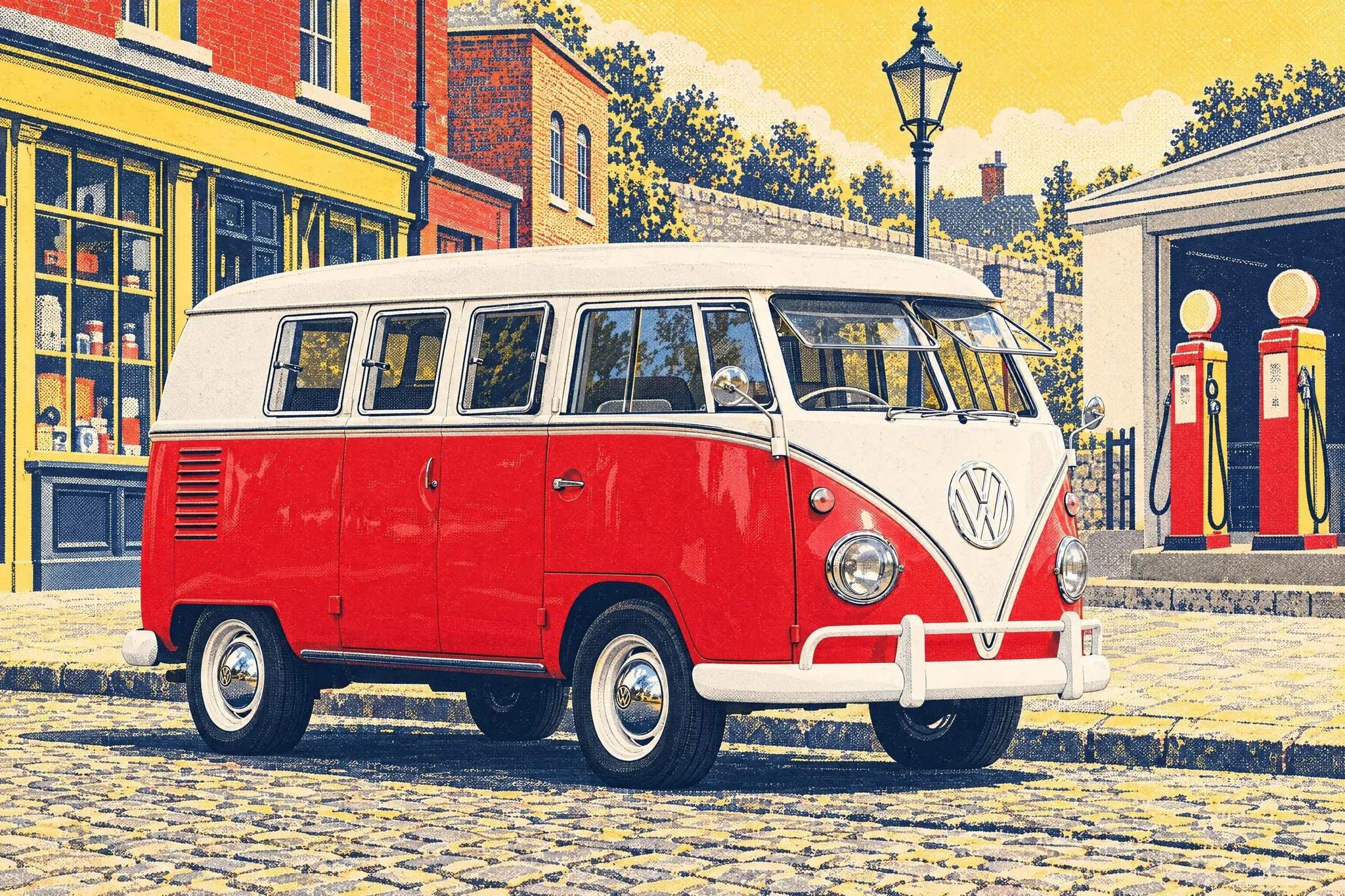
The VW campervan story: how a delivery van became a dream
No vehicle on earth says freedom quite like a Volkswagen camper. But it started life as a humble factory delivery van sketched on a notepad. This is the story of how the VW bus became the universal symbol of the open road, and an honest word on what that dream costs today.

Van Life & Everyday Touring
16 min read
The best UK campervan shows, and which one to actually go to
There are dozens of campervan and motorhome shows in the UK, and you don't need to do them all. Here are the ones genuinely worth your time, sorted by what you actually want from a day out: to buy, to gather ideas, to find your people, or to lose a weekend to a field full of VWs.

Van Life & Everyday Touring
25 min read
Do you remember these vintage surf brands and their logos?
Two bare feet, a mountain and a wave, a single lightning bolt. A nostalgic tour through the original surf brands and the iconic logos that built modern surf and van-life culture.

New & Noteworthy
12 min read
Knaus Boxtime 600 ME (2027): twin singles in 6 m, and the payload figure to question
Knaus's new Boxtime 600 ME squeezes two lengthways single beds into a 5.99 m van from £81,725. We lay out what that layout gives a couple, run the weight sums with Knaus's own figures, and explain why the 211 kg 'maximum payload' line needs a question before you sign.