
The VW campervan story: how a delivery van became a dream

Written by
Oliver
Oliver is the founder of Campervan.win and writes about campervans, travel, and the life-changing freedom that comes with getting out on the road.
The short answer
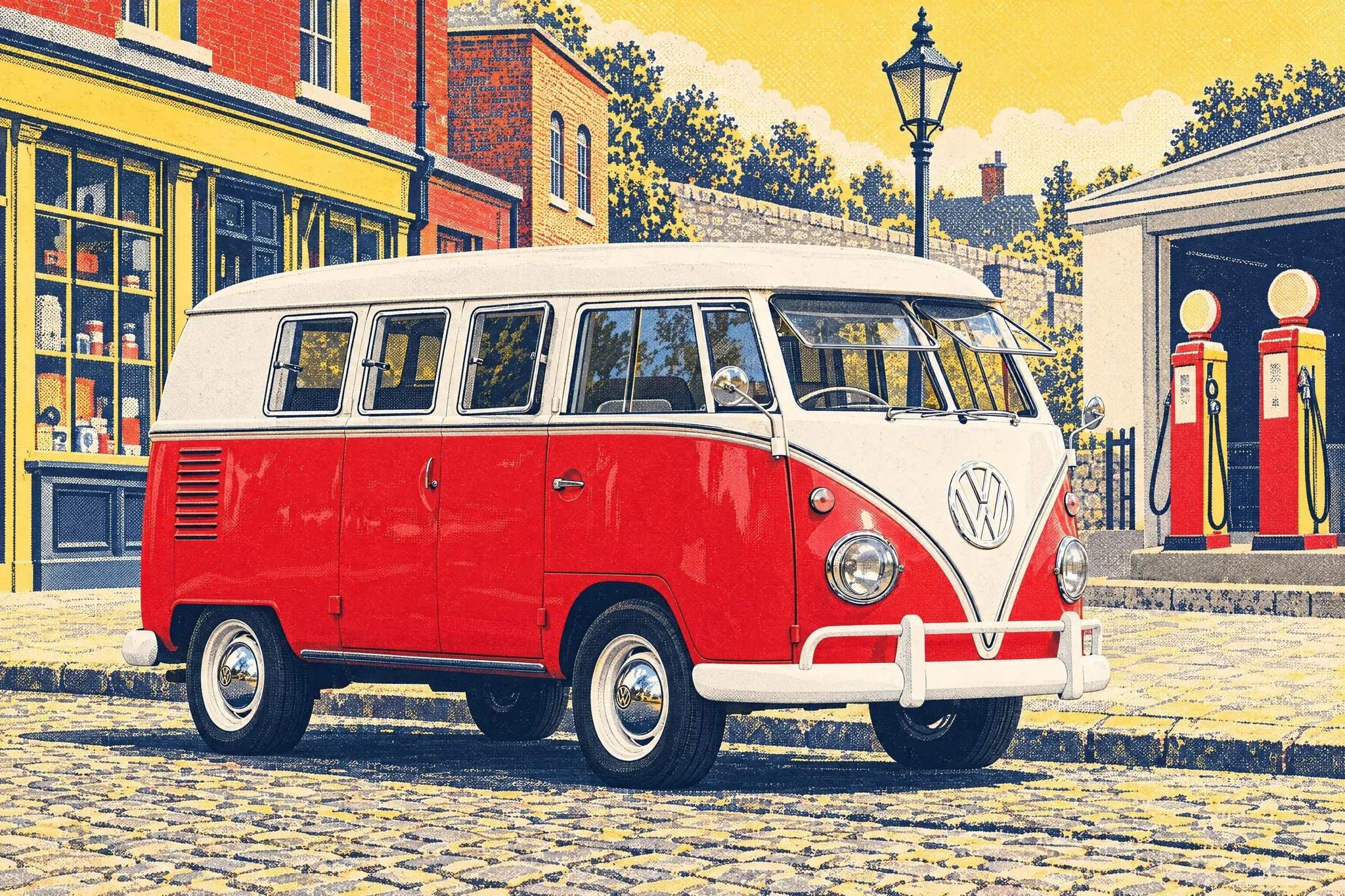
The Volkswagen camper became the universal symbol of freedom on four wheels, which is a wonderful fate for something that began as a plain factory delivery van sketched by Dutch businessman Ben Pon in 1947. It went into production as the Type 2 in 1950, and Westfalia's early-1950s camping conversions created the campervan as we know it. Across seven decades, from the Splitscreen and Bay window through the T3 and the front-engined T4 onward, it stayed deeply loved even as the engineering changed completely, which is exactly why people still pay a premium for the badge. The latest chapters are the car-derived T7 and the all-electric ID Buzz. It is one of the great stories in motoring. Here is how a humble delivery van became a dream.

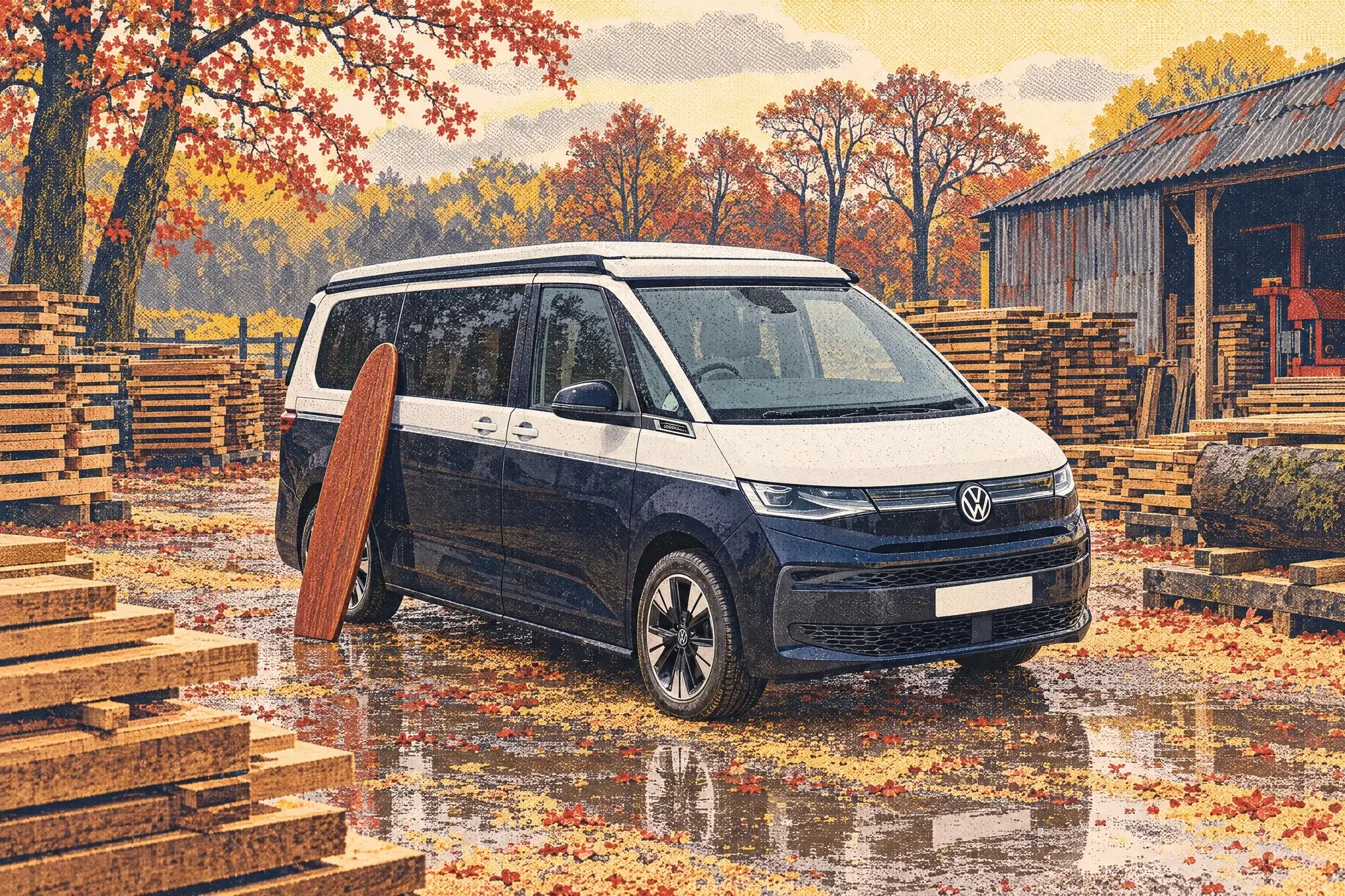
Ask anyone, anywhere, to picture freedom on four wheels, and a remarkable number of them will picture the same thing: a friendly, round-faced Volkswagen camper, surfboards on the roof, parked at the edge of a beach with the doors flung open and the kettle on. No other vehicle carries that meaning so universally. It's on postcards and tea towels, in films and album covers, tattooed on arms and painted on nursery walls. It has come to stand not for a brand or a body shape but for an entire way of being: unhurried, outdoors, free.
Which is a strange fate for what began as a humble factory delivery van, sketched almost as an afterthought, with no romance about it whatsoever. The story of how that plain little workhorse became the most loved camper in the world, and stayed loved across seven decades and a complete change of engineering, is genuinely worth telling, because it explains why people still pay a premium for the badge today, and why the dream it represents has drifted so far out of most people's reach. So here is the story, from a doodle on a notepad to the electric age, and an honest word at the end about what that dream actually costs now.
A sketch on a notepad
The Volkswagen camper was not designed by a visionary chasing the open road. It was sketched in 1947 by a Dutch businessman, Ben Pon, who imported Volkswagen Beetles and noticed the little flatbed trolleys the factory used to move parts around. He wondered whether a simple box-shaped van could be built on the Beetle's mechanicals, and drew a rough oval shape on a page of his notebook, a van with the driver right at the front and the engine at the back. That doodle became the Type 2, so called because the Beetle was the Type 1, and it went into production in 1950.
It is worth dwelling on how unsentimental this origin is, because it's the key to everything that followed. The van was cheap, simple and rear-engined purely because that was the Beetle's layout, and it put the driver up front over the wheels with a huge flat windscreen and a commanding view, again, not for romance, but because it made the most of a small, practical box. Almost by accident, those engineering compromises produced a shape that was friendly, upright and endearing, and a driving position that felt like sitting in the front row of the world. The charm was a by-product. Nobody set out to design an icon; they set out to design a sensible van, and the icon happened anyway.
The Splitscreen and the birth of the dream
The first generation, built from 1950 to 1967 and known forever as the Splitscreen for its two-pane front windscreen, is where the legend was born. It didn't take long for people to see the obvious: a roomy, simple box on wheels could be a tiny home. The German coachbuilder Westfalia began offering camping conversions in the early 1950s, with a removable "camping box" of cabinets and a folding bed, and the campervan as we understand it was born. The factory and others soon followed, and the bus became a deluxe people-carrier, a panel van, a pickup and a camper all at once.
Then the 1960s happened, and the Splitscreen found itself in exactly the right place at exactly the right time. It was cheap, it was reliable enough, it held a small tribe of people and their belongings, and it could be painted, lived in and driven to the edge of the known world. It became the vehicle of the counterculture, of surfers chasing waves down the coast, of musicians and travellers and anyone rejecting the saloon-car-and-semi version of life. The associations it picked up in that decade, freedom, the open road, gentle rebellion, the beach at dawn, have never left it. The Splitscreen stopped being a van and became a symbol, and every VW camper since has inherited that meaning whether it wanted to or not.
The Bay window: the camper comes of age
In 1967 came the second generation, the Bay window, named for its single curved windscreen, and with it the campervan grew up. It was bigger, roomier, more comfortable and more powerful than the Splitscreen, and it's the shape many people picture as the definitive hippie bus, partly because it was in its pomp through the late 1960s and 1970s. The Westfalia conversions matured too, with proper pop-top roofs, neat little kitchens and the clever, space-saving cabinetry that still defines the small camper. It's worth pausing on Westfalia, because the name is woven right through the story. The German coachbuilder's conversions, from the early camping box to the sophisticated pop-top campers of later decades, set the template for what a small camper interior should be: every centimetre earning its keep, the bed folding out of the seat, the tiny kitchen that somehow holds everything, the roof that lifts for standing room. So much of what we now take for granted in a campervan layout was worked out by Westfalia on the back of a VW, and the craft of fitting a genuinely liveable home into a van barely longer than a large car remains one of the quiet marvels of the whole field.
The Bay window is where the VW camper settled into the role it has played ever since: not the cheapest or the most practical way to travel, but the most characterful, the one that turned a journey into an adventure. It was sold all over the world and, remarkably, kept in production in Brazil for decades after Europe had moved on, the last of that lineage rolling off the line as late as 2013, which tells you something about how beloved and how fundamentally sound the basic idea was. For a great many families, the Bay window was the first vehicle they ever holidayed in, and the nostalgia it carries is a big part of the badge's emotional power today.
The wedge, and the water-cooled years
The third generation, launched in 1979 and known variously as the T3, the T25 or the Vanagon, was a boxier, more angular machine, the last of the rear-engined buses and, in a sense, the end of an era. It started out air-cooled like its ancestors but switched to water-cooled engines during its life, and it introduced genuinely useful things like the four-wheel-drive Syncro versions that could go properly off the beaten track. Its squared-off shape lacks the cartoonish charm of the older buses to some eyes, but it has a devoted following, and the Westfalia campers built on it are superb, practical little homes.
The T3 matters in the story because it was the hinge between the old world and the new. It kept the rear-engined layout and the back-to-basics character of the originals, while creeping towards the comfort and capability people increasingly expected. By the time it bowed out around 1990, the world had changed, and the next VW camper would change with it, in a way that purists found hard to forgive but that made the vehicle far better at its job.
The big change: front-engined and modern
The fourth generation, the T4, arrived in 1990 and broke with forty years of tradition: the engine moved to the front, driving the front wheels, and the rear-engined bus was gone. To devotees of the old air-cooled buses it was almost heresy. In every practical sense, though, it was a leap forward, with better handling, more usable space, proper heating and the safety and refinement of a modern vehicle. The T4 is where the VW camper became something you could genuinely use as an everyday vehicle as well as a holiday one, and it set the template for everything since.
The fifth generation, the T5 of 2003, perfected that template and gave the modern era its defining camper. It was here that Volkswagen took the California, a name Westfalia had used on its conversions, fully in-house, building its own pop-top camper on the factory line, complete with the elevating roof, the neat kitchen, the pull-out bed and the famous fold-out camping chairs stowed in the tailgate. The factory-built California turned the VW camper from a van someone else converted into a polished product you could buy new from a dealer, with a warranty and a waiting list, and it has been the benchmark small camper ever since. If you want to understand where the California sits among the other ways to build a camper, our guide to the types of campervan conversion puts it in context, but in short it's the definitive factory pop-top.
The modern California and the T6 era
The sixth generation, the T6 of 2015 and the updated T6.1 of 2019, refined the formula further without changing its essence: the same friendly, upright, cab-forward shape, the same clever California camper, now with modern engines, technology and safety. By this point the VW camper had completed an extraordinary journey, from a cheap rear-engined workhorse to a premium lifestyle vehicle that people aspired to and queued for, often paying well over the odds on the used market because demand so reliably outstripped supply.
The most recent chapter on the traditional template is the T7, launched in 2021, which moved the underpinnings onto a car-derived platform and offered plug-in hybrid power, a sign of where things were heading. Through all of it, the thing that's striking is the continuity: across seventy years and a complete reinvention of the engineering, the VW camper has kept the same essential character. You could park a 1965 Splitscreen next to a brand-new California and, for all their mechanical differences, nobody would doubt they were members of the same family. Very few vehicles manage that kind of unbroken identity.
Into the electric age: the ID. Buzz
The latest twist is the electric one. Volkswagen revealed the ID. Buzz concept in 2017 to enormous warmth, precisely because it leaned so hard into the heritage, a friendly, two-tone, round-faced electric van that deliberately evoked the Splitscreen for a new century. It reached production in 2022, and a camper version and an electric California are part of the plan, though as we explore in our honest look at the state of electric campervans, the fully electric factory California is still a few years away and the technology brings real compromises around range and weight.
What's telling is how the ID. Buzz was received. People didn't fall for it because of its battery or its software; they fell for it because it looked like the dream they already carried in their heads. Volkswagen understood that the camper's power was never really mechanical, it was emotional, and that the friendly face and the upright stance mattered more than what drove the wheels. Whether the electric camper ultimately lives up to the legend is a question for the coming years, but the fact that VW reached straight back to 1950 for the styling tells you everything about where the magic is thought to live.
More than a van: the culture it created
Few vehicles have generated a culture of their own, but the VW camper has, and it's part of why the thing endures. There's the screen life: the camper has been a character in countless films and adverts, most famously the wheezing, temperamental bus in Little Miss Sunshine that the whole family has to push to bump-start, a scene that somehow captured the van's blend of unreliability and irrepressible charm perfectly. There's the surf connection, the camper and the surfboard so intertwined that one rarely appears without the other, from California to Cornwall, where a VW parked above a beach is practically part of the scenery now.
Then there's the community, which is real and warm and a little eccentric. VW owners wave at each other on the road, a small acknowledgement between members of the same tribe. They gather in their thousands at events like Busfest and CamperJam, fields full of immaculately restored buses and proud owners swapping parts and stories. There are clubs, forums, restorers and specialists, and a whole economy built around keeping these vans alive and beautiful. Owning one, especially an older one, isn't quite like owning any other vehicle; it comes with a membership to something, an instant common language with strangers, a shared understanding of exactly why you'd put up with the slowness and the maintenance for the sake of the feeling.
That culture feeds back into the vehicle's meaning and its value. A van that people wave at, gather around, restore lovingly and pass down through families was never going to be just transport, and never going to be cheap. The community is both a symptom of the love and a cause of it, each generation of owners renewing the legend for the next. It's the rare case of a product that became a folk object, and folk objects don't obey the ordinary rules of depreciation or practicality.
Why it endures
So why this vehicle, above all others? Part of it is the design, that accidental friendliness from the original engineering, the round face, the upright stance, the cab-forward driving position that puts you up at the front of the world with a huge view. Part of it is timing, the way the Splitscreen and the Bay window happened to be the vehicles of the 1960s and 1970s, and soaked up all the freedom and optimism of those decades. Part of it is culture, the films, the surf scene, the music, the endless images of VW buses at the beach, each one reinforcing the association until it became automatic.
But the deepest part is what the van lets people imagine about themselves. To own a VW camper, or simply to love one, is to align yourself with a particular idea of the good life: slower, simpler, outdoors, free. The vehicle is a promise that you could, if you wanted, just go, that the coast and the hills and the open road are always an option. Most owners use them for ordinary weekends, of course, the same as anyone, but the van holds the promise of more, and that promise is what people are really buying. No other camper carries it so completely, which is why, decade after decade, the VW remains the one the others are measured against.
There's also something to be said for honesty of form. The VW camper never pretended to be anything other than what it was: an upright, friendly box that put space and view ahead of speed and style, and wore its simple shape with confidence. In an age when so many vehicles are sculpted and aggressive and trying hard, the camper's plain, cheerful face reads as refreshingly unpretentious, even innocent. People respond to that. It looks like it's on your side, like it wants the same gentle things you do. A vehicle that makes strangers smile, that children point at from the back seat, that seems to promise a nicer version of life, earns a loyalty that performance figures never could, and it's that warmth, more than any specification, that has carried it across seventy years.
The honest bit: the price of the dream
Here's the part the tea towels leave out. The VW camper has never been cheap, never been fast, and never been the most practical choice, and that's as true now as it ever was. The air-cooled originals were slow, noisy and needed constant attention, and the romance of an old Splitscreen comes with the reality of a vehicle that demands real mechanical devotion and money to keep on the road. People forgive all of it because of what the van means, but it's worth being clear-eyed: the charm and the practicality were always in tension.
With the modern California, the tension has become a price tag. The badge, the demand, the desirability that this whole story created have made the VW camper one of the most expensive ways to buy a given amount of camper, comfortably past £60,000 for a new one, and holding its value so well on the used market that bargains are rare. You are paying, in large part, for the meaning, for seven decades of accumulated dream. That's not a criticism of Volkswagen, who build a genuinely lovely thing; it's just the honest economics of an icon. A more anonymous van might give you more space, more pace and more practicality for the money. What it won't give you is the feeling, and the feeling is the entire point, which is exactly why people pay. The slightly bittersweet truth is that the vehicle which came to symbolise freedom and the simple life has become, in its most desirable forms, a luxury that the ordinary families who first loved it can no longer easily afford.
Common questions
When was the first VW campervan made?
The Volkswagen Type 2 went into production in 1950, sketched in 1947 by Dutch businessman Ben Pon as a simple box-shaped van on the Beetle's mechanicals, with the driver at the front and the engine at the back. The German coachbuilder Westfalia began offering camping conversions in the early 1950s, and the campervan as we understand it was born.
What are the different generations of VW camper called?
The first, built 1950 to 1967, is the Splitscreen (two-pane windscreen). The second, from 1967, is the Bay window (single curved screen). The third, from 1979, is the T3 (also T25 or Vanagon), the last rear-engined bus. From 1990 the front-engined T4, then the T5 (2003), T6 and T6.1, and the car-derived T7 (2021) carry the line forward.
What is a VW California?
The California is Volkswagen's own factory camper version of its Transporter (and, on the current car, the Multivan), with a pop-top, a small kitchen and clever fold-away beds. The name and the camper formula were refined across the T5, T6 and T6.1 eras into the modern default compact camper, the direct descendant of the Westfalia-converted classics.
Why are VW campervans so expensive?
Partly the badge and the dream it represents, partly genuine engineering and build quality, and partly strong demand and residuals: people pay a premium because no other vehicle carries the same universal meaning of freedom. The modern California is a polished, well-built camper, and classics have become collectible, so values across the range have drifted well out of most people's reach.
Is there an electric VW campervan?
Yes, the electric ID Buzz has been on sale since 2022, deliberately echoing the original Splitscreen styling, and a fully electric California camper is planned, though expected only later this decade. As with all electric campers in 2026, the technology brings real trade-offs around range and weight, so it is not yet the all-season, big-mileage answer for everyone.
Are old VW campervans reliable?
Not by modern standards. The air-cooled Splitscreen and Bay window vans are slow, mechanically simple and need regular attention, so running one is as much a hobby as transport, though a huge specialist and community network exists to help. The modern front-engined vans, from the T4 onward, are ordinary, dependable vehicles by comparison. Decide whether you want a usable camper or a labour of love.
The reachable bit
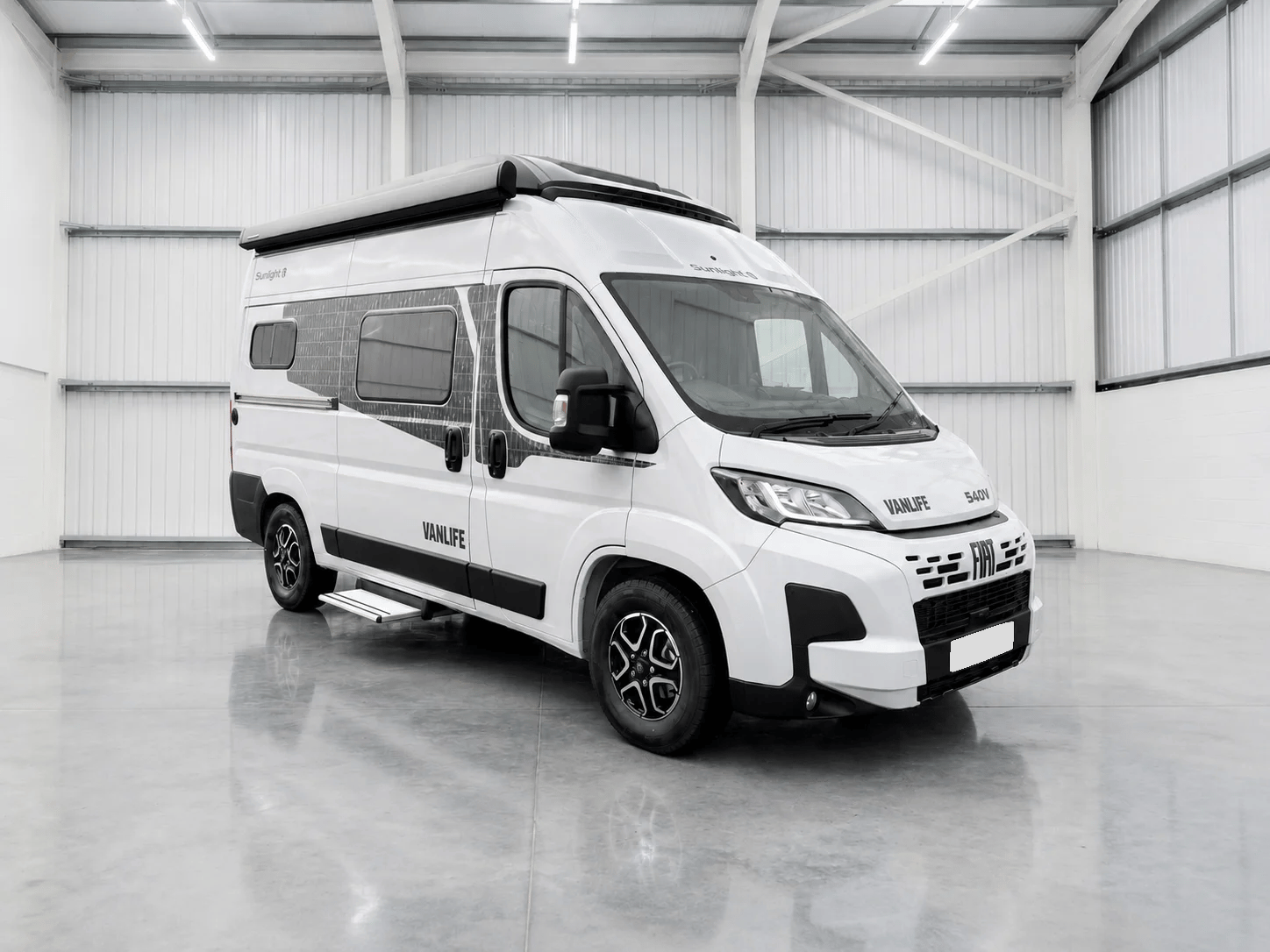
The camper you fall for is rarely the one you can afford. That gap is the whole reason Campervan.win exists. Right now we’re giving away the Sunlight Vanlife, worth around £65,000, and closing that gap is the point: capped entries so the odds stay honest, £10 a ticket, a maximum of five per person, £500 to a UK charity from every full draw, the winner picked by a public randomness beacon anyone can re-check, and one person driving away in the van itself.
Enjoyed this post?
Get more honest campervan guides like this one in your inbox.
You’re in!
Check your inbox. We’ve just sent you a welcome email.

About the author
Oliver
Oliver is the founder of Campervan.win and writes about campervans, travel, and the life-changing freedom that comes with getting out on the road.
Keep Reading
Related Reading
Thoughtful articles that build on what you’ve just read.
Van Life & Everyday Touring
16 min read
The best UK campervan shows, and which one to actually go to
There are dozens of campervan and motorhome shows in the UK, and you don't need to do them all. Here are the ones genuinely worth your time, sorted by what you actually want from a day out: to buy, to gather ideas, to find your people, or to lose a weekend to a field full of VWs.
Van Life & Everyday Touring
25 min read
Do you remember these vintage surf brands and their logos?
Two bare feet, a mountain and a wave, a single lightning bolt. A nostalgic tour through the original surf brands and the iconic logos that built modern surf and van-life culture.
Van Life & Everyday Touring
25 min read
The first surfboards, and who really invented surfing
Who invented surfing, and what did the first surfboards look like? The honest answer runs from ancient Peru and West Africa to the chiefs of Hawaii, and it's a far better story than the myth.
New & Noteworthy
12 min read
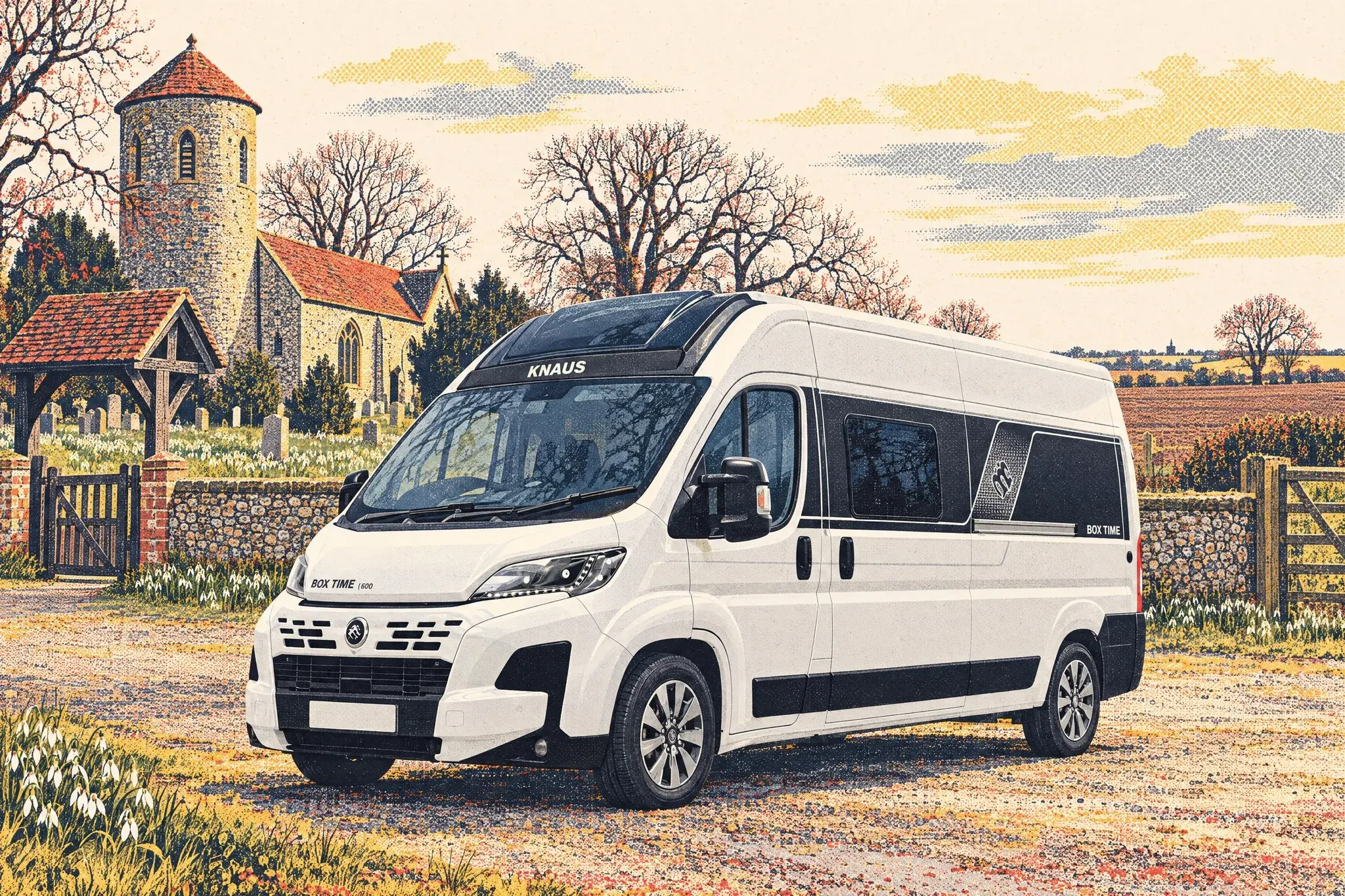
Knaus Boxtime 600 ME (2027): twin singles in 6 m, and the payload figure to question
Knaus's new Boxtime 600 ME squeezes two lengthways single beds into a 5.99 m van from £81,725. We lay out what that layout gives a couple, run the weight sums with Knaus's own figures, and explain why the 211 kg 'maximum payload' line needs a question before you sign.