
Motorhoming on a budget: the real ways to cut costs without cutting trips

Written by
Martha
Martha writes about interiors, ownership stories, and the everyday realities of campervan life, with a focus on comfort, cost, and how vans are used over time.
The short answer
You can cut the cost of motorhome life a long way without taking a single trip fewer, because most of the gap between expensive and thrifty has nothing to do with how much fun you have. The biggest savings are buying the right van at the right point in the depreciation curve and looking after it, then making it self-sufficient with solar and a good battery so the cheapest and most beautiful park-ups open up. Use farm stopovers, club sites and free spots for most nights and treat full-facility sites as the occasional luxury. Drive slower and lighter, cook aboard, shop your insurance every year, and travel in the quieter shoulder seasons. None of it is going without; it is spending where it counts and saving where it does not. Here are the real ways to do it.

Motorhoming costs money. There is no point pretending otherwise. But the gap between an expensive way of doing it and a thrifty way of doing it is enormous, and most of that gap has nothing to do with how much fun you have. You can spend £150 a night and feel hemmed in, or spend £12 a night and wake up to a sea view. The trick is knowing where the real money goes and where it quietly leaks away.
This is a long, practical guide to cutting the cost of motorhome life without cutting the number of trips you take. We will go through every part of the budget: buying, fuel, sites and park-ups, insurance, gas and power, maintenance, food, and the small habits that add up over a year. The aim is simple. Keep travelling, spend less doing it, and never feel like you are missing out.
Where the money actually goes
Before you can cut a budget, you have to see it clearly. Most people guess wrong about which costs hurt them. They obsess over fuel and ignore depreciation, or they fret about a £20 campsite while leaving £300 of avoidable insurance on the table.
For a typical UK motorhome owner doing a few thousand miles a year, the costs fall into roughly these buckets:
- Depreciation, the value the vehicle loses while you own it. This is usually the single biggest cost, and it is invisible because no one sends you a bill for it.
- Insurance, anywhere from around £300 to over £700 a year depending on the vehicle, your history and how you store it.
- Fuel, the cost you feel most, even though it is often not the largest.
- Sites and park-ups, which can be almost nothing or a small fortune, entirely depending on how you travel.
- Maintenance, servicing, MOT and tyres, predictable if you plan, painful if you do not.
- Tax, breakdown cover, gas, and habitation checks, the steady background costs.
- Food and days out, which feel like holiday spending rather than van spending, but quietly double a trip's cost.
Once you can see those buckets, the strategy becomes obvious. Attack the big invisible costs hard, trim the medium ones with good habits, and stop sweating the tiny ones that were never the problem.
Buying smart: the decision that sets your whole budget
The cheapest way to run a motorhome starts before you own one. The vehicle you choose, and the price you pay, locks in your depreciation, your insurance band, your fuel consumption and a fair chunk of your maintenance bills for years. Get this right and everything downstream gets easier.
New versus used, and why the middle is often best
A brand new motorhome loses a noticeable slice of its value in the first two or three years, just like a car but on bigger numbers. If a new coachbuilt costs, say, £65,000, it can be worth closer to £50,000 a couple of years later even in good condition. That difference is real money you never see again.
The sweet spot for most budget-minded buyers is a vehicle that is around three to seven years old. The first owner has absorbed the steepest depreciation. The van is still modern enough to have decent insulation, a reliable heating system and parts availability. And if you buy well and look after it, you may sell it for close to what you paid, which turns the biggest cost on the list into something much smaller.
Older still, say ten years and up, can be excellent value if the vehicle is sound, but you take on more maintenance risk and you need to budget for it. There is nothing wrong with an older van. Just go in with your eyes open and a contingency fund.
Match the vehicle to how you actually travel
People routinely buy too much motorhome. A six-berth coachbuilt with a fixed bed, a garage and a full bathroom is wonderful, but if it is two of you most weekends, you are paying to move, insure, fuel and store space you rarely use.
A smaller panel van conversion or a compact coachbuilt costs less to buy, less to fuel, often less to insure, fits in normal parking spaces, and is far easier to use spontaneously. The cheapest trip is the one you actually take, and a van that is easy to drive and park gets used far more often than a big one that feels like a project to take out.
Buy for the trips you take most weekends, not the one big trip you imagine taking once a year. You can always hire something larger for that.
Inspect properly so cheap stays cheap
A bargain that hides a damp problem is not a bargain. Water ingress is the classic motorhome wallet-drainer, because repairing rotten timber and replacing panels is slow, skilled work. Before you buy any used motorhome:
- Ask for the habitation service history and damp readings. A van with a clean record of annual habitation checks is worth paying a little more for.
- Feel and smell the interior. Soft walls, bubbling wallpaper, a musty odour and staining around windows, rooflights and the lower edges all point to water getting in.
- Check the base vehicle like you would any used van: service history, cambelt record where relevant, tyre dates, brake condition, and how it drives.
- Test everything that uses gas, water or electricity. The fridge on all settings, the heating, the water pump, the hob, the lights, the leisure battery holding charge.
Paying for an independent habitation check or a professional inspection before purchase can cost a hundred pounds or two and save you thousands. On a big purchase, that is some of the best money you will ever spend.
Beating depreciation: the cost no one talks about
Depreciation is the quiet giant of motorhome budgets. You cannot avoid it entirely, but you can shape it.
Buy in the right part of the curve
As above, letting someone else take the first big hit is the single most effective move. A well-kept van bought at four years old and sold at eight may lose far less in pounds per year than a new one over the same period.
Keep it dry, clean and serviced
The vans that hold value are the ones with documented habitation checks, a tidy interior, a clean base vehicle and no damp. Keeping up the paperwork is cheap. The reward is a stronger resale price, which directly reduces your true cost of ownership. Think of every habitation check receipt as money in the bank for the day you sell.
Avoid heavy personalisation
Deep modifications and very personal taste can make a van harder to sell. If you love bold choices, enjoy them, but know that reversible upgrades and neutral finishes tend to keep more buyers interested when it is time to move on.
Consider whether you need to own at all
If you only travel a handful of times a year, hiring or a peer-to-peer rental can work out cheaper than owning once you add up insurance, storage, depreciation and standing costs. There is no shame in renting. The goal is trips, not ownership for its own sake. That said, owners tend to travel far more often, because the van is sitting there ready, so for most enthusiasts ownership wins on sheer use.
Fuel: drive cheaper without driving less
Fuel is the cost you feel most because you pay it at the pump in big lumps. The good news is that motorhome fuel economy responds strongly to how and where you drive.
Slow down, especially on motorways
A motorhome is a brick moving through the air. Wind resistance climbs steeply with speed, so the difference between cruising at 70 and cruising at 60 can be surprisingly large in miles per gallon. Sitting at a steady, relaxed pace on the motorway is one of the most effective fuel savings available, and it makes the driving more pleasant too. A heavy van is not built for hurrying.
Smooth it out
Hard acceleration and late braking waste fuel. Reading the road ahead, easing off early, and keeping momentum on gentle gradients all help. Cruise control on flat motorways is your friend. On hilly roads, let the speed bleed off uphill rather than flooring it, and recover on the way down.
Lose the weight you do not need
You pay to carry everything in the van. Full water and waste tanks, an awning you never use, a box of tools you forgot about, the cast-iron pan that seemed a good idea. Travel with only the water you need for the journey, fill up closer to your destination where you can, and have a regular clear-out. Every kilo you are not hauling is fuel you are not burning, and it helps with weight limits too.
Check your tyres
Under-inflated tyres increase rolling resistance and wear faster. Keep them at the correct pressure for your loaded weight, check them cold, and you will save fuel and tyre money at the same time. It is a five-minute job that pays for itself.
Plan routes that suit a big vehicle
A slightly longer route on steady A-roads and dual carriageways can use less fuel and far less of your nerves than a short route full of steep climbs, tight lanes and constant stop-start. A good route planner that accounts for vehicle size keeps you off unsuitable roads and away from low bridges and weight limits, which also avoids expensive, stressful mistakes.
Combine trips and travel in shoulder seasons
Fewer, longer trips spread the fixed cost of getting somewhere across more nights away. And travelling outside peak summer means quieter roads, cheaper sites and often better fuel availability. Slower touring is cheaper touring.
Sites and park-ups: the biggest swing in the whole budget
Where you sleep is where budgets are won or lost. Two people can do the same two-week trip and one pays £1,400 on sites while the other pays £200. Same scenery, same van, wildly different bill. Here is how to land on the cheaper side without roughing it.
Understand the ladder of options
UK overnight options run from free to fairly pricey. Roughly in order of cost:
- Wild camping and informal park-ups, free where it is permitted and done responsibly. Legal nuance matters, which we will come to.
- Aires and dedicated motorhome stopovers, often a few pounds to around £15, sometimes with electric and waste facilities.
- Pub and farm stopovers, frequently free or low cost in exchange for buying a meal or a few pounds for the pitch, often with a warm welcome.
- Certificated locations and small five-van sites, run by the touring clubs, usually quiet, simple and good value, often in the region of £10 to £20 a night.
- Club sites and commercial campsites, with full facilities, typically £20 to £40 plus in peak season, more for premium locations and serviced pitches.
- Holiday parks with the lot, the most expensive, where you are paying for pools and entertainment as much as a pitch.
The single biggest saving is simply moving down this ladder for most nights and treating a fully serviced site as an occasional treat rather than the default.
Use farm and pub stopover schemes
Membership schemes that connect motorhomes with farms, vineyards, pubs and small attractions offering overnight parking are some of the best value in UK touring. You pay a modest annual fee and then get nights that are often free or just a few pounds, frequently in lovely rural spots you would never otherwise find. Buy a meal at the pub, support the farm shop, and everyone wins. A single trip can pay back the annual membership several times over.
Join a touring club for the small sites
The two big clubs run networks of small, simple sites that are excellent value, plus a vast number of tiny five-pitch locations on farms and in gardens. Membership pays for itself quickly if you stay even a handful of nights a year, and it opens up quiet, scenic places that cost a fraction of a commercial park.
Get comfortable being self-sufficient
The reason cheap and free park-ups are possible is that you do not need hook-up if your van can look after itself. A van that can run its fridge, lights, water pump, charging and heating without a mains post is a van that can sleep almost anywhere. Investing modestly in being off-grid capable, which we will cover under power, unlocks the cheapest nights of all. This is the heart of budget motorhoming: independence is what makes it cheap.
Wild camping and park-ups, done responsibly and legally
Rules vary across the UK. In much of England and Wales, sleeping in a vehicle on a road or in a car park depends heavily on local byelaws and signage, and you should always respect restrictions. Parts of Scotland are more relaxed about responsible overnight stays in a motorhome, though this is about parking rather than the access rights that cover wild camping in a tent, and busy areas increasingly have their own rules and parking charges. Wherever you are:
- Arrive late, leave early, and stay one night.
- Park considerately, never blocking access, gates or other vehicles.
- Take every scrap of rubbish with you and leave no trace at all.
- Never empty any waste anywhere but a proper facility.
- Obey signs and move on politely if asked.
Done badly, informal parking gets areas closed off for everyone. Done well, it is quiet, free and a privilege worth protecting. The responsible approach is also the cheapest in the long run, because it keeps these places open.
Mix and match for the best of both
The smartest budget travellers do not pick one style. They string a trip together from free and cheap nights, with the occasional serviced site every few days to fill water, empty tanks, do laundry, have a long shower and recharge fully. That rhythm keeps costs low while keeping you clean, topped up and comfortable. You get the freedom of wild nights and the convenience of facilities, without paying for a full site every single day.
Insurance: pay for what you need, not what you do not
Motorhome insurance is one of the easiest places to overpay quietly, because most people renew without checking. A bit of attention here can save a few hundred pounds a year with no downside.
Shop around every single year
Loyalty rarely pays. Insurers price renewals on the assumption that many people will not switch. Get fresh quotes each year, including from specialist motorhome insurers and through the touring clubs, which often have competitive schemes for members. Even if you stay put, an alternative quote gives you leverage.
Set mileage and usage honestly but accurately
Many policies offer limited mileage options. If you genuinely do low annual miles, a capped policy can be cheaper. Be honest, but do not over-estimate out of vague caution. Pay for the driving you actually do.
Storage and security cut the premium
Where the van lives overnight affects the price. Secure storage, a driveway, a locked compound or a recognised storage site can all reduce premiums compared with on-street parking. Approved alarms, trackers, steering locks and other security devices can help too, and a tracker can also be a condition of insuring more valuable vans. The savings often outweigh the cost of the kit within a year or two.
Consider the excess and the cover level
A higher voluntary excess lowers the premium, which can suit careful owners who rarely claim, as long as you could comfortably cover that excess if needed. Conversely, do not strip out cover you genuinely value, like European cover if you tour abroad, or contents cover for the kit you carry. The aim is the right cover, not the least cover.
Lay-up cover for winter
If you do not use the van over winter, some policies let you reduce cover during a laid-up period, keeping fire and theft protection while you are not driving. Check whether this saves money for your situation. It often does for seasonal users.
Gas, power and water: the running costs you can shrink to almost nothing
Energy and water are where a self-sufficient van pays you back. Get these right and you can travel for days without paying for a hook-up, which is the whole foundation of cheap touring.
Solar is the gift that keeps giving
A solar panel on the roof quietly tops up your leisure battery whenever there is daylight, even on cloudy UK days, just more slowly. For many owners, a decent solar setup means they almost never need to pay for electric hook-up in the lighter half of the year. The upfront cost is modest against years of free nights, and it pays back surprisingly quickly if you regularly use sites with hook-up at several pounds a night.
Get more from your battery
The bigger and healthier your leisure battery capacity, the longer you can park up without mains power. Lithium batteries cost more upfront but offer more usable capacity, longer life and faster charging, which can make sense for heavy off-grid users. A good quality lead-based battery, kept charged and not run flat, still serves most people well for years. Whatever you have, treat it kindly: avoid deep discharges, keep it charged over winter, and it will last far longer, saving you a replacement.
Switch to efficient appliances and habits
- LED lighting throughout uses a fraction of the power of older bulbs.
- Run the fridge on gas or efficient compressor settings as suits your setup, and keep it out of direct sun.
- Charge devices while driving, when the engine is doing the work anyway.
- Turn things off properly rather than leaving them on standby.
Make your gas go further
Gas powers heating, hot water, the hob and often the fridge. To make a bottle last:
- Use the heating thoughtfully. A warm jumper and a good duvet cost nothing. Heat the space when you need it, not all night.
- Cook efficiently. Lids on pans, one-pot meals, and a small efficient burner all sip gas rather than gulp it.
- Consider a refillable gas system if you tour a lot. The upfront cost is higher, but refilling at the pump is much cheaper per unit than swapping bottles, and it pays back over time for heavy users. For occasional users, standard bottles are fine.
Water discipline saves money and hassle
Carrying only the water you need saves fuel weight. Using water carefully, with short showers and a bowl for washing up, means longer between fills and empties, which means more freedom to stay at cheap or free spots without facilities. Fill up at free taps where available and you rarely pay for water at all.
Maintenance: spend a little to avoid spending a lot
Skimping on maintenance is the false economy that catches people out. A neglected van costs more, breaks down more, and sells for less. But maintaining one cheaply and well is entirely possible.
Service the base vehicle on time
The engine, gearbox and running gear are essentially a commercial van underneath. Regular oil and filter changes, attention to the cambelt where the engine has one, and prompt fixes for small faults keep big bills away. Independent specialists often service these vehicles for less than a main dealer while doing excellent work, especially once the van is out of warranty. Keep every receipt for resale.
Never skip the habitation check
An annual habitation check looks at damp, gas safety, electrics, ventilation, the heating and water systems, and the bodywork seals. It is the early warning system that catches a small leak before it becomes a rotten wall. It is not a legal requirement like an MOT, but it is one of the most cost-effective things you can do, because catching damp early is cheap and catching it late is not. It also protects resale value.
Learn the jobs you can safely do yourself
Plenty of routine tasks are well within reach of a careful owner and save labour costs:
- Checking and topping up fluids and tyre pressures.
- Replacing wiper blades, bulbs and cabin filters.
- Cleaning and protecting external seals, and resealing where needed before it leaks.
- Servicing the leisure side: cleaning the water system, sanitising tanks, checking battery terminals.
- Treating and protecting the underside against corrosion.
Leave gas work and anything safety-critical to qualified people. Gas is not the place to save money by guessing. But the simple, regular care that keeps a van healthy is mostly elbow grease, and elbow grease is free.
Keep it clean and keep it dry
Washing the van, clearing leaves from drainage channels, keeping rooflights and seals clear, and storing it where water drains away all reduce corrosion and damp. A van that is cared for visibly is usually cared for mechanically too, and it shows when you sell. Cleanliness genuinely is a money saver here.
Tyres: watch the date, not just the tread
Motorhome tyres often fail on age before they wear out on tread, because the van sits still for long periods carrying a lot of weight. Cracked, perished tyres are dangerous and an MOT failure. Check the manufacture date, keep pressures correct, move the van occasionally over winter to avoid flat spots, and budget for replacement on age. Replacing tyres before they fail is far cheaper than a blowout on the motorway and the damage it can cause.
Food and daily spending: where holidays quietly get expensive
You bought a van with a kitchen. Use it. Eating out for every meal is the fastest way to turn a cheap trip into an expensive one, and home-style cooking in the van is one of the genuine pleasures of the lifestyle anyway.
Cook in the van most of the time
A van kitchen can do far more than beans on toast. Plan a few simple meals, shop at local supermarkets and markets, and you eat well for a fraction of restaurant prices. Treat eating out as an occasional highlight, ideally at the pub that is letting you park overnight, so your food spend doubles as your accommodation deal.
Shop like a local, not like a tourist
Buy near where you are staying rather than at motorway services or tourist-trap convenience shops. Stock up on the staples before you head somewhere remote, where prices are higher and choice is thinner. A well-stocked van larder of tins, pasta, rice and long-life basics means you can throw a meal together anywhere without an emergency dash to an expensive shop.
Cut down on waste
A small fridge and limited storage actually help here. Buy what you will use, plan meals around what needs eating, and you waste less food and less money. Leftovers become tomorrow's lunch.
Free and cheap days out
The best parts of motorhome travel are often free. Beaches, hills, coast paths, forests, viewpoints and small towns cost nothing to enjoy. National trust and heritage memberships can pay for themselves if you visit a lot of properties and use their car parks. Look for free local events, markets and walks. The van gets you to wonderful places. You do not need to spend heavily once you are there.
The standing costs: tax, breakdown and the steady background
Some costs you cannot dodge, but you can still keep them lean.
Vehicle tax
Road tax for motorhomes depends on the vehicle's weight and details, and the bands have shifted over the years, so the exact figure varies by van. It is a known, fixed cost, so factor it into your annual budget and there are no nasty surprises. Knowing the figure before you buy helps you compare the true cost of different vans.
Breakdown cover that suits a motorhome
Standard car breakdown cover may not be enough for a large, heavy vehicle. You want cover that explicitly handles motorhomes of your size and weight, ideally with European cover if you tour abroad and homestart in case it will not start on the drive. Specialist and club schemes are often good value. The cost is small against the misery and expense of being stranded in a large vehicle that ordinary recovery cannot lift.
Storage
If you cannot keep the van at home, storage is a real cost, from modest open compounds to pricier covered or secure sites. Secure storage can also lower your insurance, so weigh the two together. If you can store it at home safely and legally, that is the cheapest option and keeps the van handy, which means you use it more.
Travel cheaper by travelling differently
Beyond individual line items, the biggest savings come from how you structure your travel. A few habits change the whole equation.
Embrace the shoulder seasons
Late spring and early autumn are the budget traveller's secret. Sites are cheaper and quieter, the weather is often kind, roads are calmer, and you do not pay peak prices for the privilege of queuing. A van with good heating extends your season further, so the heating investment pays for itself in cheaper, off-peak nights. Avoid school holidays where you can and your costs drop noticeably.
Travel slower and stay longer
Hurtling between distant places burns fuel and wears you out. Picking an area and exploring it properly means less driving, more time at each cheap park-up, and weekly site rates that often work out cheaper than nightly ones. Slow travel is both more relaxing and more affordable. The best trips are often the least ambitious on paper.
Stay closer to home more often
The fantasy of grand tours can make people overlook the cheap weekend an hour away. Local trips cost almost nothing in fuel, need no ferries or long planning, and get the van used regularly, which is good for the van and good for you. A Friday night drive to a nearby farm stopover is one of the best-value things you can do with a motorhome. Frequent small trips beat occasional epics for both cost and joy.
Travel with others sometimes
Meeting friends at a site, sharing a farm stopover, or travelling in a small group can cut costs through shared meals and split treats, and it is more fun. Some sites and stopovers welcome small groups. You keep your independence but share the nice extras.
Kit and gear: buy once, buy useful, ignore the rest
The accessories industry around motorhomes is vast, and plenty of it is genuinely useful while plenty more is money you will regret. The budget approach is to buy a few good things and resist the rest.
What genuinely earns its place
- Solar and a healthy battery setup, as covered, because they unlock free nights.
- Good levelling ramps and chocks, so you can use cheap and free pitches that are not perfectly flat.
- A reliable hook-up lead and the right adaptors, for when you do use mains.
- Quality bedding and warm layers, so you can run the heating less.
- A simple, efficient cooking setup, a couple of good pans, sharp knife, and a way to make proper coffee, so eating in is a pleasure not a chore.
- Basic tools and spares, fuses, bulbs, tape, cable ties, a tyre pump and a warning triangle, so small problems do not become expensive call-outs.
- Water containers and a decent hose, for filling at free taps.
What to think twice about
Expensive gadgets that solve a problem you do not have, oversized awnings you will rarely put up, novelty kitchen items, and anything that adds weight without adding real use. Borrow or buy second hand to try something before committing. Plenty of barely-used motorhome accessories come up cheaply from owners who learned this lesson the expensive way. There is a thriving used market in van gear, and it is worth shopping there first.
The lightest, cheapest van is the one carrying only what it uses. Every gadget is weight, weight is fuel, and clutter is just money you spent on something you do not need.
A realistic budget you can actually plan around
Let us put rough numbers to a thrifty but comfortable year, for two people with a paid-for used van doing a sensible amount of touring. Your figures will differ, but this shows where a careful budget lands and where the levers are.
- Insurance: shopped around, secure storage, around £350 to £450.
- Tax: a fixed annual figure depending on the van, budget for it as a known cost.
- Servicing and habitation check: independent specialist, a few hundred pounds combined, more in a year that needs tyres or bigger work, so keep a contingency fund.
- Breakdown cover: a motorhome-appropriate policy, often through a club, modest.
- Fuel: the biggest variable, driven entirely by how far you travel. Slower driving and combined trips keep it down.
- Sites and park-ups: with farm stopovers, club sites and free nights making up most of it and serviced sites as an occasional treat, this can be remarkably low, perhaps a few hundred pounds across a busy travelling year rather than thousands.
- Club and stopover memberships: a small annual outlay that pays back many times over in cheap nights.
- Food and days out: cooking in the van keeps this close to your normal home grocery spend, with free days out doing the heavy lifting.
The headline is this. The unavoidable standing costs are real but manageable and predictable. The variable costs, fuel and sites, are where your choices make the biggest difference, and they are exactly the choices that also make travelling more relaxed and more frequent. Cheaper and better are usually the same direction.
Common money mistakes to avoid
A short list of the traps that catch people, gathered from the patterns above:
- Buying too big. You pay to buy, fuel, insure and store space you rarely use, and a big van gets taken out less often.
- Ignoring depreciation. Obsessing over fuel while overpaying massively on the value the van loses is fighting the wrong battle.
- Auto-renewing insurance. A few minutes of shopping around can save hundreds with no downside.
- Skipping the habitation check. A small annual cost prevents the most expensive problem in motorhoming, damp.
- Paying for serviced sites every night. The single biggest avoidable cost, and the easiest to fix once you are self-sufficient.
- Eating out for every meal. You bought a kitchen, so use it.
- Driving fast and heavy. Speed and weight both burn fuel you did not need to burn.
- Neglecting maintenance. Small unfixed faults become big bills and a weak resale price.
- Buying gadgets you will not use. Weight, money and clutter, all for nothing.
The bottom line
Motorhoming on a budget is not about going without. It is about understanding where the money really goes and making a handful of smart choices that happen to make the whole experience better as well as cheaper. Buy the right van at the right point in its life and look after it, so depreciation and maintenance stay low. Make the van self-sufficient with solar and a good battery, so the cheapest and most beautiful nights are open to you. Use farm stopovers, club sites and free park-ups for most nights and treat full sites as an occasional luxury. Drive slower and lighter. Cook in the van. Shop around on insurance every year. Travel in the shoulder seasons, closer to home, more often.
Do those things and the cost of motorhome life drops a long way, while the number of trips you take goes up. That is the real goal. Not the cheapest possible year sitting on the drive, but the richest possible life on the road for the least money. Spend where it counts, save where it does not, and keep going.
Common questions
What is the biggest cost in motorhome ownership?
Usually depreciation, not the things people fret about. A new coachbuilt costing 65,000 pounds can be worth closer to 50,000 a couple of years later even in good condition, which dwarfs a 20-pound campsite or a tank of fuel. Buying at the right point in the depreciation curve and keeping the van dry, clean and serviced is where the real money is saved.
How can I save money on campsite fees?
Sites are the biggest swing in the whole budget: two people on the same two-week trip can pay 1,400 pounds on full-facility sites or 200 using cheaper options. Use farm and pub stopover schemes, join a touring club for small certificated sites, get comfortable being self-sufficient, and use responsible legal park-ups, treating full sites as an occasional luxury rather than the default.
How do I cut fuel costs in a motorhome?
Slow down, especially on motorways, because wind resistance climbs steeply with speed and the difference between 70 and 60mph is surprisingly large in miles per gallon. Drive smoothly, lose weight you do not need, keep tyres correctly inflated, plan routes that suit a big vehicle, and combine trips and travel in shoulder seasons.
How do I make a motorhome cheaper to run off-grid?
Make it self-sufficient. Solar and a good leisure battery let you take the cheapest and often most beautiful nights for free, away from paid hook-up. Switch to efficient appliances and habits, make your gas go further by cooking and heating sensibly, and keep water discipline, which saves both money and hassle.
How do I save money on motorhome insurance?
Shop around every single year rather than auto-renewing, set your mileage and usage honestly but accurately, and use secure storage and good security to cut the premium. Consider the excess and cover level you actually need, and use lay-up cover over winter when the van is not in use.
Is motorhoming on a budget about going without?
No. It is about understanding where the money really goes and making a handful of smart choices that happen to make the experience better as well as cheaper. Buy the right van and look after it, make it self-sufficient, use cheaper park-ups, drive slower and lighter, cook in the van, and travel in the shoulder seasons. Costs drop while the number of trips goes up.
The reachable bit
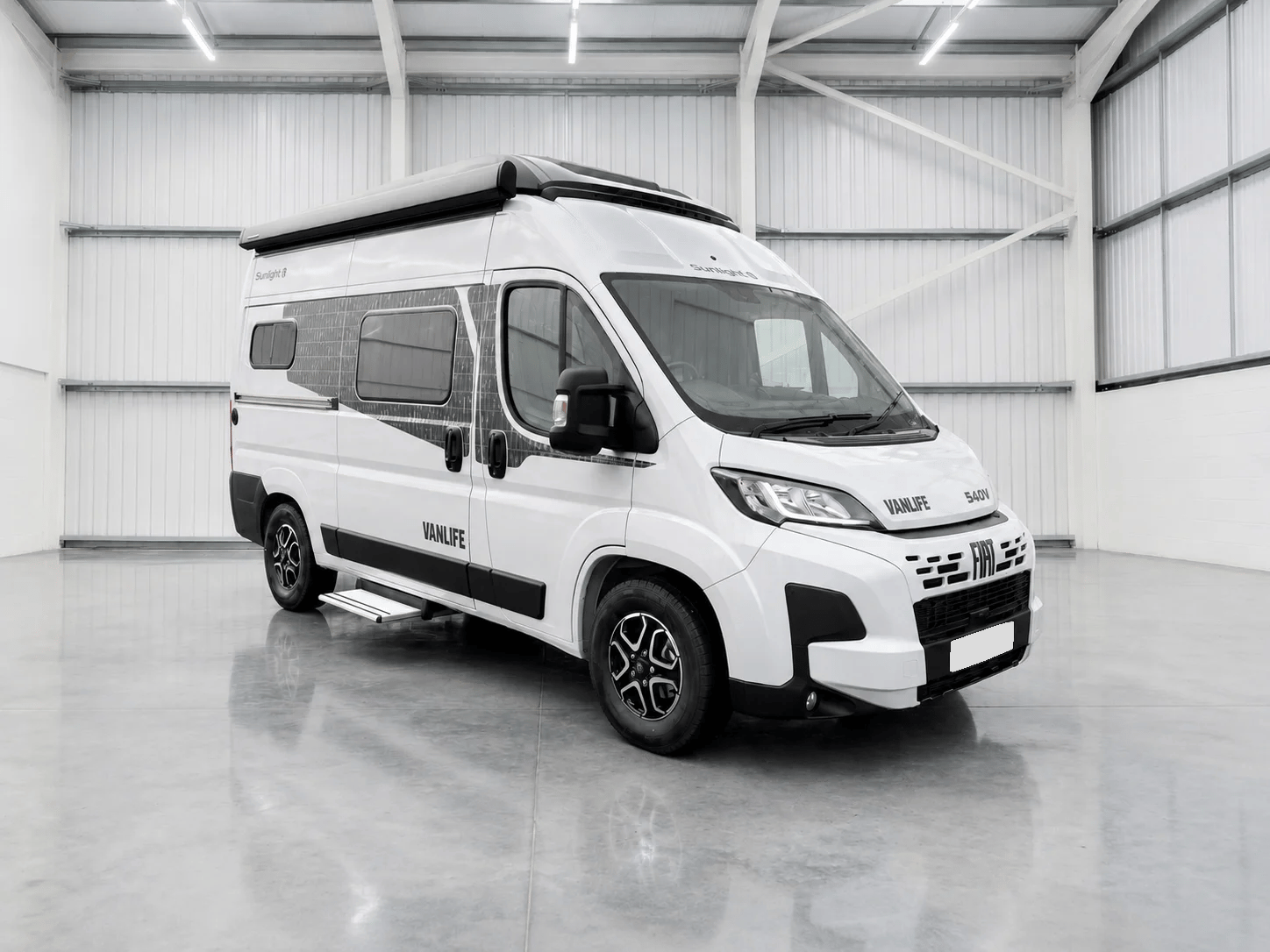
The camper you fall for is rarely the one you can afford. That gap is the whole reason Campervan.win exists. Right now we’re giving away the Sunlight Vanlife, worth around £65,000, and closing that gap is the point: capped entries so the odds stay honest, £10 a ticket, a maximum of five per person, £500 to a UK charity from every full draw, the winner picked by a public randomness beacon anyone can re-check, and one person driving away in the van itself.
Enjoyed this post?
Get more honest campervan guides like this one in your inbox.
You’re in!
Check your inbox. We’ve just sent you a welcome email.

About the author
Martha
Martha writes about interiors, ownership stories, and the everyday realities of campervan life, with a focus on comfort, cost, and how vans are used over time.
Keep Reading
Related Reading
Thoughtful articles that build on what you’ve just read.
Costs, Running & Reality
15 min read
Should you buy a campervan, or just hire one? The honest maths
Should you buy a campervan or just hire one when you need it? The honest answer hinges on a single number most people get wrong: how many weeks a year you'll really use it. Here's the real maths, the hidden costs of owning, and the decision laid out plainly.

Costs, Running & Reality
10 min read
A Campervan Gets You to the Coast. Surfers Against Sewage Is Fighting to Keep It Worth the Drive.
A campervan gets you to the coast. It can't make the water clean once you're there. Here's why £500 from this draw goes to Surfers Against Sewage.

Costs, Running & Reality
10 min read
The Real Barrier to Campervan Ownership Isn't the Price. It's the Finance.
New campervan prices have risen 15-23% since 2021, and the industry offers almost no finance incentives to help buyers. No 0% deals, no deposit contributions, no manufacturer-subsidised rates. The real barrier to ownership is not the price tag but the complete absence of accessible finance.
Costs, Running & Reality
15 min read
Amandaland’s VW WestFalia Campervan and the Unsexy Truth About Campervan Toilets
Amanda hires a VW Westfalia in Amandaland and discovers the hard way that charm is not the same as convenience. A practical guide to campervan and motorhome toilet options, with honest pros, cons, and recommendations.