
Should you buy a campervan, or just hire one? The honest maths

Written by
Arthur
Arthur writes buying guides, comparisons, and in-depth explainers to help readers choose the right campervan or motorhome with confidence.
The short answer
Whether to buy or hire a campervan hinges almost entirely on one number most people guess wildly wrong: how many nights a year you will genuinely use it, and being honest about that is the whole game. Owning is dominated by depreciation, often £3,000 to £5,000 a year, plus £1,500 to £3,000 of running costs, so a year of light use can cost £5,500 to £6,500 before you have bought a drop of fuel. Hiring the same few weeks might cost £2,500 to £3,500. For most people, who manage a couple of weeks and a scattering of weekends, hiring is simply the rational choice, and there is no shame in that; buying earns its keep only with genuinely frequent use, and used beats new if you do. Here is the honest maths, laid out so you can run your own numbers.

It's one of the most sensible questions anyone considering van life can ask, and one of the easiest to answer badly: should you buy a campervan, or just hire one whenever you fancy a trip? The romantic answer is always "buy", because owning a campervan is owning a promise, the van on the drive that says you could go anywhere, any weekend. The financial answer is usually more sobering, and it hinges almost entirely on a single number that most people guess wildly wrong: how many weeks a year you will genuinely, actually use it.
So this is the honest version, with the maths laid out plainly and the comforting illusions removed. We'll look at what owning a campervan really costs once you count the thing almost everyone forgets, work out what hiring costs over the same period, find the rough break-even point where one overtakes the other, and then, because money isn't the whole story, weigh up the lifestyle factors that might sensibly override the sums in either direction. By the end you should be able to place yourself on the right side of the line, and avoid the most expensive mistake in van life, which is buying a £60,000 vehicle to do a job a few hundred pounds of hire would have done better.
The one question that decides it
Before any maths, answer this honestly: in a typical year, how many nights will you actually spend in the van? Not how many you imagine in the first flush of enthusiasm, but how many you'll realistically manage once work, family, weather and life get in the way. This is the number everyone overestimates, often wildly. People picture themselves away most weekends and a few long trips, and then the reality, for the great majority of owners, turns out to be a couple of weeks in summer and a scattering of weekends, with the van sitting idle on the drive for forty-odd weeks of the year.
That gap between the imagined use and the real use is where most of the money is lost, because a campervan only earns its keep through use. A van used thirty weeks a year is a bargain; a van used three weeks a year is an expensive ornament. So be brutally realistic with yourself, and if you can, look at your last few years: how many actual nights away did you do, in hotels, cottages, tents, anything? That's a far better guide to your future campervan use than your daydreams are. Everything that follows depends on this number, so it's worth getting honest about it before you read another line.
What owning a campervan actually costs
The purchase price is the headline, and it's a big one: a new campervan runs from around £45,000 to well past £70,000, a coachbuilt motorhome more, and even a decent used van is a serious sum. But the purchase price is not the cost of ownership, and fixating on it is the first mistake. The real cost is what the van loses and consumes every year you own it, and that's where the unpleasant surprises live.
The biggest by far is depreciation, the value the van quietly loses as it ages, and it's the cost almost everyone forgets because you never write a cheque for it; you simply get less back when you sell than you paid. On a new coachbuilt motorhome, depreciation can run to many thousands of pounds a year, especially in the early years. Desirable vans, a VW camper above all, hold their value far better, which softens the blow but ties up more capital to begin with. Either way, depreciation is usually the single largest cost of owning a campervan, dwarfing fuel and servicing, and a van losing even £3,000 to £5,000 a year in value is costing you that whether you drive it or not.
Then come the running costs, which continue regardless of use. Insurance for a campervan runs from a few hundred pounds a year up. Road tax is an annual cost. Servicing and the MOT add up, and a campervan also wants a habitation check each year to keep the living systems and damp protection in order, which is another bill. Tyres are a sneaky one: campervan tyres often age out and need replacing long before they wear out, because a van that sits still still has tyres getting older, and that's several hundred pounds every few years. And then there's storage, because not everyone can or wants to keep a large van on the drive, and a secure storage site can cost anywhere from a couple of hundred to over a thousand pounds a year. Add it up and the running costs alone, before a single mile of fuel, commonly come to between £1,500 and £3,000 a year, on top of the depreciation. The uncomfortable truth is that a campervan costs you a substantial sum every year just to exist, used or not, and for the occasional user that fixed cost is spread across very few trips. If you do buy, buying used is the single best way to blunt the depreciation, and our guide to buying a used campervan walks through doing it well.
What hiring actually costs
Hiring flips the cost structure entirely: you pay only for the days you use, and nothing at all the rest of the year. A week's hire in peak season might run £1,000 to £1,500 once everything's added, an off-peak week rather less, and a long weekend a few hundred pounds. We break the figures down in our campervan hire guide, but the key point is that the meter only runs when you're actually on holiday. There's no depreciation, no storage, no insurance between trips, no servicing, no tyres ageing on a driveway, no capital tied up in a depreciating asset. When the trip ends, your campervan costs drop to zero until the next one.
The obvious downside is that you build no equity and have nothing at the end; the money is spent, in exchange for the holidays. And in peak season, hiring is genuinely expensive per week, which is what tempts people towards buying in the first place. But the right comparison isn't the peak-week hire cost against nothing; it's the total cost of hiring for your real annual use against the total annual cost of owning, depreciation and all. And when you line those up honestly, the result surprises a lot of people.
Doing the maths
Let's put rough numbers to it, with the caveat that everyone's situation differs and you should run your own. Say you'd realistically use a van for three weeks a year: two in summer at peak rates and one off-peak, plus you can call it the odd weekend. Hiring that might cost somewhere around £2,500 to £3,500 for the year, all in. It's not nothing, but you owe nothing else, and in the years you don't go, you pay nothing.
Now own instead. Take a £55,000 van. Even at a gentle depreciation of, say, 7% in a year, that's around £3,850 of value gone, and on a faster-depreciating coachbuilt it could be more. Add £2,000 or so of running costs, insurance, tax, servicing, habitation check, storage, tyres averaged out, and you're looking at something like £5,500 to £6,500 for the year, before you've put fuel in it, to do those same three weeks. So for the occasional user, hiring can cost roughly half what owning does, for an identical amount of time on the road, and with none of the hassle. The owner's extra spend is buying them spontaneity and the van on the drive, which has real value, but it is a premium, not a saving.
The maths swings the other way as use rises. The more weeks you do, the more the van's fixed annual cost is spread, and the more those expensive peak-season hire weeks add up on the other side. Somewhere around the four-to-six-weeks-a-year mark, for many people, the lines cross and owning starts to make financial sense, and for heavy users and full-timers, owning wins comfortably, because at that level hiring would cost a fortune and the van is genuinely earning its keep. Buying used, and holding the van for many years, also shifts the maths towards owning, by spreading the depreciation thinner. But for the typical buyer doing a handful of weeks a year, the honest figures say hire, and the romance of ownership is costing them thousands a year for the privilege of the van sitting idle.
It's not only about money
If it were purely financial, the advice would be simple: hire unless you're a heavy user. But it isn't purely financial, and the non-money factors are real and legitimate, so here's an honest weighing of them, because for some people they rightly tip the decision.
Owning buys you spontaneity, and this is the big one. The van on the drive means you can go on a whim, a free Friday and a good forecast and you're away by teatime, with no booking, no minimum hire period, no handover. You can leave it packed, with your things in it, set up exactly how you like, and that frictionlessness genuinely changes how often people go. Owning also lets you personalise the van, make it yours, know its quirks, and there's a real pleasure in that. And there's the simple emotional fact that some people just want to own the thing, to have it there, to belong to that world, and that's a valid want even if it isn't a rational saving.
Hiring buys you a different set of freedoms. You're never tied to one van, so you can try different types and sizes for different trips, the big one for the family fortnight, the little one for a solo weekend. You carry none of the maintenance, storage or depreciation worry, and none of your capital is locked up in a vehicle losing value, money that could be doing something else entirely. And you're insulated from the risk: if a van turns out to be unreliable or unsuitable, it's the hirer's problem, not yours, and you simply book a different one next time. For people who value flexibility and a clear conscience over capital, and who don't mind the booking faff, hiring isn't just cheaper, it's genuinely nicer. The right answer depends as much on which of these freedoms matters more to you as it does on the spreadsheet.
The middle paths
It isn't a binary choice, and a few clever middle options deserve a mention. The most powerful is to buy used rather than new, which slashes the depreciation cost, the heaviest part of ownership, because someone else has already taken the early hit. A well-chosen used van can lose very little further value, especially a desirable model, turning ownership into a much better-value proposition than buying new. For most buyers who do decide to own, used is simply the smarter route.
Another increasingly popular path is to buy and then rent your van out when you're not using it, through the same peer-to-peer platforms people hire from. Letting your van earn its keep for the forty weeks you're not using it can offset a meaningful chunk of the ownership costs, sometimes enough to change the maths entirely, though it comes with its own trade-offs: wear and tear, the admin, and strangers in your van. There are also shared and fractional ownership arrangements, where a few people or families co-own a van and split both the costs and the calendar, which can suit people whose use is real but not quite enough to justify sole ownership. None of these is for everyone, but they show that the choice isn't simply rent-or-buy; there's a spectrum, and the middle of it suits a lot of people better than either end.
The wrong reasons to buy
A few honest warnings, because the same mistakes recur. The most common is buying to save money when you'll only use it occasionally, which is almost always a false economy; as the maths shows, owning is the dearer option for light users, so "it'll save us on holidays" is usually the opposite of true unless you genuinely use it a lot. The second is optimism bias about use: people buy on the strength of how much they intend to use it, and intentions, as a rule, are rosier than reality. If your plan depends on using the van far more than you've ever holidayed before, be sceptical of it.
The third is buying the van as a cure for a feeling, the desire for freedom, escape, a different life, projected onto a vehicle. A campervan can absolutely deliver wonderful trips, but it can't deliver a different life by itself, and a van bought to fix a restlessness often ends up idle on the drive, a £60,000 reminder of an unscratched itch. None of this is to say don't buy; plenty of people buy and are delighted, and use it, and wouldn't be without it. It's to say buy for the right reasons, real, honest use and a clear-eyed acceptance of the cost, rather than for a saving that isn't there or a feeling a vehicle can't supply. Get those reasons straight and you'll make a good decision either way.
What about buying on finance?
Most new campervans are bought on finance rather than cash, so it's worth understanding what that does and doesn't change. A loan, hire purchase or a PCP-style deal spreads the cost into manageable monthly payments, which makes a £55,000 van feel affordable in a way the full price never does. What it doesn't do is make the van any cheaper; in fact it adds interest on top, so over the term you pay more, not less, than the cash price. Finance changes the cash flow, not the underlying cost of ownership, and all the fixed costs, depreciation, insurance, storage, servicing, are still there underneath the payment.
There's a particular trap to watch with the monthly-payment mindset. A low monthly figure can make a van you can't really justify feel reasonable, and it quietly separates you from the true cost. On a PCP-style deal you're essentially paying for the van's depreciation over the term plus interest, with a large balloon payment at the end if you want to keep it, which is the depreciation laid bare in a single number. None of this makes finance wrong; it's how most people buy, and spreading the cost can be perfectly sensible. But it makes it easier to overbuy and harder to see the real figures. If you're financing, do the honest sum on the total cost over the whole term, interest included, and compare that against what hiring would have cost over the same years. The monthly payment is designed to feel small; the lifetime cost is the figure that tells the truth.
A simple decision framework
To bring it together, run yourself through four questions. First, how many weeks a year will you really use it, judged by your actual past holidays, not your hopes? Under three or four, lean hard towards hiring; well above that, owning starts to make sense. Second, how much do you value spontaneity and having the van there, ready, on the drive? If that frictionless go-anytime freedom matters enormously to you, it's worth paying the ownership premium for; if you're happy to plan trips in advance, hiring loses little. Third, can you comfortably tie up the capital and absorb the depreciation and running costs without strain? If buying would stretch you, the fixed annual cost of an idle van is a heavy thing to carry. Fourth, do you actually want the responsibility, the maintenance, the storage, the upkeep, or would you rather someone else owned all of that?
Answer those honestly and the right side of the line usually becomes obvious. The light, flexible, capital-conscious user hires and saves a fortune. The heavy, spontaneous, hands-on user buys, ideally used, and gets their money's worth. And the person in the middle looks hard at the clever options, used, renting it out, sharing, before committing. There's no shame in either answer; the only real mistake is buying on a daydream and discovering the cost once the van's on the drive and the novelty has faded.
Common questions
Is it cheaper to rent or buy a campervan?
For most people, renting. The decision hinges on how many nights a year you will genuinely use it, a number people wildly overestimate. Owning is dominated by depreciation and running costs that apply whether you drive it or not, so for the typical owner who manages a couple of weeks and a few weekends, hiring those same trips works out far cheaper. Buying wins only with genuinely frequent use.
How many weeks a year do I need to use a campervan to justify buying one?
There is no single figure, but the break-even is higher than people expect because ownership costs so much when idle. A year of light use can cost 5,500 to 6,500 pounds before fuel (depreciation plus running costs), while hiring the same few weeks might be 2,500 to 3,500. The more weeks you genuinely use it, the sooner buying overtakes hiring; for a couple of weeks a year, hiring wins comfortably.
What is the biggest hidden cost of owning a campervan?
Depreciation, the thing almost everyone forgets. It is usually the single largest cost of owning a campervan, dwarfing fuel and servicing: a van losing even 3,000 to 5,000 pounds a year in value is costing you that whether you drive it or not. Running costs (insurance, tax, servicing, habitation check, storage, tyres) add another 1,500 to 3,000 pounds a year on top.
Can I rent my campervan out to cover the costs?
Yes, peer-to-peer platforms let owners hire their vans out when not using them, and the income can offset a meaningful share of ownership costs, sometimes enough to change the rent-versus-buy maths. The trade-offs are extra wear and tear, the admin of managing bookings, and being comfortable with strangers using your van. For some it makes ownership genuinely affordable; for others the hassle is not worth it.
Should I buy new or used if I decide to buy a campervan?
For most people, used is the smarter buy, because it sidesteps the steep early depreciation that hits new vans hardest, as someone else has already taken that loss. A well-chosen used campervan can hold its value well and makes ownership far better value. Just buy carefully, with a proper inspection and a damp check.
Does buying on finance change whether I should rent or buy?
Not really, and it can cloud the decision. Finance spreads the purchase into monthly payments but adds interest, so the van costs more over the term, not less, and the depreciation and running costs are all still there underneath the payment. A small monthly figure can make an occasional-use van feel affordable when the honest lifetime cost still points to hiring.
The reachable bit
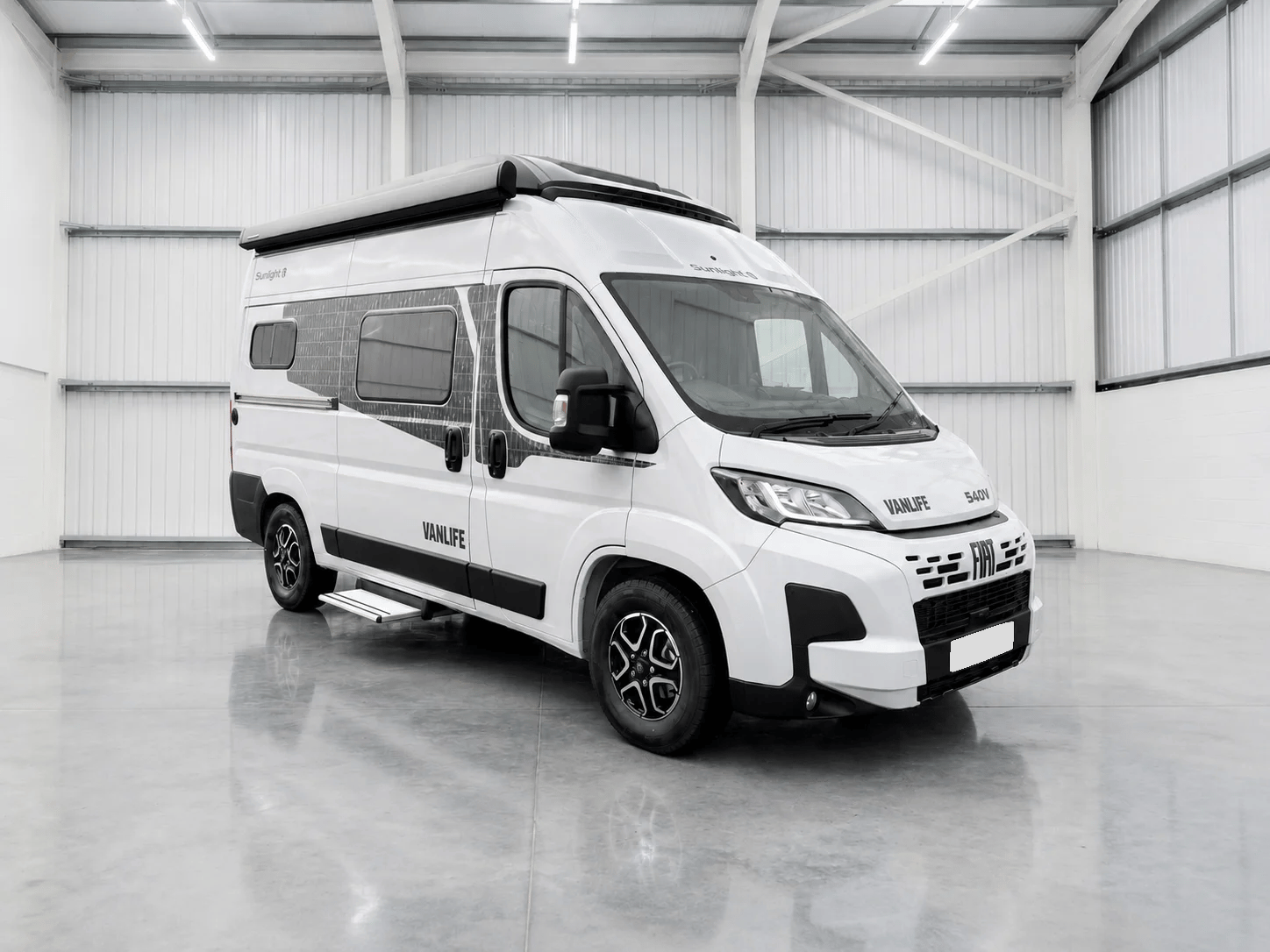
The camper you fall for is rarely the one you can afford. That gap is the whole reason Campervan.win exists. Right now we’re giving away the Sunlight Vanlife, worth around £65,000, and closing that gap is the point: capped entries so the odds stay honest, £10 a ticket, a maximum of five per person, £500 to a UK charity from every full draw, the winner picked by a public randomness beacon anyone can re-check, and one person driving away in the van itself.
Enjoyed this post?
Get more honest campervan guides like this one in your inbox.
You’re in!
Check your inbox. We’ve just sent you a welcome email.

About the author
Arthur
Arthur writes buying guides, comparisons, and in-depth explainers to help readers choose the right campervan or motorhome with confidence.
Keep Reading
Related Reading
Thoughtful articles that build on what you’ve just read.
Costs, Running & Reality
26 min read
Motorhoming on a budget: the real ways to cut costs without cutting trips
An honest, detailed guide to spending less on motorhome life without staying home, from cheaper park-ups and smarter fuel use to insurance, maintenance and clever kit choices.

Costs, Running & Reality
10 min read
A Campervan Gets You to the Coast. Surfers Against Sewage Is Fighting to Keep It Worth the Drive.
A campervan gets you to the coast. It can't make the water clean once you're there. Here's why £500 from this draw goes to Surfers Against Sewage.

Costs, Running & Reality
10 min read
The Real Barrier to Campervan Ownership Isn't the Price. It's the Finance.
New campervan prices have risen 15-23% since 2021, and the industry offers almost no finance incentives to help buyers. No 0% deals, no deposit contributions, no manufacturer-subsidised rates. The real barrier to ownership is not the price tag but the complete absence of accessible finance.
Costs, Running & Reality
15 min read
Amandaland’s VW WestFalia Campervan and the Unsexy Truth About Campervan Toilets
Amanda hires a VW Westfalia in Amandaland and discovers the hard way that charm is not the same as convenience. A practical guide to campervan and motorhome toilet options, with honest pros, cons, and recommendations.