
Paul and the rented motorhome that makes American touring look both ridiculous and irresistible

Written by
Rowan
Rowan writes editorial features, comparisons, and industry context pieces that help readers understand the campervan and motorhome landscape.
The short answer
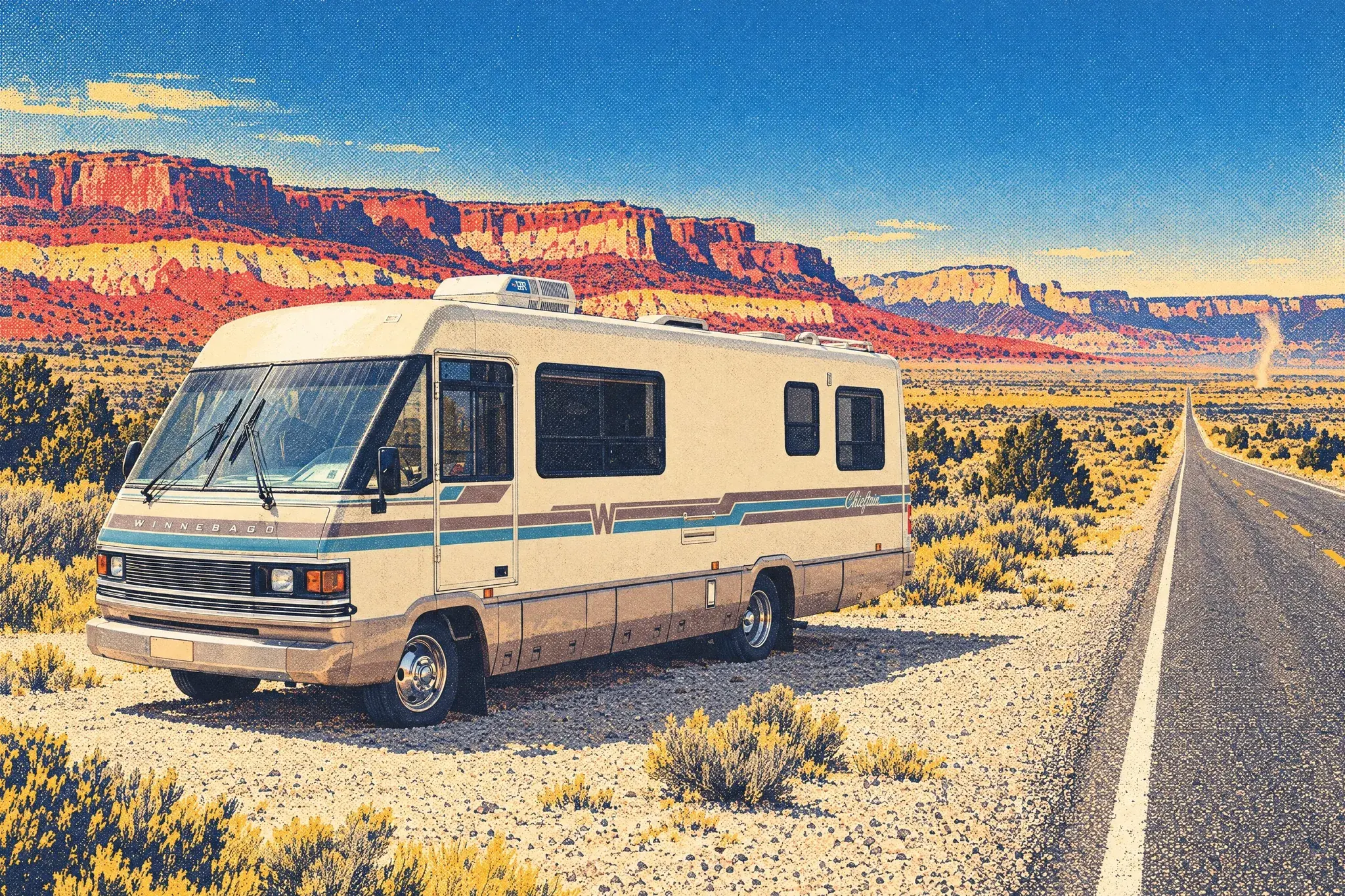
The motorhome in the 2011 comedy Paul, written by Simon Pegg and Nick Frost and directed by Greg Mottola, is a classic American RV, a Winnebago Chieftain, hired by two British friends for a UFO road trip across the American southwest. What makes it a lovely watch for any van fan is that the film uses the RV not as a punchline but as a sanctuary and a character: the vehicle becomes the routine, small comforts matter more than big ones, and the cramped inside makes the outside world feel bigger. It captures the British fantasy of the long American road beautifully, while gently warning that renting a vast RV abroad changes how you plan, where you stop and how fast you go. Here is what Paul gets so right about touring.

There is a particular British fantasy about America that never quite goes away. It is not the skyscrapers or the shopping, and it is not even the big national parks, although they help. It is the idea that you can point yourself down a long road, leave the handbrake arguments behind, and simply keep going until the light changes and the day feels new again.
Paul understands that fantasy, and then it pokes it in the ribs.
The film is a science fiction comedy road story, directed by Greg Mottola and written by Simon Pegg and Nick Frost. Two British friends fly to the States for Comic Con, hire a motorhome, and set off across the American southwest to visit UFO spots, because of course they do. And somewhere out on a desert highway, their very normal nerd pilgrimage gets hijacked by an alien with the manners of a bloke you met outside a nightclub at closing time.
The motorhome is not just transport. It is the third member of the group. It is where the film’s pace lives. It is where the jokes land. It is also, quietly, the thing that makes the whole adventure believable. If they were in a hatchback, it would feel like a silly chase. In a big rented RV, it feels like a holiday that has taken a sharp turn.
If you love campervans and motorhomes, Paul is one of the best examples of a film that uses a touring vehicle properly. It understands the absurdity of size, the comfort of having your world with you, and the strange feeling of being both free and slightly trapped at the same time.
So let’s talk about the RV itself, why it works so well on screen, what the film got right about American scale touring, and what you should know if it ever tempts you into trying something similar.
The motorhome in Paul, what it actually was
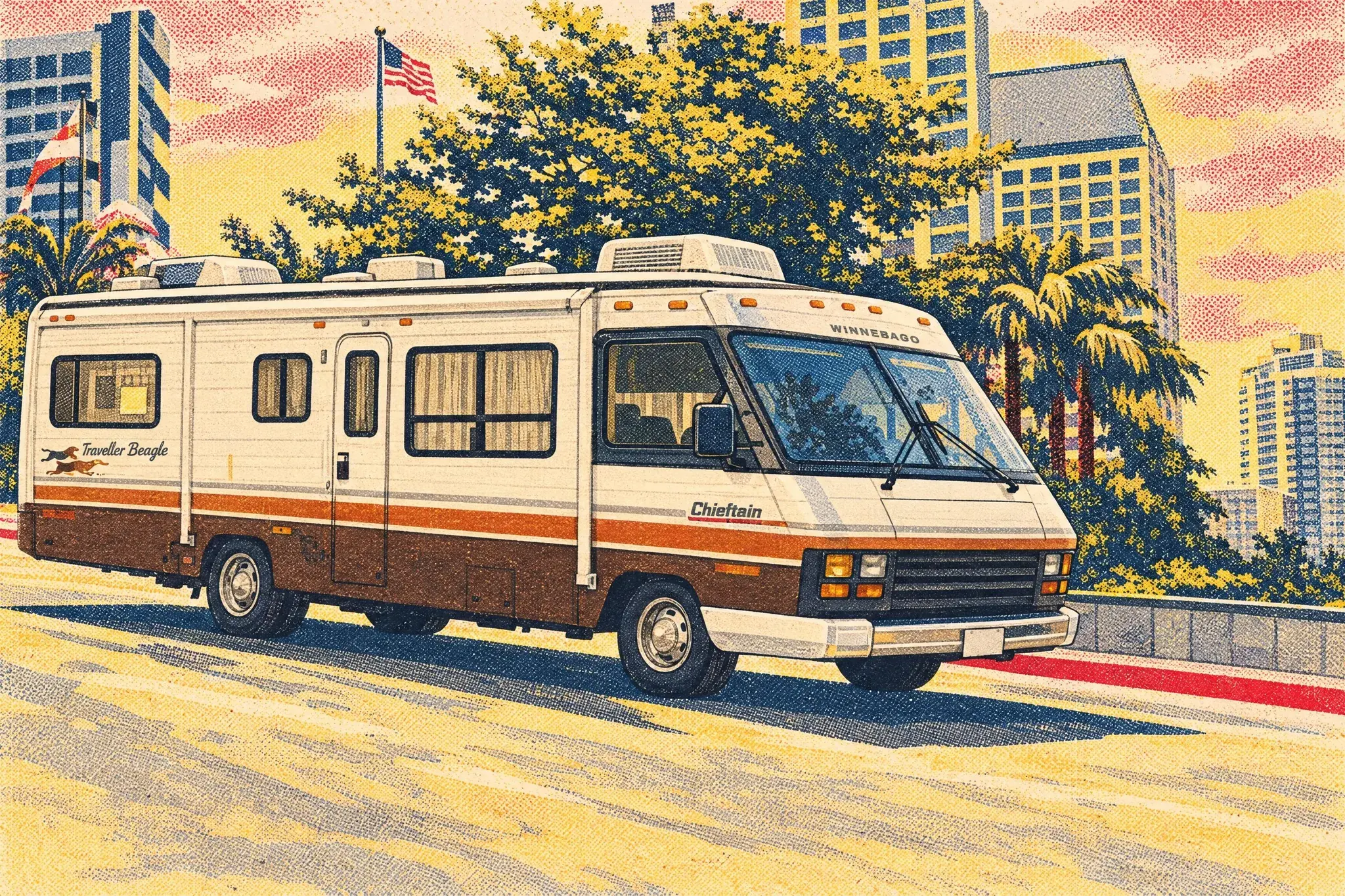
On screen, the RV looks like a classic American Class A motorhome. It has that blunt, wide stance, big windows, and the slightly dated swagger of something that was once the height of luxury and is now more charming than shiny.
The vehicle is widely identified as a Winnebago Chieftain from the late eighties, with the film’s fictional rental branding as “Traveller Beagle”.
There is also a fun bit of production trivia that makes it even more of a film prop than it already feels. One RV industry write up says the film company created a hybrid RV, using a Winnebago for exterior shots and a Fleetwood Bounder for interior scenes.
That makes sense when you think about filming. Interiors need space for cameras, lighting, and crew. Sometimes the smartest way to shoot is to use a different vehicle or a set for the inside, even if the outside remains consistent. The result is that the RV feels like one coherent character, even if its insides and outsides were not always the same physical object.
For viewers, the exact model is almost secondary. What matters is what the RV represents.
It is comically big by UK standards. It looks like a holiday home that has accidentally wandered onto a public road. And it carries the story with a kind of lumbering charm. You do not watch it and think “agile”. You think “committed”.
Why the RV is part of the joke, but never the butt of it
Paul has a lot of jokes, some clever and some gloriously stupid. But the RV humour is unusually affectionate.
The whole premise is quietly funny to a UK audience. Two British friends fly to America, rent a huge motorhome, and set off into a landscape that does not really exist in the UK. That gap between British expectation and American scale is where the comedy starts.
But the film never treats touring itself as pathetic. It treats it as a form of sincere enthusiasm. These are not lads doing a stag weekend. They are geeks doing the trip they have dreamed about. They are doing it properly, even if their version of properly is very niche.
And that is why the RV becomes desirable rather than embarrassing. It is not a punchline that collapses the fantasy. It is the fantasy, just shown in full size so you can see its seams.
The RV is the place where they sleep, bicker, panic, laugh, and pull themselves together. It is the moving safe room. When they are inside, it feels like they have a plan, even when they do not.
That is how touring vehicles work in real life too. When you are out of your normal routines, the vehicle becomes your anchor. You start measuring the day in small domestic moments, kettle, shoes, charging cables, where you left the biscuits. The outside world can be huge and unfamiliar, but the inside stays yours.
Paul gets that.
The road trip vibe, why this film makes touring feel so tempting
The plot sends the characters through parts of the US that are basically a postcard version of the UFO road trip dream. The film is associated with Nevada and New Mexico locations, with several location lists putting much of the production in those areas.
Even if you have never toured America, you can feel the difference in scale.
Roads are wider. Pull ins are bigger. Horizons are open. Fuel stations look like small supermarkets. The RV fits in the landscape in a way it would not in the UK.
That is part of why British people find American RV touring so alluring. In the UK, a big motorhome can feel like a compromise between comfort and access. You get space, but you lose some freedom of movement. In parts of the US, the same vehicle can feel perfectly normal. It is still huge, but the infrastructure shrugs it off.
Paul uses that contrast to keep the story moving. You believe they can disappear for a while. You believe they can keep going. You believe that the road might give them answers, even if the answers are an alien with questionable manners.
Pegg and Frost did the proper nerd thing, they researched it
One of the best bits of trivia around Paul is that Simon Pegg and Nick Frost did their own RV research trip while working on the film. IMDb trivia notes they drove an RV along the route their characters take in the script, and that they stopped at the Little A Le Inn, where they encountered a chatty waitress and some belligerent locals.
That detail matters because it shows in the tone.
The film has affection for the rituals of touring. The awkwardness of being on the road. The way small social encounters in strange places can become huge memories. The way you can feel both anonymous and very visible at the same time.
When writers have actually done the trip, the vehicle stops being a prop and starts being a setting. Paul’s RV is a setting in exactly that way.
What it might actually be like to drive that RV, from a UK perspective
The film does not spend ages on driving dynamics, because it is not that kind of film, but you can infer a lot just from the way the RV moves.
A big American Class A motorhome is wide, tall, and heavy. It is designed for long distances and steady cruising, not for darting around.
If you are used to UK campervans, even large ones, the first thing you would notice is width. Many American RVs feel like they take up the whole lane. Even if the lanes are wider, your brain still needs time to relax.
The second thing is the driving position. You sit out front like a bus driver, looking down at the road. That can feel brilliant, like you are captain of your own ship, but it can also make you very aware of your size.
The third thing is momentum. Everything happens slightly later than you expect. Braking takes planning. Cornering asks for patience. You do not “nip” anywhere. You choose your line and commit to it.
This is where the film’s comedy and desirability overlap. The RV is not cool because it is sporty. It is cool because it turns travel into a slow moving home life. You are not driving to get somewhere. You are driving while being somewhere.
A UK touring brain often finds that deeply relaxing once you stop trying to drive it like a car.
The RV as a sanctuary, the bit the film nails
If you have toured in campervans and motorhomes, you know the feeling. You step inside after a long day, and the world shrinks to a manageable size.
Paul uses that feeling well.
The characters are in unfamiliar places, dealing with escalating nonsense, but the RV gives them a domestic centre. Even when things are chaotic, the RV implies continuity. You can always make a brew, even if an alien is in the passenger seat.
That sanctuary effect is one of the reasons campervans and motorhomes are such good storytelling tools. They create a moving boundary between the safe and the unsafe. That boundary is not absolute, and that is where tension comes from, but it is real enough that you feel it.
In Paul, the RV is not just safety from the outside world. It is safety from the story itself. It is where the film can pause, regroup, and let characters talk.
The RV park scenes, a nod to the strange sociology of touring
The film includes a stop at an RV park, and it uses it as both a plot device and a little observation of touring culture.
This is another thing that lands differently for UK viewers.
In the UK, campsites often feel like a mix of families, retirees, weekenders, dog walkers, and people who simply want a hot shower and a quiet night. There can be a strong sense of rules, but also a sense of shared understanding.
In parts of the US, RV parks can feel like small communities. Some are holiday focused, some are long stay, some are very family oriented, some are very not. They can have a social atmosphere that is unfamiliar to British tourists, where your neighbours are close enough to hear you breathe and friendly enough to chat about it.
Paul uses that slightly odd sense of community for humour and plot, but it also shows something real. When you travel in a touring vehicle, you are never fully private. You are always living in public, just with curtains.
That is true in a Cornish campsite and it is true in New Mexico.
Why the RV is genuinely desirable, even when it is absurd
There is a reason people finish Paul and start looking up American RV rental prices, even if they know it is a terrible idea for their bank balance.
The RV offers three temptations that are hard to ignore.
The temptation of carrying comfort
The RV means you do not have to pack and unpack constantly. You do not have to find a hotel. You do not have to eat every meal out. You have your own bed, your own fridge, your own tea making setup.
That turns travel into living, which is exactly what touring is.
The temptation of the long road
A big RV makes long distances feel normal. It is built to sit on wide roads for hours. It is the physical embodiment of the idea that you can keep going until you find somewhere that feels right.
In the UK, we often tour in smaller bites because distances are shorter and roads can be tighter. In the US, the scale encourages a different rhythm. The RV makes that rhythm possible.
The temptation of the story you get to tell
Let’s be honest, part of touring is the story.
The big American RV is a story machine. It attracts conversations at fuel stops. It makes you feel like you are doing something properly adventurous, even if your biggest challenge that day is finding the right lane at a junction.
Paul leans into that. It knows that a rented RV is both a vehicle and a statement.
A practical detour, what Paul suggests about renting an RV in America
The film is not a guide, but it does highlight a few truths that are worth keeping in mind if the idea ever becomes real.
Size changes your planning
In the UK, you can sometimes wing it. In an American RV, you plan more.
You think about where you can park, where you can turn around, where you can fuel up, and whether a scenic detour is actually doable.
This is not to scare anyone. It is part of the fun. But it is different.
You choose your campsites differently
With a large RV, you start caring about hook ups, level pitches, and drive through spots. You start reading campsite reviews with a different eye.
The vehicle changes your needs.
You slow down, and that is the point
If you rent an American RV and then try to smash out huge days like you are in a hire car, you will miss the joy.
The joy is in the unhurried domestic moments. Eating something simple inside while the landscape changes. Sitting outside in a chair that came out of a cupboard. Feeling like you have brought your own little bubble of normal life into an unfamiliar place.
Paul’s characters are not exactly calm, but the RV vibe is still there underneath the chaos.
Who built the magic, and why Paul feels like a proper production
The film itself is a British science fiction comedy road film, directed by Greg Mottola. It is also a film that leans heavily on visual effects, because Paul is a digital character integrated into real scenes.
Wikipedia notes that Paul was created with CGI and that the animation was handled by Double Negative, with additional visual effects work including invisibility and other sequences.
Why mention this in a campervan and motorhome blog.
Because it affects how the RV scenes land.
When a film uses a touring vehicle as a key setting, the vehicle has to feel like a real place where actors can relax, argue, and move around naturally. If the production is stiff, the RV feels like a set. If the production is confident, the RV feels like a home on wheels.
Paul feels confident. The RV scenes have flow. People lean, sit, rummage, move, and the vehicle feels lived in.
Even the idea of the RV being a hybrid of different vehicles for exterior and interior shots fits that. It is a classic film making solution, and it is part of how productions make small spaces feel usable on screen.
The UK appeal, why this film lands so well here
Paul is not only a UK film, but it has very British touring instincts.
There is a slightly awkward sincerity to the main characters. They are excited, prepared, and a bit naive. They have a plan, and then the plan collapses. That is a very British holiday rhythm.
There is also a subtle observation about how British people behave abroad. We like rules. We like routines. We like knowing where the kettle is.
A rented RV in America is a perfect test of that personality. It gives you comfort, but it also throws you into a vastness that does not care about your itinerary.
Paul uses that tension as comedy, but it also makes the touring vehicle feel relatable. You do not have to be American to want that kind of trip. You just have to be the kind of person who enjoys the idea of a long road and a little home that comes with you.
What Paul gets right about touring, even when it is being silly
For all its jokes and plot twists, Paul is oddly accurate about a few touring truths.
The vehicle becomes your routine
Even on a wild trip, the vehicle creates a rhythm. You eat, sleep, and move within its limits. That rhythm grounds you.
Small comforts matter more than big ones
You do not need luxury. You need things to work. You need a comfortable bed. You need somewhere to sit. You need warmth, shade, and a place to put your shoes.
Big RVs often look like luxury, but the real luxury is simple function.
The outside world feels bigger when your inside world is small
The RV is a small, manageable world. The desert outside is huge. The contrast makes both feel more intense.
That is why touring is good for the brain. It shrinks your immediate worries and expands your sense of place.
You remember people and places differently on the road
A diner. A campsite. A fuel stop. An odd conversation. These become highlights. Not because they are objectively special, but because they happen when you are open to being surprised.
Paul’s research trip story, where Pegg and Frost stopped at the Little A Le Inn and met locals, is exactly that kind of memory in the making.
The gentle warning Paul also contains
The film makes RV touring look fun, but it also hints at why it can be challenging.
Big vehicles create dependency. You cannot just vanish into any little lane. You cannot always park anywhere. You carry your home with you, which means your problems come with you too. If something breaks, you do not just lose transport, you lose your bed and your kitchen.
That is true in the US and it is true in the UK.
It is not a reason to avoid touring. It is a reason to respect the basics. Maintenance, planning, and the ability to laugh when things go slightly wrong.
Paul’s characters do a lot of laughing, even when they probably should not.
What I take from it, as someone who thinks about touring vehicles too much
The reason Paul’s motorhome works is because it is both a joke and a dream.
It is a joke because it is huge, clumsy, and faintly ridiculous for two British blokes on a nerd pilgrimage.
It is a dream because it represents freedom with comfort. A bed that comes with you. A door you can close. A place to make tea while the world stays strange outside.
That is what campervans and motorhomes do at their best. They turn travel into living. They let you go somewhere new without losing yourself completely.
Paul just adds an alien and a few explosions.
If you have ever looked at an American RV and thought, quietly, I would love to try that, Paul is the film that will make you feel seen. It will also make you laugh at yourself for wanting it, which is probably healthy.
And if you ever do rent one, make sure you have a decent map, a relaxed attitude, and enough snacks to survive your first attempt at a supermarket sized fuel station.
Common questions
What motorhome is in the film Paul?
It is a classic American RV, a Winnebago Chieftain, that the two British lead characters hire for their road trip across the American southwest. The film, a 2011 science-fiction comedy written by Simon Pegg and Nick Frost and directed by Greg Mottola, follows them visiting UFO hotspots after Comic Con, with the RV at the centre of the story.
What is the film Paul about?
It is a science-fiction comedy road story in which two British friends fly to the States for Comic Con, hire a motorhome, and set off across the American southwest to visit UFO spots, only for their nerd pilgrimage to be hijacked by a foul-mouthed alien called Paul. It is written by and stars Simon Pegg and Nick Frost, and directed by Greg Mottola.
Why is the RV so important in Paul?
Because it is treated as a sanctuary and almost a character rather than just the butt of the joke. The film nails how touring really feels: the vehicle becomes your routine, small comforts matter more than big ones, and because your inside world is small, the outside world feels bigger. That is what makes the RV genuinely desirable even when the situation is absurd.
What does Paul get right about motorhome touring?
More than you would expect from a comedy. It captures how the vehicle becomes your daily rhythm, how small comforts outweigh grand features, how a small interior makes the landscape feel huge, and how you remember people and places differently on the road. It also slips in a gentle warning that a big RV is a commitment, not just a holiday prop.
What should I know before renting an RV in America?
That its size changes everything: you plan differently, choose campsites differently, and slow down, which the film suggests is the point. Paul's light-hearted advice still holds, bring a decent map, a relaxed attitude, and enough snacks to survive your first attempt at a supermarket-sized American fuel station. Renting a large RV abroad is a different skill from driving a UK campervan.
The reachable bit
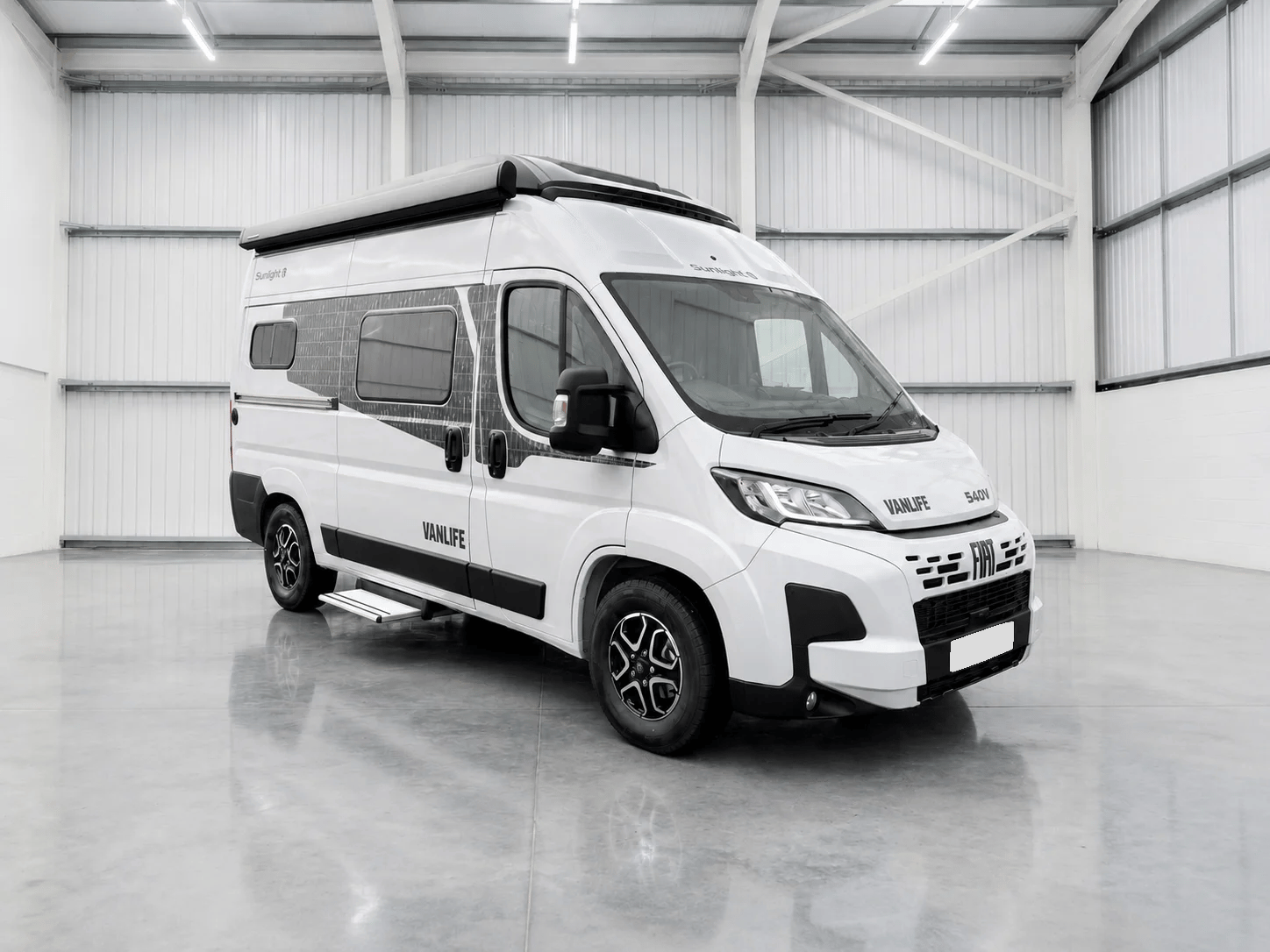
The camper you fall for is rarely the one you can afford. That gap is the whole reason Campervan.win exists. Right now we’re giving away the Sunlight Vanlife, worth around £65,000, and closing that gap is the point: capped entries so the odds stay honest, £10 a ticket, a maximum of five per person, £500 to a UK charity from every full draw, the winner picked by a public randomness beacon anyone can re-check, and one person driving away in the van itself.
Enjoyed this post?
Get more honest campervan guides like this one in your inbox.
You’re in!
Check your inbox. We’ve just sent you a welcome email.

About the author
Rowan
Rowan writes editorial features, comparisons, and industry context pieces that help readers understand the campervan and motorhome landscape.
Keep Reading
Related Reading
Thoughtful articles that build on what you’ve just read.
TV & Movie Campervans
20 min read
Alex Honnold's Campervans: A Decade in a Van, Three Rigs, and a Foundation That Started on the Road
Alex Honnold lived in a van for over a decade, long before van life was a hashtag. From a bare bones 2002 Ford Econoline to a custom solar powered Dodge ProMaster, and now a family ready rig built by Forged Vans, his campervans tell a story about simplicity, purpose, and what happens when you use a vehicle not as a home but as a way to get closer to the thing you love.
TV & Movie Campervans
10 min read
The Surfer Boy Pizza campervan in Stranger Things: the VW that stole season 4
Stranger Things season 4 gave us one of the most memorable campervan shaped vehicles on TV: the Surfer Boy Pizza van. This post covers what the van actually is in real life, why a VW T3 was the perfect choice for the show, what it might be like to drive, and how popular it became through model kits, Funko figures, a remote control version and even a Transformers crossover.
Campervan Reviews
12 min read
Rolling Homes Darwin review: the long Crafter camper with a proper washroom
The Darwin is Rolling Homes' step up from the Transporter: a long-wheelbase VW Crafter two-berth with an enclosed washroom. We set out what is published, what the price does, and who it suits.
Campervan Buying Guides
13 min read
Rolling Homes of Shrewsbury: VW-qualified campers from the Columbus to the Crafter Darwin
A plain-English profile of Rolling Homes, the Shrewsbury family converter with Volkswagen's Motorhome Qualified Converter status: what it builds on, what each model in the range is for, the 13 October 2026 prices, and what to ask before you put a deposit down.