
Swift Trekker X 2026 review: the UK built pop top that gets the basics right and the details smarter

Written by
Leo
Leo covers campervan technology, maintenance, kit, and ownership advice, with a clear, practical focus on how things work in real life.
The short answer
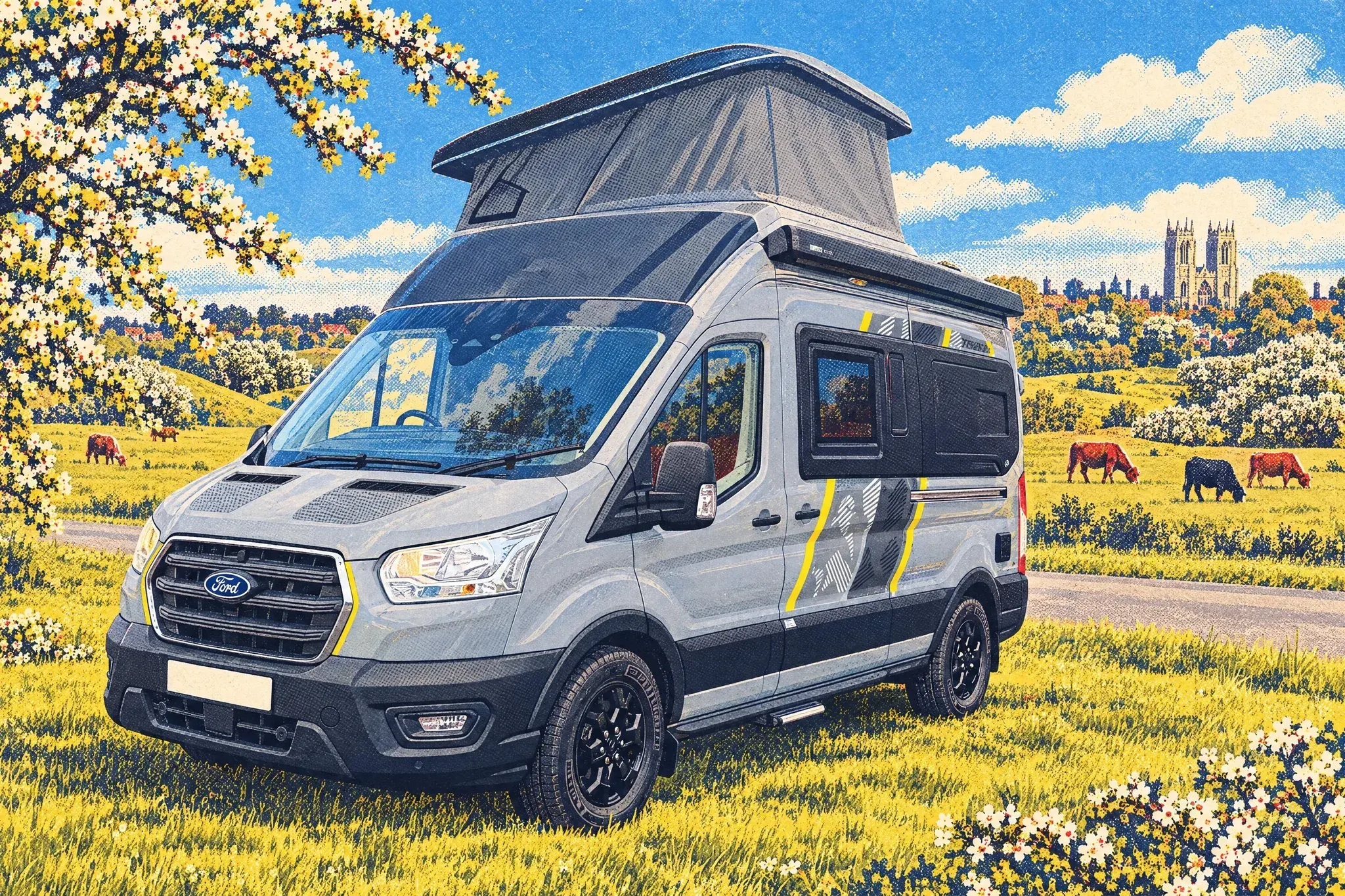
The Swift Trekker X is a practical, UK-built pop-top campervan refreshed for 2026, and it is the kind that quietly gets the important things right: a four-berth with four travel seats, a proper washroom and a sensible layout, on a Ford Transit 2.0 165bhp at 5.98 metres. The 2026 changes are useful upgrades rather than a rethink, notably a new 200W solar panel and regulator, brighter lighting and black fittings. Dealer listings show £76,390 manual, £78,285 automatic, and it is one of three Trekker sizes (5.53, 5.98 and 5.98m XL). It is not cheap, but it is strong value in the pop-top four-berth class, and being a genuine four-traveller that still fits Britain is a real appeal. Here is the full review, and why it earns a shortlist spot.

There is a particular kind of campervan moment that never really gets old. You pull in somewhere unglamorous but quietly perfect, maybe a lay by above the sea or a small campsite where the morning starts with gulls and the slow shuffle of dog walkers. The kettle goes on. You sit down, still wearing your coat because it is Britain and that is what we do, and you think, this is enough.
The Swift Trekker X for 2026 is built for exactly that sort of touring. Not the glossy brochure fantasy where everything is spotless and nobody owns a muddy pair of boots. This is a practical British campervan with a pop top roof, four berths, four travel seats, a proper washroom, and a layout that makes sense when you actually use it.
It is also expensive. No getting around that. Most people cannot casually drop the price of a Trekker X on something that is, in the end, a leisure vehicle. But value and affordability are not the same thing. Something can be out of reach for most households and still represent excellent value in its category. That is one of the reasons we run Campervan.win. If these vehicles are going to keep drifting upwards, we need more ways to put campervans and motorhomes within reach of ordinary people, not just the lucky few.
So, this is a detailed look at the Swift Trekker X for 2026. What is new. What is genuinely well thought through. Where it still feels like a compromise. What it is like to live with. And what I would tick on the options list if I was spending my own money.
The quick identity check: what the Trekker X actually is
The Trekker range is Swift’s Ford Transit based pop top campervan line up. For 2026 there are three models: the 5.53 metre Trekker S, the 5.98 metre Trekker X, and the 5.98 metre Trekker XL. Swift have kept the core idea the same for 2026, with kit improvements and refreshed graphics rather than a full rethink.
The Trekker X sits in the middle of that range in length but it feels like the one built around real life family touring. It offers four berths and four travel seats, with two sleeping spaces in the pop top roof and the other bed made up at the rear.
It is under six metres long. That matters in the UK. It keeps ferry costs sensible, opens up more parking options, and makes it less stressful on narrow lanes, especially when you are tired and just want to find somewhere to stop without turning your evening into a three point turn marathon.
What is new for 2026
Swift have not reinvented the Trekker X for 2026, but the changes are the sort that you actually notice when you use the van.
A few of the key updates reported for 2026 include:
A new 200W solar panel fitted to the Trekker models, with the Trekker XL getting 110W.
A rear door soft flyscreen that can be removed when you do not need it.
New black fittings in the washroom and brighter under locker spotlights.
An upgraded Whale heating system.
On top of that, Swift’s own Trekker page highlights the new 200W solar panel and regulator as a 2026 upgrade.
None of this sounds glamorous. That is the point. Better lighting and better heating are the difference between feeling cosy and feeling like you are camping indoors. A flyscreen at the back door is the difference between enjoying a still summer evening and sharing it with every insect within a mile.
The base vehicle: Ford Transit, 165 bhp, and why it matters
The Trekker X is built on a Ford Transit with a 2.0 litre engine in 165 bhp form as standard.
The big talking point is the gearbox. The standard set up is a manual transmission, but the optional automatic is the one most people should seriously consider. Reviewers have noted the optional eight speed automatic and the newer style rotary shift control on updated models.
In day to day touring, an automatic gearbox is less about laziness and more about reducing effort. Campervans are heavier than cars, they are often loaded awkwardly, and they spend a lot of time doing the least fun kinds of driving: stop start traffic, roundabouts, steep campsite entrances, tight manoeuvres, and the slow crawl through seaside towns where everyone has parked as if the rules are a gentle suggestion.
An automatic takes away a layer of strain. It also tends to suit the way people actually use a campervan, especially if you share driving. If one person is not confident with a manual, the automatic can turn the whole vehicle into a shared asset rather than something only one person feels comfortable driving.
The automatic option cost in real terms
Swift’s configurator pricing can move about, but dealer listings for 2026 stock show a clear step between manual and automatic. For example, listings show the Trekker X at £76,390 with a manual gearbox and £78,285 with an automatic.
That difference aligns with the sort of upgrade cost you quoted, and it is one of the few options where the daily benefit often outweighs the initial spend.
The wet belt question: is the Ford 2.0 litre system really an issue
If you have spent any time researching Ford Transits recently, you will have come across people talking about the wet belt.
In simple terms, many 2.0 litre EcoBlue engines use a timing belt that runs in oil. The theory is reduced friction and noise. The reality is that oil condition and service discipline matter a lot. If oil is diluted or neglected, belt wear can accelerate, and debris can cause further problems.
What matters for a buyer is not pub chat. It is what Ford are advising now, and what you need to do to keep risk down.
There are reputable references to Ford Motor Company UK revising the recommended timing belt replacement interval on 2.0 litre EcoBlue Transits to 6 years or 100,000 miles, with this change referenced in technical guidance.
The practical takeaway is straightforward:
Service the base vehicle on time, with the correct oil specification, every time.
Avoid long oil intervals just because you do not do many miles. Short journeys can be harder on oil than big motorway runs.
Treat the timing belt interval as a serious maintenance item, not something to worry about in a decade.
When you buy used, ask for proof of correct servicing. Not a vague stamp, actual detail.
Is the wet belt system an automatic deal breaker. Not necessarily. Plenty of people run EcoBlue Transits without drama. But it is not the sort of engine where you can be casual about maintenance and hope for the best. If you are the sort of owner who stays on top of servicing, it is manageable. If you know you are not, you may want to factor that into your decision.
Dimensions and the real world feel of the footprint
For a campervan, the Trekker X manages to stay compact enough to feel usable in Britain while still offering proper facilities.
The published dimensions for the Trekker X are around 5.98 metres long, 2.11 metres wide, and 2.80 metres high.
That width matters on narrow lanes and in supermarket car parks. It is also a reminder that height is part of the touring equation. Some coastal car parks and height barriers will be off limits. You will learn to spot the signs early and you will become oddly skilled at reversing out of places you should not have entered in the first place.
Exterior vibe: why the Trekker works visually
Swift have leaned into a tougher look with the Trekker range. It is not pretending to be an expedition vehicle, but it does have a purposeful stance and a modern palette.
The risk with any rugged styling is that it can age quickly. The Trekker mostly avoids that by keeping the lines clean. It still looks like a campervan, not an attention seeking accessory.
What I like is that it does not rely on one gimmick. The overall shape is still a Transit. The Swift layer on top is mostly about trim, graphics, wheels, and the pop top roof line. That means it should still look sensible in five years, even if tastes move on.
Inside the Trekker X: layout, flow, and where you actually spend time
A good campervan interior is not about looking expensive. It is about removing friction.
Where do you put wet coats.
Where do shoes live.
Can you make a brew without climbing over someone.
Can one person nap while another makes lunch.
Do you have a place to sit when the weather turns.
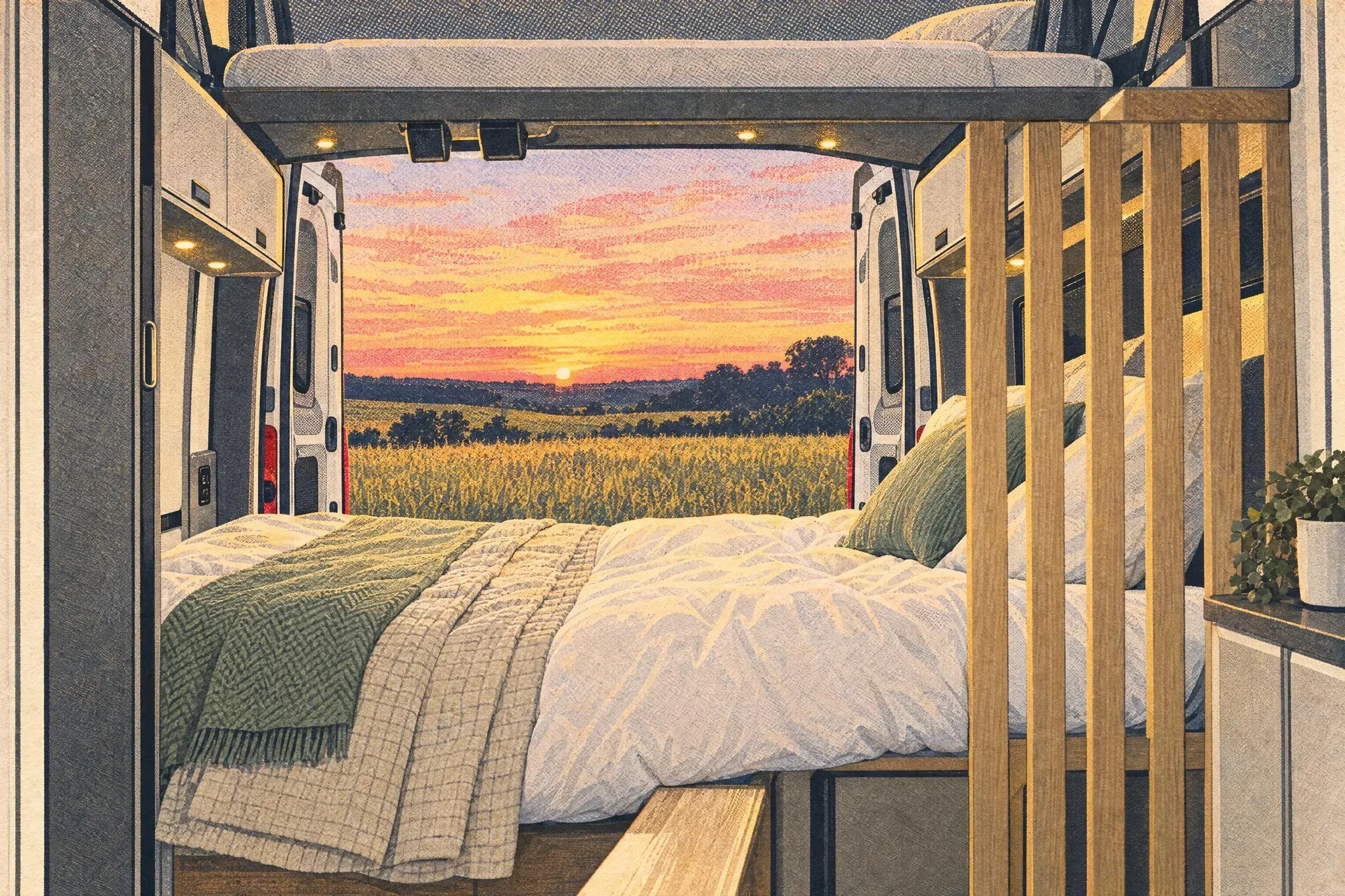
The Trekker X is set up around a central living area and washroom, with a rear sleeping and storage space that can feel like either a garage or a bedroom depending on how you set it up.
The pop top roof adds two berths upstairs. Swift’s own owner handbook covers the elevating roof and roof tent as part of the vehicle equipment.
Seating and day living
Four travel seats is an important point. Many couples buy four berth campervans and then realise they cannot legally travel with four people. The Trekker X is designed to actually do both.
In day mode, you get a living space that works for breakfast, laptops, rainy day reading, and the quiet cup of tea while everyone else is still asleep. Those are the moments you buy a campervan for.
Kitchen: enough to cook, not just to pose
The kitchen in a six metre campervan is always a compromise. Space is finite and you will never have the worktop you want.
What matters is whether it is annoying.
Can you reach the fridge without doing a dance.
Do drawers open properly.
Is there somewhere for a kettle and a chopping board.
Can you wash up without flooding the floor.
Even small things like lighting and the position of sockets make a big difference. Swift’s 2026 updates, such as brighter under locker spotlights, land right in this everyday reality.
Washroom: the feature you appreciate most in bad weather
A proper washroom changes how you tour. You stop planning your day around public toilets. You do not mind arriving late to a campsite. You are more comfortable using quiet stopovers because you are not reliant on facilities.
The Trekker X washroom also benefits from Swift’s 2026 interior tweaks such as black fittings.
And there is a genuinely useful detail in the waste system. Swift’s handbook describes an electrically operated drain valve for the waste water tank, controlled by a switch inside the vehicle.
That is the sort of convenience that does not sell a van on its own but makes ownership feel calmer. Especially on a wet winter evening when you are emptying tanks in the dark and your hands are already cold.
Water and services: the numbers that shape how independent you feel
Fresh water and waste water capacity decide how long you can comfortably stay put.
Swift’s handbook lists a fresh water tank capacity of 65 litres and a waste water holding tank capacity of 55 litres, along with an 8 litre water heater.
Those are sensible numbers for a campervan of this size. You are not going to wild camp for a week without moving, but you can do a comfortable weekend away without constantly hunting for services.
The handbook also describes the waste water tank as being mounted under the floor, with the tank drain valve controlled electrically, and with smooth bore pipes to assist flow.
This is worth paying attention to because waste systems can be the source of disproportionate misery. Slow draining, awkward valves, and splashy emptying points are the things you remember long after you have forgotten what the cabinet finish looked like.
The pop top roof: why it changes the whole feel of the Trekker X
Swift build the Trekker concept around the pop up roof, and for good reason. It adds two berths without adding length. It makes the van feel more open. It gives you the option of keeping the downstairs space in day mode while someone sleeps upstairs.
The Practical Motorhome range overview notes that the Trekker models place two berths in the pop top roof, with the other bed made up in the rear.
In real touring life, it is also the difference between a couple owning a campervan and a family owning a campervan.
If you have ever tried to do a week away with children in a two berth van, you will know that the issue is not sleeping, it is the lack of separation. Kids go to bed early. Adults want a bit of quiet. A pop top roof gives everyone a little bit of space.
Driving and ride: what it is like on the road
I do not like pretending every campervan drives like a car. They do not. You sit higher, you feel the wind more, and you are always aware of weight.
That said, modern base vehicles are much better than people expect, and the Transit is a decent place to spend hours.
A road test of the Trekker X describes it as feeling solid and easy enough to drive in a range of conditions. It also highlights the availability of the optional automatic and the updated shift control on newer models.
Where the Trekker X helps itself is by staying under six metres and by not trying to be too clever with the fundamentals. It is a straightforward panel van conversion with a pop top, not a coachbuilt with a big overhang. That usually means less wallow and a more predictable feel on country roads.
Options that matter: automatic gearbox and Trail Pack
Swift have been fairly generous with standard kit, especially for 2026 with the improved solar panel and other upgrades.
But two options are likely to come up again and again when people configure a Trekker X.
Automatic gearbox upgrade
If you do one option, I would seriously consider this one first.
As shown in 2026 listings, the step from manual to automatic takes the Trekker X from £76,390 to £78,285.
That is not small money. But it is also not outrageous in the context of the overall purchase, and the benefit is felt every single time you drive.
The other value point is resale. Automatic campervans tend to be easier to sell because more buyers want them and more households can share driving.
Trail Pack plus
You also mentioned the Trail Pack plus option at around £895.
Trail packs in this category usually bundle practical exterior and touring upgrades. The key question is not whether the pack sounds adventurous. The key question is whether it saves you money compared to adding the same features separately, and whether the features suit how you tour.
If the pack is mostly styling, I would be cautious. If it adds genuinely useful kit such as protection, lighting, or practical touring additions you would otherwise pay for later, it can be worthwhile.
Because pack contents can change by model year and dealer, I would treat this as a check list exercise:
Ask for the exact contents in writing.
Work out what you would actually use.
Price the same items aftermarket, including fitting.
Check whether any items affect warranty or insurance.
If the pack includes tyres or wheels, remember that tyres are consumables. Paying extra for a specific tyre only makes sense if you want to keep buying that style later.
Does it have the little convenience touches
This is where the Trekker X quietly scores points.
The electric waste valve control mentioned earlier is a good example. It is not glamorous but it is a real quality of life feature.
The other 2026 changes like the rear door flyscreen and improved lighting also sit in this category. They do not change the layout, they change how pleasant the layout is to live with.
UK design and manufacture: why it is worth being proud of
Swift are a British manufacturer with a long history, and the fact that the Trekker range is part of that matters. In a market where so many vehicles are imported, it is good to see UK design and production still doing serious work.
Swift talk about their heritage and UK manufacturing base, including their long standing presence in East Yorkshire.
For buyers, this is not just flag waving. It can mean:
Better alignment with UK touring habits and campsite realities
A dealer network and support structure that is built around British customers
Spare parts and warranty processes that are local rather than distant
It does not guarantee perfection, but it does make ownership feel less like you are navigating a foreign system.
Warranty: what you actually get and what to read carefully
Warranty details are where you should slow down and read the paperwork.
Swift’s owner handbook for campervans describes a three year SuperSure warranty and a three year body shell warranty for panel van conversions.
It also includes an important detail about exclusions relating to the elevating roof and roof tent after the first 12 months within the warranty period.
That is not meant to scare you. It is meant to encourage you to treat the pop top roof as a piece of equipment that needs care, inspection, and correct use. Fabric, seals, and mechanisms wear. If you keep the roof clean, dry it properly, and address small issues early, you are far less likely to have trouble later.
The base vehicle warranty from Ford is separate and will depend on the terms that apply when the vehicle is registered. Ask your dealer to explain what is covered by Swift, what is covered by Ford, and what is covered by third party equipment suppliers such as heating manufacturers.
Value: why the Trekker X makes sense even though it is pricey
Here is the honest truth. A Trekker X is not cheap. It is a serious purchase and it sits outside the comfortable reach of many people.
But within its category, it offers a lot for the money:
A pop top roof as part of the core concept, not an awkward add on
Four travel seats and four berths in under six metres
A proper washroom and sensible water capacities
Meaningful 2026 upgrades like a 200W solar panel and upgraded heating
A layout that supports real family touring rather than just weekend posing
There is also something to be said for buying a vehicle that feels coherent. Some campervans feel like a base van with a list of accessories bolted on. The Trekker X feels like Swift have made a set of decisions that hang together.
You still need to choose carefully. You can spend a lot on options you do not need. And you should be honest about how you tour. If you never stay off grid, you might value different features. If you do lots of winter touring, heating and insulation will matter more than graphics.
Who is the Trekker X for
This is the bit that really decides whether the Trekker X is right.
It is for people who want a four berth campervan that still feels manageable on British roads.
It is for families who need the pop top roof to make the sleeping set up work.
It is for couples who want the flexibility of an upstairs bed and a downstairs day space.
It is for people who like the idea of more independent touring, especially with the 2026 solar upgrade.
It is not for people who want a huge rear lounge and never want to climb into an upper bed. It is not for people who hate fabric sided roofs or who only tour in mid winter and want the feel of a fully hard sided motorhome every night.
Practical buying advice: what I would check before ordering
If you are looking at a Trekker X, I would do these checks in person:
Sit in the main seating area with the table up and down. Imagine a wet day. Does it feel like somewhere you would happily spend four hours.
Try the pop top bed access. Make sure you are comfortable with it.
Check storage. Not brochure storage, real storage for coats, shoes, food, and a kettle that you can grab without unpacking everything.
Ask for a full spec sheet that includes water capacities and service access points.
Ask the dealer to explain the waste system and the electric drain valve operation.
Ask for written confirmation of what is included in any packs, especially the Trail Pack plus.
If you are planning to tour all year, ask about heating performance and how the upgraded Whale heating is configured in the 2026 model you are buying.
Pros and cons: the honest list
Pros
Pop top roof and four berths in a compact length
Improved 2026 kit where it matters, especially solar and heating
Electric waste drain valve is a genuinely useful convenience
Strong day to day usability for UK touring, especially under six metres
UK design and manufacturing heritage, with local support structure
Cons
Still expensive, even if it represents value within its category
Automatic gearbox is optional, and most buyers will want it
Ford EcoBlue wet belt maintenance requires discipline, and belt intervals should be taken seriously
Pop top roof is brilliant for space but it adds a layer of care and long term maintenance, and warranty exclusions need reading carefully
Pack options can be confusing unless you get the contents confirmed in writing
The conclusion: a very British campervan done properly
The Swift Trekker X for 2026 feels like a campervan designed by people who understand what touring is actually like in the UK. Rain. Mud. Narrow roads. Summer evenings when you want the doors open. Winter weekends when heating and lighting matter more than shiny finishes.
It is not cheap. It will not put campervanning within reach of everyone on its own. But as a piece of design, it is coherent. As a package, it makes sense. And as a value proposition within the pop top four berth category, it is strong, especially once you factor in the 2026 upgrades like the 200W solar panel and the improved heating.
If you are in the market for a four berth campervan that still fits Britain, it deserves a place on the shortlist. If you are not, and you are reading this because you love the idea but not the price, you are exactly why Campervan.win exists.
Common questions
What is the Swift Trekker X?
It is a practical, UK-built and UK-designed pop-top campervan with four berths, four travel seats, a proper washroom and a layout that makes sense in use, on a Ford Transit base. For 2026 it comes in three sizes: the 5.53-metre Trekker, the 5.98-metre Trekker X, and the 5.98-metre Trekker XL. It is built for real British touring rather than a glossy brochure fantasy.
What is new on the Swift Trekker X for 2026?
Kit improvements and refreshed graphics rather than a full rethink, but the sort you notice in use: a new 200W solar panel and regulator (the XL gets 110W), brighter under-locker lighting, black washroom fittings and other interior tweaks. Swift kept the core idea and improved the details, which is what matters on a van you actually live in.
How much does the Swift Trekker X cost?
Pricing moves about, but 2026 dealer listings show the Trekker X at 76,390 pounds with a manual gearbox and 78,285 pounds with the automatic, a clear step of about 1,895 pounds for the auto. It is not cheap, but it represents strong value within the pop-top four-berth category, especially with the 2026 solar and heating upgrades.
What is the Swift Trekker X built on?
A Ford Transit with the 2.0-litre EcoBlue engine in 165bhp form as standard, with an optional automatic gearbox. The Transit base is modern and capable; note the 2.0 EcoBlue uses a wet-belt timing system, and Ford UK has referenced revising the recommended belt-replacement interval to 6 years or 100,000 miles, so keep the servicing up to date.
Is the Swift Trekker X good for off-grid use?
It is reasonably well set up and improved for 2026 with a new 200W solar panel and regulator and better heating. Its tanks are modest, with a 65-litre fresh water tank, a 55-litre waste tank and an 8-litre water heater, so it suits a few days between services for a careful couple or family rather than long, fully self-sufficient stretches.
Who is the Swift Trekker X for?
Anyone wanting a four-berth pop-top campervan that genuinely fits Britain: four travel seats, a real washroom, a sensible layout, and UK design and manufacture. It is expensive, so it will not put campervanning within everyone's reach, but as a value proposition in the pop-top four-berth class it is strong, and the pop-top keeps it usable and car-park-friendlier than a high-top.
The reachable bit
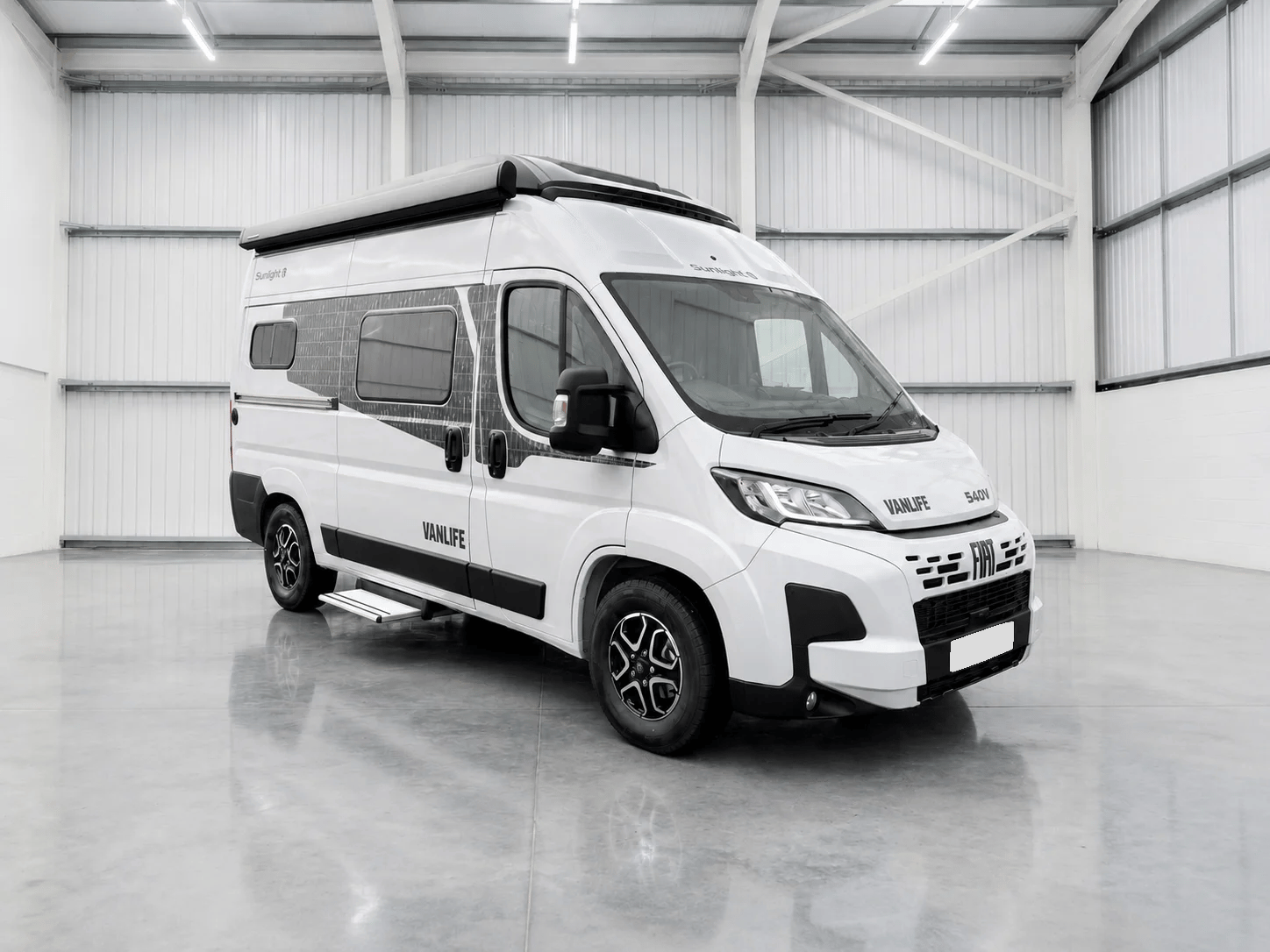
The camper you fall for is rarely the one you can afford. That gap is the whole reason Campervan.win exists. Right now we’re giving away the Sunlight Vanlife, worth around £65,000, and closing that gap is the point: capped entries so the odds stay honest, £10 a ticket, a maximum of five per person, £500 to a UK charity from every full draw, the winner picked by a public randomness beacon anyone can re-check, and one person driving away in the van itself.
Enjoyed this post?
Get more honest campervan guides like this one in your inbox.
You’re in!
Check your inbox. We’ve just sent you a welcome email.

About the author
Leo
Leo covers campervan technology, maintenance, kit, and ownership advice, with a clear, practical focus on how things work in real life.
Keep Reading
Related Reading
Thoughtful articles that build on what you’ve just read.
Campervan Reviews
12 min read
Rolling Homes Darwin review: the long Crafter camper with a proper washroom
The Darwin is Rolling Homes' step up from the Transporter: a long-wheelbase VW Crafter two-berth with an enclosed washroom. We set out what is published, what the price does, and who it suits.
Campervan Reviews
13 min read
Jerba Cromarty review: the long-wheelbase five-seater with two double beds
The Jerba Cromarty is a 5.45 m Scottish-built camper on a VW T7 or Ford Transit Custom that seats five in belts and sleeps two as standard, or four with the optional roof bed. We look at how it lives, what the from-price buys, the published weights and who it suits.
Campervan Reviews
12 min read
Bilbo's Nexa+ T7 review: a rear kitchen, a cassette toilet and the new Low-Lie roof
The Nexa+ is the Bilbo's for people who want a fitted toilet in a Volkswagen Transporter. We go through the rear-kitchen layout, the beds, the power and heating as published, the T7 base, the £77,930 in-stock price and who it suits.
Campervan Reviews
13 min read
Hillside MVX review: the Multivan camper from £70,995, or £78,995 as an eHybrid 4MOTION
Hillside's MVX puts a four-berth pop-top conversion on the Volkswagen Multivan, with a plug-in hybrid and all-wheel drive at the top of the range. Here is what it offers, what it leaves to the Transporter-based Cromford, and where the 2026 Club judges placed it.