
Motorhome Tech, Heating & Systems
Truma CombiNeo 4 E review: instant hot water, faster heating, and a very different way to think about showers on tour

Written by
Martha
Martha writes about interiors, ownership stories, and the everyday realities of campervan life, with a focus on comfort, cost, and how vans are used over time.
The short answer
The Truma CombiNeo 4 E is a new combined gas-and-electric space and water heater for motorhomes and caravans, and it is a genuinely clever rethink: Truma's attempt to move you from rationing hot water to simply getting in the shower. Instead of heating a fixed 10-litre tank like the familiar Combi 4 E, it uses a much smaller volume (around 5.6 litres) and heats water continuously as you draw it, promising near-instant, endless showers plus faster room heating, with a proper 3kW electric mode. It was unveiled at the NEC in February 2025, with specialist availability planned for late 2026, and is already fitted as standard on some new vans. Heating is comfort, not a footnote, and this is a real step forward. Here is the full review, and what it means for showers on tour.

There are a few parts of a campervan or motorhome that you only notice when they go wrong. Heating is one. You can have the loveliest upholstery, the cleverest storage, the fanciest fridge, and still end up quietly miserable if the living space never quite gets warm or the hot water runs out halfway through the second person’s shower.
That is why Truma’s Combi heaters have become such a familiar name in UK touring. They are not glamorous, but they are the sort of kit you end up trusting. The new CombiNeo 4 E is Truma’s attempt to move the whole conversation on from, “How long until the boiler is ready?” to, “Just get in the shower.” Truma is promising hot water in minutes and “endless” showers, alongside quicker room heating, all in a compact unit that still fits the way European vans are built.
It sounds like marketing, until you look at what has actually changed inside the box.
What the CombiNeo 4 E actually is
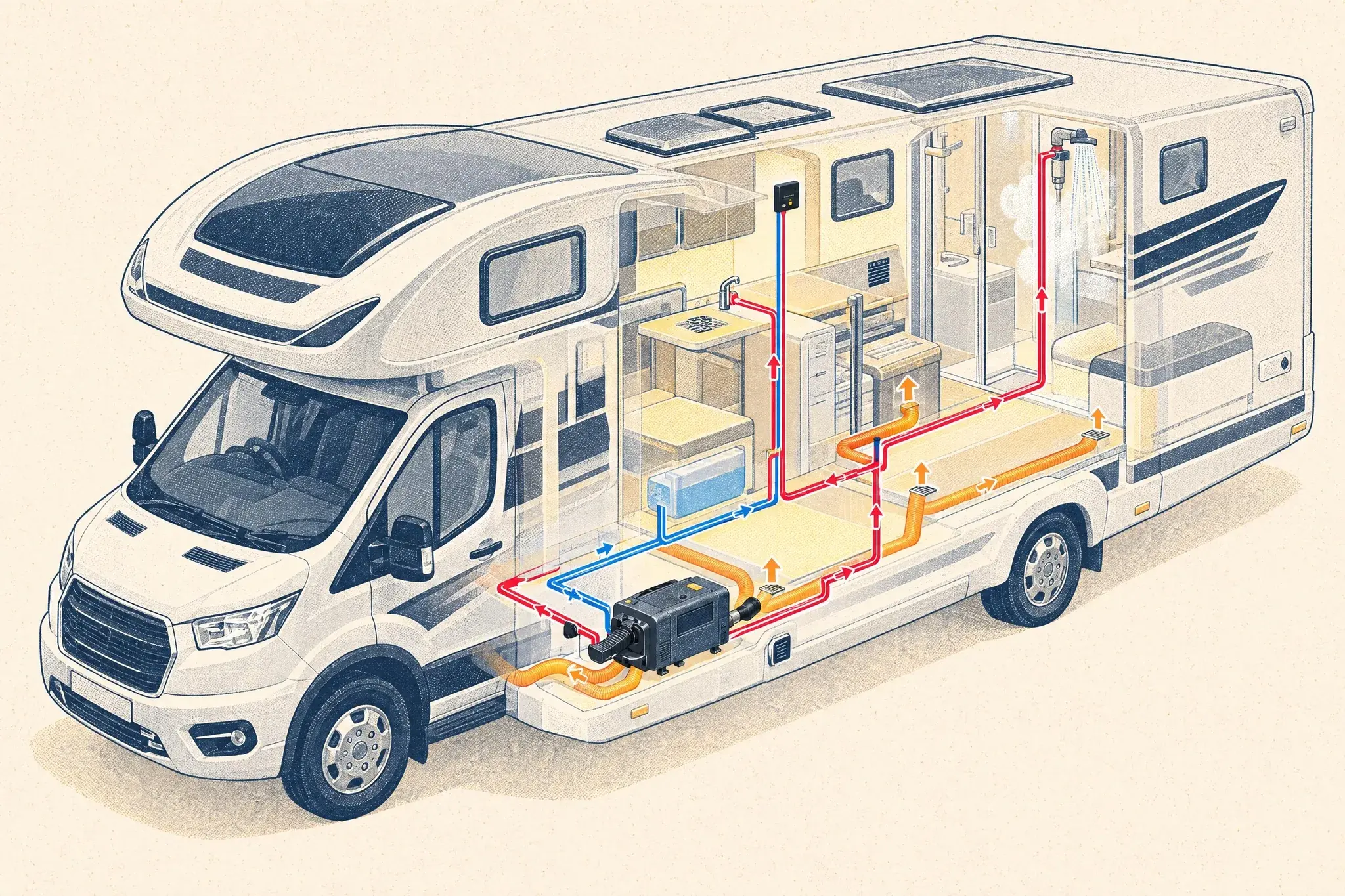
The CombiNeo 4 E is a combined space heater and water heater for motorhomes and caravans. It runs on gas, and it also has a proper electric heating mode up to 3 kW, which matters if you spend a lot of time on sites with hook up and you like saving gas.
Truma positions it as a “2 in 1” heater, but that is true of the older Combi units as well. The real difference is how it makes hot water.
Traditional Combi heaters heat a fixed tank of water, commonly 10 litres in the Combi 4 E. Once that is hot, you have a window of time to use it. If you are careful, 10 litres goes further than you think. If you have two adults who both like a proper shower, it goes surprisingly quickly.
The CombiNeo uses a much smaller water volume, around 5.6 litres, and focuses on heating water continuously as you draw it, within a set flow rate. That is how it gets to the headline claim of hot water in around three minutes and a shower experience that keeps going as long as you have water available in your fresh tank or you are connected to mains water.
There is an important practical takeaway here: it is not magic water. It is a different way of heating water, closer to the idea of a small domestic combi boiler, but constrained by the realities of a leisure vehicle. Truma itself uses careful wording and footnotes around “endless” and “instant”, because it depends on conditions and how you use it.
Availability and why you are suddenly hearing about it
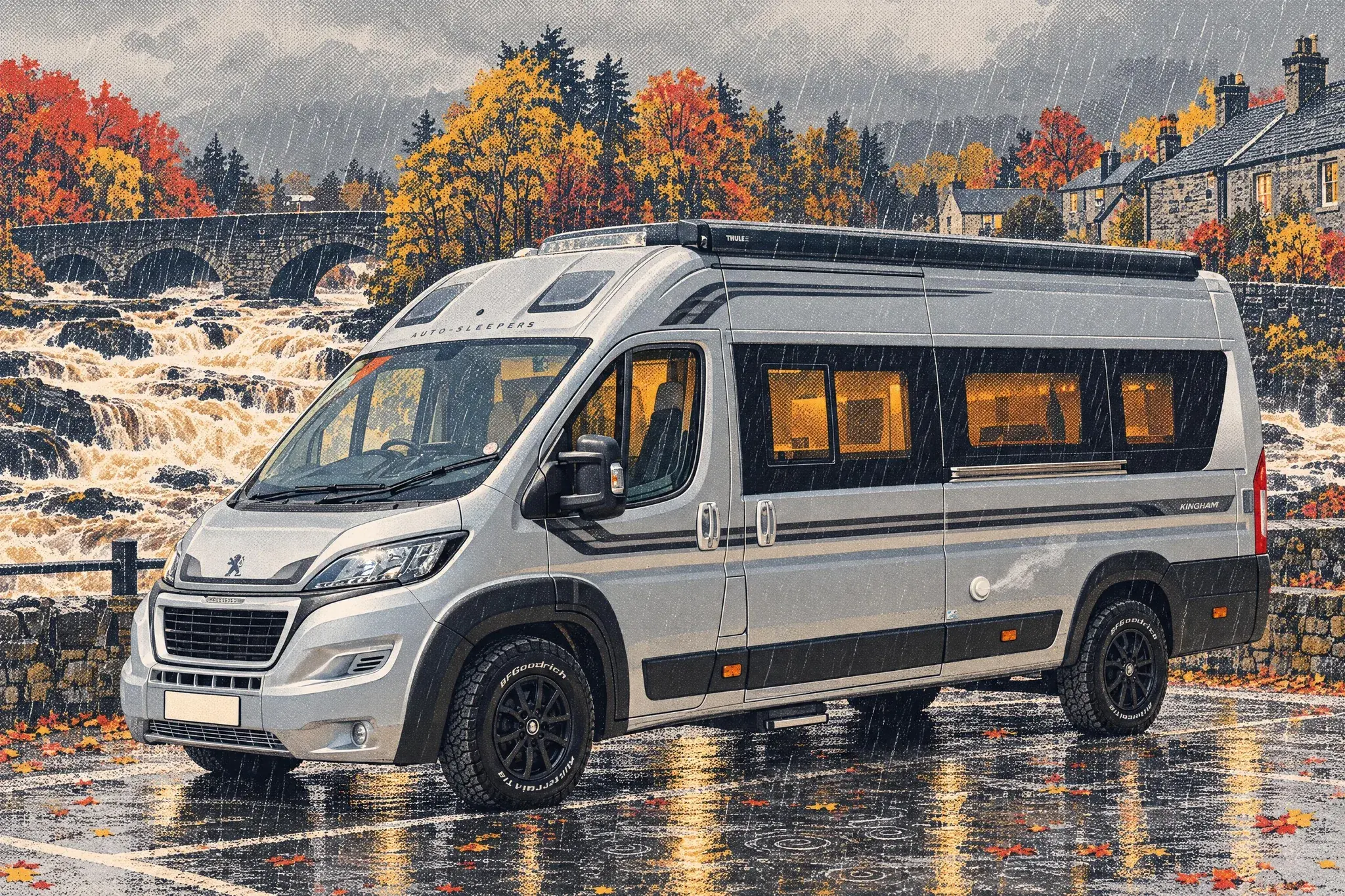
Truma unveiled CombiNeo publicly in the UK at the Caravan, Camping and Motorhome Show at the NEC in Birmingham on 18 February 2025. Truma also partnered with Auto Sleepers for an exclusive pre launch.
The broader European launch was planned around Caravan Salon 2025, and Truma’s own campaign information says specialist shop availability is planned for the end of 2026. In other words, for many people it will arrive first as factory fitted equipment in new vehicles, not as something you pick up off the shelf.
That matters when we talk about price and retrofitting later.
The headline benefits, in plain English
If you tour in the UK, your heating system ends up doing more jobs than you expect. It is not just warmth. It is drying damp clothes, warming towels, taking the edge off condensation, and turning a cold morning into something you can actually enjoy.
The CombiNeo 4 E’s main promises are:
- Hot water quickly
Truma says hot water is available within three minutes. - A shower that does not run out after one person
The “endless” claim is essentially about continuous hot water while you have water in the system. Swift, who are fitting it in the Trekker motorhome range, describe it in similar terms. - Faster, efficient space heating
Truma positions it as fast and energy saving for room heat up. - A strong electric mode
Up to 3 kW electrical heating mode, useful on hook up. - A lighter, compact unit
The technical data shows a compact housing and a lower water volume compared with older systems.
None of those are small things if you have ever done the classic UK routine of arriving wet, parking up, and trying to get the van warm without turning it into a sauna.
What it is likely to feel like in real touring life
The best way to judge a heating system is to picture an ordinary day, not an ideal one.
Morning warmth without the long wait
With older systems, the rhythm is familiar. You put the heating on, you wait for the air to warm, you wait longer for the water to get properly hot, and you try not to use too much of it because you know it is a finite tank. A Combi 4 E can absolutely do the job, but it encourages a certain scarcity mindset around hot water.
CombiNeo is designed to remove that feeling. If the heater can bring hot water online in minutes, you stop thinking of showers as a limited resource and more as a normal part of the day. That changes how you use your washroom, especially if you are touring as a couple, or if you have a family and a queue forms.
Better for back to back showers, with one big caveat
The caveat is flow rate. Continuous hot water systems usually protect themselves by limiting the amount of water that can pass through while maintaining temperature. That is sensible engineering, but it also means your “endless” shower might be a gentler shower than you get at home, and it might be less happy if you like turning the mixer fully open.
Truma’s own material makes it clear that performance depends on conditions, and the “endless” nature is about duration, not about turning your motorhome into a power shower suite.
In practice, many people will happily trade a slightly calmer flow for the ability to shower without watching the clock.
More workable washing up and hand washing
Hot water that arrives quickly is not just about showers. It is about all the little jobs: washing up after a windy dinner, cleaning up after a muddy walk, filling a bowl for a proper face wash when you cannot be bothered with the shower.
Those are the moments that make a motorhome feel civilised. A system that reduces the friction and waiting is quietly valuable.
The big change: a smaller water volume, a different kind of hot water
It is worth pausing on the numbers, because they explain both the advantages and the trade offs.
A Combi 4 E is built around a 10 litre water tank.
CombiNeo uses around 5.6 litres.
On paper, that looks like a downgrade until you remember that CombiNeo is trying to heat continuously rather than heat a big tank and hope you use it wisely. The smaller volume also means less weight in water carried inside the heater itself, which helps with payload, and it can mean less heat up time for the water that is within the system.
Where this gets interesting is UK touring where many people are not on full service pitches. If you are off grid with a limited fresh water tank, you still cannot shower forever. The system cannot create water you do not have. What it can do is stop the heater being the limiting factor.
That is the shift. Your limiting factor becomes your fresh water supply and your willingness to refill, not the fact the boiler has run out of hot water.
Gas, electric, and how CombiNeo fits UK touring habits
UK touring is a mix. Some people love hook up and do not apologise for it. Others treat hook up like a mild character flaw and only use it when forced.
CombiNeo is trying to suit both camps.
On gas, it is designed to deliver quick room heat and continuous hot water within the constraints discussed above. On electric, you have a proper 3 kW mode, which is a step up from what many people are used to in older combined systems.
This is especially relevant on UK sites where a decent electric pitch can make a big difference to running costs and to comfort. If you can heat the living area and maintain hot water support electrically, you may reduce gas use, which helps in winter touring and helps reduce the hassle of bottle swaps.
Controls and the living experience
Truma is very invested in its iNet X ecosystem, and CombiNeo is designed to be operated via the iNet X panel and app.
For some people, this is a clear win. The interface is modern, it can be more intuitive than older control panels, and the app control is genuinely useful if you like warming the van before you step back inside. For others, it is another layer of electronics that feels unnecessary.
The practical point for buyers is simple: when you are looking at a motorhome with CombiNeo, spend a minute with the control panel and make sure it makes sense to you. If you are not comfortable with touchscreens, you want to know that now, not on a cold night in February when you are trying to change settings with damp fingers.
How it compares with the older Truma Combi 4 E
This is the comparison most UK buyers will care about, because the Combi 4 E is everywhere, and it is well understood.
Combi 4 E strengths
- Familiar, widely installed, plenty of installer knowledge in the UK.
- 10 litre tank is straightforward and predictable.
- Proven track record in real touring life.
Combi 4 E limitations
- Hot water is finite. If you push it, you will run out.
- Heat up time for water feels long compared with what CombiNeo is promising.
CombiNeo 4 E strengths
- Hot water available in minutes, which changes daily routines.
- Continuous hot water approach that suits multiple showers.
- Strong 3 kW electric mode.
CombiNeo 4 E limitations
- Like any continuous system, it will be limited by flow and conditions.
- Newer product means real world long term feedback will build over time.
The honest view is that Combi 4 E is the safe, known quantity. CombiNeo is the exciting shift in how the system behaves day to day.
How it compares with diesel systems and Alde style wet heating
This is where the conversation gets slightly more nuanced, because heating preferences can be almost personal.
Diesel heating
Many motorhomes and campervans use diesel space heating and a separate water heater, or a diesel combined system. Diesel has real advantages in the UK: it is easier to buy than LPG in some situations, and you are not swapping bottles. That said, diesel heaters have their own maintenance requirements, and some people do not love the smell or the sound when they are running hard on a cold night.
Truma already has diesel Combi options in the wider Combi range, but CombiNeo as presented is focused on gas with electric support.
If you are a diesel heating loyalist, CombiNeo is not necessarily the thing that will convert you. If you are happy with LPG and you want a more home like hot water experience, that is where CombiNeo fits.
Alde water based heating
Alde style wet heating is a different philosophy. It is radiant and even, and many people find it more comfortable, especially for long winter trips. Alde also has a strong reputation in premium motorhomes.
The trade off is complexity and space. Wet heating systems include more components, more fluid, and more installation demands. They can be lovely, but they are not always the right choice for compact panel vans or for buyers who want simplicity.
CombiNeo is trying to deliver a step change in comfort without turning the whole vehicle into a more complex system. It will not feel like Alde, but it might feel closer to domestic expectations for hot water, which is where many people actually notice the difference.
Whale and other modular systems
Whale’s approach often splits space heating and water heating into separate modules, which can be flexible for converters and can make sense in certain layouts. Whale’s Expanse water heater, for example, is commonly an 8 litre system in its own right.
The CombiNeo’s pitch is that you do not need separate boxes and separate compromises. You get an integrated system with a very specific aim: better hot water behaviour.
Price: what we know, what we can reasonably infer
Right now, the tricky bit is that CombiNeo is new enough that firm UK retail pricing is not widely published, and Truma’s own information focuses on availability rather than RRP. It is positioned for model year adoption and then later specialist shop rollout.
So, instead of pretending we know an exact number, it is more useful to anchor expectations using the existing Combi 4 E market.
A Truma Combi 4 E unit is commonly sold in the UK in the mid £1,000s depending on kit contents and retailer. For example, Leisure Shop Direct lists the Combi 4 E around £1,478 for one of its purchase options, while Trailertek lists a Combi 4 E with iNet X control panel at around £1,962 excluding VAT in the product display.
For supply and fitting, a fixed price example in the UK is Motorhome Workshop listing £2,427 supplied and fitted including VAT for a Combi 4 E.
CombiNeo will not necessarily match those figures. It may cost more, particularly early on, simply because it is new and because vehicles with it may bundle it into higher specification packages. The sensible expectation is that it will sit at least in the same general bracket as a high spec Combi system with iNet X control, and that installation cost will depend heavily on layout and how much of the plumbing and ducting is already prepared for it.
If you are buying a new motorhome where it is factory fitted, the real question is not the component price. It is what you would have needed to spend to get the same comfort from an older system.
Which motorhomes are getting CombiNeo as standard
This is where CombiNeo becomes real, because you can actually buy it as part of a vehicle rather than as a theoretical upgrade.
Swift’s Trekker motorhome range highlights the CombiNeo as a key feature, describing it as a new heating solution with continuous hot water and instant heating style benefits.
Auto Sleepers has also talked publicly about equipping models with the Truma Combi Neo system as part of its updates, positioning it as a major comfort upgrade.
As always, specification can vary by model year and by market, so treat any heating system claim as something to verify on the actual vehicle order form. But the direction of travel is clear: CombiNeo is being used by manufacturers as a headline comfort feature, not as a minor technical tweak.
Installation, servicing, and the practical buyer questions
Even if you never plan to retrofit a heater yourself, it is worth thinking like someone who might have to fix it on a wet Wednesday in Cumbria.
Here are the questions I would be asking a dealer on handover day.
Where is it fitted and can you access it easily
Some vehicles make heater access straightforward, others bury it behind panels and storage. A system you cannot reach becomes a system you avoid maintaining.
How is the system drained for frost protection
UK winter touring is full of near misses. You forget to drain, temperature dips, and you wake up wondering what has frozen. Make sure you understand the drain procedure and where the valves are.
What does the dealer consider normal behaviour
With any new product, there is a period where owners are learning what is normal and what is a fault. The first time you hear a new pump note or see a new icon on the panel, you want to know whether you should worry.
What happens if you want to run mostly on electric
If you spend a lot of time on hook up, ask how the system behaves in electric mode and what it can realistically cover on a UK pitch. The 3 kW capability is meaningful, but it is still constrained by site supply and by what else you are running.
The downsides and the honest cautions
No heating system is perfect, and a review is only useful if it admits where the shine comes off.
“Endless” depends on your fresh water reality
If you have a modest fresh tank, you are still rationing water. CombiNeo stops the boiler being the limiting factor, but it cannot make your water tank bigger.
Flow rate may feel different
Some people will love it. Some people will miss a stronger shower. If you care deeply about shower pressure, try a demo vehicle.
New product, new learning curve
Early adopters sometimes hit small niggles. That is not a criticism of Truma specifically, it is just how new systems settle into the world. Truma is an experienced manufacturer, but a new design still has to earn its reputation in British winters and real owner usage.
Retrofitting could be expensive
Because CombiNeo is arriving first as factory fit in certain vehicles and only later in specialist shops, it is not currently the simple swap that many people imagine.
If you are dreaming of retrofitting it into an older motorhome, you will want to speak to a Truma approved installer and you should expect more than a quick like for like change.
So, is the CombiNeo 4 E worth getting excited about
Yes, with the right expectations.
If your touring life includes regular showers, or you tour as a family, or you simply hate the feeling of timing your hot water, CombiNeo looks like a meaningful step forward. It tackles one of the most common annoyances in campervan and motorhome life, which is the slightly stingy nature of hot water when you are not on a big domestic system.
If you mostly wash up, have the occasional quick rinse, and you are happy with the rhythms of a classic Combi 4 E, then CombiNeo might not change your world. It will still be nice, but it may not feel essential.
The most interesting thing about CombiNeo is not the marketing language. It is the shift in daily behaviour it encourages. It is designed to make a motorhome feel less like a vehicle with a boiler and more like a tiny home that happens to move.
That is a strong direction for the industry, and it is the sort of upgrade that quietly improves touring life without needing you to buy a bigger vehicle or carry more kit.
As it rolls into more UK models and as owners build up a couple of seasons of real use, we will get the clearest picture of whether it becomes the new default or the clever premium option. For now, if you are considering a motorhome like the Swift Trekker where it is fitted as part of the package, it is one of the most compelling reasons to look closely at the specification sheet and take the heating system seriously, not as a footnote but as a central part of comfort.
Common questions
What is the Truma CombiNeo 4 E?
It is a new combined space and water heater for motorhomes and caravans, running on gas with a proper electric mode up to 3kW. Its big change is how it makes hot water: rather than heating a fixed 10-litre tank like the older Combi 4 E, it uses a much smaller volume (around 5.6 litres) and heats water continuously as you draw it, promising near-instant, longer showers and faster room heating.
How is the CombiNeo different from the Truma Combi 4 E?
The Combi 4 E heats a fixed 10-litre tank, which encourages a scarcity mindset around hot water; the CombiNeo uses around 5.6 litres and heats continuously within a set flow rate, so it aims at endless showers rather than a finite tank. It also offers a full 3kW electric mode, a step up from many older combined systems. The Combi 4 E remains the safe, well-understood known quantity.
When can you buy the Truma CombiNeo, and what does it cost?
Truma unveiled it at the NEC in Birmingham in February 2025, with broader European launch around Caravan Salon 2025 and specialist-shop availability planned for the end of 2026. No clean standalone price is confirmed; for context, a Truma Combi 4 E is commonly sold in the UK in the mid-1,000s of pounds, so the CombiNeo is likely to sit around or above that as the premium option.
Is the Truma CombiNeo good for off-grid or hook-up touring?
It suits both. Running on gas it works anywhere, and its continuous-heat approach means less waiting and less rationing of hot water. On hook-up its 3kW electric mode lets you heat on mains and save gas, which is genuinely useful if you spend a lot of time on serviced sites. The continuous, flow-rate-based hot water is the headline benefit either way.
Should I choose a van with the Truma CombiNeo?
If you value comfort, it is worth taking seriously rather than treating heating as a footnote. It quietly improves touring life with faster, more abundant hot water and quicker heating, without needing a bigger vehicle. As it rolls into more models, like the Swift Trekker, and owners build up real-world seasons, it should become clearer whether it is the new default or a clever premium upgrade.
The reachable bit
The camper you fall for is rarely the one you can afford. That gap is the whole reason Campervan.win exists. Right now we’re giving away the Sunlight Vanlife, worth around £65,000, and closing that gap is the point: capped entries so the odds stay honest, £10 a ticket, a maximum of five per person, £500 to a UK charity from every full draw, the winner picked by a public randomness beacon anyone can re-check, and one person driving away in the van itself.
Enjoyed this post?
Get more honest campervan guides like this one in your inbox.
You’re in!
Check your inbox. We’ve just sent you a welcome email.

About the author
Martha
Martha writes about interiors, ownership stories, and the everyday realities of campervan life, with a focus on comfort, cost, and how vans are used over time.
Keep Reading
Related Reading
Thoughtful articles that build on what you’ve just read.
Motorhome Tech, Heating & Systems
15 min read
Gas-free motorhomes: living without LPG through a UK winter is possible but not simple
A growing list of motorhomes now leave the factory with no gas at all. We look at what gas does in a typical van, what replaces each job, and whether diesel heating, induction cooking and a big lithium bank can cope with short British days, weak winter solar and campsite hook-up.
Motorhome Tech, Heating & Systems
13 min read
Thetford's £420 separating kit changes the cassette chore, and a microwave toilet is next
Thetford now sells a kit that turns its C220 and C260 cassette toilets into separating toilets, Dometic has shown rival kits, and a microwave toilet that burns waste to ash has appeared in Germany. Each one changes the least-loved job in the van in its own way, and each suits a different kind of owner.
Motorhome Tech, Heating & Systems
29 min read
Heated storage and double floors: the cold-weather feature checklist for motorhome buyers
A clear, honest guide to the features that actually keep a motorhome usable in a British winter, from double floors and heated storage to insulation, freeze protection and the standards worth checking before you buy.
Motorhome Tech, Heating & Systems
24 min read
The Hymer SLC chassis explained: what the Super Light Chassis changes for ride and handling
SLC is Hymer's Super Light Chassis, built on a front-wheel-drive Mercedes Sprinter with a lowered double floor and independent suspension. The piece explains the low centre of gravity, payload and handling benefits, and the front-drive traction trade-off versus rear-wheel-drive Sprinter conversions.