
VW Grand California 600 and 680 review: brilliant bones, baffling decisions, and a brand that has forgotten what made it famous

Written by
Martha
Martha writes about interiors, ownership stories, and the everyday realities of campervan life, with a focus on comfort, cost, and how vans are used over time.
The short answer
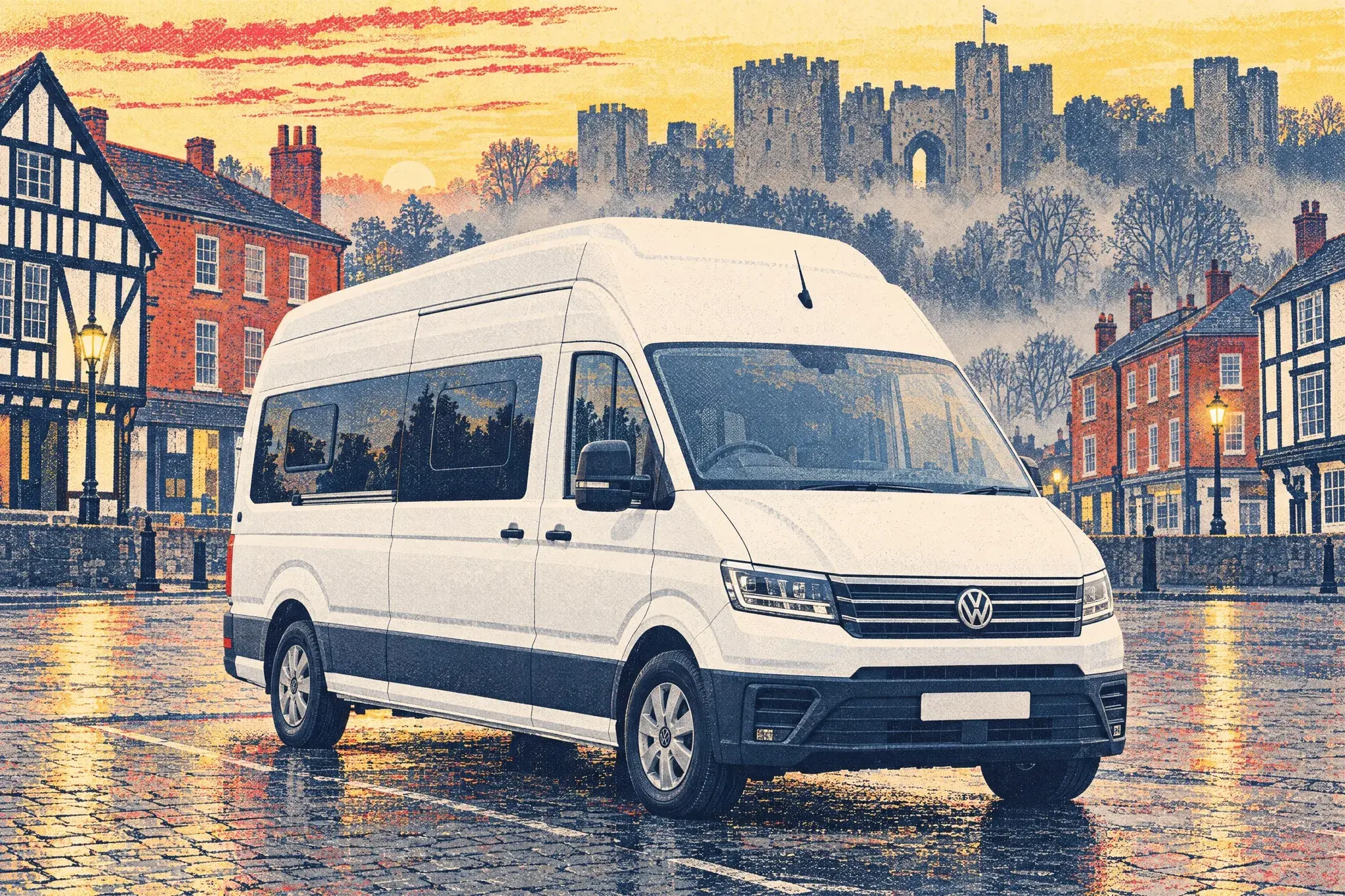
The VW Grand California is a Crafter-based coachbuilt camper with a proper wet room and a permanent bed, in two versions on the same 2.0 TDI 163 PS eight-speed automatic, and one of them is genuinely brilliant. The 600 (six metres) gets the interior right: generous headroom, a sensible rear transverse double, and an optional pull-out overcab bed for two children (£2,754) that makes it a four-berth. The 680 (6.8 metres, optional all-wheel drive) is the more baffling one, spending its extra 85cm on a lengthways bed while barely improving daily living and sleeping just two. The bones are brilliant, and the 600 is comfortably the one to have. Here is the full review, the clever bits, the baffling decisions, and which version to buy.

Updated 6 October 2026: we have corrected the over-cab bed, 680 bed size, paint prices and lithium option details, and added Volkswagen UK's 30 September 2026 prices.
There is a campervan you see everywhere in Europe and almost nowhere in the UK. It is parked outside every second Stellplatz in Germany, dotted along the French coast, and quietly taking up its spot at alpine sites where the view is worth the climb. The VW Grand California should be huge in Britain. It has the badge. It has the heritage. It has an interior that, in one of its two versions, comes closer to getting campervan living right than almost anything else in the factory built market.
And yet it sits in an odd place over here. Too expensive for what it offers. Too cautious with its colour palette. Too willing to play it safe with a layout that wastes its own potential. And, perhaps most painfully, too far from the spirit of the brand that made the campervan a cultural icon in the first place.
This is not a hit piece. The Grand California gets real things right, and some of those things deserve praise. But it also needs someone to say, plainly, that Volkswagen could do so much better. The bones are brilliant. The ambition is not keeping up.
Two models, two very different stories
The Grand California comes in two versions. The 600 is six metres long and sits on a standard VW Crafter chassis. The 680 stretches to 6.8 metres and adds all wheel drive as an option. Both run the same 2.0 litre TDI engine at 163 PS with an eight speed automatic, both have a proper wetroom with a cassette toilet, and both come with a 70 litre fridge, a two burner hob, and the sort of build quality that reminds you this is a manufacturer built vehicle, not a weekend project in someone's industrial unit.
On paper, the 680 sounds like the obvious upgrade. More length. More space. More vehicle. In practice, what VW has done with that extra length is one of the most frustrating layout decisions in the current campervan market.
But we will come to that. Because first, the 600 deserves its moment.
The Grand California 600: when a manufacturer gets interior living right
Step inside the 600 and the first thing you notice is headroom. The GRP high roof sits at 2.97 metres externally, and inside it translates into a space that feels genuinely generous. You do not duck. You do not hunch. You stand up, move around, and forget for a moment that you are inside something with wheels.
The layout places a transverse double bed at the rear, measuring 1.93 metres by 1.36 metres. It is a fixed bed, which means no nightly shuffling of cushions, no converting your lounge into your bedroom and back again every morning. You arrive, you sit down, you make a brew, and when you are ready for sleep, the bed is already there.
Above the cab sits the optional pull-out bed, priced at £2,754. This is where VW has done something genuinely clever. The overcab bed pulls out to give space for two children (VW quotes a 150 kg limit), turning the 600 into a four berth family campervan. It isn't a second double for adults. In day mode, it stows away and the cab feels open and airy. At night, a family of four has somewhere to sleep without any of the usual compromises that come with trying to squeeze extra berths into a six metre vehicle.
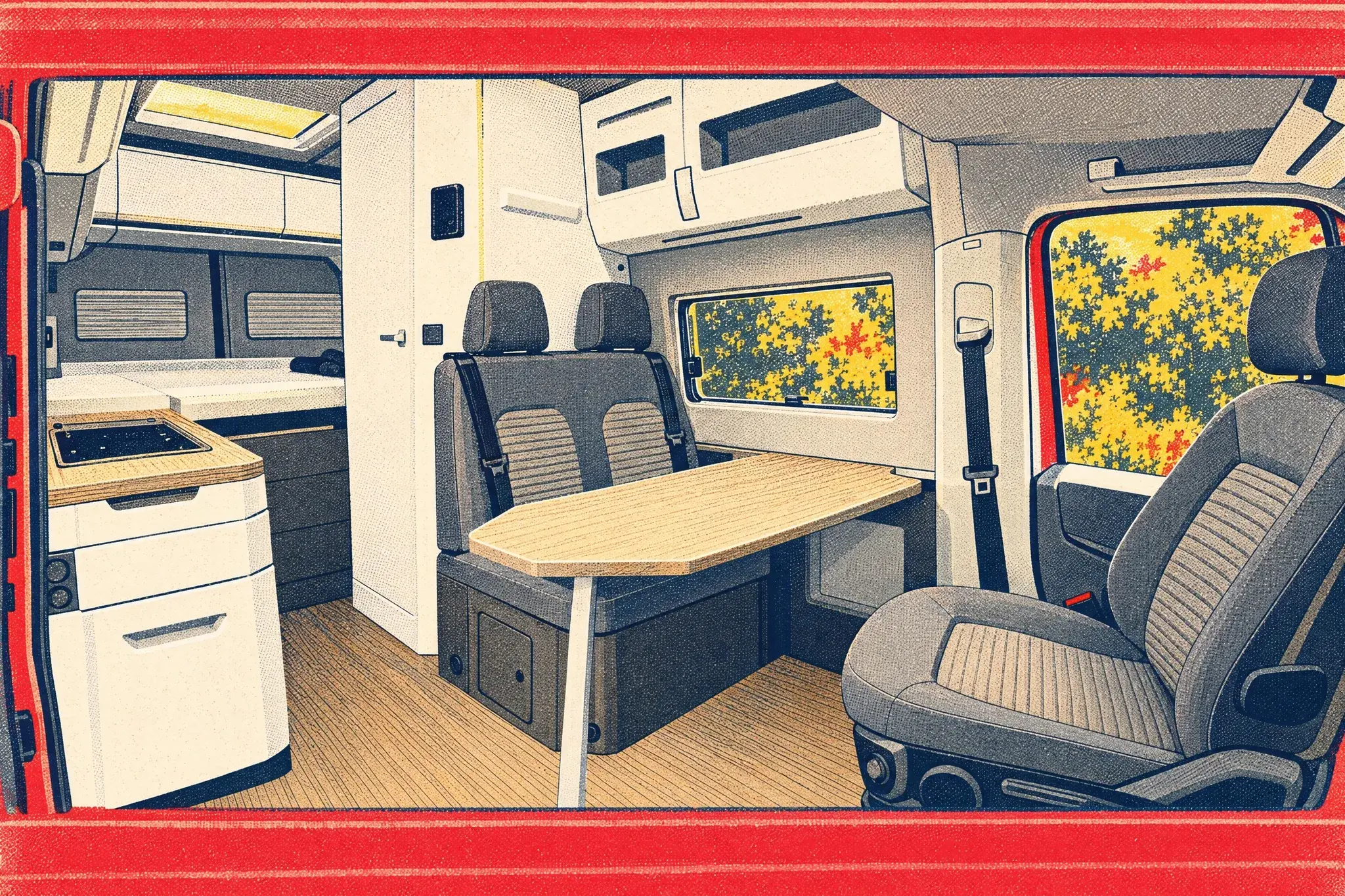
The wetroom is compact but properly resolved. Cassette toilet, shower, and a space that does not make you feel like you are washing in a cupboard. The kitchen sits along one side with enough worktop to prepare a real meal, not just reheat something from a packet. And the living area, with four travel seats and a table that works for eating, reading, or just sitting out a rainy afternoon, feels like a space designed for people who actually tour, not people who just photograph their van for social media.
The 600 proves that VW understands how to build a campervan interior. The proportions work. The flow works. The daily routines of cooking, washing, sleeping, and just existing in a small space all work. It is, in many ways, exactly what you would hope a factory Volkswagen campervan would be.
Which makes what they have done with the 680 all the more baffling.
The Grand California 680: a masterclass in wasting potential
The 680 gives you an extra 85 centimetres of vehicle. That is a meaningful amount of space. In campervan terms, 85 centimetres can transform a layout. It can turn a tight lounge into a generous one. It can add real separation between living and sleeping. It can create the kind of day space that makes bad weather touring genuinely comfortable rather than something you endure.
What has VW done with those extra 85 centimetres? They have turned the bed lengthways.
Instead of the 600's transverse double at the rear, the 680 has a lengthways double bed 1.67 metres wide and 2.00 metres long on the right, 1.90 metres on the left. It is a comfortable bed. Nobody is arguing that. But it consumes the extra length entirely. The lounge area does not meaningfully grow. The kitchen does not get more generous. The daily living space, the bit you use for 16 hours a day, barely changes. All that extra vehicle, all that extra weight, all that extra cost, and it goes into a different sleeping orientation.
Worse, the 680 sleeps just two, where the 600 can be a four-berth with the optional overcab bed. Both keep four belted travel seats, so the difference is about sleeping rather than carrying, and the longer, more expensive 680 simply sleeps fewer people. For a brand built on the idea of bringing people together on the road, that feels like a strange trade.
The 680 also sits lower at 2.84 metres compared to the 600's 2.97 metres, which means less interior headroom despite the longer body. And with a gross vehicle weight of 3.88 tonnes, it pushes into C1 licence territory, meaning some UK drivers cannot legally drive it without additional testing.
Here is what VW should have done. Take the extra length. Keep the transverse bed from the 600. Use the additional space to create a properly generous rear lounge with side flares that open up the living area width. Give people a reason to choose the bigger vehicle that actually improves their waking hours, not just their sleeping position. A larger lounge with outward flares would make wet weather touring, family mealtimes, and those long slow evenings where you just sit and watch the light change into something special rather than something squeezed.
The 680 is not a bad vehicle. It is a missed opportunity. And at prices starting around £87,000 before options, missed opportunities should not be part of the conversation.
Colour options: safe choices in a world that craves personality
Walk into a VW dealership looking at the Grand California colour chart and you will find seven options. Three single colours and four dual tone combinations. Candy White. Indium Grey Metallic. Oyster Silver Metallic. Then the two tone options add Mojave Beige, Cherry Red, and Deep Ocean Blue on a white base, plus a silver and grey combination.
They are fine. They are sensible. They are the sort of colours you would expect from a committee that was asked to choose options nobody would complain about.
And that is the problem. Nobody is going to fall in love at first sight with Indium Grey Metallic. Nobody is going to walk past a Candy White Grand California on a campsite and feel a pull of longing. These are colours designed not to offend, and in the process they have become colours that do not inspire either.
It gets worse when you learn that metallic paint is an option costing £1,518 on the Grand California. And two tone schemes add £3,102 on top of the base price. So if you want your £84,000-plus campervan to look like anything other than a white delivery van with curtains, you are paying a premium for the privilege.
Compare this to Eriba, who build their Car 600 and 602 on the same VW Crafter platform. Eriba offers vibrant dual tone combinations including Deep Ocean Blue with Candy White, Cherry Red with Candy White, and Metallic Reflex Silver with Indium Grey. Metallic paint is included as standard in these schemes. No surcharge. No awkward options list. You choose your colour, it arrives looking the way it should, and you have not added thousands to the price for the right to have a van that looks like something you chose rather than something you settled for.
VW should know better. The original campervans were famous for their colour. Two tone paint schemes defined the look of the Type 2 era. Those early Splitscreens and Bay Windows rolling off the line in combinations of green and white, blue and cream, orange and brown, they did not just look good. They looked like they belonged to someone. They looked loved. The Grand California colour palette feels like it belongs to a fleet manager.
The elephant in the showroom: value for money
The Grand California 600 started at around £84,000 for the 2025 model year, rose to approximately £85,400 for the 2026 update, and is £84,208 on Volkswagen UK's 30 September 2026 price list. The 680 begins at roughly £87,000 and climbs from there. Add the automatic gearbox (which is standard, thankfully), metallic paint, two tone livery, the overcab bed, and a few sensible options, and you are comfortably past £90,000. A fully loaded 680 with 4MOTION all wheel drive can push towards £100,000.
Now consider the Eriba Car 600, built on the same VW Crafter platform, with the same 2.0 litre engine options, the same fundamental base vehicle quality. It starts at £71,120 in the UK. That is over £13,000 less than the cheapest Grand California. The Eriba includes metallic paint in its dual tone schemes as standard. It won Best Fixed Bed Campervan at the Out and About Live Awards in 2025. The Eriba Car 602 won Best VW Campervan at the Practical Motorhome Awards the same year.
There are differences, of course. The Grand California has a GRP high roof where the Eriba uses a steel roof. The VW interior finish uses different materials and the overall feel is different. Storage solutions differ. Some features that come standard on the Grand California are optional on the Eriba, and vice versa. These are not identical vehicles with different badges.
But the gap is enormous. Over £13,000 buys a lot of optional extras on an Eriba. It buys the automatic gearbox upgrade, the engine power upgrade, and still leaves change. The VW badge carries weight, undeniably. But £13,000 of weight? For a vehicle built on the same Crafter bones? That is a question every buyer should be asking in the showroom, and it is a question VW does not have a comfortable answer to.
The ghost of campervans past: what VW seems to have forgotten
There is a photograph from 1947 of a Dutch businessman called Ben Pon sketching a van in his notebook at the Wolfsburg factory. The drawing was simple. A box on wheels, based on the Beetle platform, designed to carry things and carry people. It was the seed of what became the Type 2, and eventually, the most recognisable campervan shape in the world.
By 1951, Westfalia-Werke had started converting those vans into proper campers. The early Camping Box models were simple and functional. A thousand units by 1958. Then through the 1960s, the SO-42 layout arrived, pop top roofs appeared, rotating seats turned the cab into living space, and modular kitchens made the whole thing feel like a tiny home you could drive to the coast.
Those original VW campervans were not luxury goods. They were affordable, practical, and brilliantly democratic. The Type 2 Splitscreen, produced from 1950 to 1967, was built around the idea that adventure should not cost a fortune. When the Bay Window model followed from 1967 to 1979, with over 3.2 million units produced, it became the definitive image of freedom on four wheels. Families drove them to the beach. Students drove them across continents. They turned up at Woodstock. They parked outside campsites all over Europe with their pop tops raised and their sliding doors open and someone inside making something simple on a gas stove.
This was not the DUB scene. This was not about custom paintwork and lowered suspension and show and shine competitions. This was ordinary people using ordinary vehicles to do extraordinary things with their weekends and their holidays. The VW campervan was the people's car taken to its logical conclusion. A people's home. A people's adventure.
Volkswagen, the company whose name literally translates as people's car, now sells a campervan that starts at £84,000 and charges £1,518 for metallic paint. Something has gone very wrong with the mission statement.
What VW should build: a Grand California for real people
Imagine a revised Grand California 680 that uses its extra length properly. Transverse beds at the rear, just like the 600, freeing up the additional space for a genuinely generous lounge area. Side flares that push the walls outward in the living zone, creating width as well as length. Four berths to match its four seatbelts, because families exist and friends like to travel together.
Now add a pop top roof option. Not as a replacement for the fixed high roof, but as an alternative. A pop top 680 would sit lower on the road, reducing wind resistance and improving fuel economy. It would fit under more height barriers. It would look less like a box and more like the campervans that made VW famous. And when you arrive and pop the roof, you get the headroom and the sleeping space, with the bonus of that wonderful feeling of unfolding your home that every pop top owner knows.
For the fixed roof version, offer electric drop down beds above the cab as standard, not as a £2,754 option. If you are charging £87,000 for a vehicle, overcab sleeping should be part of the package. Make the 680 a genuine family campervan that sleeps four comfortably as well as travelling four.
Rethink the colours entirely. Look at what Hymer Group is doing with Eriba. Look at what the classic VW palette offered. Bring back two tone schemes that make people stop and stare. Include metallic paint as standard, because at this price point, charging extra for it feels miserly. Offer a heritage colour range that nods to the original Splitscreen and Bay Window era. Dove Blue and white. Mango Green and cream. Velvet Green and white. Give people something worth falling in love with.
And bring the price closer to earth. If Eriba can build a properly specced Crafter campervan for £71,120 with metallic paint included, VW should be able to close that gap significantly. The Volkswagen supply chain is vast. The economies of scale are real. The pricing on the Grand California feels like it includes a premium for the badge that has drifted beyond what the product justifies.
The 2026 updates: welcome, but not enough
VW has refreshed the Grand California for 2026 with a new 10.4 inch touchscreen as standard, an optional 12.9 inch display, App Connect integration, bamboo decorative elements, black interior fixtures, and Euro 6e emissions compliance. The dashboard has been updated to match the latest Crafter styling.
These are pleasant changes. The infotainment upgrade was overdue, and the bamboo trim adds a warmer tone to the interior. The black fixtures in the wetroom and kitchen follow a broader trend that looks clean and modern.
But none of this addresses the fundamental issues. The 680 layout has not changed. The colour options have not expanded. The pricing has come down only a little (Volkswagen UK cut the standard van by £1,200 in its 30 September 2026 price list). The overcab bed is still an option, not standard. There is still no pop top variant, and lithium batteries and solar come only in the £1,740 Off Grid Package, not as standard equipment.
It feels like a cosmetic refresh when what was needed was a strategic rethink.
Who the Grand California is actually for
None of this means the Grand California is a bad vehicle. Saying it could be better is not the same as saying it is not good.
The 600, in particular, is a genuinely excellent campervan for couples who want a fixed bed, a proper wetroom, and a living space that feels calm and well resolved. If you add the overcab bed option, it becomes a strong four berth family tourer in a manageable six metre package. The build quality is high. The driving experience benefits from the Crafter platform's refinement. And the VW dealer network offers a level of aftersales support that many third party converters simply cannot match.
The 680 suits people who prioritise bed comfort above all else and who tour as a couple without needing extra berths. The lengthways bed is comfortable, and 4MOTION all wheel drive makes it capable in conditions that would have a two wheel drive campervan thinking carefully about traction. For winter touring in Scotland or heading to ski resorts in the Alps, the 680 with AWD is a genuine all season proposition.
If you are buying with your eyes open, understanding both what you are getting and what you are paying for, the Grand California can work. It just should not require you to make that many compromises at this price point.
The bigger picture: what the Grand California tells us about factory campervans
The Grand California sits in a strange corner of the market. It is too expensive to feel democratic, too cautious to feel exciting, and too good in places to dismiss. It is a vehicle that proves VW can build a brilliant campervan interior and then immediately proves that VW is not willing to be brave enough to build the brilliant campervan that interior deserves.
The smaller California, built on the Transporter, has always been the people pleaser. The Grand California was supposed to be the step up. More space, more capability, more ambition. Instead, it feels like more vehicle at more money, without enough more thought.
What makes this frustrating is that the fix is not complicated. The engineering exists. The platform is proven. The brand heritage is unmatched. VW does not need to invent anything new. It just needs to remember what made people love the campervan in the first place, and build a Grand California that honours that legacy instead of just trading on it.
A transverse bed 680 with a generous lounge. A pop top option. Four berths. Vibrant colours. Metallic paint included. Electric overcab beds as standard. A price that does not make the Eriba Car look like a bargain by comparison.
That would be a Grand California worth getting excited about. That would be a people's campervan for 2026.
Until then, we have a vehicle that is very good in a six metre body, and very nearly good enough in a 6.8 metre body, sold at a price that makes you wonder whether the people setting it have ever actually spent a week in a campervan, or whether they just looked at the margin and called it a day.
Common questions
What is the difference between the VW Grand California 600 and 680?
The 600 is six metres long on a standard Crafter chassis; the 680 stretches to 6.8 metres and adds optional all-wheel drive. Both share the 2.0 TDI 163 PS eight-speed automatic, a proper wet room and a 70-litre fridge. The 600 uses a rear transverse double and can be a four-berth with the overcab bed for two children; the 680 has a lengthways bed and sleeps just two.
Which VW Grand California should I buy, the 600 or 680?
The 600, for most people. It gets the interior living right, with generous headroom, a sensible transverse double and a four-berth option, while the 680 spends its extra 85cm on a lengthways bed without meaningfully improving the daily living space and sleeps two rather than four. The 680's only clear advantage is the optional all-wheel drive.
Is the VW Grand California a four-berth?
The 600 can be. With its optional pull-out overcab bed (£2,754), the 600 gains space for two children and becomes a four-berth family campervan, on top of its rear transverse double (1.93 by 1.36 metres). The overcab bed is not a second double for adults. The 680, by contrast, sleeps just two, so despite its length it is less family-friendly.
Is the VW Grand California good value?
It has brilliant bones and genuine manufacturer build quality, but it sits in an awkward place in the UK: arguably too expensive for what it offers, too cautious on colour, and the 680 wastes its own potential. The 600 makes the stronger case; the 680 is very nearly good enough but priced in a way that makes you question it.
What is the VW Grand California 600 like inside?
It proves VW understands how to build a campervan interior. The GRP high roof (2.97 metres external) translates into genuinely generous headroom, the rear transverse double is sensible, and the optional overcab bed makes it a four-berth. Combined with a real wet room, a 70-litre fridge and proper build quality, the 600's interior comes closer to getting compact-camper living right than almost anything in the factory-built market.
Who is the VW Grand California for?
Buyers who want a factory-built coachbuilt camper with a proper wet room, a permanent bed and the VW badge and build quality, and who value that over price or personality. The 600 suits couples or a small family (with the overcab bed); the 680 suits those wanting the extra length and optional all-wheel drive, accepting that it sleeps only two.
The reachable bit
The camper you fall for is rarely the one you can afford. That gap is the whole reason Campervan.win exists. Right now we’re giving away the Sunlight Vanlife, worth around £65,000, and closing that gap is the point: capped entries so the odds stay honest, £10 a ticket, a maximum of five per person, £500 to a UK charity from every full draw, the winner picked by a public randomness beacon anyone can re-check, and one person driving away in the van itself.
Enjoyed this post?
Get more honest campervan guides like this one in your inbox.
You’re in!
Check your inbox. We’ve just sent you a welcome email.

About the author
Martha
Martha writes about interiors, ownership stories, and the everyday realities of campervan life, with a focus on comfort, cost, and how vans are used over time.
Keep Reading
Related Reading
Thoughtful articles that build on what you’ve just read.
Campervan Buying Guides
13 min read
Rolling Homes of Shrewsbury: VW-qualified campers from the Columbus to the Crafter Darwin
A plain-English profile of Rolling Homes, the Shrewsbury family converter with Volkswagen's Motorhome Qualified Converter status: what it builds on, what each model in the range is for, the 13 October 2026 prices, and what to ask before you put a deposit down.
Campervan Buying Guides
11 min read
Bilbo's explained: the Surrey VW converter since 1977, now on the T7 and Transit Custom
A plain profile of Bilbo's, the Surrey converter that has been putting raising roofs on Volkswagen Transporters since 1977 and now builds its Celex layout on both the T7 and the Ford Transit Custom. The range, the in-stock prices on 13 October 2026, the warranty, the owner-voted awards, and what to ask before you order.
Campervan Buying Guides
12 min read
Hillside Leisure explained: Derby's type-approved VW converter with a hybrid Multivan
A plain profile of Hillside Leisure of Derby: what the company builds on, every model with its published from-price, the approvals most buyers never ask about, and who it suits.
Campervan Buying Guides
10 min read
Swift Merlin 2027: nine layouts from £64,190 and how to pick the right one
Swift's all-new Merlin campervan arrives for 2027 with nine layouts on the Fiat Ducato panel van. We sort them into four families, work the payload sum on a four-seat version, and explain what the roof, the automatic and the prices mean for your choice.