
Motorhome Tech, Heating & Systems
Alde wet heating in A-class motorhomes: what 'Arctic Comfort Plus' really buys you

Written by
Leo
Leo covers campervan technology, maintenance, kit, and ownership advice, with a clear, practical focus on how things work in real life.
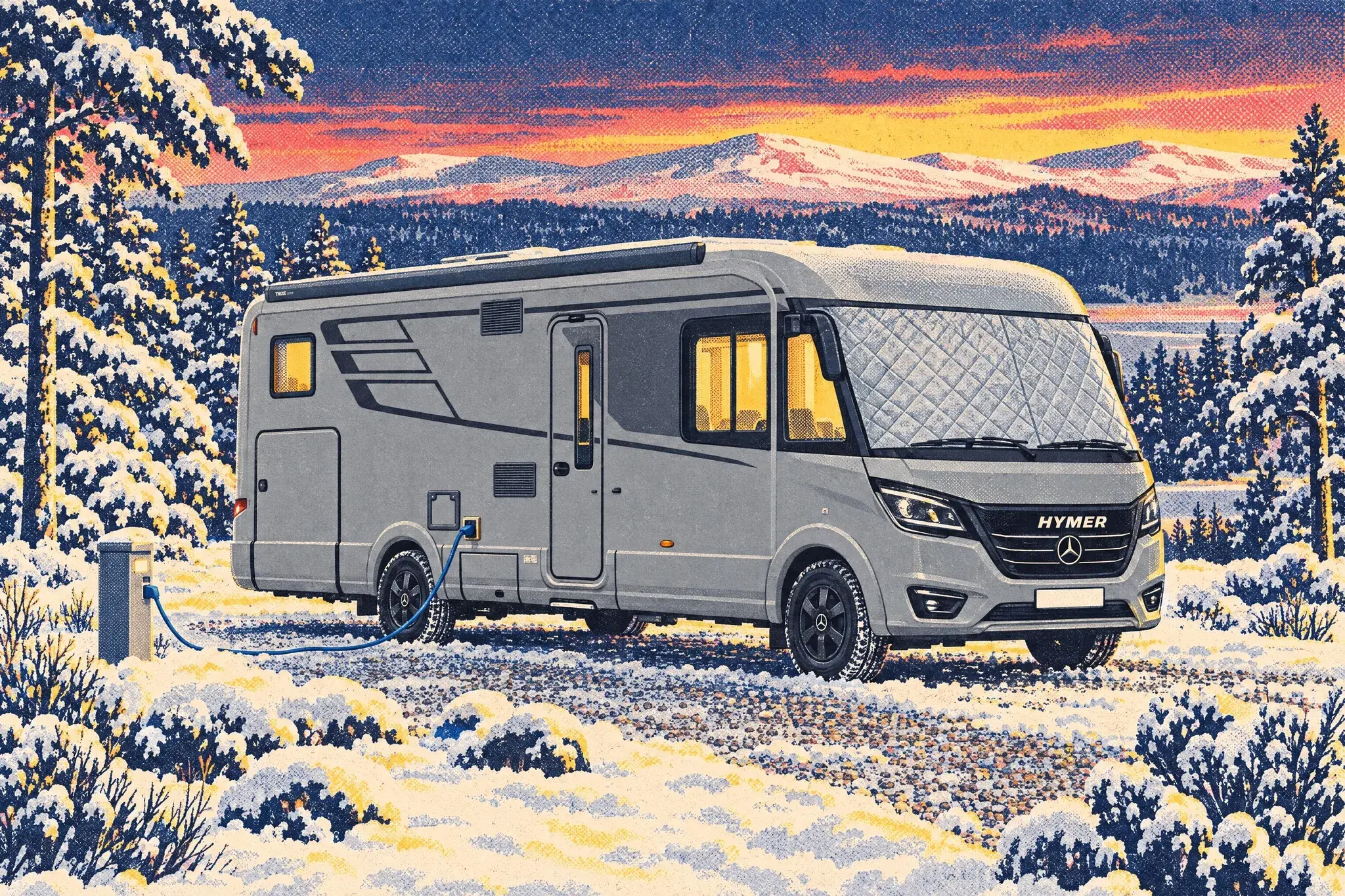
The short answer
Alde wet heating warms an A-class motorhome with hot water flowing through wall convectors, giving that quiet, even, genuinely house-like warmth owners love. The clever thing to understand is that the 'Arctic' or winter comfort packs do not make the heater hotter, they make the whole van cope with real cold, and the parts worth paying for are structural: a heated double floor, tank protection, the 12V circulation pump for even heat, and cab and windscreen insulation. A spring-to-autumn tourer who meets the odd frost can happily skip the full stack; a genuine winter or ski user should buy the lot and not overthink it. Match it to how you actually travel and the van simply works when the weather does its worst. Here is exactly what Arctic Comfort Plus buys you.

Alde heating keeps a motorhome warm using hot water, the same way the radiators in a house do. There is a small boiler, a loop of pipes filled with a water and glycol mix, and slim convectors along the walls that give off heat. It is quiet, it is even, and once you have lived with it you understand why so many A-class motorhomes are built around it.
But there is a catch that confuses a lot of buyers. The brochure phrases vary by brand and model year. You will see badges like 'Arctic pack', 'winter pack', 'cold weather package' and, on some configurators, 'Arctic Comfort Plus'. These are not all the same thing, and none of them magically turn a summer van into an alpine ski lodge. Some of what they add is genuinely useful in a British winter. Some of it you will rarely notice. And a couple of items are arguably things the van should have had anyway.
This guide explains exactly how Alde wet heating works, what the cold weather packs really bundle together, what each part does in real use, and how to judge whether the upgrade is worth the money on the specific van in front of you. The focus is A-class motorhomes because that is where Alde is most common, but most of it applies to any van fitted with the system.
What Alde actually is, in plain terms
Most campervans and many coachbuilt motorhomes use a blown-air heater. That is a unit, usually running on gas or diesel, that heats air and pushes it round the van through ducting and out of vents. It works, it is light, and it warms a small space quickly.
Alde is different. It is a hydronic, or 'wet', central heating system. Instead of moving hot air around, it heats a liquid and circulates that liquid through pipes to convectors fitted along the base of the walls. Heat radiates and convects gently into the room. There is no roaring fan blasting warm air at your ankles. The warmth feels more like a well heated house and less like a hairdryer.
The system has a few core parts that are worth knowing by name, because every conversation about cold weather packs comes back to them.
The boiler
At the heart of it sits a compact boiler, usually mounted in a locker or under a seat. On most A-class motorhomes it is a combined unit that can run on gas (LPG), on 230V mains electricity when you are hooked up on a campsite, or on both at once for faster heat. The current generation, the Alde Compact 3030, is the one you will meet most often. It heats the glycol loop and, through a heat exchanger, also heats your domestic hot water.
The glycol loop
The pipes are filled with a mix of water and glycol, similar in principle to the coolant in a car engine. The glycol does two jobs. It stops the liquid freezing in winter, and it protects the metal parts of the system from corrosion. This fluid is not 'fit and forget'. The corrosion inhibitors in it degrade over time, which is why Alde specify a fluid change roughly every two years. Skipping that is one of the most common and most expensive owner mistakes, and we will come back to it.
The convectors
Along the bottom of the walls you will see slim panels, often behind a finned cover. Hot fluid passes through these and the heat rises into the room. Because they run along the perimeter, the warmth is spread out rather than coming from one point. That even distribution is the single biggest reason people prefer wet heating once they have tried it.
The hot water tank
Alde heats your tap water as part of the same system. There is no separate water heater. On the Compact 3030 the domestic hot water is heated quickly and refreshed continuously while the boiler runs, so you are less likely to run out mid shower than with a small fixed tank that has to reheat from cold.
The control panel
Modern installs use a clear touch panel where you set the cabin temperature, the hot water, and timers. You set a target temperature like you would a house thermostat, and the system holds it. That is a meaningful difference from a basic blown-air setup where you tend to nudge a dial up and down.
Why A-class motorhomes lean on Alde
An A-class is the big, coach-built-from-the-ground-up motorhome where the cab is part of the body rather than a van front grafted on. They tend to be larger, better insulated, and bought by people who intend to use them properly, including out of season. That buyer profile and Alde are a natural fit.
There are a few practical reasons the pairing makes sense:
- Even heat in a big space. A large A-class has a lot of volume to warm. Perimeter convectors spread heat far better across that volume than a single air outlet.
- Quiet running. A-class owners often stay put for longer and value calm. No fan noise overnight is a real comfort.
- Hot water on tap. The combined hot water performance suits longer trips and multiple people.
- Cold weather credibility. Many A-class buyers want a van they can use in winter, for skiing or simply for off-season touring, and a wet system with the right extras handles that well.
None of this makes blown-air bad. It is lighter, cheaper, and warms quickly, which is exactly right for a small campervan. But in a heavy, spacious A-class used across the seasons, the case for wet heating is strong.
What the cold weather packs are actually trying to solve
Before we list what is in a typical 'Arctic' or winter pack, it helps to understand the problem it is solving. A motorhome in genuine cold has three separate challenges, and they are not the same thing.
Keeping the people warm
This is the obvious one. The cabin needs to hold a comfortable temperature even when it is well below freezing outside, and you do not want cold spots by the windows or the floor.
Keeping the services working
A motorhome carries water. Fresh water tanks, waste tanks, and the pipes between them all sit in or under the floor. If those freeze, you have no working sink, no shower, no flushing toilet, and potentially a cracked pipe or tank. Keeping the body warm is not enough. You have to keep the plumbing above freezing too, including the bits hanging under the floor in the wind.
Keeping the system itself protected
The Alde glycol stops the heating loop freezing, but the rest of the van still needs care. And the gas supply itself can struggle in deep cold if you are running standard butane, because butane stops vaporising properly at low temperatures.
A good cold weather pack chips away at all three of these. A weak one only addresses the first. That distinction is the whole point of this article.
What is usually inside an 'Arctic' or winter comfort pack
Exact contents vary by manufacturer, model and year, so always read the specific spec sheet. But across the A-class market, a winter or Arctic comfort package tends to draw from this list.
A heated, insulated double floor or underfloor heating runs
The single most valuable cold weather feature in many A-class motorhomes is a heated double floor. This is a sealed cavity beneath the living floor that holds the water tanks and pipework inside the warmed envelope of the van, rather than slung underneath exposed to the wind. Alde pipes are routed through this space so the floor itself is gently warmed and, crucially, the plumbing stays above freezing.
If your van has a true heated double floor, you have solved most of the 'frozen services' problem in one go. This is the part of a winter pack most worth paying for.
Tank heating elements or warmed tank bays
Where there is no double floor, or in addition to it, packs often add heating to the fresh and waste tanks. This can be an Alde pipe loop run past the tank, or in some setups an electric element. The waste tank is the one people forget. A frozen waste tank means the shower and sink have nowhere to drain.
Extra convectors and better heat distribution
Some packs add convector capacity in cold corners, around the cab area, in the washroom, or in the garage. A-class cabs are a known weak point because of the large windscreen, so cab heating matters.
Windscreen and cab insulation
That big A-class windscreen is a huge pane of glass and a major heat loss point. Cold weather packages sometimes include better internal thermal blinds, insulated screens, or improved cab door and window sealing.
The 12V circulation pump and 'Comfort' control upgrade
Here is where names like 'comfort' come from. The basic Alde system relies partly on natural convection to move the fluid. Adding the 12V circulation pump, sometimes branded as a comfort upgrade, forces the fluid round the loop evenly and quickly. This gives faster, more even warm up and lets the system push heat into corners that natural convection struggles to reach. On many vans this pump is standard now, but on some it sits inside the upgraded pack.
An electric immersion or higher mains element
Running on mains hook-up is cheaper and cleaner than burning gas, especially with site electricity included in your pitch fee. Cold weather packs sometimes bump up the available mains heating wattage, or ensure the boiler can run gas and electric together for faster recovery on bitter mornings.
Battery and habitation area protection
Leisure batteries lose capacity and charge poorly in the cold, and lithium batteries in particular must not be charged below freezing. Some winter packages include battery compartment heating or relocate the battery into the warmed double floor.
Frost protection and drain-down automation
Higher-end systems include automatic frost protection that kicks the heating on if the cabin drops near freezing, and easy drain points so you can empty the system quickly when you put the van away.
So what does 'Arctic Comfort Plus' specifically buy you
Because the exact badge varies, treat 'Arctic Comfort Plus' as the top-tier bundle rather than a single fixed list. When a manufacturer uses a 'Plus' or top-level name, you are generally paying for the full stack rather than a partial one. In practice that usually means the combination of:
- A fully heated, insulated double floor with the water system inside the warm envelope.
- The 12V circulation pump for even, fast heat distribution.
- Additional convectors in the cab, washroom and any garage or rear storage.
- Tank protection, including the waste tank.
- Enhanced cab and windscreen insulation.
- Battery compartment protection.
- Frost protection logic built into the control panel.
The 'Comfort' part of the name almost always refers to the circulation pump and the even heat it delivers. The 'Arctic' part refers to the freeze protection of the services and the structure. The 'Plus' part is the manufacturer telling you this is the complete winter specification rather than the entry option.
The honest summary is this: the most expensive winter pack does not make the heater hotter. It makes the whole van behave properly when it is genuinely cold, and it keeps your water working. That is what you are buying.
What it does not buy you
It is just as important to be clear about what these packs are not, because a few myths cost people money.
It is not a more powerful heater
The boiler output is the boiler output. The Compact 3030 produces a set amount of heat on gas, on electric, or combined. A winter pack does not increase that figure. What it does is help that heat reach everywhere and stop it leaking out as fast. If your van is genuinely struggling to get warm at all, the answer is usually insulation, sealing, and distribution, not a bigger number on the boiler.
It is not a substitute for using the van properly
Even a fully specced winter van needs sensible habits in the cold. You still benefit from thermal screens on the windscreen, from keeping the heating ticking over rather than letting the van go stone cold, from managing condensation with ventilation, and from running propane rather than butane. The pack helps. It does not replace technique.
It is not always all-or-nothing
On some vans the double floor is standard and the 'pack' only adds the pump and a few convectors. On others the double floor is the pack. Read what is actually included before assuming the badge means everything.
Gas matters more than people expect: propane vs butane
This is the detail that catches out new winter campers, and no comfort pack can save you from getting it wrong. LPG comes in two common forms in the UK, butane (often blue bottles) and propane (often red bottles). They are not interchangeable in cold weather.
Butane stops turning from liquid to gas at around freezing point. Below roughly zero degrees it simply will not feed your appliances properly, so your heater starves of fuel exactly when you need it most. Propane keeps vaporising down to around minus 40 degrees, which is far colder than any British winter. For winter use you want propane.
This is why serious winter motorhomers often fit a refillable LPG system such as Gaslow, where you refill propane at a forecourt LPG pump and never have to swap a bottle. It is cleaner, cheaper per litre than exchange bottles, and you always have winter-capable fuel on board. If you do a lot of cold weather touring, a refillable propane setup is arguably a better spend than some of the optional convectors.
Running on gas versus mains: the cost reality
One of the quiet pleasures of an Alde system is being able to choose your energy source. Understanding the trade-off helps you run the van cheaply.
On gas
Gas heating is independent. You do not need a hook-up, so you can keep warm wild camping or on an Aire with no electricity. The downside is that LPG is not cheap and a hard winter can get through a surprising amount. As a rough guide, sustained heating in genuine cold can work through the best part of an 11kg bottle in a handful of days, sometimes faster. That is why refillable tanks make sense for regular winter users.
On mains electric
When you are on a hook-up, especially one where electricity is included in the pitch fee, running the boiler on its electric element is usually the cheaper and quieter option. The limitation is the site's amperage. Many UK sites supply 16A, some only 10A or even 6A on smaller pitches. The Alde electric element draws a meaningful chunk of that, and if you are also running a kettle, a fan heater, and charging things, you can trip the bollard. Knowing your site's supply and managing your load matters.
Both together
For the coldest mornings, running gas and electric at the same time gives the fastest warm up and the quickest hot water recovery. Once the van is up to temperature you can drop back to electric only to hold it. This combined mode is one of the genuinely clever things about the system and one reason the upgraded control and pump are worth having.
The maintenance reality nobody mentions in the showroom
Alde is reliable, but it is not maintenance-free, and the costs of neglect are real. If you are buying a used A-class with Alde, the service history of the heating is as important as the engine.
The glycol fluid change
This is the big one. The water and glycol mix contains corrosion inhibitors that wear out. Alde specify changing the fluid roughly every two years. If it is not changed, the inhibitors stop protecting the metal, and you can get internal corrosion in the boiler and pipework. A failed boiler is an expensive repair. A fluid change at a service is cheap by comparison. When buying used, ask directly: when was the glycol last changed, and is there paperwork?
Checking the fluid level and pressure
The system runs at a low pressure and the level needs to be kept in the right range. Owners can top up themselves with the correct premixed fluid, but it is worth understanding the expansion tank and how to read it.
Servicing the boiler
Like any gas appliance, the boiler should be checked periodically by someone competent, ideally as part of a habitation service. The gas side should be checked for safe operation and the electrical element and controls verified.
The price of getting it wrong
Two figures put this in perspective. A glycol fluid service is a modest cost, typically in the low hundreds including labour depending on who does it. A replacement boiler runs into four figures. Keeping up the cheap maintenance avoids the expensive failure. This is exactly the kind of small print that makes the difference between a van that costs little to keep and one that surprises you.
Condensation: the winter problem the heater cannot fix
Wet heating gives lovely dry, even warmth, but every motorhome in winter fights condensation, and a warm van actually makes it more visible. Warm air holds more moisture, and when that air touches a cold surface like a window or a poorly insulated corner, the moisture condenses into water. Two adults breathing and cooking overnight put a remarkable amount of water into the air.
The cure is ventilation, not just heat. You need a small amount of air moving through the van at all times, which is why motorhomes have fixed roof vents and floor vents that you must never block. In a winter-specced van the temptation is to seal everything up to keep heat in, but that traps moisture and you wake up to wet windows and damp soft furnishings.
Practical habits that work:
- Crack a roof vent open even in cold weather to let moist air escape.
- Use thermal screens on the windscreen and cab windows to keep those cold surfaces from being the condensation magnet.
- Wipe down windows in the morning rather than letting water pool on sills.
- Ventilate well when cooking and showering, the two biggest moisture sources.
- Keep the heating ticking over rather than letting the van swing cold then hot, which encourages condensation cycles.
None of this is a fault of the heating. It is physics, and it applies to every van. A winter pack with better cab insulation reduces cold surfaces, which genuinely helps, but it does not remove the need for ventilation.
How wet heating compares with blown air, honestly
It would be easy to present Alde as simply better. The truth is more balanced, and which system suits you depends on how you use the van.
Where wet heating wins
- Even, gentle warmth. No hot blast, no cold corners, more like a house.
- Quiet. No fan running overnight.
- Hot water integration. One system does heating and plentiful hot water.
- Comfort in large spaces. Better suited to the volume of an A-class.
Where blown air wins
- Speed. Air heats faster than a body of liquid, so a cold van warms quickly.
- Weight. Wet systems are heavier because of the fluid, pipes and convectors. In a payload-tight van that matters.
- Cost and simplicity. Fewer parts, cheaper to fit and maintain, and no glycol changes.
- Drying. Blown air is good at drying wet kit quickly via ducted outlets.
In a compact campervan, blown air is often the sensible choice. In a heavy, spacious, seasons-round A-class, wet heating earns its place. Neither is wrong. They are different tools.
Weight and payload: the hidden cost of a winter pack
A-class motorhomes already carry a lot of weight, and many sit closer to their maximum permitted mass than owners realise. Every winter feature adds kilos. The fluid in an Alde loop, the extra convectors, the double floor structure, the additional insulation, and any extra batteries all add up.
This matters because of the legal weight limits and your driving licence. A motorhome over 3,500kg needs the C1 entitlement, which younger drivers may not automatically hold, and even within your licence the van must not exceed its maximum technically permissible laden mass. Loading a heavily specced A-class with passengers, full water, gas and gear can leave very little spare payload.
Before adding every optional winter item, find out:
- The van's maximum permitted mass and its unladen 'mass in running order'.
- How much payload that leaves for people and belongings.
- Whether the chassis can be uprated to a higher plated weight, which some A-class chassis can.
A winter pack that pushes you over your legal limit, or that needs a heavier licence category, is a poor trade if you cannot actually load the van for a real trip. This is worth a proper weight calculation, ideally a weighbridge check, before you commit.
Living with it day to day
Beyond winter extremes, how does an Alde-heated A-class feel in normal use across a British year?
Spring and autumn
This is where it shines. Chilly mornings and cool evenings are exactly the conditions where gentle, even warmth and ready hot water make a van feel like a home rather than a tent with a heater. You set a temperature on the panel and forget about it.
Deep winter
With the right pack, propane gas, thermal screens and sensible ventilation, a well-built A-class is genuinely usable in snow and hard frost. Ski trips and off-season touring become realistic. Your running cost goes up because heating runs more, but the experience is comfortable.
Summer
You mostly use the system just for hot water, often on electric when hooked up. It quietly does its job. The weight you carry for the heating is dead weight in summer, which is the trade-off for the winter capability.
Storage and lay-up
When the van sits unused over a hard winter, you have a choice. Keep low-level frost protection running if it is plugged in, or drain the water system down to protect it. The glycol loop itself is protected by the glycol, but the fresh and waste water lines are not, so draining the domestic water is the safe move for unheated storage. Easy drain points, sometimes part of a winter pack, make this far less of a chore.
Buying advice: new configurator choices
If you are speccing a new A-class, here is how to think about the winter options rather than just ticking the top box.
Ask what is standard before you add anything
On many A-class models the heated double floor and the circulation pump are already standard. If so, the named winter pack may only be adding marginal extras, and the value question changes completely. Get the standard specification in writing first.
Prioritise the structural items
If you have to choose, spend on the things you cannot easily add later: the heated double floor, the tank protection, and proper cab insulation. These are built into the van. Convectors and pumps can sometimes be added, but structure cannot.
Match the spec to your actual use
If you genuinely tour in winter or ski, buy the full pack without hesitation. If you are a spring-to-autumn user who occasionally catches a frosty morning, a mid-level option plus good thermal screens and propane gas may serve you just as well for less money.
Think about gas supply
Factor a refillable propane system into your budget if winter use is on the cards. It often delivers more real winter benefit than the last few optional convectors.
Buying advice: used A-class with Alde
Buying used is where the homework really pays off, because the heating's history tells you how the van has been cared for.
Ask for the glycol service history
This is the single most revealing question. A seller who can show regular two-yearly fluid changes has looked after the van. One who cannot, or who looks blank, is a flag. Budget for an immediate fluid change if there is any doubt.
Test everything cold and hot
Run the heating on gas and on electric, separately and together. Confirm hot water comes through quickly. Listen to the circulation pump. Check the control panel works and holds a temperature. Feel the convectors warming evenly around the van.
Check for past freeze damage
Look for signs of cracked pipes, repaired tanks, or water staining. A van that was stored wet through a hard winter without protection can have hidden damage. Ask how it was stored.
Get a habitation check
A proper habitation service includes the heating and gas system. If the van has not had one recently, factor it in. It is the motorhome equivalent of a service history and it protects you.
Verify the actual winter spec
Do not assume an old A-class has a heated double floor just because it is an A-class. Confirm what is fitted. The difference between a van with the full Arctic spec and a base one is large in winter, and you should pay accordingly.
Common mistakes owners make
A few recurring errors turn a great system into a frustrating one. Most are easy to avoid once you know them.
- Skipping the glycol change. The classic expensive mistake. Keep it on schedule.
- Running butane in winter. The heater starves of gas in the cold and people assume it has failed. Use propane.
- Blocking vents to keep heat in. This traps moisture and creates condensation and damp. Ventilate.
- Letting the van go stone cold then blasting it. Wet systems warm steadily. Keep them ticking over in cold weather rather than swinging between extremes.
- Ignoring the waste tank. A frozen waste tank stops everything draining. Protect it or empty it.
- Overloading the electric circuit on site. Know your bollard amperage and manage your loads.
- Forgetting payload. Loading a heavily specced van past its legal weight. Weigh it.
A note on energy and responsible use
Heating a large motorhome in deep winter uses real energy, whether gas or electric. None of that is wrong, but it is worth being thoughtful. Running on site mains where electricity is renewable-backed, using thermal screens to cut heat loss, keeping the van at a sensible rather than tropical temperature, and not heating an empty van all reduce both your costs and your footprint. Wet heating's even, low-and-steady running style actually lends itself to efficient use, because holding a steady temperature is more efficient than repeated reheating from cold.
The bottom line
Alde wet heating is one of the genuine pleasures of a well-built A-class motorhome. It is quiet, even, and comfortable in a way blown air cannot match in a large space, and it handles hot water cleanly as part of the same system. For a van you intend to use across the seasons, it is the right kind of heating.
The cold weather packs, whatever they are badged on a given model, are not about making the heater hotter. They are about making the whole van cope with real cold. The parts worth paying for are structural and protective: the heated double floor that keeps your water system inside the warm envelope, tank protection including the waste tank, the circulation pump that spreads heat evenly, and proper cab and windscreen insulation. Those earn their money for anyone who touches winter.
The parts you can take or leave depend on how you actually use the van. A pure spring-to-autumn tourer who occasionally meets a frost does not need the full Arctic stack and would do better spending on thermal screens and a refillable propane system. A genuine winter or ski user should buy the lot without overthinking it.
And whatever you buy, the system rewards care. Change the glycol on schedule, run propane in the cold, ventilate against condensation, watch your payload, and get a regular habitation check. Do that, and an Alde-heated A-class will keep you warm, dry and comfortable in conditions that would have most vans shivering. That, in the end, is what 'Arctic Comfort Plus' really buys you: not a hotter heater, but a motorhome that simply works when the weather does its worst.
Common questions
What is Alde heating?
Alde is a wet central heating system, the same idea as house radiators. A small boiler heats a water and glycol mix that circulates through pipes to slim convectors along the walls, giving quiet, even warmth. On most A-class motorhomes it is a combined unit (commonly the Alde Compact 3030) that runs on gas, on mains electricity when hooked up, or both at once.
What does an Arctic Comfort Plus or winter pack actually add?
Not a hotter heater. These packs bundle the things that make a van cope with real cold: typically a heated double floor, tank heating or warmed tank bays, extra convectors and better heat distribution, the 12V circulation pump, and cab and windscreen insulation. The structural and protective items are the ones worth paying for, especially if you touch winter.
Does Alde heating make a van warm enough for winter on its own?
The heat is excellent, but the heater alone does not make a van winter-proof. It needs the structural support: a heated double floor and protected tanks so the water system stays inside the warm envelope, good insulation, and the circulation pump to spread heat evenly. Without those, you get a warm lounge and frozen pipes.
Should you run Alde on gas or mains electricity in winter?
Both have a place. On mains hook-up it is cheap and silent, but many UK pitches only supply 16A, 10A or even 6A, which limits the electric output, so in genuine cold you often lean on gas or run both together for faster heat. Use propane rather than butane, because propane keeps working down to around minus 40 degrees while butane struggles near freezing.
What does an Alde system cost to maintain?
The main task is the glycol fluid, which should be checked for level and pressure and changed periodically on schedule, plus regular boiler servicing and a habitation check. Skipping the glycol change risks corrosion and expensive damage. In genuine cold, also budget gas: sustained winter heating can work through most of an 11kg bottle in a handful of days.
Who should buy the full Alde winter pack?
A genuine winter or ski user should buy the lot without overthinking it. A spring-to-autumn tourer who only occasionally meets a frost does not need the full Arctic stack and would do better spending on thermal screens and a refillable propane system. Match the spec to how you actually use the van, and watch the payload, because winter kit adds weight.
The reachable bit
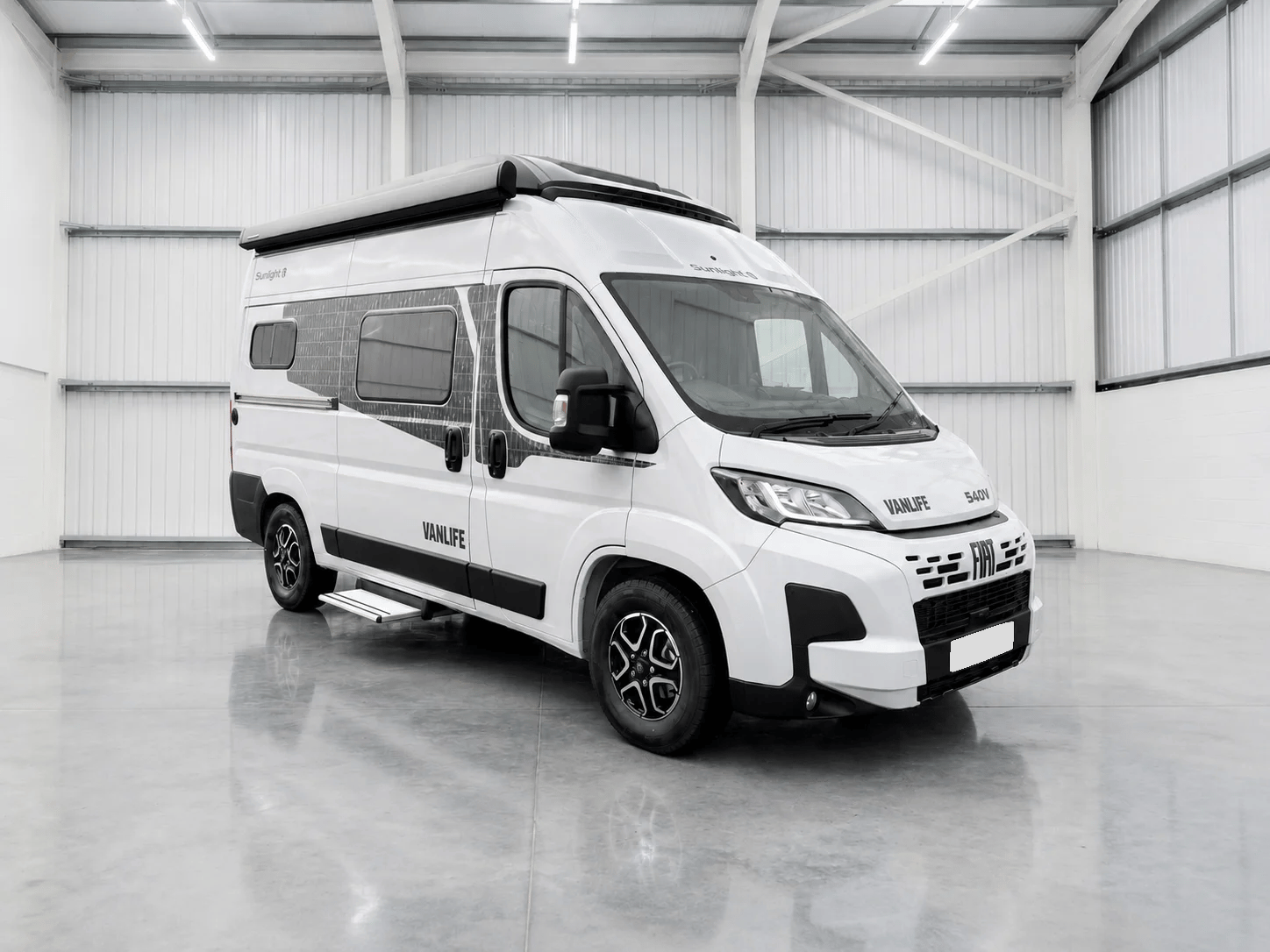
The camper you fall for is rarely the one you can afford. That gap is the whole reason Campervan.win exists. Right now we’re giving away the Sunlight Vanlife, worth around £65,000, and closing that gap is the point: capped entries so the odds stay honest, £10 a ticket, a maximum of five per person, £500 to a UK charity from every full draw, the winner picked by a public randomness beacon anyone can re-check, and one person driving away in the van itself.
Enjoyed this post?
Get more honest campervan guides like this one in your inbox.
You’re in!
Check your inbox. We’ve just sent you a welcome email.

About the author
Leo
Leo covers campervan technology, maintenance, kit, and ownership advice, with a clear, practical focus on how things work in real life.
Keep Reading
Related Reading
Thoughtful articles that build on what you’ve just read.

Motorhome Tech, Heating & Systems
15 min read
Gas-free motorhomes: living without LPG through a UK winter is possible but not simple
A growing list of motorhomes now leave the factory with no gas at all. We look at what gas does in a typical van, what replaces each job, and whether diesel heating, induction cooking and a big lithium bank can cope with short British days, weak winter solar and campsite hook-up.
Motorhome Tech, Heating & Systems
13 min read
Thetford's £420 separating kit changes the cassette chore, and a microwave toilet is next
Thetford now sells a kit that turns its C220 and C260 cassette toilets into separating toilets, Dometic has shown rival kits, and a microwave toilet that burns waste to ash has appeared in Germany. Each one changes the least-loved job in the van in its own way, and each suits a different kind of owner.
Motorhome Tech, Heating & Systems
29 min read
Heated storage and double floors: the cold-weather feature checklist for motorhome buyers
A clear, honest guide to the features that actually keep a motorhome usable in a British winter, from double floors and heated storage to insulation, freeze protection and the standards worth checking before you buy.
Motorhome Tech, Heating & Systems
24 min read
The Hymer SLC chassis explained: what the Super Light Chassis changes for ride and handling
SLC is Hymer's Super Light Chassis, built on a front-wheel-drive Mercedes Sprinter with a lowered double floor and independent suspension. The piece explains the low centre of gravity, payload and handling benefits, and the front-drive traction trade-off versus rear-wheel-drive Sprinter conversions.