
Motorhome Tech, Heating & Systems
The Hymer SLC chassis explained: what the Super Light Chassis changes for ride and handling

Written by
Felix
Felix covers campervan technology, layouts, and modern conversions, with a focus on design-led thinking and practical performance
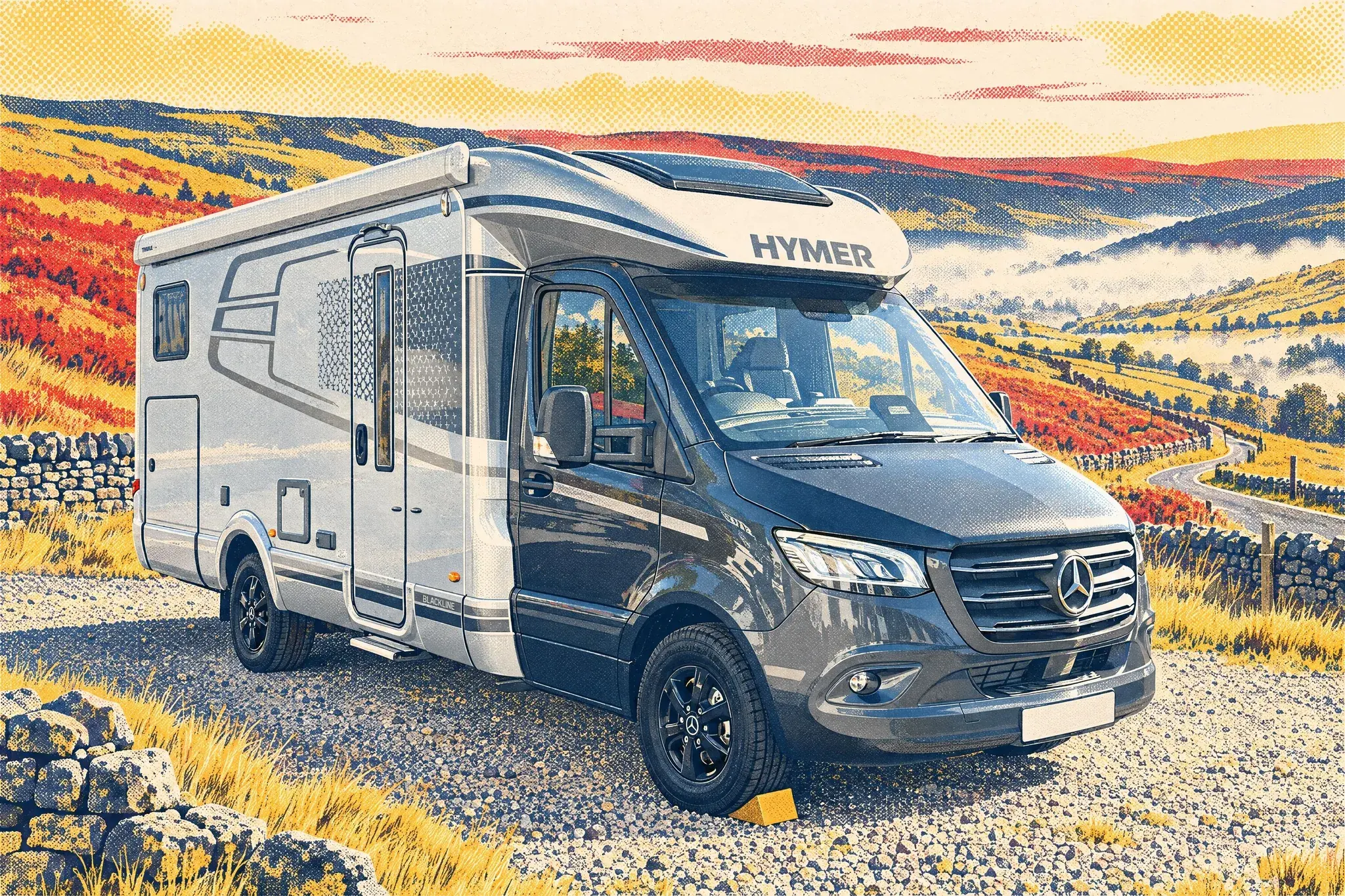
The short answer
SLC means Hymer's Super Light Chassis: a front-wheel-drive Mercedes Sprinter with a lowered, heated double floor and independent suspension. The low centre of gravity gives a calmer, flatter drive and saves around 16% in weight for up to about 600 kg payload at 3.5 tonnes. The trade-off is front-drive traction, where rear-wheel-drive Sprinter conversions hold an advantage.

If you have looked at a Hymer and seen the letters SLC, you may have wondered what they mean. SLC stands for Super Light Chassis. It is Hymer's own chassis, built on a front-wheel-drive Mercedes-Benz Sprinter, with a lowered double floor and independent rear suspension. This article explains what that actually changes when you are behind the wheel, and how it compares with the other low chassis you will meet on the forecourt.
Why the chassis matters more than the bodywork
Two motorhomes with almost identical interiors can drive completely differently, and the reason usually sits underneath. The frame, the suspension geometry, the track width, and where the weight sits decide how a tall, top-heavy body behaves on a fast road or in a gust. The living area gets the attention in the brochure, but the chassis is the part that determines how planted the whole thing feels. The SLC is Hymer's answer to that, which is why it is worth understanding before you judge a van by its kitchen.
What the SLC actually is
The Super Light Chassis is not a Mercedes part. Hymer designs and builds it, then mounts it on a Mercedes-Benz Sprinter base vehicle. The version Hymer uses for its low-profile and A-class models is the front-wheel-drive Sprinter. Front-wheel drive frees up the space under the floor that a rear propshaft would otherwise occupy, and that is what lets Hymer drop the floor and fit a deep double floor without raising the roof.
Three things define it. First, a lowered, heated double floor, around 36 cm deep, that gives a level living-area floor and up to about 1,000 litres of insulated, easily reached storage. Second, independent wheel suspension, which controls each wheel separately rather than tying them together on a rigid axle. Third, a low centre of gravity, because the floor and the mass above it sit lower than they would on a standard chassis cab. Hymer also quotes a weight saving of around 16% over a conventional chassis, which on a 3,500 kg vehicle can free up a payload of up to roughly 600 kg.
The centre of gravity problem, explained simply
Picture carrying a tray of drinks at waist height, then lifting it above your head. The weight has not changed, but the wobble is far harder to control higher up. A motorhome carries a lot of its mass high: solar panels, an overcab bed, roof lockers, the body itself. Dropping the floor pulls that mass downward. Hymer's own description is plain about the result: a low centre of gravity gives reduced roll and high driving stability. Less leverage at the top means less lean in corners and less shove in crosswinds.
Independent suspension and why it helps
On a rigid axle, a bump on one wheel disturbs the other. Independent suspension lets each wheel move on its own, so the tyre stays in better contact with the road through a corner or over rough ground. Hymer puts it simply: independent wheel suspension improves wheel control when cornering, which means more grip than a vehicle on a rigid axle. Combined with the low floor, that is the heart of the SLC's handling case. It is not about going faster. It is about staying settled.
Front-wheel, rear-wheel, and what the Sprinter base changes
This is where a lot of confusion creeps in, so it is worth being clear. The Mercedes Sprinter is sold in three forms: front-wheel drive, rear-wheel drive, and all-wheel drive (badged 4x4 on older vans, AWD on newer ones). They are not the same to drive.
The SLC uses the front-wheel-drive Sprinter. The benefit is packaging: no rear propshaft, so the floor can drop and the double floor can go in. The trade-off is traction. Front-wheel drive pulls from the front, and when a heavy van is fully laden, weight shifts rearward, which can leave the driven front wheels lighter on a steep, loose, or wet climb. For most touring on sealed roads it is a non-issue, but it is the honest cost of the low floor.
Rear-wheel drive, by contrast, is the Sprinter many coachbuilders choose when payload, towing, and loaded traction matter most, because the driven wheels sit under the load. All-wheel drive adds genuine grip in snow or off the tarmac, at the cost of fuel, weight, and price. So the SLC is not a rear-wheel-drive chassis, and you should not assume it behaves like one. It is a front-drive Sprinter that trades a little traction for a lower, lower-slung body.
Suspension tuning for a vehicle that is always heavy
A delivery van spends much of its life part-loaded or empty, so its suspension is a compromise between those states. A motorhome is different. Once it is furnished, plumbed, and packed, it runs near its maximum weight all the time. A chassis built for that, like the SLC, can be set up for the load it always carries rather than a load it rarely sees. The payoff is that the van settles after a bump instead of bobbing along, which is a large part of why a well-sorted motorhome chassis feels calmer than a converted van on standard springs.
What changes for you behind the wheel
Crosswinds. A tall body catches the wind, and on exposed motorway sections that means constant small corrections. A lower, more planted chassis cuts those corrections, and over a long drive that is less tiring.
Overtaking lorries and being overtaken. A passing truck throws a pressure pulse at you. A settled chassis rides that pulse rather than being knocked sideways, and you notice the difference dozens of times on a long trip.
Roundabouts and bends. Body roll, the lean toward the outside of a corner, drops with a lower centre of gravity. A run of bends feels more composed and less of an event.
Braking. Lower mass with controlled suspension means less dive under hard braking, which keeps the load planted across both axles and helps the ABS and stability systems do their job.
The everyday feel. Most of the benefit is simply calm. The van tracks straight, sits flat, and stops nagging at you, which is what makes a 300-mile day pleasant rather than draining.
Lower floor, lower roof, real interior gains
Easier access. A lower floor means a smaller step up. That matters for anyone with a dodgy knee, for older travellers, for children, and for dogs going in and out all day.
More usable height for less overall height. Because the double floor does not raise the roofline, you keep the headroom inside while the van stays lower overall. That trims wind drag a little, helps in height-limited car parks, and pushes the centre of gravity down further.
Better storage layouts. The heated double floor gives genuinely usable, insulated space under your feet, so tanks and gear can sit low and central rather than high in lockers. That is good for storage and good for stability at the same time.
Weight, payload, and licensing: read this carefully
The 3,500 kg reality. Most coachbuilt motorhomes are plated at 3,500 kg because a standard UK category B car licence (the test most people passed from 1 January 1997 onward) only covers vehicles to that weight. Above it you need category C1, which many newer drivers do not hold.
Why the SLC helps here. This is the SLC's strongest practical card. By saving around 16% over a conventional chassis, it can leave a useful payload, up to roughly 600 kg on a 3.5-tonne plate, before you add water, gas, bikes, and people. That said, real-world figures depend on the model and how it is specced, so always check the weighed payload of the actual van.
The upplating option. Many vans can be plated higher depending on the chassis and the builder. A capable chassis allows a safe higher rating, which solves a payload squeeze but may push you into needing C1.
Before you fall in love with a heavier-rated van, check your licence. Look at the categories on the back.
The practical decision. Get a weighbridge figure for a real van with full tanks and your chosen options, check your licence against the plated maximum, and work out whether the loads you actually carry fit inside the limit.
How the SLC compares with the alternatives
There are three mainstream ways to put a motorhome body on the road. First, a standard chassis cab with the body built on top: simplest, often cheapest, and the highest floor. Second, a specialist low-frame chassis from a supplier such as AL-KO, whose AMC chassis replaces the rear frame behind the cab to lower the floor and widen the track; it is well proven and, importantly, AL-KO offers it on front-wheel-drive bases like the Fiat Ducato and also on the rear-wheel-drive Sprinter. Third, a manufacturer's own integrated design, which is exactly what the Hymer SLC is.
The key contrast is the drivetrain. Hymer's SLC is built around the front-wheel-drive Sprinter and leans on packaging and weight saving. A coachbuilder using an AL-KO low-frame chassis on a rear-wheel-drive Sprinter is choosing the loaded traction and towing strength of rear drive instead. Both lower the floor and both lower the centre of gravity. They simply make a different choice about which wheels do the pulling, so do not assume one badge tells you the other.
Engines, gearbox, and how they suit the chassis
Why the automatic matters. The Sprinter's automatic keeps the engine in its torque band on a climb and responds promptly for an overtake, without the lurch of a manual change. On a Welsh pass or a Lake District climb that reduces fatigue and pairs neatly with a settled chassis.
Torque, not headline power. For a heavy van, low-down pulling power matters more than peak horsepower. A torquey diesel hauls a loaded motorhome uphill without straining. Higher-output engines suit hilly touring and towing; the base outputs are fine for gentler, flatter trips.
Real-world fuel and running costs
A motorhome is an aerodynamic brick, and the chassis cannot change physics by much. Owners commonly report somewhere around 20 to 35 mpg depending on weight, gearing, terrain, and how you drive. The lower roofline that comes with a low floor trims drag a little, not dramatically. Running costs are dominated by diesel, then servicing (Mercedes main dealers are not cheap, though independent specialists can be good value once the warranty is up), tyres (commercial-rated, not bargain items), insurance (often reasonable on a specialist policy given low mileage), and depreciation, which tends to be steady on a well-built van on a respected base.
Maintenance and ownership over time
Servicing the running gear. Engine, gearbox, and brakes follow the Sprinter's normal schedule and can be handled by any competent Mercedes commercial specialist. The SLC's own suspension and mounts may need documentation to hand, so keep the paperwork for the garage.
Corrosion and underbody care. A lower floor means some parts sit closer to road spray, salt, and grit. Underbody protection and a wash after winter are cheap insurance, and it is worth checking the suspension and the low-mounted tanks for stone damage and corrosion now and then.
The habitation service. Whatever the chassis, an annual habitation service checking damp, gas, electrics, and ventilation protects both safety and resale value.
How the chassis affects different layouts
Rear garage layouts. The double-floor design suits deep storage, and the GRP garage on these vans can carry serious loads. Tall garages work without forcing the bed too high, though the garage has its own rear-axle weight limit, so load it with care.
Low-line and flat-floor layouts. A low-profile body without an overcab pod suits the SLC's low centre of gravity best: it drives well and uses a little less fuel. Couples who value simplicity get the most from it.
Drop-down bed designs. Electric drop-down beds keep a permanent bed without losing daytime space. The level double-floor layout and clever packaging make these feel less cramped day to day.
What to check before you buy
- Confirm exactly what is underneath: a Hymer SLC on a front-wheel-drive Sprinter, an AL-KO low frame, or a standard chassis cab.
- Get a real weighed payload from a weighbridge with full fuel and your options fitted.
- Check your licence categories against the plated maximum weight.
- Ask for the front and rear axle weight limits separately.
- Test drive it, ideally loaded, on fast roads and in town.
- Sit inside for a proper while: make tea, lie on the bed, try the toilet and lockers.
- Measure the overall height and try the habitation step for everyone who will use it.
- Understand the warranty, where it will be serviced, and what is covered.
Common misunderstandings, cleared up
"The SLC is rear-wheel drive because it is a Mercedes." No. The Sprinter is sold in front-, rear-, and all-wheel drive, and Hymer builds the SLC on the front-wheel-drive version. That is the whole point of it: front drive frees the space for the low floor and double floor.
"A low chassis makes it slow." No. The chassis does not change the engine, and the lower roof may even help drag a touch. Performance comes from the engine, the gearbox, and the weight, not the floor height.
"Front-wheel drive is hopeless in winter." Not hopeless, but it is the trade-off to know. Front drive can struggle for grip on a steep, slippery climb when the van is heavily laden and weight has shifted rearward. Good winter tyres make a large difference, and if you regularly tour genuinely snowy regions, the all-wheel-drive Sprinter exists for that reason.
"Upgrading the chassis fixes a bad conversion." It does not. Poor build quality and bad weight distribution remain whatever the chassis underneath. Judge the conversion on its own merits, separately from the badge on the frame.
Who the SLC really suits
It is genuinely worth it if you want a calm, settled drive on long motorway miles, you value easy access from a lower step, you need usable, insulated storage in the floor, and you want a healthy payload at 3,500 kg without jumping to a C1 licence. The weight saving is the headline benefit, and the low centre of gravity is the one you feel.
You may want to look at a rear-wheel-drive alternative if loaded traction, heavy towing, or steep, loose-surface climbs are a regular part of your touring, since that is where front-wheel drive gives ground. In that case a coachbuilt on a rear-drive Sprinter, with or without an AL-KO low frame, may suit you better.
The bigger picture: where motorhome chassis design is heading
Manufacturers and chassis specialists increasingly treat motorhomes as serious engineering rather than vans with furniture: lower floors, wider tracks, suspension tuned for a permanent load, better refinement, and more car-derived driver aids. The Hymer SLC is one example of a maker building its own chassis to do this. Driver-assistance features such as adaptive cruise, lane keeping, and crosswind assist pair naturally with a settled chassis to cut fatigue. Full electrification is still hard at 3,500 kg because batteries are heavy, so for now the gains are about fixing the real weaknesses of a tall van rather than chasing performance.
The bottom line
SLC stands for Super Light Chassis, and it is Hymer's own chassis on a front-wheel-drive Mercedes Sprinter, with a lowered heated double floor and independent suspension. By dropping the floor and saving weight, it gives a calmer, flatter drive and a genuinely useful payload at 3,500 kg, with easy access and insulated underfloor storage as a bonus. The honest trade-off is front-wheel-drive traction, which can give ground when very heavily laden on a steep or slippery climb, and that is where a rear-wheel-drive Sprinter, sometimes on an AL-KO low frame, makes a different and equally valid choice. Work out which set of strengths matches how you actually travel, and check the payload and licence sums for real life before you sign.
Common questions
What does SLC stand for on a Hymer?
SLC stands for Super Light Chassis. It is Hymer's own chassis, built on a front-wheel-drive Mercedes-Benz Sprinter, with a lowered heated double floor and independent suspension. It is designed to give a low centre of gravity, useful payload, and a settled drive.
Is the Hymer SLC chassis front-wheel drive or rear-wheel drive?
Front-wheel drive. The Sprinter is sold in front-, rear-, and all-wheel-drive forms, and Hymer builds the SLC on the front-wheel-drive version. Front drive removes the rear propshaft, which is what allows the low floor and the deep double floor.
Does the SLC chassis improve ride and handling?
Yes, noticeably. The low centre of gravity reduces body roll and the independent suspension keeps the wheels in better contact with the road, so the van feels flatter and more planted in crosswinds, on fast roads, and through bends. It will not turn a heavy motorhome into a sports car, but it cuts long-drive fatigue.
What is the payload benefit of the Hymer Super Light Chassis?
Hymer quotes a weight saving of around 16% over a conventional chassis, which can leave a payload of up to roughly 600 kg on a 3,500 kg vehicle before you add water, gas, and gear. Real figures vary by model and specification, so always check a weighbridge ticket for the actual van.
How does the SLC compare with an AL-KO low chassis?
Both lower the floor and the centre of gravity. The difference is the drivetrain. The Hymer SLC uses a front-wheel-drive Sprinter, while a coachbuilder fitting an AL-KO low-frame chassis to a rear-wheel-drive Sprinter is choosing the loaded traction and towing strength of rear drive. AL-KO offers its chassis on both front- and rear-drive bases, so check what is actually underneath.
Is front-wheel drive a problem for a motorhome in winter or on hills?
It is the main trade-off to understand. When a van is heavily laden, weight shifts rearward, which can leave the driven front wheels short of grip on a steep, loose, or icy climb. Good winter tyres help a lot, and if you regularly tour genuinely snowy or off-road areas, the all-wheel-drive Sprinter exists for that reason.
The reachable bit
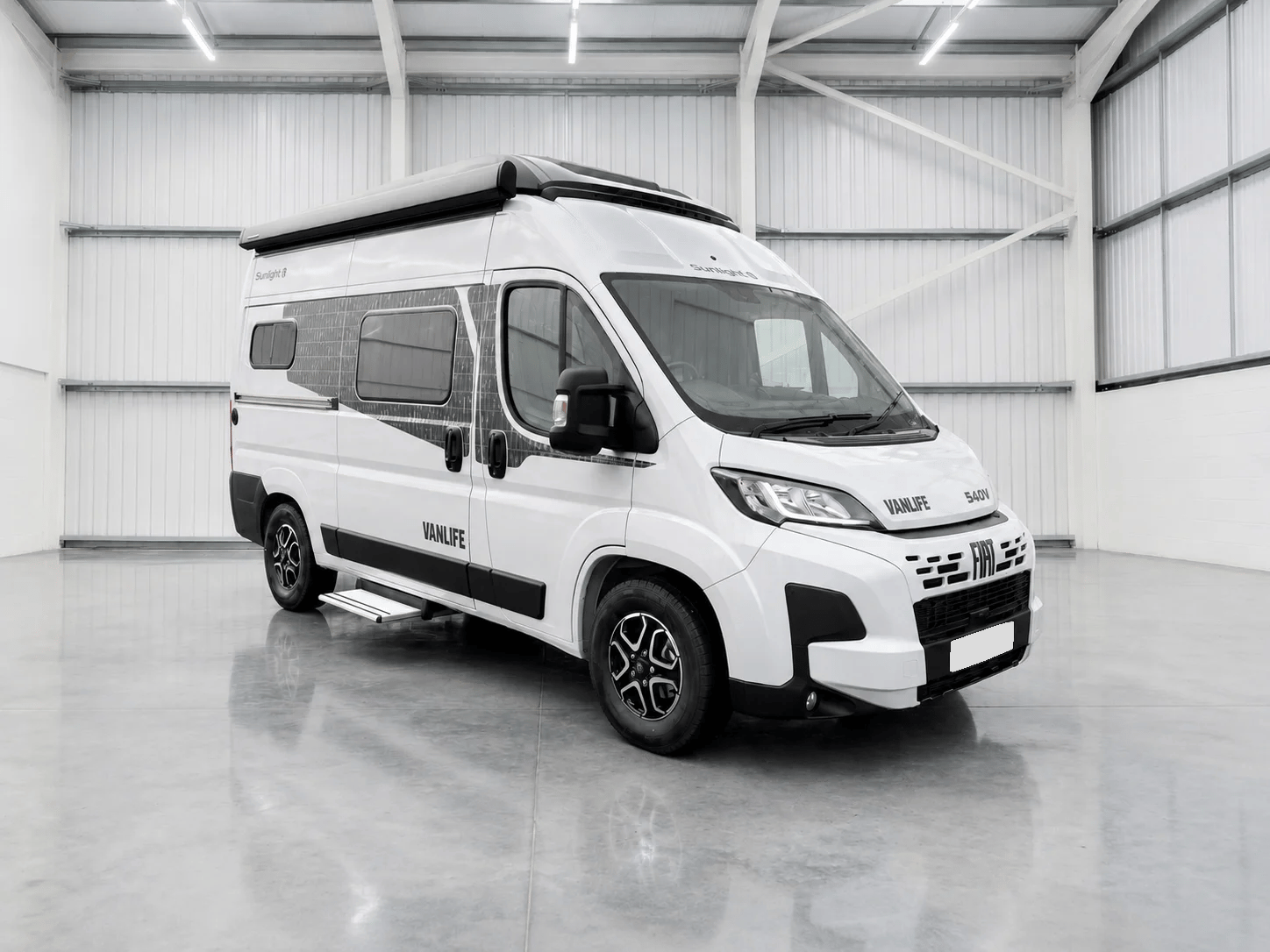
The camper you fall for is rarely the one you can afford. That gap is the whole reason Campervan.win exists. Right now we’re giving away the Sunlight Vanlife, worth around £65,000, and closing that gap is the point: capped entries so the odds stay honest, £10 a ticket, a maximum of five per person, £500 to a UK charity from every full draw, the winner picked by a public randomness beacon anyone can re-check, and one person driving away in the van itself.
Enjoyed this post?
Get more honest campervan guides like this one in your inbox.
You’re in!
Check your inbox. We’ve just sent you a welcome email.

About the author
Felix
Felix covers campervan technology, layouts, and modern conversions, with a focus on design-led thinking and practical performance
Keep Reading
Related Reading
Thoughtful articles that build on what you’ve just read.

Motorhome Tech, Heating & Systems
15 min read
Gas-free motorhomes: living without LPG through a UK winter is possible but not simple
A growing list of motorhomes now leave the factory with no gas at all. We look at what gas does in a typical van, what replaces each job, and whether diesel heating, induction cooking and a big lithium bank can cope with short British days, weak winter solar and campsite hook-up.
Motorhome Tech, Heating & Systems
13 min read
Thetford's £420 separating kit changes the cassette chore, and a microwave toilet is next
Thetford now sells a kit that turns its C220 and C260 cassette toilets into separating toilets, Dometic has shown rival kits, and a microwave toilet that burns waste to ash has appeared in Germany. Each one changes the least-loved job in the van in its own way, and each suits a different kind of owner.
Motorhome Tech, Heating & Systems
29 min read
Heated storage and double floors: the cold-weather feature checklist for motorhome buyers
A clear, honest guide to the features that actually keep a motorhome usable in a British winter, from double floors and heated storage to insulation, freeze protection and the standards worth checking before you buy.

Motorhome Tech, Heating & Systems
25 min read
Built-in WiFi and Alde heating: are connected, winterised motorhomes worth the premium?
Connected, winterised motorhomes cost more up front. We look honestly at what Alde wet heating and factory WiFi actually do, what they cost to run, and whether the premium pays off for how you really travel.