
The best campervan electrical systems, explained honestly

Written by
Leo
Leo covers campervan technology, maintenance, kit, and ownership advice, with a clear, practical focus on how things work in real life.
The short answer
The best campervan electrical system is the one matched to how you actually travel. For most UK users that means a lithium (LiFePO4) leisure battery, a DC-DC charger to charge safely while driving, solar to top up when parked, a mains charger for hook-up, and properly sized fusing and cable. Lead-acid still works fine for occasional, hook-up-based touring at lower cost.

Ask ten van owners about electrics and you will get ten answers, half of them contradictory. The truth is calmer than the forums suggest. A campervan electrical system is just a way of storing energy and moving it where you need it, safely. Get a few core decisions right and everything else falls into place. Get them wrong and you spend your trips watching a battery meter instead of the view.
This guide walks through what actually matters, what the components do, and what a genuinely good setup looks like for different kinds of travelling. No single system is best for everyone, so we will be honest about the trade-offs rather than crown a winner.
What a campervan electrical system actually does
Almost every leisure system in a UK van runs at 12 volts. That is the voltage your lights, water pump, fridge, fans, USB sockets and most heating controls expect. It is separate from the vehicle's starter battery, which exists only to crank the engine. The leisure side is yours to drain and recharge.
There are four jobs the system has to do:
- Store energy, in a leisure battery.
- Refill that energy, from the engine while you drive, from solar when parked, and from a mains hook-up when you have one.
- Distribute it safely, through fuses, cable and a control panel.
- Convert it where needed, mainly stepping 12V up to 230V mains with an inverter.
The best systems do all four well and are sized to how you really travel. The most expensive systems are not automatically the best. A modest setup that matches your habits beats an over-specified one that never gets used.
The leisure battery: the heart of the decision
This is the choice that shapes everything else, so it is worth slowing down here.
Lead-acid and AGM
Traditional lead-acid leisure batteries, including the sealed AGM type, are the long-standing default. They are cheap to buy and forgiving to charge from a basic system. The catch is usable capacity. To keep them healthy you should only draw them down to around half their rated capacity. So a 100Ah lead-acid battery realistically gives you about 50Ah of usable energy before you should recharge. They are also heavy for what you get, and they lose performance in cold weather.
For someone who tours mainly on campsites with hook-up, or only gets away a handful of weekends a year, a good AGM battery is perfectly sensible. There is no shame in the simple option.
Lithium (LiFePO4)
Lithium iron phosphate batteries have become the popular upgrade, and for active users the reasons are real:
- You can use most of the rated capacity, often 80 to 100 percent, so a 100Ah lithium gives you far more usable energy than a 100Ah lead-acid.
- They are much lighter, which matters when you are watching your payload.
- They charge faster and hold voltage steadily until nearly empty.
- They last for thousands of charge cycles when looked after.
The honest downsides are cost and cold. They cost considerably more upfront, though the price has fallen a lot in recent years. And standard LiFePO4 cells should not be charged below freezing, so a quality battery with a built-in heater or low-temperature cut-off is worth having if you tour in winter.
Rule of thumb: if you wild camp, work from the van, or travel for weeks at a time off hook-up, lithium usually pays for itself in comfort. If you mostly use sites with electric, lead-acid is still a fair choice.
Charging: where the energy comes from
A battery is only as good as your ability to refill it. Most well-built vans use three charging sources, and the best systems combine all three.
Charging while you drive
The old approach was a simple split-charge relay that connected the leisure battery to the alternator when the engine ran. It works, but it is crude and it does not suit lithium well, partly because modern vehicles with smart or variable-output alternators do not deliver a steady charging voltage.
The modern answer is a DC-DC charger, sometimes called a battery-to-battery or B2B charger. It takes power from the engine and feeds the leisure battery a controlled, correct charge regardless of what the alternator is doing. Common sizes are around 30 to 50 amps. A 30A unit can put a useful amount back into the battery on a couple of hours of driving. If you move every day or two, this is often your biggest source of energy.
Solar
Solar is the quiet hero of off-grid touring. Panels on the roof feed a solar charge controller, which feeds the battery. An MPPT controller is more efficient than the cheaper PWM type and is worth choosing.
How much solar you need depends on season and habit. In a sunny UK summer, 100 to 200W of panel can comfortably keep a modest system topped up if you are careful with usage. In midwinter, the same panels produce a fraction of that, sometimes very little for days. Solar is brilliant for extending stays in good light and useful even in winter, but do not expect it to carry a power-hungry system through a grey December week on its own.
Mains hook-up
On a campsite with electric, a 230V hook-up runs through a mains charger that refills the leisure battery while also powering 230V sockets in the van. A good multi-stage charger is gentle and thorough. This is the easiest, fastest way to fill the battery, which is exactly why hook-up-based touring lets you get away with a simpler, cheaper battery setup.
The inverter question
An inverter turns your 12V battery power into 230V mains so you can run household plugs. It sounds essential. Often it is not, and oversizing it is a classic and costly mistake.
Think about what you actually want to run:
- Phones, laptops, cameras, lights, fans, the fridge, the water pump. These either run on 12V directly or charge from USB. No inverter needed.
- A coffee machine, hairdryer, toaster, kettle or microwave. These pull a lot of power and need a large inverter, a big lithium bank and heavy cable to feed it.
A small inverter for charging a laptop is cheap and handy. A large 2000W-plus inverter to run a kettle is a serious system decision that drives up the cost of everything around it. There is nothing wrong with wanting mains appliances, but be honest about the chain reaction. Many happy van owners cook with gas and skip the big inverter entirely.
One more honest note: a kettle on an inverter empties a battery fast. Boiling water for two mugs can pull a meaningful chunk out of even a large bank. Gas is simply more efficient for heat.
Sizing your system honestly
The most useful thing you can do before spending money is a simple energy budget. Add up what you use in a typical day in watt-hours, then size storage and charging to suit. You do not need to be precise. You need to be roughly right.
- List your devices and how long each runs per day.
- Estimate the daily total. A frugal off-grid setup, with lights, phone charging, a fridge and a water pump, might use somewhere around 40 to 60Ah a day. Add a heavy fridge, a laptop and an inverter and that climbs quickly.
- Size your battery to cover one to two days without input, so you have a buffer for dull weather.
- Size your charging to replace that daily use comfortably from the sources you will realistically have.
This stops you from the two opposite mistakes: a battery so small you are always anxious, or a battery so large you can never charge it fully and you have paid for capacity you never touch.
Safety: the part that is not optional
This is where the best systems quietly stand apart. A neat battery and a clever charger mean nothing without correct protection. Electrical faults are one of the more serious risks in a van, and good practice is not difficult.
- Fuse close to the battery. Every positive cable leaving the battery should have a fuse near the battery terminal, sized for that cable, so a short cannot turn a wire into a heating element.
- Correct cable size. Cable must be thick enough for the current it carries. Thin cable on a high-current run gets hot and wastes energy. This matters especially for inverter and DC-DC charger feeds.
- Good connections. Loose or corroded terminals cause voltage drop, heat and faults. Use proper crimped lugs, not twisted wire under a screw.
- Mains side done properly. The 230V hook-up side should include an RCD and be wired to a safe standard. If you are not confident, this is the part to have checked by someone qualified.
- A battery monitor. A shunt-based monitor that shows true state of charge in amp-hours, rather than guessing from voltage, is one of the best-value additions you can make. It turns anxiety into information.
What a good setup looks like for different travellers
The occasional weekender on hook-up
A single good AGM or lead-acid leisure battery, a basic mains charger, and a small solar panel as a trickle top-up. A simple system, low cost, and entirely adequate if your nights are mostly on serviced sites. Add a small inverter only if you want to charge a laptop.
The regular UK tourer, mix of sites and stopovers
This is the sweet spot for many people. A 100 to 200Ah lithium battery, a DC-DC charger so driving refills you, around 150 to 200W of solar, a mains charger for hook-up nights, and a battery monitor. A modest inverter for small appliances. Comfortable, flexible, and not extravagant.
The off-grid and remote-working crowd
Larger lithium capacity, often 200Ah or more, generous solar, a higher-output DC-DC charger, and a properly sized inverter if mains appliances or work gear demand it. Here the energy budget really earns its keep, because the gap between a system that copes and one that always lets you down is wide.
Common mistakes worth avoiding
- Buying the battery first. Start with your energy budget, then choose capacity. Working backwards saves money.
- Mixing battery types. Do not wire a lithium and a lead-acid together in one bank. They want different charging and will fight each other.
- Forgetting payload. Batteries, inverters and cable are heavy. Every kilo counts against your van's weight limit, and lithium's lighter weight is a genuine advantage here.
- Skimping on fusing and cable to afford a fancier battery. The protection is the part you cannot cut corners on.
- Over-buying an inverter. If you are not cooking with electricity, you rarely need a big one.
- Ignoring winter. Solar drops, days are short, and standard lithium dislikes charging below freezing. Plan for the season you actually travel in.
The bottom line
There is no single best campervan electrical system, only the best one for how you travel. For a lot of UK owners that turns out to be a lithium battery, a DC-DC charger, sensible solar, a mains charger and a battery monitor, all protected by correct fusing and cable. For the weekend-and-hook-up crowd, a well-fused lead-acid setup is still a perfectly honest, money-saving choice.
Decide how you travel, build a rough energy budget, and let that shape the parts. Spend your money on safety and on capacity you will genuinely use, not on headline numbers. Do that and your electrics become the thing you never think about, which is exactly what a good system should be.
Common questions
Is lithium really worth the extra cost over lead-acid?
For active and off-grid travellers, usually yes. Lithium gives you far more usable capacity per amp-hour, weighs much less, and charges faster, which adds up to real comfort. If you mostly use campsites with hook-up and travel occasionally, a good lead-acid or AGM battery still does the job at a lower price.
How much solar do I need on a campervan?
It depends on the season and your usage. In UK summer, 100 to 200W of panel can keep a modest system topped up if you are careful. In winter, output drops sharply for days at a time, so treat solar as a strong top-up rather than your only charging source, and rely on driving or hook-up too.
Do I need an inverter in my van?
Only if you want to run 230V mains appliances. Phones, laptops, lights, fridges and water pumps run from 12V or USB without one. A small inverter for a laptop is cheap and handy, but a large inverter for kettles or hairdryers needs a big battery and heavy cable, so consider whether gas would do the job instead.
What is a DC-DC charger and why is it better than a split-charge relay?
A DC-DC, or battery-to-battery, charger takes power from your engine and feeds the leisure battery a controlled, correct charge regardless of what the alternator does. Modern vehicles with smart alternators do not suit simple split-charge relays, and lithium batteries in particular want the managed charging a DC-DC unit provides.
What is the most important safety step in a van electrical system?
Fusing every positive cable close to the battery, sized for that cable, so a short circuit cannot turn a wire into a fire risk. Pair that with correctly sized cable, solid crimped connections, and a properly wired mains side with an RCD. If you are unsure about the 230V side, have it checked by someone qualified.
The reachable bit
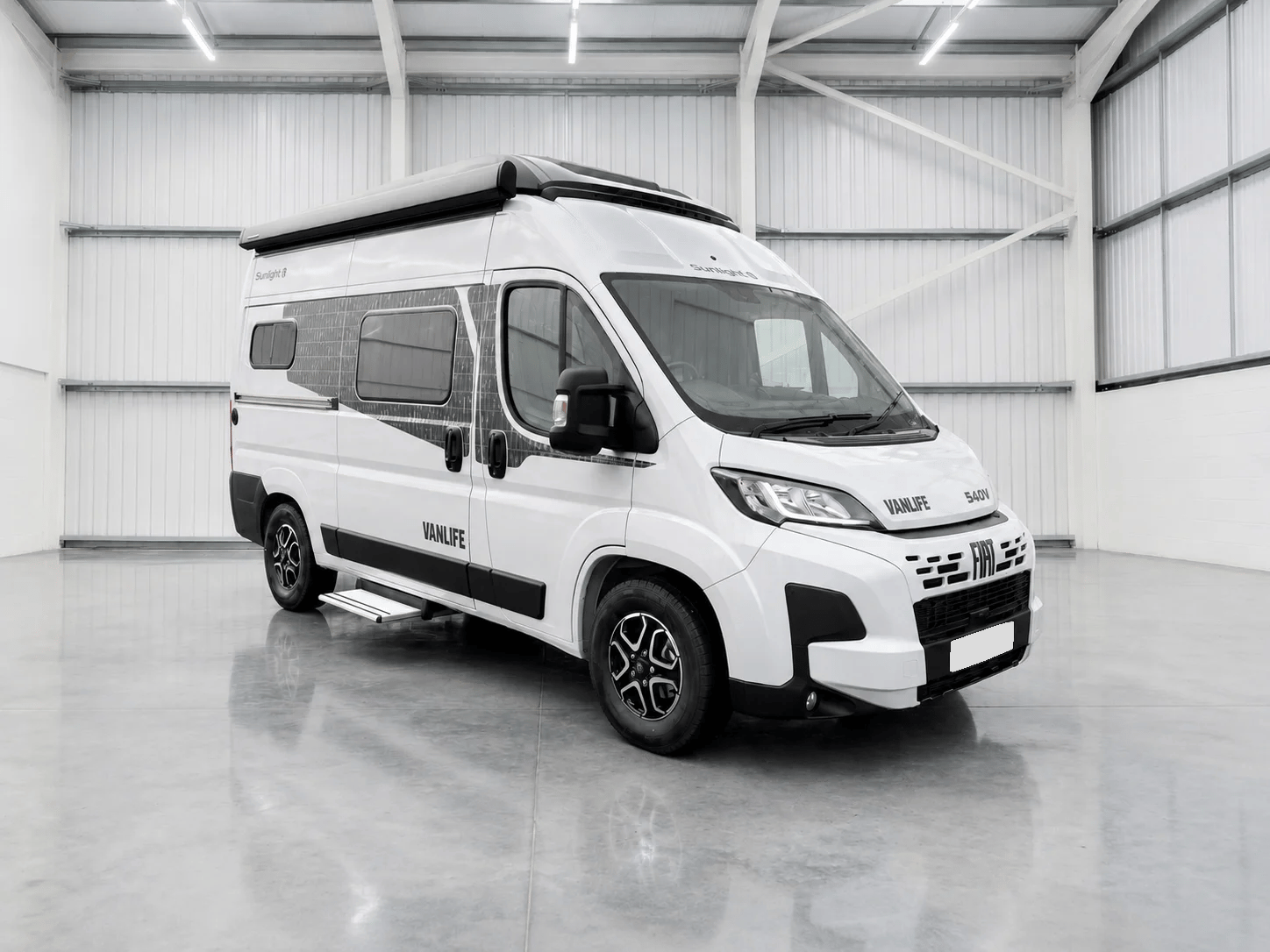
The camper you fall for is rarely the one you can afford. That gap is the whole reason Campervan.win exists. Right now we’re giving away the Sunlight Vanlife, worth around £65,000, and closing that gap is the point: capped entries so the odds stay honest, £10 a ticket, a maximum of five per person, £500 to a UK charity from every full draw, the winner picked by a public randomness beacon anyone can re-check, and one person driving away in the van itself.
Enjoyed this post?
Get more honest campervan guides like this one in your inbox.
You’re in!
Check your inbox. We’ve just sent you a welcome email.

About the author
Leo
Leo covers campervan technology, maintenance, kit, and ownership advice, with a clear, practical focus on how things work in real life.
Keep Reading
Related Reading
Thoughtful articles that build on what you’ve just read.
Campervan Tech & Electrics
10 min read
Campervan electric systems: how to judge a good one
A plain-English guide to reading and reviewing a campervan's electrical setup, from leisure batteries and solar to DC-DC chargers and inverters, so you can tell a genuinely good system from a flashy spec sheet.
Campervan Tech & Electrics
11 min read
Campervan air conditioning: the honest UK guide for motorhomes and vans
A practical look at whether air conditioning is worth fitting to your van, the real pros and cons, the main types, what it takes to run off-grid, and which system suits which budget.

Campervan Tech & Electrics
26 min read
Off-grid for real: what 100Ah lithium and Alde heating get you in a 4x4 van
An honest, detailed look at what a single 100Ah lithium battery and an Alde wet heating system actually deliver in a 4x4 campervan, with real UK figures, day counts, and the mistakes that catch people out.
Campervan Tech & Electrics
7 min read
Are electric campervans ready yet? The honest 2026 picture
A clear, no-spin look at where electric campervans actually stand in 2026: real range, charging, weight, cost, and who they suit right now.