
Off-grid for real: what 100Ah lithium and Alde heating get you in a 4x4 van

Written by
Leo
Leo covers campervan technology, maintenance, kit, and ownership advice, with a clear, practical focus on how things work in real life.

The short answer
A single 100Ah lithium battery gives a typical couple roughly a day and a half to two days of static off-grid power, but that figure rather misses the point: pair it with solar in the warmer months and a DC-to-DC charger whenever you drive, and you stay powered almost indefinitely for the way most people actually tour. Alde wet heating barely touches the battery, because the warmth comes from gas and the battery only runs the pump. The honest limit is not electricity at all; in most seasons your water and waste send you looking for facilities long before power does. So you do not need the biggest off-grid setup money can build, you need the right division of labour. Here is exactly where your amp hours go, and how to keep them topped up.

Off-grid sounds like freedom. No hook-up, no campsite, just you and a quiet spot somewhere good. The honest question is simpler than the dream: how long can you actually stay there before something runs out? This guide answers that for a very specific and very common setup, a single 100Ah lithium battery paired with Alde wet heating, fitted to a 4x4 van. We will work through the real numbers, not the brochure ones, and we will be straight about where this combination shines and where it quietly struggles.
By the end you will know roughly how many days you can stay parked up in summer and in winter, what each appliance really costs you in amp hours, how the heating fits into the picture without draining your battery, and the upgrades that genuinely move the needle. No hype, no magic. Just electricity, heat, and arithmetic you can trust.
What "off-grid" actually means in a campervan
Off-grid is one of those phrases that gets used loosely. To some people it means a weekend without a campsite. To others it means weeks in the wild with solar panels humming. For the purposes of this guide, off-grid means you are not plugged into mains electricity, often called a hook-up or EHU (electric hook-up), and you are relying entirely on what you carry and what you can generate.
That changes everything. On a campsite with a hook-up, your van behaves like a tiny flat. The fridge runs on mains, the heating ignores your battery, the kettle boils without a second thought, and the leisure battery just sits there topped up. Off-grid, every one of those tasks pulls from a finite store of energy. The skill is not deprivation. It is knowing what each thing costs and choosing where to spend.
There are three resources that run down when you are off-grid, and people fixate on only one of them:
- Electricity, stored in your leisure battery. This is the headline number everyone obsesses over.
- Gas, usually LPG in bottles or a refillable tank, which does the heavy lifting for heat and hot water.
- Water, both fresh and waste. Often the real limiting factor, and the one people forget.
A 100Ah lithium battery and an Alde system are mostly about the first two. But you cannot understand them properly without keeping water in the back of your mind, because it tends to be the thing that sends you home first.
Why a 4x4 van changes the conversation
Before we get to batteries, it is worth being clear about what the 4x4 part actually buys you, because it shapes the kind of off-grid trip you are planning.
A four-wheel-drive van, whether that is a Ford Transit Trail with its limited-slip differential, a genuine all-wheel-drive Volkswagen Crafter, a Mercedes Sprinter 4x4, or an Iveco Daily 4x4, lets you reach park-ups that a standard front-wheel-drive van simply cannot. Forest tracks, beach approaches, grassy fields after rain, snowy Highland lanes in winter. The 4x4 is not about going rock crawling. For most owners it is about confidence. It is the difference between committing to a remote spot and turning back because the last 200 metres look greasy.
This matters for off-grid planning because a 4x4 van tends to take you further from facilities. If your van can reach places others cannot, you are more likely to be genuinely remote, with no shop, no tap, and no friendly hook-up to bail you out. So the demands on your battery and heating are real, not theoretical. You actually need the numbers to work.
The flip side is weight and economy. Four-wheel-drive systems add weight and reduce fuel economy, often by a few miles per gallon, and they eat into your payload. That payload pressure is worth remembering when you start dreaming of adding more batteries and solar later. Every kilogram of kit competes with water, gear, and people. We will come back to that.
The 100Ah lithium battery, demystified
Let us start with the heart of the system. A 100Ah lithium battery is the most common single-battery off-grid setup in modern campervans, and for good reason. It hits a sweet spot of size, weight, cost, and usable energy. But the headline "100Ah" hides a few things you need to understand.
Amp hours versus watt hours
A battery rated at 100Ah at 12.8 volts stores roughly 1,280 watt hours of energy. That is the number that actually matters, because appliances are rated in watts. The simple sum is amp hours multiplied by voltage equals watt hours. So 100 x 12.8 = 1,280Wh, or about 1.28 kilowatt hours.
To put that in everyday terms, 1.28kWh is a little more than a typical home electric kettle uses to boil a couple of litres a few times over. It is not a vast amount of energy. It is enough to run lights, a fridge, a water pump, phone charging, and modest gadgets for a couple of days. It is not enough to run an electric kettle, a hairdryer, or an electric heater for any meaningful length of time. Keep that scale in mind throughout.
Why lithium beats lead acid here
The reason lithium has taken over is usable capacity. A traditional lead acid or AGM leisure battery does not like being drained much below 50 percent. Do it repeatedly and you kill it early. So a 100Ah lead acid battery realistically gives you about 50Ah of usable energy before you are damaging it.
A lithium iron phosphate battery, the LiFePO4 chemistry used in nearly all campervan lithium, happily delivers 80 to 100 percent of its rated capacity without harm. So a 100Ah lithium gives you something like 90 to 100Ah of genuinely usable energy. In real terms, one 100Ah lithium does the job of nearly two 100Ah lead acid batteries, at roughly half the weight. A 100Ah lithium typically weighs 11 to 13kg. A pair of equivalent lead acid batteries could be 50kg or more. On a payload-sensitive 4x4, that weight saving alone justifies the choice.
Lithium also charges faster, holds a steadier voltage as it discharges so your lights do not dim, and tolerates thousands of charge cycles. The catch is cold. Most lithium batteries should not be charged below freezing, around 0C, or you damage the cells. Better batteries include a built-in low-temperature cutoff or a self-heating function. For a winter off-grid van, this is not a detail to skip. We will return to cold weather later, because it is the single biggest gotcha for off-grid in the UK.
What 100Ah does not include
One honest point. A battery on its own is just storage. To use it off-grid you also need a way to charge it without mains, which means solar, a DC-to-DC charger from the engine (often a B2B), or both. And to run anything with a three-pin plug you need an inverter, which turns 12V DC into 230V AC and loses some energy doing so. None of that comes with the battery. So when someone says "I have 100Ah lithium", that tells you the storage but not the whole system. We will treat the full system, because that is what determines how long you last.
Where your amp hours actually go
Here is the part most guides gloss over. Let us itemise a realistic daily off-grid power budget for a couple in a well-equipped 4x4 campervan, in amp hours at 12V. These are real-world figures, and they vary, but they are honest middle-of-the-road numbers.
The compressor fridge
Your fridge is almost always the biggest single draw. A modern 12V compressor fridge of around 90 litres, the sort fitted to most campervans now, does not run constantly. It cycles on and off to hold temperature. Over 24 hours it typically uses 20 to 40Ah, depending on ambient temperature, how often you open it, and how warm the contents are when you load them.
- Mild spring or autumn day: around 20 to 25Ah.
- Hot summer day in direct sun: 35 to 45Ah, sometimes more.
- Cold winter day: 15 to 20Ah, because the fridge barely has to work.
This is the single most important figure to internalise. In summer your fridge alone can eat a third to a half of your whole 100Ah battery in a day. That is before you have charged a phone or turned on a light.
Lights, pump, and the small stuff
LED lighting is wonderfully frugal. An evening of lights might use 3 to 6Ah. The water pump runs in short bursts and uses very little over a day, perhaps 1 to 3Ah. Phone and tablet charging via USB is also modest, maybe 2 to 4Ah per device per day if you fully charge it. A laptop is heavier, perhaps 5 to 8Ah per full charge.
The control panel and parasitic loads
People forget that the van itself draws power while doing nothing. The control panel, the heating controller, any always-on circuits, alarms, and trackers all sip current. This parasitic draw is small but constant, often 1 to 3Ah per day. Over a long trip it adds up, and it is the reason a van left for two weeks can come back with a flatter battery than you expected.
Putting it together: a realistic daily budget
For two people in spring or autumn, a typical off-grid day looks like this:
- Fridge: 25Ah
- Lights: 5Ah
- Water pump: 2Ah
- Phone and gadget charging: 6Ah
- Control electronics and parasitic: 3Ah
- Occasional inverter use, charging a camera or running a small appliance briefly: 4Ah
That comes to around 45Ah per day. With roughly 90 to 100Ah usable from a 100Ah lithium, you have about two days of autonomy from a full battery with no charging at all. In summer, with the fridge working harder, that drops closer to a day and a half. In winter, the fridge eases off but the heating fan and longer dark evenings push it the other way, so you are back around two days.
The honest headline: a single 100Ah lithium, with no solar and no driving, gives a typical couple roughly one and a half to two days fully off-grid. That is the number to plan around.
That might sound modest, and it is. The point of off-grid living is not the battery alone. It is the battery plus a way to keep refilling it. That is where solar and the engine come in.
Keeping the battery full: solar and the engine
A 100Ah battery is the bucket. Solar and your alternator are the taps. Get the taps right and that modest bucket can keep you off-grid almost indefinitely in the right conditions.
What solar really delivers in the UK
Solar is brilliant and frustrating in equal measure, mostly because UK weather is what it is. A common campervan setup is one or two roof panels totalling 100 to 300 watts. The rated wattage is the figure in perfect lab conditions. Real output is lower, and it swings hugely with season and cloud.
- A 200W solar array on a bright summer day in the UK might generate 60 to 100Ah over the day. That more than covers our 45Ah daily budget, and you finish the day fuller than you started.
- The same array on an overcast summer day might give 20 to 40Ah. You roughly break even or fall slightly behind.
- In midwinter, with short days and a low sun, that same 200W array might struggle to produce 10 to 20Ah even on a clear day, and almost nothing under heavy cloud.
This seasonal swing is the most important thing to understand about UK off-grid. From April to September, decent solar can keep a 100Ah battery topped up for a couple in most weather, and you can genuinely stay put for days. From November to February, solar is a bonus, not a plan. You will rely on driving to charge instead.
The engine and DC-to-DC charging
This is the unsung hero of off-grid in winter. A DC-to-DC charger, often called a B2B or battery-to-battery charger, takes power from your engine's alternator while you drive and pushes it into the leisure battery at a controlled rate. A common 30A unit will put around 30Ah into your battery for every hour of driving, sometimes a little less in practice.
So a 45-minute drive between park-ups can add 20Ah or more. An hour and a half on a touring day can fully recover a day's usage. For most people the realistic off-grid pattern is not sitting in one spot for a week. It is moving every day or two, exploring, and letting the drive recharge the battery. With that rhythm, a 100Ah lithium and a B2B charger keep you comfortably topped up all year round, weather no object.
Modern 4x4 vans with smart alternators sometimes need a B2B that can wake the alternator and manage the variable voltage. If you are buying or converting, make sure the charger is matched to your vehicle's electrical system. A mismatch can mean poor charging or none at all.
Now the heating: how Alde fits in
Here is where a lot of off-grid worry comes from, and where the good news lives. People assume heating must hammer the battery. With an Alde wet system, it largely does not, because the heat comes from gas, not electricity.
What Alde actually is
Alde is a wet central heating system, the same principle as a home radiator setup. A boiler heats a fluid, a mix of water and glycol antifreeze, and pumps it around a sealed loop of pipes and convectors fitted around the van. The convectors radiate gentle, even warmth. It is quiet, draught-free, and feels far more like a house than a blown-air system that roars warm air from a single vent.
The boiler can be powered by gas, by mains electricity when you are hooked up, or both at once for faster warm-up. Off-grid, you run it on gas. The system also heats your domestic hot water through a built-in tank, so the same boiler gives you radiators and hot taps.
What Alde costs you in electricity
This is the key off-grid point. When running on gas, the only electricity Alde needs is to run the circulation pump and the control electronics. That is a small, steady draw, typically in the region of 1 to 2 amps while the pump is running, and the pump does not run constantly. Over a cold winter night and day of regular heating, the electrical cost of an Alde system is roughly 10 to 20Ah.
Let that sink in. The heating that keeps you warm in a Scottish glen in February costs you about the same in battery terms as running your fridge on a mild day. The heat itself comes from gas. The battery just runs the pump. This is exactly why a 100Ah lithium and Alde are such a sensible pairing for off-grid. The big heat load does not touch your limited electricity store.
What Alde costs you in gas
The trade-off is gas. Heat is energy, and in winter you use a lot of it. This is where off-grid endurance is really decided in cold weather. A rough rule of thumb for an Alde system working hard in genuine winter conditions is gas consumption of around 0.3 to 0.5kg of LPG per hour while the burner is actually firing. The burner cycles, so over a full day of heating in cold weather you might use somewhere between 1 and 2kg of gas, sometimes more in severe cold.
A standard 6kg Calor bottle, therefore, might give you three to five days of winter heating, less if it is bitterly cold and you also cook on gas and heat lots of water. An 11kg bottle roughly doubles that. A refillable LPG tank of 20 to 40 litres gives you considerably more and the convenience of topping up at filling stations.
In winter, off-grid endurance is usually limited by gas, not electricity. Your 100Ah lithium will outlast your gas bottle for heating, easily.
Why wet heating suits remote, cold trips
There is a comfort argument too. Alde's gentle, even warmth holds temperature better overnight and avoids the on-off blast of warm air that some blown-air systems give. For genuinely cold off-grid trips, the steady ambient heat and the warm convectors around the van make a real difference to how livable the space feels at 6am in January. It also keeps your pipes and tanks from freezing, which matters more than people expect when you are parked somewhere properly cold.
Putting power and heat together: realistic off-grid scenarios
Numbers in isolation are abstract. Let us walk through three realistic trips in a 4x4 van with one 100Ah lithium, 200W solar, a 30A B2B charger, Alde heating, and an 11kg gas bottle. Two people.
Scenario one: summer touring in the Highlands
July, long days, mostly dry with some cloud. You move every day or two, driving an hour or so between spots. Daily power use around 45 to 50Ah with the fridge working in the warmth. Solar on bright days adds 60 to 90Ah, more than covering it. Even on cloudy days, the short daily drive tops you up via the B2B. Heating is barely used, just a quick warm-up on a cool evening, so gas lasts a fortnight or more. Water is your limit here, not power or gas. You will be hunting for taps and dump points every two to four days. Power-wise, you are effectively unlimited. You could stay off-grid as long as you like.
Scenario two: spring weekend, parked up, no driving
April, you find a perfect spot and do not want to move for three days. Mild days, chilly nights. Daily power use around 45Ah. Solar gives 30 to 50Ah on decent April days, so you roughly break even or fall slightly behind. Heating runs for a few hours each evening and morning, costing maybe 15Ah of electricity and a modest amount of gas. Over three static days you might drift down to 50 or 60 percent battery, recovering some each sunny afternoon. You make it comfortably, and a short drive to find water on day three tops the battery back up. This is the classic case where one 100Ah lithium plus solar is genuinely enough.
Scenario three: deep winter, remote and cold
January, the reason you bought a 4x4. Snowy track, beautiful isolation, minus 4C at night. This is where honesty matters. Solar gives you almost nothing, maybe 10Ah on a bright day. Your power use is around 50 to 55Ah a day, including the heating pump running often and longer dark evenings on the lights. With no solar to speak of, your 100Ah lithium would last under two days static. So you cannot sit still for a week here without driving. The realistic pattern is to drive somewhere each day or every other day, letting the B2B recover 30 to 60Ah per trip. Do that and your power is fine indefinitely.
Gas is your real countdown. Heating hard in sub-zero conditions could use 1.5 to 2kg a day. An 11kg bottle gives you perhaps five to seven days. You will be replacing or refilling gas before anything else runs out. And critically, you must make sure your lithium battery is protected from charging when frozen, either with a low-temperature cutoff or by being mounted somewhere that stays above zero, often inside the heated living space rather than in an exposed underfloor box. A battery that refuses to charge because it is too cold is the classic winter off-grid failure.
The cold weather gotchas nobody mentions until it bites
Winter off-grid in a 4x4 is the dream for a lot of buyers, so it deserves its own honest section. Cold changes the rules in several ways.
Lithium and freezing
As noted, LiFePO4 batteries should not be charged below 0C. Discharging in the cold is generally fine, though capacity dips a little, but charging a frozen cell causes lasting damage. Good campervan lithium batteries handle this in one of three ways: a built-in heater that warms the cells before accepting charge, a low-temperature charge disconnect that simply refuses charge until it warms up, or installation inside the heated cabin. If your battery is in an unheated underfloor locker on a -5C night and you fire up the engine to charge it, a battery without protection can be harmed. Check which protection yours has. This is not optional knowledge for winter touring.
Fridge behaviour in winter
Counterintuitively, your fridge uses far less power in winter because the ambient air does its cooling for it. That is a small mercy that partly offsets the loss of solar. Some people even switch the fridge off in deep cold and use the van's natural temperature, though that gets fiddly and is not generally recommended for food safety.
Condensation and ventilation
Two people breathing and cooking inside a sealed metal box in winter produce a startling amount of moisture. Alde's gentle heat helps because warm air holds more water vapour and the even warmth reduces cold spots where condensation forms, but you still need ventilation. Crack a roof vent. Wipe down windows. Damp is the enemy of a comfortable winter van, and it has nothing to do with your battery, but it will ruin a trip faster than a flat battery if you ignore it.
Water freezing
Fresh and waste tanks, and the pipes between them, can freeze. Many vans with Alde route a heating pipe near the fresh tank or keep tanks inside the insulated floor. Underslung tanks are more vulnerable. If you are serious about winter off-grid, understand where your tanks are and whether they are protected. A frozen waste valve on a frosty morning is a genuinely miserable, common problem.
Common mistakes people make with this setup
After all the theory, here are the errors that catch real owners out, so you can skip them.
Trying to run an electric kettle off the inverter
A 2kW electric kettle draws around 160 to 170 amps at 12V. Your 100Ah battery would, in theory, deliver that for well under half an hour, but in practice the sustained high current stresses everything, and a single boil can pull 8 to 12Ah in a few minutes. Do it a few times and your battery is gone. Off-grid, boil water on the gas hob. Save the inverter for laptops, camera batteries, and small things. The gas does the heavy work, the battery does the light work. That division of labour is the whole secret to making 100Ah feel like enough.
Forgetting that water runs out first
Time and again, people fit big batteries and huge solar arrays and then discover they have to move every two days anyway because the fresh tank is empty and the waste tank is full. A typical campervan carries 60 to 100 litres of fresh water. Two people washing, cooking, and making the odd cup of tea get through 20 to 40 litres a day. That is often two to four days of water regardless of how clever your electrics are. Plan your trip around water and waste, then make sure your power and gas comfortably outlast it.
Mounting lithium where it freezes
Covered above, but worth repeating because it is so common. A lithium battery in an exposed locker, with no low-temperature protection, on a UK winter trip, is a problem waiting to happen.
Ignoring payload
On a 4x4, with its heavier drivetrain, payload is precious. Every extra battery, every litre of water, every bag of gear competes for it. A van loaded beyond its plated weight is illegal, handles worse, and is exactly the kind of thing that turns a confident track approach into a stuck van. Before you add a second battery or a third solar panel, weigh your van fully loaded with people, water, and kit, and check you have headroom. We have a whole separate piece worth reading on weighing and payload, because it catches more people than anything else.
Believing the rated solar figure
That 200W on the box is a best-case lab number. Plan around real UK output, which is a fraction of it in winter and only reaches near-rated levels on bright summer days with the panel angled well, which roof-mounted panels rarely are. Hope for the rated figure, budget for half of it in summer and almost none in winter.
Is one 100Ah battery enough, or should you have more?
This is the question everyone asks, and the honest answer is: it depends entirely on how you travel.
When 100Ah is plenty
- You move every day or two, so the engine recharges via the B2B.
- You travel mostly spring to autumn, when solar carries you.
- You cook and heat water on gas, and use the inverter only for small jobs.
- You are a couple or solo, not a power-hungry family with multiple devices and a coffee machine.
For this very common style of touring, one 100Ah lithium with solar and a B2B is genuinely enough, and the extra weight of a second battery would just eat payload you would rather spend on water or gear.
When you will want more
- You like to sit still for many days without driving, especially in winter.
- You want to run an inverter for real appliances, a proper coffee machine, an induction hob, a hairdryer, or to charge e-bikes.
- You work from the van and run a laptop, monitor, and starlink-style internet all day.
- You travel hard in winter and cannot rely on solar at all.
For these, a second 100Ah, taking you to 200Ah, transforms the experience. It roughly doubles your static endurance and gives you the headroom to run an inverter more freely. Many serious off-grid 4x4 builds run 200 to 300Ah of lithium with 300 to 400W of solar and a 50A B2B. That is a genuinely independent setup that can sit still for days even in shoulder seasons. The cost is money and weight, and on a 4x4 the weight is the bigger constraint for many people.
A good rule of thumb: 100Ah for a couple who tour and move on, 200Ah for those who sit still, work from the van, or run an inverter for real appliances.
How to stretch a single 100Ah battery further
If you have 100Ah and want to make it go as far as possible off-grid, here are the changes that actually help, roughly in order of impact.
- Add or upgrade solar. Going from 100W to 200W or more is the single biggest improvement for summer endurance. Even a portable panel you can angle toward the sun beats a flat roof panel on a low-sun day.
- Fit a proper B2B charger if you do not have one. The ability to gain 30Ah from a 40-minute drive turns touring into effectively unlimited power.
- Do your heavy energy jobs on gas. Boiling water, cooking, and heating all belong on gas off-grid. The battery is for electronics and light.
- Switch everything to LED if it is not already, and be disciplined about turning lights off.
- Pre-cool the fridge on hook-up or while driving before you head off-grid, and load it with already-cold food. A warm fridge full of room-temperature shopping is a battery sink for the first day.
- Use a battery monitor with a shunt so you can see your state of charge accurately in amp hours, not guess from a voltage that lithium keeps stubbornly flat. Knowing you are at 62Ah remaining lets you make sensible choices. Flying blind leads to either anxiety or a flat battery.
- Charge devices while driving rather than parked, so the alternator does the work.
- Keep the battery warm in winter so it accepts charge, ideally inside the heated space.
A realistic shopping and checking list before you commit
If you are buying a van with this setup, or specifying a conversion, here is what to actually check so the off-grid promise is real and not just brochure words.
For the electrical system
- Confirm it is genuinely LiFePO4 lithium, the battery's exact capacity, and whether it has low-temperature charge protection.
- Ask where the battery is mounted and whether that location stays above freezing in winter.
- Check the solar wattage, the type and quality of the charge controller (an MPPT controller is worth having), and whether the panels are shaded by roof furniture.
- Confirm there is a DC-to-DC charger, its amp rating, and that it is matched to the vehicle's alternator type, especially with a modern smart-alternator 4x4.
- Check the inverter size and that you understand its limits. Know what it can and cannot run.
- Make sure there is a clear battery monitor showing state of charge in amp hours or percentage.
For the heating system
- Confirm whether the Alde runs on gas, electric, or both, and that the gas side works, since that is the off-grid mode.
- Ask about service history. Alde systems use a glycol fluid that should be checked and changed periodically, and the system benefits from regular servicing.
- Check the gas supply: bottle size, or a refillable tank capacity, and where you can refill on your typical routes.
- Find out whether the heating protects the water tanks and pipes from freezing, and where the tanks are located.
For the bits people forget
- Fresh and waste water capacity, because this is usually your real off-grid limit.
- Payload: get the van's plated weights and ideally weigh it loaded. Make sure adding people, water, and gear keeps you legal, especially given the 4x4's heavier base weight.
- Ventilation provision for winter condensation.
The bottom line
A single 100Ah lithium battery and an Alde wet heating system make a genuinely capable off-grid pairing for a 4x4 van, as long as you understand what each part does. The lithium gives a couple roughly one and a half to two days of static autonomy, and combined with decent solar in the warmer half of the year and a DC-to-DC charger any time you drive, it keeps you powered effectively forever for the touring style most people actually adopt. The Alde is the clever part for off-grid: it delivers proper, even, house-like warmth and hot water while costing your precious battery almost nothing, because the heat comes from gas and the battery only runs the pump.
The honest limits are real and worth respecting. In deep UK winter, solar all but disappears, so you rely on driving to recharge, and your gas bottle becomes the thing that counts down first. Across all seasons, water and waste usually send you to find facilities before power or gas ever do. And on a 4x4 specifically, payload is the quiet constraint that should temper any urge to bolt on a second battery and a bigger inverter without weighing the van first.
Get the division of labour right, gas for heat and cooking, battery for electronics and light, solar and the engine to refill, and one 100Ah lithium with Alde takes you to remarkable places and keeps you warm and comfortable when you get there. That is not the biggest off-grid setup you can build. For a huge number of UK trips, it is exactly the right one.
Common questions
How long can you stay off-grid on a single 100Ah lithium battery?
On its own with no charging, a 100Ah lithium gives a typical couple about one and a half to two days, because you have around 90 to 100Ah of usable energy against a realistic daily use of roughly 45Ah. With solar in the warmer half of the year, or a short daily drive to recharge through a DC-to-DC charger, you can effectively stay out indefinitely.
Does Alde heating drain your leisure battery?
No, not significantly. Running on gas, Alde only uses electricity for its circulation pump and controls, roughly 1 to 2 amps while the pump runs, which works out at about 10 to 20Ah over a cold day and night. The heat itself comes from gas, so the big heating load never touches your limited battery.
Why is lithium better than lead-acid for an off-grid campervan?
Usable capacity and weight. A 100Ah lead-acid battery only gives about 50Ah before you damage it, while a 100Ah LiFePO4 lithium delivers 90 to 100Ah and weighs around 11 to 13kg instead of 50kg or more for the equivalent lead-acid pair. Lithium also charges faster and holds a steadier voltage, though most types must not be charged below freezing.
What uses the most power in an off-grid campervan?
The fridge, by a wide margin. A 12V compressor fridge typically uses 20 to 40Ah over 24 hours, rising to 35 to 45Ah in summer heat and dropping to 15 to 20Ah in winter. Lights, the water pump, charging and parasitic loads add maybe 15Ah on top, so the fridge alone can be a third to a half of your battery in a day.
Can you boil a kettle off a campervan leisure battery?
Not practically. A 2kW electric kettle draws around 160 to 170 amps at 12V and a single boil can pull 8 to 12Ah in minutes, so a few boils would flatten a 100Ah battery. Off-grid, boil and cook on the gas hob and keep the inverter for laptops, camera batteries and small jobs. Gas does the heavy work, the battery does the light work.
What actually runs out first when you are off-grid?
Usually water, then gas, then electricity. A campervan carries 60 to 100 litres of fresh water and two people get through 20 to 40 litres a day, so water and waste often send you to find facilities every two to four days whatever your power setup. In deep winter, gas for heating becomes the next limit, with the battery outlasting both.
The reachable bit
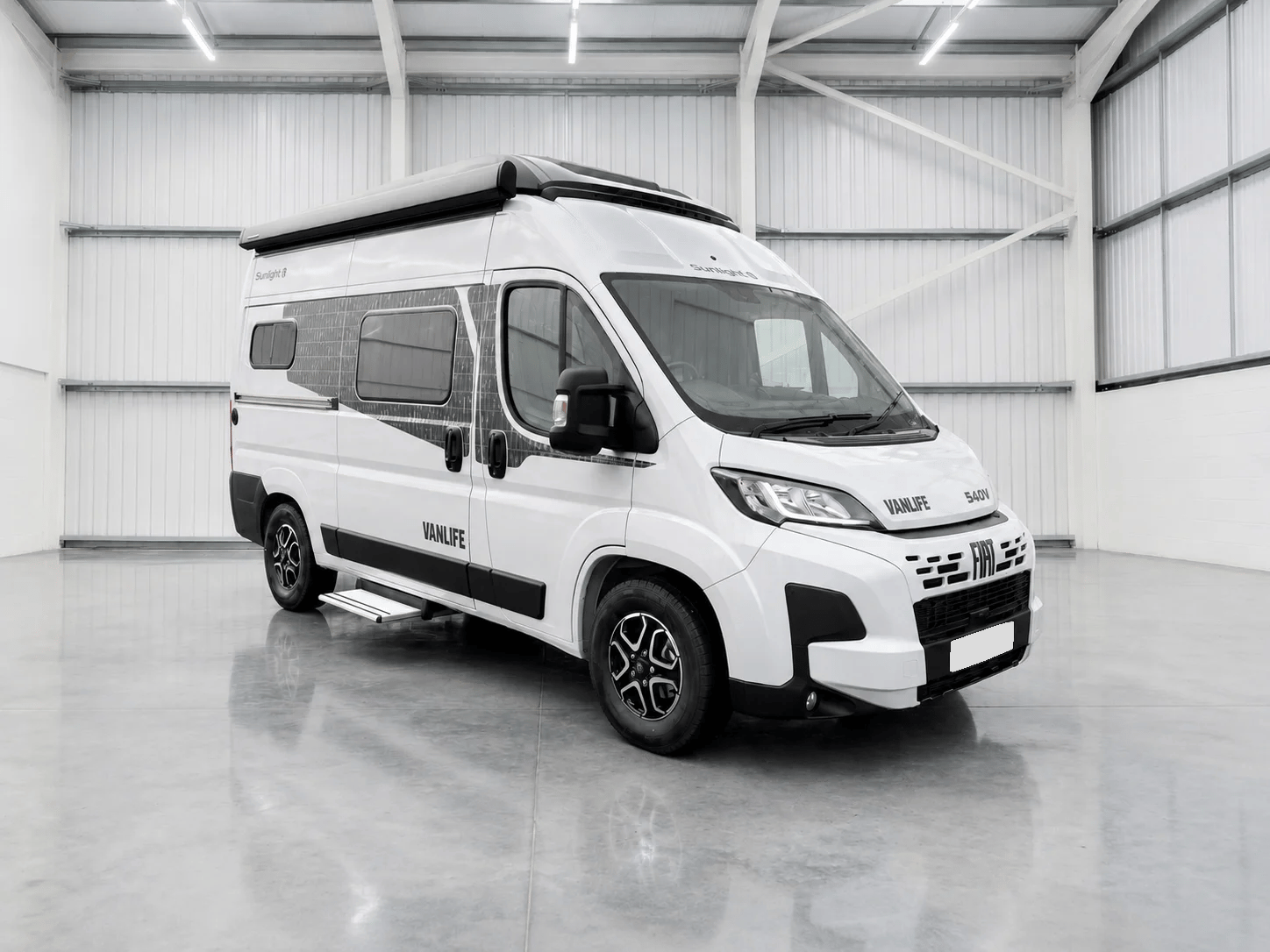
The camper you fall for is rarely the one you can afford. That gap is the whole reason Campervan.win exists. Right now we’re giving away the Sunlight Vanlife, worth around £65,000, and closing that gap is the point: capped entries so the odds stay honest, £10 a ticket, a maximum of five per person, £500 to a UK charity from every full draw, the winner picked by a public randomness beacon anyone can re-check, and one person driving away in the van itself.
Enjoyed this post?
Get more honest campervan guides like this one in your inbox.
You’re in!
Check your inbox. We’ve just sent you a welcome email.

About the author
Leo
Leo covers campervan technology, maintenance, kit, and ownership advice, with a clear, practical focus on how things work in real life.
Keep Reading
Related Reading
Thoughtful articles that build on what you’ve just read.

Campervan Tech & Electrics
10 min read
Campervan electric systems: how to judge a good one
A plain-English guide to reading and reviewing a campervan's electrical setup, from leisure batteries and solar to DC-DC chargers and inverters, so you can tell a genuinely good system from a flashy spec sheet.
Campervan Tech & Electrics
10 min read
The best campervan electrical systems, explained honestly
A plain-English guide to what makes a campervan electrical system genuinely good, from leisure batteries and charging to inverters and safety, with honest setups for different ways of travelling.
Campervan Tech & Electrics
11 min read
Campervan air conditioning: the honest UK guide for motorhomes and vans
A practical look at whether air conditioning is worth fitting to your van, the real pros and cons, the main types, what it takes to run off-grid, and which system suits which budget.

Campervan Tech & Electrics
7 min read
Are electric campervans ready yet? The honest 2026 picture
A clear, no-spin look at where electric campervans actually stand in 2026: real range, charging, weight, cost, and who they suit right now.