
When is the best time of year to buy a campervan or motorhome in the UK?

Written by
Arthur
Arthur writes buying guides, comparisons, and in-depth explainers to help readers choose the right campervan or motorhome with confidence.

The short answer
You will usually pay less for a campervan or motorhome in the cold, dark months and more in spring, because demand is weather-led: it dips in winter when vans are packed away and rises sharply when the sun brings buyers out. That makes autumn and winter, especially December and January, the value window, with early autumn an underrated sweet spot, while spring gives the widest choice but the weakest prices. New-vehicle timing works differently, hinging on plate changes and model-year runout. The cheerful part is that buying in the quiet months also lets you take your time, use the cold to expose any damp or heating faults, and start the season ready rather than rushed. Whatever the date, the rule that beats all of it is to buy a sound, dry, well-kept van with a clean history. Here is how to time it well.

The simplest version is this: you will usually pay less for a campervan or motorhome in the cold, dark months and more in spring. If you can buy in October, November, December or January, while everyone else has packed their van away for winter, you are shopping when demand is at its lowest. That is the headline, and it holds up most years.
But the full answer is more interesting, and a lot more useful. The best time to buy depends on whether you are after new or used, whether you are buying from a dealer or a private seller, how patient you are, and what matters more to you: the lowest possible price, the widest possible choice, or being ready to travel by a certain date. This guide walks through all of it, with real UK numbers, the quirks of the trade calendar, and the things that genuinely save you money no matter what the season says.
The short answer, and why it is true
Campervans and motorhomes are seasonal in a way that most cars are not. A hatchback gets driven all year, so the used market for it stays fairly steady. A leisure vehicle, on the other hand, is something most people only think about when the weather turns nice. That creates a predictable rhythm of demand across the year, and prices follow demand.
Here is the pattern in plain terms:
- Late autumn to mid winter (October to January) is generally the cheapest time to buy. Demand drops, dealer forecourts get full, and private sellers who list now are often motivated.
- Spring (February to April) is the most expensive time to buy. As soon as the first warm weekend arrives, buyers come out in force, and prices firm up fast.
- Peak summer (May to August) stays strong on price because demand is still high, but choice can thin out as the best vehicles sell.
- Early autumn (September) is a sweet spot for many buyers: the rush is fading, sellers are starting to think about winter, and there is still plenty of stock around.
If you only remember one thing, remember that you want to be the buyer who is calm and ready when nobody else is looking. That is almost always in the colder half of the year.
How the seasonal leisure-vehicle market actually works
To time a purchase well, it helps to understand why the market moves the way it does. A few forces are at work at once.
Demand is weather-led and emotional
People buy campervans on a feeling. A bright Saturday in March, a bank holiday with blue skies, a documentary about touring Scotland, and suddenly thousands of people decide this is the year. That emotional surge is concentrated into a narrow window each spring, and it lifts prices across the whole market, new and used. By contrast, very few people wake up on a wet Tuesday in late November and decide to start van hunting. That is exactly why November is a good time to be that person.
Supply is sticky
Sellers do not magically appear and disappear. A private seller who decides to part with their motorhome in autumn often still has it listed in winter, because fewer buyers are looking. Dealers take in part-exchanges all year but sell hardest in spring and summer. So in winter you frequently get a build-up of stock meeting very little buyer competition. That imbalance is your friend.
Storage and running costs push some sellers
Owning a leisure vehicle you are not using has a cost. Secure storage in the UK typically runs from around £30 to £80 a month depending on whether it is open, covered or indoor, and where in the country you are. Insurance, even laid-up cover, keeps ticking. Some owners look at the winter ahead, decide they did not use the van as much as they hoped, and would rather sell now than pay to store something they have fallen out of love with. Those are exactly the sellers who will accept a sensible offer.
The dealer calendar adds its own rhythm
Dealers have targets, financial year-ends and stock they need to shift before the next intake. New leisure-vehicle model years tend to be revealed in the autumn, often around the big indoor shows. When new-season stock starts arriving, the previous year's unregistered or pre-registered vehicles become last year's model, and dealers have a reason to discount them even though they are mechanically identical and brand new. More on that below, because it is one of the best-value plays in the whole market.
Buying in autumn and winter: the value window
If price is your priority, the months from roughly mid October to the end of January are where you want to be shopping. Here is what that looks like in practice and how to make the most of it.
What you gain
- Lower asking prices and more flexible sellers. Private listings that have sat through the autumn often come down. Dealers are keener to do a deal to keep cash flowing through a quiet period.
- Less competition. You are not racing three other buyers to a viewing. You can take your time, look twice, sleep on it.
- Honest weather testing. This is underrated. A van that is warm, dry and draught-free in January is a van that will be lovely in July. Winter viewing shows you whether the heating works properly, whether there is any damp, and whether the windows mist up badly overnight. You learn far more about a leisure vehicle in the cold than you ever will on a perfect summer day.
- Time to get ready. Buy in winter and you have months to fettle, fix small jobs, get the habitation service done and learn the systems before your first proper trip.
What you trade away
- Choice can be narrower for very specific specs. If you want one exact layout in one exact colour with one exact engine, fewer of them are listed in winter. You may need to wait or compromise.
- Some private sellers simply pause. A chunk of owners take their van off the market over winter and relist in spring, so the total pool of private vehicles shrinks even as the buyer pool shrinks faster.
- Test driving in poor weather and short days. You can still do a thorough inspection, but you will want to plan viewings for daylight and take a good torch.
A damp problem hides on a sunny day and shouts on a wet one. Viewing a leisure vehicle in winter is one of the few times the weather is working for the buyer, not the seller.
The deep winter point: December and January
The quietest weeks of all tend to fall from mid December into late January. Many sellers do not want the hassle of viewings over the festive period, so listings can be thin in the days around the holidays, then a fresh batch appears in early January as people act on new-year plans and post-holiday finances. Early to mid January is genuinely one of the strongest moments of the year to make an offer, because sellers who list then often want a quick, clean sale and buyer competition is still almost nil.
Buying in spring: widest choice, weakest prices
Spring is when the market wakes up. From late February the listings multiply, the shows are on, and by Easter the forecourts are busy. If you have ever wondered why a particular van seems to cost more in April than it did in November, this is why.
What you gain
- The most stock you will see all year. Private sellers who paused over winter relist, dealers stock up for the season, and new-season models are fully available. If finding your exact layout matters more than saving every last pound, spring gives you the broadest hunting ground.
- You can be touring within weeks. Buy in March or April and you are set up for the whole season ahead with no winter wait.
What you trade away
- The highest prices of the year. Strong demand means sellers hold firm and have little reason to negotiate. The same vehicle that might have softened by a few percent in winter sits at full money in spring.
- Pressure and pace. Popular vehicles sell fast. You may feel rushed into a decision, which is exactly when buyers skip checks they should not skip.
If you must buy in spring, accept that you are paying for convenience and choice, and be extra disciplined about inspection. The fear of missing out is highest in this season, and that is precisely when costly mistakes happen.
Buying in summer: strong demand, thinning stock
By May through August the market is in full swing. Prices stay firm because plenty of people are still buying, but the best examples of any given model have often already been snapped up earlier in the year. So summer can be a frustrating mix of high prices and picked-over stock.
There is one quiet advantage to late summer, though. As August fades and people return from their trips, a portion of owners realise their plans changed, the kids are bored of it, or the van was bigger than they needed. Those vehicles start appearing in late August and September, which leads neatly into the next window.
Early autumn: the underrated sweet spot
September is the buy that a lot of experienced owners quietly favour. The summer rush has passed, so urgency drops and sellers become more reasonable. But stock is still plentiful, because the season's listings have not yet thinned out and a new wave of post-summer sellers is arriving. You get much of spring's choice with a good chunk of winter's negotiating room.
September also lines up well with the new-model reveals and the autumn shows. If you are buying used, the arrival of next year's models nudges current and previous-year prices down. If you are buying new, this is when you can start talking to dealers about runout deals on the outgoing model year.
New vs used: the timing is not the same
So far we have mostly talked about the used market, because that is where most people buy. New vehicles follow a related but different calendar, driven by model years, plate changes and dealer targets.
Plate changes and what they really mean
The UK changes its number plate identifier twice a year, in March and September. With ordinary cars this creates clear buying rhythms. With campervans and motorhomes the effect is softer, because many are built to order and lead times can be long, but the plate still matters for resale. A vehicle registered in March carries a newer-looking plate for six months than one registered the previous September, even if they rolled off the line days apart. If you are buying new and plan to sell on one day, a plate-change month registration can protect a little resale value. If you plan to keep the vehicle for a decade, it barely matters.
Model-year runout: the best new-vehicle play
New leisure-vehicle model years typically arrive in late summer and autumn. When the new range lands, dealers are still holding unregistered or pre-registered examples of the outgoing model year. These are brand new, never lived in, often identical in spec to the new ones, but now classed as last year's. That gives dealers a strong reason to discount them, and gives you a genuine saving on a new vehicle.
The window for this runs roughly from autumn into the new year, depending on how much old stock a dealer is sitting on. If you are flexible on the latest cosmetic tweaks and happy with a vehicle that is mechanically current but a model year behind on paper, this is one of the smartest ways to buy near-new without paying full new money.
Build slots and lead times
If you are ordering a new conversion or coachbuilt to your own spec, the calendar flips. Popular converters can have lead times running many months, sometimes the best part of a year. To collect a bespoke vehicle in time for next summer, you often need to place the order the previous autumn or winter. So for built-to-order new vehicles, the best time to start the process is the cold half of the year, simply because the queue is real and spring orders may not be ready until the season is half over.
Dealer vs private seller: timing affects each differently
The season influences dealers and private sellers in different ways, and knowing which you are dealing with helps you read the price.
Private sellers
Private sellers are emotional and circumstantial. They sell because life changed: a house move, a growing family wanting more space, an older owner stepping back from driving, or simply not using the van enough to justify it. Their motivation, not the calendar, often drives the deal. But the calendar shapes how many of them are listed and how much competition you face. In winter, a motivated private seller plus almost no rival buyers equals your best chance of a strong price. The trade-off is no warranty, no comeback, and you carry all the risk of inspection yourself.
Dealers
Dealers think in stock, cash flow and targets. They are most willing to deal when the forecourt is full and selling is slow, which again points to winter, and at financial period-ends when they want to hit numbers. A dealer purchase usually costs more than the equivalent private sale, but you typically get some warranty, a habitation check, and a degree of consumer protection. For many first-time buyers that peace of mind is worth the premium, especially on a vehicle as complex as a motorhome.
A private sale rewards your knowledge. A dealer sale rewards your caution. Pick the route that matches how confident you are inspecting a leisure vehicle on your own.
How depreciation interacts with timing
Timing the season is about the price on the day. Depreciation is about how that price changes over the years you own it, and it dwarfs any seasonal saving over the long run.
New campervans and motorhomes lose the most value in their first couple of years, as all new vehicles do, then the curve flattens. A well-kept three to five year old vehicle has already taken the steepest part of that hit, which is why the used market is where most sensible value lives. Buy a tidy used vehicle in the winter value window and you stack two savings: you avoid the early depreciation, and you buy when seasonal demand is low.
One genuinely reassuring feature of this market is that good leisure vehicles hold their value comparatively well once that early drop is behind them. Demand has been strong for years, supply of well-maintained examples is limited, and people keep them a long time. That means a careful buyer who pays a fair winter price can often own a vehicle for several seasons and sell it on for a sum that feels remarkably gentle on the wallet, especially if they sell in spring when prices are high. Buy low season, sell high season, and the maths works in your favour.
A month-by-month buying calendar
Here is the year laid out so you can see where you sit and plan accordingly.
January
One of the best months. Fresh new-year listings appear, sellers want clean quick sales, buyer competition is almost nil. Cold-weather viewing exposes damp and heating faults. If you are ready to buy, this is prime time.
February
Still quiet early in the month, then the market starts to stir towards the end as the first mild days arrive. The last of the genuine winter bargains are around in early February. Good month to be finishing a deal rather than starting a leisurely search.
March
Spring kicks off, helped by the plate change. Stock rises, but so do prices and competition. Choice is good; bargains are fading. A reasonable time to buy if you value selection over savings.
April
Peak buying enthusiasm, often the most expensive month. Easter brings buyers out in force. Expect firm prices and little negotiating room. Buy now only if you must be touring this season and have not found the right vehicle yet.
May
High demand continues. Prices strong, best examples selling fast. Fine for choice, poor for value.
June
Mid-season. Demand still healthy, stock thinning as the spring intake sells through. Not a notable bargain window.
July
People are away using their vans, so listings can lull. Prices remain firm. Not ideal for value, though the occasional motivated seller appears.
August
Late summer. As trips end, post-holiday sellers begin to list. Prices still solid but the first signs of softening appear towards month-end.
September
The underrated sweet spot. Good stock, fading urgency, new model-year reveals nudging used prices down, and the start of new-vehicle runout deals. Strong all-rounder for buyers who want choice and some negotiating room.
October
The value window opens. Demand drops noticeably, sellers turn more flexible, and runout deals on outgoing new models are in full flow. Excellent month to start hunting seriously.
November
Quiet and buyer-friendly. Few rival buyers, motivated sellers facing a winter of storage costs, honest wet-weather viewing. One of the best value months of the year.
December
Very quiet, especially around the festive period. Listings thin in the holiday weeks but sellers who are active often want a deal done. If you are willing to shop while others are distracted, there are deals to be had.
What matters more than the season
Here is the honest truth that no calendar can override: the condition and history of the specific vehicle matter far more than the month you buy it. A great example bought in expensive April will serve you better than a tired, damp one bought in cheap November. Timing is a useful edge, not a substitute for buying well. So whatever the season, run through the following.
Damp is the big one
Water ingress is the single most expensive and common problem in coachbuilt motorhomes and many campervans. It rots the structure from the inside, often invisibly. A reputable seller or dealer should be able to show a recent damp report or habitation service. If buying privately, take a moisture meter, or pay for an independent habitation check before committing. Smell for mustiness, look at corners, around windows, around rooflights, under cushions, along the bottoms of cupboards and around the bathroom. Soft or stained areas are warning signs. This is exactly why winter viewing helps: leaks show themselves in the wet.
Habitation service history
The habitation service checks the living systems: gas, electrics, water, ventilation, heating, and damp. An annual habitation service typically costs somewhere in the region of £150 to £300. A full stack of habitation service records tells you the van has been cared for as a home, not just as a vehicle. Its absence is not necessarily a deal-breaker, but it should make you look harder and offer lower.
The base vehicle mechanicals
Underneath the living space sits a van. It needs the same scrutiny as any used vehicle: service history, cambelt or chain status, MOT history, signs of corrosion underneath, tyre age and condition. Note that motorhome tyres often have plenty of tread but age out before they wear out, because the vehicle sits still a lot. Tyres older than around five to seven years should be on your radar regardless of tread depth, and a full set is not cheap.
Weight and your licence
This one catches people out and has nothing to do with the season. If you passed your car test on or after 1 January 1997, your standard licence generally limits you to vehicles up to 3,500kg maximum authorised mass. Plenty of larger motorhomes exceed that, and you would need the C1 entitlement to drive them legally. Always check the vehicle's MAM against your licence before you fall in love with it. Also check the payload, the difference between the empty weight and the maximum, because once you load water, gas, kit, bikes and passengers, a tight payload becomes a real and frequently overlooked problem.
Paperwork and provenance
Confirm the V5C matches the seller and address, check for outstanding finance with a history check, verify the VIN, and make sure any habitation and base-vehicle records are genuine. Buying privately means doing this yourself; it is a small cost for large peace of mind.
Negotiation: how to use the season at the table
Knowing the seasonal pattern is only useful if you let it shape how you negotiate. A few practical points.
- Reference time on the market. In winter, a vehicle that has been listed for weeks is a strong negotiating lever. The seller knows the busy season is months away. A polite, fair offer on a long-listed winter vehicle often lands.
- Mention the cost of waiting, gently. You do not need to be aggressive. Simply being a serious, ready, cash-or-finance-approved buyer in a quiet month is itself the pressure. Sellers know how few of you there are.
- Use inspection findings, not insults. Tyres near the end of their life, a habitation service due, a small damp reading: these are legitimate, costable reasons to adjust an offer. Quantify them. A new set of tyres or a service has a real number attached, and that is far more persuasive than vague haggling.
- Be ready to walk in spring. If you are forced to buy in the expensive months, your best tool is genuine willingness to wait for the right one. Desperation is visible, and it costs money.
- On new vehicles, ask directly about runout and ex-display. In autumn and winter, asking a dealer what outgoing-model-year or ex-demonstrator stock they need to move can surface savings that are never advertised.
The hidden costs that should shape your timing
The purchase price is only the start. When you buy affects some of these too, so factor them in.
Insurance
Motorhome and campervan insurance is usually a good deal cheaper than people expect, often less than insuring a family car, because owners tend to be careful, experienced and low-mileage. Expect a wide range depending on value, security, mileage and storage, but many owners pay somewhere in the low hundreds of pounds per year. If you buy in winter, you may be able to start on a laid-up or limited-mileage basis while the van is stored, which can reduce the cost until you start touring in spring.
Storage
If you do not have driveway space, secure storage runs roughly £30 to £80 a month as noted earlier. Buying in winter means you start paying for storage before you start using the van, so build that into the value calculation. The winter price saving needs to comfortably outweigh a few months of storage for the timing to truly pay off, and usually it does.
Servicing and getting road-ready
Budget for a habitation service and any base-vehicle service due, plus the small jobs almost every used vehicle needs in the first months: a new leisure battery perhaps, fresh tyres if they are aged, a water filter, gas check, and the bits and pieces of kit you will inevitably want. Buying in winter gives you the calm time to do all this properly before the season, rather than scrambling in spring.
Running and touring costs
Fuel economy on a coachbuilt motorhome is modest, often in the high teens to high twenties of miles per gallon depending on size, weight and how you drive. Campsite fees in the UK vary enormously, from a few pounds on a basic certificated location to £30 or £40 a night at a full-facility site in peak season. None of this is affected by when you buy, but it all belongs in your real ownership budget so the purchase decision is made with open eyes.
Special cases worth knowing
Buying your first ever leisure vehicle
If this is your first, lean towards autumn or winter for two reasons beyond price. First, the calmer market lets you take your time and learn without pressure. Second, the months before spring give you breathing room to get comfortable with the systems, do a few shakedown nights close to home, and iron out teething issues before you commit to a big trip. First-time buyers benefit most from the unhurried winter window.
Buying to live in or travel long-term
If the vehicle is going to be a serious home on wheels, condition and payload matter even more, and the season matters even less. Buy when the right vehicle appears, but use the winter months to find it without the spring crowd inflating prices on the very vehicles that suit full-time living.
Buying with a hard deadline
If you have booked a trip or have a fixed life event, work backwards. For a used vehicle, give yourself at least a couple of months to search, inspect, buy and prepare, which means starting in winter for a spring departure. For a bespoke new build, start the conversation the previous autumn at the latest, because lead times are long and queues do not care about your calendar.
Selling as well as buying
If you already own a vehicle and are trading up, the ideal is to sell in spring when prices are high and buy in autumn or winter when they are low. That is not always practical, because you usually need one before letting go of the other, but even partially aligning your sale with the strong season and your purchase with the weak season puts money in your pocket.
Common timing mistakes to avoid
- Waiting for the perfect month and missing the right vehicle. If an excellent example at a fair price appears in May, do not turn it down purely because the calendar says spring is expensive. A great van is worth more than a seasonal discount on a mediocre one.
- Rushing in spring because everyone else is. The fear of missing out peaks when the market is busiest. That is when buyers skip the damp check and regret it. Slow down regardless of the month.
- Ignoring storage and insurance in the winter sums. A winter bargain that sits unused for four months still costs you to keep. Net it off and the saving is usually still real, but do the arithmetic.
- Assuming new is always more than used by a wide margin. Autumn runout deals on outgoing-model-year new vehicles can close the gap to a tidy used example more than people expect. Always price both.
- Forgetting the licence and weight check. No season saves you if you buy a vehicle you are not legally entitled to drive. Check MAM against your licence first, every time.
So when should you actually buy?
Putting it all together, here is the honest, practical guidance.
- If price is your main goal: shop from October to January, with early January and November as standout moments. Be ready, be calm, and let the quiet market work for you.
- If choice is your main goal: shop in spring, accept you will pay more, and stay disciplined on inspection.
- If you want the best balance: September is hard to beat. Good stock, easing prices, runout deals starting, and time to prepare before next season.
- If you want a near-new vehicle for less: hunt outgoing-model-year and ex-display stock from autumn into the new year.
- If you are ordering a bespoke build: start in autumn or winter for delivery in time for summer.
And the rule that overrides all of the above: buy the right vehicle in great condition with a clean history, whatever the month. Timing is a useful edge worth real money, often a meaningful percentage of the price, but it is the icing. The cake is a sound, dry, well-cared-for vehicle that fits your licence, your needs and your budget. Get the cake right first, then enjoy the icing of a well-timed winter deal.
The bottom line
The UK leisure-vehicle market breathes with the seasons. It exhales in winter, when demand falls, stock builds and sellers soften, and it inhales sharply in spring, when the sun brings the buyers out and prices climb. The savviest buyers do their serious looking when the weather is poor and the forecourts are quiet, use the cold to expose any damp or heating faults, and take their time without the spring crowd breathing down their neck. They give themselves the winter to prepare so that when the first proper trip of the year arrives, the van is sorted, the systems are understood, and the only thing left to do is drive.
Buy in the quiet months if you can, prepare while others wait, and you will start your touring season ahead on price, on readiness, and on confidence. That is the best time of year to buy, and the best frame of mind to buy in.
Common questions
When is the cheapest time to buy a campervan or motorhome?
The cold, dark months. If you can buy in October, November, December or January, while most owners have packed their vans away for winter, you are shopping when demand and prices are at their lowest. December and January are the deepest value window, with early autumn an underrated sweet spot before prices have fully softened.
Why are motorhomes cheaper in winter?
Because demand for leisure vehicles is weather-led and emotional in a way that ordinary cars are not. Most people only think about a van when the weather turns nice, so demand falls in winter while stock builds and storage and running costs push some sellers to sell. Prices follow demand, so the quiet months are when sellers soften.
When should I buy if I want the widest choice?
Spring. As the sun brings buyers out, sellers list more vans, so choice is at its widest, but prices are at their strongest at the same time. If having the most options to compare matters more than the lowest price, spring is the time, as long as you are ready to pay a bit more and move quickly against the crowd.
Is the timing different for buying a new motorhome?
Yes. New-vehicle timing hinges on plate changes and especially model-year runout, when dealers discount the outgoing year's stock, plus build slots and lead times if you order to spec. So the used-market winter value window and the best new-vehicle deals do not always fall at the same time.
What hidden costs should affect when I buy?
Storage, which typically runs around 30 to 80 pounds a month, insurance, and getting the van road-ready, including an annual habitation service at roughly 150 to 300 pounds. Buying in winter gives you the quiet months to prepare and sort the van so it is ready for the first proper trip, while others are still shopping in spring.
Does the season matter more than the condition of the van?
No. Timing is a useful edge worth a meaningful percentage of the price, but it is the icing. The cake is a sound, dry, well-cared-for vehicle with a clean history that fits your licence, needs and budget. Get the right van in great condition first, then enjoy the icing of a well-timed winter deal.
The reachable bit
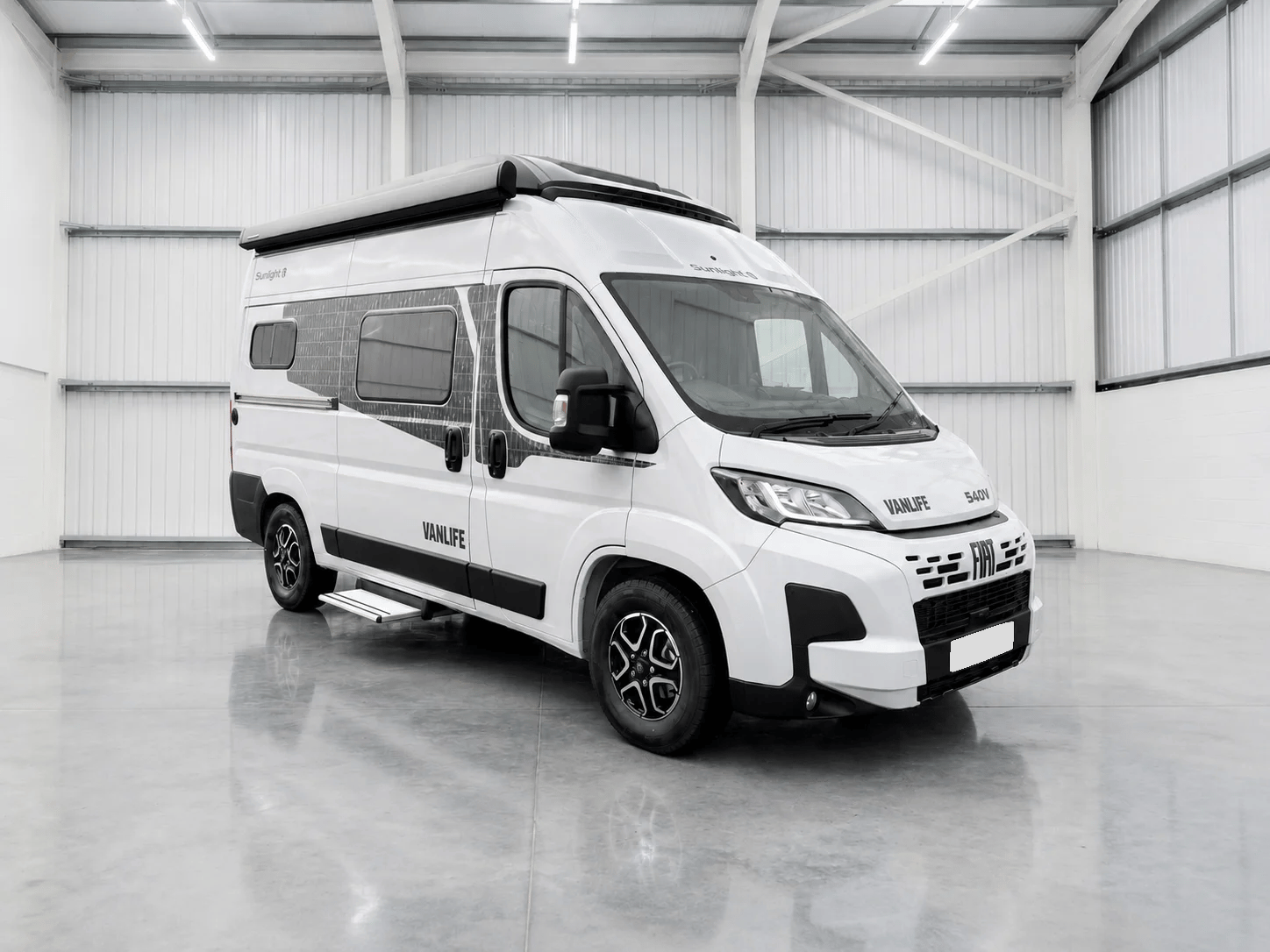
The camper you fall for is rarely the one you can afford. That gap is the whole reason Campervan.win exists. Right now we’re giving away the Sunlight Vanlife, worth around £65,000, and closing that gap is the point: capped entries so the odds stay honest, £10 a ticket, a maximum of five per person, £500 to a UK charity from every full draw, the winner picked by a public randomness beacon anyone can re-check, and one person driving away in the van itself.
Enjoyed this post?
Get more honest campervan guides like this one in your inbox.
You’re in!
Check your inbox. We’ve just sent you a welcome email.

About the author
Arthur
Arthur writes buying guides, comparisons, and in-depth explainers to help readers choose the right campervan or motorhome with confidence.
Keep Reading
Related Reading
Thoughtful articles that build on what you’ve just read.

Campervan Buying Guides
10 min read
Swift Merlin 2027: nine layouts from £64,190 and how to pick the right one
Swift's all-new Merlin campervan arrives for 2027 with nine layouts on the Fiat Ducato panel van. We sort them into four families, work the payload sum on a four-seat version, and explain what the roof, the automatic and the prices mean for your choice.
Campervan Buying Guides
11 min read
Bailey Endeavour B68: the end-lounge Transit campervan where the pop-top costs 143 kg
Bailey's new Endeavour B68 puts a rear lounge in a 5.98 m Ford Transit campervan. We compare it with the B65 and B62, check the 1.86 m bed, and do the payload sums if you add the £7,500 pop-top.

Campervan Buying Guides
12 min read
New campervans under £60,000 for 2027: what the NEC shows and what the price leaves out
A fair look at the new 2027 campervans listed under £60,000 ahead of the Motorhome and Caravan Show at the NEC, with each price given as its maker words it, and the differences between ex-works, delivered and German-retail-based figures explained so you can compare real on-the-road totals.

Campervan Buying Guides
14 min read
Eura Mobil Vancona 2027: a €57,400 campervan with just 84 to 118 kg left for options
Eura Mobil's new Vancona is a well-equipped Fiat Ducato campervan from €57,400, but its 84 to 118 kg options allowance means you need to order it with the weight sheet open. We explain what the figure means, what the 4.25 t uprate costs you in licence terms, and which options to prioritise.