
VW California vs VW Grand California: which one actually suits you?

Written by
Arthur
Arthur writes buying guides, comparisons, and in-depth explainers to help readers choose the right campervan or motorhome with confidence.
The short answer
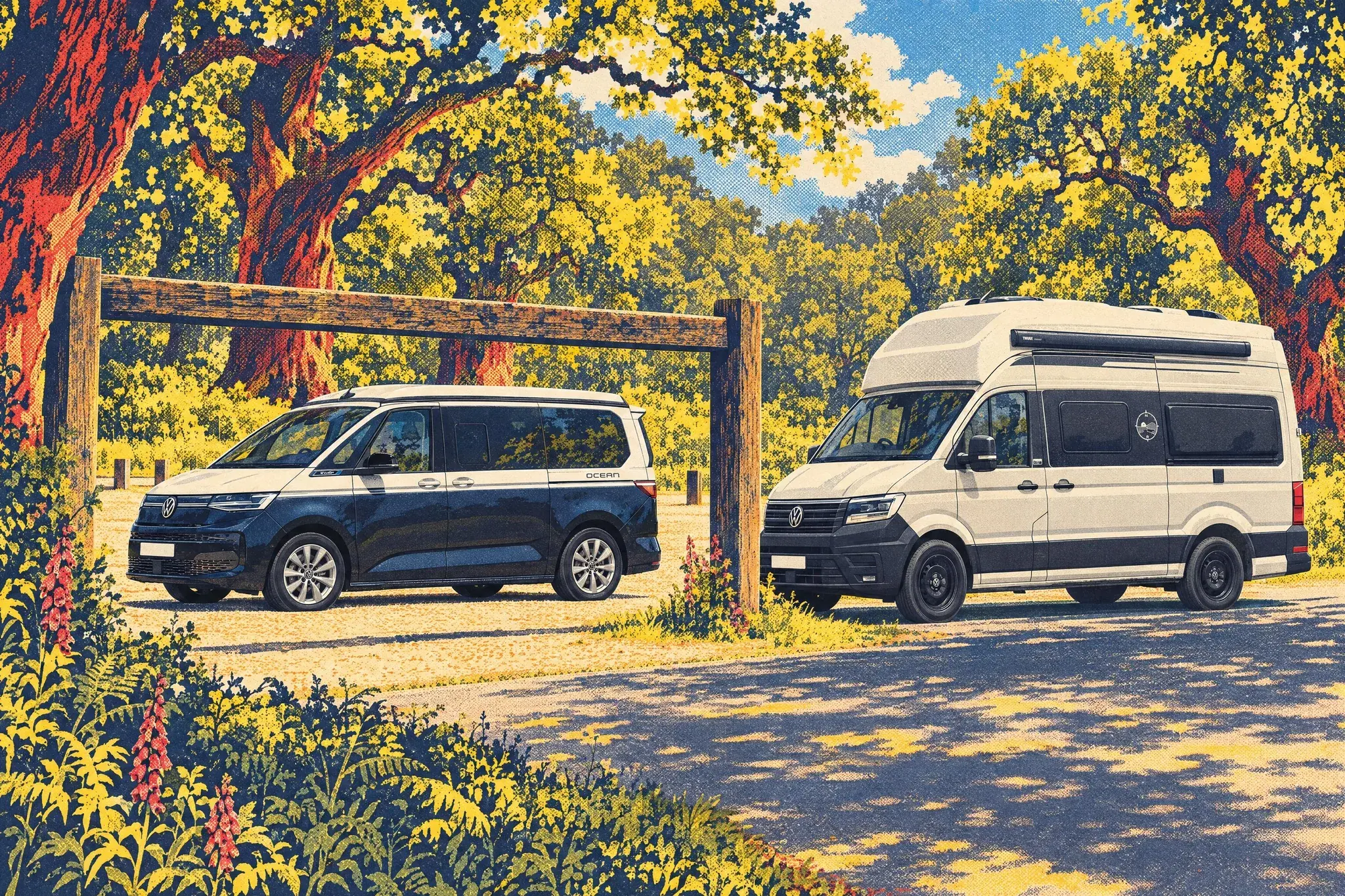
The VW California is a compact pop-top campervan on VW's Multivan-based platform: car-like to drive, sleeps up to four, but has no built-in toilet or shower. The Grand California is a high-top conversion on the Crafter with a fixed bed, full washroom and proper kitchen, so it's roomier but bigger, taller and pricier. Choose the California for everyday usability and the Grand California for self-contained, longer touring.

Updated 6 October 2026: we have corrected which Grand California can take a children's bed, its weights and licence rules, and its UK prices.
Volkswagen sells two very different campervans under one family name, and the gap between them is bigger than the shared badge suggests. The California is a compact pop-top van you could happily use as your only car. The Grand California is a much larger high-roof conversion with a proper bathroom inside. They suit different lives, different budgets and different kinds of trips. This guide walks through the real differences, who each one is for, and how things are shaping up as the range moves into 2026 and 2027.
The quick version
If you want a van that fits on your driveway, ducks under most height barriers and drives like a tall estate car, the California is the one. If you want to stand up, cook properly, shower and use a loo without leaving the vehicle, the Grand California is built for that. Everything else is detail, and the detail matters, so let's go through it.
Two very different vehicles under one name
The current California is built on Volkswagen's Multivan-based platform, which means it shares a lot of its driving manners and cabin tech with VW's passenger people-carrier rather than a heavy commercial van. It's a five-metre-ish vehicle with an elevating pop-top roof. Roof down, it slips into ordinary parking spaces and most multi-storey car parks.
The Grand California is a different animal. It's a factory conversion of the larger Crafter panel van, so you're dealing with a genuine big-van footprint: a fixed high roof, a tall body and a much longer wheelbase on the larger version. It comes in two lengths, usually badged around their length in centimetres, with the shorter one just under six metres and the longer one closer to 6.8 metres. The shorter model can be specified to sleep an extra child or two.
The simplest way to think about it: the California is a campervan you can use every day, and the Grand California is a small motorhome that, in its lightest 3.5-tonne 600 form, you can drive on a normal car licence.
Sleeping: pop-top versus fixed bed
The California sleeps up to four. Two adults sleep downstairs on a bed formed from the folded rear seats, and two more sleep up top in the elevating roof, which has a sprung base that's surprisingly comfortable. The trade-off is the nightly routine: you raise the roof, fold things flat and make the beds, then reverse it in the morning.
The Grand California has a permanent double bed at the rear, crosswise in the 600 and lengthways in the 680, so it's always made and ready. There's no fold-down ritual, no pop-top to raise, and a lot more usable mattress for taller people. The shorter 600 version can add a pull-out over-cab bed for two children, pushing it toward a genuine family layout; the longer 680 sleeps two. If your trips involve teenagers, wet weather or simply wanting to flop into bed without rearranging the living room, the fixed-bed approach is a real comfort.
The bathroom question
This is the single biggest practical divide between the two.
The California has no built-in toilet or shower. Most owners carry a portable cassette loo and rely on campsite facilities or an outdoor shower attachment. That keeps the van small and simple, but it shapes how and where you can stay comfortably.
The Grand California has a proper washroom with a cassette toilet, a sink and a real shower, plus hot water. That makes it genuinely self-contained for several days at a time, which is the whole point of the larger van. If you like wild-ish spots, off-grid aires or long stretches between facilities, an onboard washroom changes the experience completely.
Kitchen and living space
The California's kitchen is compact but cleverly done: a hob, a sink, a fridge and a few well-judged cupboards, mostly accessed from the rear and through the sliding door. It's enough for real cooking, but it's a one-person-at-a-time galley and you'll often cook with the tailgate up.
The Grand California gives you a larger fridge, more worktop, more storage and the headroom to stand and cook properly inside. It feels like a small flat rather than a clever van. With the height comes a dinette and a much greater sense of living space, especially in poor weather when you're stuck inside for a day.
Standing height
Roof down, you can't stand up in the California; roof up, you can stand under the pop-top. The Grand California has full standing height throughout because of its fixed high roof. For some buyers that alone settles the decision.
Driving, parking and everyday usability
This is where the California pulls ahead for a lot of people. It's around two metres tall with the roof down, so it clears most car-park height barriers and fits in a standard garage and ordinary parking bays. It drives in a relaxed, car-like way, and plenty of owners use it as their only vehicle for the school run, the supermarket and the weekend away.
The Grand California is tall, long and wide. It stands close to three metres high, so height barriers, garages and many town-centre car parks are out. The longer version in particular needs thought about where you'll park it at home and how confident you are threading a big van down narrow lanes. None of this is a problem if you expect a motorhome-sized vehicle, but it is a daily reality, not just a holiday one.
Licence and weight
The California is designed to sit at or under 3,500kg maximum authorised mass, so a standard UK category B car licence covers it for most drivers. The Grand California is different: only the 600 comes at 3,500kg. The 600 is also sold at 3,880kg, and every 680 is 3,880kg, which needs C1 if you passed your car test on or after 1 January 1997. Even at 3,500kg, the catch is payload: VW quotes 404kg for the standard 600, and full water, gas, gear and passengers can eat into that quickly. Before you buy either, get the real plated weights and do an honest sum of what you'll actually carry. Going over your plated limit is both unsafe and an insurance and legal problem.
If you passed your test before 1 January 1997, you may hold older C1 entitlement that gives more headroom, but never assume it. Check your licence categories directly.
Running costs and the honest money picture
Neither van is cheap, and it's fair to be upfront about that. New, the California typically starts in the region of the mid-to-high £60,000s and climbs well past £75,000 with options. The Grand California starts higher again, at £84,208 for the 600 and £86,986 for the 680 on Volkswagen UK's 30 September 2026 price list, before options. Used prices vary hugely with age, mileage and engine.
Beyond the purchase price, the cost realities differ:
- Fuel: the smaller, lighter California is generally the more economical to run day to day. The larger Grand California is heavier and less aerodynamic, so expect higher fuel use.
- Servicing and tyres: the Crafter-based Grand California uses larger commercial-grade components, which can mean pricier tyres and consumables.
- Insurance and storage: the bigger van is harder to store at home and can cost more to insure, partly down to value and size.
- Depreciation: VW campervans hold value relatively well compared with many vehicles, but a high-spec example bought new still gives up a meaningful chunk in the early years, as almost any new vehicle does.
If you're weighing one up, build a simple yearly budget: finance or capital, insurance, servicing, tyres, road tax, storage and fuel for your real mileage. The sticker price is only the start.
The 2026 and 2027 picture
Here's where honesty matters more than confident-sounding detail. Volkswagen has been refreshing the California significantly, and the headline change is that the range now offers a plug-in hybrid option alongside conventional petrol and diesel. For a compact campervan used for lots of short trips and overnight hook-ups, an electrified drivetrain is genuinely interesting, because so much campervan mileage is local.
For 2027 specifically, treat any precise spec claim with caution, including ours. What's reasonable to expect rather than to promise:
- The California continuing with combustion and plug-in hybrid options, with ongoing tech and efficiency updates.
- Volkswagen's broader move toward electric vans feeding, eventually, into the larger conversions, which would make a fully electric large camper plausible in time. Range and payload are the hard parts to solve for a heavy, tall van, so judge any electric large camper on its real-world figures, not the headline number.
- The Grand California remaining the self-contained, washroom-equipped choice, with updates to tech, infotainment and safety systems rather than a change in its basic concept.
If you're shopping in 2026 or 2027, the smart move is to compare the actual brochure and the actual plated weights of the exact model year in front of you, and to test drive both. Specifications shift between model years, and a salesperson's current configurator beats any article for the precise numbers on the day.
Which one is right for your situation?
Choose the California if…
- It needs to double as your everyday car and fit your driveway, garage or normal parking.
- You travel as a couple or a small family and don't mind the pop-top routine.
- You're happy using campsite facilities or a portable loo rather than an onboard bathroom.
- You value easy driving and lower running costs over indoor space.
- You're drawn to the plug-in hybrid option for lots of short, local trips.
Choose the Grand California if…
- You want a real bathroom and a fixed, always-made bed.
- You take longer trips, stay off-grid, or tour in cooler, wetter months when indoor space matters.
- You have young children and want the 600's optional over-cab bed for them, plus more sleeping room.
- You're comfortable driving and parking a large van, and have somewhere to keep it.
- You'd happily own a separate everyday car alongside it.
The bottom line
These two vans answer different questions. The California asks, "Can one vehicle do my normal life and my adventures?" and answers yes, within the limits of a clever, compact space. The Grand California asks, "Can I have a small, self-contained home that still fits a car licence?" and answers yes, in its 3.5-tonne 600 form, at the cost of size, money and everyday convenience.
There's no wrong choice, only a wrong match. Be honest about how you'll really travel, how often, with whom, and where you'll park it the other fifty weeks of the year. Then go and sit in both, raise the roof on one and stand up in the other, and the right answer for your situation tends to make itself obvious.
Common questions
Does the VW California have a toilet and shower?
No. The standard California has no built-in washroom. Most owners carry a portable cassette toilet and use campsite facilities or an outdoor shower attachment. If you want an onboard toilet and shower, that's the Grand California's main advantage.
Can I drive a Grand California on a normal car licence?
Only the 600 at 3,500kg. The 600 is also sold at 3,880kg, and every 680 is 3,880kg; those need a C1 entitlement if you passed your car test on or after 1 January 1997. Even at 3,500kg the catch is payload (VW quotes 404kg for the standard 600), so always check the plated weight and weigh up what you'll actually carry.
How many people can sleep in each van?
The California sleeps up to four, with two below and two in the pop-top roof. The Grand California has a fixed rear double, and the shorter 600 can be specified with an over-cab bed for two children, making it the more family-friendly layout; the longer 680 sleeps two.
Is there an electric or hybrid VW California?
The current California range now offers a plug-in hybrid option alongside petrol and diesel, which suits the lots-of-short-trips nature of campervan use. A fully electric large camper based on VW's van range is plausible in future, but judge any such model on its real-world range and payload.
Which is cheaper to run, the California or Grand California?
The smaller, lighter California is generally cheaper day to day, with better fuel economy, easier parking and storage, and often lower insurance. The larger Grand California costs more to fuel and tends to carry higher consumable and storage costs.
The reachable bit
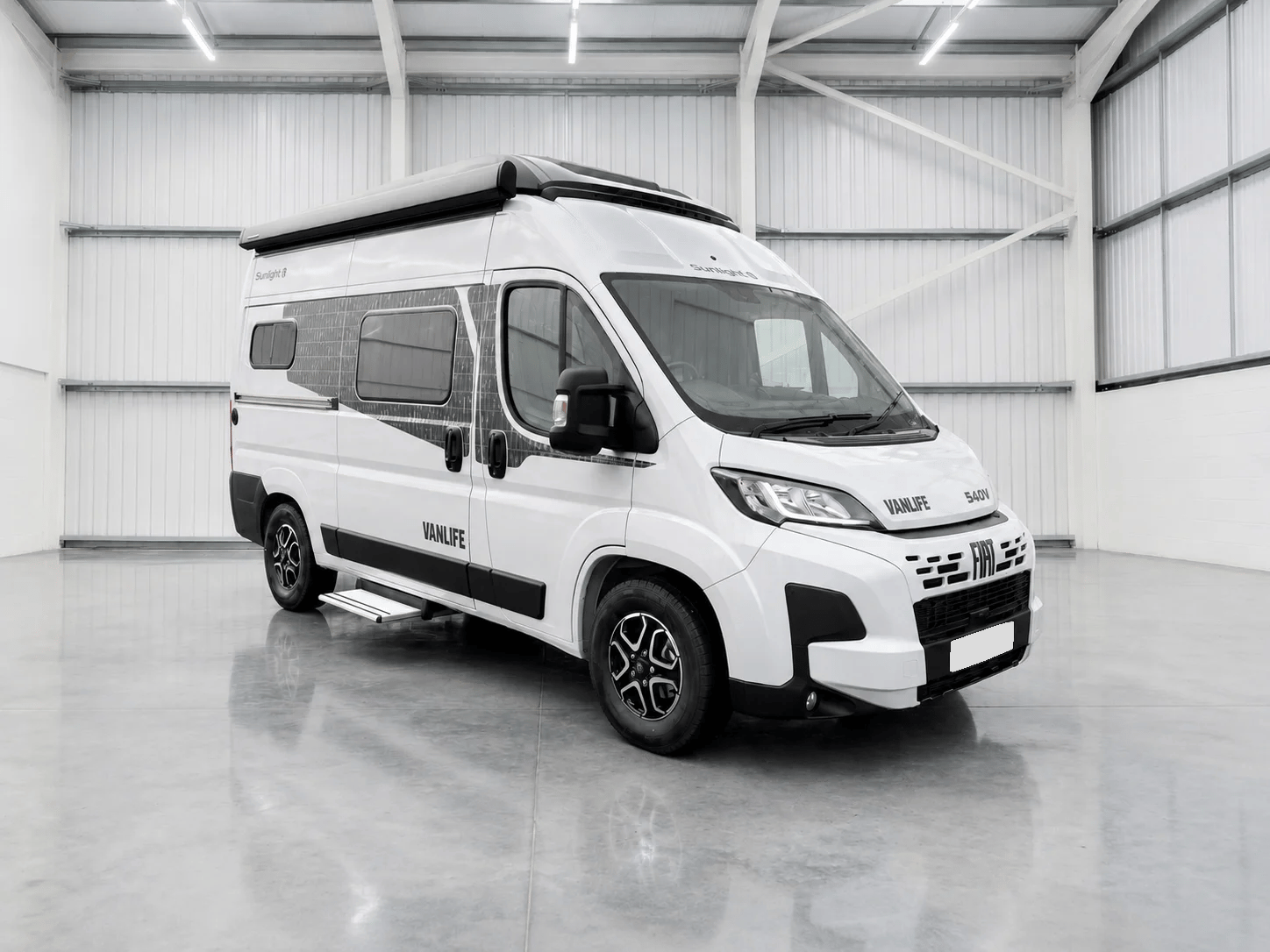
The camper you fall for is rarely the one you can afford. That gap is the whole reason Campervan.win exists. Right now we’re giving away the Sunlight Vanlife, worth around £65,000, and closing that gap is the point: capped entries so the odds stay honest, £10 a ticket, a maximum of five per person, £500 to a UK charity from every full draw, the winner picked by a public randomness beacon anyone can re-check, and one person driving away in the van itself.
Enjoyed this post?
Get more honest campervan guides like this one in your inbox.
You’re in!
Check your inbox. We’ve just sent you a welcome email.

About the author
Arthur
Arthur writes buying guides, comparisons, and in-depth explainers to help readers choose the right campervan or motorhome with confidence.
Keep Reading
Related Reading
Thoughtful articles that build on what you’ve just read.
Campervan Buying Guides
13 min read
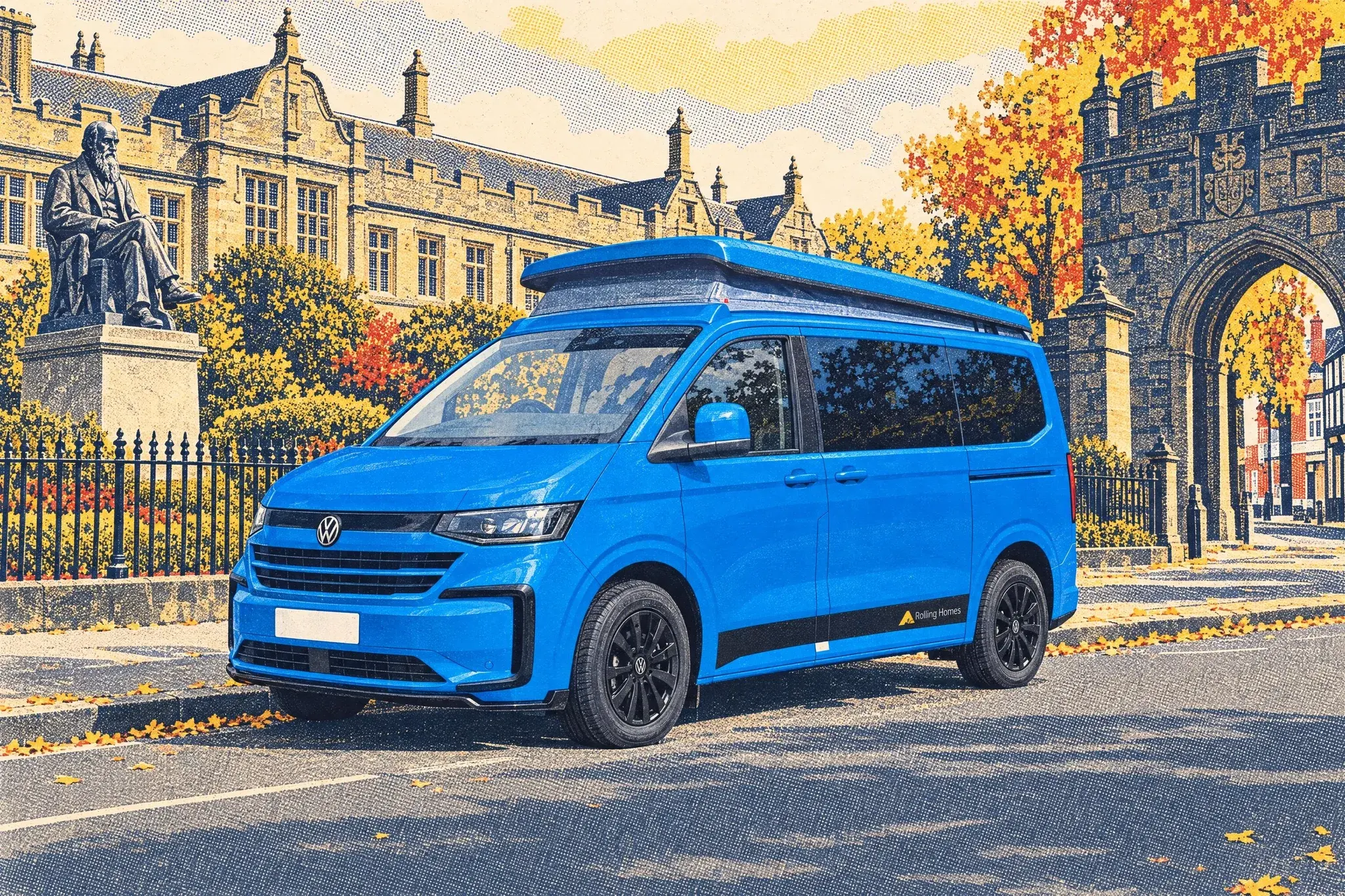
Rolling Homes of Shrewsbury: VW-qualified campers from the Columbus to the Crafter Darwin
A plain-English profile of Rolling Homes, the Shrewsbury family converter with Volkswagen's Motorhome Qualified Converter status: what it builds on, what each model in the range is for, the 13 October 2026 prices, and what to ask before you put a deposit down.
Campervan Buying Guides
11 min read
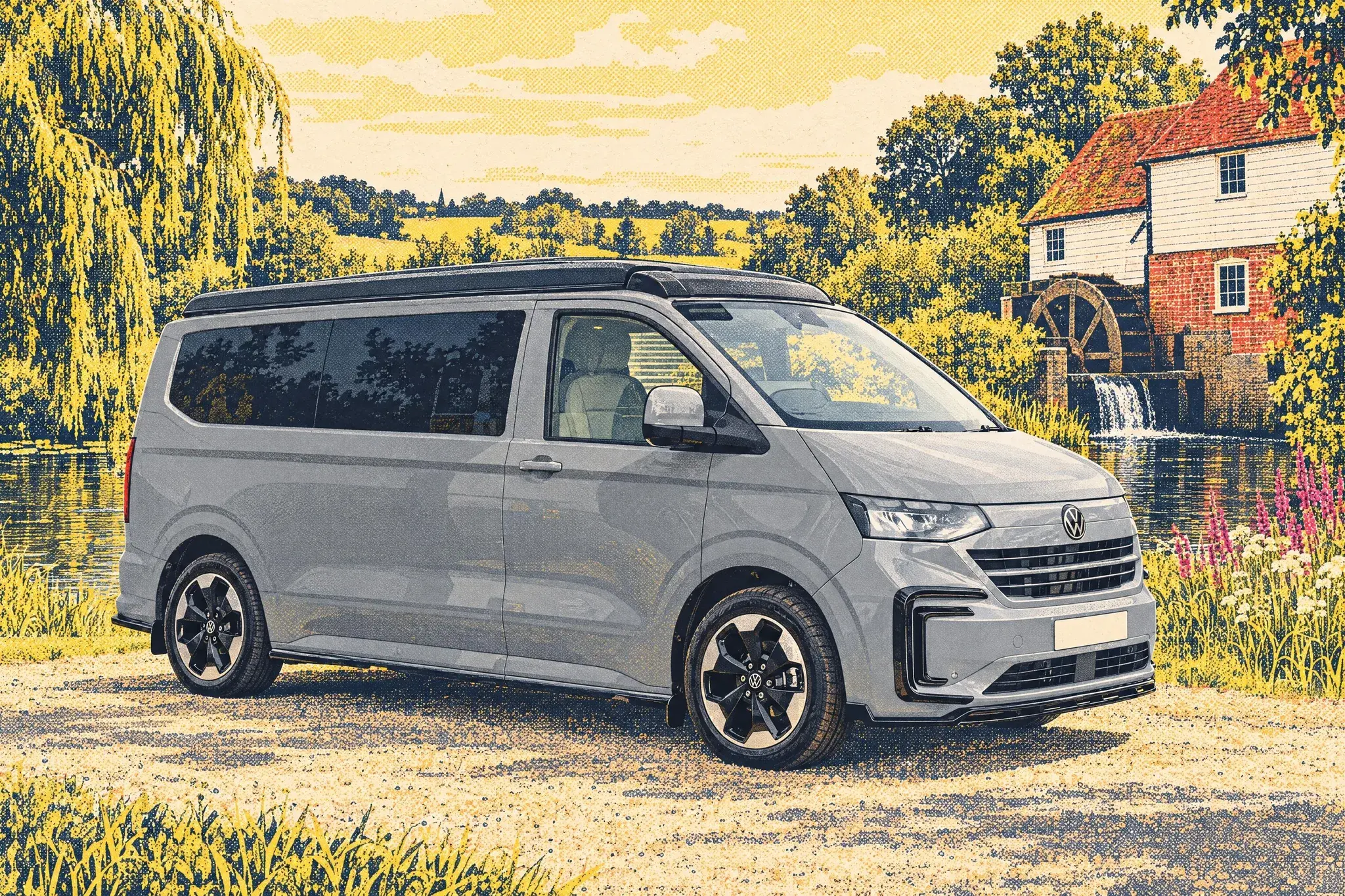
Bilbo's explained: the Surrey VW converter since 1977, now on the T7 and Transit Custom
A plain profile of Bilbo's, the Surrey converter that has been putting raising roofs on Volkswagen Transporters since 1977 and now builds its Celex layout on both the T7 and the Ford Transit Custom. The range, the in-stock prices on 13 October 2026, the warranty, the owner-voted awards, and what to ask before you order.
Campervan Buying Guides
12 min read
Hillside Leisure explained: Derby's type-approved VW converter with a hybrid Multivan
A plain profile of Hillside Leisure of Derby: what the company builds on, every model with its published from-price, the approvals most buyers never ask about, and who it suits.
Campervan Buying Guides
10 min read
Swift Merlin 2027: nine layouts from £64,190 and how to pick the right one
Swift's all-new Merlin campervan arrives for 2027 with nine layouts on the Fiat Ducato panel van. We sort them into four families, work the payload sum on a four-seat version, and explain what the roof, the automatic and the prices mean for your choice.