
Mercedes Sprinter 4x4 campervans: do UK buyers actually need all-wheel drive?

Written by
Arthur
Arthur writes buying guides, comparisons, and in-depth explainers to help readers choose the right campervan or motorhome with confidence.
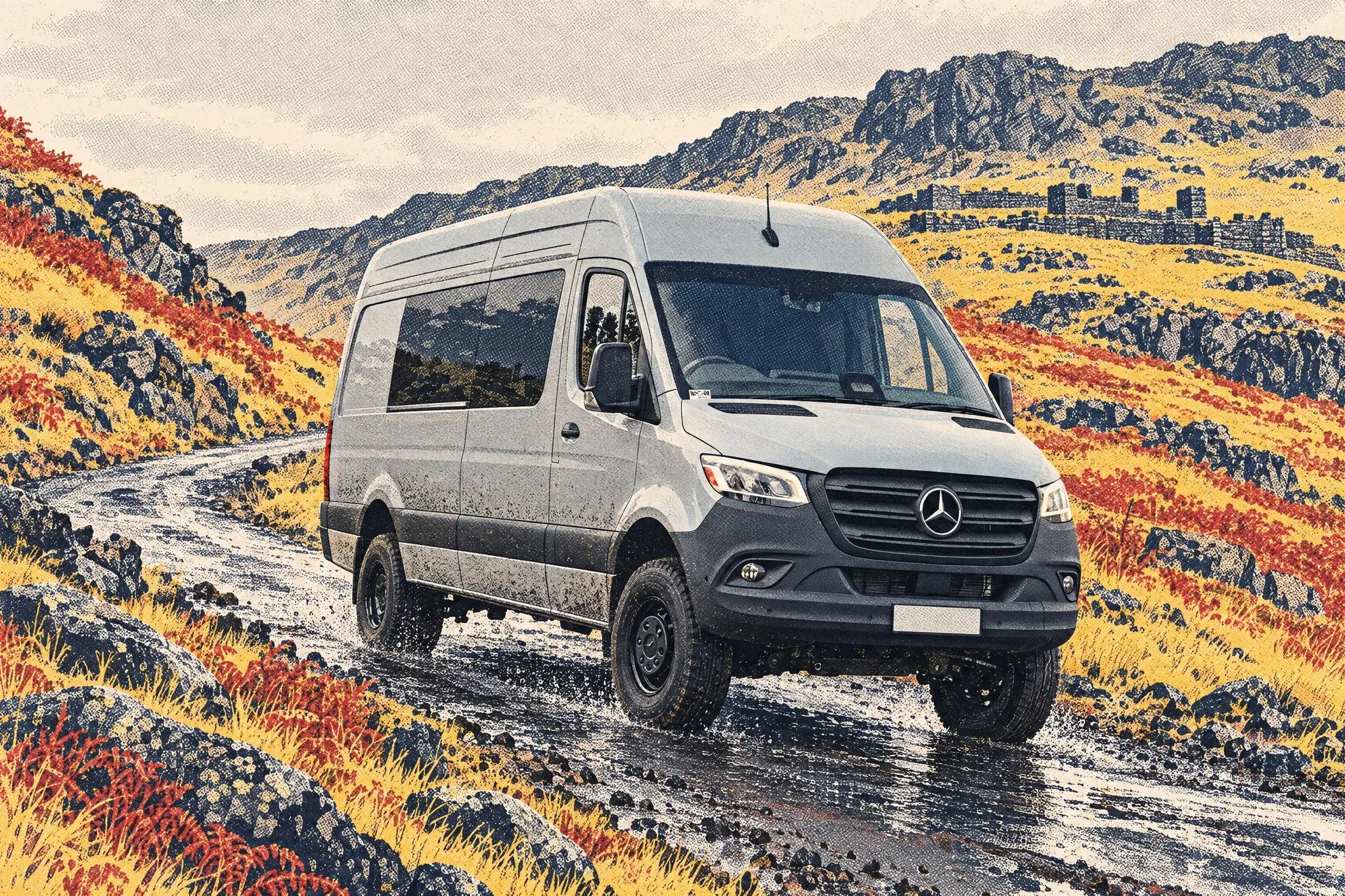
The short answer
For most UK buyers, a Mercedes Sprinter 4x4 campervan is traction you will rarely call upon, bought at the expense of payload, fuel, complexity and price, and knowing that is genuinely liberating, because it frees the money for things you will use every day. The all-wheel-drive system itself is excellent and earns its keep if you tour winter hills, reach rough park-ups, tow heavy or live somewhere that gets cut off. But for the touring most of us actually do, good all-season or winter tyres, a couple of traction boards and sensible parking solve nearly everything the 4x4 promises, for a fraction of the cost. So be specific about yourself: if you can name the roads and the dates, buy it and enjoy it. If you cannot, here is the smarter, cheaper way to go everywhere anyway.

The Mercedes Sprinter 4x4 has a way of making people feel ready for anything. A higher stance, a chunkier look, and the quiet confidence of knowing all four wheels can pull. It is the campervan base that gets shared in glossy mountain photos and bought by people who plan to chase snow, mud and remote tracks. But here is the honest question almost nobody asks before they spend the money: on British roads, in British weather, doing the kind of touring most of us actually do, do you really need it?
This guide answers that properly. Not with hype, and not by talking you out of something you genuinely want. We will look at what the Sprinter 4x4 system actually does, how it differs from a regular front or rear-wheel-drive van, what it costs you in money, fuel, payload and complexity, and the specific situations where it earns its keep. By the end you will know whether your money is better spent on the driven axles, or on tyres, a heater, a bigger battery, and a clear head about where you will actually go.
What people picture versus what they buy
When most buyers say "Sprinter 4x4" they have a picture in their head. Snow-covered Scottish single track. A muddy field at a festival. A steep gravel access road to a remote bothy. A beach launch. The promise is that the van will simply keep going when a normal van would spin a wheel and stop.
That picture is mostly true, but it is also a small slice of how a campervan is actually used. The average UK leisure van spends the overwhelming majority of its life on tarmac. Motorways. A-roads. Town traffic. Campsite hardstanding. Tidy gravel pitches. The number of days per year where all-wheel drive makes a genuine difference, for most people, can be counted on one hand. For some buyers it is zero. For a small group, it is the whole point of the van.
The skill here is being honest about which group you are in before the deposit goes down, not after.
How the Sprinter all-wheel-drive system actually works
It helps to understand what you are buying, because "4x4" means very different things on different vehicles. A Sprinter is not a low-range off-road specialist in the way a traditional mud-plugging 4x4 is. It is a road-biased van with an intelligent all-wheel-drive system designed mainly to give you traction and stability in poor conditions, not to crawl up a rock face.
On the older shape (the previous generation)
The earlier Sprinter 4x4, sold widely in the UK as a converted base, used a part-time system. In normal driving it sent power to the rear wheels, and you engaged the front axle when you needed it via a switch. There was also an optional low-range reduction gear that genuinely helped on steep, slippery climbs and descents. That low range is the closest a Sprinter gets to proper off-road hardware, and it is why some buyers specifically hunt out the older shape with that option.
On the current shape
The current Sprinter moved to a more car-like, permanent style all-wheel-drive setup on the rear-wheel-drive based versions, splitting torque between the axles automatically. It is smoother and more seamless on the road, and very good at quietly sorting out a slippery start or a greasy hill. What it is less focused on is hardcore terrain. There is no traditional low-range crawler gear in the same way, and the system is tuned for grip and security rather than expedition rock-crawling.
The takeaway is simple. Both systems are excellent at turning a scary slippery moment into a non-event. Neither turns your campervan into a go-anywhere expedition truck. If you imagine fording rivers and tackling boulder fields, you are picturing a different category of vehicle.
The honest case for buying the 4x4
Let us be fair to it, because there are real, sensible reasons to want all-wheel drive. This is not a vanity purchase for everyone.
You genuinely tour in winter, in the hills
If you spend serious time in the Highlands, the Lake District, mid-Wales or the Pennines between December and March, you will meet conditions where two-wheel drive struggles. A frozen, untreated single-track road with a climb on it can stop a heavy rear-drive van dead, especially if it is empty over the driven axle. All-wheel drive plus winter tyres makes those mornings calm instead of stressful.
You access genuinely rough park-ups
Some people really do use their van to reach remote spots: forestry tracks, rough estate roads, surf spots with a soft or rutted approach, or fields that turn to soup after rain. If your lifestyle regularly involves that last quarter mile of unsealed ground, all-wheel drive stops you getting stuck or chewing up someone's land trying to leave.
You tow, or you are heavy and tail-happy
A long-wheelbase, high-roof van with a heavy conversion can be light over the rear axle when the water tank is empty and the cupboards are bare. In the wet, a rear-wheel-drive van in that state can feel skittish pulling away or on a slippery roundabout. All-wheel drive spreads the effort and feels more planted. If you tow a trailer or a small car, that stability is worth real money.
You live somewhere that gets cut off
If home is up a steep, unadopted lane, or you keep the van somewhere rural that snows in, the 4x4 is not a holiday toy. It is the difference between using your van in January and leaving it parked. That is a legitimate everyday-use case, not a fantasy.
The rule of thumb: if you can name the specific roads, dates and conditions where you will need it, you probably need it. If you are buying it for a vague feeling of being prepared, you are buying insurance you will rarely claim on.
The honest case against, for most UK buyers
Now the other side, because this is where most people quietly are, even if they do not want to admit it on day one.
UK weather rarely demands it
Britain is mild, wet and crowded with treated roads. Heavy, sustained snow that closes proper routes for days is the exception in most of the country, not the rule. Councils grit primary routes quickly. Most campsites and Caravan and Motorhome Club sites have hardstanding or are sensible about not letting vans onto sodden grass. The conditions that genuinely defeat a sensible two-wheel-drive van on decent tyres are uncommon for the typical tourer.
The thing that saves you is usually tyres, not driven axles
This is the single most important point in the whole guide. A two-wheel-drive van on good all-season or winter tyres will out-grip a 4x4 on tired, hard summer tyres in cold and wet conditions almost every time. Traction starts at the contact patch. Most people who get stuck or slide are not short of driven axles, they are short of rubber. Spending a few hundred pounds on proper tyres transforms bad-weather confidence far more cheaply than spending thousands on an extra driven axle.
You pay for it three times
The 4x4 costs you more than once. There is the purchase premium, often a significant chunk on top of an equivalent two-wheel-drive base. There is the fuel: more weight, more drivetrain drag, more rolling resistance, so real-world economy drops. And there is long-term complexity: more components, more to service, more to potentially go wrong as the van ages and the warranty is long gone. None of that is a scandal. It is just the honest arithmetic of a more complicated machine.
It eats your payload and your access
The extra hardware adds weight, and on a campervan payload is precious. Every kilo of drivetrain is a kilo you cannot spend on water, gear, passengers or a bigger battery bank. The raised ride height can also nudge you over height limits in car parks and on low approaches, and it can make the habitation door a longer step up, which matters more than you think if anyone in the household has dodgy knees.
The real-world cost picture
Let us put rough numbers around this so it is concrete. Prices move, so treat these as honest ballparks rather than quotes.
Purchase premium
An all-wheel-drive Sprinter base typically commands a meaningful premium over the equivalent two-wheel-drive van, both new and used. On the used market that premium can actually widen, because 4x4 vans are rarer and sought after, so they hold value well. That is a double-edged sword: you pay more to buy, but you may also get more back when you sell. If you are buying a finished, professionally converted 4x4 campervan, the premium is baked into a higher overall price that can run into many thousands over a comparable two-wheel-drive build.
Running costs
- Fuel: expect real-world economy to drop noticeably versus the same van in two-wheel drive. A few miles per gallon adds up over a year of touring.
- Servicing: more driveline to inspect and maintain, including front drive components that simply are not there on a standard van.
- Tyres: you will still want good tyres, and a raised or heavier van can wear them at a similar or faster rate.
- Insurance: a higher vehicle value generally means a higher premium, and some insurers treat modified or uprated vans more cautiously.
Depreciation and resale
This is the genuine silver lining. Because demand outstrips supply, well-kept 4x4 Sprinter conversions tend to hold their value strongly. If you buy sensibly, look after it, and the market stays warm, the premium you paid is partly an asset rather than pure cost. That changes the calculation. It does not mean everyone should buy one, but it does mean the money is not simply burned.
Payload: the conversation everyone skips
Weight is where campervan dreams meet physics, and the 4x4 makes the sums tighter. A typical Sprinter campervan is plated at 3,500kg so it can be driven on a standard car licence. Once you load in a conversion, water, leisure batteries, gas, a couple of adults and a fortnight of gear, the spare capacity disappears fast.
The all-wheel-drive hardware adds weight before you have packed a single thing. That means less margin for everything else. The honest options are:
- Accept a lighter, more disciplined build with less water and fewer batteries.
- Look at uprating the gross weight above 3,500kg, which has licensing consequences for some drivers and changes speed limits and where you can park.
- Be ruthless about what you actually carry, and weigh the loaded van at a public weighbridge to know the truth.
Plenty of overweight campervans are driven on UK roads by owners who have never weighed them. With a 4x4 you have less slack, so this matters more, not less. Before committing, ask for the base vehicle's kerb weight and do the payload maths for your real packing list, including passengers. If the numbers are tight, that is a reason to think hard, not to hope for the best.
Licensing: what your driving licence allows
This trips people up regardless of drive type, but it is worth nailing down because the 4x4 nudges weight upward. If you passed your car test in Great Britain on or after 1 January 1997, your standard category B licence generally lets you drive a vehicle up to 3,500kg maximum authorised mass. That covers most 3,500kg-plated Sprinter campervans.
If you want to uprate the van above 3,500kg to claw back payload, you may need category C1, which younger drivers do not automatically hold and which involves a medical and a test. Drivers who passed before 1997 often have grandfather rights that cover heavier vehicles, but you should check your own licence categories rather than assume. The point for the 4x4 buyer is simple: the heavier base makes the 3,500kg ceiling feel closer, so know your licence and your numbers before you buy.
Driving a Sprinter 4x4 on the road, day to day
Set aside the off-road fantasy and ask how it actually feels for 95 per cent of its life, which is ordinary tarmac.
Wet and cold confidence
This is where the system quietly shines for normal people. Pulling away on a wet, leaf-strewn slope. A greasy roundabout in November. A frosty campsite exit at 7am. The van just goes, with no drama and no wheelspin. You may never call it dramatic, but you notice the absence of small stressful moments, and that adds up over years.
Ride height and step-in
The raised stance looks great and helps on rough ground, but it makes the cab and habitation door a bigger climb. For tall, able people that is nothing. For anyone with a hip, knee or back issue, or for kids and older relatives, it can be a daily annoyance. A grab handle and a good step help, but factor it in honestly.
Wind and motorway manners
A tall van is a sail in crosswinds whatever drives it. The 4x4's added weight low down can make it feel a touch more planted, but do not expect miracles. Crosswind nerves on exposed motorways and bridges are a height-and-shape issue more than a drivetrain one.
Parking and height limits
The extra ride height plus a high roof can put you over the 2 metre and 2.1 metre barriers in many town and supermarket car parks anyway, so that may not change. But on tight rural approaches, low gateways and overhanging branches, the taller van asks for more awareness.
What actually gets vans stuck, and what fixes it cheaply
If your main fear is getting stuck on a wet pitch or a soft track, it is worth knowing that all-wheel drive is only one tool, and often not the most cost-effective one.
Tyres first, always
Fit good all-season or winter tyres if you tour in the cold half of the year. The difference in grip below about 7 degrees Celsius, in the wet, and on snow, is enormous. This is the highest-value upgrade you can make on any van, two-wheel drive or four.
Recovery kit that fits in a locker
- Traction boards: a pair of grip ramps wedged under the driven wheels will get a two-wheel-drive van off a wet pitch in seconds. They cost a fraction of an extra driven axle.
- A folding shovel: clearing in front of the wheels and dropping tyre pressure a little often does the job.
- A tow strap: a friendly tractor or 4x4 is rarely far away in the countryside.
Technique and timing
Most stuck-van stories start with a decision to drive onto soft ground that was obviously marginal. Walking the route first, parking on firmer edges, arriving and leaving when ground is dry, and not turning sharply on grass solves the majority of cases. A 4x4 lets you be a bit braver, but bravery on soft ground is also how you end up axle-deep with all four wheels spinning.
Who should genuinely buy the 4x4
Here is the clear-eyed shortlist of people for whom the all-wheel-drive Sprinter is the right call, not an indulgence:
- Year-round mountain and Highland tourers who actually travel in winter and meet untreated, climbing roads.
- People who park or live somewhere rural and steep that becomes impassable in snow or after heavy rain.
- Active-pursuit users whose lifestyle genuinely involves rough access: surfers, climbers, mountain bikers, photographers, estate and forestry workers using the van as a base.
- Towing households who want the extra stability of driven front wheels with a heavy load behind.
- Buyers who value strong resale and are happy to pay more upfront knowing the van should hold its value well.
If you recognise yourself clearly in two or more of those, the premium is probably money well spent and you will use what you paid for.
Who should probably save the money
And here is the equally honest shortlist for whom a good two-wheel-drive van plus sensible tyres is the smarter buy:
- Three-season tourers who put the van away or stick to easy trips in deep winter.
- Campsite and hardstanding users who book proper pitches rather than chasing wild ground.
- Payload-sensitive builds with families, lots of water and big battery banks, where every kilo counts.
- Cost-conscious owners who would rather put the saved thousands into a diesel heater, solar, lithium batteries, or simply into fuel and trips.
- Anyone with mobility considerations for whom a lower, easier step-in genuinely improves daily use.
There is no shame in that list. It is where most people actually live, and a well-specced two-wheel-drive van will serve them brilliantly for years.
If you do buy one: what to check
Whether new or, more likely, used, a 4x4 Sprinter campervan deserves a careful inspection. The drivetrain complexity that gives you the benefit also gives you more to check.
On a used base or conversion
- Service history for the drivetrain: ask specifically whether the front axle, transfer arrangement and any low-range hardware have been serviced and used. A 4x4 that has never left tarmac can have seized or neglected components precisely because the owner never engaged the system.
- Evidence of real off-road use: a little is healthy, a lot of underbody damage, bent steps, dented sills and grass-packed components suggests a hard life.
- Tyres: check the date codes and tread. Chunky all-terrain tyres look the part but can be old, noisy and poor in the wet. Matched, in-date tyres of the right load rating matter.
- Corrosion: as with any older van, look hard at the usual rust areas, wheel arches, sills and any place water sits. Mud-track use accelerates it.
- Weight plate and payload: confirm the plated weights and do the payload sums for the finished conversion, ideally with a weighbridge ticket.
On the conversion itself
The drivetrain is only half the van. The habitation side, electrics, gas, water and damp are exactly as important as on any campervan. A great base with a poor conversion is not a bargain. Check the leisure electrics, look for damp around windows, rooflights and the habitation door, and make sure the heating works properly, because if you are buying a 4x4 for winter use you will rely on that heater heavily.
The alternatives worth considering first
Before you commit to all-wheel drive, it is worth being sure a simpler answer does not solve your actual problem.
Two-wheel drive plus a proper winter setup
Good cold-weather tyres, traction boards, a shovel and a bit of weight over the driven axle handle the vast majority of British conditions. This combination costs a small fraction of the 4x4 premium and adds almost no weight.
Rear-wheel drive done sensibly
A rear-drive van loaded with the water tank toward the back, or simply carrying typical touring weight, has decent traction. Many owners who think they need 4x4 actually just had a bad experience in an empty van on summer tyres in winter, which is a setup problem, not a drivetrain one.
Choosing your park-ups better
If the real issue is soft ground, the cheapest fix is discipline about where you point the van. Hardstanding pitches, gravel aires, firm verges and well-drained spots remove the problem entirely. The freedom you imagine the 4x4 buying you is often available with a two-wheel-drive van and slightly more thought.
A balanced way to make the decision
Try this honest test before you spend the money. Get a piece of paper and write down, with dates and places, every trip in the last two years where you genuinely could not have gone, or got stuck, in a sensible two-wheel-drive van on good tyres. Not trips where 4x4 would have been nice. Trips where it was actually necessary.
If that list has several real entries, buy the 4x4 with confidence. You will use it, and the resale strength softens the cost. If the list is empty or has one nervous morning on it, your money will do more good elsewhere in the van and on the road. Either answer is fine. The only wrong move is paying the premium for a picture in your head that your real life never quite matches.
The bottom line
The Mercedes Sprinter 4x4 is a genuinely good system. It turns slippery, frightening moments into quiet non-events, it adds real capability for people who travel in winter hills or reach rough places, and it holds its value well because others want it too. None of that is marketing. It is true.
But for the majority of UK buyers, doing the touring most of us actually do, all-wheel drive is traction they will rarely call upon, bought at the expense of payload, fuel, complexity and a higher price. The honest secret is that good tyres, a couple of traction boards and a bit of common sense about where you park solve nearly every problem people imagine the 4x4 will solve, for a tiny fraction of the cost.
So be specific about yourself. If you can name the roads and the dates, buy it and enjoy it. If you cannot, buy the best two-wheel-drive van you can, put proper rubber on it, spend the difference on a warm, well-equipped interior, and go everywhere a sensible person would go anyway. That is not settling. For most people, it is simply the better van.
Common questions
Do you actually need a Sprinter 4x4 campervan in the UK?
Most UK buyers do not. The all-wheel-drive system is excellent, but for the touring most people actually do it is traction you will rarely call on, paid for in higher price, more fuel, more complexity and less payload. Good tyres, a couple of traction boards and choosing your park-ups carefully solve nearly every situation people imagine the 4x4 is for.
When is a Sprinter 4x4 worth buying?
When you can name the roads and the dates. It earns its keep if you genuinely tour winter hills, regularly reach rough or remote park-ups, tow or run heavy and tail-happy, or live somewhere up a steep lane that gets cut off in snow. If you can be that specific about your travel, buy it and enjoy it; if you cannot, the money is better spent elsewhere.
Is a Sprinter 4x4 a proper off-roader?
Not in the low-range, mud-plugging sense. A Sprinter is not a traditional off-road specialist; its all-wheel-drive system is about confident traction on slippery surfaces and rough access tracks, not rock crawling. It turns frightening slippery moments into quiet non-events, which is genuinely useful, but it is not built for serious off-roading.
What does a Sprinter 4x4 cost you beyond the purchase price?
It costs you more than once: a purchase premium, then ongoing in worse fuel economy and added complexity, and in lost payload because the heavier driven axles eat into your 3,500kg allowance. The upside is strong resale, as 4x4 conversions are rare and sought after, so well-kept examples hold their value well.
Will good tyres do the job instead of 4x4?
Very often, yes. A two-wheel-drive van on good all-season or winter tyres will out-grip a 4x4 on tired summer tyres in cold and wet almost every time. Tyres first, then a couple of traction boards in a locker and sensible judgement about where you park, fix nearly every problem people buy a 4x4 to avoid, for a tiny fraction of the cost.
Does a Sprinter 4x4 affect payload and licence?
Yes. The heavier base makes the 3,500kg ceiling feel closer, so payload is tighter. A standard category B licence covers up to 3,500kg; uprating above that to claw back payload needs category C1, which drivers who passed after 1 January 1997 do not hold automatically. Know your licence and your numbers before you buy.
The reachable bit
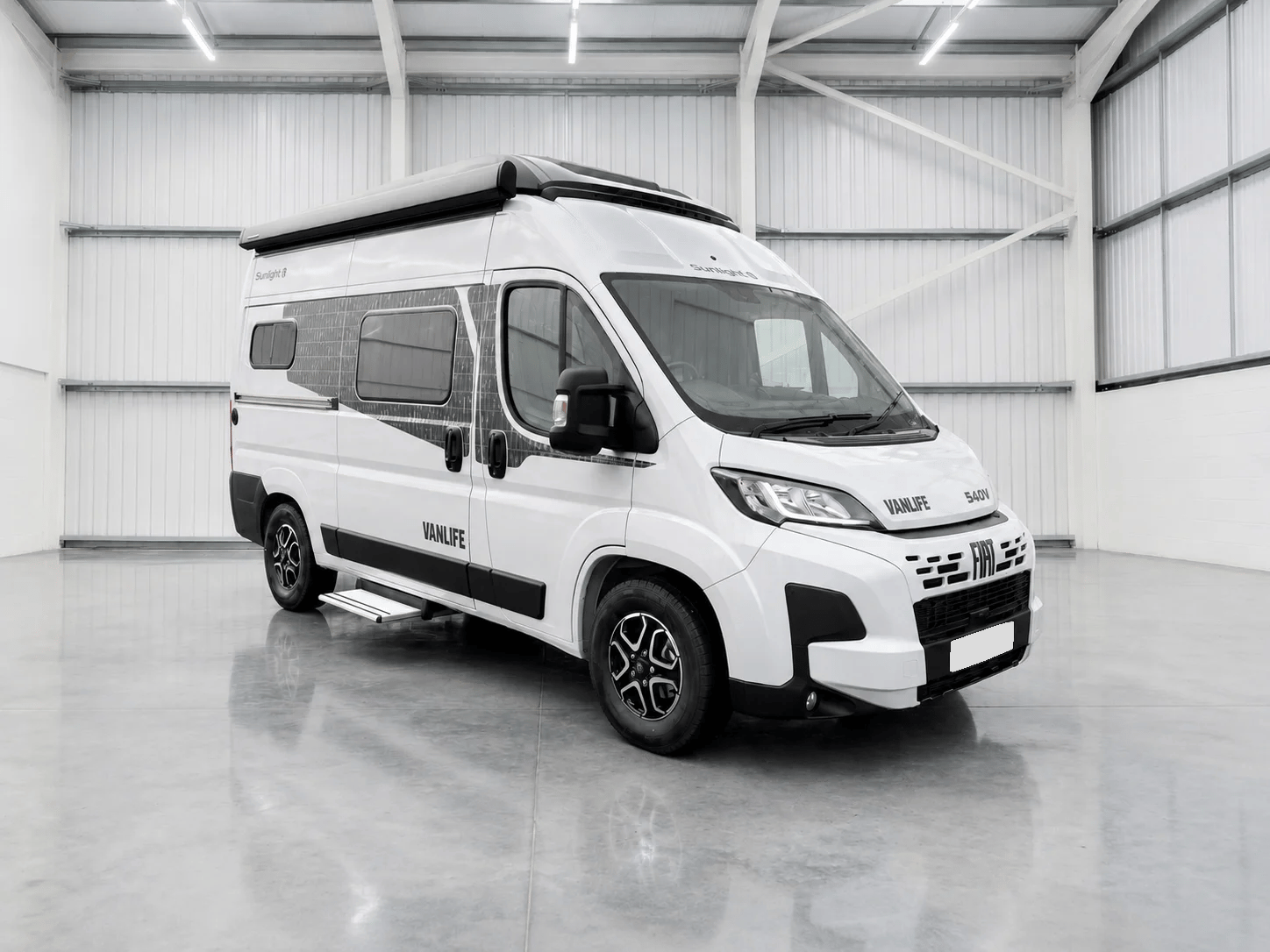
The camper you fall for is rarely the one you can afford. That gap is the whole reason Campervan.win exists. Right now we’re giving away the Sunlight Vanlife, worth around £65,000, and closing that gap is the point: capped entries so the odds stay honest, £10 a ticket, a maximum of five per person, £500 to a UK charity from every full draw, the winner picked by a public randomness beacon anyone can re-check, and one person driving away in the van itself.
Enjoyed this post?
Get more honest campervan guides like this one in your inbox.
You’re in!
Check your inbox. We’ve just sent you a welcome email.

About the author
Arthur
Arthur writes buying guides, comparisons, and in-depth explainers to help readers choose the right campervan or motorhome with confidence.
Keep Reading
Related Reading
Thoughtful articles that build on what you’ve just read.
Campervan Buying Guides
10 min read
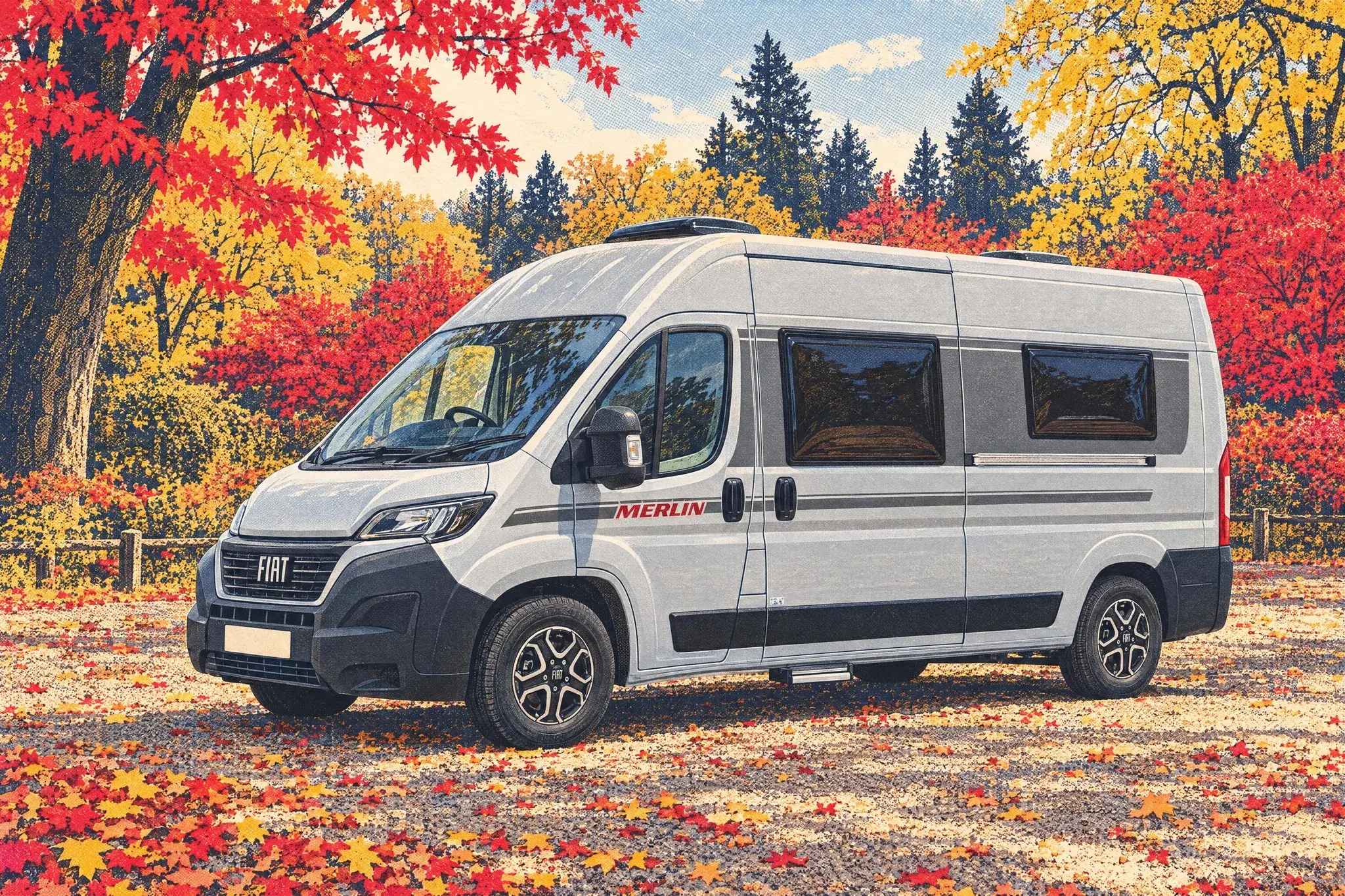
Swift Merlin 2027: nine layouts from £64,190 and how to pick the right one
Swift's all-new Merlin campervan arrives for 2027 with nine layouts on the Fiat Ducato panel van. We sort them into four families, work the payload sum on a four-seat version, and explain what the roof, the automatic and the prices mean for your choice.
Campervan Buying Guides
11 min read
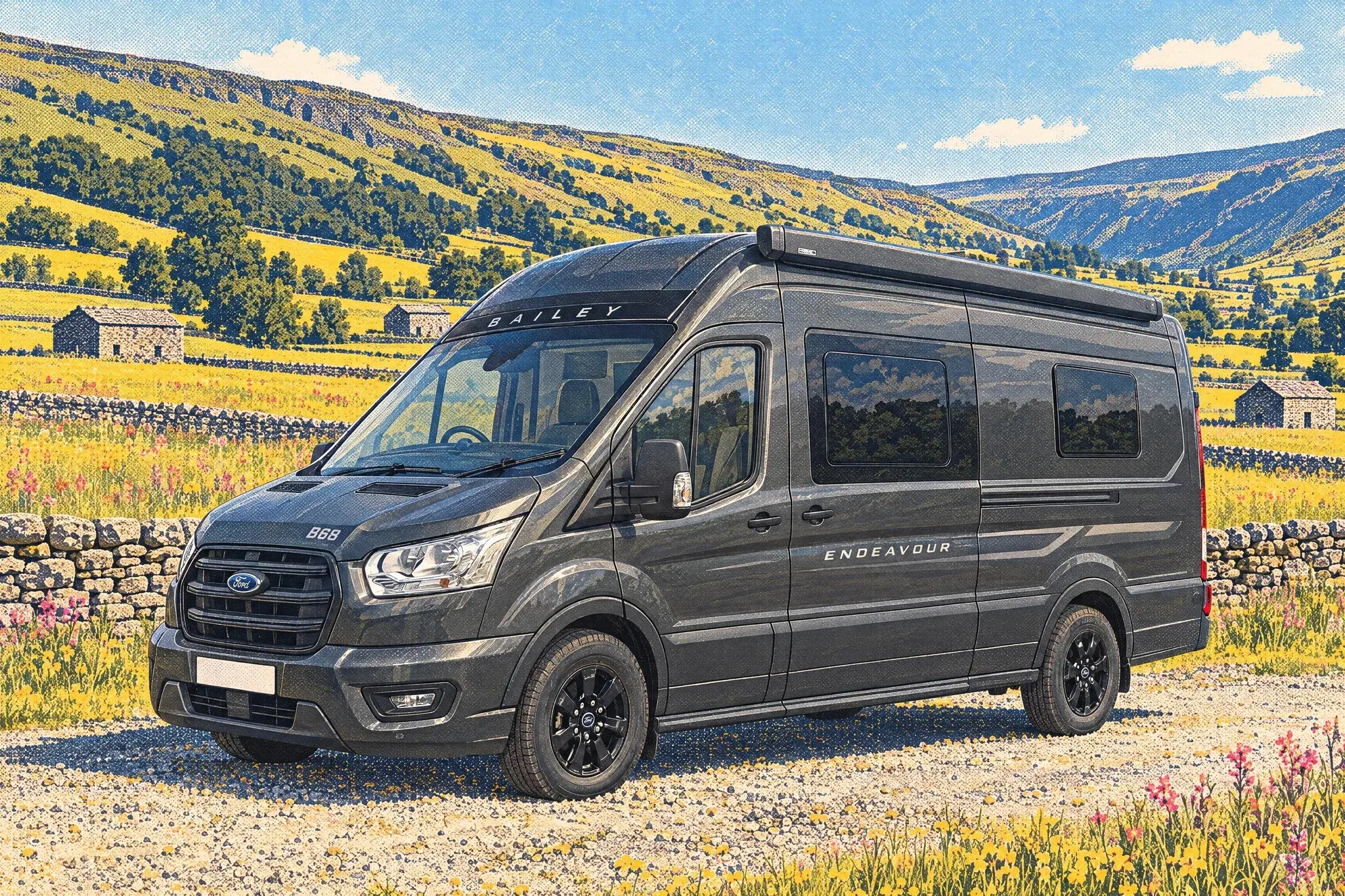
Bailey Endeavour B68: the end-lounge Transit campervan where the pop-top costs 143 kg
Bailey's new Endeavour B68 puts a rear lounge in a 5.98 m Ford Transit campervan. We compare it with the B65 and B62, check the 1.86 m bed, and do the payload sums if you add the £7,500 pop-top.
Campervan Buying Guides
12 min read
New campervans under £60,000 for 2027: what the NEC shows and what the price leaves out
A fair look at the new 2027 campervans listed under £60,000 ahead of the Motorhome and Caravan Show at the NEC, with each price given as its maker words it, and the differences between ex-works, delivered and German-retail-based figures explained so you can compare real on-the-road totals.
Campervan Buying Guides
14 min read
Eura Mobil Vancona 2027: a €57,400 campervan with just 84 to 118 kg left for options
Eura Mobil's new Vancona is a well-equipped Fiat Ducato campervan from €57,400, but its 84 to 118 kg options allowance means you need to order it with the weight sheet open. We explain what the figure means, what the 4.25 t uprate costs you in licence terms, and which options to prioritise.