
Campervan or motorhome? How to choose the right one in the UK

Written by
Arthur
Arthur writes buying guides, comparisons, and in-depth explainers to help readers choose the right campervan or motorhome with confidence.
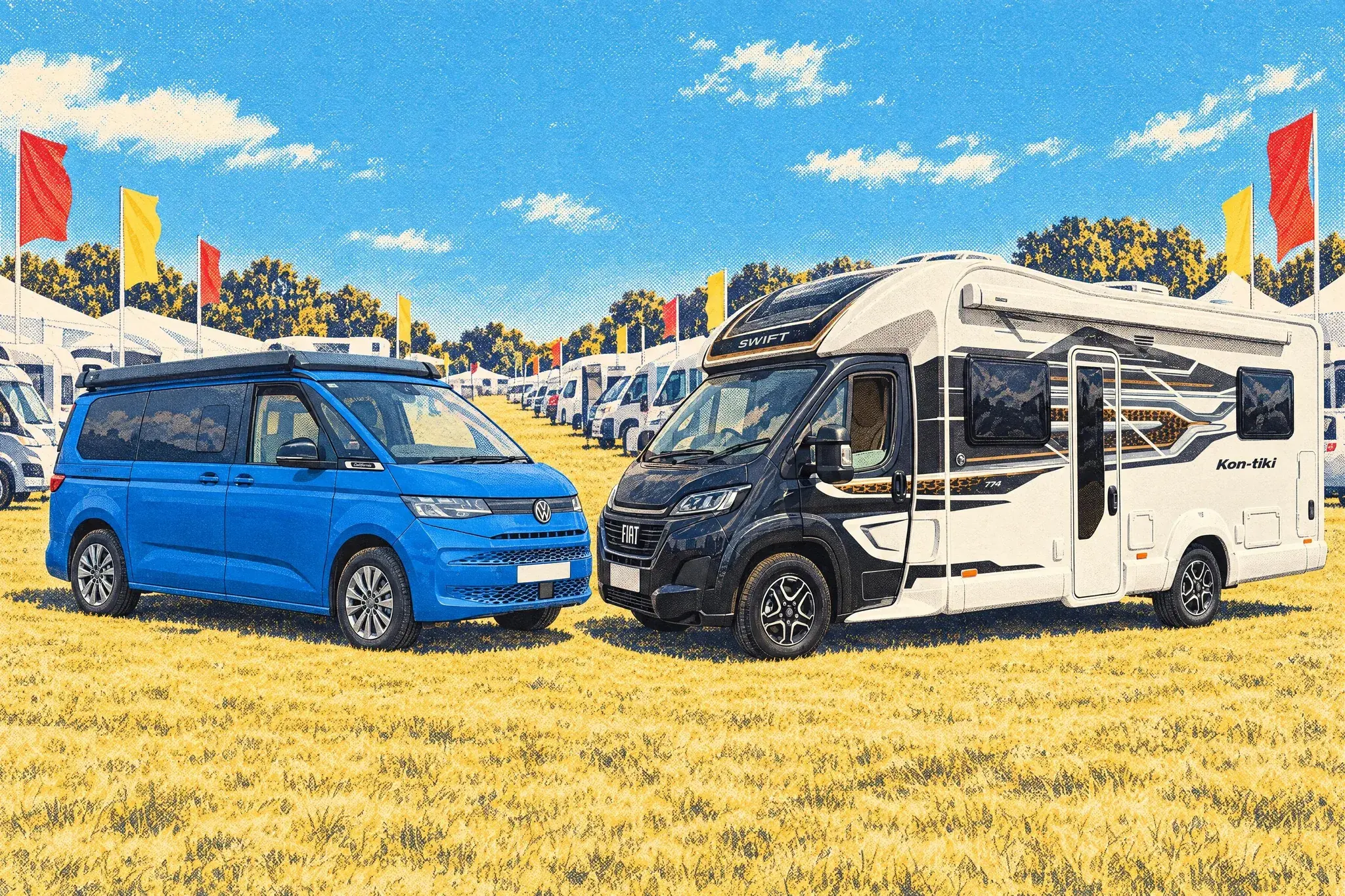
The short answer
Neither a campervan nor a motorhome is better; one is better for you, and the cheerful truth is that working out which comes down to how you travel, not the badge. A campervan is a panel-van conversion (typically 5.4 to 6.4 metres), easier to drive, park and use daily, especially a pop-top that clears car-park barriers, though tighter on living space and standing room. A motorhome is a larger coachbuilt body (6 to 7.5 metres-plus) that unlocks proper living space, a fixed washroom and more berths, at the cost of size, parking and economy. Both usually need a 3,500kg-or-under build for a category B licence. Get that one honest decision right and the rest is happy detail. Here is how to choose the right one for the way you actually travel.

There is a question that comes up in almost every conversation about buying a leisure vehicle in the UK. It gets asked at shows, on forums, in pub gardens, and at that particular stage of a Sunday evening where someone has been scrolling dealer websites for two hours and needs another person to either validate or gently redirect their thinking.
Campervan or motorhome?
It sounds simple. It is not. Because the answer depends on things that no brochure will tell you. How you actually travel. How far you drive in a day. Whether you cook properly or survive on toast and optimism. How you feel about parking in a supermarket. Whether you need to stand up straight while getting dressed. How many people you are sleeping. What you do when it rains for three days.
The internet tends to treat this as a loyalty question, as if choosing one means the other is wrong. It is not like that. Campervans and motorhomes are different tools for different jobs, and neither one is better in absolute terms. One is usually better for you, given the way you travel, and working out which one that is before you spend fifty, seventy, or ninety thousand pounds is one of the most useful exercises you can do.
This is the honest version. What each one actually is. What the real trade offs look like in daily touring life. And how to decide without getting lost in specifications that sound important but do not change how your Tuesday evening feels on a wet campsite in Pembrokeshire.
What we actually mean by campervan and motorhome
The terminology is looser than most people realise, and it causes more confusion than it should.
A campervan, in the way the UK market uses the term, is a panel van that has been converted into a living space. The exterior still looks like a van. The body is the original manufacturer's metalwork, whether that is a Fiat Ducato, Ford Transit, Mercedes Sprinter, or VW Transporter. The habitation equipment, the kitchen, the bed, the bathroom if there is one, the heating, the electrics, all of it sits inside the original van shell. Some campervans have pop top roofs that extend the headroom and sleeping capacity. Some have high top roofs that are permanently raised. But the silhouette is still recognisably a van.
A motorhome is different. A motorhome starts with a chassis cab, the front section of a commercial vehicle with no body behind it, and then a purpose built habitation body is constructed on top. That body is wider than a panel van, often taller, and almost always longer. It has its own walls, its own insulation structure, its own windows, and its own roof. The result is a vehicle where the living space is not constrained by the shape of a van, which means layouts can be more ambitious, ceiling heights can be more generous, and features like fixed island beds, full standing height wardrobes, and separate shower rooms become possible in ways that panel van conversions struggle to match.
There are grey areas. Coach built motorhomes sit on a standard chassis cab with a moulded body bolted on. Low profile motorhomes do the same but with a lower roofline above the cab. A frame motorhomes use a purpose built chassis where the cab is integrated into the body, creating a sleeker profile. Overcab motorhomes have a sleeping area that extends forward above the driving cab.
Then there are the vehicles that blur the line. The VW Grand California is technically a panel van conversion, but at 6.8 metres with a high roof, it lives more like a compact motorhome. The Hymer GT S sits on a Sprinter chassis but has a body extension at the rear that gives it motorhome proportions. Some large panel van campervans with high tops and rear extensions are functionally closer to motorhomes than they are to a VW California.
For the purposes of this guide, the distinction that matters most is this: a campervan is based on a complete panel van body, and a motorhome has a purpose built habitation section on a chassis cab. That single difference drives almost everything else.
Size, and why it changes everything
The most immediate difference between a campervan and a motorhome is physical size. And in the UK, size is not a neutral variable. It affects where you can go, where you can park, how you feel on the road, and how other people react to you when you are trying to squeeze past them on a single track lane in the Lake District.
Campervans and the under six metre advantage
Most panel van campervans sit between 5.4 and 6.4 metres long. The popular models, vehicles like the Swift Trekker X, Hymer Redwood, Bailey Endeavour, and Eriba Car, tend to cluster around the 5.9 to 6.0 metre mark. That length is not an accident. It keeps the vehicle under the threshold where ferry pricing changes, it fits in most standard parking spaces if you are willing to overhang slightly, and it makes manoeuvring in tight spaces feel manageable rather than theatrical.
Width is typically between 2.0 and 2.1 metres. That is wider than a family car but narrow enough that you do not clip wing mirrors on every country lane. Height varies. A fixed high roof campervan might be 2.6 to 2.8 metres tall. A pop top in its lowered position sits at around 2.0 to 2.1 metres, which opens up multi storey car parks, height restricted car parks, and the general ability to use the vehicle as daily transport without constantly thinking about what is above you.
In practical terms, a sub six metre campervan can do things that a motorhome cannot. It can park in a supermarket without causing a logistical incident. It can use a standard driveway. It can navigate narrow village streets without requiring the oncoming driver to reverse into a passing place. It can double as a second car if you are willing to live with the fuel economy and the slightly unusual school run.
Motorhomes and the space they unlock
Motorhomes start where campervans end and go considerably further. A compact coachbuilt motorhome might measure 6.0 to 6.5 metres. A mid range model sits around 7.0 to 7.5 metres. Larger vehicles stretch to eight metres or beyond, and at that point you are driving something that requires genuine skill, spatial awareness, and a relaxed attitude to the opinions of other road users.
Width is typically 2.2 to 2.35 metres. That does not sound like much more than a campervan, but in practice the extra fifteen to twenty centimetres makes a noticeable difference to how a vehicle feels on narrow roads. It also makes a dramatic difference to interior space, because the habitation body is purpose built rather than constrained by a panel van's stamped metal walls.
Height is usually between 2.7 and 3.2 metres. That rules out most height restricted car parks, many urban car parks, some petrol station canopies, and the occasional low bridge that catches people out every summer. You learn to check heights. You learn quickly.
But here is what that size gives you. Proper ceiling height throughout the living space, not just in certain areas. A fixed bed that does not need to be converted from anything else. A kitchen with enough worktop to prepare a real meal. A bathroom you can turn around in without your elbows hitting both walls. Storage that does not require packing with the precision of a Tetris world champion. Living space that feels like a small flat rather than a clever box.
For couples who tour for weeks at a time, that space is not a luxury. It is the difference between enjoying your trip and enduring it.
Living space: the daily comfort question
This is where the conversation gets honest and where brochure photography becomes almost entirely useless.
What campervan living actually feels like
A well designed campervan is a masterclass in efficiency. Every centimetre is considered. The bed converts or folds. The kitchen is compact but functional. The bathroom, if there is one, doubles as a wardrobe or storage area when you are not using it. You learn where things go. You develop routines. You get good at a particular kind of domestic choreography where two people can coexist in a small space without constantly being in each other's way.
When it works, it feels like enough. Genuinely enough. You have what you need, nothing you do not, and the simplicity becomes part of the appeal. There is something clarifying about living in a space where excess is physically impossible.
When it does not work, it feels cramped. And the moments where it does not work tend to cluster around the same situations. Rainy days when you cannot open the door and spread out. Evenings when one person wants to read and the other wants to cook. Mornings when you are both getting dressed and the internal space forces a level of choreography that tests even the most compatible partnerships. Mealtimes where the table is just slightly too small for a proper dinner.
Pop top campervans help enormously. The extra headroom when the roof is raised transforms the feeling of the interior, even if the actual floor space has not changed. And the upper sleeping area means the main living space does not need to convert into a bedroom every night, which saves time, effort, and the nightly frustration of moving cushions into exactly the right position.
But a pop top is not a second room. It is an extension of the same room. In cold or windy weather, the canvas sides of the pop top let in noise, cold air, and the general sense that you are one fabric layer away from the outside world. For summer touring, that is charming. For a November week in Scotland, it is a different proposition entirely.
What motorhome living actually feels like
A motorhome does not require the same negotiation with space. The living area is a living area. The bedroom is a bedroom. The bathroom is a bathroom. You do not need to convert one thing into another. You do not need to move cushions, fold tables, or arrange bedding before you can go to sleep.
That permanence changes how you use the vehicle. You arrive at a site, you park, and you are home. The bed is made. The kitchen is ready. The bathroom is there. You sit down, you put the kettle on, and the evening starts immediately instead of starting after twenty minutes of furniture rearrangement.
Headroom is a significant factor, particularly for taller people. If you have read our guide to campervan internal height, you will know that standing height in a panel van conversion can be marginal for anyone over about 180 centimetres. In a motorhome, standing height is rarely an issue. The purpose built body is designed around the assumption that adults will stand up inside it, and the ceiling heights reflect that.
The trade off is that motorhome living can feel less intimate. A campervan concentrates everything into a small space that, when it works, feels cosy and complete. A motorhome can sometimes feel like a long corridor with rooms attached, especially in the narrower coachbuilt designs where the habitation body is not much wider than the cab.
The best motorhome layouts avoid this. Vehicles with a rear lounge, an island bed, or a generous central living area create spaces that feel open and comfortable. But layout matters enormously in a motorhome, perhaps even more than in a campervan, because the available space is large enough that a bad layout wastes it and a good layout transforms it.
Driving: the part nobody wants to talk about honestly
Most campervan and motorhome content focuses on the living. The cooking, the sleeping, the view from the door. Very little of it talks about the driving, which is strange, because you spend a meaningful percentage of every trip behind the wheel.
Campervans on the road
A campervan drives like a large van. Because it is a large van. The steering is direct, the proportions are manageable, and after an hour or two most people forget they are driving something unusual. An automatic gearbox, which we recommend for almost everyone, makes the experience calmer and less tiring.
Wind sensitivity depends on the roof type. A fixed high roof campervan catches crosswinds in a way that you notice on motorway bridges and exposed coast roads. A pop top in its lowered position is more aerodynamic and less affected. Neither is dangerous, but both require you to hold the wheel properly and pay attention to gusts, especially when overtaking or being overtaken by lorries.
Fuel economy on most modern diesel campervans sits between 25 and 32 miles per gallon depending on driving style, load, and terrain. That is reasonable. Not cheap, especially at current fuel prices, but reasonable enough that the cost per mile does not dominate every journey.
The big advantage of a campervan on the road is that it feels proportionate to the UK road network. Motorways are fine. A roads are fine. B roads are fine. Country lanes are manageable. You are not making the road fit the vehicle. The vehicle fits the road.
Motorhomes on the road
A motorhome drives like a motorhome. That is not a dismissive statement. It is an honest one. The driving experience is defined by length, height, weight, and the awareness that behind you there is a habitation body that moves slightly differently from the cab when you change direction.
Compact motorhomes, those under about 6.5 metres, are manageable for most drivers with a little practice. Medium motorhomes between 6.5 and 7.5 metres require more awareness, especially in tight spaces, and a reversing camera moves from a useful extra to an essential tool. Large motorhomes above 7.5 metres are a commitment. You plan routes differently. You think about turning circles. You avoid certain roads. You become the sort of person who checks bridge heights on a map before you set off.
Fuel economy is lower than a campervan. The extra weight and less aerodynamic profile means most motorhomes return between 20 and 28 miles per gallon. On a two week touring holiday, that difference adds up to a meaningful amount.
Wind sensitivity is more pronounced. The taller, wider body catches more wind, and the effect on stability is noticeable in a way that demands respect rather than fear. You slow down on windy days. You allow more space. You become more attentive to weather forecasts than you ever imagined possible.
None of this means motorhomes are unpleasant to drive. Many people find the elevated driving position and the commanding view of the road genuinely enjoyable. But it does mean that driving a motorhome is a task that requires concentration, whereas driving a campervan is closer to driving a large car. For some people, that distinction matters a great deal.
Payload and licensing: the practical ceiling
This is the section that people skip and then regret skipping.
In the UK, a standard Category B driving licence allows you to drive a vehicle with a maximum authorised mass of 3,500 kilograms. If you passed your test before January 1997, you may have entitlement up to 7,500 kilograms, but if you passed after that date, 3,500 kilograms is your limit unless you take an additional test.
Most campervans sit comfortably within the 3,500 kilogram limit. The base vehicle, the habitation equipment, and a reasonable payload allowance for passengers and touring kit all fit within that envelope. Payload can be tight on some models, especially once you add water, gas, and the contents of a week away, but it is usually achievable with sensible packing.
Motorhomes are more complicated. A compact coachbuilt motorhome might have a maximum mass of 3,500 kilograms, but the heavier habitation body eats into payload in a way that panel van conversions do not. Some motorhomes require an upgrade to a 3,650 or 4,250 kilogram chassis to carry their own equipment plus passengers and kit, and at that point you need a licence that covers the higher weight.
Larger motorhomes frequently exceed 3,500 kilograms, and many sit at 4,250, 4,500, or even 5,000 kilograms. If your licence does not cover those weights, you either need to take a C1 driving test or you need to choose a lighter vehicle. There is no grey area here. Exceeding your licence entitlement invalidates your insurance, and driving overweight is a separate offence.
This is not a minor consideration. It shapes the entire market that is available to you, and it needs to be settled before you start falling in love with layouts and colour schemes.
Cost: the honest numbers
Money is where the conversation gets uncomfortable, because the gap between campervans and motorhomes is real and it affects more than just the purchase price.
Purchase price
New campervans in the UK typically start between fifty five and seventy five thousand pounds for mainstream models with a reasonable specification. Premium models from manufacturers like Hymer push into the eighties and nineties. Used campervans offer more accessible entry points, with well maintained three to five year old models available from the mid thirties upwards.
New motorhomes cover a wider range. A compact coachbuilt might start around sixty thousand. A well specified mid range motorhome sits between seventy and ninety thousand. Premium models from manufacturers like Carthago, Niesmann and Bischoff, or Concorde climb well above a hundred thousand without any difficulty at all. Used motorhomes follow the same pattern but with sharper depreciation in the first few years, which can work to your advantage.
Running costs
Insurance is typically higher for motorhomes, reflecting the greater replacement value and the larger habitation content. Storage costs more if the vehicle is longer, because storage facilities charge by length. Fuel costs more per mile. Servicing the habitation side of a motorhome is usually more involved, because there is more habitation to service.
Ferry prices increase significantly once you exceed six metres. A campervan under six metres can often travel at standard vehicle rates. A seven metre motorhome pays a premium that can add hundreds of pounds to a return crossing. Over several trips a year, that accumulates.
Campsite fees are generally the same regardless of vehicle type, though some sites charge more for larger pitches or refuse vehicles above a certain length. Most UK sites accommodate vehicles up to about eight metres without issue, but it is always worth checking.
Depreciation
Campervans tend to hold their value slightly better than motorhomes, partly because the base vehicle retains commercial van residuals and partly because the smaller, more versatile format appeals to a wider market when it comes time to sell. Motorhomes depreciate more steeply in the first three to five years but tend to stabilise after that, particularly for well maintained examples from respected manufacturers.
Who should choose a campervan
A campervan makes the most sense if your touring style values flexibility, ease of driving, and the ability to use the vehicle in everyday life as well as on holiday. If you do a lot of short breaks and weekends rather than extended tours, a campervan's convenience is hard to beat. You can drive to work on Friday, load up on Friday evening, and be at a campsite by nine without feeling like you have undertaken a military operation.
Campervans suit couples and small families who are comfortable with compact living and who see the vehicle as a base for being outdoors rather than as a destination in itself. If you spend your days walking, cycling, surfing, climbing, or just exploring, and you return to the van for cooking and sleeping, a campervan gives you everything you need without the size penalty.
They also suit people who have limited parking space at home, who want a vehicle that can navigate any road in the UK without advance planning, and who value the ability to pop into a town, visit a beach car park, or stop at a viewpoint without worrying about whether the vehicle will fit.
Who should choose a motorhome
A motorhome makes the most sense if your touring style involves longer stays, more time spent inside the vehicle, and a desire for living comfort that does not require daily compromise. If you tour for weeks at a time, if you travel in winter, if you want to cook proper meals, shower comfortably, and have a fixed bed that you never need to convert, a motorhome delivers a quality of daily life that campervans struggle to match at any price.
Motorhomes suit couples who have retired or who have the time to take extended trips and want the space to live comfortably without feeling like they are camping. They suit families who need separate sleeping areas and enough living space that rainy days are not a crisis. They suit anyone who has experienced the limits of a campervan, enjoyed the lifestyle, and decided they want more space without giving up the freedom of having their accommodation on wheels.
They also suit people who are honest about their tolerance for compact living. There is no virtue in choosing a campervan if you know, deep down, that you need more space to be happy on a two week trip. The right vehicle is the one that makes you want to go again.
The bottom line
A campervan is a brilliant vehicle for people who want freedom, flexibility, and the ability to tour without fuss. It fits the UK road network, it fits a normal life, and it delivers a style of travel that is spontaneous, intimate, and remarkably satisfying when done well.
A motorhome is a brilliant vehicle for people who want comfort, space, and a touring home that does not ask you to compromise on the basics of daily living. It rewards longer trips, it handles bad weather better, and it offers a quality of life on the road that makes extended touring feel like a genuine alternative to bricks and mortar holidays.
Neither is better. One is better for you. And the way to work out which one that is has nothing to do with badges, brochures, or what the person next to you at a campsite thinks. It has to do with how you travel, how long you travel for, and what you need to feel comfortable while you are doing it.
Get that right, and the rest is details.
And if either option still feels like a stretch, well, that is exactly why we run Campervan.win. Someone has to make these things accessible.
Common questions
What is the difference between a campervan and a motorhome?
A campervan keeps the shape and footprint of a panel van, with the living space fitted inside it (typically 5.4 to 6.4 metres). A motorhome has a larger habitation body built on a chassis cab, which makes it bigger but gives more living space and facilities. Campervans are easier to drive, park and use daily; motorhomes give more room and a fixed washroom.
Should I buy a campervan or a motorhome?
It depends entirely on how you travel, not the badge. Choose a campervan if you want a vehicle you can drive and park easily and use day to day, and can live with tighter space. Choose a motorhome if you want proper living space, a fixed washroom, more berths and room to sit out three days of rain, and can handle the size. Work out your real trips and the rest is detail.
How big are campervans versus motorhomes?
Most panel-van campervans are 5.4 to 6.4 metres long, around 2.0 to 2.1 metres wide, and either a fixed high roof at 2.6 to 2.8 metres or a pop-top that drops to about 2.0 to 2.1 metres. Motorhomes run from compact coachbuilts at 6 to 6.5 metres up to 7.5 metres-plus, around 2.2 to 2.35 metres wide and 2.7 to 3.2 metres tall.
Can you use a campervan as an everyday vehicle?
More easily than a motorhome, especially a pop-top. With the roof down a pop-top sits around 2.0 to 2.1 metres, which clears multi-storey and height-restricted car parks and lets you use it as daily transport without constantly thinking about what is above you. A fixed high-roof campervan or a motorhome is taller and less suited to everyday driving.
Are campervans or motorhomes cheaper to run?
Campervans, generally. Modern diesel campervans return roughly 25 to 32 miles per gallon, while heavier, less aerodynamic motorhomes return about 20 to 28. Motorhomes also cost more to buy, store and sometimes service. The trade-off is the living space and facilities the extra size buys, so weigh the running cost against how much room you actually need.
What licence do I need for a campervan or motorhome?
A standard category B car licence allows a vehicle up to 3,500kg maximum authorised mass, which covers most campervans and many compact motorhomes. If you passed your test before January 1997 you may have entitlement up to 7,500kg, but if you passed after that date you are limited to 3,500kg unless you take an additional C1 test, which larger motorhomes can require.
The reachable bit
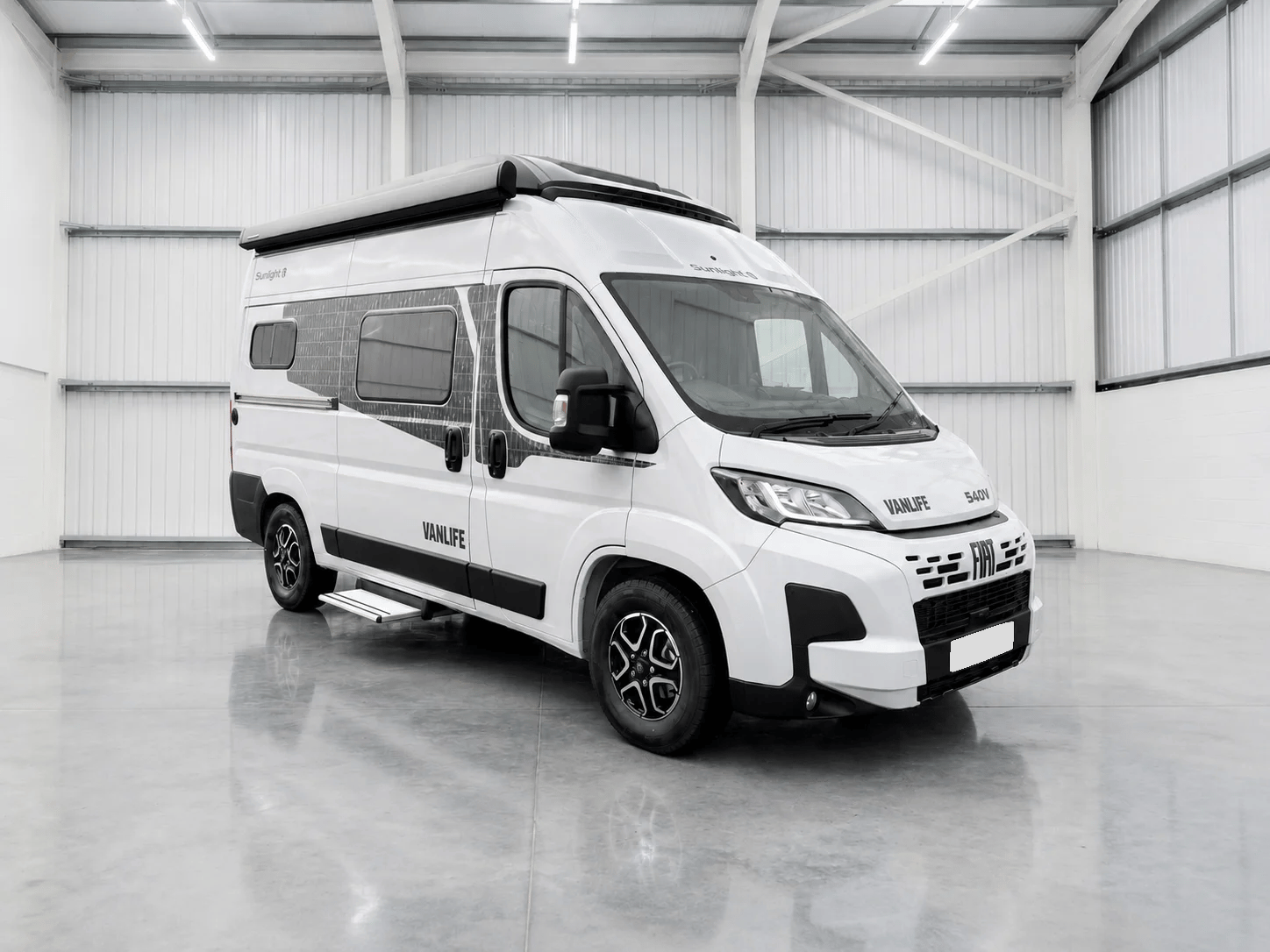
The camper you fall for is rarely the one you can afford. That gap is the whole reason Campervan.win exists. Right now we’re giving away the Sunlight Vanlife, worth around £65,000, and closing that gap is the point: capped entries so the odds stay honest, £10 a ticket, a maximum of five per person, £500 to a UK charity from every full draw, the winner picked by a public randomness beacon anyone can re-check, and one person driving away in the van itself.
Enjoyed this post?
Get more honest campervan guides like this one in your inbox.
You’re in!
Check your inbox. We’ve just sent you a welcome email.

About the author
Arthur
Arthur writes buying guides, comparisons, and in-depth explainers to help readers choose the right campervan or motorhome with confidence.
Keep Reading
Related Reading
Thoughtful articles that build on what you’ve just read.
Campervan vs Motorhome
10 min read
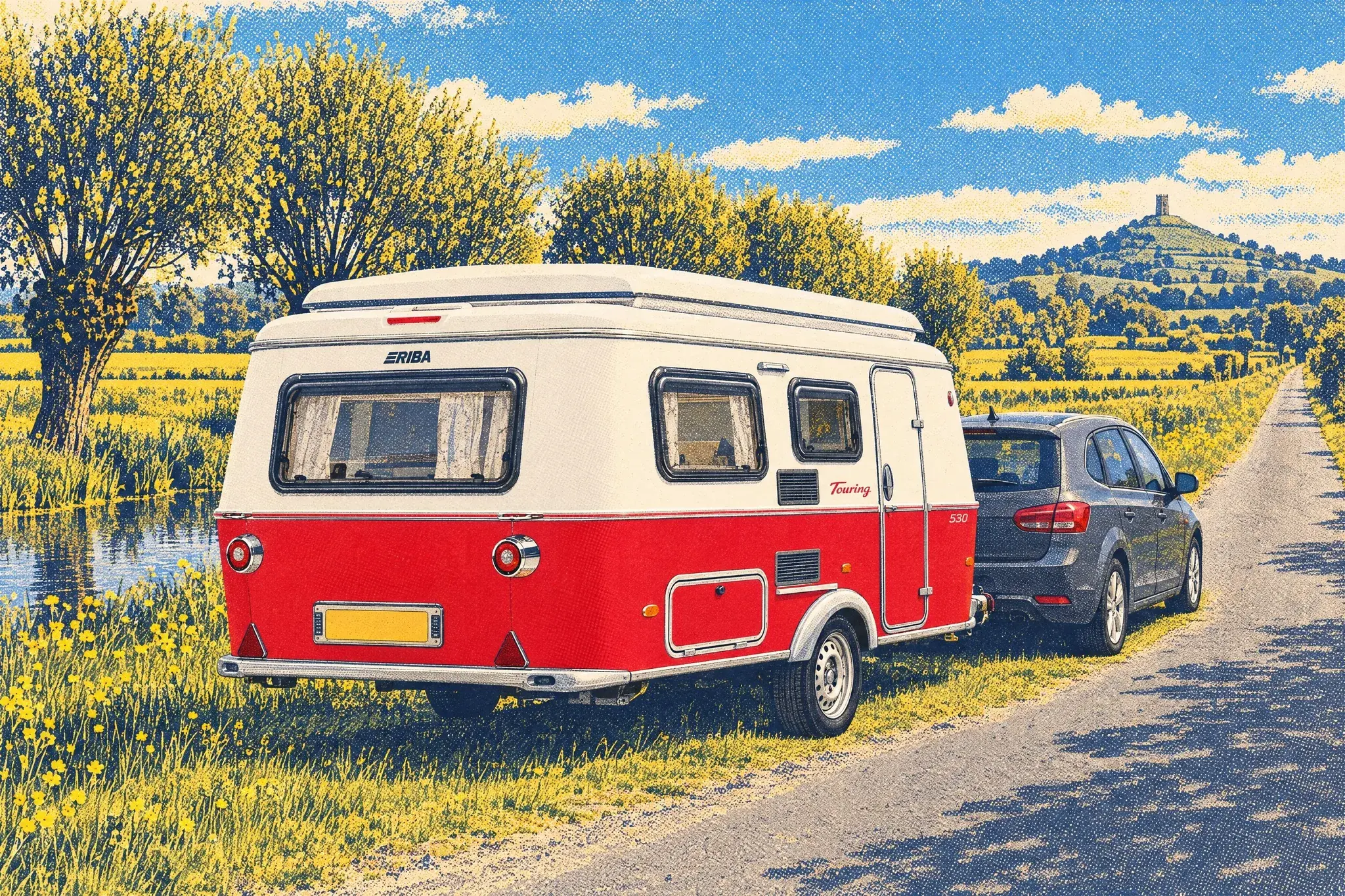
Is an Eriba caravan the sensible alternative to a campervan or motorhome?
Eriba's little pop-top caravans have a cult following for good reason. We weigh the real pros and cons of towing one behind the car you already own versus buying a campervan or motorhome, and explain who each option genuinely suits.
New & Noteworthy
12 min read
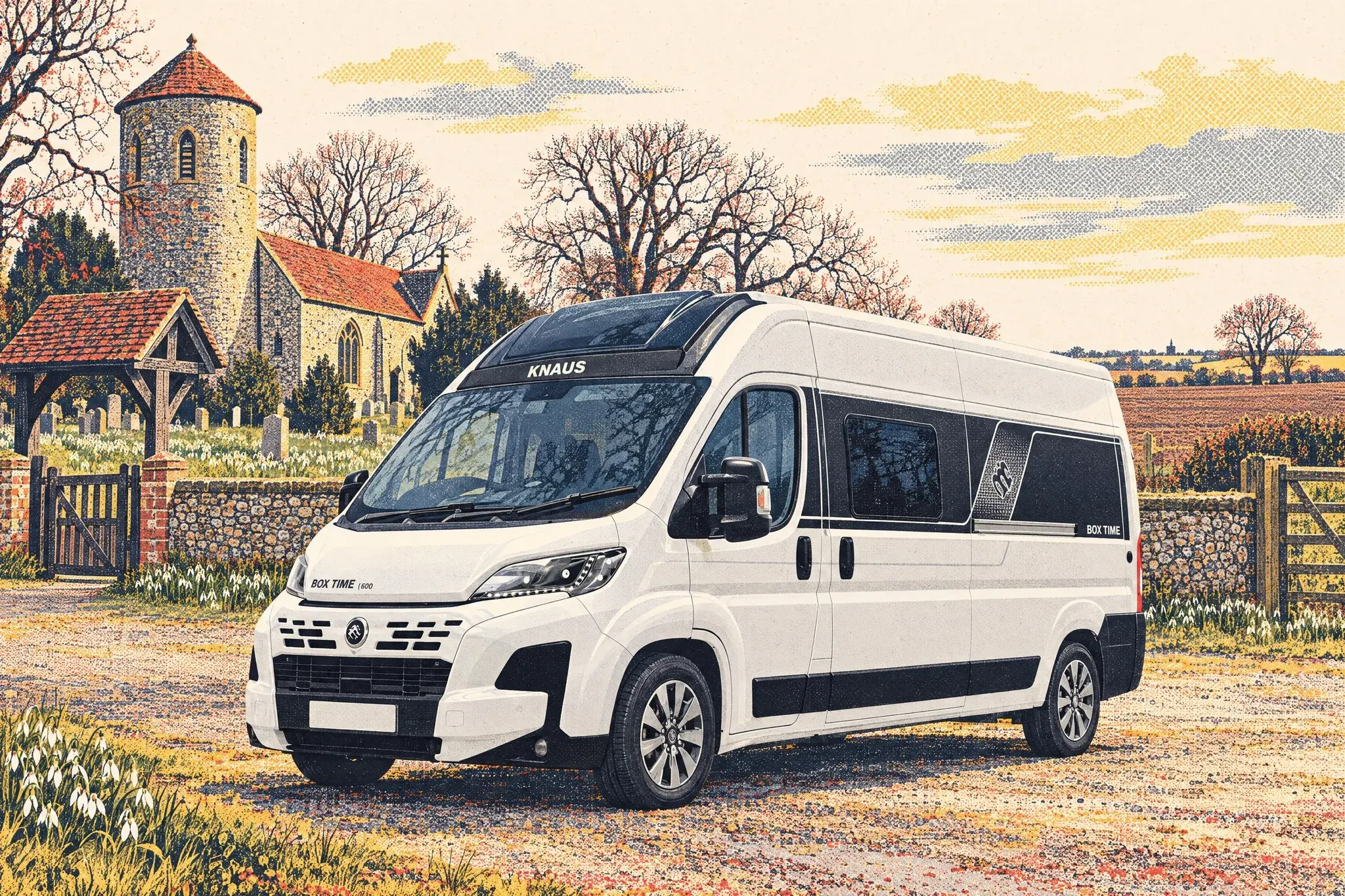
Knaus Boxtime 600 ME (2027): twin singles in 6 m, and the payload figure to question
Knaus's new Boxtime 600 ME squeezes two lengthways single beds into a 5.99 m van from £81,725. We lay out what that layout gives a couple, run the weight sums with Knaus's own figures, and explain why the 211 kg 'maximum payload' line needs a question before you sign.
New & Noteworthy
10 min read
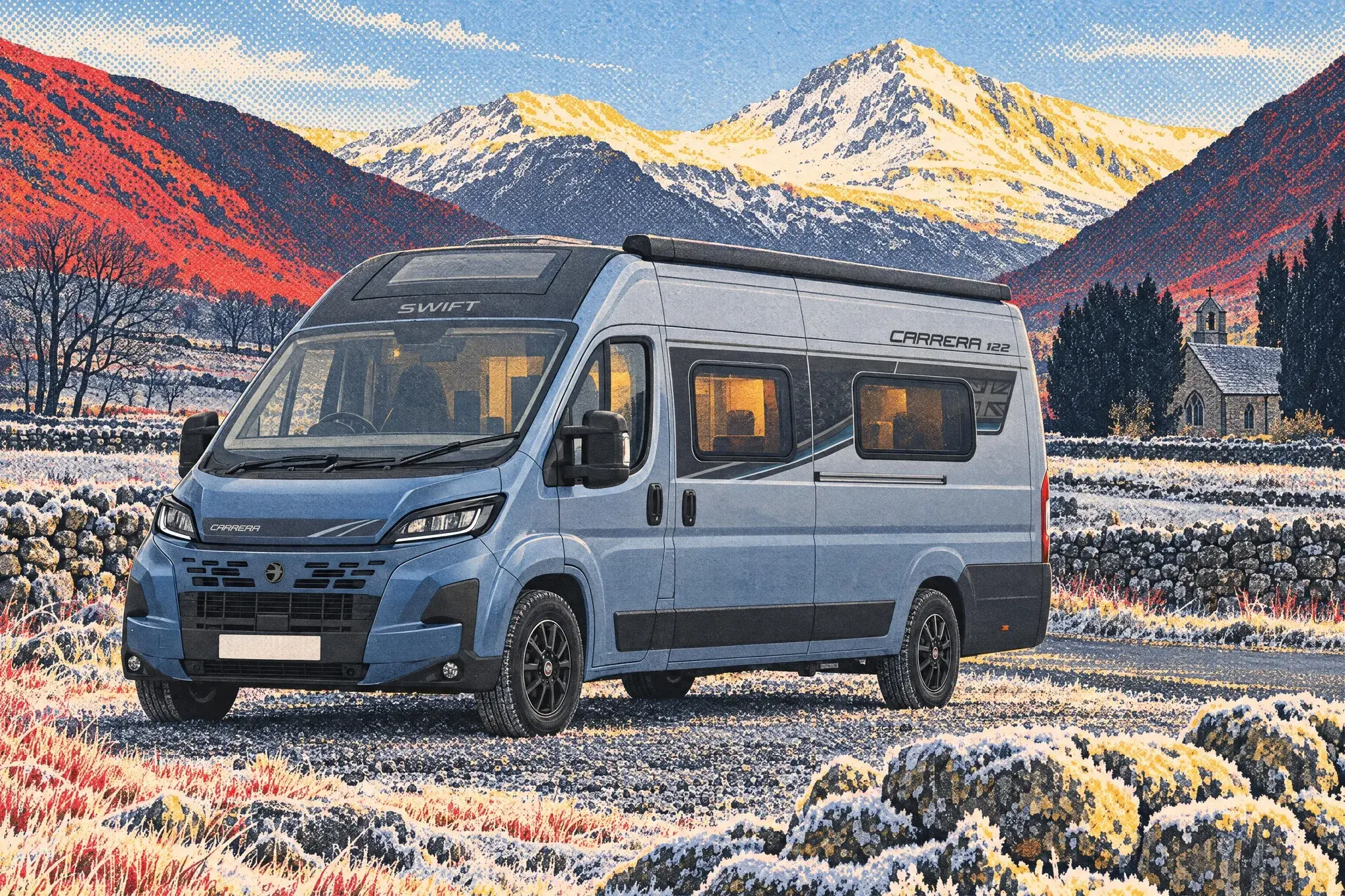
Swift Carrera goes gas-free for 2027: 340Ah lithium, diesel heat and induction cooking
Swift has taken the gas out of its Carrera campervan for 2027, swapping bottles for a 340Ah lithium battery, diesel heating and an induction hob. Here is what that means across a real UK year, how it compares with the cheaper Merlin, and the one question to ask at the NEC.
New & Noteworthy
10 min read
British campervan converters at the NEC 2026: who builds on what, and for how much
A stand-by-stand map of the British campervan converters at the Motorhome and Caravan Show 2026: the vans they build on, their from-prices, seats, roofs and lead times, plus the four questions to put to every one of them.