
Is an Eriba caravan the sensible alternative to a campervan or motorhome?

Written by
Arthur
Arthur writes buying guides, comparisons, and in-depth explainers to help readers choose the right campervan or motorhome with confidence.
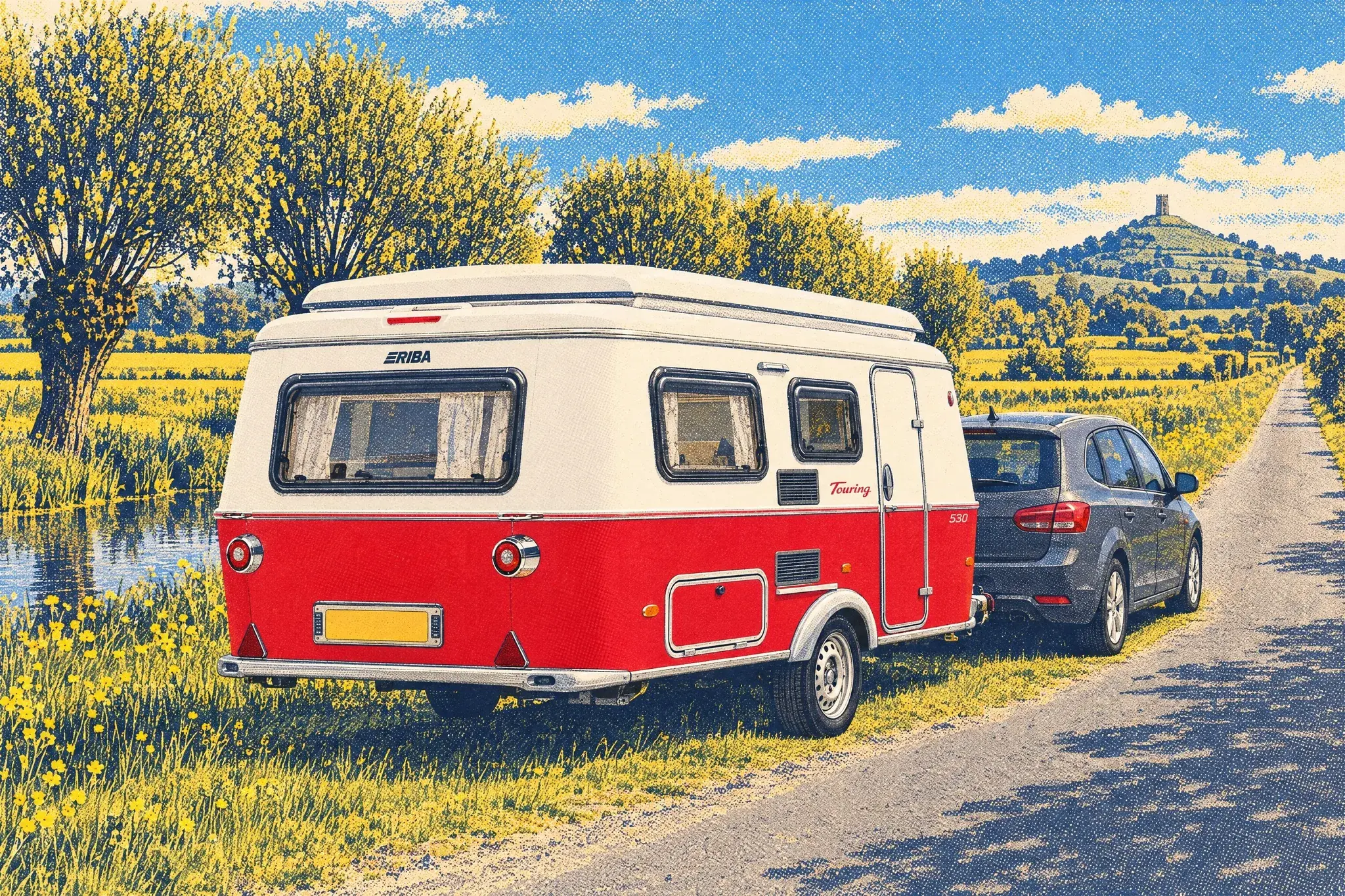
The short answer
For many people, yes. An Eriba Touring caravan costs a fraction of a campervan, lets you keep your existing car, and gives you a base you can drop on a pitch while you explore in the car. You trade away spontaneity, stealth stops and easy one-vehicle travel, so it suits planned campsite touring better than roaming. It is often the more achievable route into regular trips away.

A small caravan you tow behind the car you already own. That is the whole idea, and for a lot of people it beats spending five times as much on a campervan. Eriba's little pop-top Touring caravans have been quietly doing this job since the late 1950s, and they have earned a following that most motorhomes can only dream of. But cult status does not automatically make something right for you. So let's weigh it up honestly: what an Eriba actually gives you, what it takes away, and who genuinely comes out ahead choosing one over a van.
What makes Eriba caravans special in the first place
Eriba is part of the wider Hymer family, and the Touring range is the one everyone recognises: the low, rounded, slightly aeronautical shape with the pop-up canvas roof. The design goes back to the late 1950s, when a former aircraft engineer helped create a caravan built around a welded tubular steel frame rather than the usual timber skeleton. That construction is a big part of why so many old Eribas are still on the road. They resist the sagging and hidden rot that kills a lot of conventional caravans, and a well-kept example from the 1980s or 1990s is still a perfectly usable holiday home today.
The pop-top is the other clever bit. With the roof down, a Touring model sits low, which means less drag, less crosswind drama and better fuel economy when towing than a full-height caravan. Many owners also find the low profile fits under a standard home garage door or a height barrier, which solves the storage question that plagues bigger caravans. On site, you pop the roof and get full standing height inside.
Then there is weight. The smallest models in the Touring range come in well under a tonne, and even the larger ones are light by modern caravan standards. That matters enormously, because it opens up towing to ordinary hatchbacks and small SUVs, not just heavy diesel estates and pickups.
- Puck: the tiny one, a snug two-berth that many small petrol cars can tow comfortably.
- Familia and Triton: the middle of the range, still compact but with more usable living space.
- Troll: the largest of the classic Touring shapes, with a proper fixed-feeling interior while staying lighter than most conventional caravans.
Weights vary by model year and specification, so always check the plated figures on the actual caravan you are looking at rather than relying on brochure memory. But the broad picture holds: these are caravans designed to be towed by normal cars.
The money question, because it is usually the deciding factor
This is where the Eriba argument gets loud. A decent used campervan conversion typically starts somewhere around £30,000 to £40,000, and new coachbuilt motorhomes commonly sit at £60,000 and beyond. A campervan is a whole second vehicle: a second engine to service, a second MOT, a second set of tyres, second road tax, and insurance on a vehicle worth tens of thousands.
An Eriba, by contrast:
- Can be bought used from roughly £8,000 to £15,000 for a tidy older example, with newer models climbing from there. New ones sit broadly in the £25,000 to £40,000 bracket depending on model and spec.
- Has no engine, so there is no annual mechanical service on a drivetrain, no cambelt, no clutch, no DPF worries.
- Needs no MOT, because caravans are exempt. It should still have an annual habitation-style service covering the chassis, brakes, gas and damp, typically £150 to £300.
- Costs far less to insure. Caravan insurance is not a legal requirement, but it is sensible, and it usually runs to a few hundred pounds a year at most.
- Depreciates gently. Eribas are famous for holding value. A well-kept example can be owned for years and sold on for close to what you paid, which is a sentence you will rarely write about a motorhome.
Your only real setup cost beyond the caravan is a towbar. A fitted towbar with the right electrics typically costs somewhere in the region of £400 to £800 on a common car, depending on whether you go fixed or detachable. That is it. The car you already own, insured and taxed, does the driving.
The everyday advantages nobody mentions until they own one
You keep your own car
This is the quiet superpower of the caravan route. Your daily driver stays your daily driver. You do not need to buy, run and park a second large vehicle that spends most of its life sitting still. When you are not touring, the Eriba sits at home or in storage costing you almost nothing, while a campervan on the drive is depreciating, needing its battery kept topped up, and tempting you to justify the spend.
Pitch it, unhitch it, explore
Here is the touring pattern that converts a lot of motorhome owners to caravans. You arrive at a campsite, set the Eriba on its pitch, wind down the corner steadies, and unhitch. From that moment you have a normal car again. Narrow Cornish lanes, tight Lake District car parks, a supermarket run, a last-minute pub dinner three villages away: all trivial. Motorhome owners at the same site are either driving their whole home into town, packing everything away first, or staying put. With a caravan, your accommodation and your transport are separate, and day to day that is genuinely liberating.
Your base camp stays put
Because the caravan stays pitched, you never lose your spot, your fridge stays running, the awning stays up, and the kettle is exactly where you left it. Multi-day stays suit caravans beautifully. You settle in properly rather than living out of a vehicle you also need to drive.
Space for the money
Even a modest Eriba gives you a fixed double or twin singles, a proper dinette, a kitchen and, in the larger models, a washroom, for the price of a very tired old campervan. Pound for pound of living space, a caravan wins every time.
The honest downsides, because there are real ones
If caravans did everything campervans do, nobody would buy campervans. Here is what you give up.
Spontaneity takes a hit
A campervan can pull into a lay-by for lunch, stop at a beach car park for a brew, or decide at 9pm to stay somewhere new. A caravan cannot, at least not easily. Towing means planning: where you will stop, whether the site takes caravans, whether the approach road is sensible. The classic vanlife image of waking up somewhere wild with the side door open to the sea is not really a caravan experience. Caravanning is campsite touring, and you need to be honest with yourself about whether that is the holiday you actually want. For many people it is, and they only realise it after buying a van.
Towing is a skill, and hitching is a chore
Modern Eribas tow beautifully because they are light and low, but reversing a small caravan is genuinely harder than reversing a big one, because it reacts faster to steering input. You will get the hang of it, and a half-day towing course (often around £150 to £300) is money extremely well spent. Hitching and unhitching, loading properly, checking the breakaway cable and lights: none of it is difficult, but it adds twenty minutes to every departure and it is all done outdoors in whatever weather Britain provides.
You travel slower
When towing in the UK you are limited to 60mph on motorways and dual carriageways, and 50mph on single carriageways where the limit would otherwise be 60. Journeys take longer and overtaking is rarer. A campervan travels at normal car speeds.
No travelling passengers in the caravan
Everyone rides in the car, which is fine for most families, but it means a small car plus a small caravan can feel tight on a long, wet motorway slog in a way that a lounge-on-wheels motorhome does not.
The pop-top has limits
The canvas section of the roof is the thermal weak point. Eribas are used year-round by plenty of owners, and heating options cope well, but in deep winter a hard-walled caravan or motorhome holds warmth more easily. Condensation management on the canvas needs a little care too.
Licences, weights and matching the caravan to your car
The rules got simpler recently, which helps the caravan case. Since December 2021, anyone with a standard category B car licence can tow a trailer up to 3,500kg MAM, regardless of when they passed their test. Any Eriba falls comfortably inside that, so the licence question that used to trip up younger drivers has largely gone away.
The thing that still matters is the match between car and caravan. The long-standing guidance from the UK caravan clubs is to keep the caravan's loaded weight at or below about 85% of the car's kerbweight, especially while you are learning. Never exceed the car's stated towing limit, which you will find in the handbook or on the VIN plate. Because Eribas are so light, the maths works for a huge range of ordinary cars, including many that could not legally tow a conventional caravan at all. That is a genuine part of why the range has its cult status: it made caravanning possible for people with normal cars.
Two practical checks before you buy anything:
- Find your car's kerbweight and maximum towing capacity, and compare them against the plated MTPLM of the specific Eriba you are considering, not the brochure figure for the model name.
- Confirm the noseweight limit on your car's towbar and hitch, because a badly loaded light caravan tows worse than a well-loaded heavier one.
Where a campervan or motorhome still wins
To keep this honest, here is the shortlist of situations where the van is simply the right tool:
- You want one-vehicle simplicity. Drive, park, sleep. No hitching, no pitch, no setup. For weekend surfers, festival-goers and people who tour by moving every night, a van's rhythm is unbeatable.
- You want to stop anywhere. Lunch in a lay-by, a night at a pub stopover, an early start from a trailhead car park. Caravans need caravan-friendly places.
- You travel off-season into proper cold. A well-insulated motorhome with a diesel or gas heating system is a warmer winter base than a pop-top caravan.
- You dislike towing full stop. Some people never enjoy it, and no spreadsheet of savings fixes a hobby you dread.
- Storage at home is impossible. If you have no drive and no affordable storage nearby, a campervan that doubles as a daily vehicle can actually be the more practical option.
So who should choose the Eriba?
Picture your actual trips, not the ones in adverts. If your touring looks like this, the Eriba route is probably the sensible one:
- You mostly stay two or more nights in each place.
- You book campsites, or you are happy to.
- You already own a car you like that can tow around a tonne.
- Your budget is closer to £10,000 to £25,000 than £50,000 plus.
- You want to explore narrow lanes, small towns and tight car parks once you arrive.
- You want low ongoing costs and strong resale if life changes.
And if your trips are one-night hops, spontaneous coastal wandering, ski trips or stealthy city stopovers, buy the van and do not look back.
The cheapest, most flexible touring vehicle most households will ever own is the car already sitting on the drive. The Eriba's genius is that it turns that car into the front half of a motorhome for the price of a towbar.
The bottom line
An Eriba Touring caravan is not a compromise version of a campervan. It is a different, and for many people better, answer to the same question: how do we get away regularly without it costing a fortune? You give up spontaneity and the romance of the wild overnight stop. You gain a proper living space, a car that stays a car, running costs that barely register, and a caravan that holds its value stubbornly well. For planned campsite touring around the UK, which is honestly what most van owners end up doing anyway, the little pop-top makes a very strong case for being the sensible choice.
If you can, borrow or hire one for a weekend before committing either way. A single trip will tell you more about which rhythm suits you than any article can, including this one.
Common questions
What car do I need to tow an Eriba caravan?
Far less than you might think. The smallest Eriba Touring models weigh well under a tonne loaded, so many ordinary hatchbacks and small SUVs can tow them within the 85% kerbweight guideline. Always check your car's stated towing limit against the plated weight of the specific caravan.
Do I need a special licence to tow a caravan in the UK?
No. Since December 2021, a standard category B car licence lets you tow a trailer up to 3,500kg MAM regardless of when you passed your test, and every Eriba falls comfortably within that.
How much does an Eriba caravan cost compared to a campervan?
A tidy used Eriba typically costs around £8,000 to £15,000, with new models broadly in the £25,000 to £40,000 range, while decent used campervans usually start around £30,000 to £40,000. Eribas also hold their value unusually well and cost very little to run, as there is no engine, no MOT and cheap insurance.
Why do Eriba caravans have such a cult following?
The classic Touring range combines a welded tubular steel frame that resists rot and sag, a low pop-top profile that tows easily behind normal cars and fits under many height barriers, and a timeless shape. The result is caravans that last decades and hold their value.
Is a caravan or a campervan better for touring the UK?
It depends on your trip style. A caravan suits planned campsite stays of two or more nights, because you can unhitch and explore in your car. A campervan suits spontaneous, one-night-at-a-time touring and stopping wherever you like. Most people's real trips fit the caravan pattern better than they expect.
Can you use an Eriba pop-top caravan in winter?
Yes, many owners tour year-round, and the heating copes well in typical UK conditions. The canvas pop-top section is the thermal weak point though, so in deep winter a hard-walled caravan or motorhome holds heat more easily.
The reachable bit
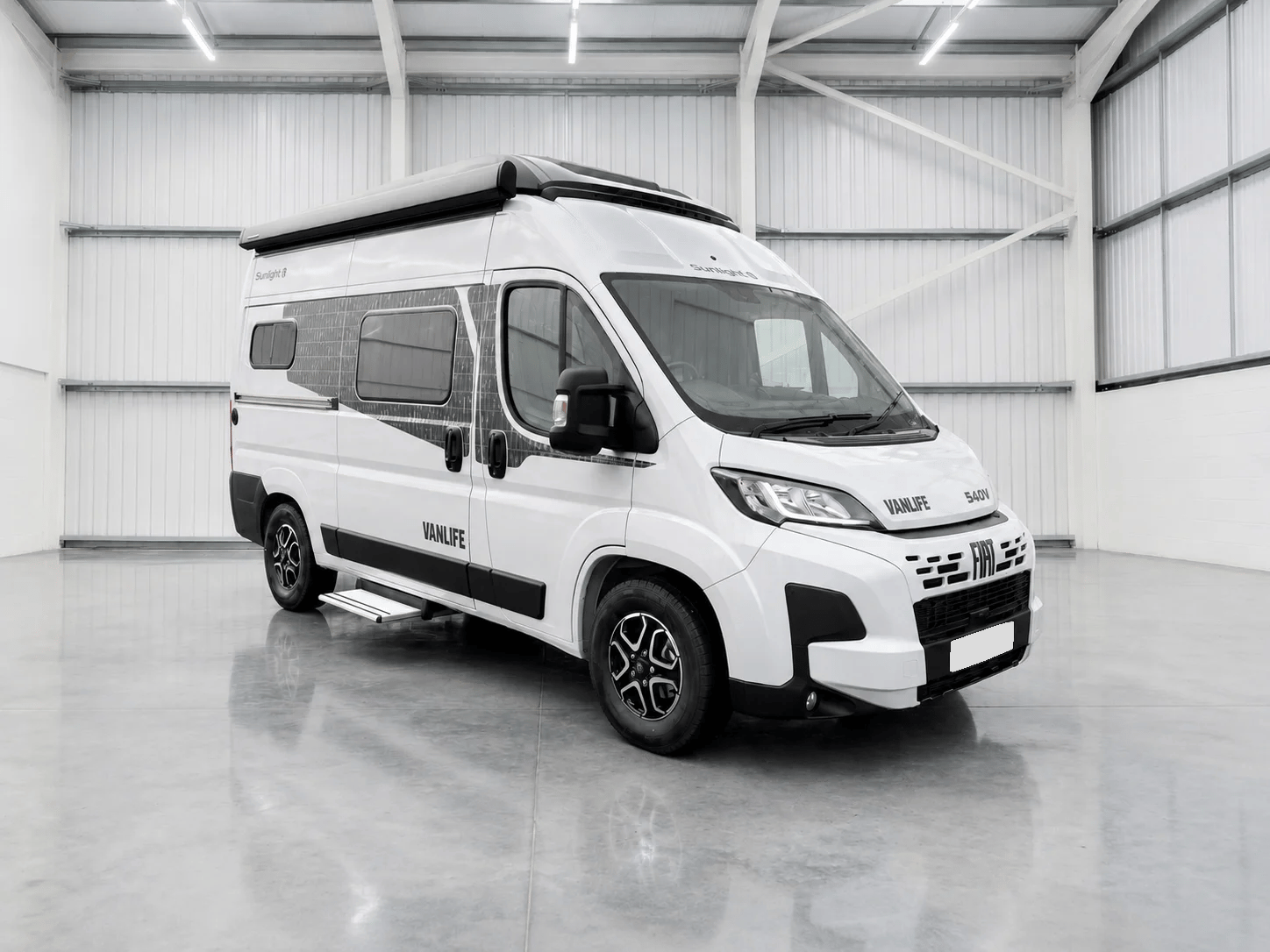
The camper you fall for is rarely the one you can afford. That gap is the whole reason Campervan.win exists. Right now we’re giving away the Sunlight Vanlife, worth around £65,000, and closing that gap is the point: capped entries so the odds stay honest, £10 a ticket, a maximum of five per person, £500 to a UK charity from every full draw, the winner picked by a public randomness beacon anyone can re-check, and one person driving away in the van itself.
Enjoyed this post?
Get more honest campervan guides like this one in your inbox.
You’re in!
Check your inbox. We’ve just sent you a welcome email.

About the author
Arthur
Arthur writes buying guides, comparisons, and in-depth explainers to help readers choose the right campervan or motorhome with confidence.
Keep Reading
Related Reading
Thoughtful articles that build on what you’ve just read.
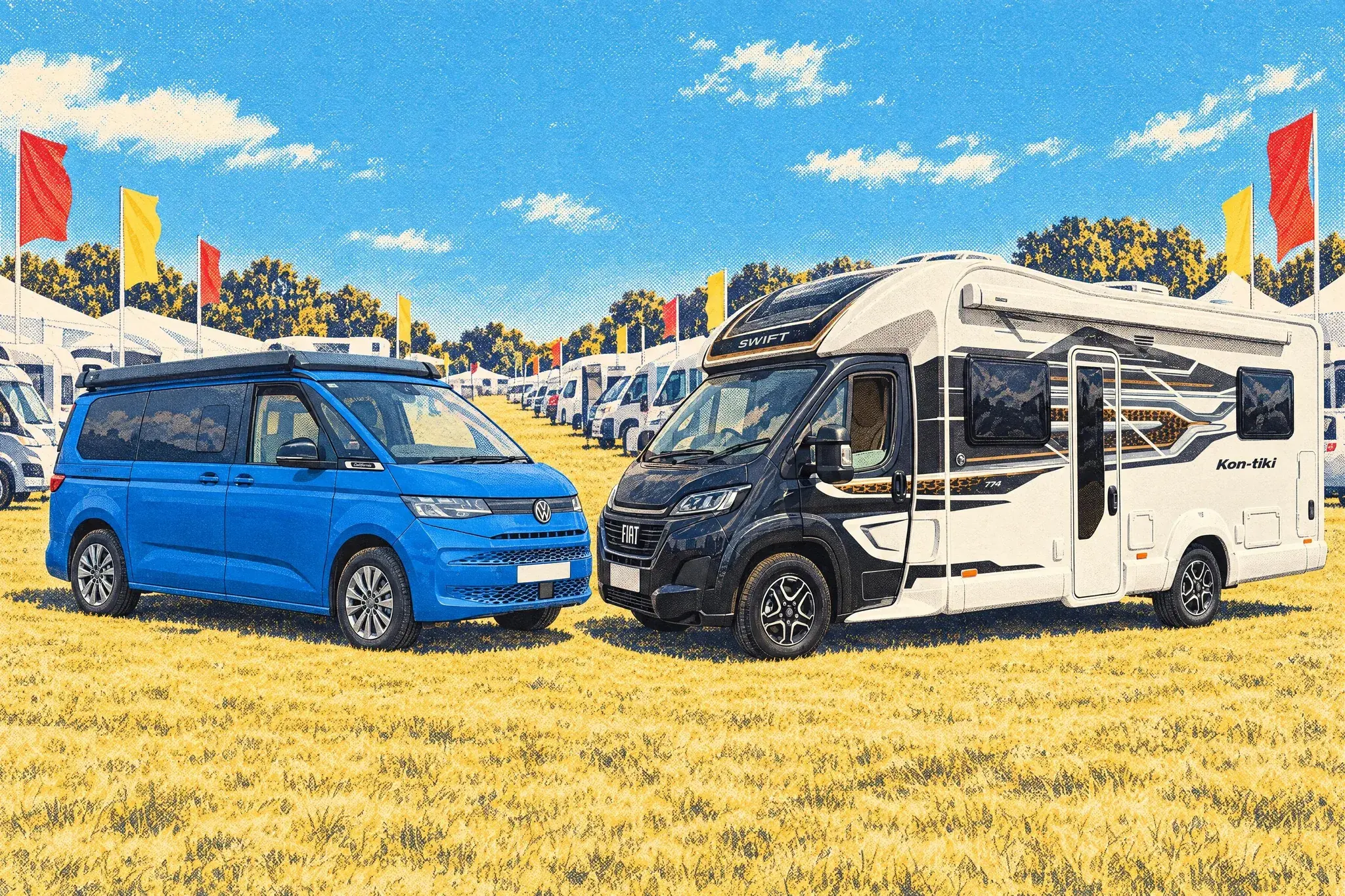
Campervan vs Motorhome
20 min read
Campervan or motorhome? How to choose the right one in the UK
Campervans and motorhomes are not the same thing, but the differences are not always where you expect them. This guide explains what actually separates them, how each one suits different styles of touring, and why the right choice depends on how you travel rather than how much you spend.
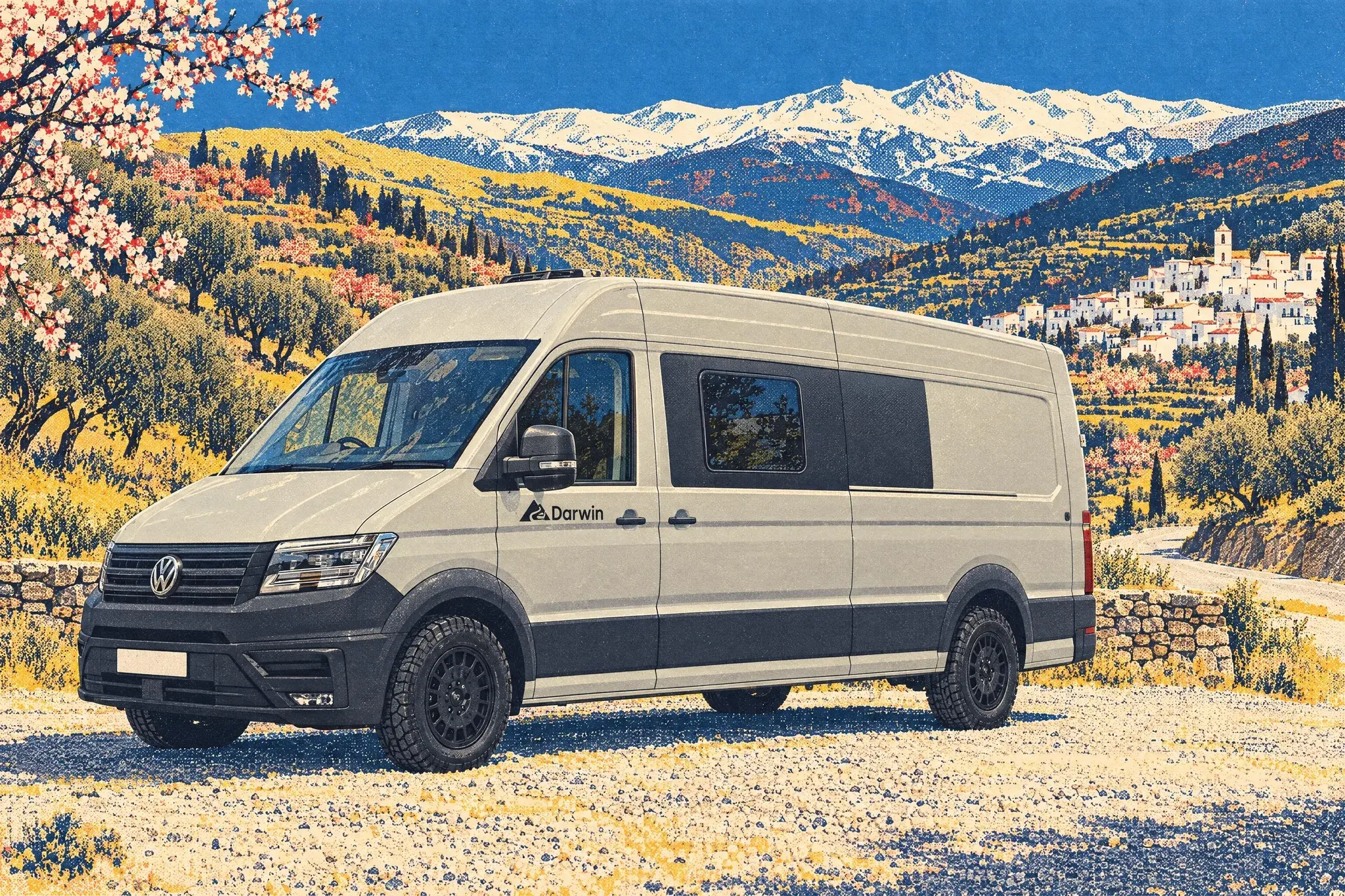
Campervan Reviews
12 min read
Rolling Homes Darwin review: the long Crafter camper with a proper washroom
The Darwin is Rolling Homes' step up from the Transporter: a long-wheelbase VW Crafter two-berth with an enclosed washroom. We set out what is published, what the price does, and who it suits.
Campervan Buying Guides
13 min read
Rolling Homes of Shrewsbury: VW-qualified campers from the Columbus to the Crafter Darwin
A plain-English profile of Rolling Homes, the Shrewsbury family converter with Volkswagen's Motorhome Qualified Converter status: what it builds on, what each model in the range is for, the 13 October 2026 prices, and what to ask before you put a deposit down.
Campervan Reviews
13 min read
Jerba Cromarty review: the long-wheelbase five-seater with two double beds
The Jerba Cromarty is a 5.45 m Scottish-built camper on a VW T7 or Ford Transit Custom that seats five in belts and sleeps two as standard, or four with the optional roof bed. We look at how it lives, what the from-price buys, the published weights and who it suits.