
Mistakes, Myths & Misconceptions
What are your real chances of winning a campervan?

Written by
Rowan
Rowan writes editorial features, comparisons, and industry context pieces that help readers understand the campervan and motorhome landscape.

The short answer
Your real chance of winning a capped campervan draw is refreshingly simple to work out: it is just your tickets divided by the ticket cap. In a draw capped at 7,500 tickets, one ticket is 1 in 7,500 (0.013 percent) and the maximum five is 1 in 1,500 (0.067 percent). The thing that actually decides your odds is the size of the pool, not the ticket price, which is why a £10 ticket in a few-thousand-ticket cap is far better value than a cheap ticket dropped into a pool of hundreds of thousands. Buying more tickets only helps within the published cap, and separate draws never compound. The good news is that this all means you can judge any competition honestly, in seconds. Here is how the maths really works, and the myths to ignore.

It's the first question anyone sensible asks before they spend a penny on a prize competition: what are my actual chances of winning? It's the right question, and it deserves a straight answer. The trouble is that for a surprising amount of the market, there isn't one, because the single number that decides your odds is the one number a lot of competitions never tell you.
So let's do this properly. This is an honest look at what your chances of winning a campervan really are: the actual maths, stripped of theatrics; why the size of the ticket pool matters more than the ticket price; how to put your real odds into perspective without either flattering them or scaring yourself; the myths that quietly cost people money; and a short checklist for judging any campervan competition, ours included. No "amazing odds" language, because that's not how we talk. Just the numbers, and what they mean.
The honest maths, in one line
Here is the entire formula for your chance of winning a single capped draw:
> your chance = the number of tickets you hold, divided by the total number of tickets in the draw.
That's it. There's no second page. The total number of tickets, the cap, is set and published for each draw, and it varies from one draw to the next, for reasons we'll come to in a moment. Say a draw is capped at 7,500 tickets, which is around where ours often sits: hold one ticket and your chance is 1 in 7,500, which is 0.013%; hold the maximum of five and it's 5 in 7,500, or 1 in 1,500, which is 0.067%. Whatever the cap on the day, the principle is identical: your chance is your tickets divided by the total. Five tickets don't bend the maths or unlock a better rate; they're simply five chances out of the same fixed pool, so your odds improve in a straight, predictable line.
We cap tickets at five per person on purpose, and it's worth understanding why, because it's central to how the odds stay honest. If there were no per-person limit, the draw would tilt steadily towards whoever spent the most, and the person putting in a tenner would be quietly competing against someone putting in five hundred pounds. Capping at five keeps everyone in roughly the same bracket. Someone with £10 holds one chance in the same pool as someone with £50 holding five. The gap between the smallest and largest entry is narrow by design, so nobody buys their way to dominance and nobody walks away feeling the whole thing was stacked.
The cap on the draw itself is the other half of the picture, and here's the part that matters most, because it's where we differ from much of the market. The cap is not fixed at one magic number; it varies from draw to draw, and it's set deliberately rather than plucked from the air. Our rule is to keep the number of tickets as low as we possibly can, and to scale it to the value of the campervan on offer: a lower-value van means fewer tickets and shorter odds, a higher-value van means more tickets, because the maths of covering the prize honestly demands it. Either way the cap is published up front, fixed before that draw opens, and never quietly raised once entries are running. What never changes, draw to draw, are the three things you can actually rely on: tickets are always £10, you can hold a maximum of five, and the odds work out around twice as good as a typical UK competition for the same spend. The headline number moves with the van; the fairness underneath it does not.
Why the size of the pool is the whole game
Most people instinctively judge a competition by the ticket price. A £2 ticket feels like better value than a £10 one. But price tells you almost nothing about your chances. The number that actually decides your odds is how many tickets exist in total, and that's the number that's easy to hide.
Think about it in extremes. A £1 ticket in a draw that sells a million tickets gives you a one-in-a-million chance. A £10 ticket in a draw capped at a few thousand gives you a one-in-a-few-thousand chance. The cheaper ticket is many times less likely to win, despite costing a fraction as much. The pool size swamps the price every time. So when you're weighing up a competition, the ticket price is close to a distraction; the question that matters is "how many other tickets am I up against," and the honest follow-up, "do they even tell me?"
For a large slice of the market, the answer to that second question is no. When the government's own market study into online prize draws and competitions reported in 2025, it found that only around 69% of operators displayed the likelihood of winning at all, and only about 62% explained how the winner would be chosen. Read that again: for roughly a third of the competitions out there, the question "what are my chances" is not difficult to answer, it's impossible, because the information simply isn't published. The pool is uncapped, or its size is undisclosed, so your true odds are unknowable even in principle.
This is the entire reason we publish a hard cap. Not as a marketing flourish, but because a capped, stated pool is the only thing that turns "what are my chances" from an unanswerable question into a single, checkable number. If you can't see the total number of tickets, you can't know your odds, and a competition that won't show you the pool is asking you to guess in the dark. Ours is the same number for everyone, printed before you join: the draw runs when that draw's published cap is reached, and not a ticket more.
What "twice as likely, for the same spend" actually means
We make one direct comparison on the site: that you're around twice as likely to win as you'd be in a typical UK competition, for the same spend. It's the only competitive claim we make, and because we don't do claims without the maths behind them, here's exactly how it works, including the part that's less flattering to us.
Start with the honest awkward bit: our tickets are dear. At £10 each, a single ticket from us costs far more than the going rate elsewhere, where the average competition ticket sells for something like 38 pence. On raw per-ticket odds, the cheap ticket genuinely looks better, and we're not going to pretend otherwise. The comparison only makes sense when you hold the spend constant and ask what a fixed amount of money actually buys you in each place.
So take a tenner. Spend it in a typical competition at 38 pence a ticket and you get about 26 tickets, but those 26 are dropped into a pool that, across the category, averages something like 400,000 tickets, which works out at roughly 1 in 15,500. Now hold that against a capped campervan draw. Even at, say, a 7,500-ticket cap, your single £10 ticket is a 1 in 7,500 chance, more than twice as likely as the same tenner bought you in the big-pool competition. And because we keep our caps as low as the value of the van allows, the real gap is often better still. That's the source of the "twice as likely" line. It isn't a slogan; it's just what happens when a small, hard cap meets a large, soft one, for an identical amount of money, and it holds whatever our exact cap happens to be on the day.
Two honest footnotes. First, we round that 15,500 deliberately; the precise figure is messier, and a suspiciously exact number would imply we're quoting one specific competitor, which we're not. It's a market benchmark, not a quote. Second, the comparison is per spend, not per ticket, and we always say so, because per ticket the cheaper sites really do look better, and leaving that out would be the kind of half-truth this whole brand exists to avoid.
Putting those odds in perspective
A bare number is hard to feel. Odds like these could read as hopeless or hopeful depending on your mood, so it helps to anchor them against things people can picture. Here's where a capped campervan draw tends to sit among a few rare-but-real events, using a 7,500-ticket draw as the example, though do remember the exact figure moves with the cap.
| Event | Roughly the odds |
|---|---|
| Finding a four-leaf clover in one go | 1 in 5,000 |
| Winning a capped campervan draw, one ticket (example, 7,500 cap) | 1 in 7,500 |
| Finding a pearl in a wild oyster | 1 in 10,000 |
| Spotting a wild dolphin off the UK coast on a given day | 1 in 12,000 |
| Winning the UK Lotto jackpot | 1 in 45,057,474 |
| Winning the EuroMillions jackpot | 1 in 139,838,160 |
The useful thing about that table isn't the campervan line, it's the distance to the bottom two. A chance of one in a few thousand sits comfortably among everyday rare events, the sort of thing that happens to someone you know now and again: the clover, the pearl, the dolphin off the headland. The lottery, by contrast, is in a different universe, thousands of times longer odds, a number so large it stops meaning anything. When a competition's prize is a campervan rather than a rollover jackpot, the pool can be small enough that the odds land in the realm of things that actually happen to ordinary people. That's the honest appeal of a capped draw: not that you're "almost certain to win", which would be a lie, but that the number is small enough to picture, and the same for everyone holding a ticket.
Hold the maximum of five tickets and you shorten those odds fivefold, which in our example draw means 1 in 1,500, shorter than the odds of finding a four-leaf clover. It's still a long shot, as any honest prize competition must be when the prize is worth tens of thousands of pounds. But it's a long shot you can actually get your head around, which is more than most of the market offers.
The myths that cost people money
A lot of competition marketing, and a lot of received wisdom, quietly encourages beliefs that aren't true. None of these change your real odds, and a couple of them are designed to separate you from more money than you meant to spend.
"Buy more tickets and you'll win"
More tickets do improve your odds, but only up to our cap of five, and then the lever stops working entirely. After five, more money buys you nothing, because there are no sixth tickets to sell you. We don't offer "VIP" tickets that count as three entries, we don't sell bonus entries for sharing a referral link, and there's no premium tier with better odds hiding behind a bigger price. The honest version of "buy more to win" is "hold up to five if you want the shortest odds we offer, and stop there", which is a far less profitable sentence for us to write, and the true one.
"Someone has to win, so why not me"
It's true that every full draw produces a winner; the draw doesn't run until the pool is full, and then one ticket is picked. But "someone wins" tells you nothing about whether that someone is you. Your chance is still your tickets divided by the cap, regardless of how certain it is that the draw will produce a winner overall. It's a comforting thought, and there's nothing wrong with enjoying it, but it's comfort, not strategy. Don't let "someone has to win" talk you into more tickets than you decided on.
"I almost won"
In a random draw there is no "almost". If the winning ticket is number 312 and you held number 311, you were not close; you were exactly as far away as the person holding number 6,000. Ticket numbers aren't a race track where being nearby counts for something. Every ticket has precisely the same chance, and the gap between your number and the winning number is meaningless. Any framing that tells you that you "just missed out", and nudges you to try again before the feeling fades, is preying on a misunderstanding of how randomness works.
"Stay subscribed and your odds keep improving"
Each draw is independent. Being entered into more draws over time does give you more chances overall, in the same way buying a clover-hunt ticket every week gives you more goes at finding the clover. But it never improves the odds of any single draw, and it doesn't accumulate into some better rate. We mention this because "stay in to improve your chances" is a tempting line for a subscription business to run, and it would be false. Your odds in next month's draw are the same whether it's your first draw or your fiftieth.
What actually changes your odds (a very short list)
After all that, the list of things that genuinely move your chances is almost comically short. Two items:
- How many tickets you hold, from one to five.
- The size of the cap on that particular draw.
That's the entire list. What's not on it is just as important. There is no priority queue, so the first person to subscribe has exactly the same odds as the last. There's no early-bird advantage, no loyalty bonus, no "subscribe before Friday for an extra entry". The allocation that hands out ticket numbers runs the same way for everyone, every draw. Nothing you do, short of holding more tickets up to the cap, changes the number. That's not a limitation we're apologising for; it's the point. A competition where effort, timing, or cleverness changed your odds would be a competition where the odds weren't really the same for everyone.
The things that should matter as much as the number
Here's the part most "what are my chances" articles skip. The odds are only half of what you're really evaluating, and arguably the less important half. A tempting-looking 1-in-N is worth nothing if you can't trust that the draw is real, that the pool won't be inflated after you've joined, or that the prize will actually be handed over. So when you weigh up your chances, weigh these up alongside the number.
Can the draw be checked? Ours is decided by drand, a public randomness beacon run by a group of universities and companies, on a round we commit to before that round's number even exists. In plain terms, the number that picks the winner comes from a public service that nobody, including us, can predict or change, and anyone can re-check it afterwards, forever, without an account. A great set of odds attached to a "trust us, we drew it in the office" process isn't worth much. A modest set of odds you can independently verify is worth a great deal.
Is the pool genuinely fixed? A hard cap is only meaningful if it can't be quietly raised once the draw is filling up. Ours never is; the number is set before entries open and the draw runs the moment the last ticket is taken. A cap that flexes when sales are good is just an uncapped pool wearing a costume.
Where does the money go? From every full draw, £500 goes to a UK charity, drawn from a rotation of ten partners, and the receipt or thank-you is published so you can see it landed. The full cost of running the draw is published too, six lines, no twelfth, so you can see where your tenner goes. None of that changes your odds of winning. All of it changes how you feel about the entry whether you win or not, and whether the operation behind the number is one that behaves itself.
Can you walk away? You can cancel or pause in one click, with no guilt screens and no buried links. It's not an odds question, but a competition that makes it hard to leave is telling you something about how it sees you.
How to judge any campervan competition
You don't have to take our word for any of this. Better, here's a short checklist you can run against any campervan or prize competition, this one included. If a competition can't give you a clean answer to all five, that tells you most of what you need to know.
1. Is the total number of tickets capped, and is the cap published? If you can't find out how many tickets exist, you can't know your odds, full stop. Be wary of "limited tickets" with no number attached. 2. Are the odds shown plainly, with the maths? Not "great chances", but an actual figure you could check on the back of an envelope. 3. Can you verify the draw independently? Is there a public, checkable record of how the winner was chosen, or are you being asked to trust an announcement? 4. Where does the entry money go, and is it published? A clear cost breakdown and a named, receipted charity donation beat a vague "supporting good causes". 5. Is there a genuine free entry route and a real skill question? That's the legal basis a UK prize competition stands on, and it's also a decent honesty signal. We dig into how that framework came to be in our history of campervan competitions in the UK, if you want the background.
Run those five questions and the murk clears quickly. The competitions worth your money are the ones that answer all five without flinching, because they've already decided to compete on being trustworthy rather than on being loud.
So, what are your chances with us?
Plainly, then, and without dressing it up. Your chance is simply your tickets divided by that draw's published cap. In a draw capped at 7,500, which is around where ours often sits, one ticket is 1 in 7,500, or 0.013%, and the maximum of five is 1 in 1,500, or 0.067%. We keep that cap as low as the value of the van allows, so a cheaper campervan means fewer tickets and shorter odds; whatever the number, it's fixed before the draw opens and never raised. The odds are identical for everyone holding the same number of tickets. The winning number comes from a public beacon you can re-check yourself. And if you don't win, which, honestly, is the likeliest outcome for any single entrant in any honest prize competition, £500 still went to a UK charity from that full draw, and you can see the receipt.
That's the whole truth of it. It's a real, graspable chance at a campervan, the same for everyone, on a draw you can check. It isn't a near-certainty, and anyone telling you a prize competition is a near-certainty is the last person you should be handing money to. Knowing your odds, exactly, and deciding for yourself whether the entry is worth it to you, is the entire idea. The number is small. It's also honest, and it's the same one we'd quote a friend.
Common questions
What are the odds of winning a campervan with Campervan.win?
Your chance is simply your tickets divided by the draw's cap. In a draw capped at 7,500 tickets, around where ours often sits, one ticket is 1 in 7,500 (0.013 percent) and the maximum of five is 1 in 1,500 (0.067 percent). Because the cap is published, you always know your real odds before you enter, which a lot of competitions never tell you.
Do more expensive or premium tickets have better odds in a competition?
No. Your odds depend only on how many tickets exist in the pool, not on what you paid. Someone holding one ticket has the same single chance in the pool as someone holding five, just fewer of them. A cheap-looking ticket dropped into a pool of hundreds of thousands is far worse value than a dearer ticket in a draw with a small, hard cap.
Can I do anything to improve my chances of winning a campervan?
Only one thing genuinely shortens your odds in a single draw: holding more tickets within the cap, up to the maximum of five, which in a 7,500-ticket draw takes you from 1 in 7,500 to 1 in 1,500. Beyond that, nothing changes them. Entering more draws over time gives you more separate chances, but it never improves the odds of any one particular draw.
Are campervan competition odds better than the lottery?
For the prize on offer, the odds of a capped campervan draw are vastly shorter than a national lottery jackpot, because the pool is a few thousand tickets rather than tens of millions of combinations. The fair comparison, though, is against other campervan competitions, where a 10-pound ticket in a small published cap typically works out around twice as likely to win as the same spend in a big-pool competition.
What happens to my chances if the draw does not fill?
Nothing bad. With a capped draw, the draw runs only when the cap is reached, so a full draw always has the published odds, and you are never quietly entered into worse odds than stated. If a draw does not fill, it does not run on its normal terms, and nobody is charged for a draw that has not opened. The cap is the cap.
If I stay subscribed for several draws, do my odds add up?
Not within any single draw. Each draw is independent, and your odds in each are just your tickets divided by that draw's cap. Being entered into more draws over time gives you more separate chances, the way playing a rare-event game more often gives you more goes, but it never improves the odds of one particular draw.
The reachable bit
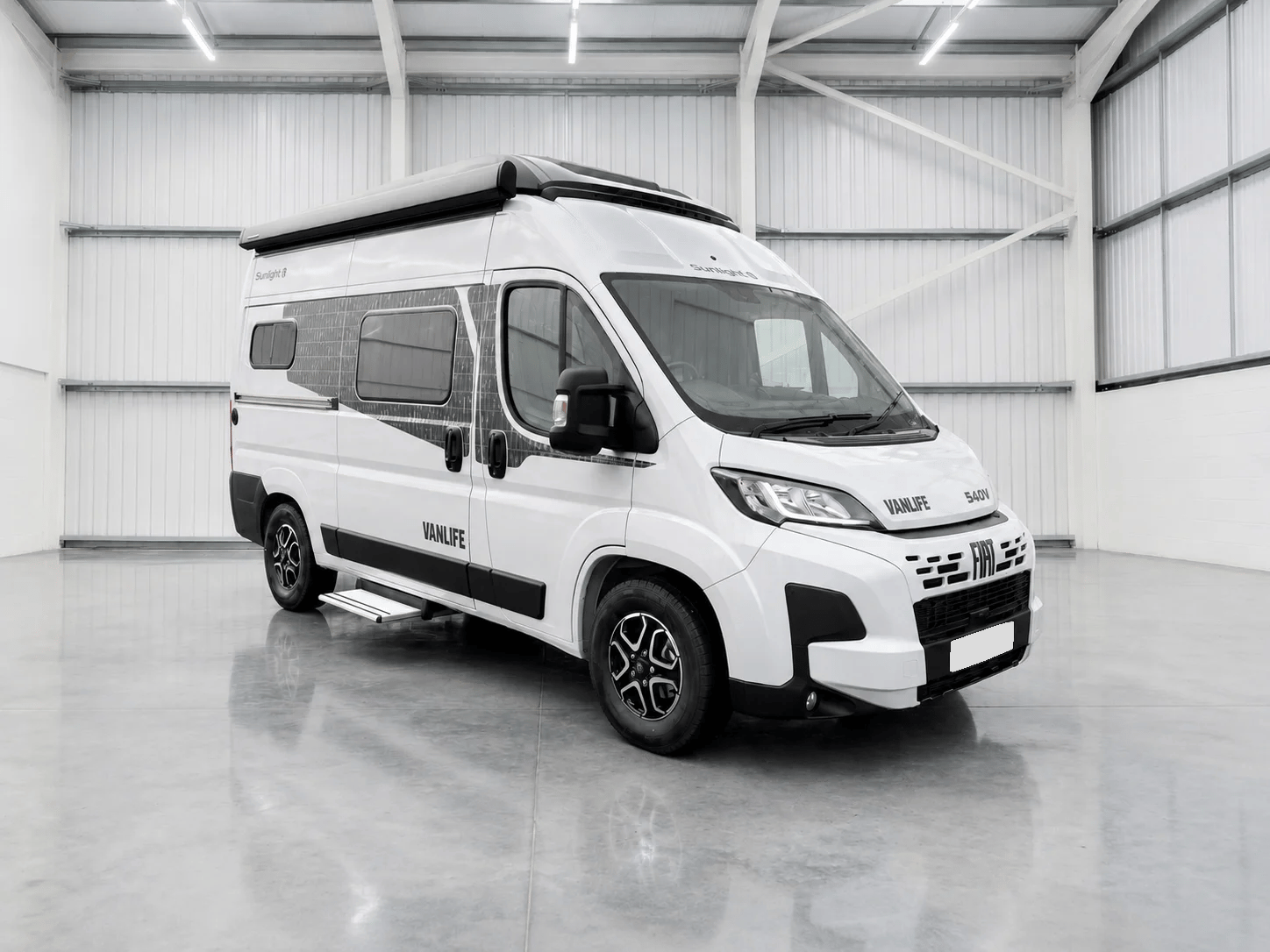
The camper you fall for is rarely the one you can afford. That gap is the whole reason Campervan.win exists. Right now we’re giving away the Sunlight Vanlife, worth around £65,000, and closing that gap is the point: capped entries so the odds stay honest, £10 a ticket, a maximum of five per person, £500 to a UK charity from every full draw, the winner picked by a public randomness beacon anyone can re-check, and one person driving away in the van itself.
Enjoyed this post?
Get more honest campervan guides like this one in your inbox.
You’re in!
Check your inbox. We’ve just sent you a welcome email.

About the author
Rowan
Rowan writes editorial features, comparisons, and industry context pieces that help readers understand the campervan and motorhome landscape.
Keep Reading
Related Reading
Thoughtful articles that build on what you’ve just read.
Mistakes, Myths & Misconceptions
15 min read
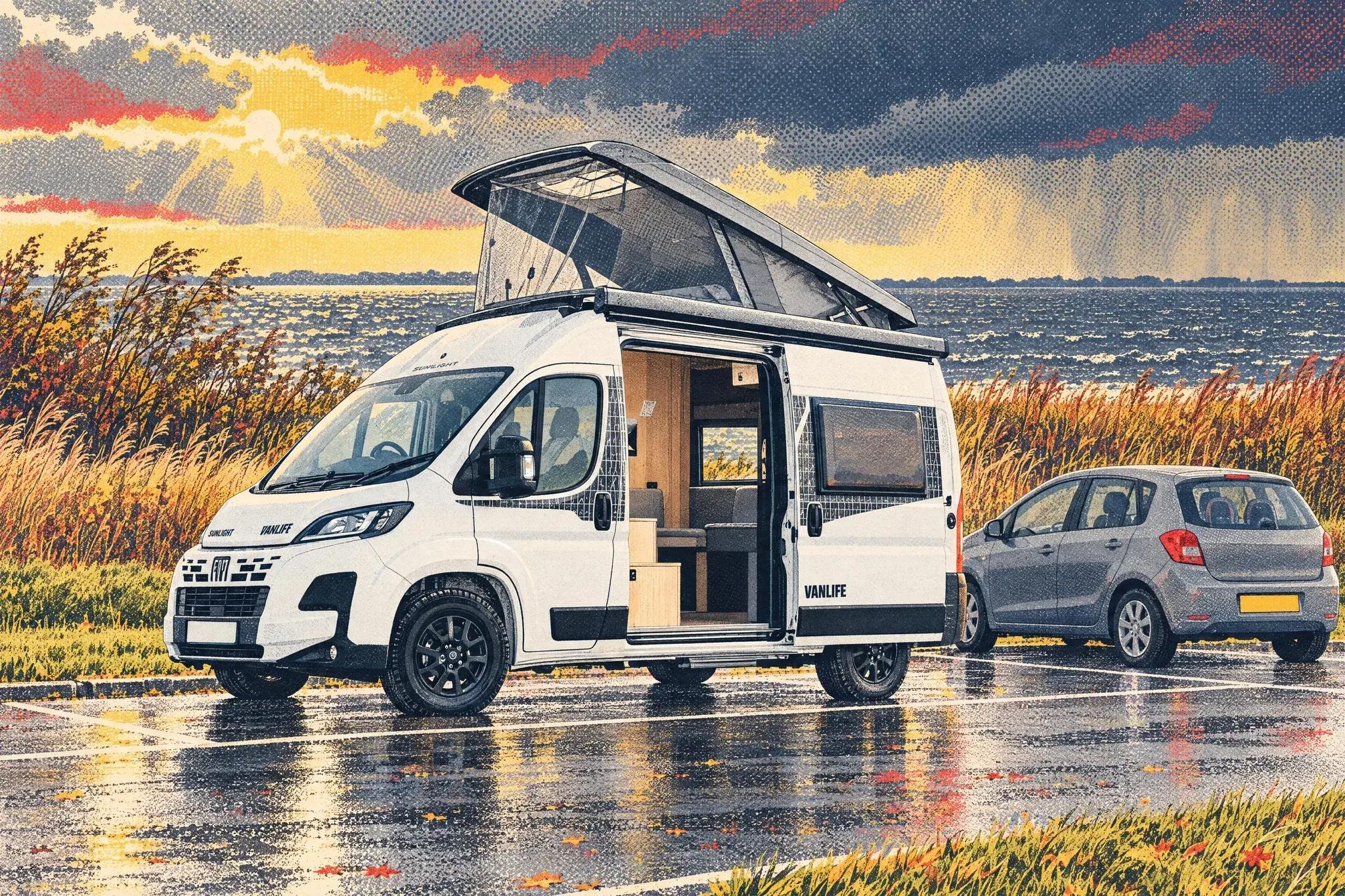
Is the Sunlight Vanlife 540 a 4-berth? Berths vs seatbelts, explained
The Sunlight Vanlife 540 sleeps four, so a lot of people assume it carries four. It doesn't. It has two travel seatbelts. Here's the difference between berths and travel seats, why this layout costs you seats, and how to check any campervan's real capacity before you buy.
New & Noteworthy
12 min read
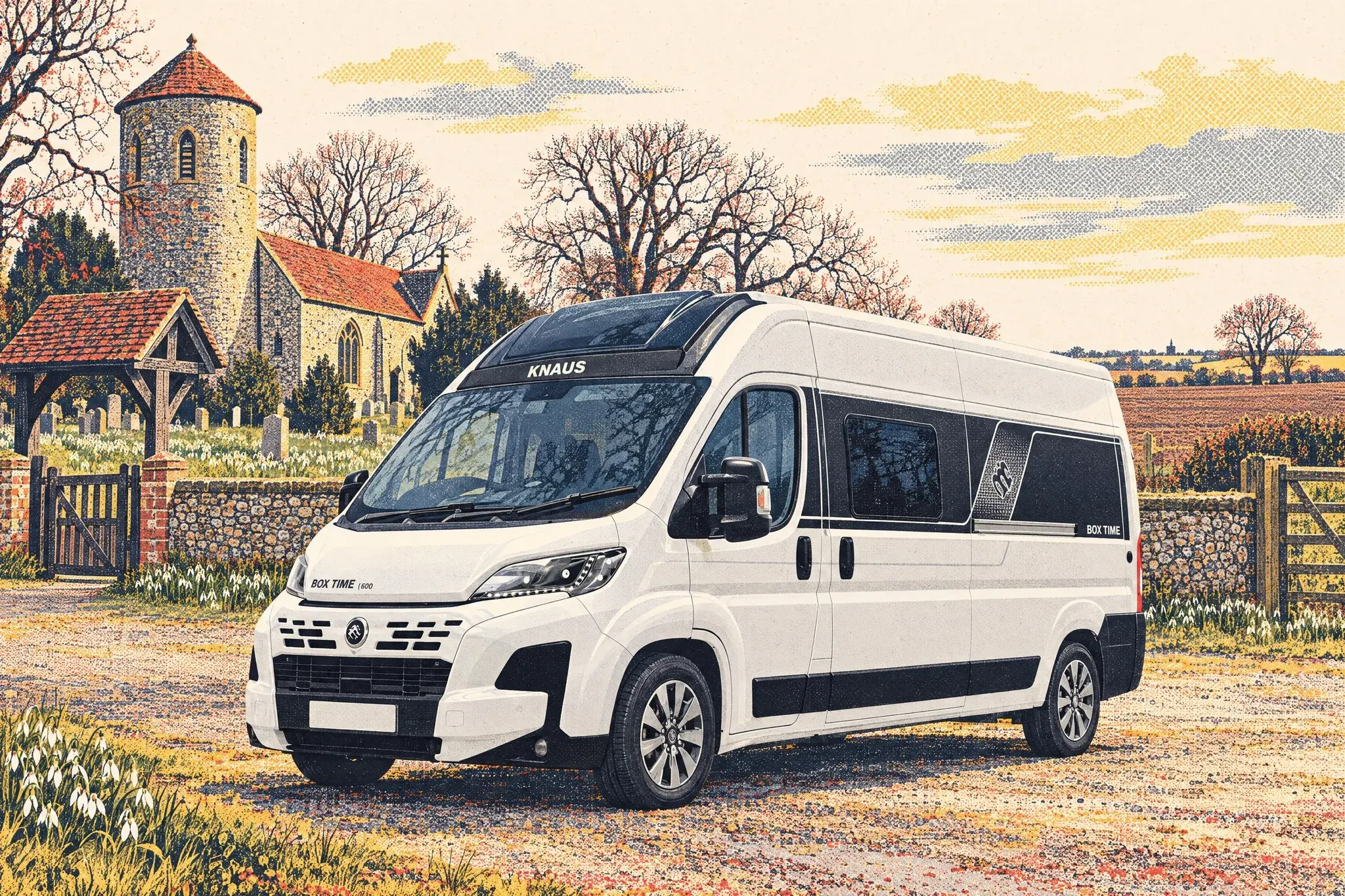
Knaus Boxtime 600 ME (2027): twin singles in 6 m, and the payload figure to question
Knaus's new Boxtime 600 ME squeezes two lengthways single beds into a 5.99 m van from £81,725. We lay out what that layout gives a couple, run the weight sums with Knaus's own figures, and explain why the 211 kg 'maximum payload' line needs a question before you sign.

New & Noteworthy
10 min read
Swift Carrera goes gas-free for 2027: 340Ah lithium, diesel heat and induction cooking
Swift has taken the gas out of its Carrera campervan for 2027, swapping bottles for a 340Ah lithium battery, diesel heating and an induction hob. Here is what that means across a real UK year, how it compares with the cheaper Merlin, and the one question to ask at the NEC.
New & Noteworthy
10 min read
British campervan converters at the NEC 2026: who builds on what, and for how much
A stand-by-stand map of the British campervan converters at the Motorhome and Caravan Show 2026: the vans they build on, their from-prices, seats, roofs and lead times, plus the four questions to put to every one of them.