
Mistakes, Myths & Misconceptions
Is the Sunlight Vanlife 540 a 4-berth? Berths vs seatbelts, explained

Written by
Rowan
Rowan writes editorial features, comparisons, and industry context pieces that help readers understand the campervan and motorhome landscape.
The short answer
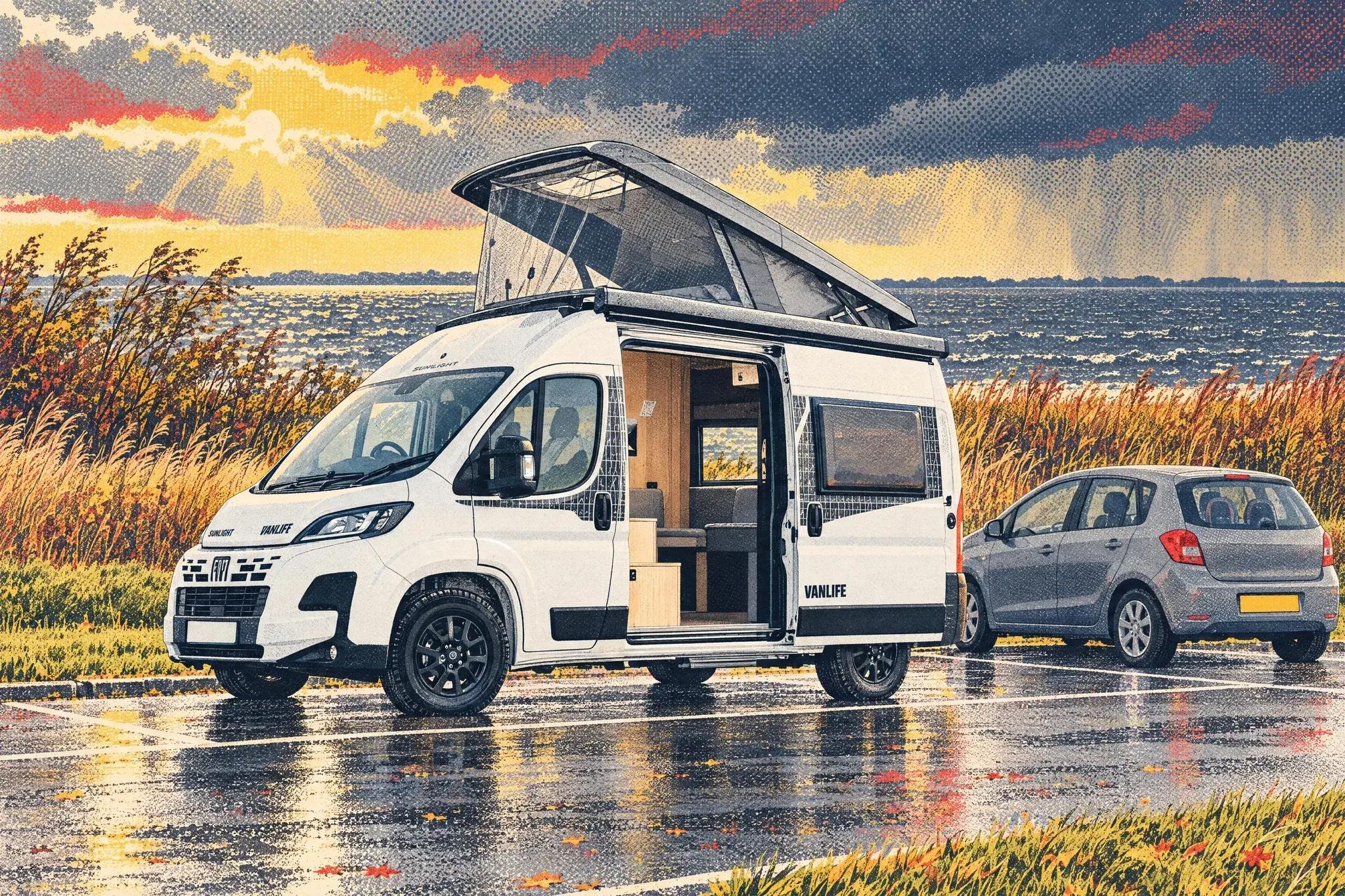
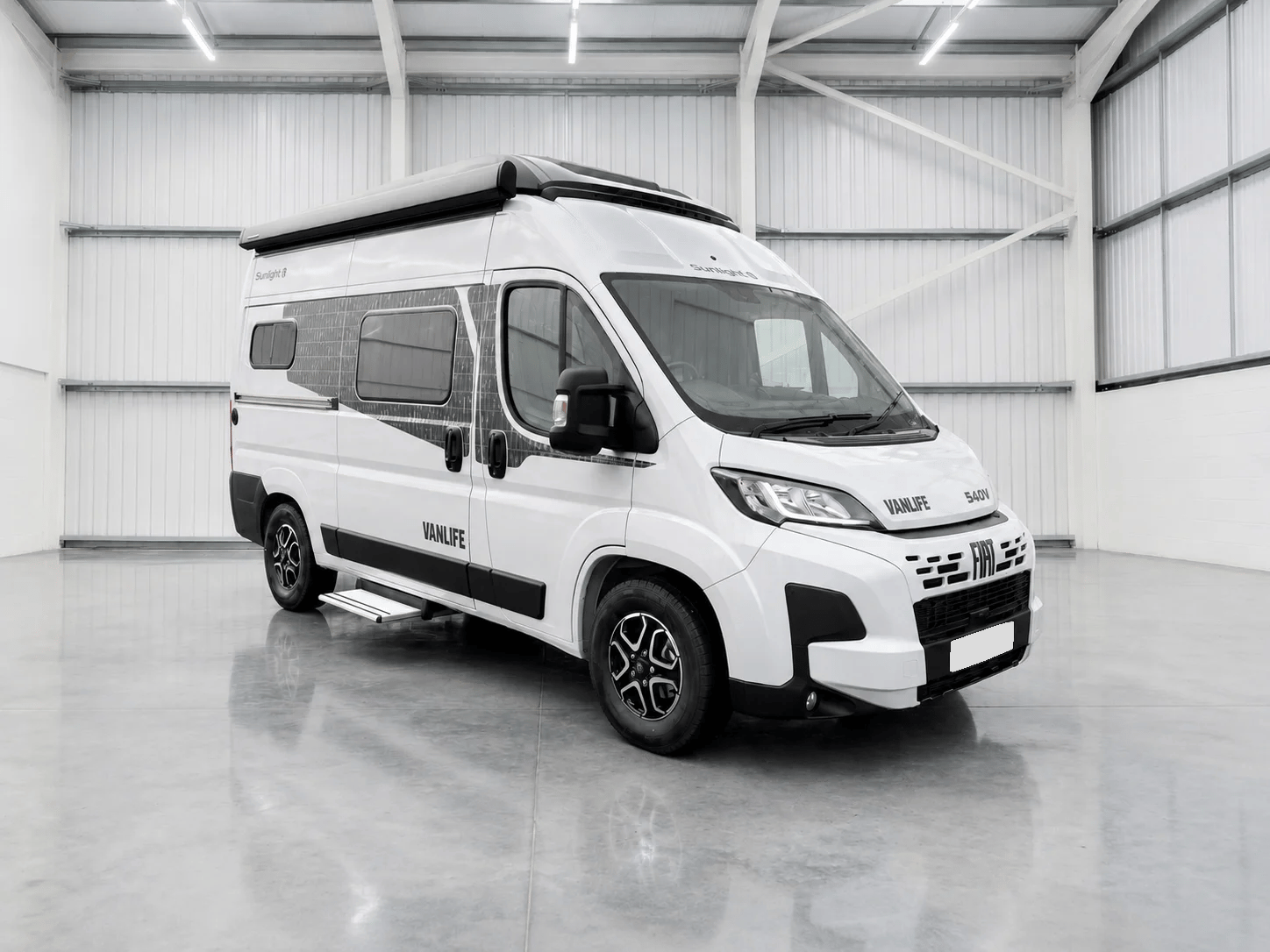
The Sunlight Vanlife 540 V sleeps four but carries only two on the road, and that gap between berths and seatbelts is the most common, and most expensive, misunderstanding about it, so it is well worth getting straight before you buy. Its two numbers are four berths (a pop-top double of around 206 by 143cm plus a rear-lounge bed of around 180 by 100cm) and two travel seatbelts, both in the cab. The clever staircase-and-lounge layout frees the rear for a sociable lounge, which is lovely for a couple but leaves no room for belted rear seats. None of that is a flaw, it just means a family needing four travel seats should choose the four-belt Sunlight Cliff 540 instead. Here is exactly how berths and belts differ, and who can really come along.

Here's the most common, and most expensive, misunderstanding people fall into when they look at the Sunlight Vanlife 540: they confuse how many it sleeps with how many it can carry. The brochure says it sleeps four. A reasonable person reads that and assumes a family of four can pile in and head off to the coast. And then, often late in the process and sometimes after a deposit has changed hands, they discover that the Vanlife 540 V has two travel seatbelts, which means it can legally and safely carry just two people on the road, no matter how many it sleeps.
This isn't the manufacturer hiding anything; the numbers are all there on the spec sheet. It's simply that "sleeps four" and "carries four" are two completely different things, and the gap between them catches people out all the time, not just with this van but across the campervan market. So this is the honest explanation: what berths and travel seats actually are, what the Vanlife 540 really offers, why its clever layout costs you travel seats, who that matters for, and the simple check that will stop this catching you out on any camper you ever look at.
Berths and travel seats are two different numbers
The single idea to fix in your head is this: a campervan has two separate headline numbers about people, and they measure different things.
The berths number is how many people can sleep in it. It counts beds, made up however the van allows, roof beds, converted lounges, drop-downs, the lot. The travel seats number, sometimes written as belted seats or seatbelts, is how many people can be legally and safely carried while the van is moving. It counts crash-rated seats with proper seatbelts, and nothing else.
These two numbers are often different, and sometimes very different. A van can sleep four and carry two. Another can sleep two and carry four. There's no rule that they match, because sleeping space and crash-safe travel seating are built into a van in different ways and often compete for the same floor space. The number that governs your actual road trips, who can come with you, is the travel seats number, because the law requires the people in a moving vehicle to be in proper belted seats. "Sleeps four" tells you about nights parked up. "Carries two" tells you about the journey to get there. You need to check both, and for deciding who can come on the trip, the travel seats number is the one that counts.
What the Vanlife 540 actually offers
For the Sunlight Vanlife 540 V, the two numbers are four and two.
It sleeps four, across two beds: a generous pop-top roof bed of around 206 by 143 centimetres, reached by the van's fixed staircase, and a second bed of around 180 by 100 centimetres made up by converting the rear lounge. That's a genuine four-berth sleeping capacity, and for a couple with occasional guests, or a couple with a young child or two staying over, it works nicely.
But it carries two. The Vanlife 540 V has two travel seatbelts, the driver and front passenger seats in the cab. There is no belted rear travel seating. So while four people can sleep in it once you've parked and set up, only two can legally be aboard while you drive there. You can see this clearly in the full specifications, where the travel-seat count is listed alongside the berths, but it's easy to skim past the small number and remember the big one. For a couple, this is a complete non-issue, and the van is one of the most charming compact campers you can buy. For anyone needing to travel with more than one passenger, it's the most important fact about the vehicle.
Why the clever layout costs you travel seats
It's worth understanding why this van carries only two, because it isn't an oversight, it's a direct consequence of the layout that makes the Vanlife so appealing in the first place.
In a more conventional campervan that "sleeps four and carries four", the rear seating is a belted travel bench, often a rock-and-roll seat, that does double duty: crash-rated seats with belts when you're driving, and a bed when you fold it down at night. That arrangement is practical and family-friendly, but it puts a seat-shaped block of furniture in the back of the van. The Vanlife 540 V does something different and, for a couple, rather lovely: it walls off the cab, puts the main bed up in the pop-top reached by a fixed staircase, and frees the rear of the van for a sociable lounge of facing sofas. That lounge is gorgeous to live in, and it's the heart of why the van feels like a small flat rather than the back of a Transit, which we explore in our piece on the staircase layout. But those lounge sofas are not crash-rated belted travel seats.
So the trade is direct and unavoidable in a van this size: you can have the spacious, sociable lounge, or you can have four travel belts, but not both. The Vanlife chooses the lounge. That's the right choice for the couple it's designed for, and the wrong one for a family who need to travel together, and there's no clever workaround that gives you both.
Who this matters for, and the alternative
For a couple, or a solo traveller, the two-belt limit simply doesn't matter. You'll never need more than two seats, you get the better layout in exchange, and you can stop worrying about it. The Vanlife 540 V is, for you, close to ideal.
For a family of four, or anyone who regularly needs to carry more than one passenger, it's a hard no, and it's worth being blunt about that because people talk themselves around it. No amount of loving the layout changes the fact that you cannot legally drive your two children to the campsite in a van with two seatbelts. If that's you, you need a different van, and helpfully there's one in the same family: the Sunlight Cliff 540 (and its near-identical Carado CV 540 twin), which uses a conventional rear-fixed-bed layout with a belted rear bench, giving you four travel seats. It's a different van for a different buyer, and we compare the two directly in our Cliff versus Vanlife guide. The point is simply that the right Sunlight for a family exists; it just isn't this one.
Real-world scenarios: who can actually come?
It helps to make this concrete, because the two-seat limit plays out in ordinary situations people don't picture until they're planning a trip. A couple heading off for a weekend: perfect, two of you, two belts, no issue at all. The same couple wanting to bring a set of grandparents along for a day at the coast: not possible, because that's four people and two belts. A parent hoping to take two children to a campsite: not possible. Two friends sharing the driving on a long tour: absolutely fine, that's two. One friend wanting to join you and your partner for the journey: not possible, because that's three.
The pattern is simple but unforgiving. Any time more than two humans need to be in the van while it's moving, the Vanlife cannot do it legally, no matter how much you love the layout or how short the trip. It's worth sitting with that for a moment against your own life: think about the journeys you actually make, and who's usually in the vehicle, not the idealised solo-couple trip but the real mix of family, friends and hangers-on. If the honest answer is "almost always just the two of us," the limit is irrelevant and you can stop worrying. If it's "often three or four," the van is quietly telling you it isn't the one.
One important nuance that softens the picture: this is about travelling, not visiting. Once you're parked up, as many people as you like can pile into the lounge, eat at the table, or sleep across the four berths. The cap of two applies only while the wheels are turning. So the Vanlife works perfectly well as a couple's van that hosts friends and family at the campsite; it just can't be the vehicle that drives them all there. Get that distinction clear and the van's real character, a brilliant two-up tourer with room to entertain when stopped, comes into focus.
The law, and the safety reality
This isn't a technicality to be negotiated around, so let's be clear about it. UK law requires that people travelling in a vehicle use the seatbelts provided, and you must not carry more passengers than there are proper seats with belts. Children have their own specific rules on top. Carrying people in unbelted rear seats, or worse, sitting or lying on the bed or the lounge while the van is moving, is against the law.
And the law is the least of it. In a crash or even a hard stop, an unbelted passenger in the back of a van becomes a projectile, a danger to themselves and to everyone else aboard. The belted-seat limit isn't bureaucratic caution; it's the difference between people being held safely and being thrown. On top of the legal and safety problem, carrying passengers your van isn't built to carry can invalidate your insurance, turning a bad day into a catastrophic one. So treat the travel-seat number as the hard limit it is. Two belts means two people on the move, and that's that.
How berths and belts play out across the camper market
This mismatch between berths and travel seats isn't unique to the Vanlife; it runs right across the camper market, and understanding the pattern helps you read any van. At one end, a small day van or a classic pop-top VW often carries four or five, because it keeps the van's original belted seats, but may only sleep two comfortably, the opposite imbalance. In the middle, the conventional panel-van camper with a rock-and-roll bed typically carries four and sleeps two to four, because the belted rear bench doubles as the bed, which is exactly why that layout is the family default. At the other end, lounge-led and fixed-bed vans like the Vanlife trade belted rear seating for living space, sleeping four but carrying two. And big coachbuilt motorhomes can carry four, five or six on dedicated belted travel seats, which is part of why growing families size up to them.
The lesson is that there's no reliable link between the two numbers, and the layout is what decides it. A van that sleeps more isn't a van that carries more; often it's the reverse. So the same single check, count the belted travel seats, works on everything from a micro-camper to an A-class motorhome, and it's the habit that stops the berths headline misleading you on any vehicle you ever consider.
Children, car seats and the rules
Families weighing one of these vans should know how children fit the picture, because it changes things. The same principle applies: a child needs a proper belted travel seat, and in most cases an appropriate child seat or booster secured to it, just as in a car. You can't seat a child on a bed or an unbelted lounge while moving any more than you can an adult. Most modern campers with belted rear travel seats make provision for child seats, and some include ISOFIX mounting points on those seats, though it's worth checking which seats are ISOFIX-equipped rather than assuming, because it varies by van and layout.
The consequence for the Vanlife 540 V is simple and unavoidable: with only two travel belts, both in the cab, there's nowhere to legally and safely secure a child for travel beyond the front passenger seat, and even that comes with the usual rules about airbags and rear-facing seats. So as a van to grow a young family into, it doesn't work, and a four-belt layout with proper child-seat provision, like the Cliff 540, is what you'd need instead. If children travelling with you is part of the plan, make the belted-seat and child-seat question one of your very first filters, not an afterthought.
What if you sometimes need more than two seats?
Suppose you love the Vanlife but occasionally, not often, need to carry a third or fourth person. Is there a workaround? Honestly, not a good one within this van, and it's far better to know that now than to buy hopefully and discover it later. You can't simply add travel seats: belted seats have to be crash-rated and anchored to the vehicle's structure, which is an engineering and type-approval matter rather than a retrofit, and the lounge isn't built to take them. So the van stays a two-seater on the road whatever you do to it.
The realistic answers are around the van, not in it. For the genuinely rare extra passenger, they travel separately in a car and meet you there, which is how plenty of couples with visiting friends or family manage perfectly happily; the van carries the two of you and the kit, and everyone converges at the campsite. That works when "extra people" is an occasional event. If carrying more than two is a regular part of your life rather than a once-a-year thing, the honest conclusion is that this isn't your van, and you should choose a four-belt layout such as the Cliff 540 from the outset.
The mistake to avoid, and it's a common and expensive one, is buying the two-belt Vanlife while quietly telling yourself you'll "make it work" when the children or the in-laws come along. You won't, not legally and not safely. The seat count is the one specification you genuinely cannot design around after the fact. Match the van to your real travelling group rather than your occasional one, and you'll love it; try to stretch it past two on the move and you'll be permanently frustrated, or worse, tempted to break the law.
How to check any campervan's real capacity
The good news is that this trap is easy to avoid once you know to look, and the check works on any camper, not just this one. When you're assessing a van, mentally set aside the big, cheerful "sleeps X" headline for the purpose of working out who can travel, and instead find the number of belted travel seats. It's on the specification, sometimes called travel seats or seatbelts, and it's reflected in the vehicle's registration document as the seating capacity. When you view the van in person, simply count the actual seatbelts fitted to proper seats. If there are two, it carries two, however many it sleeps.
Make that one check a habit and you'll never be caught out. It's the single most useful question to ask of any campervan, and the one that most often goes unasked until it's too late: not "how many does it sleep?" but "how many can it carry?" Get the answer to that before you fall in love, and you'll buy the van that fits your life rather than the one that fit your imagination.
Common questions
Is the Sunlight Vanlife 540 a 4-berth?
Yes, it sleeps four, across two beds: a generous pop-top roof double of around 206 by 143cm reached by a fixed staircase, and a second bed of around 180 by 100cm made up by converting the rear lounge. But 4-berth refers only to sleeping; it is a separate question from how many it can carry on the road, where the Vanlife is limited to two.
How many people can the Sunlight Vanlife 540 carry on the road?
Two. The Vanlife 540 V has only two travel seatbelts, the driver and front passenger seats in the cab, so however many it sleeps, it can legally and safely carry just two people while moving. Its lounge layout leaves no room for a belted rear bench, which is the trade-off for its sociable rear living space.
Can a family of four travel in the Sunlight Vanlife 540?
No. With only two travel belts, both in the cab, there is nowhere to legally and safely secure a child for travel beyond the front passenger seat. As a van to grow a young family into it does not work; a four-belt layout with proper child-seat provision, such as the Sunlight Cliff 540 or its Carado CV 540 twin, is what a family needs.
Can you add extra seatbelts to the Sunlight Vanlife 540?
Not realistically. Travel seats must be crash-rated and anchored to the vehicle's structure, which is an engineering and type-approval job, not a simple retrofit, and the Vanlife's rear lounge is not designed for it. If you need more than two travel seats, buy a van that comes with them rather than trying to add them to one that does not.
Does a dog count towards the two-seat limit in a campervan?
No. A dog does not need a belted travel seat the way a person does, so it does not use up one of the two belts. It should still be properly restrained while moving, with a harness, crate or dog guard, both for its safety and so it cannot be thrown forward or distract the driver in a sudden stop.
Can more than two people be in the Vanlife 540 when it is parked?
Yes, absolutely. The two-seat limit applies only while the van is moving. Once parked and set up, as many people as you like can sit in the lounge, eat at the table or sleep across the four berths. It is purely the journey that is capped at two, which is why the Vanlife works well as a couple's van that hosts guests at the campsite.
The reachable bit
The camper you fall for is rarely the one you can afford. That gap is the whole reason Campervan.win exists. Right now we’re giving away the Sunlight Vanlife, worth around £65,000, and closing that gap is the point: capped entries so the odds stay honest, £10 a ticket, a maximum of five per person, £500 to a UK charity from every full draw, the winner picked by a public randomness beacon anyone can re-check, and one person driving away in the van itself.
Enjoyed this post?
Get more honest campervan guides like this one in your inbox.
You’re in!
Check your inbox. We’ve just sent you a welcome email.

About the author
Rowan
Rowan writes editorial features, comparisons, and industry context pieces that help readers understand the campervan and motorhome landscape.
Keep Reading
Related Reading
Thoughtful articles that build on what you’ve just read.

Mistakes, Myths & Misconceptions
17 min read
What are your real chances of winning a campervan?
What are your actual chances of winning a campervan in a UK prize competition? The honest answer depends almost entirely on one number most competitions don't tell you. Here's the real maths, the perspective, and the myths to ignore.
New & Noteworthy
12 min read
Knaus Boxtime 600 ME (2027): twin singles in 6 m, and the payload figure to question
Knaus's new Boxtime 600 ME squeezes two lengthways single beds into a 5.99 m van from £81,725. We lay out what that layout gives a couple, run the weight sums with Knaus's own figures, and explain why the 211 kg 'maximum payload' line needs a question before you sign.
New & Noteworthy
10 min read
Swift Carrera goes gas-free for 2027: 340Ah lithium, diesel heat and induction cooking
Swift has taken the gas out of its Carrera campervan for 2027, swapping bottles for a 340Ah lithium battery, diesel heating and an induction hob. Here is what that means across a real UK year, how it compares with the cheaper Merlin, and the one question to ask at the NEC.
New & Noteworthy
10 min read
British campervan converters at the NEC 2026: who builds on what, and for how much
A stand-by-stand map of the British campervan converters at the Motorhome and Caravan Show 2026: the vans they build on, their from-prices, seats, roofs and lead times, plus the four questions to put to every one of them.