
Etrusco explained: who really builds these budget Italian-styled vans, and should UK buyers care?

Written by
Rowan
Rowan writes editorial features, comparisons, and industry context pieces that help readers understand the campervan and motorhome landscape.

The short answer
Etrusco is a value-focused Italian campervan and motorhome brand built on the mainstream Fiat Ducato and owned by one of the biggest groups in the leisure-vehicle world, which is the reassuring part: it is how a young badge can offer low prices while still backing the product with a real warranty and dealer network. New campervans land roughly in the mid-£40,000s to mid-£50,000s, with coachbuilts higher. The bones are genuinely sound; the honest trade-offs are plainer trim, leaner standard kit and off-grid systems that usually want upgrading if you wander from hook-up. It does not pretend to be a luxury van and does not need to, as a first van or a sensible step into the lifestyle it makes a strong case. Here is who really builds it, and whether UK buyers should care.

Walk around any big UK motorhome show and you will spot a name that feels both familiar and slightly mysterious: Etrusco. The vans look smart, the prices look gentle, and the badge sounds reassuringly continental. But a lot of buyers stand in the doorway of one and ask the same quiet question. Who actually makes this thing, and is the low price hiding something?
That is a fair question, and it deserves a proper answer rather than a shrug. Etrusco is not a tiny back-street operation, and it is not a one-season fad. It sits inside one of the largest groups in the whole leisure-vehicle world. That single fact changes how you should think about buying one. In this guide we will unpack exactly who builds Etrusco vans, where they are made, what the cheerful price really buys you, what you give up to get there, and whether a UK buyer should care at all. No sales pitch, just the small print read out loud.
The short version, in plain English
Etrusco is a value-focused brand of campervans and motorhomes. The vehicles are built in Italy, styled with an Italian flavour, and aimed squarely at people buying their first leisure vehicle or trading down to something simpler and cheaper. The badge is owned by a very large parent group, which is the reason a brand this young can offer the prices it does while still backing the product with a proper warranty and a real dealer network.
So the honest headline is this. Etrusco is a budget brand, but it is a budget brand with serious engineering and a big company behind it. That is a genuinely different proposition from a cheap unknown, and it is why the name keeps coming up in conversations among first-time buyers. The rest of this guide explains the detail so you can decide whether it fits your plans.
Who really builds Etrusco vans
Here is the part most brochures gloss over. Etrusco was created as a value brand within the Erwin Hymer Group, a German-headquartered business that owns a whole family of motorhome and caravan marques. The Erwin Hymer Group itself is now part of Thor Industries, an American company that is one of the biggest recreational-vehicle businesses on the planet.
That sounds like a lot of corporate layers, and it is, so let us make it simple:
- Etrusco is the brand on the side of the van.
- Erwin Hymer Group is the European parent that created and develops the brand.
- Thor Industries is the large group that owns Erwin Hymer Group.
Why does this matter to a buyer? Because it tells you that the design, parts sourcing, and quality systems behind an Etrusco are not improvised. The brand can borrow proven components, layouts, and supplier relationships from a much bigger pool. When a company makes leisure vehicles in big numbers, it buys windows, fridges, heaters, and hinges by the tens of thousands. That buying power is a big reason the finished van can be sold at a lower price without the whole thing being flimsy.
It also matters for the boring but important things. Parts availability, software updates for control panels, recall handling, and warranty support all flow more smoothly when there is a large organisation behind the badge rather than a small builder who might not be around in five years. None of that is a reason to buy on its own, but it is a meaningful difference from picking up a cheap, obscure brand with no obvious lineage.
Why a big group bothers with a cheap brand
It can feel odd that a major group would deliberately sell something inexpensive. The logic is straightforward. A budget brand lets a group reach buyers who would otherwise not buy at all, or who would buy used. It widens the doorway. Someone might come in through the value brand, enjoy the lifestyle, and trade up later. The group keeps the customer rather than losing them. So Etrusco exists partly to bring new people into motorhoming at a price they can stomach. That is a structural business decision, not a judgement on anyone.
Where the vans are actually made
Etrusco vehicles are built in Italy, which is where the country's strong tradition of value motorhome manufacturing comes in. Italy has a long history of building leisure vehicles efficiently and in volume, and a lot of the supplier base for furniture, mouldings, and fittings sits there. Building an Italian-styled, Italian-made van using Italian suppliers keeps costs down and keeps the styling consistent.
This is worth understanding because the phrase "Italian-styled" can mean different things. With Etrusco it is not just a marketing flourish bolted onto something built elsewhere. The vans genuinely come out of the Italian side of the parent group's operations, drawing on the design language and production methods that the region is known for. Lighter colours, rounded shapes, airy interiors, and practical kitchens are part of that look.
The base vehicle under the body
Almost every Etrusco sits on a Fiat Ducato cab and chassis, which is the single most common motorhome base in Europe. If you have looked at any mainstream coachbuilt or panel-van conversion, you have almost certainly seen a Ducato. That is good news for an owner. The Ducato is familiar to mechanics across the UK and Europe, parts are everywhere, and the driving manners are well understood. Many models use the popular 2.2-litre turbodiesel in various power outputs, with manual or automated gearboxes depending on the spec.
The practical upshot is that the part of the vehicle that drives, the bit that has an engine, brakes, and steering, is mainstream and serviceable anywhere. You are not relying on the budget brand for the mechanical core. That removes one of the biggest worries people have about a cheaper marque.
What the Etrusco range actually includes
Etrusco does not try to be all things to all people, and that focus is part of how it keeps prices sensible. The range broadly splits into a few clear types. Exact model names and codes change over time, so treat the categories as the durable part rather than any specific badge.
Panel-van campervans
These are the conversions based on the standard Ducato van body, often badged in the brand's CV family. You get the compact footprint of a big van with a fitted interior inside. They are the easiest Etrusco vehicles to drive and park, they fit most normal parking spaces with care, and they are the closest thing to a do-everything vehicle. Inside you typically find a compact kitchen, a washroom, a seating area, and a bed, all squeezed into a clever footprint.
Low-profile coachbuilts (semi-integrated)
Step up to the coachbuilt models and you get a purpose-built habitation body bonded to the Ducato cab. "Low-profile" means there is no big bed pod hanging over the cab, which keeps the roofline lower and the styling sleeker. These give you noticeably more living space than a panel van, with proper fixed beds, bigger washrooms, and larger kitchens. They are wider and longer than a campervan, so they need more thought on narrow lanes and in town.
Overcab coachbuilts
Some models add the classic bed area over the cab, the bit that bulges forward above the windscreen. This is the traditional family layout. It adds sleeping capacity, often making a van genuinely useful for four people, at the cost of a taller, draggier profile and a slightly more old-school look.
A-class style models
At the top of the value ladder, some Etrusco offerings move towards a more integrated front end, where the cab is part of the habitation body rather than the standard Fiat cab. These feel more like a complete motorhome and less like a converted van, with a wider windscreen and a more living-room feel up front. They are still pitched as value vehicles, just larger and more comprehensively equipped.
The point of listing these is simple. Etrusco is not a single product. It is a small but coherent ladder, from a tidy two-berth campervan up to family-sized coachbuilts, all sharing the same value philosophy. That means a buyer can usually find a body type that suits without leaving the brand, which is unusual at this price level.
What "budget" actually means here
Budget is a loaded word. With some products it means corners cut everywhere. With Etrusco it means something more specific and more honest: a deliberately controlled specification, sold at a deliberately controlled price, using shared parts to keep costs low.
Pricing moves around with model year, spec, and the wider market, so always check current figures, but as a rough guide a new Etrusco campervan tends to land in the region of the mid-£40,000s to mid-£50,000s, while the coachbuilt models climb into the £50,000s and £60,000s depending on size and layout. Used examples can be found well below that as the first owner takes the early depreciation. Those numbers undercut a lot of premium-branded equivalents while sitting on the same Ducato base.
So where does the saving come from? It is not magic. It is a series of sensible trade-offs:
- Shared components. The same heaters, fridges, and fittings used across the parent group's volume brands, bought in bulk.
- Simpler specification as standard. Fewer luxury extras included by default, with options you can add if you want them.
- Efficient, volume production. Built on established Italian production lines rather than hand-assembled in tiny numbers.
- Lighter trim and finishes. Practical materials rather than premium veneers and soft-close everything.
None of those choices makes a van bad. They make it cheaper. The skill of buying well is knowing which of those trade-offs you can happily live with and which ones would quietly annoy you for years.
Build quality, and what you give up to get the price
Let us be balanced here. An Etrusco is a value product and it feels like one in places. But it benefits from group-level engineering, so the bones are usually sound even where the trim is plain. Here is the honest split between what tends to be solid and where the savings show.
What is usually fine
- The structure. Bonded coachbuilt bodies and well-understood conversion methods mean the basic build is competent.
- The mechanicals. Ducato base, mainstream and serviceable, nothing exotic.
- The core habitation kit. Heating, fridge, and water systems are typically proven units shared with other brands.
- Layout sense. The floorplans are generally practical because they borrow from a big design pool.
Where the budget shows
- Trim and finish. Plastics can feel harder, edges less refined, and cupboard fronts more basic than on premium vans.
- Standard equipment. You may find fewer USB points, simpler upholstery, basic control panels, and less generous lighting unless you add options.
- Sound deadening and insulation. Adequate rather than plush. You may notice more road noise and faster heat loss on cold nights than in a top-tier van.
- The little luxuries. Soft-close drawers, deep-pile carpets, premium worktops, and clever hidden storage are often where money has been saved.
The fair way to read that list is this. The things that keep you safe and dry tend to be fine. The things that make a van feel expensive are where the cost has come out. If you value substance over polish, that is a good trade. If you want the cabin to feel like a boutique hotel, this is not the brand for you, and that is fine.
The trick with any value van is to separate what matters from what merely impresses. A heater that works on a wet February night matters. A backlit drinks cabinet does not.
The habitation systems: heating, water, power
The day-to-day living experience of a van comes down to its systems, so it is worth knowing what you typically get and what you might want to upgrade.
Heating and hot water
Etrusco models usually run a combined heating and hot-water system of the kind used widely across European motorhomes, most often gas-powered, sometimes with an electric element option. These are reliable and easy to service. On a value spec you may get the simpler version rather than the more powerful or fully programmable one. For UK use, where you will want heat from October through April, check the heater's output and whether it warms the water at the same time. If you plan winter trips, a more capable heating package is worth the option cost.
Fresh and waste water
Water tanks on compact and value vans are often smaller than on big premium tourers. A campervan might carry a modest fresh tank, while a coachbuilt carries more. Smaller tanks mean more frequent fills and dumps, which is fine on a serviced site and more of a chore off-grid. If wild-ish touring and stopovers appeal, check the tank sizes carefully, because this is one area where the budget footprint really shows. In UK winters, also check whether tanks are insulated or carried internally, because an exposed tank can freeze on a hard night.
Electrics and leisure batteries
This is the single biggest area where value vans differ from premium ones in 2026. Many Etrusco models ship with a basic 12V setup: a lead-acid leisure battery, a simple charger, and hook-up. That is perfectly workable if you mostly use campsites with electric pitches. If you want to camp off-grid, work from the van, or run a compressor fridge and devices without hook-up, you will likely want to upgrade to lithium batteries and add solar. Some buyers do this aftermarket, which can be money well spent, but factor that cost in when you compare prices. A van that looks cheaper on the forecourt is not cheaper if you immediately spend a few thousand pounds on power.
Gas
Most models use refillable or exchange gas bottles for cooking, heating, and the fridge in gas mode. Nothing unusual there. Just check the locker size and whether it takes the bottle type you prefer, and consider a refillable system if you tour a lot, because exchange bottles get expensive over time.
Driving and living with one in the UK
On the road, an Etrusco drives like what it is: a Ducato with a body on it. That means it is car-like enough to be unintimidating, with light steering, a high seating position, and good visibility forward. The bigger coachbuilts feel their width on narrow British lanes and need patience in town, but they are no harder to handle than any comparable motorhome.
A few UK-specific points are worth flagging:
- Width on country roads. Coachbuilt bodies are wider than the cab. Mirrors and hedges become a regular negotiation in places like the West Country and the Highlands. A panel-van campervan is far easier here.
- Height and barriers. Know your van's height to the centimetre. Car-park height barriers, low bridges, and some ferry decks will catch you out otherwise. Stick the number on the dashboard.
- Fuel. Expect real-world diesel economy somewhere in the high-20s to mid-30s miles per gallon depending on size, load, and how hard you push it. The campervans do better than the big coachbuilts.
- Parking and stopovers. The campervans can pass as large vans in many spaces. The coachbuilts need motorhome-friendly parking and proper aires or campsites.
For everyday touring around the UK, the smaller Etrusco models are genuinely usable as a second vehicle. The bigger ones are weekend-and-holiday machines that need a bit more planning, which is true of any large motorhome regardless of badge.
Weight and licensing: the bit too many people skip
This is not Etrusco-specific, but it catches out plenty of buyers across every brand, so read it carefully.
When you passed your car test matters. If you passed a standard UK car test on or after 1 January 1997, your basic licence normally lets you drive a vehicle up to 3,500kg maximum authorised mass (MAM). Most modern campervans and many compact coachbuilts are built to sit at or just under that 3,500kg limit precisely so that everyone can drive them. If you passed before 1997, you usually have so-called "grandfather rights" that allow heavier vehicles up to 7,500kg, but you should confirm your own entitlement on your licence rather than assume.
Why does this matter with a value van? Because keeping a van under 3,500kg means the maker has to budget its weight carefully. By the time you add passengers, a full water tank, gas, bikes, an awning, and a fortnight of luggage, a 3,500kg van can be surprisingly close to its limit. Check the payload, the difference between the empty weight and the maximum allowed weight, before you buy. A generous payload number is one of the most valuable and most overlooked features of any van.
How to check payload properly
- Find the MIRO or mass in running order, which is roughly the empty weight with fluids and a driver allowance.
- Subtract that from the MAM (often 3,500kg).
- The gap is your usable payload. From it you must cover all passengers, all your belongings, water, gas, and any accessories.
If the gap is tight, you have a few options: travel light, fit fewer accessories, or look at whether the model can be uprated to a higher MAM (some Ducato-based vans can, though that may push you over a licence threshold). Overloading is not a technicality. It affects braking, handling, insurance validity, and your legal standing if you are weighed at the roadside. Get this right and a lot of stress disappears.
Servicing, warranty, and parts in the UK
One of the strongest practical arguments for a brand backed by a large group is what happens after the sale. Here is the realistic picture.
The base vehicle
Because it is a Ducato, the cab, engine, and running gear can be serviced and repaired at a wide network of commercial-vehicle and motorhome-friendly garages across the UK. Parts are common and not exotic. This is a big advantage over any van built on an unusual base.
The habitation side
The living area, heating, water, and electrics, needs a habitation service from someone competent in motorhome systems. The good news is that the systems Etrusco uses are mainstream units fitted across many brands, so qualified motorhome workshops generally know them well. An annual habitation check is sensible regardless of brand. It looks for damp, checks seals, tests gas and electrics, and catches small problems before they become expensive ones.
Warranty
New Etrusco vehicles come with manufacturer warranties covering the base vehicle and the conversion, typically with a longer separate cover on water ingress provided you keep up the annual habitation checks. Read the exact terms for the model and year you are looking at, because the water-ingress warranty is the one that protects you from the most expensive failure a motorhome can suffer. Skipping the annual service to save money can void that cover, which is a false economy.
Dealer network
UK availability depends on which dealers carry the brand at any given time, and that does change. Before you buy, find out where your nearest servicing dealer is, because driving a large van two hundred miles for routine work is tedious and costly. A value purchase stops being a value purchase if every service trip is an expedition.
Depreciation and resale: the honest money picture
Every motorhome loses value, and value brands are no exception. The pattern with a budget badge tends to look like this. Because the new price is lower, the absolute number of pounds you lose can be smaller than on an expensive van, but the percentage drop can be steeper in the early years because there is less brand premium holding the price up.
What does that mean in practice?
- Buying new: expect to absorb meaningful depreciation in the first two or three years, as with any new vehicle.
- Buying lightly used: this is often the value sweet spot. Let the first owner take the early hit and pick up a two or three-year-old example with plenty of life left.
- Selling later: condition, service history, and habitation-check records matter more than the badge. A tidy, dry, well-documented van sells; a neglected one of any brand struggles.
The single best thing you can do for resale on a value van is keep every service record, especially the habitation checks, and keep the van dry and clean. Documented care closes the gap between brands more than anything else.
Common misconceptions about Etrusco
A few myths follow this brand around, so let us clear them up plainly.
"It is cheap so it must be junk"
No. It is a controlled specification at a controlled price, built with group engineering on a mainstream base. It is plainer than a premium van, not broken. The savings are in trim and equipment, not usually in the bones.
"Italian-styled means it is not really Italian"
In this case the vans are genuinely built in Italy using the region's manufacturing base. The styling matches the origin rather than being a sticker over something else.
"A budget brand will leave me stranded for parts"
Because it sits on a Ducato and uses mainstream habitation components shared across many brands, parts and servicing are more available than the worry suggests. The big-group backing helps here.
"It will fall apart in a few years"
Any van, premium or budget, fails fastest when water gets in and is ignored. Keep up the habitation checks and a value van can give many good years. Neglect a premium van and it will rot just the same.
Who an Etrusco genuinely suits
Let us match the product to the person honestly, because the right buyer will be delighted and the wrong buyer will be quietly frustrated.
It suits you if
- You are buying your first motorhome or campervan and want to keep the financial risk modest while you learn what you actually like.
- You mostly use campsites with electric hook-up, so the basic standard electrics are not a limitation.
- You value practicality over polish and do not need premium materials to enjoy a trip.
- You want a mainstream base vehicle that any competent garage can look after.
- You like the idea of a big group behind a small price, with proper warranty and parts support.
It is less ideal if
- You want to live off-grid for days at a time without upgrading the power and water systems first.
- You expect a luxury cabin feel with soft-close everything and premium finishes.
- You do serious winter touring and need the highest insulation and heating spec as standard.
- Your nearest servicing dealer turns out to be a very long way away, which makes ownership a hassle.
Notice that most of the "less ideal" cases can be addressed with options or aftermarket upgrades. The question is always whether the upgraded total still represents good value compared with buying a higher-spec van in the first place. Sometimes it does. Sometimes it does not. Do the sums for your own use, not for an average buyer who does not exist.
What to check before you buy one
Whether new or used, run through this list before you sign anything. It applies to any van, but it is especially useful for a value buy where the standard spec is leaner.
On any Etrusco
- Payload. Confirm the usable payload and imagine your real loaded weight. Tight payload is the most common regret.
- Bed length and access. Lie on the bed in the showroom. Measure it if you are tall. Check how you get in and out at 3am.
- Washroom in use. Sit on the loo, stand in the shower space, open the door. Cramped washrooms reveal themselves fast.
- Kitchen reality. Worktop space, hob size, fridge capacity, and somewhere to put a mug down. Small details, daily impact.
- Heating spec. Check the heater model and whether it also does hot water. Ask about winter capability if you tour cold.
- Power setup. Battery type and capacity, charger, solar, and the number of USB and 12V points. Plan upgrades and budget for them.
- Water tank sizes. Fresh and waste capacity, and whether tanks are protected from frost.
- Storage. Where do bikes, chairs, the awning, and outdoor kit actually go? Open every locker.
On a used Etrusco specifically
- Damp. Ask for evidence of annual habitation checks. Feel for soft spots around windows, roof joints, and the floor. Damp is the killer.
- Service history. Both the base vehicle and the habitation side. Gaps cost you on resale and may void water-ingress cover.
- Operation of everything. Run the heater, the fridge on each mode, the water pump, the lights, and the hook-up. Test, do not trust.
- Tyre age. Motorhome tyres often time out before they wear out. Check the date codes; old tyres are a safety and cost issue.
- Habitation door and seals. Open and close repeatedly. Look at the rubber. This is where water sneaks in.
- MOT and mileage logic. Low mileage is normal on motorhomes, but it should match the wear and the story.
How to compare it fairly with other options
The mistake people make is comparing the Etrusco forecourt price with a premium van's forecourt price and stopping there. That is not a fair comparison. Build a true total-cost picture instead.
- Start with the van price.
- Add the upgrades you actually need to make it suit your use: more battery, solar, better heating, towbar, bike rack, awning.
- Add running costs: insurance, annual habitation service, base-vehicle service, storage, fuel for your typical mileage.
- Estimate depreciation over your likely ownership period.
Do that for the Etrusco and for whatever you are weighing it against, including buying a used premium van. Sometimes the value brand wins outright. Sometimes a slightly older, higher-spec used van costs about the same all-in and gives you a nicer cabin. The right answer is personal, and only the full sum reveals it. Anyone who tells you one brand is always the answer has not done the maths for your situation.
The bigger picture: why value brands matter
Step back from Etrusco specifically and there is a useful point here about the whole market. The cost of a new motorhome has climbed a long way, and that is a structural reality of how these vehicles are made, taxed, and equipped, not anyone's fault. Value brands exist to keep the door open for people who would otherwise be priced out of the lifestyle entirely.
That is a genuinely good thing. Getting out on the road, waking up by a Welsh estuary or a Scottish loch, having your home with you wherever you stop, that experience should not be reserved for people with the deepest pockets. A well-engineered budget van, backed by a big group's parts and warranty support, is one of the most honest ways the market makes that experience reachable. You give up some polish. You keep the freedom. For a lot of people that is exactly the right trade.
If the freedom of the road is what you are chasing, it is worth remembering there is more than one route to the driveway. Buying new, buying used, and the occasional chance to win a van outright through a properly run competition all get you to the same place: keys in hand and a map full of possibilities. The vehicle is just the tool. What you do with it is the point.
The bottom line
So, should UK buyers care about Etrusco? Yes, but with clear eyes.
Care because the brand is a sensible, well-supported way into motorhoming at a price that more people can manage. It is built in Italy, it sits on a mainstream Fiat Ducato base, and it is backed by one of the largest groups in the business, which means parts, warranty, and servicing are not a leap of faith. The bones are sound.
Care also about the trade-offs, because they are real. The trim is plainer, the standard equipment is leaner, and the off-grid systems usually want upgrading if you plan to wander away from hook-up. Check the payload, check the heating spec for UK winters, and check where your nearest servicing dealer is before you commit.
Do that honest homework and an Etrusco can be a smart, unfussy buy that gets you touring without the premium price. It will not pretend to be a luxury van, and it does not need to. It needs to be dry, reliable, easy to service, and yours. On those terms it makes a strong case for itself, especially as a first van or a sensible step into the lifestyle. The badge may be young, but the engineering behind it is not, and that is the detail that should reassure you most.
Common questions
Who makes Etrusco motorhomes?
Etrusco is a value-focused brand built in Italy and owned by a very large parent group, one of the biggest in the leisure-vehicle world. That ownership is why a relatively young brand can offer gentle prices while still backing the vans with a proper warranty and a real dealer network, and it sits on the mainstream Fiat Ducato base.
Is Etrusco any good, or is it cheap for a reason?
The bones are sound. It uses a proven Fiat Ducato base and is backed by a major group, so parts, warranty and servicing are not a leap of faith. The price shows in plainer trim, leaner standard equipment and basic off-grid systems rather than in poor engineering. It does not pretend to be a luxury van, and it does not need to.
How much does an Etrusco cost?
As a rough guide, a new Etrusco campervan tends to land in the region of the mid-40,000s to mid-50,000s of pounds, while the coachbuilt models climb into the 50,000s and 60,000s depending on size and layout. Pricing moves with model year and the wider market, so always check current figures, but it is squarely a value-end choice.
What are the weak points of an Etrusco?
Mainly the off-grid setup. Many models ship with a basic 12V system, a lead-acid leisure battery and a simple charger, which is fine on hook-up but usually wants upgrading if you plan to wander away from it. The trim is plainer and the standard kit leaner, so check the heating spec for UK winters and budget for the upgrades you will want.
What licence and payload should I check on an Etrusco?
A standard category B licence covers up to 3,500kg, and most Etruscos are built to sit at or just under that so everyone can drive them. The flip side is that the maker has to budget weight carefully, so once you add passengers, a full water tank, gas, bikes and luggage a 3,500kg van can be close to its limit. Check the real payload before you buy.
Who is an Etrusco best for?
First-time buyers, or owners trading down to something simpler and cheaper, who want a dry, reliable, easy-to-service van on a mainstream base without the premium price. It is less ideal if you want a plush interior, lots of standard kit, or serious off-grid ability out of the box. Do the payload sum, check the winter spec and find your nearest servicing dealer first.
The reachable bit
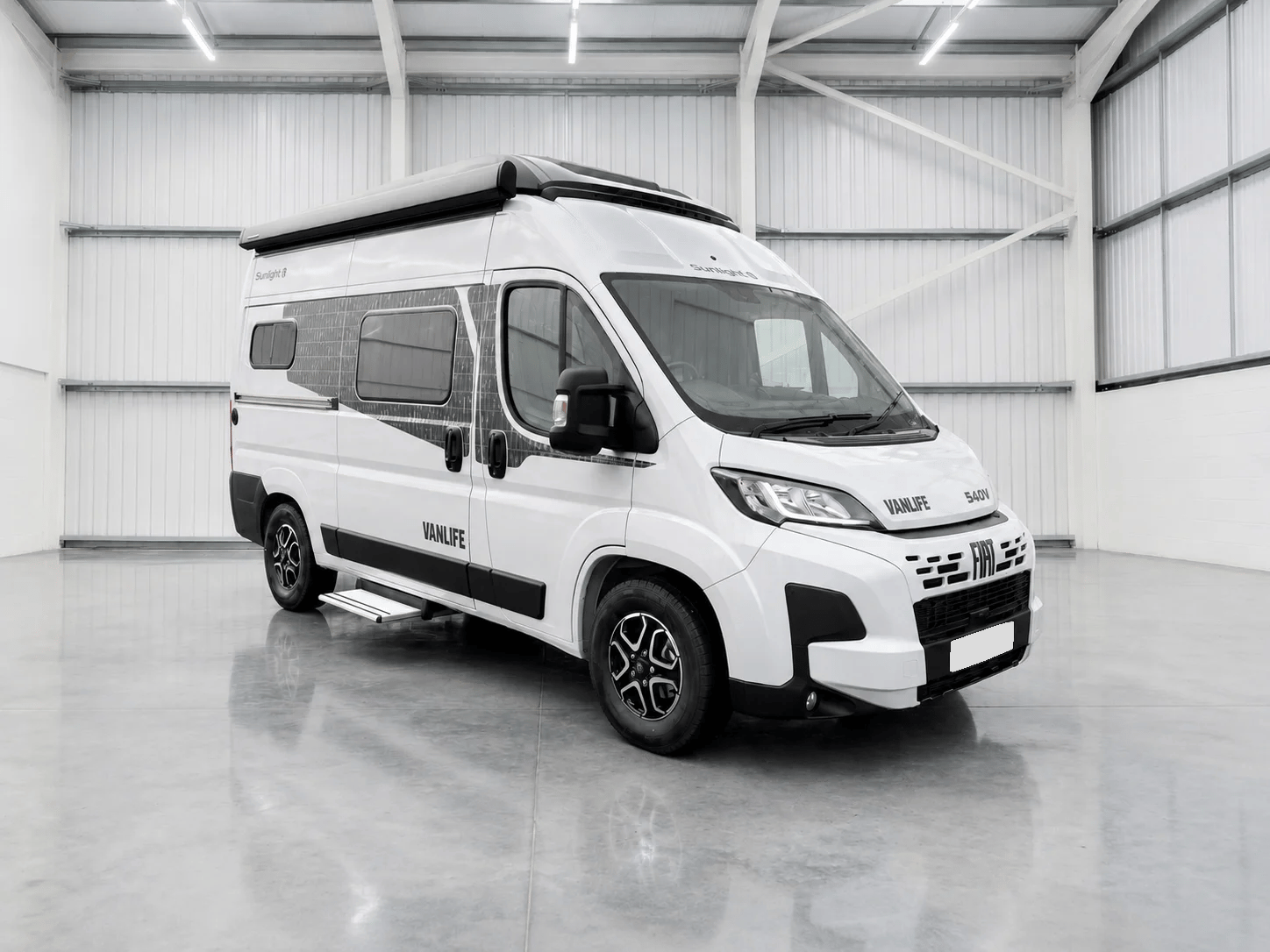
The camper you fall for is rarely the one you can afford. That gap is the whole reason Campervan.win exists. Right now we’re giving away the Sunlight Vanlife, worth around £65,000, and closing that gap is the point: capped entries so the odds stay honest, £10 a ticket, a maximum of five per person, £500 to a UK charity from every full draw, the winner picked by a public randomness beacon anyone can re-check, and one person driving away in the van itself.
Enjoyed this post?
Get more honest campervan guides like this one in your inbox.
You’re in!
Check your inbox. We’ve just sent you a welcome email.

About the author
Rowan
Rowan writes editorial features, comparisons, and industry context pieces that help readers understand the campervan and motorhome landscape.
Keep Reading
Related Reading
Thoughtful articles that build on what you’ve just read.
Motorhome Buying Guides
12 min read
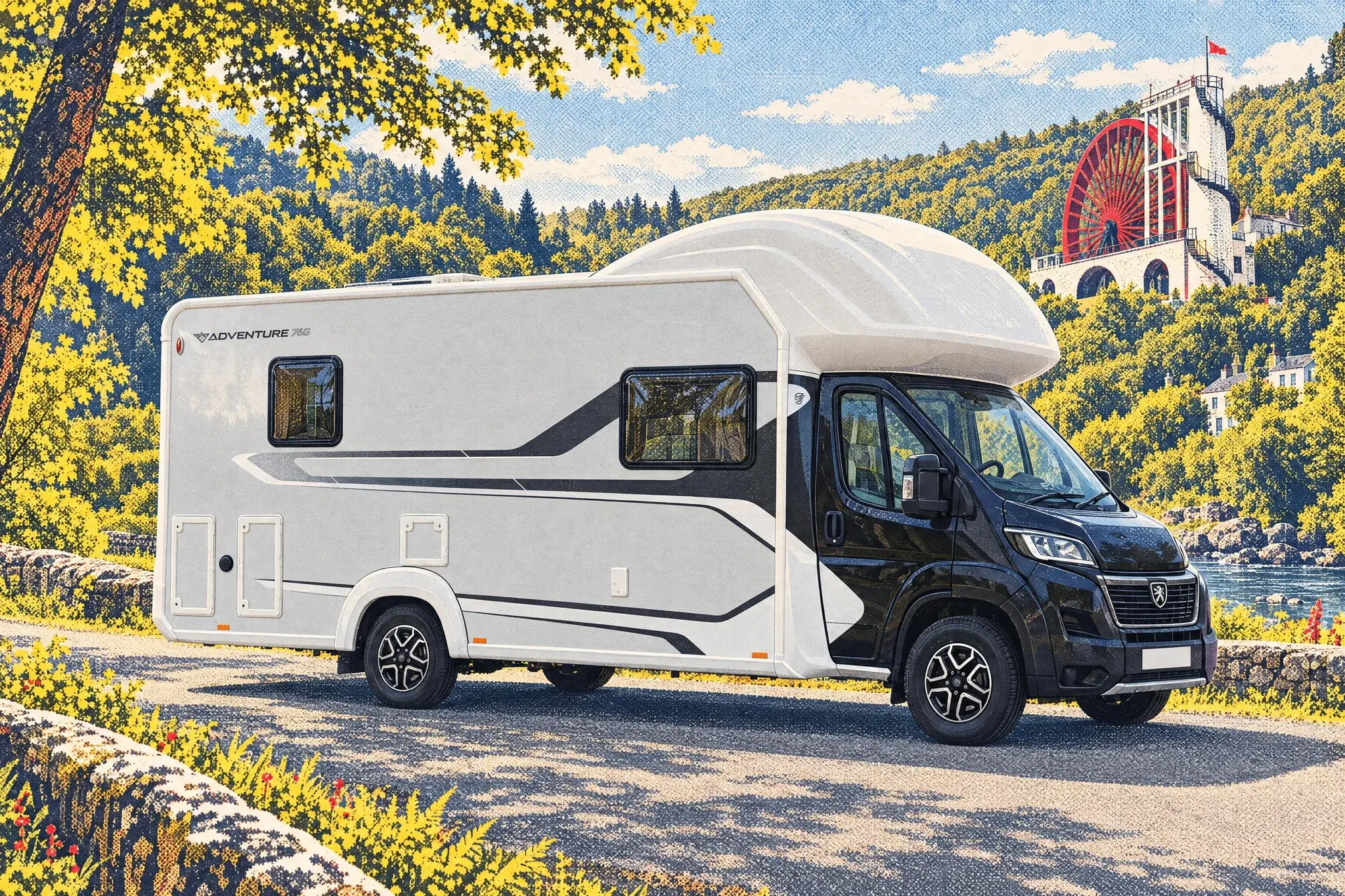
Auto-Trail Adventure 2027: the overcab is back, and two options change your licence
Auto-Trail's new Adventure coachbuilt puts a permanent bed over the cab of a Peugeot Boxer and prices the long models at £71,000 ex-works. Here is why that layout suits a family of four, and the weight, licence and payload questions to settle before you sign.
Motorhome Buying Guides
14 min read
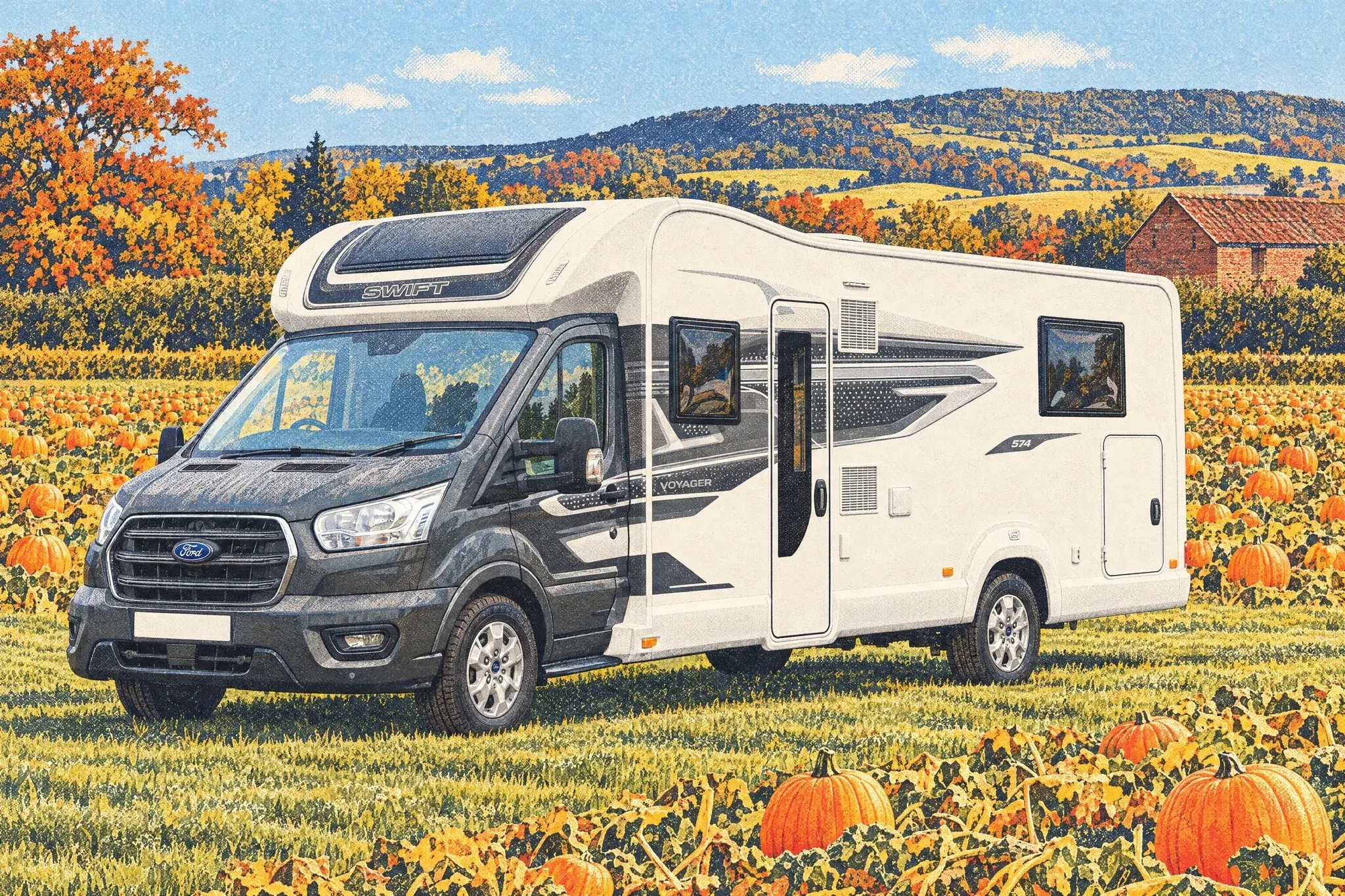
Family motorhomes at the NEC for 2027: belts, beds and the payload sum that decides them
The 2027 family layouts at the NEC sleep four to seven, but the numbers that decide whether they work for your family are the belted seats, the Isofix points and the weight left once everyone is aboard. We do the sums model by model.
Motorhome Buying Guides
10 min read
Buying a motorhome at the NEC: what you commit to when you sign on the stand
A plain-English explainer on what a signature on a show stand at the NEC commits you to: cancellation rights that are not as clear as people think, what happens to a deposit, why withdrawing from finance does not cancel the van, why Section 75 rarely covers a motorhome deposit, and your rights if the van arrives faulty.
Motorhome Buying Guides
9 min read
NEC show offers 2026: how to judge the Auto-Sleepers, Auto-Trail and Marquis deals
The October 2026 NEC show offers from Auto-Sleepers, Auto-Trail dealers and Marquis Leisure, decoded: what each free pack is worth to you, what it weighs, what a heavier plate means for your licence and tax, and the questions to settle before you sign.