
What £166k really buys in a semi-integrated Hymer (and who it's actually for)

Written by
Arthur
Arthur writes buying guides, comparisons, and in-depth explainers to help readers choose the right campervan or motorhome with confidence.
The short answer
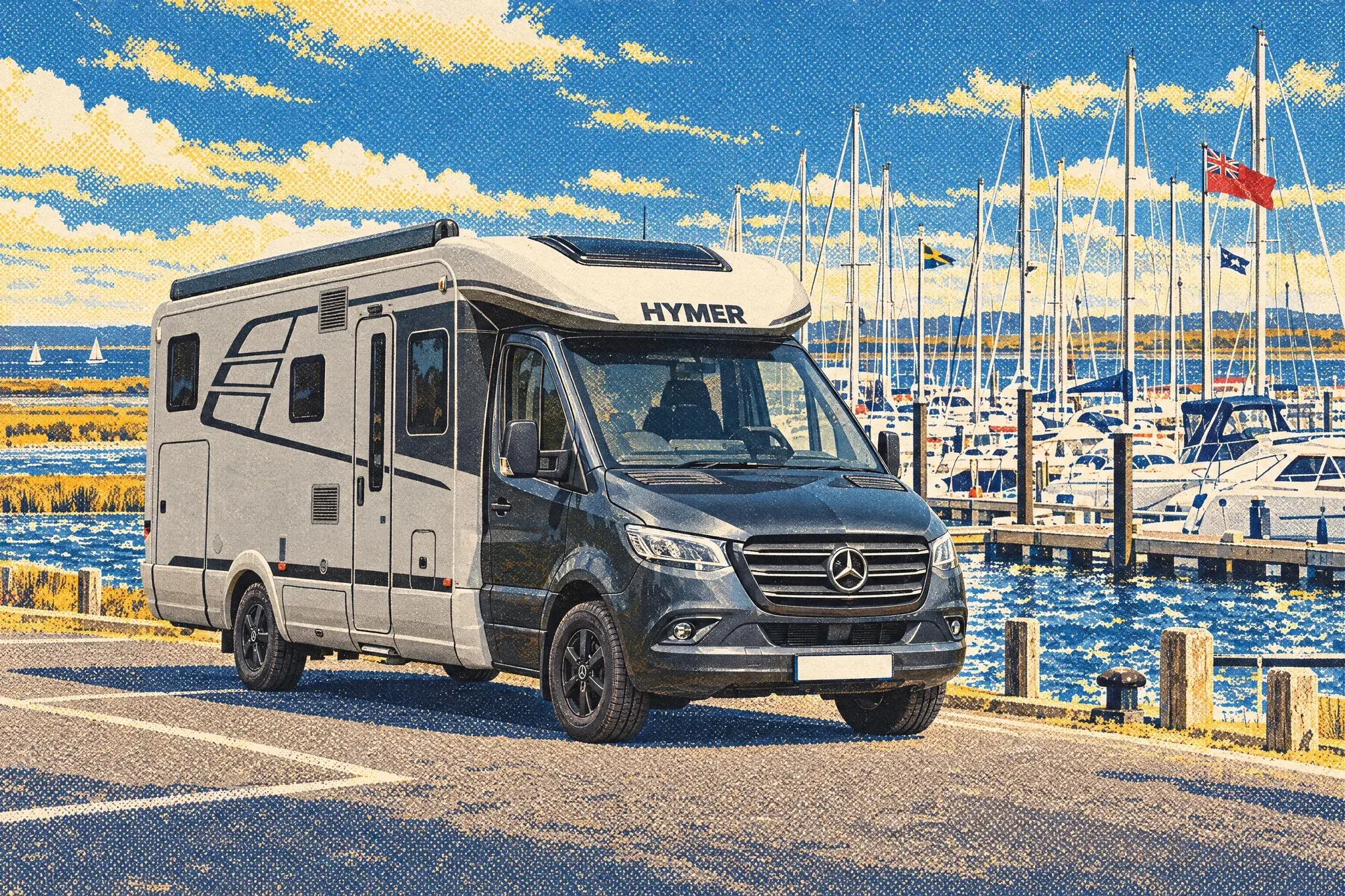
Spend £166,000 on a semi-integrated Hymer and you are not really buying a vehicle, you are buying a small, beautifully built home that happens to drive: a Mercedes or Fiat base, proper four-season insulation, a drop-down bed and a fixed one, a real washroom, and a long list of options to make it your own. Whether it is worth every penny comes down to how you travel. For people who tour often, in all weathers, and keep their vans for years, it is a genuine joy and easy to justify; if you only get away a fortnight a year, there is just as much fun to be had for far less. The trick is in the details: nail the payload, keep an eye on the licence weight, and pick the options that earn their place. Below: where the money really goes, and how to make every pound count.

A £166,000 motorhome stops people in their tracks. It is more than many UK homes outside the South East, and it is a lot of money for something that spends most of the year parked on a driveway. So the first honest question is not whether it is worth it, but where exactly the money goes, and whether the person buying it is the person it was built for.
This is a calm, detailed walk through what a semi-integrated Hymer in that price bracket actually delivers. We will look at the build, the base vehicle, the running costs, the licence and weight realities, and the day-to-day living. We will also be honest about who should think twice. By the end you should be able to look at a six-figure motorhome and know, fairly quickly, whether it is the right tool for the way you travel or simply a very expensive way to feel underwhelmed.
First, what "semi-integrated" actually means
Motorhome bodies usually fall into three broad shapes, and the names get used loosely, so it helps to be precise.
The three main body styles
- Coachbuilt or low-profile: The cab of the base van stays, and a habitation body is built behind and above it. A low-profile keeps the roofline low to save fuel and reduce wind drag, so there is no big bed pod over the cab.
- Semi-integrated: This is essentially a refined coachbuilt. You keep the original cab doors, windscreen and dashboard of the base vehicle, but the habitation body is designed to flow into the cab as seamlessly as possible. Many semi-integrated layouts add a drop-down bed that tucks into the ceiling above the cab and lowers at night, giving you the sleeping capacity of an overcab model without the permanent bulk.
- A-class or fully integrated: The whole front end is replaced. The original windscreen and cab doors are gone, swapped for a wide, panoramic bespoke front. These are the largest, most expensive, most living-room-like motorhomes.
A semi-integrated sits in the sensible middle. You get most of the living space and finish of a big motorhome, but you keep the familiar cab of the base vehicle, which usually means lower cost, better visibility, simpler repairs, and a slightly smaller, easier-to-drive footprint than a full A-class. At £166k you are looking at a top-tier example, often with a drop-down bed, a fixed rear bed, a generous washroom, and a long list of factory options.
Where £166,000 actually goes
It is tempting to assume a six-figure price is mostly badge and showroom theatre. Some of it is brand, of course. But a surprising amount is genuine cost, and understanding the split helps you judge value rather than just react to the number.
The base vehicle
Most semi-integrated Hymers are built on a Mercedes-Benz or Fiat chassis cab. A Mercedes Sprinter base, in particular, pushes the price up considerably before a single screw of furniture goes in. A modern Sprinter chassis cab with the right engine, automatic gearbox, and uprated running gear can account for a very large slice of the total. You are buying:
- A strong, well-supported commercial chassis designed to carry weight all day.
- A modern diesel engine, often paired with an automatic gearbox that makes a three-and-a-half-tonne-plus vehicle genuinely relaxing to drive.
- Driver aids that were science fiction a decade ago: adaptive cruise, lane keeping, autonomous emergency braking, hill descent control, and a reversing camera as standard or near-standard.
The base vehicle is not a detail. It is the single biggest reason two motorhomes of similar size can differ by tens of thousands of pounds. A Sprinter-based build will usually carry a meaningful premium over the same body on a more budget-friendly chassis, and that premium is real engineering, not marketing.
The body and how it is built
This is where the long-term value of a motorhome is decided, and where the cheapest models cut corners you cannot see on a forecourt. Premium semi-integrated Hymers are built to resist water ingress, the single biggest killer of motorhome value and the most expensive thing to put right years down the line.
Construction features that justify part of the cost include:
- Wood-free or aluminium-framed walls and floors in many models, designed so that even if water gets in, there is far less to rot.
- Thick, bonded sandwich panels with good insulation values, which matter enormously if you intend to use the van in a British winter rather than just two weeks in August.
- A double floor on some layouts, creating a heated, insulated cavity that protects pipes and tanks from freezing and adds huge amounts of usable storage.
- Quality seals, windows and rooflights that hold up to years of motorway buffeting and rain.
None of this is glamorous. You cannot photograph it for a brochure. But it is precisely the part of a six-figure motorhome that earns its money over ten or fifteen years.
The habitation kit
Then there is everything that turns a van into a home. At this price you typically get:
- A sophisticated heating system, often diesel-fired, that warms both the living space and the hot water and runs without needing gas.
- A large fridge, frequently a compressor model that works on a hot day without sulking.
- A proper washroom with a separate shower in many layouts, a bench toilet, and real storage.
- A lithium leisure battery setup, or at least the wiring and capacity to add solar and lithium, giving you days of off-grid power.
- Soft-close furniture, quality upholstery, ambient lighting, and a level of finish that genuinely does feel a cut above mid-market.
The options list
Here is the part buyers underestimate. The headline price of a Hymer is rarely the price people actually pay. Factory options stack up fast: a particular paint finish, a larger battery and solar package, a satellite dish, a heavier chassis upgrade, a tow bar, leather-effect seating, a reversing camera package, awnings, bike racks, and so on. It is entirely possible for many thousands of pounds of options to sit inside that £166k figure. When you compare two vans, always compare the specification, not just the badge.
The licence and weight question you must sort first
This is the single most important practical point, and it catches people out constantly. A large semi-integrated motorhome can weigh more than you are legally allowed to drive on an ordinary modern UK licence.
What your licence actually lets you drive
If you passed your car test on or after 1 January 1997, your standard category B licence generally allows you to drive a vehicle up to 3,500kg maximum authorised mass (MAM). That is the fully loaded weight limit the vehicle is plated at, not the empty weight.
If you passed before 1 January 1997, you very likely hold grandfather rights under category C1, which lets you drive vehicles up to 7,500kg. Many older buyers have this without realising it, which is one quiet reason the larger motorhome market skews towards people in their late fifties and beyond.
Why this matters at £166k
A well-equipped semi-integrated Hymer with a fixed bed, a big washroom, a full water tank, and a couple of weeks of belongings can sit very close to, or beyond, 3,500kg. Manufacturers often offer chassis upgrades that re-plate the vehicle to a higher limit. Those higher plates need a C1 licence to drive legally.
So before you spend anything like this kind of money:
- Check which licence categories you actually hold. Look at the back of your photocard for the category codes.
- Decide honestly how much you will carry. Two adults, a full water tank, an awning, bikes, an e-bike or two, levelling ramps, outdoor furniture and a fortnight of food add up alarmingly quickly.
- Ask for the real payload figure, in writing, for the exact specification you are buying, not the brochure best case.
The number that matters is not the price and it is not the empty weight. It is the payload: how much you can legally load before you hit the plated limit. A beautiful motorhome you cannot legally pack for a family holiday is a very expensive mistake.
The medical and renewal side of C1
If you need C1 and do not have it, you can take a test for it, but it requires a medical and the entitlement is renewed in shorter cycles once you pass a certain age. None of this is a dealbreaker, but it is a real consideration that should be sorted before you commit, not after.
What it is genuinely like to drive
People imagine a vehicle this size is a chore. In practice, a modern semi-integrated Hymer on a Mercedes or Fiat base, particularly with an automatic gearbox, is far easier to live with than the dimensions suggest.
The reassuring parts
- Visibility is good. You sit high, the mirrors are large, and a reversing camera takes the fear out of parking and hitching.
- The automatic gearbox transforms it. Crawling in traffic, reversing onto a pitch, and pulling away on a hill all become non-events. If you are buying at this level, an automatic is worth every penny.
- The driver aids genuinely help. Adaptive cruise on a long motorway run reduces fatigue enormously, and lane-keeping plus emergency braking add a real safety margin.
The parts that take adjustment
- Width and height awareness. You learn to read height-restriction signs, low branches, and narrow lanes in a way car drivers never have to. The first few hedgerows in Devon or Cornwall focus the mind.
- Wind. A tall, flat-sided body catches crosswinds on exposed bridges and motorways. It is manageable, but you drive with two hands and you slow down when the gusts pick up.
- Fuel and pace. This is not a vehicle to hurry. Settle into a steady motorway cruise and it rewards you. Push it and the fuel economy and the stress both get worse.
The running costs nobody puts on the brochure
The purchase price is the start, not the end. Six-figure motorhomes carry six-figure-adjacent running realities, and going in clear-eyed is the difference between joy and resentment.
Fuel
Expect somewhere in the region of 25 to 30 miles per gallon on a steady run, less if you are loaded, towing, or in hilly country. On a long touring summer that adds up, but most owners are surprised that fuel is not their biggest cost. The bigger numbers are elsewhere.
Insurance
Specialist motorhome insurance for a vehicle of this value is not cheap, but it is often more reasonable than people fear because motorhomes are used carefully, parked securely, and driven relatively few miles. Expect to pay more than a family car but far less, proportionally, than the purchase price implies. Limited annual mileage, secure overnight storage, an alarm and a tracker all bring the premium down. Agreed-value cover is worth asking about so that a total loss pays out a fair figure rather than a depreciated guess.
Depreciation
This is the honest big one. Like almost any vehicle, a motorhome loses value, and the steepest drop happens in the first few years. A premium brand with a strong reputation for build quality tends to hold value better than budget alternatives, which is one of the quiet arguments for spending more in the first place. But you should still expect to lose a meaningful chunk over the first three to five years. If you buy nearly new rather than brand new, you let someone else absorb the steepest part of that curve.
Depreciation is a structural reality of the market, not a flaw in any one product. The key is to go in understanding it, so the eventual resale figure does not come as a shock.
Servicing and habitation checks
You have two things to maintain, not one:
- The base vehicle needs servicing like any van, on its own schedule, plus an MOT once it is old enough.
- The habitation body needs an annual habitation service. This checks the gas system, the electrics, the water system, the damp readings, and the seals. It is the single most important thing you can do to protect both your safety and your resale value, and it is the check that proves the body has been looked after.
Budget for both every year. The habitation service in particular is non-negotiable if you ever want to sell the van with a clean history, and the damp readings it records are the first thing a sensible future buyer will ask to see.
Storage
Unless you have a long driveway and tolerant neighbours, you will likely pay for secure storage. A good CaSSOA-rated storage site costs a few hundred to over a thousand pounds a year depending on location and whether it is indoor or outdoor. It also tends to lower your insurance, so part of the cost pays for itself.
Pitch fees, tolls and extras
On the road there are campsite fees, the occasional aire or stopover charge, ferry surcharges for oversized vehicles, and toll bands on the continent that put motorhomes in a higher category. None of these are huge individually, but they belong in your annual budget.
Living in it: what the layout gives you
At £166k you are not buying a vehicle, you are buying a small home that moves. The layout is where the money turns into daily life, and it is worth understanding what the typical premium semi-integrated arrangement offers.
Sleeping
Many semi-integrated layouts give you two distinct sleeping options:
- A fixed rear bed, often a French bed angled into a corner, a pair of single beds, or a full transverse double. A fixed bed means you never have to make and unmake a bed every night, which sounds trivial until you have done it for a week.
- A drop-down bed over the cab, electrically lowered at the press of a button. By day it tucks invisibly into the ceiling. By night it gives you a second comfortable double without sacrificing the lounge. This is the signature trick of a good semi-integrated and a genuine reason to choose this body style.
The lounge and dining
The half-dinette or full-lounge seating doubles as the social heart of the van. With the cab seats swivelled round, you get a proper sitting room. This is where good design shows: comfortable backrests, sensible table positions, decent reading light, and somewhere to put a mug of tea that will not slide off on a bend.
The kitchen
Expect a three-burner hob, a sink, a compressor fridge of meaningful size, and on some layouts an oven and grill. The worktop space is always at a premium in any motorhome, so look at where you will actually chop, plate up, and put the kettle. Drawers on soft-close runners, deep storage, and a fridge you can use on a hot day without it giving up are the differences you feel daily.
The washroom
A separate shower cubicle is one of the real luxuries that the larger semi-integrated layouts offer. No more showering in a space where the toilet roll gets soaked. Good ventilation, a heated towel rail in some models, and proper storage for toiletries turn the washroom from a wet box into something you are genuinely happy to use every day for two weeks.
Storage and the garage
Rear "garage" storage, accessed by an external door, is a defining feature of many of these layouts. It swallows e-bikes, folding chairs, a barbecue, levelling ramps and the inevitable bag of cables. On double-floor models the garage and the underfloor cavity together give you storage that smaller vans simply cannot match. Just remember every kilo you put in there comes off your payload.
The off-grid and tech reality
One of the strongest arguments for spending at this level is genuine independence from hook-up. A well-specified semi-integrated Hymer can run for days without plugging in, and that changes how and where you can travel.
Power
A lithium leisure battery, decent solar on the roof, and a smart charging system mean you can wild-camp responsibly, use aires and farm stopovers, and not panic about the fridge or the heating overnight. Lithium holds more usable energy, charges faster, and lasts more cycles than older battery types, which is why it has become the expectation at this price. If a van at this level does not have lithium, ask why, and ask what it would cost to upgrade.
Heating and hot water
A diesel-fired combi heater that does both space heating and hot water from the same fuel tank as the engine is a genuinely clever bit of kit. It means you are not constantly worrying about gas bottles, and it makes proper winter use realistic. Underfloor warmth on double-floor models and well-insulated walls turn a frosty morning into a non-event. This is the difference between a van that gets used three months a year and one that gets used twelve.
Connectivity
Many owners now add a roof-mounted 4G or 5G system or a satellite-based internet kit, plus a good aerial for terrestrial TV. None of this is essential, but if you intend to work from the van or simply want reliable weather forecasts and maps in remote spots, it is worth budgeting for.
Who this is genuinely for
This is the heart of the matter. A £166k semi-integrated motorhome is a brilliant tool for some people and a poor decision for others. Honesty here saves a fortune.
It suits you if you travel often and for real
The maths only works if you use it. Someone who takes the van out most months, does long trips through spring, summer and autumn, and tours in the shoulder seasons when sites are quiet, gets enormous value from a vehicle built to be lived in. The build quality, the insulation, the off-grid independence and the comfort all earn their keep when the van is doing thousands of miles a year and dozens of nights.
It suits you if you want to tour comfortably in cold weather
If your idea of a good trip is the Scottish Highlands in October, the Lake District in early spring, or an alpine drive in the colder months, the insulation, double floor, and diesel heating of a premium build are not a luxury, they are the reason the trip is enjoyable rather than miserable. A budget van in a British winter teaches you exactly what you paid less for.
It suits you if you want to keep it for years
The strongest financial case for buying quality is keeping it. Depreciation hurts most in the early years and softens over time. An owner who buys a well-built van and keeps it for a decade, servicing it properly and keeping the damp readings clean, spreads that cost over so many trips that the per-night figure becomes genuinely reasonable. The buyer who trades up every two years pays the most for the privilege.
It suits you if comfort and reliability matter more than novelty
If you value a vehicle that starts every time, holds its value, has a strong dealer and parts network, and is comfortable enough that two people can live in it happily for a fortnight without falling out, then the premium is buying you peace of mind. That is a perfectly rational thing to spend money on.
Who should think twice
Equal honesty the other way. There are people for whom this is the wrong purchase, and it is kinder to say so.
The occasional user
If you will use it three or four weekends a year and one summer trip, the cost per night is brutal, and the depreciation alone will dwarf what you would pay to hire a high-spec motorhome for those same weeks. Renting, or buying something far cheaper and simpler, makes more sense for genuinely light use.
The driveway dreamer
Plenty of motorhomes are bought on a wave of enthusiasm and then sit on the drive while life gets in the way. If you are honest with yourself and the trips are more aspiration than plan, start smaller, or hire first, and prove to yourself that the lifestyle fits before committing six figures.
The buyer who cannot drive the weight
If you only hold a category B licence and the van you love comes in at, or can be loaded beyond, 3,500kg, you have a real problem. Either you choose a lighter layout you can legally load, you go through the C1 test and medical, or you walk away. Buying it and hoping is not an option that ends well.
The space-and-access constrained
If you live on a tight street, have nowhere to store a large vehicle, and your favourite destinations are reached down single-track lanes, a vehicle this size will fight you. Be honest about where you actually want to go and whether you can get there comfortably.
New versus nearly new versus pre-owned
You do not have to buy brand new to get into a premium semi-integrated Hymer, and there is a strong argument for not doing so.
Brand new
Buying new gets you exactly the specification you want, the full manufacturer warranty, the latest base vehicle and driver aids, and the reassurance of a clean history. You also absorb the steepest part of the depreciation curve. If you intend to keep the van for a decade, that early loss matters far less because you spread it over so many years of use.
Nearly new (one to three years old)
This is often the sweet spot. Someone else has taken the biggest depreciation hit, the van is still modern and under or near warranty, and you can frequently find a high-specification example for meaningfully less than its original list price. The key is to check that the habitation services have been done every year and the damp readings are clean.
Older pre-owned
A well-cared-for older premium motorhome can be superb value, because the build quality means it ages well. But the older it is, the more important the inspection becomes. The single biggest risk is hidden water ingress, which is expensive and sometimes uneconomic to repair. Never buy an older example without a recent, clean habitation damp report or an independent inspection.
What to check before you hand over the money
Whatever you buy, run through this before you commit. It applies whether you are spending £166k new or a fraction of that on a used example.
- The real payload. Ask for the figure for the exact van, exact specification, with full water and the options fitted. Then mentally load it with everything you carry and see what is left.
- Your licence category. Confirm you can legally drive the plated weight. If not, plan the C1 route before buying.
- The habitation service history. Every year, no gaps. The damp readings are the health record of the body.
- Damp, everywhere. Around windows, rooflights, the rear corners, the floor edges, and inside lockers. Any musty smell or soft spot is a red flag worth thousands.
- The base vehicle service history and MOT. Two vehicles in one, both need a clean record.
- The electrics under load. Run the heating, the fridge, the water pump and the lights together and watch the battery behave. Confirm the solar and the charger actually work.
- Every appliance. Light the hob, run the hot water, test the heating, check the fridge gets cold, flush the toilet, run the shower.
- The seals, awning and slide-outs. Anything that moves or seals is a future leak point if neglected.
- The tyres' age, not just their tread. Motorhome tyres often perish from age and standing before they wear out. Check the date codes.
- How it drives. Take a proper test drive, ideally including a motorway and a tight manoeuvre. Make sure you are comfortable with the size before, not after, you buy.
The honest cost-per-use sum
Here is a way to think about the money that cuts through the sticker shock. Take the price, subtract a realistic resale figure for when you expect to sell, and add up your running costs for the years in between. Then divide by the number of nights you will genuinely spend in it.
An owner who keeps a £166k van for ten years, loses a large but slowing chunk to depreciation, spends sensibly on servicing, insurance, storage and fuel, and uses it for, say, eighty nights a year, ends up with a per-night cost that is far lower than people assume. An owner who keeps the same van for two years and uses it for fifteen nights a year ends up with a per-night cost that is genuinely eye-watering.
The vehicle is identical. The value is entirely decided by how much you use it and how long you keep it. That is the single most useful sentence in this whole guide.
Why the premium can be rational, not indulgent
It is easy to look at a six-figure motorhome and assume it is pure indulgence. Sometimes it is. But for the right owner there are sound, unsentimental reasons the premium makes sense.
- Build quality protects resale. A van that resists damp and ages well holds more of its value, narrowing the gap between what you paid and what you get back.
- Insulation extends the season. A van you can use comfortably twelve months a year is, in use terms, worth far more than one limited to high summer.
- Reliability protects your trips. A breakdown on the first morning of a long-planned trip costs more than money. Quality reduces the odds of that happening.
- Comfort protects the relationship. Two people living in a small space for a fortnight need it to work. A separate shower, a fixed bed, proper heating and decent storage are the difference between a trip you repeat and one you never mention again.
The bottom line
A £166,000 semi-integrated Hymer is not a con and it is not a status toy, although it can become either in the wrong hands. It is a carefully built, comfortable, genuinely capable touring home, sitting in the sensible middle ground between a coachbuilt and a full A-class. The money goes into a strong base vehicle, a body engineered to resist the things that destroy motorhome value, a long list of off-grid and comfort kit, and a finish that holds up over years of real use.
It is the right buy for someone who travels often, tours in the cold months, keeps their vehicles for years, and values comfort and reliability over novelty. It is the wrong buy for the occasional user, the driveway dreamer, the buyer who cannot legally drive the weight, and anyone whose favourite lanes are too narrow for a vehicle this size.
Before you spend anything close to this, do three things in order: confirm your licence covers the plated weight, get the real payload in writing and load it in your head, and check the habitation service history and damp readings of any specific van. Get those right and you are buying a tool that will give you years of brilliant travel. Get them wrong and you are buying a very expensive lesson.
The number on the windscreen is only the beginning of the story. The real value is written in how many nights you spend out in it, how long you keep it, and how well it was built to survive both. Judge it on that, and a six-figure motorhome stops looking like madness and starts looking like a decision you can make with your eyes open.
Common questions
What does semi-integrated mean on a motorhome?
Semi-integrated, sometimes called low-profile, keeps the original van cab and windscreen but has the converter build the body behind it, usually without a bed over the cab. It sits between a panel-van conversion and a full A-class, giving a sleeker, lower profile than an A-class while keeping the familiar cab.
Where does the money go on a six-figure motorhome?
Into the base vehicle, the body construction and insulation, the habitation kit and a long list of factory options. At this level you typically get a drop-down bed, a fixed rear bed, a generous washroom and genuine cold-weather capability. It is entirely possible for many thousands of pounds of options to sit inside the headline price.
What licence do I need for a semi-integrated Hymer?
A standard category B licence covers up to 3,500kg, and a well-equipped semi-integrated Hymer with a fixed bed, big washroom and a full water tank can sit very close to or beyond that when loaded. Higher plates need category C1, which drivers who passed before 1 January 1997 usually hold already, while those who passed later need a test and medical.
What does a high-end motorhome cost to run?
Expect roughly 25 to 30 miles per gallon on a steady run, less when loaded or in hilly country, plus specialist insurance, secure storage, annual servicing and habitation checks, pitch fees and tolls. Depreciation is the biggest cost but slows over time, so a van kept for years and used for many nights a year can work out at a surprisingly low cost per night.
Is a 166,000 pound motorhome worth it?
It is a brilliant tool for some and a poor decision for others. It is right for someone who travels often, tours in the cold months, keeps their vans for years and values comfort and reliability over novelty. It is wrong for the occasional user, the driveway dreamer, anyone who cannot legally drive the weight, and anyone whose favourite lanes are too narrow for a vehicle this size.
The reachable bit
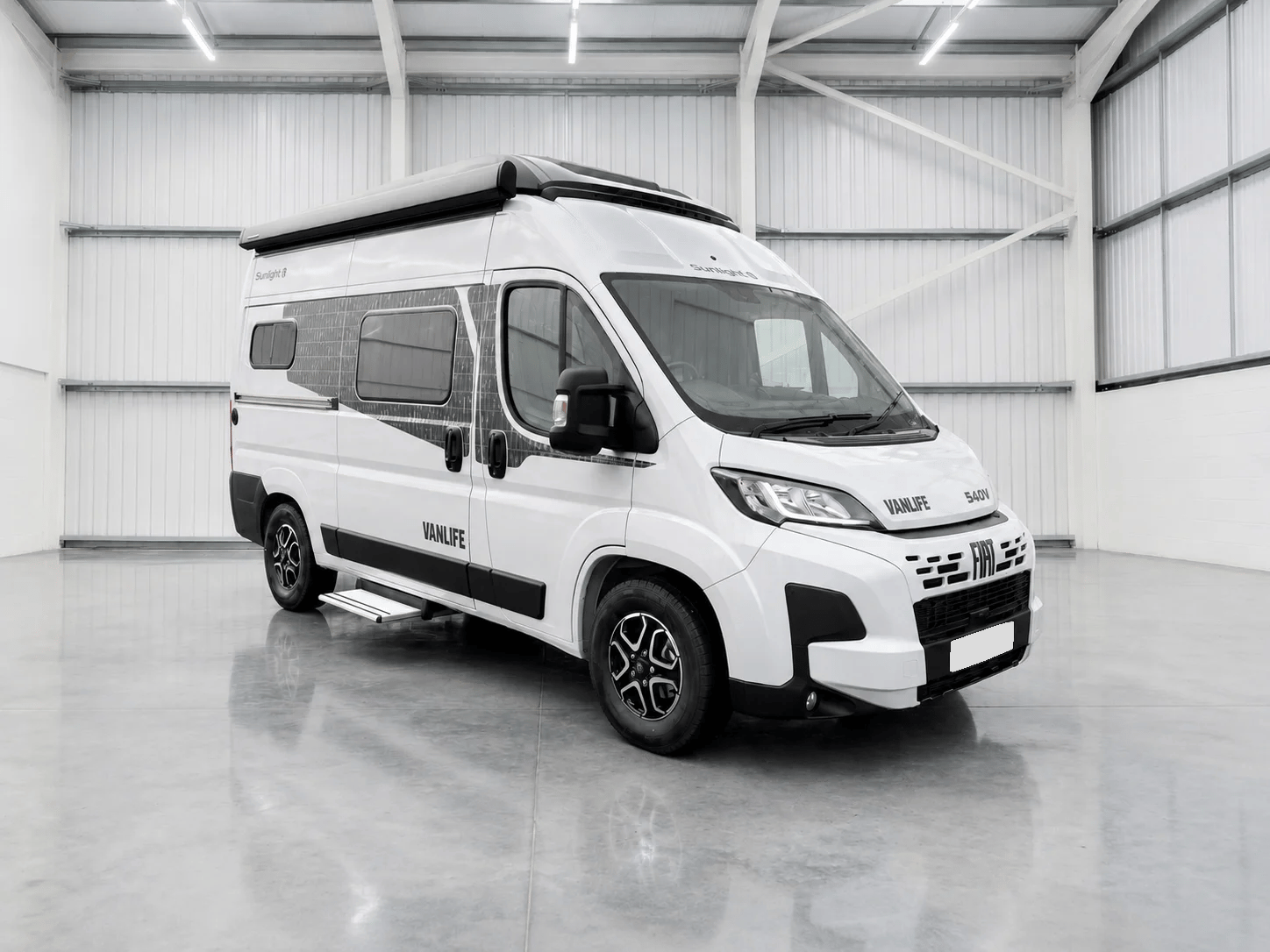
The camper you fall for is rarely the one you can afford. That gap is the whole reason Campervan.win exists. Right now we’re giving away the Sunlight Vanlife, worth around £65,000, and closing that gap is the point: capped entries so the odds stay honest, £10 a ticket, a maximum of five per person, £500 to a UK charity from every full draw, the winner picked by a public randomness beacon anyone can re-check, and one person driving away in the van itself.
Enjoyed this post?
Get more honest campervan guides like this one in your inbox.
You’re in!
Check your inbox. We’ve just sent you a welcome email.

About the author
Arthur
Arthur writes buying guides, comparisons, and in-depth explainers to help readers choose the right campervan or motorhome with confidence.
Keep Reading
Related Reading
Thoughtful articles that build on what you’ve just read.
Motorhome Buying Guides
12 min read
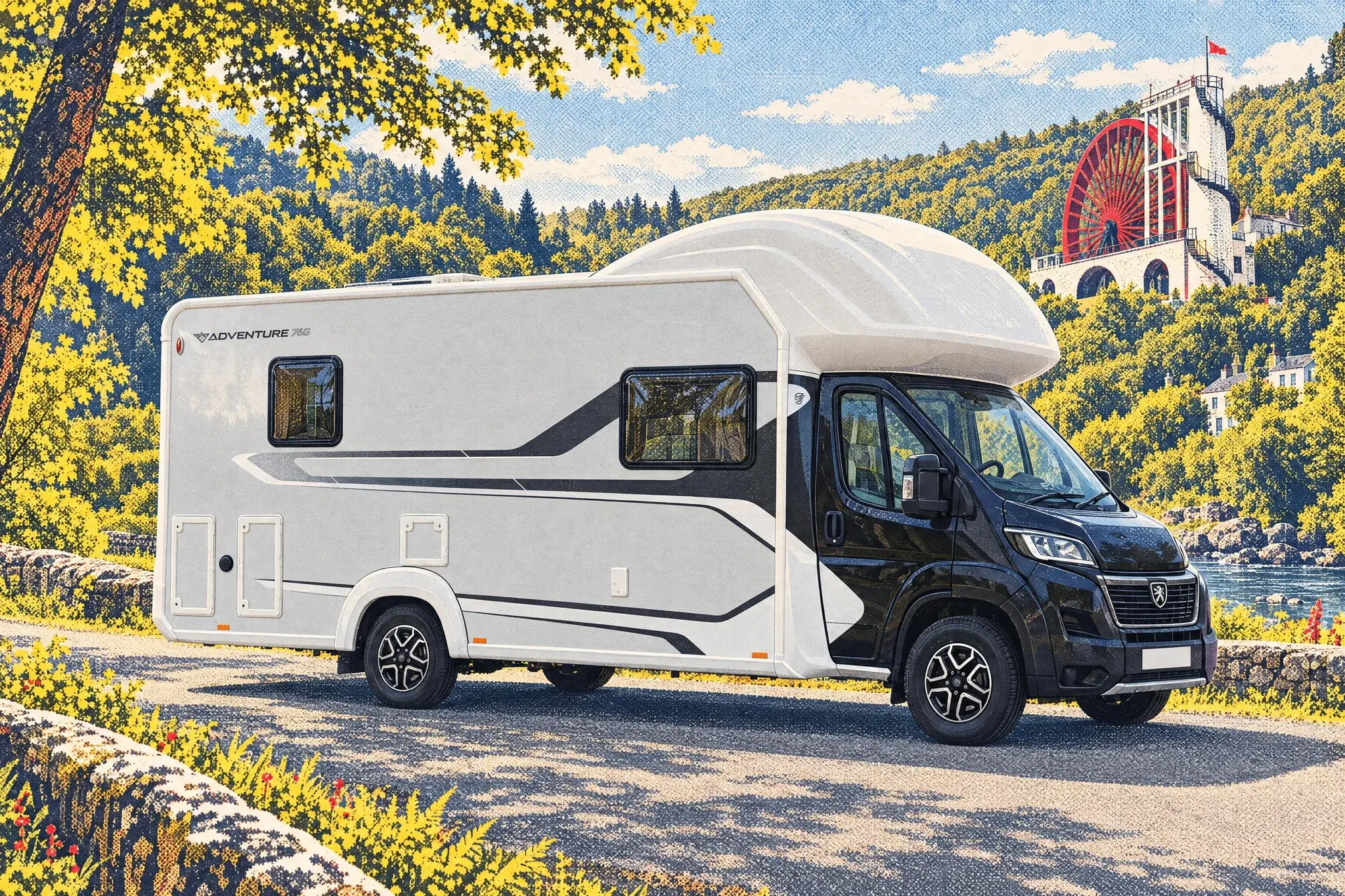
Auto-Trail Adventure 2027: the overcab is back, and two options change your licence
Auto-Trail's new Adventure coachbuilt puts a permanent bed over the cab of a Peugeot Boxer and prices the long models at £71,000 ex-works. Here is why that layout suits a family of four, and the weight, licence and payload questions to settle before you sign.
Motorhome Buying Guides
14 min read
Family motorhomes at the NEC for 2027: belts, beds and the payload sum that decides them
The 2027 family layouts at the NEC sleep four to seven, but the numbers that decide whether they work for your family are the belted seats, the Isofix points and the weight left once everyone is aboard. We do the sums model by model.
Motorhome Buying Guides
10 min read
Buying a motorhome at the NEC: what you commit to when you sign on the stand
A plain-English explainer on what a signature on a show stand at the NEC commits you to: cancellation rights that are not as clear as people think, what happens to a deposit, why withdrawing from finance does not cancel the van, why Section 75 rarely covers a motorhome deposit, and your rights if the van arrives faulty.
Motorhome Buying Guides
9 min read
NEC show offers 2026: how to judge the Auto-Sleepers, Auto-Trail and Marquis deals
The October 2026 NEC show offers from Auto-Sleepers, Auto-Trail dealers and Marquis Leisure, decoded: what each free pack is worth to you, what it weighs, what a heavier plate means for your licence and tax, and the questions to settle before you sign.