
What €125k French A-class build quality actually buys you: the Rapido 8096dF as a case study

Written by
Arthur
Arthur writes buying guides, comparisons, and in-depth explainers to help readers choose the right campervan or motorhome with confidence.
The short answer
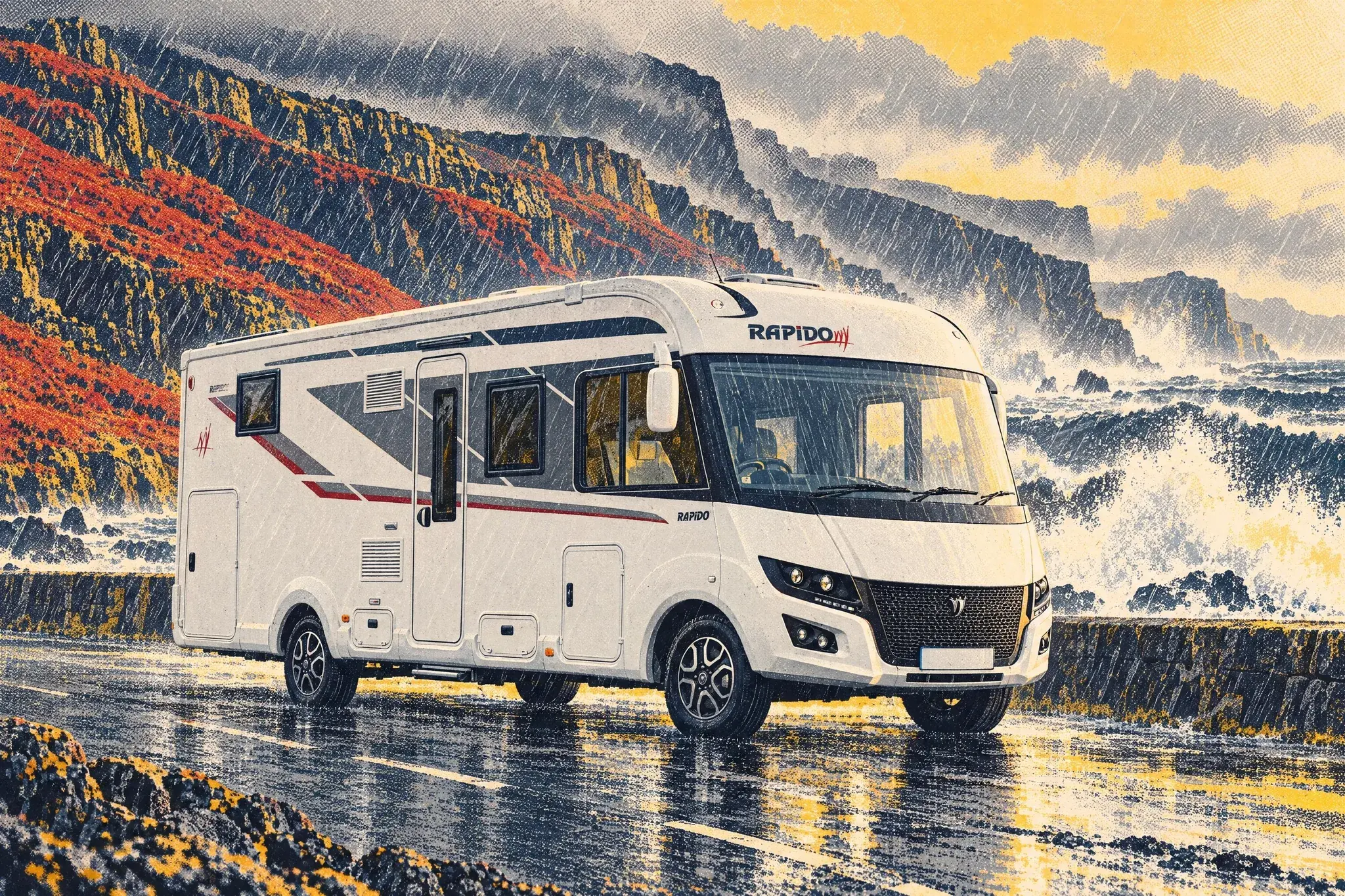
At the roughly €125k tier, a French A-class like the Rapido 8096dF buys you a fully integrated bodyshell built on an upgraded motorhome chassis, GRP sandwich walls and a heated double floor, a panoramic single-piece windscreen, a large electric drop-down bed, and furniture and habitation engineering designed to last decades. You are paying for thermal performance, structural integrity and finish, not just size.

A-class motorhomes look expensive because they are. When you see a sticker near €125,000 on a vehicle like the Rapido 8096dF, the natural question is simple: where does the money actually go? It is a fair thing to ask, because from ten paces an A-class and a much cheaper coachbuilt can look similar. Both have a bed, a kitchen, a shower and an engine.
The difference is mostly in the parts you cannot see from the forecourt. This piece uses the 8096dF as a worked example to explain what premium French A-class construction buys you, what it does not, and how to judge whether that gap is worth the money for the way you actually travel. We will keep the claims honest and flag where things vary by spec, because A-class motorhomes are highly configurable and two vans with the same model badge can weigh and cost quite differently.
What "A-class" really means
The term is about the cab, not luxury. An A-class is built as one continuous body from the ground up. There is no donor van cab bolted on the front. Instead the manufacturer takes a bare chassis-cab, often a stripped cowl version, and builds the entire living box and driving area as a single integrated shell.
That changes a lot:
- One single-piece windscreen instead of a commercial van's split screen, giving a wide, low, panoramic view of the road.
- A full-width dashboard built to the manufacturer's own design, usually with a large electric drop-down bed hidden above the cab.
- Continuous insulation across the front, where a normal coachbuilt has a metal van cab that leaks heat and cold.
- Two proper captain's seats that swivel into the lounge, rather than fixed commercial seats.
This is the headline reason A-class costs more before you even discuss materials. You are paying a manufacturer to engineer and build the front of the vehicle, not just fit out the back of one.
The chassis underneath, and why it matters
A motorhome this size is heavy and long, so the base it sits on does a lot of work. Larger A-class motorhomes are commonly built on a heavy-duty motorhome chassis variant rather than a standard panel-van floorpan, frequently with a lowered chassis frame that drops the floor and lowers the centre of gravity. That arrangement is what gives an A-class its low, planted stance and the room for a heated double floor.
I am going to be careful here rather than quote you an exact engine and drivetrain, because A-class ranges are offered with more than one chassis and power option and they change over model years. What matters for a buyer is to confirm three things in writing for the specific vehicle in front of you:
- The chassis type and rating. Is it the standard chassis or an upgraded heavy-duty one? This affects payload and how it drives loaded.
- The plated weight (MTPLM). Many A-class motorhomes sit at or above 3,500kg, and some are plated at 4,250kg or higher. In the UK that has real licence consequences, which we cover below.
- The engine and gearbox. Bigger A-class vans benefit from more torque and an automatic. Check the actual power figure on the V5 or order sheet rather than assuming.
Do not let anyone, including yourself, guess the donor base. Read it off the paperwork. It is the single most common thing people get wrong about their own motorhome.
Where the €125k really goes: the bodyshell
The biggest invisible spend is the construction of the living box. At this tier you are typically looking at a GRP (glassfibre) sandwich construction: a smooth, hail-resistant outer skin, a rigid insulating core, and an interior lining, bonded into stiff panels. Quality A-class builders extend that to the roof and floor, not just the walls.
What that buys you over a budget build:
A heated double floor
This is one of the defining features at the premium end. Instead of one floor, there are two, with a sealed insulated void between them. That void does several jobs. It keeps tanks, pipes and valves inside the warm envelope so they do not freeze. It provides large, dry, flat storage you can load heavily without affecting balance. And it raises the living floor to a single flat level with no steps, which makes the interior feel like a proper room.
Genuine cold-weather capability
Premium A-class motorhomes are often built and tested to a high winter-use standard, meaning the heating can hold a comfortable interior temperature in hard frost and the water system stays protected. If you intend to ski, tour Scotland in shoulder season, or simply not worry about a cold snap, this is a meaningful part of what you are paying for. A cheaper van can be used in winter, but you fight the cold rather than ignore it.
Resistance to water ingress
GRP outer skins do not dent or corrode the way aluminium can, and good bonding reduces the seams where water finds its way in. Water ingress is the quiet killer of motorhome value, so construction quality directly protects what the vehicle is worth in ten years. This is also why the habitation damp check at service time matters so much, regardless of how the van is built.
The drop-down bed and the cab
The electric drop-down bed over the cab is a signature A-class feature and a genuinely clever use of space. By day it sits flush against the ceiling. At night it lowers electrically to a full-size double, often a comfortable one with a proper sprung or foam mattress rather than a token cushion. It means you can have a permanent rear bed and a second full double without towing a longer van around.
The cab itself is where the money shows on a daily basis. The wide windscreen, the integrated dash with built-in screen and controls, the quality of the swivel seats, the cab blinds that seal the front against light and heat, and the sheer sense of space when you are sitting at the wheel. It is a calmer place to drive a big vehicle than a converted commercial cab, and that is worth a lot on a long French motorway haul.
Layout and living space in the 8096dF
The 8000-series Rapido sits in the longer, fuller end of the A-class range, around eight metres of vehicle. At that length you get the kind of layout that makes a motorhome feel like a home rather than a place to sleep: a generous lounge, a real kitchen with worktop and a proper fridge, a separate or semi-separate washroom, and a rear sleeping area, with the drop-down providing the second bed.
Rapido layout codes describe the bed arrangement, so models in this family are offered with different rear configurations such as a large rear bed or twin singles depending on variant. Rather than state the exact rear layout of the 8096dF as gospel, the sensible move is to view the floorplan for the specific model year you are buying, because manufacturers revise these. What you can rely on at this size and tier:
- A lounge that genuinely seats four to dine, with the swivelled cab seats forming part of it.
- A kitchen with usable counter space, a tall fridge-freezer, and real storage rather than token lockers.
- A washroom designed as a space you can move in, not a wet cupboard.
- Large external storage, often a rear garage tall enough for bikes or gear, plus the double-floor lockers.
The thing to test in person is daily flow. Can two people pass in the kitchen, make a hot drink and use the washroom in the morning without a traffic jam? At this length the answer should be yes, and that ease is a big part of why people step up to an A-class.
Fit, finish and the things that age well
Furniture is where premium build quietly justifies itself over years. Better cabinetry uses solid framing, dovetailed or pinned joints, soft-close metal drawer runners rated for heavy loads, and lockers that still shut squarely after thousands of miles of vibration. Cheaper furniture sags, the catches wear, and doors start to rattle. You will not notice the difference on a test drive. You will notice it on year five.
The same applies to:
- Habitation electrics: a properly specified power system, decent leisure battery capacity, and tidy, accessible wiring you can actually fault-find.
- Heating: a quality blown-air or wet heating system sized for the volume of the van, with ducting that reaches every corner including the washroom and double floor.
- Windows, blinds and seals: the bits you touch every single day, and the bits that fail noisily when they are cheap.
None of this is glamorous. All of it is where a long-life motorhome differs from one that feels tired quickly.
The UK realities you must check before you buy
A premium French A-class is a fine thing, but a few UK-specific points decide whether it suits you. Sort these before you fall in love with a floorplan.
Driving licence and weight
If you passed your car test in Great Britain after 1 January 1997, your standard category B licence generally covers vehicles up to 3,500kg. Many full-size A-class motorhomes are plated above that, or can be uprated above it, which requires category C1. If you passed before 1997 you very likely have C1 grandfather rights up to 7,500kg, but check your photocard. This single point rules some buyers in or out, so confirm the exact plated weight of the specific van.
Payload
Big motorhomes are heavy before you load them. Ask for the real, measured mass in running order for the actual van, not the brochure figure, and work out your remaining payload. Passengers, water, gas, bikes, an awning, food and clothes add up fast. A van plated at 3,500kg with a lot of fitted extras can leave you uncomfortably little headroom. Uprating the plate, where the chassis allows, is often the answer, but it usually pushes you into C1 territory.
Size on UK roads and sites
Eight metres is long, and an A-class is wide and tall. It is calm on motorways and main roads and excellent for touring the Continent, which is exactly what these are designed for. It is more of a handful on a tight Cornish lane or a small village. Check that your favourite sites and storage can take the length, and be honest about the kind of driving you enjoy.
Clean-air zones and running costs
A vehicle this size is not cheap to fuel or to service, and you should factor UK clean-air and low-emission zones into where you can drive an older example. Newer diesels generally meet current standards, but always check the specific vehicle against the zones you will use.
So is the premium worth it?
Here is the honest bottom line. The €125k tier is not buying you a bigger version of a budget van. It is buying you a different kind of vehicle: integrated construction, a heated double floor, serious thermal performance, furniture and systems built to last, and a cab that is genuinely pleasant to spend long days in.
If you tour a lot, travel in cold weather, and plan to keep the van for many years, that engineering pays you back in comfort and in how well it holds together. If you do a handful of summer weekends a year on UK sites, a much cheaper coachbuilt will do almost everything you need.
Use the 8096dF as a checklist rather than a conclusion. When you view any premium A-class, confirm the chassis and engine from the paperwork, get the real weight and payload, check the floorplan for the exact model year, open every drawer and locker, and sit in the cab for ten minutes imagining a long drive. Buy the construction and the way it suits your travelling, not the badge. That is what your money is really for.
Common questions
What makes an A-class motorhome different from a coachbuilt?
An A-class is built as one integrated body, including the driving cab, rather than fitting a living box onto a donor van's existing cab. This gives a single-piece panoramic windscreen, continuous insulation across the front, and usually a large electric drop-down bed over the cab.
Do I need a special licence to drive the Rapido 8096dF in the UK?
It depends on the plated weight. Many full-size A-class motorhomes are above 3,500kg or can be uprated above it, which needs category C1. If you passed your car test in Great Britain after 1997 you may only hold category B, so check the exact MTPLM of the specific van and your licence categories.
Why does an A-class cost so much more than a similar-sized coachbuilt?
Most of the extra money goes into things you cannot see on the forecourt: integrated cab construction, GRP sandwich bodywork, a heated double floor, higher cold-weather capability, and longer-lasting furniture and systems. You are paying for thermal performance, structural integrity and durability.
What is a heated double floor and why does it matter?
It is a second insulated floor with a sealed void above the real one. That void keeps tanks and pipes inside the warm envelope so they resist freezing, provides large flat storage, and creates a single step-free living floor. It is a key reason premium A-class motorhomes cope so well in cold weather.
How much should I worry about payload on a large A-class?
A lot. Big motorhomes are heavy before loading, so ask for the real measured running weight of the actual vehicle and calculate what is left for passengers, water, gas and gear. Some are plated tight at 3,500kg, and uprating the plate often pushes you into C1 licence territory.
The reachable bit
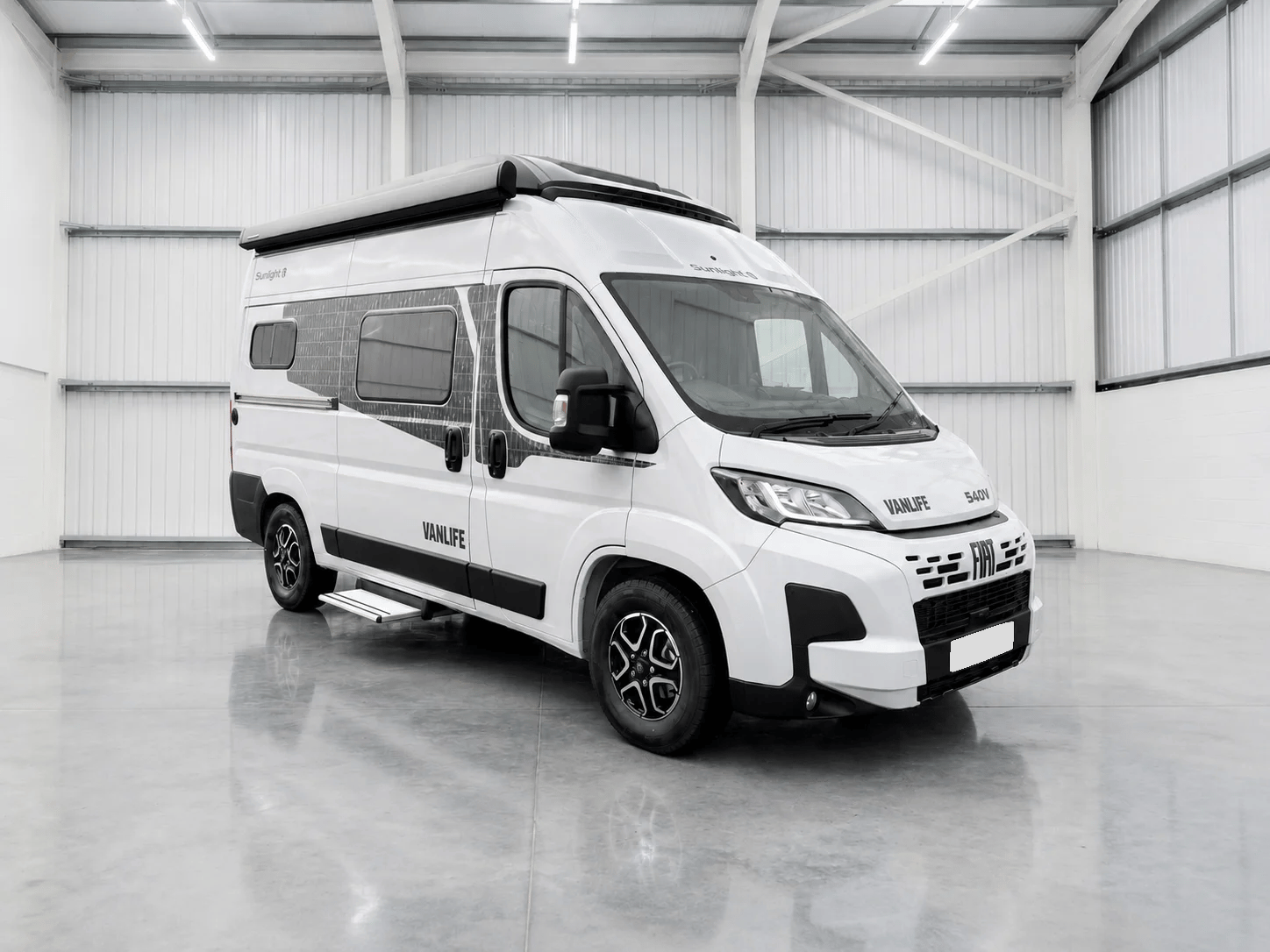
The camper you fall for is rarely the one you can afford. That gap is the whole reason Campervan.win exists. Right now we’re giving away the Sunlight Vanlife, worth around £65,000, and closing that gap is the point: capped entries so the odds stay honest, £10 a ticket, a maximum of five per person, £500 to a UK charity from every full draw, the winner picked by a public randomness beacon anyone can re-check, and one person driving away in the van itself.
Enjoyed this post?
Get more honest campervan guides like this one in your inbox.
You’re in!
Check your inbox. We’ve just sent you a welcome email.

About the author
Arthur
Arthur writes buying guides, comparisons, and in-depth explainers to help readers choose the right campervan or motorhome with confidence.
Keep Reading
Related Reading
Thoughtful articles that build on what you’ve just read.
Motorhome Buying Guides
12 min read
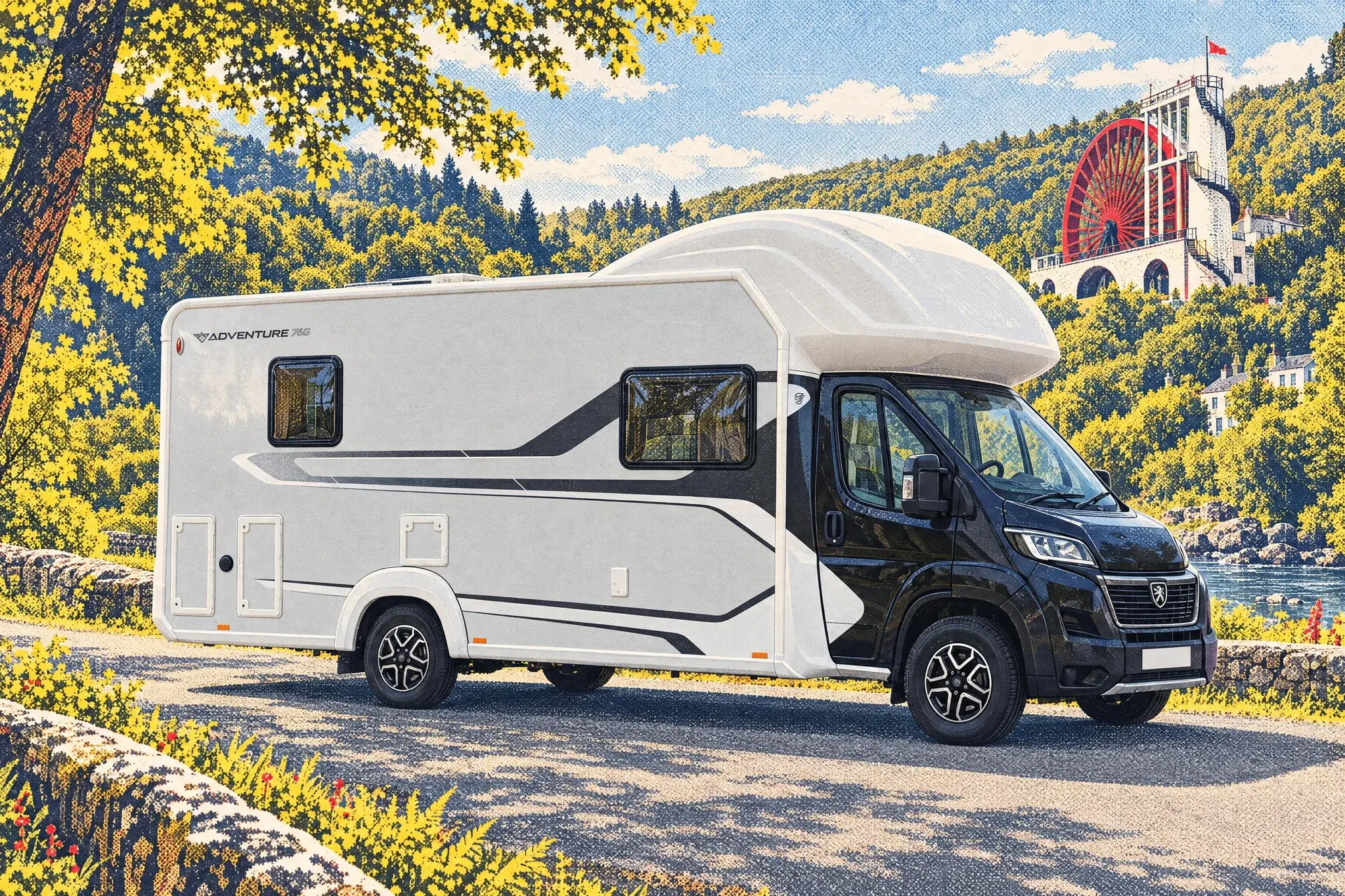
Auto-Trail Adventure 2027: the overcab is back, and two options change your licence
Auto-Trail's new Adventure coachbuilt puts a permanent bed over the cab of a Peugeot Boxer and prices the long models at £71,000 ex-works. Here is why that layout suits a family of four, and the weight, licence and payload questions to settle before you sign.
Motorhome Buying Guides
14 min read
Family motorhomes at the NEC for 2027: belts, beds and the payload sum that decides them
The 2027 family layouts at the NEC sleep four to seven, but the numbers that decide whether they work for your family are the belted seats, the Isofix points and the weight left once everyone is aboard. We do the sums model by model.
Motorhome Buying Guides
10 min read
Buying a motorhome at the NEC: what you commit to when you sign on the stand
A plain-English explainer on what a signature on a show stand at the NEC commits you to: cancellation rights that are not as clear as people think, what happens to a deposit, why withdrawing from finance does not cancel the van, why Section 75 rarely covers a motorhome deposit, and your rights if the van arrives faulty.
Motorhome Buying Guides
9 min read
NEC show offers 2026: how to judge the Auto-Sleepers, Auto-Trail and Marquis deals
The October 2026 NEC show offers from Auto-Sleepers, Auto-Trail dealers and Marquis Leisure, decoded: what each free pack is worth to you, what it weighs, what a heavier plate means for your licence and tax, and the questions to settle before you sign.