
Rapido explained: who builds these French A-class motorhomes and how they reach UK buyers

Written by
Rowan
Rowan writes editorial features, comparisons, and industry context pieces that help readers understand the campervan and motorhome landscape.
The short answer
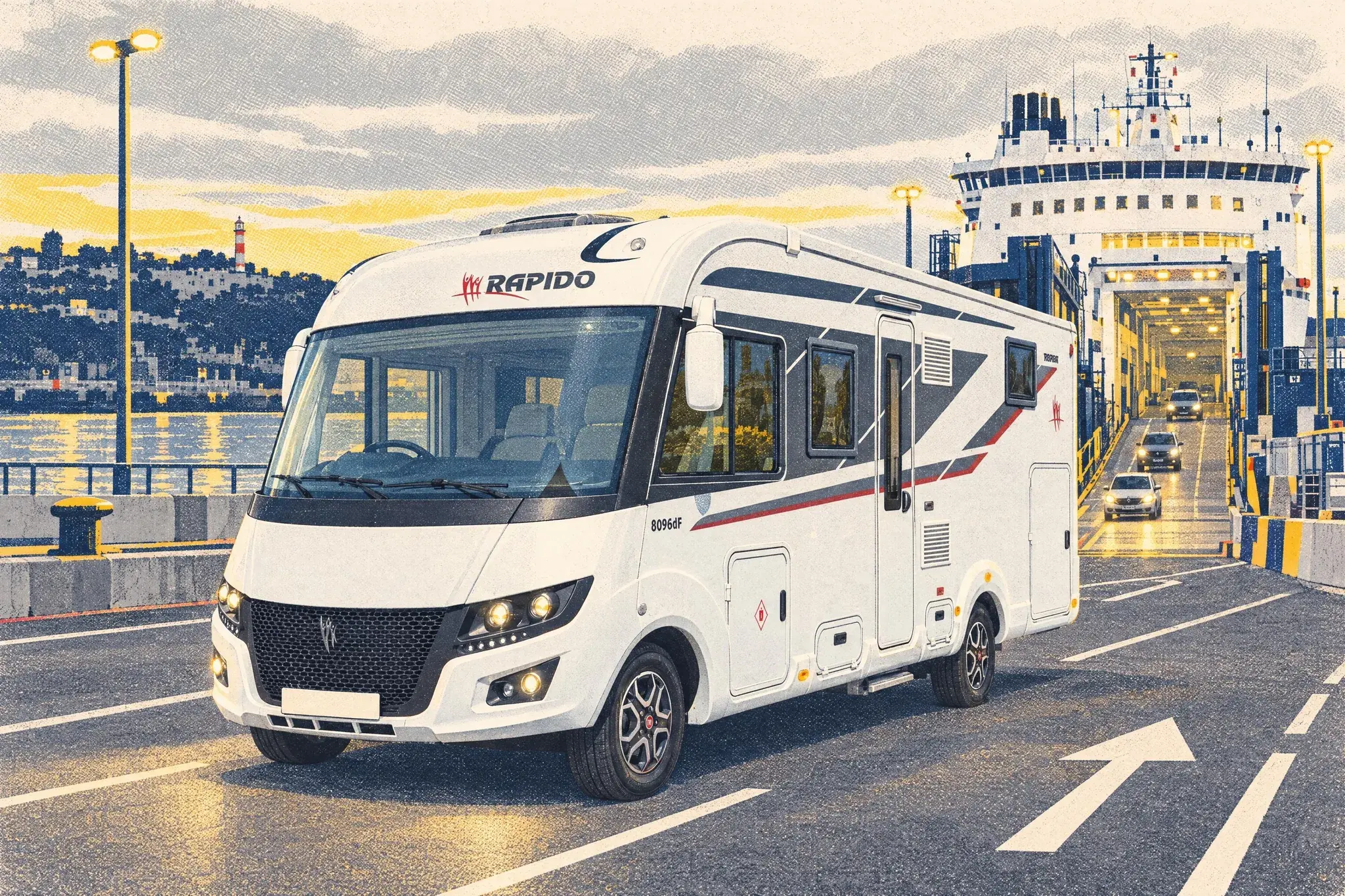
Rapido is a respected French manufacturer that has been building motorhomes since the 1980s, best known for beautifully made A-class vans on Fiat and Mercedes bases, and unlike many continental marques most reach the UK as proper right-hand-drive vehicles with dealer support behind them. What your money buys is serious body construction, real insulation and an interior built to be lived in for months rather than weekends, plus the airy, light-filled space only a true A-class delivers. It is a grown-up, long-term sort of purchase, so do the grown-up homework: check the licence and weight, do the payload maths, and insist on damp evidence and a test drive. Get that right and you buy with clear eyes. Here is who Rapido are, how they are built, and whether one is right for you.

You have probably seen one on a motorway slip road or parked up at a coastal site. A big, smooth-fronted motorhome with a single sweeping windscreen, no obvious cab doors interrupting the lines, and a quiet sense that it cost more than the van next to it. Quite often that van is a Rapido. The badge is French, the build is French, and yet a fair number end up living on British driveways. This guide explains exactly who Rapido are, what an A-class motorhome actually is, how these vehicles are put together, and the honest route they take to reach a UK buyer. No sales pitch, just the full picture so you know what you are looking at.
Rapido is one of those names that experienced motorhome owners say with a small nod of respect, and that newcomers often have never heard of. That gap is worth closing, because if you are shopping in the upper half of the market, or even just trying to understand why some motorhomes cost twice as much as others that look broadly similar, the Rapido story tells you a lot about how this industry really works.
Who Rapido actually are
Rapido is a French motorhome manufacturer based in Mayenne, a town in the Pays de la Loire region in the north west of France. The company has been around since 1961, when it was founded by Constant Rousseau. It did not start out building motorhomes at all. Like many of the long established names in this sector, Rapido began life as a caravan maker, building towable holiday homes for a post war France that was just discovering the joys of getting away in your own time, on your own terms.
That caravan heritage matters more than it sounds. The skills involved in building a good caravan, bonding furniture, managing weight, sealing a body against water, fitting out a small living space so it works on the move, are exactly the skills you need to build a good motorhome. Rapido moved into motorhomes properly in the 1980s, and over the following decades it grew into one of Europe's more substantial and respected producers, with a particular reputation for the A-class style of motorhome that we will come to shortly.
The company is still rooted in Mayenne, where it has its main production facilities. This is not a brand that sticks a badge on a vehicle built somewhere else. The body construction, the fit out, the assembly, a great deal of that happens in France, and the company has historically been proud of keeping it that way. When you buy a Rapido, you are buying a vehicle that was genuinely engineered and assembled by a French company with decades of continuity behind it.
Why French motorhomes are a thing at all
It is worth pausing on this. France, Germany and Italy between them dominate European motorhome manufacturing. Britain has its own builders, and good ones, but the sheer scale of mainland European production dwarfs the UK industry. Part of that is simply numbers. France is a nation of enthusiastic motorhome users, with a strong domestic camping culture, plentiful aires (the free or low cost overnight stopovers dotted across the country) and a population that takes long summer holidays seriously. That domestic demand built large, capable manufacturers, and Rapido is one of them.
So when a British buyer ends up with a French motorhome, it is not an exotic accident. It is the natural result of a continent where the big production volumes, and a lot of the design innovation, have long sat across the Channel.
The Rapido Group: one company, many badges
Here is the first thing that confuses people. Rapido the brand sits inside Rapido the group, and the group owns a whole family of other motorhome and campervan badges. If you have been browsing and felt like several different French names kept appearing, that is why. Many of them share a parent.
The Rapido Group has, over the years, included or owned a range of brands covering different price points and styles. These have included names such as Itineo, Dreamer, Fleurette, Campérêve and the long established Westfalia name on the campervan side. The exact line up shifts over time as companies are bought, restructured or repositioned, so it is always worth checking the current situation, but the principle holds: Rapido is part of a larger group that produces leisure vehicles across several segments.
Why does this matter to you as a buyer? A few reasons:
- Shared engineering and parts. Brands within a group often share construction methods, suppliers and components. That can mean better parts availability and a more proven approach, because the same techniques are used across higher volumes.
- Different brands, different positioning. The group can offer a budget conscious badge and a premium badge without diluting either. Rapido itself tends to sit towards the more premium, better finished end.
- Financial stability. A brand backed by a larger group is, broadly, less likely to vanish overnight, which matters when you are thinking about warranty, parts and resale years down the line.
None of this is unique to Rapido. The motorhome world is full of group ownership and shared platforms. But knowing the structure helps you read the market with clearer eyes, and it stops you assuming that every French name you see is a separate, unrelated company.
What an A-class motorhome actually is
Rapido is best known for A-class motorhomes, so it is worth being precise about what that term means, because it gets used loosely and it genuinely changes what you are buying.
Motorhomes are usually grouped into a few broad body styles:
- Panel van conversions. A standard van, such as a Fiat Ducato or Mercedes Sprinter, converted inside while keeping the original van body. Compact, easy to drive, often used as everyday vehicles.
- Coachbuilt (sometimes called C-class or low profile). Built on a van chassis cab, so you keep the original cab and front end of the donor vehicle, but the living area behind is a purpose built box. Often with a bed over the cab (an overcab or luton) or a sleeker low profile roofline.
- A-class. The whole front of the vehicle, including what would have been the cab, is replaced with a bespoke body. You keep the chassis, engine, gearbox and mechanical bits of the donor vehicle, but the cab itself is designed and built by the motorhome maker. That is why an A-class has that single panoramic windscreen and no obvious van doors at the front.
An A-class is the most involved and usually the most expensive style to build, because the manufacturer is effectively designing and constructing the front of the vehicle from scratch rather than using the donor van's cab. Rapido has built its reputation in this space.
Why people love A-class
The appeal is real and worth understanding:
- Space and light. That huge windscreen and the full width front make the living area feel enormous and bright. The cab becomes part of the living space rather than a separate compartment you climb out of.
- Insulation and weather sealing. Because the manufacturer builds the whole body, A-class motorhomes are often very well insulated, which makes a genuine difference for cold weather and shoulder season touring.
- The drop down bed. Most A-class motorhomes have a large double bed that electrically lowers from the ceiling above the cab at night and tucks away during the day. It is a clever use of space and gives you a permanent, properly sized bed without sacrificing daytime living area.
- A premium feel. The driving position, the finish and the sense of being in a purpose built vehicle rather than a converted van all add up to something that feels special.
The honest downsides
Being fair, A-class is not automatically the right answer for everyone:
- Size and weight. They tend to be large and heavy, which affects where you can park, how easy they are to manoeuvre on tight British lanes, and the licence and weight questions we will come to.
- Cost. They sit at the higher end of the market, both to buy and sometimes to repair, because that bespoke front body is not a standard van part.
- Repair complexity. A bumped van cab can be fixed with standard parts. A bumped A-class front may need manufacturer specific panels, which can mean longer waits and higher bills.
- Visibility and feel. Some drivers love the commanding view, others find the sheer size and the higher driving position take getting used to.
How a Rapido is built
Construction is where premium motorhome makers earn their reputation, and it is worth understanding in plain terms, because it directly affects how long the vehicle lasts and how it copes with the British climate.
The body and the water question
The single biggest long term threat to any motorhome is water ingress. Water gets in through tired seals, around windows, roof fittings and body joints, and once it is in the structure it rots timber, delaminates panels and quietly destroys value. Decades of caravan and motorhome ownership stories come back to this one issue.
Manufacturers fight water two ways: by sealing the body well in the first place, and by building the structure so that even if water does get in, it has less to feed on. A long running trend in better motorhomes has been the move away from timber framing towards materials that do not rot, such as composite panels and synthetic or aluminium framing. Premium builders like Rapido have invested heavily in body construction precisely because that is what justifies the price and protects the long term value.
When you look at a Rapido's specification, you will see talk of insulated sandwich construction, where the walls, floor and roof are built up in layers, typically with an outer skin, an insulating core and an inner lining bonded together. Good sandwich construction gives you strength, insulation and weather resistance without a heavy traditional timber frame. The details vary by model and model year, so always read the current specification for the exact van you are considering, but the principle is consistent: this is body building taken seriously.
Insulation and cold weather ability
One reason A-class motorhomes from French and German makers command respect is their genuine winter ability. Continental Europe has proper winters, alpine skiing trips and cold shoulder seasons, and motorhomes built for that market are often well insulated with capable heating systems. For a British buyer who wants to use the van beyond July and August, that matters. A well insulated A-class with a good heating system is a different proposition in October than a lightly built summer van.
The fit out
Inside, the furniture, cabinetry, upholstery and fittings are where a premium maker shows its hand. Solid feeling drawers and lockers, quality hinges and catches, well finished surfaces and a layout that has clearly been thought about rather than just packed in. Rapido has a long standing reputation for interior quality, and a lot of what you pay for in any premium motorhome is in these details that you touch every day.
The chassis underneath: Fiat and Mercedes
A motorhome maker rarely builds its own engine and chassis. Instead it buys a base vehicle, the chassis cab or bare chassis, from a commercial vehicle manufacturer, and builds the motorhome onto it. This is completely standard across the industry.
The overwhelmingly common base for European motorhomes is the Fiat Ducato, in its motorhome specific chassis form (often referred to as the AL-KO or Fiat chassis depending on configuration). It is so dominant that the vast majority of coachbuilt and A-class motorhomes you see, regardless of badge, sit on a version of it. Rapido uses Fiat as a core base across much of its range.
At the higher end, and on certain models, you will also find Mercedes-Benz as the base vehicle, typically the Sprinter chassis. A Mercedes base usually brings a more powerful and refined driveline, sometimes automatic transmission as standard, and a premium badge on the steering wheel, at a higher price.
Why the base vehicle matters to you
- Servicing. Mechanical servicing of the engine, gearbox and brakes is done through the base vehicle's dealer network, Fiat Professional or Mercedes-Benz commercial dealers in the UK. That is genuinely reassuring, because it means the running gear is supported by a mainstream network, not just specialist motorhome workshops.
- Parts. Mechanical parts are widely available because these vans are sold in huge numbers as commercial vehicles. The habitation parts, the motorhome specific bits, are a separate matter we will cover.
- Driving character. The base vehicle largely determines how the motorhome drives, its engine options, gearbox choices and handling. Test driving matters.
- Weight and payload. The chassis variant determines the maximum weight rating, which feeds directly into the licence question below.
The Rapido range in broad terms
Rapido's range has, over the years, been organised into different series and trim levels, with naming that evolves. Rather than quoting model numbers that may date quickly, it helps to understand the shape of the range:
- Core A-class motorhomes. The heart of the brand, full A-class vehicles with the panoramic windscreen and drop down bed, in a range of layouts and lengths.
- Low profile coachbuilt models. For buyers who want a slightly smaller, lighter, often less expensive vehicle that keeps the donor van cab but adds a sleek coachbuilt body behind.
- Higher specification and flagship ranges. Premium series with more luxurious finishes, larger layouts, Mercedes bases on some models, and the kind of equipment levels you would expect at the top of the market.
- Compact and van based options. Depending on the year, the group has offered smaller, more manageable vehicles for those who do not need a large A-class.
Within each series you then choose a floorplan. This is arguably the most important decision you will make, because the layout determines how the van actually works for your daily life. Common layout choices across the market, and across Rapido, include:
- Rear fixed bed layouts, with a permanent bed at the back, either a transverse (sideways) double, twin single beds, or a French bed (a double with one corner cut away for a side aisle).
- Island bed layouts, where you can walk around both sides of the bed, a popular choice for couples who value easy access.
- Rear lounge layouts, which give you a big, sociable seating area at the back that converts to sleeping space.
- Drop down front bed, present on most A-class models, which adds a permanent second double without taking daytime space.
Twin singles versus a double
One layout debate worth flagging for couples, because it catches people out. Twin single beds at the rear are easier to get in and out of without climbing over a partner, easier to make up, and give you somewhere to sit at the end of each bed. The trade off is no permanent double at the back, though many can be bridged into a large double with an infill cushion. A fixed double or island bed is more romantic and immediate, but means one person climbing over the other for a night time trip to the bathroom. Neither is right or wrong, but spend a night imagining your real routine in each before you commit.
How Rapido motorhomes reach UK buyers
Now the part the title promised. A French built motorhome does not simply teleport onto a British driveway. There is a route, and understanding it helps you buy with confidence and avoid surprises.
The official dealer route
The most straightforward way a Rapido reaches a UK buyer is through a UK dealer that holds the franchise to sell the brand. The dealer orders vehicles, often to UK specification, holds stock or takes orders, handles the registration, and provides aftersales support including habitation servicing and warranty work.
Buying through a UK dealer has clear advantages:
- Right-hand drive availability. A UK franchised dealer can supply right-hand drive vehicles built for the British market, which is a big deal we will expand on below.
- UK warranty support. Warranty claims are handled domestically, so you are not shipping a vehicle back to France if something goes wrong.
- UK specification. Vehicles can come with details suited to the UK, such as appropriate gas systems, and sometimes equipment tailored to British buyers.
- Aftersales. A relationship with a dealer who can service the habitation side and knows the brand is worth a lot over years of ownership.
The personal import route
Some buyers, particularly those after a specific specification, a better price, or a model not officially brought into the UK, import a Rapido themselves, either new from a continental dealer or used from the European market. This is entirely legal and done regularly, but it carries responsibilities:
- Left-hand drive. A vehicle bought on the continent will almost certainly be left-hand drive. More on what that means below.
- Registration and compliance. You must register the vehicle with the DVLA, which involves proving it meets UK requirements, arranging any necessary approval, and dealing with VAT and duty considerations depending on where and how you buy. The rules around importing vehicles changed after the UK left the EU, so the paperwork and any tax implications need checking carefully and currently.
- Lighting and other tweaks. Imported vehicles may need adjustments to comply with UK requirements, such as headlamp considerations and a rear fog lamp on the correct side.
- Warranty and support. A privately imported vehicle may have a warranty that is awkward to use in the UK, and you may find UK dealers less willing or able to support a vehicle they did not supply. Always check before you buy.
Personal importing can save money and open up choice, but it is a job for someone willing to do their homework. For most buyers, the simplicity of a UK dealer outweighs the savings of a private import.
Right-hand drive versus left-hand drive
This is one of the most important practical questions for a UK buyer of any continental motorhome, and it deserves a proper look rather than a throwaway line.
Why it matters
Continental manufacturers build primarily for left-hand drive markets, because that is where most of their customers are. Many, including Rapido, also produce right-hand drive versions specifically for the UK and Ireland, but availability, choice of layout and model, and lead times can be more limited than for left-hand drive.
The case for right-hand drive
- Overtaking and junctions. On British roads, sitting on the right makes pulling out at junctions, overtaking and judging the nearside far easier and safer.
- Toll booths, car parks and drive throughs. Reaching a ticket machine or paying at a barrier is simple from the correct side.
- Resale in the UK. A right-hand drive vehicle is generally easier to sell on to a UK buyer.
The case some people make for left-hand drive
- Continental touring. If you spend most of your time driving in mainland Europe, left-hand drive is actually more natural there.
- Price and availability. Left-hand drive vehicles can sometimes be found cheaper or in specifications not offered in right-hand drive.
- Door on the kerb side. On a left-hand drive motorhome the habitation door is usually on the right of the vehicle, which in the UK means it opens onto the pavement or verge side rather than into the road. Some owners value this for safety when stepping out.
That last point cuts both ways and is worth dwelling on. On a right-hand drive motorhome, the habitation door is typically on the left, which is the kerb side when parked normally in the UK, so you step out onto the pavement. On a left-hand drive vehicle the door is on the opposite side. Where the door sits affects awning use, stepping out at the roadside, and how the van suits the campsites and aires you will use. Think about how you will actually park and live with it.
For most UK buyers who will mainly drive in Britain, right-hand drive is the sensible default, and the good news is that Rapido does produce right-hand drive vehicles for this market. If a particular model or layout you want is only easily available in left-hand drive, weigh the savings against the daily reality of driving a large left-hand drive vehicle on British roads.
What a Rapido costs in the UK
Let us be honest about money, because cost is a structural reality of this part of the market, not a criticism of anyone. A-class motorhomes from established premium makers sit towards the top of the price range, and Rapido is no exception.
New prices vary enormously with model, length, base vehicle and specification, but a premium A-class motorhome in the current UK market commonly runs well into the high tens of thousands of pounds, and flagship models with Mercedes bases and full equipment can reach substantially higher. Coachbuilt and lower profile models from the same brand will generally cost less than the full A-class flagships. These figures move with exchange rates, model years and options, so treat any number as indicative and always get current pricing for the exact vehicle.
The used market is where a lot of buyers actually shop, and it is worth understanding how depreciation works:
- Premium motorhomes hold value relatively well compared with many vehicles, partly because demand for good quality used examples is strong and supply of new vehicles has at times been constrained.
- The steepest drop is in the early years, as with most vehicles, so a two to four year old example in good condition can represent the sweet spot between a sensible price and plenty of life left.
- Condition and history matter more than age beyond a certain point. A well cared for, fully service stamped older example with a clean damp history can be a far better buy than a neglected younger one.
The running costs you should budget for
Buying is only the start. Realistic ownership costs include:
- Insurance. Specialist motorhome insurance, with the premium depending on value, your experience, where it is stored and your annual mileage. A high value A-class costs more to insure than a modest van.
- Servicing. Two strands here. The base vehicle needs mechanical servicing through Fiat or Mercedes networks. The habitation side, the living area systems, needs a separate annual habitation service, which checks for damp, tests gas and electrics, and keeps any warranty valid.
- Fuel. A large diesel A-class is not light, and real world economy reflects that. Expect figures that are sensible for a vehicle of this size rather than car like.
- Storage. If you cannot keep it at home, secure storage is an ongoing cost, and a good storage history also helps protect condition and value.
- Tyres, habitation consumables and the slow drip of small things. Motorhome tyres age out before they wear out and need replacing on age grounds. Leisure batteries, gas, filters and seals all add up over the years.
None of this is meant to put you off. It is meant to let you budget honestly, so the van remains a pleasure rather than a worry.
Servicing, parts and keeping it healthy
One genuine concern people raise about any imported motorhome is support. Will I be able to get it serviced? Can I get parts? Here is the honest position.
The mechanical side is well covered
Because Rapido motorhomes sit on Fiat or Mercedes bases that are sold across Europe in large numbers, the engine, gearbox, brakes and core running gear are supported by mainstream commercial vehicle networks in the UK. A Fiat Professional or Mercedes commercial dealer can service the mechanicals. This is a real advantage of mainstream base vehicles over anything obscure.
The habitation side needs the right workshop
The living area, the body, the appliances, the electrics and the brand specific fittings are a different matter. For these you want a workshop that understands the brand, ideally a UK dealer for the marque or an experienced independent motorhome specialist. Habitation servicing is where damp is caught early, gas is tested, and the systems that make the van liveable are kept right.
Annual habitation servicing is not optional in spirit, even if no law forces it. It is how you catch water ingress before it becomes expensive, and on newer vehicles it is usually a condition of keeping any water ingress warranty valid. Skipping it to save a couple of hundred pounds can cost thousands later.
Parts
Brand specific habitation parts come from the manufacturer through its dealer network. For a vehicle that was officially sold in the UK, this is reasonably straightforward. For a privately imported vehicle, you may occasionally find a particular trim or body part takes longer to source from the continent. Standard appliances, fridges, heaters, toilets and the like, tend to be common European brands shared across many motorhomes, so those are usually easy to support.
The licence and weight question
This trips up more buyers than almost anything else, and it is genuinely important with A-class motorhomes because they can be heavy.
The licence basics
In the UK, when you can drive is governed by your driving licence and the vehicle's maximum authorised mass (MAM), sometimes called gross vehicle weight.
- If you passed your car test on or after 1 January 1997, your standard category B licence generally lets you drive a vehicle up to 3,500kg MAM. Many motorhomes are built right up to that limit precisely so this large group of drivers can use them.
- If you passed before 1 January 1997, you usually have so called grandfather rights under category C1, allowing you to drive vehicles up to 7,500kg MAM. This is worth checking on your own licence, as it changes which vehicles are open to you.
Larger A-class motorhomes can exceed 3,500kg, sometimes coming in at 3,850kg, 4,250kg or more depending on model and chassis. If a vehicle's MAM is above 3,500kg and you hold only a post 1997 category B licence, you would need to take an additional test to drive it legally. So before you fall for a particular model, check its MAM against your licence.
Payload: the number that really bites
Even if the licence is fine, you must understand payload. Payload is the difference between the empty weight of the van (as it actually leaves the factory, with fluids and standard kit) and its maximum permitted weight. That difference is everything you are allowed to add: you, your passengers, water, gas, food, clothes, bikes, awning, outdoor furniture, the lot.
Large, well equipped A-class motorhomes can be heavy when empty, and if the maximum weight is capped at a licence friendly figure, the remaining payload can be tighter than people expect. It is genuinely possible to load a motorhome over its legal weight without realising, which is unsafe and can land you in trouble at a weighbridge or after an incident.
Before buying any motorhome, ask for the real world unladen weight and the maximum weight, work out the payload, and then honestly add up what you intend to carry. A full tank of fresh water alone can be 100kg or more. Two adults, a full water tank, gas, and a normal amount of holiday kit eats into payload faster than most people think.
Some vehicles can have their plated weight uprated within the chassis manufacturer's limits, which can ease the payload squeeze if your licence allows the higher figure. This is worth investigating with a specialist if a particular van you love is tight on payload.
Living with a Rapido in the UK: the practical realities
A French A-class is a lovely thing, but Britain is not France, and a few practical points are worth thinking through before you commit.
Size on British roads
A-class motorhomes are large. Many British roads, village lanes, older car parks and tight campsite pitches were not designed with a long, wide, tall vehicle in mind. None of this is a dealbreaker, plenty of people tour Britain happily in large motorhomes, but you should be realistic. If your dream is exploring narrow Cornish lanes or remote single track roads in the Highlands, a very large A-class will sometimes be a handful. A smaller coachbuilt or van based model might suit that style of touring better.
Height and width awareness
Know your vehicle's exact height and width and keep them written down in the cab. Height barriers at car parks, low bridges, overhanging trees on country roads and width restrictions all become things you actively plan around. This is simply part of motorhome life and quickly becomes second nature, but it is a genuine change from driving a car.
Clean air and emissions zones
UK cities increasingly operate clean air zones and low emission zones, with London's arrangements being the most well known. A motorhome's position in these schemes generally depends on its weight category and its engine's emissions standard. A newer diesel motorhome meeting the relevant Euro emissions standard usually avoids daily charges in most zones, but you must check the specific rules for the specific zone and your specific vehicle, because the way motorhomes are classified can vary and the schemes evolve. Older vehicles are more likely to face charges.
Where you will stop
Britain has a strong network of campsites and club sites, plus a growing number of informal and certificated locations. The continental aires culture that suits A-class motorhomes so well is less developed here than in France, though the situation improves year on year. If you have toured France and loved the ease of stopping, set expectations accordingly for British touring, which leans more on booked sites.
Common mistakes and misconceptions
Having walked through the whole picture, here are the things people most often get wrong about buying a French A-class like a Rapido.
Assuming all motorhomes are basically the same under the badge
They are not. While many share a Fiat base, the body construction, insulation, fit out quality and engineering vary a great deal. The price difference between a budget coachbuilt and a premium A-class is not just badge snobbery, it reflects genuinely different construction and materials. Whether that difference is worth it to you is a personal judgement, but it is real.
Ignoring the weight and payload sums
Covered above, but it bears repeating because it is the single most common and most serious oversight. Do the maths before you buy, not after.
Underestimating the importance of damp checks
For any used motorhome, a documented damp history and a recent habitation service report are gold. Water ingress is the quiet killer of motorhome value. A premium body is well built to resist it, but no body is immune forever, and seals age. Always insist on evidence the vehicle has been looked after, and consider an independent habitation inspection before buying used.
Overlooking left-hand drive when buying used
Plenty of attractively priced continental motorhomes on the used market are left-hand drive. There is nothing wrong with that if it suits you, but go in with eyes open about daily driving in the UK and about resale.
Forgetting the total cost of ownership
The purchase price is the headline, but insurance, two strands of servicing, storage, tyres, fuel and the slow accumulation of consumables all matter. Budget for the life of ownership, not just the day you collect the keys.
Buying more van than you need
The biggest, most luxurious A-class is wonderful, but if your real life is short weekends and tight lanes, a smaller vehicle might bring more joy and less stress. Match the van to how you will genuinely use it, not to the most impressive thing on the forecourt.
What to check before you buy a Rapido
A practical checklist to take with you, whether buying new or used.
For any purchase
- Confirm the MAM against your licence. Make absolutely sure you are legally allowed to drive it.
- Calculate the real payload and pressure test it against everything you intend to carry, including a full water tank and passengers.
- Check right-hand or left-hand drive and decide honestly whether it suits your driving.
- Measure the dimensions and think about your home parking, storage, and the kind of places you want to tour.
- Sit in it and live in it mentally. Lie on the bed, sit in the lounge, open the bathroom, work the kitchen. Layout is everything for daily happiness.
- Understand the warranty, both the base vehicle warranty and any habitation or water ingress warranty, including what keeps it valid.
For a used purchase specifically
- Ask for the full service history, both mechanical and habitation. Gaps in habitation servicing are a red flag.
- Get a damp report or commission an independent habitation inspection. This is money well spent.
- Check the age of the tyres, not just the tread. Motorhome tyres often need replacing on age grounds.
- Test every system: heating, hot water, fridge, hob, lights, the drop down bed mechanism, the leisure electrics, the water systems and any movers or levelling.
- Inspect for accident repairs, particularly to the bespoke A-class front, which is expensive to repair properly and tells you a lot about how the van has been treated.
- Confirm registration and import status if there is any chance the vehicle was privately imported, and that all UK paperwork is in order.
Take a proper test drive
A long, varied test drive is non negotiable. A large motorhome drives nothing like a car. You want to feel how it handles, how the engine and gearbox cope with hills and overtaking, how the brakes feel, and how confident you are placing it on the road. If you cannot drive it comfortably, no amount of lovely interior will make ownership a pleasure.
So is a Rapido worth it?
That depends entirely on what you want, but the honest summary goes like this. Rapido is a long established, French, family rooted manufacturer with genuine heritage, a strong reputation for build quality and interior finish, and a focus on the A-class style that many touring couples and long distance travellers love. It sits in the premium part of the market, and the price reflects real engineering rather than just a badge.
If you want a spacious, light, well insulated motorhome with a commanding driving position and a clever drop down bed, and you are touring in a way that suits a larger vehicle, an A-class from a maker like this is a deeply appealing choice. If your touring is all tight lanes and short hops, or your budget and payload needs point elsewhere, a smaller coachbuilt or van based model, from any reputable maker, might serve you better.
The route to a UK driveway is well trodden. Buy right-hand drive through a UK dealer for the simplest ownership, with domestic warranty and aftersales support. Consider a private import only if you are confident handling registration, compliance and the realities of left-hand drive, and if the savings or specification genuinely justify the extra effort.
The bottom line
Rapido is not a mystery once you understand the shape of it. A French company in Mayenne, building motorhomes for over four decades on top of a caravan heritage going back to 1961, part of a larger group of leisure vehicle brands, best known for well built A-class motorhomes on Fiat and Mercedes bases. They reach UK buyers mostly through franchised dealers supplying right-hand drive vehicles with UK support, and sometimes through private imports for those who want a specific specification.
What you are really paying for is body construction and insulation that take the long term seriously, an interior built to be lived in, and the airy, light filled space that only a proper A-class delivers. What you must do in return is the homework: check the licence and weight, do the payload maths honestly, choose right-hand or left-hand drive deliberately, budget for the full cost of ownership, and insist on damp evidence and a proper test drive before you part with money.
Do all that, and you will buy with clear eyes rather than crossed fingers. And whether a Rapido turns out to be the right van for you or not, you will at least understand exactly what you are looking at when one glides past with that big single windscreen and quietly confident air. That understanding is the whole point, because the best motorhome purchase is always the informed one.
Common questions
Who makes Rapido motorhomes?
Rapido is a French manufacturer based in Mayenne in north-west France, founded in 1961 by Constant Rousseau and building motorhomes since the 1980s. It started as a caravan maker and grew into one of Europe's more substantial and respected producers, part of a larger group of leisure-vehicle brands and best known for its A-class motorhomes.
Are Rapido motorhomes available in right-hand drive in the UK?
Yes. Most Rapidos reach UK buyers through franchised dealers as right-hand-drive vehicles with UK support, which is the easiest route for British roads and servicing. Some buyers privately import left-hand-drive examples to get a specific specification, but right-hand drive is the simpler choice for most.
What are Rapido motorhomes built on?
Rapido builds its A-class motorhomes on Fiat and Mercedes bases. The base vehicle shapes how the van drives, how it is serviced and its long-term support, so choose it deliberately. Above that, Rapido focuses on body construction and insulation built to take the long term, and the light, airy space that a true A-class delivers.
What licence do I need for a Rapido A-class?
A standard category B licence covers vehicles up to 3,500kg. Larger A-class Rapidos often exceed that, plated at 3,850kg, 4,250kg or more, which needs category C1. Drivers who passed before 1 January 1997 usually have C1 automatically, while those who passed later need an additional test to drive over 3,500kg legally.
Is a Rapido worth the extra money over a mainstream motorhome?
If you value long-term build quality, it can be. The premium pays for body construction and insulation that take durability seriously, an interior built to be lived in, and the airy feel of a proper A-class. In return you must do the homework: the licence and payload sums, a deliberate choice of right or left-hand drive, the full cost of ownership, and damp evidence with a proper test drive.
The reachable bit
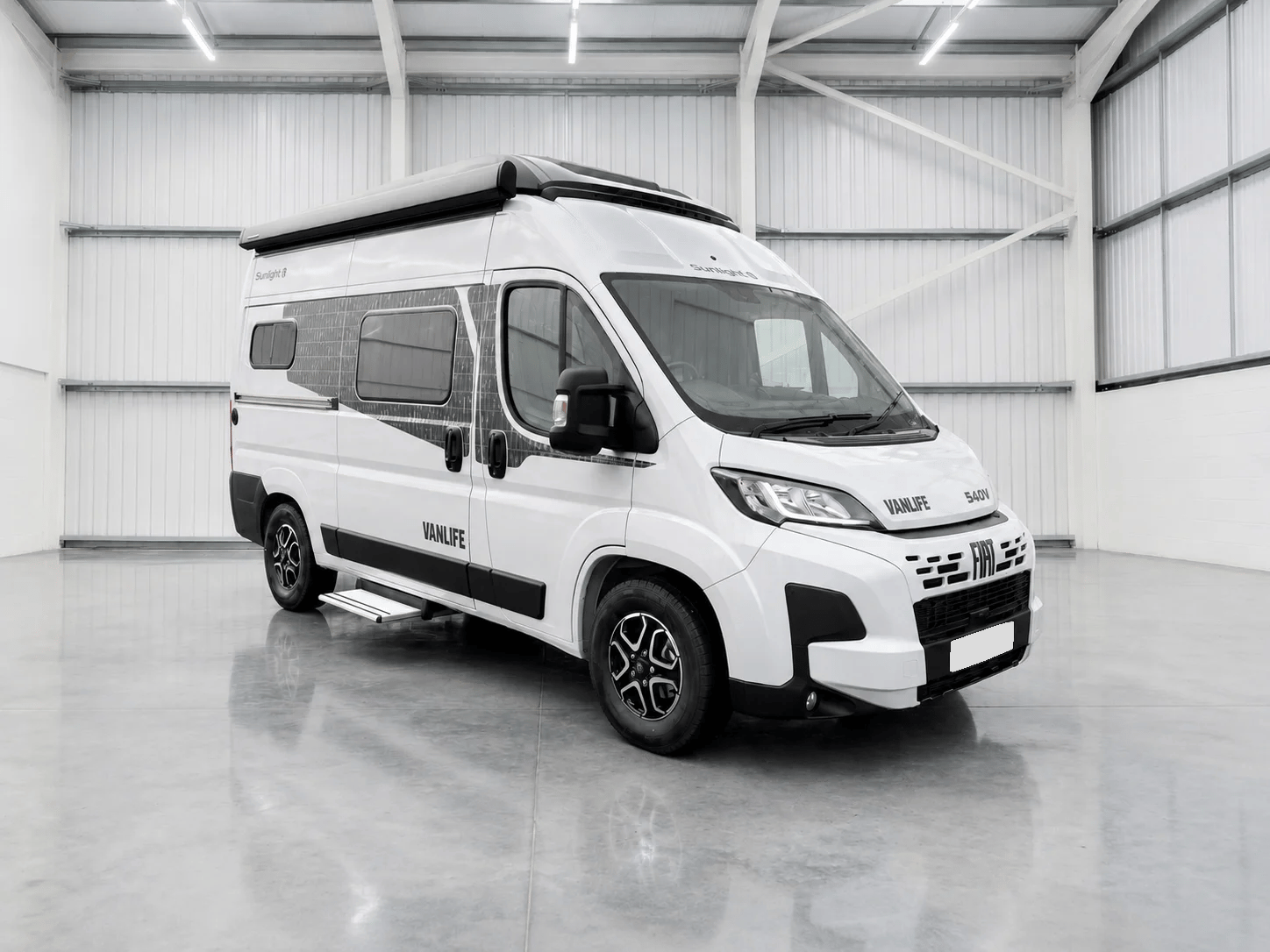
The camper you fall for is rarely the one you can afford. That gap is the whole reason Campervan.win exists. Right now we’re giving away the Sunlight Vanlife, worth around £65,000, and closing that gap is the point: capped entries so the odds stay honest, £10 a ticket, a maximum of five per person, £500 to a UK charity from every full draw, the winner picked by a public randomness beacon anyone can re-check, and one person driving away in the van itself.
Enjoyed this post?
Get more honest campervan guides like this one in your inbox.
You’re in!
Check your inbox. We’ve just sent you a welcome email.

About the author
Rowan
Rowan writes editorial features, comparisons, and industry context pieces that help readers understand the campervan and motorhome landscape.
Keep Reading
Related Reading
Thoughtful articles that build on what you’ve just read.
Motorhome Buying Guides
12 min read
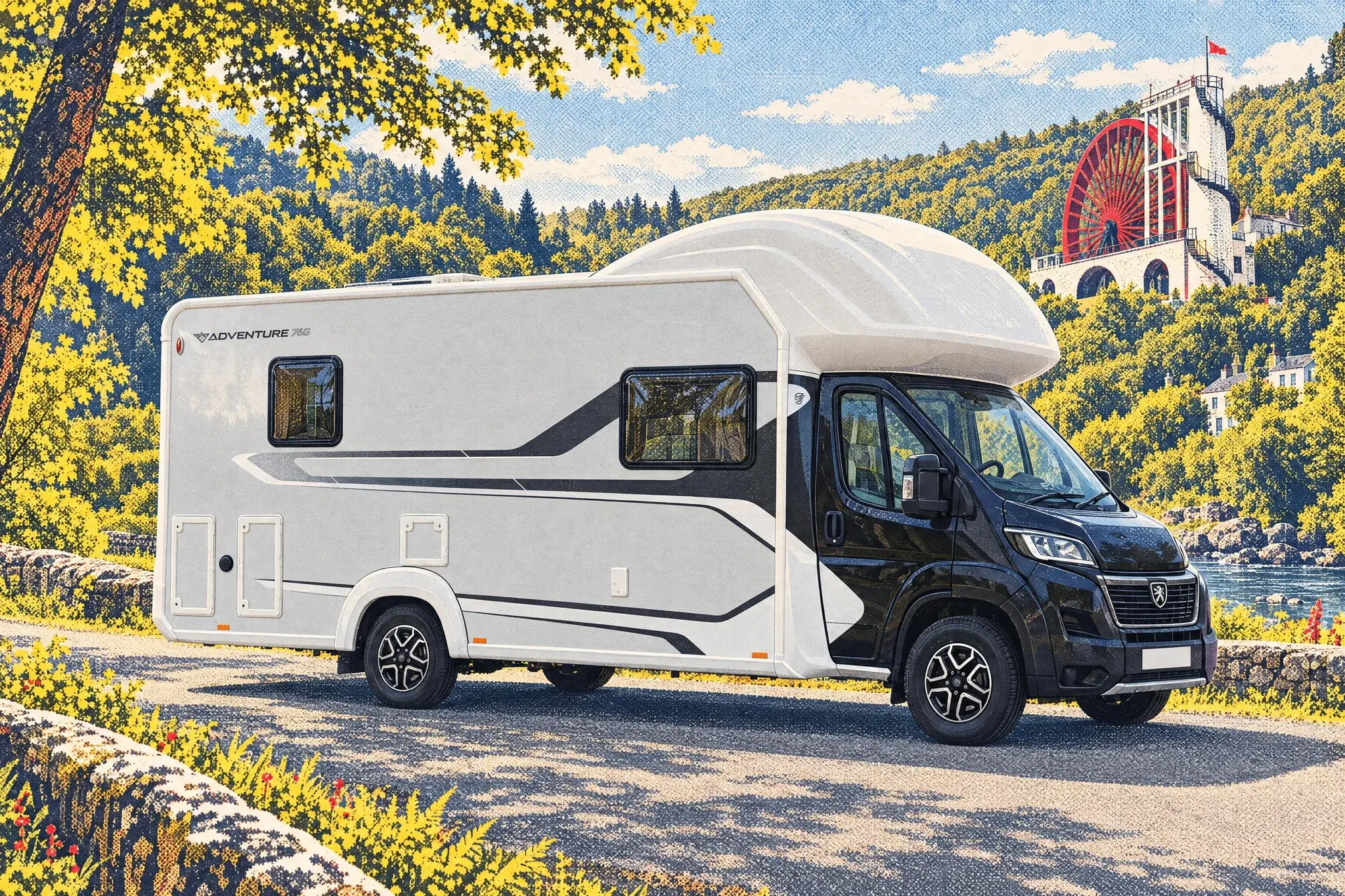
Auto-Trail Adventure 2027: the overcab is back, and two options change your licence
Auto-Trail's new Adventure coachbuilt puts a permanent bed over the cab of a Peugeot Boxer and prices the long models at £71,000 ex-works. Here is why that layout suits a family of four, and the weight, licence and payload questions to settle before you sign.
Motorhome Buying Guides
14 min read
Family motorhomes at the NEC for 2027: belts, beds and the payload sum that decides them
The 2027 family layouts at the NEC sleep four to seven, but the numbers that decide whether they work for your family are the belted seats, the Isofix points and the weight left once everyone is aboard. We do the sums model by model.
Motorhome Buying Guides
10 min read
Buying a motorhome at the NEC: what you commit to when you sign on the stand
A plain-English explainer on what a signature on a show stand at the NEC commits you to: cancellation rights that are not as clear as people think, what happens to a deposit, why withdrawing from finance does not cancel the van, why Section 75 rarely covers a motorhome deposit, and your rights if the van arrives faulty.
Motorhome Buying Guides
9 min read
NEC show offers 2026: how to judge the Auto-Sleepers, Auto-Trail and Marquis deals
The October 2026 NEC show offers from Auto-Sleepers, Auto-Trail dealers and Marquis Leisure, decoded: what each free pack is worth to you, what it weighs, what a heavier plate means for your licence and tax, and the questions to settle before you sign.