
Frankia goes (relatively) affordable: the NOW range explained for UK buyers

Written by
Arthur
Arthur writes buying guides, comparisons, and in-depth explainers to help readers choose the right campervan or motorhome with confidence.
The short answer
The Frankia NOW range is the German premium brand's more attainable line, starting around £90,000 to £110,000 rather than the £150,000-plus of its traditional A-class models, and that gap is the appeal: you still get Frankia's construction quality, good insulation, a planted drive and proper A-class living space, just with fewer decisions and a shorter options list. The catches for UK buyers are real but manageable, most are left-hand drive, the weight and licence need checking (some are plated above 3,500kg and need C1), and parts for an imported premium brand take a little planning. If you were already shopping at this level and value build quality over maximum space per pound, it earns a place on the shortlist. Here is what the NOW range is, and whether it adds up for you.

Frankia is a name that usually sits at the expensive end of the motorhome world. Big A-class coachbuilts, careful engineering, prices that make most buyers wince. So when a brand like that launches a range called NOW with the word "affordable" attached, it is worth slowing down and asking what that word really means. Affordable compared to what? Affordable for whom?
This guide answers those questions properly. We will look at what Frankia is, where the NOW range fits, what you actually get for the money, and the things that matter specifically if you are buying from the UK. That last part matters more than people expect, because a German A-class motorhome and a UK driveway are not always natural friends. Licensing, weight, left-hand drive, servicing, parts, and resale all come into it.
No hype here. Just a clear, honest walk through the range so you can decide whether it belongs on your shortlist.
Who Frankia is, and why "affordable" is a relative word
Frankia is a German motorhome manufacturer based in Bavaria, building vehicles since the 1960s. The brand has spent decades cultivating a reputation for solid construction, good thermal insulation, and a slightly more engineered feel than mass-market coachbuilts. They are best known for A-class motorhomes, which is the style where the cab is part of the living body rather than a separate van front. You sit up high behind a huge windscreen, and the whole front of the vehicle is purpose-built living space.
That kind of build costs money. A well-specified Frankia A-class can sit comfortably north of £150,000, and the top models go a long way beyond that. So the brand has always lived in the part of the market where buyers are downsizing from a house, spending an inheritance, or simply treating a motorhome as the big purchase of their retirement.
The NOW range is the attempt to bring that brand feel to a lower starting price. The key word is starting. We are not talking about budget motorhomes in the way a value-focused coachbuilt is budget. We are talking about a Frankia that begins in the region of £90,000 to £110,000 depending on layout, base vehicle, and specification, rather than starting with a one in front of fifty.
So "affordable" here means affordable for a Frankia. It is a relative term, and it is honest to say so up front. If your budget tops out at £60,000, the NOW range is not going to fit, and that is fine. There is a wide and healthy market at that level. But if you were already looking at premium coachbuilts and lower-end A-classes, the NOW range pulls a recognisably premium German brand down into a price bracket where it can actually compete for your attention.
What the NOW range actually is
The NOW range is Frankia's effort to streamline. The brand's traditional approach offered enormous customisation, long options lists, and bespoke-feeling builds. That flexibility is lovely, but it adds cost and slows production. The NOW concept flips that. Instead of building you a near-bespoke motorhome, NOW offers a tighter selection of layouts with carefully chosen standard specification and fewer decisions to make.
Think of it as the difference between a tailor measuring you for a suit and a very good off-the-peg suit in a small number of sizes. The off-the-peg version costs less because the maker is not starting from scratch each time. You lose some bespoke flexibility. You gain a lower price and, usually, a shorter wait.
That is the core idea. Frankia has taken its engineering and packaging knowledge and applied it to a more standardised product. The result is meant to feel like a Frankia, with the construction quality and the driving manners, but at a price that opens the door to more buyers.
Two body styles under the NOW name
Depending on the model year, the NOW concept has appeared across both of Frankia's main body styles, and it helps to know the difference before you go any further:
- A-class. The classic Frankia shape. Big panoramic windscreen, integrated cab, generous front living space, and often a drop-down bed above the cab that tucks away during the day. This is the body style most people picture when they think of the brand.
- Semi-integrated (low-profile). This uses the original van cab from the base vehicle, with a coachbuilt body behind it and a streamlined roofline above the cab. It is lighter, often cheaper, and a touch easier to drive for people new to larger vehicles because the cab feels familiar.
If you see "NOW" attached to a model, check which body style it refers to, because the experience of owning and driving them is genuinely different. The A-class feels grander and gives you that wraparound view. The semi-integrated is more modest, lighter, and usually the more sensible starting point for a first big motorhome.
The base vehicle underneath
Almost every coachbuilt and A-class motorhome in this part of the market is built on a small number of commercial van chassis. Frankia's NOW range typically sits on a well-known European light commercial platform, with the heavier A-class versions often using a low-line chassis variant designed specifically for motorhome bodies. That low-line chassis drops the floor height and lowers the centre of gravity, which is part of why a good A-class feels planted rather than top-heavy.
For UK buyers there are a few things to understand about the base vehicle:
- Engine and gearbox. These are usually turbo-diesel engines in the 140 to 180 horsepower range, paired with either a manual or, increasingly, an automated or torque-converter automatic gearbox. The automatic is worth seeking out if your budget allows. On a heavy A-class it makes hills, junctions, and long days far more relaxing.
- Euro 6 emissions. Any current Frankia will meet the latest emissions standards, which matters for clean-air and low-emission zones in UK cities. A modern Euro 6 diesel motorhome is not charged in most UK clean-air zones, but always check the specific zone rules before you drive in.
- Servicing network. The base vehicle is a mainstream commercial platform, which means the mechanical side can be serviced at a wide network of commercial dealers across the UK. That is genuinely reassuring. The habitation side is a separate matter, which we will come to.
Left-hand drive: the elephant in the cab
This is the single most important thing for UK buyers to get straight in their heads. Frankia is a German manufacturer, and the vast majority of its production is left-hand drive. Right-hand drive versions of premium German A-classes are rare, and where they exist they often command a premium and a longer wait.
That does not make left-hand drive wrong. Plenty of UK motorhome owners drive left-hand-drive vehicles happily for years, especially people who spend a lot of time touring on the Continent, where a left-hand-drive layout is actually an advantage. But you need to go in with your eyes open.
What left-hand drive means day to day in the UK
- Overtaking. On single-carriageway roads, you sit on the left and cannot see past the vehicle in front as easily. On a long, heavy motorhome you would rarely be overtaking quickly anyway, but it changes how you plan moves.
- Toll booths, car parks, and drive-throughs. Anything designed for a driver on the right side becomes a stretch or a walk around. Minor, but real, and it adds up over a year.
- Width awareness. Positioning the nearside (left) of a wide vehicle in a UK lane takes practice when you are sitting on that same side. Most people adapt within a few hundred miles.
- Resale. When you come to sell in the UK, a left-hand-drive motorhome appeals to a smaller pool of buyers. That can affect both how quickly it sells and the price. It is not a disaster, because there is a genuine market of buyers who tour Europe and actively prefer left-hand drive, but it is a narrower pool.
Some Frankia models can be ordered or sourced in right-hand drive through UK channels. If having the wheel on the right matters to you, make that a non-negotiable early question, because it shapes which layouts and which lead times are realistic.
The layouts, and how to think about them
The NOW range, like most Frankia ranges, is organised around a handful of layouts. Layout is the single biggest decision you will make, far more important than colour or trim, because it dictates how the vehicle works for the way you actually live. Here is how to think about the main types you will encounter.
Single beds (twin beds) at the rear
Two single beds along the back, with a wardrobe and often a large garage underneath. This is one of the most popular layouts in the premium market for good reason. Each person gets their own bed, so no climbing over a partner for a midnight trip to the washroom. The space under the rear beds becomes a large external storage garage, big enough for two bikes or a substantial amount of kit.
The trade-off is that two single beds use more length than one transverse double, so these tend to be the longer vehicles in the range. If you want to sleep as a couple in a double, some single-bed layouts include an infill that bridges the two beds into one large sleeping platform. It works, but it is a bit of faff each night.
Island bed at the rear
A double bed you can walk around on at least one side, set across or along the back. This is the layout that feels most like a bedroom in a house. You get easy access from both sides, often a proper wardrobe each side, and a grown-up sense of space. The cost is that an island bed eats floor area, so the rest of the vehicle, particularly the lounge, can feel a touch tighter, and the rear garage is usually smaller than in a single-bed layout.
Rear washroom with French bed
A French bed is a double with one corner cut away to let you walk past it. Pair that with a full-width rear washroom and you get a generous shower and toilet area, which is a real luxury for full-time and long-trip use. This layout suits people who prioritise the washroom and do not mind one slightly awkward bed corner.
Drop-down bed over the lounge or cab
In A-class models especially, a powered bed drops down from the ceiling at night and tucks away during the day. This is brilliant for usable space, because the same floor area becomes lounge by day and bedroom by night. It is also how an A-class can sleep four without being enormous. The thing to check is the headroom and the ease of the mechanism, and whether you are comfortable sleeping high up near the front.
The honest test for any layout is not how it photographs. It is whether you can make a cup of tea, use the washroom, and get into bed without the other person having to move. Sit in it. Lie in it. Pretend it is raining and you are both stuck inside for an afternoon.
Build quality: where the money goes
The reason a brand like Frankia can charge what it does is partly construction. Even in a more affordable range, certain things tend to carry over from the premium models. It is worth understanding what you are paying for, because this is where a higher price can genuinely be justified rather than just being a badge.
The body and insulation
Premium A-classes are usually built with bonded sandwich-panel walls, floors, and roofs. The principle is an insulating core sandwiched between outer and inner skins, often using materials that resist water ingress better than older timber-framed construction. Good insulation is not just about staying warm. It also keeps the interior cooler in summer and reduces the workload on your heating in winter, which saves gas or diesel.
If you intend to use the motorhome in cold weather, ask specifically about the heating system, the insulation rating, and whether the water and waste tanks are insulated and heated. A vehicle that can keep its fresh water from freezing at minus temperatures is in a different league for winter touring than one that cannot.
Floor height and the garage
A double floor is a Frankia signature on many models. It means there is an insulated cavity between the outer floor and the floor you walk on. That cavity hides pipework and tanks away from the cold, provides extra storage, and lifts the living space off the chassis. It is a big reason these vehicles feel warm and solid. It also raises the step-in height, so if anyone in the household has limited mobility, check how high you have to climb to get in and whether a powered step helps.
Fit and finish inside
This is subjective, but it is where you should spend real time during a viewing. Open and close every locker. Pull out every drawer. Check the catches, the hinges, the way the doors sit. Premium cabinetry should feel solid and quiet, not rattly. Sit on the seats for longer than feels normal. Lie on the beds with your shoes off. The finish is part of what you are paying for, so make it earn the money.
Weight and UK licensing: do not skip this
This is the part that catches out more UK buyers than anything else, and it can quietly remove a vehicle from your options altogether. A-class motorhomes are heavy, and heavy vehicles run into UK driving licence rules.
The licence categories that matter
- Category B. A standard car licence. If you passed your test from 1 January 1997 onwards, your B licence lets you drive a vehicle up to 3,500kg maximum authorised mass (MAM). That is the gross weight, fully loaded, not the empty weight.
- Grandfather rights (C1). If you passed your car test before 1 January 1997, you very likely have C1 entitlement on your licence, which lets you drive vehicles up to 7,500kg. This is hugely relevant, because many A-class motorhomes weigh more than 3,500kg once loaded.
Here is the crux. A fully equipped A-class with passengers, water, gas, and kit can easily exceed 3,500kg. Many are plated at 3,500kg by clever weight management, but some have a maximum of 4,500kg, 5,000kg, or more. If you only hold a post-1997 category B licence, you are legally limited to 3,500kg, and that rules out the heavier models unless you take an additional driving test to gain C1.
Why a 3,500kg plate can be a trap
Some buyers see "3,500kg" on the plate and relax. But the number that matters is not the limit, it is the difference between the limit and what the vehicle actually weighs empty. That difference is your payload, the weight you are allowed to add in the form of water, passengers, food, clothes, bikes, awnings, and everything else.
A large A-class plated at 3,500kg can have a worryingly small payload once you account for a heavy build. By the time you add a full fresh water tank (often 100 litres or more, and water weighs 1kg per litre), two adults, a full gas bottle, and a normal amount of holiday kit, you can be over the legal limit without realising. Driving overweight is an offence, it invalidates insurance in the event of a claim, and it is checked at the roadside.
So when you look at any NOW model, ask for two numbers: the MIRO (mass in running order, roughly the empty weight with fluids and a driver) and the MAM (the legal maximum). Subtract one from the other. If the gap is under about 350 to 400kg on a vehicle two people will tour in, be cautious. If it is comfortably over 500kg, you have room to live.
Upplating and downplating
Some chassis can be re-rated. A vehicle plated at 3,500kg might be capable of 3,650kg or more, and the manufacturer or chassis maker can sometimes issue revised plating. That can rescue a tight payload if your licence allows the higher figure. Conversely, a heavy vehicle cannot be magically downplated to 3,500kg to suit a B licence, because you cannot make it physically lighter just by changing a number. Get professional advice on this before you commit. It is not a grey area to guess at.
What it actually costs to buy
Let us put some honest numbers around the NOW range as a UK buyer would experience them. Exact figures move with model year, exchange rates, base-vehicle pricing, and specification, so treat these as realistic brackets rather than a fixed price list.
- Entry semi-integrated NOW models. Roughly £85,000 to £100,000 depending on layout and equipment.
- A-class NOW models. Roughly £100,000 to £125,000, again depending heavily on chassis, engine, gearbox, and specification.
Those numbers feel large, and they are. The context is that this represents a meaningful reduction against Frankia's traditional A-class pricing, which is the whole point of the range. Whether that represents value for you depends entirely on what you compare it against and how you intend to use it.
The extras that add up
The headline price is rarely the price you pay. Build a realistic budget that includes:
- Automatic gearbox. A worthwhile option on a heavy vehicle, and a few thousand pounds.
- Upgraded heating. Diesel heating, or a more powerful system, for genuine winter use.
- Solar and battery upgrades. Essential if you want to stop away from hook-up. A decent solar panel and a lithium leisure battery transform off-grid life, and we will return to this.
- Reversing and all-round cameras. Close to essential on a vehicle this size. A single reversing camera is the minimum; a side and front camera package is better.
- Towbar. If you plan to tow a small car or a trailer, factor the cost and, crucially, the weight implications.
- Habitation extras. Awning, bike rack, extra storage, upgraded upholstery.
It is easy to add £10,000 to £20,000 of options to a base price without trying very hard. Decide what you genuinely need versus what is nice to have, and price the full specification before you fall in love with a brochure figure.
Running costs: the honest ongoing picture
Buying is one thing. Living with a large A-class is another, and the running costs are a structural reality of owning a big, heavy, premium vehicle. None of this is anyone's fault, it is simply physics and the nature of the product. Here is what to plan for.
Fuel
A heavy A-class diesel typically returns somewhere in the region of 22 to 30 miles per gallon in real touring use, depending on weight, terrain, speed, and how the gearbox is set up. On a long motorway cruise at a steady speed you might do better; in hills with a full load you will do worse. At UK diesel prices, budget carefully if you plan big mileage. A semi-integrated NOW model is usually a little more economical because it is lighter and more aerodynamic at the front.
Insurance
Specialist motorhome insurance is the norm. Premiums depend on value, where it is stored, your no-claims history, annual mileage, and security. A high-value left-hand-drive A-class can cost more to insure than a mainstream coachbuilt, partly because of value and partly because parts and repairs can be more involved. Get quotes before you buy, not after, because the number can surprise you.
Habitation service and maintenance
A motorhome needs two kinds of servicing. The base vehicle needs its normal mechanical service, which a commercial dealer can handle. The habitation side (the living area) needs an annual habitation service that checks for damp, tests the gas and electrical systems, and inspects the body seals. This is important on any motorhome and especially on a premium one, because keeping the damp warranty valid usually depends on having that service done on schedule by an approved workshop.
Storage
A vehicle this long and tall often will not fit on a normal driveway, and many will not pass under a standard garage door even if the length worked. Secure storage at a CaSSOA-rated site costs money every month, and good sites near population centres can have waiting lists. Storage also affects your insurance premium, so factor it in early.
Depreciation
Every motorhome depreciates. Premium brands often hold value relatively well in percentage terms compared to budget builds, but the cash figures are larger because the starting price is higher. A left-hand-drive vehicle in the UK can depreciate a little faster than an equivalent right-hand-drive, simply because of that smaller buyer pool we mentioned. None of this should put you off, but go in understanding that the first few years carry the steepest drop.
Servicing, parts, and warranty as a UK owner
This deserves its own section, because it is where buying a premium imported brand differs most from buying something built or widely sold in the UK.
Where do you get it serviced?
The mechanical base vehicle is straightforward, as covered. The habitation side is the question. You want to know, before you buy, where your nearest approved Frankia service workshop is, how busy they are, and what their lead times look like in spring when everyone wants a habitation service at once. A premium German A-class is not something every local motorhome workshop will be comfortable with, particularly the more involved electrical and heating systems.
Parts and lead times
Body panels, specific trim, and brand-specific components may need to come from the Continent. For routine consumables this is rarely an issue. For accident repair or a specific habitation part, lead times can be longer than for a mainstream UK-sold brand. This is not a reason to avoid the range, but it is a reason to choose a supplying dealer who can demonstrate they can support you after the sale, not just sell you the vehicle.
Warranty
Check exactly what the warranty covers, for how long, and what you must do to keep it valid. Premium motorhomes usually carry a base-vehicle warranty, a habitation warranty, and a separate, longer water-ingress (damp) warranty. That damp warranty is the valuable one over time, and it almost always depends on having the annual habitation service carried out on schedule at an approved workshop. Miss a service and you can void it. Read the conditions, then read them again.
Buy the dealer as much as the vehicle. With a premium import, the quality of after-sales support is the difference between a relaxed decade of ownership and a frustrating one.
Living with it day to day
Specifications and prices only tell you so much. Here is what the ownership experience tends to feel like, based on how these vehicles are actually used.
Driving it
An A-class drives better than its size suggests, helped by that low-line chassis and the high seating position that gives an excellent view forward. The big windscreen is genuinely lovely on a scenic route. What takes getting used to is width and length: parking, narrow lanes, and the discipline of planning your route to avoid roads that are too tight. UK country lanes are the real test, not motorways. A semi-integrated NOW model is a gentler introduction if you have never driven anything this large.
The cab as living space
One of the joys of an A-class is that the cab seats swivel to become part of the lounge. With the drop-down bed stowed and the seats turned round, the front of the vehicle becomes a bright, sociable space. That panoramic windscreen, often with a thermal blind system, makes the front feel like a conservatory in good weather and keeps it insulated in cold. It is a big part of why people pay the premium for the A-class shape.
Power and going off-grid
If you want to stop somewhere beautiful without a hook-up, your electrical setup matters more than almost anything else. A sensible upgrade is a lithium leisure battery and a solar panel or two on the roof. Lithium gives you more usable energy for the weight, charges faster, and copes better with being run down and topped up daily. Pair it with a decent solar array and you can run lights, water pump, fridge, and device charging for days in summer without a hook-up. In winter, with short days, you will lean on the engine alternator or a hook-up more.
Ask what comes as standard and what is an upgrade. A base electrical system designed mainly for hook-up use is fine if you only ever stay on serviced sites, but it will frustrate you the moment you want to wild-camp or use an off-grid stopover.
Heating and hot water
Most premium motorhomes use either gas, diesel, or a combination for heating and hot water. Diesel heating draws from the main fuel tank, which is convenient because you are not constantly swapping gas bottles, and it suits longer winter trips. Gas systems are simple and effective but mean managing bottle levels. For UK and Continental winter touring, a well-insulated body with a capable heating system and protected tanks is what separates a vehicle you can use all year from one you put away in October.
Who the NOW range genuinely suits
Let us be straight about who this range is and is not for, because the right buyer will love it and the wrong buyer will feel they overspent.
It suits you if
- You were already looking at premium coachbuilts or lower-end A-classes and have the budget to match.
- You value construction quality, insulation, and a solid feel over having the largest possible vehicle for the money.
- You plan to tour the Continent regularly, where left-hand drive is an advantage and a well-insulated body earns its keep.
- You want a premium brand feel without going to the very top of the price ladder.
- You either hold C1 entitlement (passed your test before 1997) or you are happy to choose a model and specification that genuinely works within 3,500kg.
It is probably not for you if
- Your budget realistically tops out below £80,000. There are excellent vehicles at that level and below, and stretching to a premium import will leave you with no slack for options and running costs.
- You only ever tour in the UK, never plan to leave, and the idea of left-hand drive bothers you. Right-hand-drive options exist but narrow your choices.
- You hold only a post-1997 category B licence and you want a large, heavily equipped A-class. The weight maths may simply not work without C1.
- You want maximum interior space per pound. Premium construction and the A-class shape cost weight and money, and a value-focused coachbuilt will give you more raw space for less outlay.
How to inspect one before you buy
If a NOW model makes your shortlist, here is a practical checklist for the viewing. Take your time. A vehicle at this price deserves a thorough, unhurried inspection.
Paperwork and weights
- Ask for the weight plate figures: MIRO and MAM. Do the payload sum yourself.
- Confirm the gearbox type, engine power, and Euro emissions standard.
- Check whether it is left- or right-hand drive and be honest with yourself about whether that suits your use.
- For a used example, get the full habitation service history. Gaps in it can mean a void damp warranty.
The body and seals
- Walk all the way round looking for any sign of panel damage, repaired accident damage, or sealant that looks recently and roughly applied.
- On a used vehicle, ask for a damp meter reading at the seams and around windows, roof lights, and the rear corners. Damp is the silent killer of motorhome value.
- Check the condition of the roof: solar panels, sealant around vents, and any signs of pooling.
Inside
- Open and close every locker, drawer, and door. Listen for rattles and check the catches.
- Test the drop-down bed mechanism, the seat conversions, and any powered systems.
- Run the heating and hot water. Check the fridge cools. Test the lights and the water pump.
- Lie on the beds. Sit in the lounge for a proper length of time. Use the washroom space as if you were getting ready.
- Check headroom throughout if anyone in the household is tall.
The drive
- Drive it, ideally on a mix of roads including something tighter than a motorway.
- Notice how the gearbox behaves on a hill and at junctions.
- Get comfortable with the width and the mirrors before you decide anything.
- If it is left-hand drive and you have never driven one, give yourself honest time to judge whether you would be relaxed living with it.
New versus used
You do not have to buy new. A two- or three-year-old NOW model, or an older premium Frankia, can be a sensible way into the brand at a lower cash price, with the steepest depreciation already absorbed by the first owner.
The trade-offs are the usual ones. New gives you the full warranty, the latest base vehicle and emissions, and the ability to specify exactly what you want. Used saves money but demands a more careful inspection, particularly for damp and for a complete habitation service history. On a premium motorhome, a missing service record is not a minor administrative gap; it can mean the difference between a valid water-ingress warranty and an expensive surprise down the line.
If you go used, prioritise a vehicle that has been serviced on schedule at approved workshops over one that looks slightly newer or cheaper but has patchy history. The paperwork is part of the value.
Importing privately versus buying through a UK supplier
Some buyers are tempted to source a left-hand-drive Frankia directly from the Continent, where prices and availability can look attractive. It can work, but understand what you are taking on.
- Registration and approval. Bringing a vehicle into the UK and registering it involves DVLA processes, possibly an Individual Vehicle Approval depending on circumstances, and getting the paperwork right. It is doable but it is not trivial.
- Warranty support. A vehicle bought abroad may not carry the same UK after-sales relationship. When something needs attention, having bought through a UK supplier who knows you and the vehicle is worth a great deal.
- VAT and costs. The headline foreign price is not the landed UK price. Factor in delivery, registration, any tax implications, and the time involved.
For most buyers, buying through an established UK supplier costs a little more on paper but buys peace of mind, local support, and a smoother ownership experience. Importing privately suits confident, experienced buyers who enjoy the process and understand the risks.
Common mistakes UK buyers make
Having walked through the detail, here are the errors that come up again and again, gathered in one place so you can sidestep them.
- Ignoring payload. Falling for the base price and forgetting to check the gap between empty weight and the legal maximum. This is the big one.
- Assuming the licence is fine. Buying a heavy A-class on a post-1997 B licence and only later discovering the weight maths does not work.
- Budgeting only the headline price. Forgetting options, storage, insurance, servicing, and fuel. The true cost of ownership is the number that matters.
- Underestimating left-hand drive. Either dismissing it without trying it, or buying it without thinking through resale and daily UK driving.
- Skipping the off-grid power question. Buying a base electrical system, then being frustrated the first time they want to stop away from hook-up.
- Not checking storage first. Committing to a vehicle that will not fit anywhere sensible at home, then scrambling for expensive storage.
- Choosing the layout last. Picking on looks or price, then realising the layout does not suit how they actually live. Layout first, always.
The bottom line
The Frankia NOW range is a genuine attempt to bring a respected premium German brand to a lower starting price by simplifying the build and tightening the choices. "Affordable" is relative, and it is honest to say that this is affordable for a Frankia rather than affordable in absolute terms. You are still looking at well into six figures for most A-class versions, with semi-integrated models a step down.
What you get for that is construction quality, good insulation, a planted drive, and that lovely A-class living space, packaged with fewer decisions and a shorter options list than the brand's traditional models. The catches for UK buyers are real but manageable: left-hand drive on most models, weight and licence implications you must check carefully, and the practicalities of servicing and parts for an imported premium brand.
If you were already shopping at this level, the NOW range deserves a place on your shortlist, especially if you tour the Continent and value build quality over maximum interior space per pound. If your budget sits lower, or you only ever drive in the UK and want the wheel on the right, the maths may steer you elsewhere, and there is no shame in that.
Whatever you decide, do the payload sum, check your licence, price the full specification with running costs included, and choose a supplier who will look after you long after the sale. Get those four things right and you will avoid the mistakes that catch most buyers out, whichever motorhome you eventually park on the drive.
Common questions
What is the Frankia NOW range?
It is Frankia's relatively affordable line, designed to bring the German premium brand's build quality and A-class living space to buyers at a lower entry point, with a shorter options list and fewer decisions than its traditional models. 'Affordable' is relative: it starts around 90,000 to 110,000 pounds rather than the 150,000-plus of Frankia's flagship A-class vans.
How much does a Frankia NOW cost?
It begins in the region of 90,000 to 110,000 pounds depending on layout, base vehicle and specification, well below a traditional Frankia A-class which can sit north of 150,000. It is easy to add 10,000 to 20,000 pounds of options, so price the full specification rather than the headline figure.
Is the Frankia NOW left-hand drive?
Most models are left-hand drive, which is the main thing for UK buyers to weigh. Left-hand drive changes overtaking and junctions on British roads and can affect daily use, so it suits buyers who tour the Continent or are comfortable adapting. Confirm what right-hand-drive options exist before you commit.
What licence and payload should I check on a Frankia NOW?
A category B licence covers up to 3,500kg. Some NOW models are plated at 3,500kg by careful weight management, but others have a maximum of 4,500kg, 5,000kg or more, which needs C1. Even on a 3,500kg plate a heavy A-class can leave a small payload, so aim for comfortably over 500kg of headroom and be cautious under 350 to 400kg.
Who does the Frankia NOW range suit?
Buyers already shopping at this level who value build quality, insulation and a planted A-class drive over maximum interior space per pound, and who tour the Continent or are comfortable with left-hand drive. If your budget sits lower, or you only ever drive in the UK and want the wheel on the right, the maths may steer you elsewhere.
The reachable bit
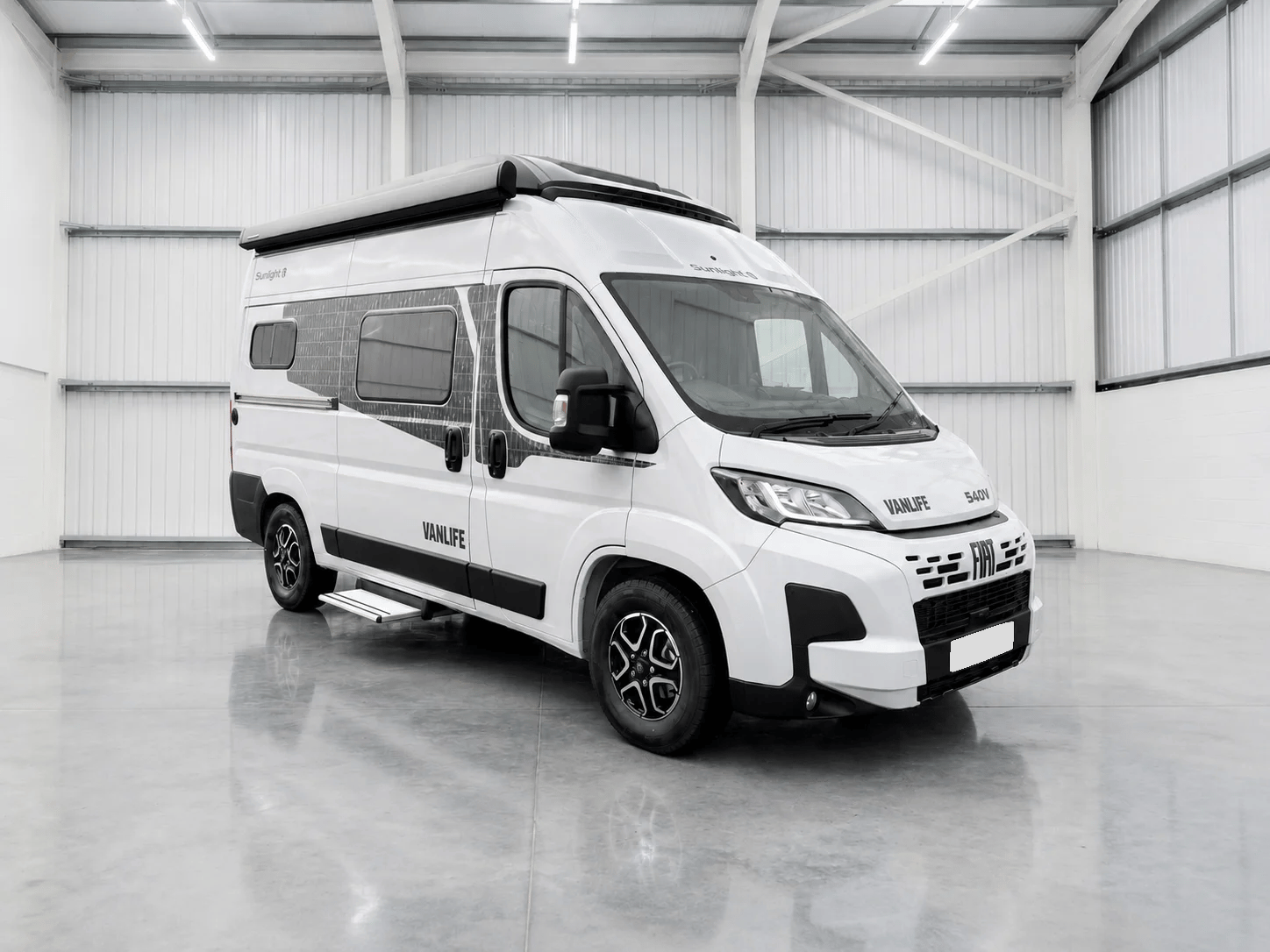
The camper you fall for is rarely the one you can afford. That gap is the whole reason Campervan.win exists. Right now we’re giving away the Sunlight Vanlife, worth around £65,000, and closing that gap is the point: capped entries so the odds stay honest, £10 a ticket, a maximum of five per person, £500 to a UK charity from every full draw, the winner picked by a public randomness beacon anyone can re-check, and one person driving away in the van itself.
Enjoyed this post?
Get more honest campervan guides like this one in your inbox.
You’re in!
Check your inbox. We’ve just sent you a welcome email.

About the author
Arthur
Arthur writes buying guides, comparisons, and in-depth explainers to help readers choose the right campervan or motorhome with confidence.
Keep Reading
Related Reading
Thoughtful articles that build on what you’ve just read.
Motorhome Buying Guides
12 min read
Auto-Trail Adventure 2027: the overcab is back, and two options change your licence
Auto-Trail's new Adventure coachbuilt puts a permanent bed over the cab of a Peugeot Boxer and prices the long models at £71,000 ex-works. Here is why that layout suits a family of four, and the weight, licence and payload questions to settle before you sign.
Motorhome Buying Guides
14 min read
Family motorhomes at the NEC for 2027: belts, beds and the payload sum that decides them
The 2027 family layouts at the NEC sleep four to seven, but the numbers that decide whether they work for your family are the belted seats, the Isofix points and the weight left once everyone is aboard. We do the sums model by model.
Motorhome Buying Guides
10 min read
Buying a motorhome at the NEC: what you commit to when you sign on the stand
A plain-English explainer on what a signature on a show stand at the NEC commits you to: cancellation rights that are not as clear as people think, what happens to a deposit, why withdrawing from finance does not cancel the van, why Section 75 rarely covers a motorhome deposit, and your rights if the van arrives faulty.
Motorhome Buying Guides
9 min read
NEC show offers 2026: how to judge the Auto-Sleepers, Auto-Trail and Marquis deals
The October 2026 NEC show offers from Auto-Sleepers, Auto-Trail dealers and Marquis Leisure, decoded: what each free pack is worth to you, what it weighs, what a heavier plate means for your licence and tax, and the questions to settle before you sign.