
Crosscamp: is it coming to the UK, and what's its standout model?

Written by
Oliver
Oliver is the founder of Campervan.win and writes about campervans, travel, and the life-changing freedom that comes with getting out on the road.
The short answer
As of mid-2026, Crosscamp is not sold in the UK, has never been, offers no right-hand-drive vehicles, and has announced no plan to come here, despite belonging to the same group as Hymer and Bürstner and building one model on a van Vauxhall already sells in Britain. Happily, the widely repeated story that it went bust is not true: it simply went quiet during the 2024 industry downturn and relaunched leaner for 2026. Its standout model is the compact, car-park-friendly EXPLR on the Opel Zafira Life, the kind of urban camper a lot of people would love. So the honest position is interesting rather than disappointing. Here is the full picture on whether Crosscamp is coming, and the model worth knowing about.

Every so often a campervan brand develops a quiet cult following among UK buyers before it's actually sold here, and Crosscamp is one of them. It builds clever, compact, city-friendly campers; it belongs to the same group as Hymer and Bürstner; and, temptingly, one of its models is built on a van that Vauxhall sells in Britain under its own badge. Put all that together and the question writes itself: is Crosscamp coming to the UK, and if it did, which model should you want?
We've dug into this properly, because there's a lot of muddle around the brand, including a widely-repeated story that it went bust, which turns out not to be true. So this is the honest, sourced picture: whether Crosscamp is sold or planned for the UK, what actually happened during its rocky couple of years, what the current range looks like, and which model is the standout you'd be eyeing up. As ever on this site, where the answer is "no" or "it's complicated", we say so plainly rather than dress it up.
The short answer
Let's not bury it. As things stand in mid-2026, Crosscamp is not sold in the UK, has never been sold in the UK, offers no right-hand-drive vehicles, and has announced no plan to come here. Its official sales markets are continental: Germany, Austria, Switzerland, France, Italy, the Netherlands, Belgium and Poland. Britain isn't on the list, there's no UK dealer network, and there's no GBP pricing because there's nothing to price.
So the direct answer to "is Crosscamp coming to the UK?" is: not right now, and nothing official suggests it's imminent. The slightly longer answer is more interesting, because the brand is very much alive and trading again after a difficult patch, and because the Vauxhall connection means a UK arrival isn't unthinkable, just unannounced. If you want one today, you're looking at a personal import in left-hand drive, with all that entails. We'll explain all of that, and the genuinely appealing van at the centre of it, below.
What Crosscamp actually is
Crosscamp is the youngest brand in the Erwin Hymer Group, the giant that also owns Hymer, Bürstner, Dethleffs, Sunlight and Carado, and which is itself a subsidiary of the American RV company Thor Industries. We mapped that whole family in our guide to who makes Sunlight campervans, and Crosscamp is the group's dedicated stab at the compact, urban "camping bus" end of the market, the small, drivable campers that compete with the likes of the VW California.
Founded in 2019, Crosscamp's vehicles are developed, built and distributed by Dethleffs in Isny im Allgäu, which is the group's competence centre for campervans (the same operation that builds for Pössl). Its first vehicle was a Toyota Proace-based camper with a pop-top roof. Then, in 2020, came the model that gives the brand its UK intrigue: the Crosscamp Lite, based on the Opel Zafira Life. We'll come back to why that matters for the Vauxhall question. The point for now is that Crosscamp isn't a fly-by-night outfit; it's a young brand with the full backing of one of the biggest names in European motorhomes, building genuinely clever small campers.
A short history, from Toyota to the relaunch
Crosscamp's story is short but eventful, and it's worth a quick run-through, because it explains both the muddle around the brand and where it is today.
It began in 2019 with a camper on the Toyota Proace, a compact, pop-top urban camper that set the template: small, drivable, clever with space. In 2020 came the Crosscamp Lite on the Opel Zafira Life, the model that matters most for UK readers because of its Vauxhall-twinned base. The early Lite was a pared-back, affordable thing: a rear bed of around 114 by 200 centimetres plus a pop-top double of roughly 120 by 200, seating for up to seven, and a deliberately minimal galley, a slide-out single-burner stove, an optional small fridge, and not much else, at a continental price starting around €42,999. The idea was a camper you could also use as the family's everyday seven-seater, with just enough camping kit to get away at the weekend. There was even an all-electric version, the Crosscamp Flex on the battery-powered Opel Zafira-e Life, with a claimed range of around 200 miles, an early stab at the electric-camper idea that most of the industry is still circling warily.
In 2023, at the Caravan Salon in Düsseldorf, Crosscamp pushed upmarket with its first proper panel-van campers, the Flex 541 and the larger Full 600 and 640, on the bigger Stellantis vans. For a moment the brand had a genuine spread, from the little Lite to the family-sized Full. Then 2024 happened, the industry-wide downturn we've described, and the brand went quiet while its parent operation weathered the storm. The 2026 relaunch is the next chapter: a tidied-up, renamed, value-focused range built to come back leaner and sharper. So the brand you're looking at today is young, has already been through one full cycle of expansion and retrenchment, and is now on its second wind, which is a more interesting position than either "thriving newcomer" or "failed experiment", the two stories people usually tell about it.
Did Crosscamp go bust? The myth, corrected
Here's the bit that needs clearing up, because it colours the whole "coming to the UK" question. There's a widely-repeated belief that Crosscamp went insolvent around 2022 or 2023. We went looking for evidence of a Crosscamp insolvency and found none. No insolvency filing, no brand discontinuation, no third-party rescue. Crosscamp has been continuously owned by the Erwin Hymer Group, through Dethleffs, since it was founded.
What actually happened is more mundane and more reassuring. The wider recreational-vehicle market hit a serious slump in 2024, and the whole industry felt it. Dethleffs, in Isny, paused production and ran short-time working, and the group as a whole had a tough year, the kind of downturn that made headlines across the sector. Crosscamp, as a small brand built on the same lines, was caught up in that group-level squeeze. But "the parent group had a hard year and the brand went quiet for a while" is a very different story from "the brand went bankrupt", and only the first one is true. Crosscamp is a brand, not a standalone company, so it was never going to file for insolvency in its own name in the first place.
The proof is in what came next. For the 2026 season, Crosscamp came back with a full relaunch: a leaner, more modern, more keenly-priced range, presented by the brand and its dealers as a fresh start after the difficult years. So if you've heard Crosscamp is dead, put it out of your mind. It's trading, it's relaunched, and it has new models on sale across Europe. The honest framing isn't "it went under", it's "the group hit a rough patch and the brand was relaunched", and that distinction matters when you're judging whether it might one day reach the UK.
The 2026 range
The relaunch reorganised Crosscamp into three lines, with new names that are, frankly, still settling down, so don't be surprised if you see slightly different badges in different places.
| 2026 line | What it is | Base vehicle(s) | Previously |
|---|---|---|---|
| EXPLR ("Explorer") | Compact urban camper with pop-top | Opel Zafira Life / Peugeot Traveller | Crosscamp Lite |
| ADVTR ("Adventure") | Larger panel-van camper | Peugeot Boxer / Fiat Ducato / Opel Movano | Crosscamp Flex / Full |
| EXPDN ("Expedition") | First coachbuilt (semi-integrated) motorhome | Peugeot Boxer | New for 2026 |
A quick note on those names: the middle line, launched as ADVTR, has also appeared in later 2026 reporting renamed ELMNT, so the badges are mid-transition. If you're shopping, check the current name on Crosscamp's own site rather than trusting any one article, this one included. The shape of the range, though, is clear: a small urban camper, a bigger van conversion, and, for the first time, a proper coachbuilt motorhome, which is an ambitious move for a brand fresh out of a relaunch.
It's worth a word on the other two lines, even though the EXPLR is the star. The ADVTR (the line also seen badged ELMNT) is the bigger panel-van camper, built on the Peugeot Boxer, Fiat Ducato or Opel Movano with a 140 PS diesel, the descendant of the old Flex and Full models. It's a more conventional six-metre-ish van conversion of the sort the market is full of, aimed at buyers who want proper indoor space, a fixed bed and a full washroom rather than the EXPLR's car-park-friendly compactness. It competes head-on with the Ducato-based crowd, including the group's own Sunlight Cliff and Vanlife, which is part of why it's a less distinctive proposition than the little EXPLR.
The EXPDN is the genuinely new departure: Crosscamp's first coachbuilt, or semi-integrated, motorhome, on the Peugeot Boxer. Moving from camping buses and van conversions into coachbuilt motorhomes is an ambitious step for a brand fresh out of a relaunch, and it signals that Crosscamp intends to be a full-range maker rather than a one-trick urban-camper specialist. For UK readers it's the least relevant of the three, coachbuilt motorhomes are a different market again, and there's no UK route to it, but it's a sign the brand is thinking bigger, not smaller, after its rocky patch.
The standout model: the Crosscamp EXPLR
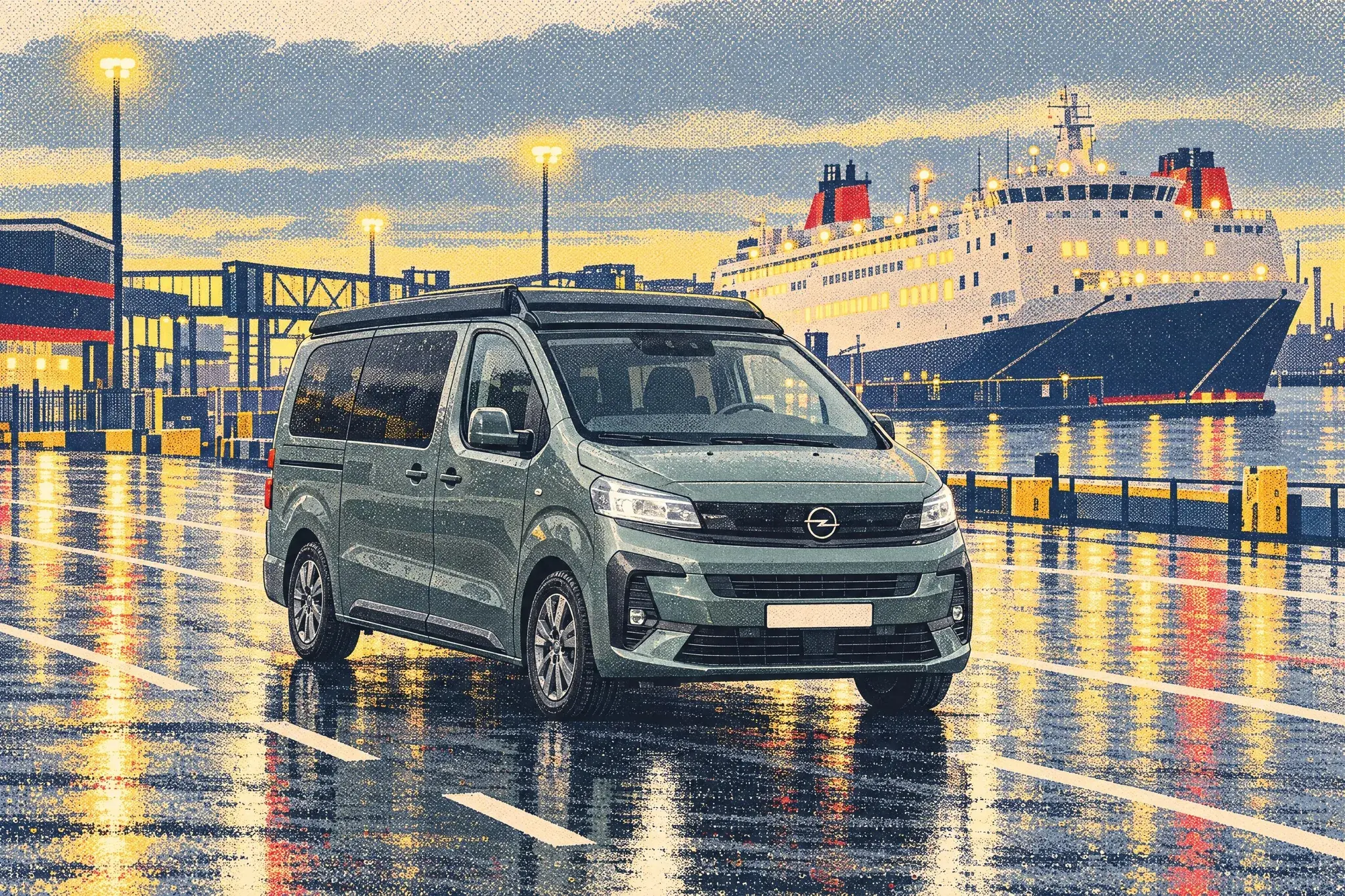
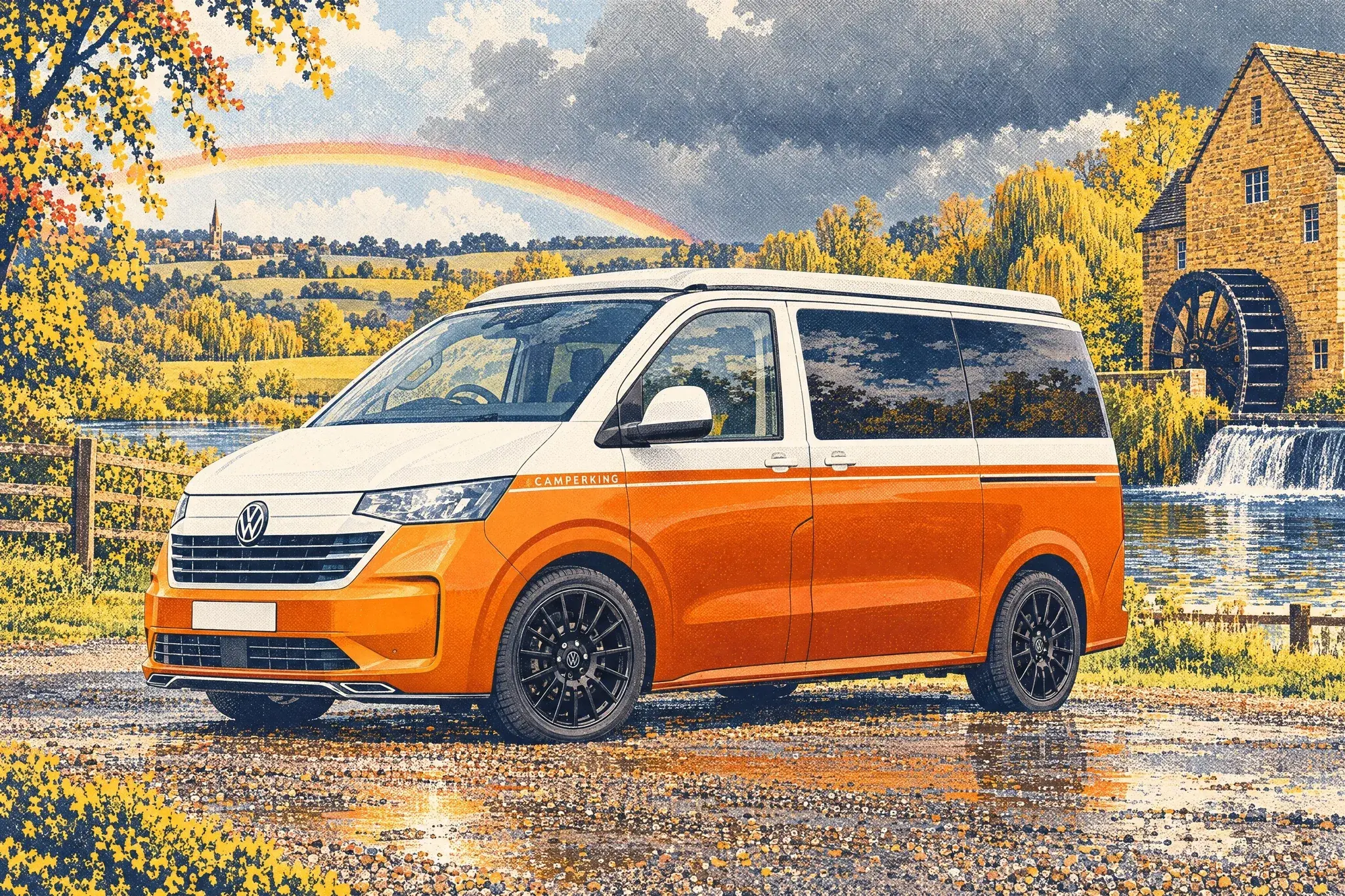
If you're going to covet one Crosscamp, make it the EXPLR, the compact urban camper that used to be the Crosscamp Lite. It's the model that defines the brand's identity, it's the one a UK buyer would genuinely cross-shop against a VW California, and it's the one carrying the Vauxhall connection that makes the whole UK question tempting. The bigger ADVTR and EXPDN are capable but more conventional; the EXPLR is the distinctive one.
Here's what makes it special. It's built on the Opel Zafira Life (or its Peugeot Traveller twin) with a 144 PS diesel, and the headline figures are all about usability: it's under five metres long and under two metres tall, which is the killer trick, because at that height it slips under the typical multi-storey and supermarket car-park barriers that lock out almost every other camper. A raised pop-top roof gives up to 2.27 metres of standing height inside when you're parked, then drops down for a low, car-like profile on the move. It sleeps up to four (a rear bed plus the pop-top double) and seats up to seven, so it genuinely doubles as family transport. The galley is a removable kitchen module with an external connection, so you can cook outside, paired with a 22-litre fresh-water tank and a 36-litre compressor fridge. Maximum gross weight is a light 3.1 tonnes.
| Crosscamp EXPLR (5.0 F) | Detail |
|---|---|
| Base vehicle | Opel Zafira Life / Peugeot Traveller |
| Engine | 144 PS diesel |
| Length | under 5.0 m |
| Height (roof down) | under 2.0 m (fits most car-park barriers) |
| Standing height (roof up) | up to 2.27 m |
| Berths | up to 4 |
| Seats | up to 7 |
| Kitchen | Removable module with external connection |
| Fresh water / fridge | 22 litres / 36 litres |
| Max gross weight | 3.1 tonnes |
| Price | €49,999 (no UK price; not sold here) |
That combination, a camper small enough for everyday car-park life, that still sleeps four and seats seven, is exactly the recipe that makes the VW California so beloved, and the EXPLR does it for a continental price of €49,999, which is roughly £43,000 at current exchange rates. We stress "roughly" and "continental", because there is no official UK price; the van isn't sold here. But it gives you a sense of why UK buyers eye it: it's a genuinely appealing small camper at a sensible price, from a serious group, and it's just out of reach.
What makes the urban-camper formula so appealing
It's worth pausing on why a van like the EXPLR generates such interest, because it explains the whole shape of this market and why UK buyers covet a camper they can't have. The appeal is duality. A compact pop-top camper like this isn't really a motorhome you keep only for holidays; it's a vehicle you can use every single day, the school run, the supermarket, the commute, that also happens to convert into a camper at the weekend. With the roof down it's barely bigger than a large estate car or an MPV, it fits on the drive, it slips into ordinary parking spaces, and crucially it ducks under the height barriers that turn most campers away from town-centre and supermarket car parks. Then you raise the roof, and it's a four-berth camper with standing room.
That one-vehicle-does-everything promise is exactly why the VW California has such a devoted following, and why this corner of the market is so fiercely fought. For a lot of people, especially those downsizing from a big motorhome or a caravan, or younger buyers who can only justify one vehicle, the small camper is the sweet spot: enough to get away properly, little enough to live with daily. The EXPLR nails that brief, sub-five-metres, sub-two-metres tall, seven seats, four berths, at a sensible price, which is precisely why its absence from the UK is frustrating rather than academic. It isn't a niche curio; it's a van a lot of British buyers would genuinely use.
The EXPLR versus the VW California
Since the VW California is the van every compact camper is measured against, and the one a UK buyer would most likely choose instead, it's worth a direct look at how the EXPLR stacks up against it, even though you can't buy the Crosscamp here. It's the clearest way to understand what the EXPLR is, and isn't.
On the core recipe they're strikingly similar. Both are compact, pop-top campers under five metres long that double as everyday vehicles, both raise a roof for standing room and a sleeping double up top, and both seat several and sleep up to four. The EXPLR's strengths are its sheer practicality: that sub-two-metre roof-down height that clears car-park barriers, the removable kitchen module you can use outside, and a keen continental price of €49,999. The California's advantages are the ones that come with being the established champion: a more polished, more integrated interior, the cachet and resale strength of the VW badge, and, decisively for a UK buyer, the fact that you can actually walk into a dealer and buy one in right-hand drive with a warranty.
The honest read is that the EXPLR looks like a thoroughly credible California rival on paper, arguably with a price and a practicality edge, but the California wins the only contest that matters in Britain by simply being available here. It's a familiar pattern: an interesting continental camper that would give the home-market favourite a real run, if only you could buy it. For now, if the EXPLR's recipe appeals, the California is the way to get it on a UK driveway, with the Ford Nugget and the specialist converters as the other routes to the same idea. The EXPLR is the one that got away, not because it's worse, but because it isn't here.
The Vauxhall tease, and why it still doesn't mean UK
This is where hope springs, so let's deal with it honestly. The EXPLR is built on the Opel Zafira Life. In the UK, that exact van is sold by Vauxhall as the Vivaro Life, Opel and Vauxhall being sister brands under the same Stellantis umbrella. So the underlying vehicle is already here, already right-hand drive, already serviced by a UK dealer network. It feels like Crosscamp could just flick a switch and sell us a Vivaro-based version.
But it doesn't work like that, and it's worth understanding why. Crosscamp converts the Opel, not the Vauxhall, and a conversion designed and type-approved around a left-hand-drive Opel for continental markets isn't automatically a right-hand-drive Vauxhall product for Britain. Vauxhall, separately, has run its own UK campervan conversion programme on the Vivaro, but that's Vauxhall's project, not Crosscamp's, and the two shouldn't be confused. No source ties Crosscamp to a Vauxhall-badged or right-hand-drive UK product. So the shared Stellantis base makes a future UK Crosscamp plausible in engineering terms, the hard part, a suitable base vehicle, already exists here, but it doesn't make it planned, and as of now there's no indication it's happening. The tease is real; the product isn't.
So why isn't Crosscamp sold in the UK?
A few reasons stack up. Right-hand drive is the obvious one: bringing a camper to Britain properly means engineering and type-approving a right-hand-drive version, building a dealer and warranty network, and committing to the market, all of which costs real money and only makes sense at a certain volume. For a small brand that has just relaunched after a tough couple of years, the sensible focus is its core continental markets, not an expensive new-country launch.
There's also the group dimension. The Erwin Hymer Group already sells several camper brands in the UK, including Sunlight, Hymer and Bürstner, so from the group's point of view, Britain is already served by its badges; adding Crosscamp to the UK line-up would mean it competing partly against its own siblings here. And the UK compact-camper market it would enter is fiercely defended, dominated by the VW California and the Ford Transit Custom Nugget, with a long tail of specialist converters, so a newcomer would have a hard, expensive fight on its hands. None of this means "never", but together it explains why "not now" is the rational position for the brand, and why no UK launch has been announced.
There's a harder commercial truth underneath all this, too. Bringing any continental camper to Britain properly is a volume game: the cost of right-hand-drive engineering, type approval, a dealer and parts network, marketing and warranty support has to be spread across enough sales to make sense. The UK is a substantial motorhome market, but it's smaller than the big continental ones, and post-Brexit trade friction has added cost and complexity to moving vehicles and parts across the Channel. For a large, established brand with a proven UK appetite that maths can work; for a small brand that has just rebuilt itself, and whose group already fields several UK badges, the case is much harder to make. It isn't that Crosscamp couldn't sell here; it's that, right now, the numbers probably don't justify the effort, and that's the real reason the answer is "not yet" rather than any lack of a good product.
If you want one in the UK anyway
Say you've fallen for the EXPLR and you want one on a British driveway. What are your realistic options? Honestly, they're limited, and we'd want you to go in clear-eyed.
The first is a personal import. You can, in principle, buy a Crosscamp in left-hand drive from a continental dealer and import it to the UK, but that's a project: you'd be driving or shipping a left-hand-drive van home, then dealing with UK registration and the relevant approval and paperwork to put it on the road here, with no local dealer support, no UK warranty channel, and the everyday compromise of left-hand drive on British roads. For a determined enthusiast it's doable; for most people it's more hassle and risk than it's worth, especially at this money.
The second, and the one we'd gently steer most people towards, is to buy something equivalent that is properly sold here. The EXPLR's whole appeal, a compact, car-park-friendly pop-top that sleeps four and seats several, is a recipe other makers offer in right-hand drive with a UK warranty: the VW California is the obvious benchmark, the Ford Transit Custom Nugget another, and there's a healthy UK industry of specialist converters building exactly this kind of small camper on bases you can have serviced down the road. You may not get the Crosscamp badge, but you'll get the same usefulness without the import headache. And it's worth remembering that sister operations within the same group, such as Pössl, do reach the UK, so the broader family of clever continental campers isn't entirely out of reach, even if this particular badge is.
What importing one actually involves
If you're set on the genuine article, it's worth knowing what a personal import actually entails, because it's more involved than just buying a van abroad. You'd buy a left-hand-drive Crosscamp from a continental dealer, then bring it to the UK, by driving it home or shipping it, and go through the process of registering a newly-imported vehicle here. For a new vehicle with European type approval that can be relatively straightforward, but you'll still be dealing with the paperwork of registration, the VAT and customs considerations, and getting UK number plates and documentation in order, and it pays to research the current requirements carefully before you commit, because the rules around importing and registering vehicles can change.
Then there's the ownership reality once it's here. You'd have no local Crosscamp dealer for servicing, warranty or parts, so anything that needed attention would mean either a long trip back to the Continent or finding a UK specialist willing to take it on, and warranty claims on an imported vehicle can be awkward. You'd also be living with left-hand drive on British roads, which is manageable but a daily compromise, less convenient at toll booths, car-park barriers and overtakes, and a factor when you come to sell. And resale is its own question: a left-hand-drive, personally-imported camper from a brand with no UK presence is a niche proposition that can be harder to move on than a mainstream UK-supplied van.
None of this makes it impossible, and plenty of enthusiasts happily import vehicles they love. But for a camper whose whole appeal is easy, everyday usability, taking on left-hand drive, the import paperwork and the lack of local support is a real price to pay, and it's worth weighing honestly against simply buying a comparable van that's sold here. For most people, the sums and the hassle point firmly towards a UK-available alternative.
The UK alternatives worth a look
Because the EXPLR's appeal is a recipe rather than a unique invention, the good news is that the recipe is well served in the UK, in right-hand drive, with proper dealer support. If what drew you to the Crosscamp was the small-camper-that-fits-everywhere idea, here's where to look instead.
The VW California is the obvious benchmark, and the one the EXPLR most directly echoes: a compact, pop-top camper that doubles as everyday transport, with a loyal following, strong residuals and a vast UK dealer and support network. It's not cheap, but it's the gold standard for this kind of van, and it does in Britain exactly what the EXPLR does on the Continent. The Ford Transit Custom Nugget is the other big name, a slightly different take with, in some versions, a rear kitchen and the choice of a fixed or elevating roof, again fully sold and supported here. Between them, the California and the Nugget cover most of what makes the EXPLR appealing, and you can buy either without a moment's worry about left-hand drive or import paperwork.
Beyond the big two, the UK has a deep and healthy industry of specialist converters building compact campers on the VW Transporter, the Ford Transit Custom, the Vauxhall Vivaro (the very van the EXPLR is based on) and others. Many will build you a pop-top, four-berth, multi-seat camper to your own specification, which is arguably closer to the Crosscamp spirit than any off-the-shelf rival, and it'll be right-hand drive with a UK warranty. So while you can't have a Crosscamp here, you can absolutely have what a Crosscamp offers. The badge is missing; the usefulness isn't.
What a UK arrival would actually take
If Crosscamp ever did decide Britain was worth it, it's worth understanding what that would involve, because it tells you how likely it is. The brand would need to engineer and type-approve right-hand-drive versions of the models it wanted to sell here, which is real work even when, as with the EXPLR, a right-hand-drive base vehicle already exists in the form of the Vauxhall Vivaro. It would need a UK dealer network to sell, service and warranty the vans, either by signing up independent motorhome dealers or by leaning on the group's existing UK infrastructure. And it would need the parent group to decide that a UK Crosscamp wouldn't simply cannibalise sales of its other UK brands.
That last point is the quiet obstacle. The Erwin Hymer Group already sells Sunlight, Hymer and Bürstner here, covering value, premium and design-led buyers. A UK Crosscamp would have to carve out space without eating its siblings' lunch, and the group may simply judge that the urban-camper buyer it would target is better chased with an existing badge, or not worth a fresh launch at all. The most plausible route, if it happened, would be a right-hand-drive EXPLR riding on the established Vivaro base, sold through group channels, because that's where the engineering and commercial pieces line up best. But "most plausible route" is a long way from "announced plan", and we want to be clear we're describing what would be required, not predicting that it will happen.
Could it come in future?
We'll end the speculation honestly. Could Crosscamp arrive in the UK one day? Yes, it's plausible. The base vehicle for its most appealing model is already sold here, the parent group knows the UK market intimately, and a brand that has just relaunched with fresh ambition might well look at new territories once it's back on its feet. If it did, the EXPLR is the model that would make the most sense for Britain.
But plausible isn't planned, and we won't pretend otherwise. There is, today, no announced UK launch, no right-hand-drive product, and no dealer network. So the honest position is: keep an eye on it, because it's not impossible, but don't hold your breath, and don't make a buying decision today on the assumption it's coming. If that changes, it'll be genuine news, and we'll cover it. Until then, Crosscamp remains a brand worth admiring from across the Channel rather than one you can buy at home.
If you do want to keep tabs on it, there are a few concrete signs that would suggest a UK launch is genuinely on the cards, rather than just wished for. The first would be Crosscamp adding the UK, or "GB", to the country list on its own website, or publishing any sterling pricing. The second would be a UK motorhome dealer announcing it had taken on the franchise, the way dealers announce new brands they're stocking. The third, and most telling, would be any sign of a right-hand-drive Crosscamp, whether in a press release, at a UK show like the NEC, or in type-approval terms. Until at least one of those appears, treat any "Crosscamp is coming to Britain" chatter as speculation. When one does, it'll be a genuine story, and the EXPLR on the Vauxhall-shared base is the model to watch for first. For now, the sensible assumption is steady as it goes: a good brand, doing well enough across the Channel, with no pressing reason to take on the cost and complexity of Britain just yet.
Frequently asked questions
Is Crosscamp sold in the UK?
No. As of mid-2026, Crosscamp is not sold in the UK and never has been. It offers no right-hand-drive vehicles and has no UK dealer network. Its official markets are continental, including Germany, Austria, Switzerland, France, Italy, the Netherlands, Belgium and Poland. There's no official UK price for any Crosscamp model because none is sold here.
Did Crosscamp go out of business?
No. There was no Crosscamp insolvency. The confusion comes from a genuine downturn across the recreational-vehicle industry in 2024, during which its parent operation, Dethleffs in Isny, paused production and ran short-time working. Crosscamp, owned throughout by the Erwin Hymer Group, was caught up in that group-level slump, then relaunched with a new range for the 2026 season. So it's trading, not gone.
What is Crosscamp's best model?
For most buyers, and especially anyone in the UK eyeing the brand, the standout is the EXPLR (formerly the Crosscamp Lite), a compact urban camper on the Opel Zafira Life. It's under five metres long and under two metres tall, so it fits typical car-park height barriers, raises a pop-top for standing room, sleeps up to four and seats up to seven, all for a continental price of €49,999. It's the model that best captures what makes Crosscamp appealing.
Will Crosscamp come to the UK because it's based on a Vauxhall?
Not necessarily. The EXPLR is based on the Opel Zafira Life, whose UK twin is the Vauxhall Vivaro Life, so the base vehicle is sold here. But Crosscamp converts the Opel, not the Vauxhall, and a left-hand-drive continental conversion isn't automatically a right-hand-drive UK product. Vauxhall runs its own, separate camper conversions on the Vivaro. The shared Stellantis base makes a future UK Crosscamp plausible, but nothing has been announced.
How can I buy a Crosscamp in the UK?
Realistically, only by personal import in left-hand drive from a continental dealer, which means handling UK registration and approval yourself, with no local dealer or warranty support, and living with left-hand drive. For most people that's more trouble than it's worth. The sensible alternative is a comparable camper sold here in right-hand drive, such as a VW California, a Ford Transit Custom Nugget or a UK converter's compact pop-top.
What was the Crosscamp Lite?
The Crosscamp Lite was the brand's compact urban camper from 2020, built on the Opel Zafira Life (and earlier the Toyota Proace). It's the model that has since been relaunched and renamed the EXPLR for 2026. The original Lite was a pared-back, affordable pop-top camper that doubled as a seven-seat family vehicle, with a minimal galley and a continental starting price around €42,999. If you've read about the Crosscamp Lite, the EXPLR is its current equivalent.
Is there an electric Crosscamp?
There has been. Crosscamp offered an all-electric version, the Crosscamp Flex, based on the battery-powered Opel Zafira-e Life, with a claimed range of around 200 miles, an early entry into the electric-camper niche. Whether an electric model features in the current 2026 range isn't something we can confirm, so if an EV camper is what you're after, check the latest line-up directly. As with the rest of the range, none of it is sold in the UK.
Why do so many good European campervans never come to the UK?
It usually comes down to volume and cost. Selling a camper properly in Britain means engineering right-hand-drive versions, gaining type approval, building a dealer, parts and warranty network, and marketing the brand, all of which only pays off above a certain number of sales. For smaller makers, or brands whose group already has UK representation, the UK market, while substantial, may not justify that investment, especially with the added post-Brexit friction of moving vehicles and parts across the Channel. It's rarely about the product; it's about whether the business case adds up. Crosscamp is a case in point.
How much does a Crosscamp cost?
On the Continent, the standout EXPLR urban camper starts at €49,999, which is roughly £43,000 at current exchange rates. The larger ADVTR van conversion and the new EXPDN coachbuilt motorhome cost more. But there is no official UK price for any Crosscamp, because the brand isn't sold here, so any sterling figure is only a currency conversion of a continental price, not what you'd actually pay in Britain.
Is Crosscamp part of the same group as Hymer and Bürstner?
Yes. Crosscamp is the youngest brand in the Erwin Hymer Group, which also owns Hymer, Bürstner, Dethleffs, Sunlight and Carado, and which is itself owned by the American RV company Thor Industries. Crosscamp's vehicles are built by the group's Dethleffs operation in Isny. So it shares its engineering and backing with some of the biggest names in European motorhomes, even though it's the smallest and newest of the family.
When did Crosscamp relaunch?
Crosscamp relaunched for the 2026 season, after a quiet period during the recreational-vehicle industry's 2024 downturn. The relaunch reorganised the range into three lines, the EXPLR urban camper, the ADVTR van conversion and the new EXPDN coachbuilt motorhome, with a leaner, more value-focused approach. The brand is actively selling across its continental markets again, though still not in the UK.
Is the Crosscamp EXPLR better than a VW California?
On paper the EXPLR is a credible rival, with a similar compact, pop-top, car-park-friendly format, a clever removable kitchen and a keen continental price of €49,999, arguably with an edge on outright practicality and value. The VW California counters with a more polished interior, stronger residuals, the badge, and the decisive advantage, for a UK buyer, of actually being sold here in right-hand drive with a warranty. So "better" depends on your priorities, but for anyone in Britain the California wins the practical contest simply by being available, while the EXPLR remains the intriguing one you can't buy.
Common questions
Is Crosscamp sold in the UK?
No. As of mid-2026 Crosscamp is not sold in the UK, has never been sold here, offers no right-hand-drive vehicles and has announced no plan to come. Its official markets are continental, including Germany, Austria, Switzerland, France, Italy, the Netherlands, Belgium and Poland. There is no UK dealer network and no GBP pricing because there is nothing to price.
Did Crosscamp go out of business?
No, that is a myth. There is a widely repeated belief that Crosscamp went insolvent, but it did not. The wider recreational-vehicle market hit a serious slump in 2024 and the whole industry felt it, so the brand went quiet while its parent operation weathered the storm, then came back for 2026 with a full relaunch and a leaner, more keenly-priced range.
What is Crosscamp's best model?
The standout is the Crosscamp EXPLR, a compact urban camper on the Opel Zafira Life (the Vauxhall-twinned base). Its killer trick is being under five metres long and under two metres tall, so it slips under the typical multi-storey and supermarket height barriers that lock out almost every other camper, with a pop-top giving up to 2.27 metres of standing height when parked.
Will Crosscamp come to the UK because it is based on a Vauxhall?
Not necessarily. One model uses the Opel Zafira Life, which Vauxhall sells in Britain, but a shared base does not create a UK sales operation: there is still no right-hand-drive build, no dealer network, no warranty support and no announced plan. The Vauxhall connection is an intriguing tease rather than a sign a UK arrival is coming.
How can I buy a Crosscamp in the UK?
The only route is a private import of a left-hand-drive example from one of its continental markets, with all the practical realities that brings: registration, compliance, insurance, servicing and resale. For most UK buyers a comparable van sold here in right-hand drive with a warranty, such as a VW California, is the more sensible choice.
Is the Crosscamp EXPLR better than a VW California?
On paper the EXPLR is a credible rival, with a similar compact pop-top format, a clever removable kitchen and a keen continental price, arguably with an edge on practicality and value. But the California counters with a more polished interior, stronger residuals, the badge and, decisively for a UK buyer, actually being sold here in right-hand drive with a warranty. For anyone in Britain, the California wins simply by being available.
The reachable bit
The camper you fall for is rarely the one you can afford. That gap is the whole reason Campervan.win exists. Right now we’re giving away the Sunlight Vanlife, worth around £65,000, and closing that gap is the point: capped entries so the odds stay honest, £10 a ticket, a maximum of five per person, £500 to a UK charity from every full draw, the winner picked by a public randomness beacon anyone can re-check, and one person driving away in the van itself.
Enjoyed this post?
Get more honest campervan guides like this one in your inbox.
You’re in!
Check your inbox. We’ve just sent you a welcome email.

About the author
Oliver
Oliver is the founder of Campervan.win and writes about campervans, travel, and the life-changing freedom that comes with getting out on the road.
Keep Reading
Related Reading
Thoughtful articles that build on what you’ve just read.
New & Noteworthy
12 min read
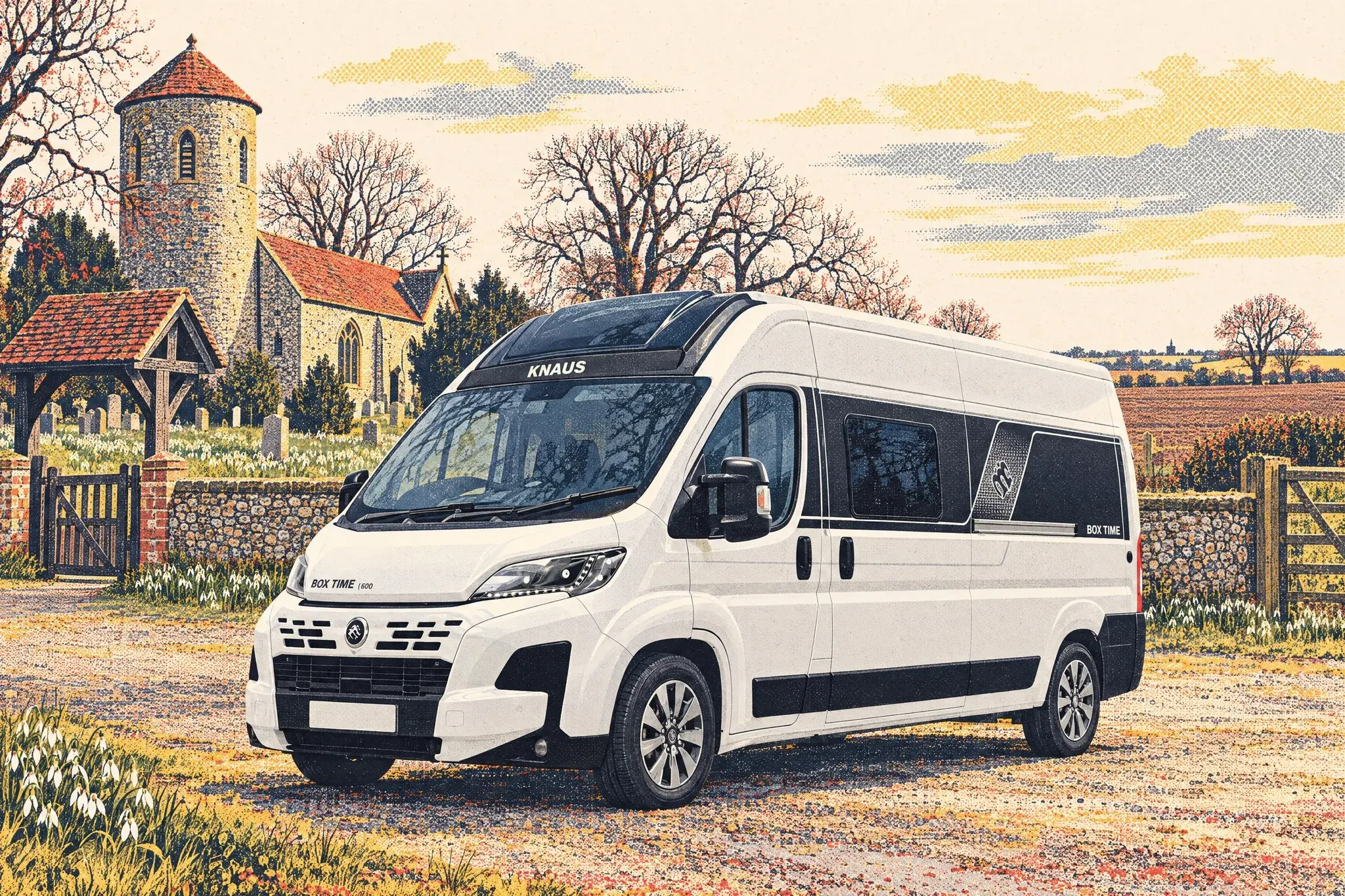
Knaus Boxtime 600 ME (2027): twin singles in 6 m, and the payload figure to question
Knaus's new Boxtime 600 ME squeezes two lengthways single beds into a 5.99 m van from £81,725. We lay out what that layout gives a couple, run the weight sums with Knaus's own figures, and explain why the 211 kg 'maximum payload' line needs a question before you sign.
New & Noteworthy
10 min read
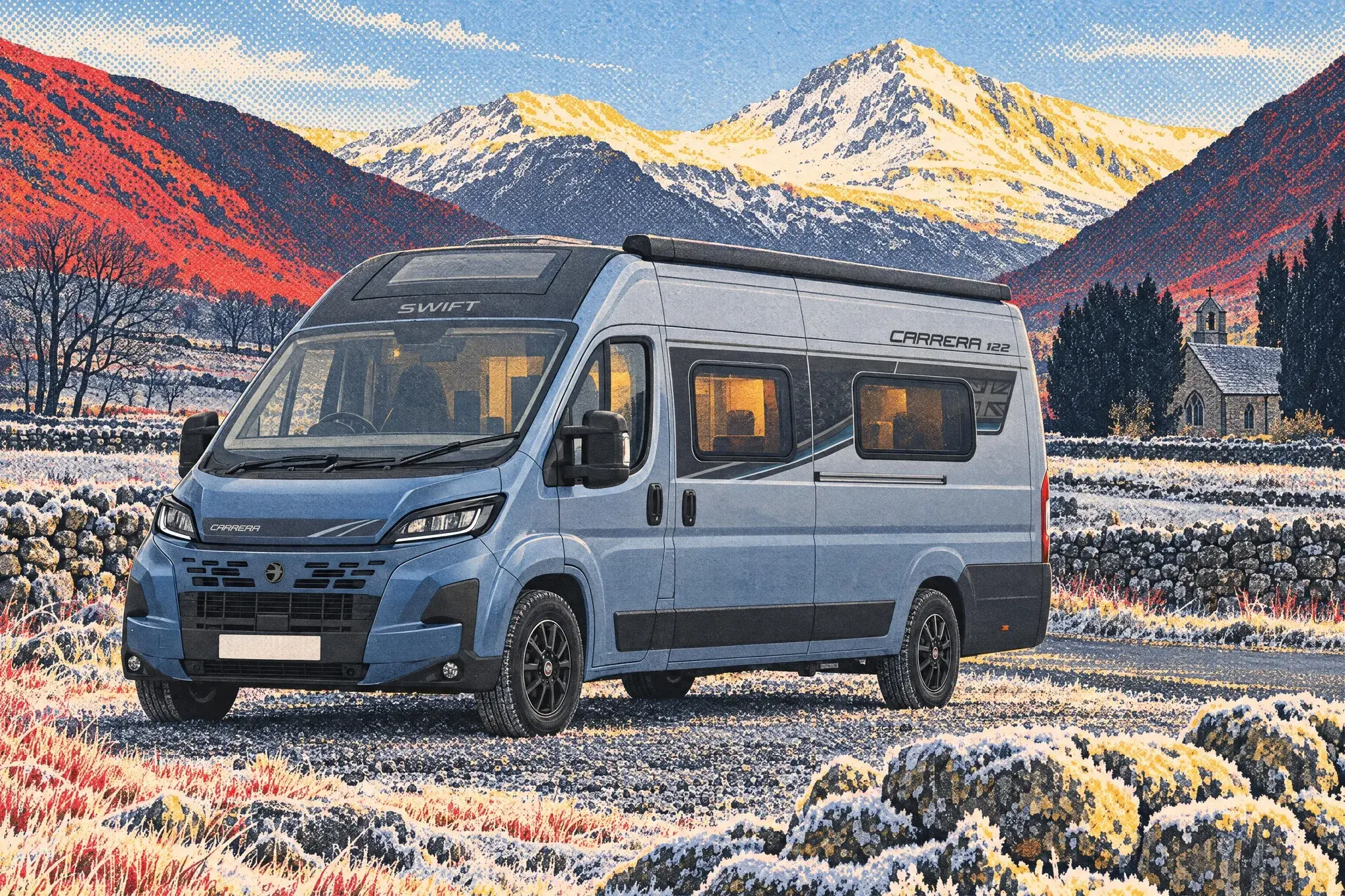
Swift Carrera goes gas-free for 2027: 340Ah lithium, diesel heat and induction cooking
Swift has taken the gas out of its Carrera campervan for 2027, swapping bottles for a 340Ah lithium battery, diesel heating and an induction hob. Here is what that means across a real UK year, how it compares with the cheaper Merlin, and the one question to ask at the NEC.
New & Noteworthy
10 min read
British campervan converters at the NEC 2026: who builds on what, and for how much
A stand-by-stand map of the British campervan converters at the Motorhome and Caravan Show 2026: the vans they build on, their from-prices, seats, roofs and lead times, plus the four questions to put to every one of them.
New & Noteworthy
9 min read
Plug-in hybrid campervans at the NEC: what a PHEV gives you and why full EVs are rare
Four UK converters have hybrid campers at or around the Motorhome and Caravan Show this October, while fully electric campers remain scarce. Here is what a plug-in hybrid camper does well, what the sellers rarely tell you, and the questions to ask on the stand.