
Who makes Sunlight campervans? Inside the Erwin Hymer Group

Written by
Oliver
Oliver is the founder of Campervan.win and writes about campervans, travel, and the life-changing freedom that comes with getting out on the road.
The short answer
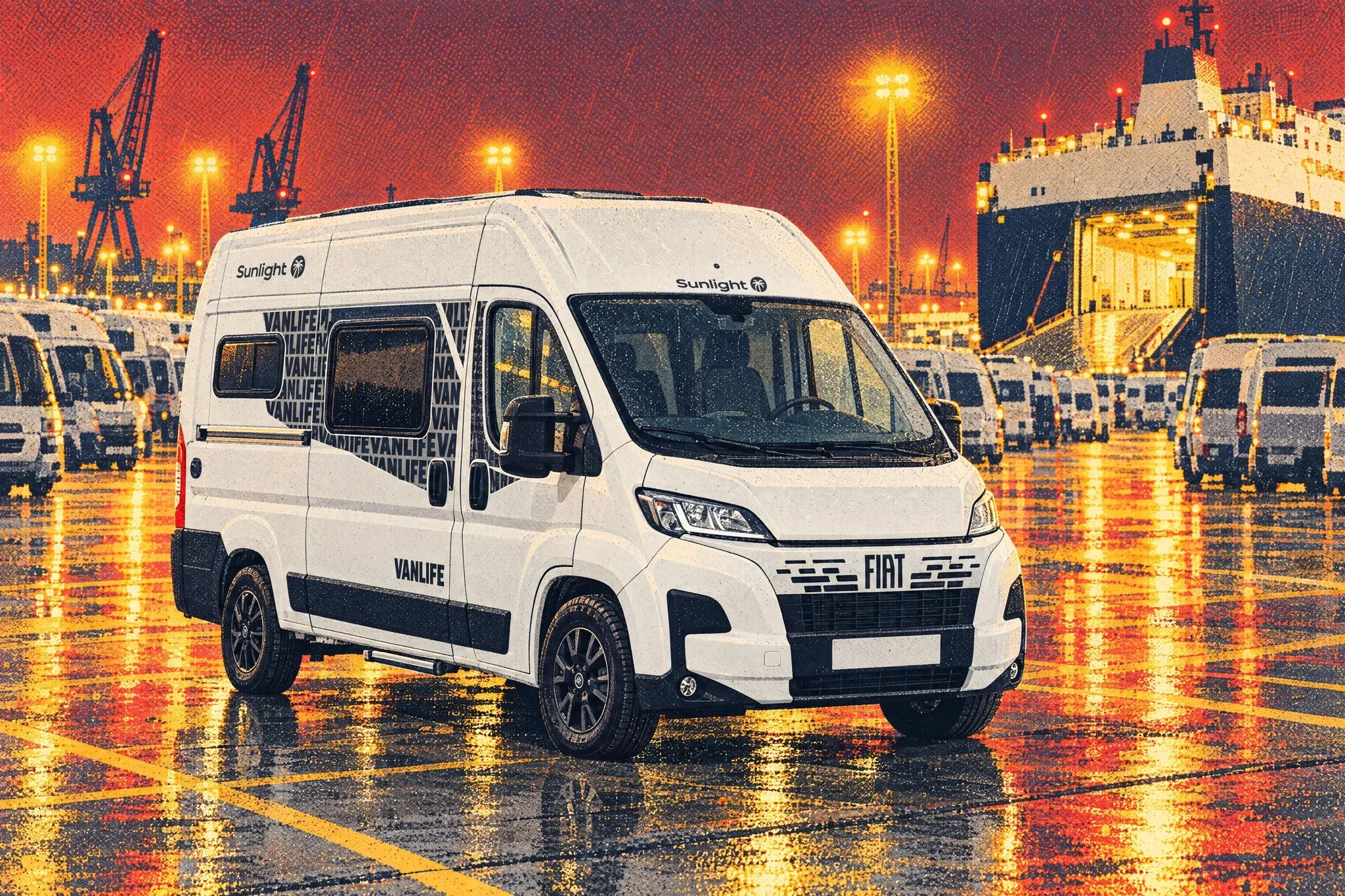
Sunlight is not an independent maker; it is the value-end brand of the Erwin Hymer Group, one of Europe's largest motorhome manufacturers, built in Germany at the Capron factory in Neustadt on the same lines as its near-identical sister brand Carado. The group traces back to Erwin Hymer's 1950s caravan business and has been owned by America's Thor Industries since 2019, so the engineering and build are German while the ultimate parent is American. That heritage is the reassuring bit: a Sunlight is type-approved and factory-built to a consistent standard, comes with a warranty backed by a major group, and resells easily because thousands of identical vans exist. It sits on the Fiat Ducato. Here is the full story of who really makes Sunlight, and what that backing gives you.

When you're about to spend the thick end of £60,000 on a campervan, "who actually makes this?" is one of the most sensible questions you can ask, and one of the least often answered. Brands in the motorhome world can be genuinely confusing: some are large manufacturers, some are small one-workshop converters, and a surprising number are badges belonging to far bigger groups you've never heard of. Sunlight is one of the names that sounds like a standalone brand but isn't, and the truth behind it is reassuring, which is exactly why it's worth knowing before you commit.
The short answer is that Sunlight is built by the Erwin Hymer Group, one of the largest and most respected motorhome manufacturers in Europe, in a modern factory in eastern Germany, on the same production lines as its near-identical sister brand Carado. The longer answer, the history, the American parent company, the family of brands, where Sunlight sits among them, the warranty behind it, and whether all of that makes it a good buy, tells you a great deal about what you're actually getting for your money. So here is the full picture, because understanding the maker is half of understanding the van, and in this case the maker is a genuine point in the van's favour.
Sunlight is an Erwin Hymer Group brand
Let's start with the headline and then unpack it properly. Sunlight is not an independent manufacturer; it's one of the brands owned by the Erwin Hymer Group, usually shortened to EHG. If you don't follow the motorhome world closely, that name might mean nothing to you, but in the industry it's a heavyweight, the kind of parent company whose involvement should put your mind at ease rather than the opposite.
This matters because it tells you the van isn't the work of a small outfit that might not be around in five years, or a converter learning on the job. It's the product of a major European manufacturer with decades of engineering behind it, a proper factory, established quality control, a real dealer network and the financial stability of a large group, which is itself owned by one of the biggest recreational-vehicle companies in the world. For a purchase you intend to keep and tour in for years, and to be able to service and sell on, that backing is worth a great deal. The Sunlight badge is the friendly, accessible face; the engineering and the corporate muscle underneath are serious, established and German. That combination, an approachable brand on top of a heavyweight maker, is the whole story of Sunlight, and it's why a keen price doesn't have to mean a risky buy.
The Erwin Hymer Group, and where it came from
To understand the reassurance, it helps to know the group and its roots. The Erwin Hymer Group traces back to Erwin Hymer himself, a German engineer whose family business in Bad Waldsee, in the south of Germany, grew from building its first caravans in the 1950s into one of the most respected names in European leisure vehicles. What began as a modest family caravan firm became, over the following decades, a sprawling group of brands that today sits among the very biggest in the motorhome and caravan world.
The group's portfolio is a roll-call of names a motorhome buyer will recognise. At the premium end sit Niesmann+Bischoff, Hymer itself and the Italian maker Laika. In the broad middle are Dethleffs, one of the oldest caravan names in Germany, and Bürstner, along with others. And at the value end, the two brands at the heart of this story, Carado and Sunlight, joined by Etrusco. The group also owns familiar British names through its UK arm. It is, in short, not a single brand but an entire ecosystem of them, spanning every price point from entry-level to luxury, all under one corporate roof.
Then, in 2018, came the development that put real financial weight behind all of it: the American giant Thor Industries agreed to buy the Erwin Hymer Group, and the deal closed on the first of February 2019, valued at around two billion euros. The acquisition made Thor, already huge in North America, the largest recreational-vehicle manufacturer in the world, with EHG as its European arm. For a Sunlight buyer, the practical meaning is simple: the brand you're considering sits within a major German manufacturer, which in turn sits within a global RV group with enormous resources behind it. That's about as far from a fly-by-night operation as the campervan market gets, and it's the context that makes Sunlight's keen pricing reassuring rather than suspicious. A small maker pricing low might worry you; a value brand inside a giant, stable group is a different proposition entirely.
Where Sunlight (and Carado) are actually built
Here's the detail that ties it all together, and the one most buyers never learn. Sunlight campervans, and their Carado equivalents, are built at a factory called Capron, in Neustadt in Sachsen, in the east of Germany. The name is a contraction of Caravan Produktion Neustadt, and the plant has an interesting history of its own. It was founded in July 2005 as a joint venture between Hymer and Dethleffs, took over a former agricultural-machinery site near the Czech border, and began building vehicles in November 2006. It exists specifically to build the group's volume, value-focused campervans and motorhomes, and it has grown steadily ever since, adding a second production line in 2015 and further press lines as demand rose.
The significant part, for anyone weighing a Sunlight, is that Sunlight and Carado roll down the same lines, at the same factory, built by the same workforce to the same standards. They are, underneath the different badges and trim, the same vehicles, a point we explore in full in our comparison of the Sunlight Vanlife 540 V and its Carado twin. The plant has been productive enough to turn out its hundred-thousandth vehicle in June 2022, which tells you this is a serious, high-volume operation rather than a boutique workshop. This kind of badge-sharing is completely normal in the vehicle world, exactly as a car group will build near-identical models under different marques, and it's good news for the buyer: it means a Sunlight is built with the same German engineering and quality control as its group siblings, just packaged and priced for a particular kind of customer. You're getting Capron factory build, the same metal that wears more expensive badges, at an accessible price.
A short history of the Sunlight brand
Sunlight itself is a relatively young brand, created in the mid-2000s as part of the same push that established the Capron factory, with production beginning alongside its sister marque in 2006. From the start it was conceived as a value and design-led brand, pitched at younger, more style-conscious buyers and first-time owners who wanted a well-built German camper without the premium-brand price tag. Where its sister brand Carado was aimed at the slightly more traditional, sober end of the value market, Sunlight was given the brighter, more modern personality, lighter woods, bolder fabrics, a more adventurous tone, while sharing the same vehicles underneath.
One footnote in the brand's history is worth knowing because it speaks to the Fiat connection that defines its vans today: the value brands are widely reported to have switched their base vehicle from Ford to the Fiat Ducato around 2009, settling on the platform that has underpinned them ever since and that powers the Vanlife and Cliff ranges now. The brand has evolved its line-up over the years, but the core proposition has stayed constant: German build and group engineering, styled for a younger buyer, sold at a price that undercuts the premium marques. Understanding that the brand was purpose-built to be the accessible, design-forward face of a serious manufacturer explains a lot about why its vans feel the way they do, keenly priced and brightly styled, but solidly made.
The Fiat Ducato underneath
It's not only the conversion that's worth knowing about; the van it's built on matters just as much, and here too the news is reassuring. Sunlight's campervans, including the Vanlife and the Cliff, are built on the Fiat Ducato, which is not just a popular motorhome base but the dominant one: something like three-quarters of all European motorhomes are built on it. There's a reason for that. The Ducato is, unusually, a van that Fiat engineers specifically with the motorhome industry in mind, developed in consultation with the big converters, with the body shapes, chassis options, payload ratings and the flat, square load space that camper builders need. It has been named the industry's best motorhome base year after year, a run of recognition that reflects how well suited it is to the job.
For a Sunlight buyer, that base brings concrete, everyday benefits. The 2.2-litre diesel and eight-speed automatic that power the Vanlife are a proven, refined combination, relaxed to drive and well able to haul a 3,500-kilogram van. More importantly, because the Ducato is everywhere, so is the ability to look after it: almost any garage in the UK and across Europe can service one, parts are plentiful and reasonably priced, and the knowledge base for keeping one running is vast. When you're touring far from home, that ubiquity is a genuine reassurance, far more so than a rarer base vehicle would be. So a Sunlight isn't only an Erwin Hymer Group conversion; it's that conversion on top of the single most sensible, best-supported base in the business, which is a large part of why these vans are easy to live with and easy to keep.
It's worth adding one honest note for completeness, because no base is flawless. Like any vehicle the Ducato has its known quirks: a slightly notchy, tall reverse gear that Fiat regards as a characteristic of the design rather than a fault, the usual diesel-particulate-filter care needed if you only ever do short trips, and suspension and clutch that work hard when the van is loaded near its weight limit. None of these are serious or unusual, and the sheer scale of the Ducato support network means they're cheap and straightforward to address wherever you happen to be. But they're worth knowing so the picture is complete rather than rose-tinted. On balance, the Ducato's combination of motorhome-specific engineering and near-universal parts and servicing makes it about the most sensible base a value camper could sit on, which is one more quiet point in a Sunlight's favour.
Sunlight's place in the range
So where does Sunlight sit within all those group brands? It's positioned as one of the value, design-led entry points, pitched at younger, more style-conscious buyers and families who want a well-built German camper without paying premium-brand money. Its sister brand Carado occupies a similar value position but with more sober, traditional styling, while Hymer, Bürstner and the luxury marques sit above both as the group's more premium, more expensive names.
Think of it as a ladder. At the top, the luxury names like Niesmann+Bischoff and the aspirational Hymer flagship, with the polish and the price to match. In the middle, Dethleffs and Bürstner. And at the accessible end, the value pairing of Carado and Sunlight, sharing the same vans but aimed at slightly different tastes, Sunlight the brighter and more modern of the two, Carado the quieter and keener-priced. Crucially, "entry-level" here does not mean poorly made; it means built to a sensible price within a group that knows how to build well. The corners that are cut are in trim level, interior plushness and badge prestige, not in the fundamental soundness of the vehicle. That's the whole appeal of buying at this end of a serious manufacturer's range: you get the engineering of the expensive brands without paying for the badge.
The other Erwin Hymer Group brands worth knowing
If you're shopping at this level it helps to recognise the wider family, because you'll keep bumping into these names and several are cross-shopped against Sunlight. At the premium end sit Niesmann+Bischoff and Hymer itself, the group's flagships, with the polish, the engineering showpieces and the prices to match, plus Laika, the upmarket Italian marque. In the middle, Bürstner, known for warm, liveable interiors, and Dethleffs, one of the oldest and broadest caravan and motorhome names in Germany. And then the value end: Carado and Sunlight, sharing the same vans from the same factory, alongside Etrusco. The group also owns established British caravan and motorhome names through its UK operations.
Knowing this does two genuinely useful things for a buyer. It reassures you that Sunlight isn't an orphan brand but part of a serious, deep portfolio with shared engineering and group-wide support, parts and dealer infrastructure. And it gives you a ladder to shop up and down: if a Sunlight feels close but you want more polish, a Bürstner or Hymer is the in-family step up; if you want the same van for less, the Carado twin is the step across. It's all one group, which is part of why buying any of them carries a similar baseline of reassurance, and why understanding the family is worth the few minutes it takes.
The warranty, and what backing the badge gives you
One of the most concrete benefits of buying from a major group rather than a small converter is the warranty, and it's worth understanding because the cover that matters most on any camper is protection against water ingress. As sold in the UK through the group's dealer network, Sunlight (and Carado) typically come with a two-year manufacturer's warranty plus a longer water-ingress, or watertightness, warranty in the region of five to six years, conditional on the van receiving its annual habitation and damp check at an approved dealer.
That conditionality is the important part, and it's a sensible discipline rather than a catch. Damp is the great enemy of any motorhome, the thing that quietly rots a neglected one from the inside, and the annual damp check is exactly what catches a developing problem early, while it's a cheap fix rather than an expensive one. Keep up the yearly check and the cover stays valid for years; skip it to save a service bill and you can lose the protection just when you might need it. Confirm the exact term and conditions in writing for the specific van you're buying, because the figure can vary by model year, but the shape of it, a couple of years of full warranty and several more of damp protection tied to servicing, is the kind of backing that comes from buying within an established group. A small converter may not offer it at all, or may not be around to honour it; a brand inside the Erwin Hymer Group can, and does.
What owners and reviewers actually say
History and corporate structure are reassuring, but the real test of a brand is what owners think after living with the vans, and here the picture for Sunlight and Carado is genuinely positive. In a substantial long-term survey of owners of the group's value vans, the large majority said they would buy the same brand again, and most rated the build quality as good or excellent, with the vehicles holding their value strongly over many years, fifteen-year-old examples still commanding real money. That kind of long-term satisfaction and residual strength is exactly what you want to see, because it reflects the experience of people who've lived with the vans through real ownership rather than a single glossy first drive.
The honest watch-points, the things owners report checking and occasionally fixing, are the small stuff common to almost all campervans rather than anything fundamental: the odd leaky tap or tired water pump, occasional cracking around a plastic washbasin, the rare bit of damp at the roof or the cab-to-living transition on poorly-maintained examples, a warped fridge door here and there, and on older vehicles things like headlight fogging. None of these are widespread or serious, and most are exactly what the annual damp and habitation check is designed to catch. The motoring press, for its part, consistently praises Sunlight's vans for packing a lot into a sensible size, for good build quality and clever, modern layouts, while applying the usual sensible cautions about payload and about the options list inflating that attractive base price. The overall verdict, from owners and reviewers alike, is of a well-made, good-value brand that does what it promises, which is the most you can ask.
Factory-built versus a small converter
It's worth drawing out the contrast with the other way campervans come to exist, because it explains a lot of Sunlight's appeal. A great many campers, especially in Britain, are built by small independent converters, sometimes a handful of skilled people in a workshop. The best of them do beautiful, bespoke work, and there's a lot to be said for a hand-built van made to your exact wishes. But buying from a small converter carries risks that a factory-built Erwin Hymer Group van largely removes.
A factory van like a Sunlight is type-approved as a complete vehicle, built to a consistent, repeatable standard on a production line, with engineering and crash-testing behind it that a small shop can't match. It comes with a manufacturer's warranty and a water-ingress warranty backed by a major group that will still be there in ten years. Its quality doesn't depend on which fitter happened to build yours that week. And because thousands of identical vans exist, problems are known, parts are available, and resale is straightforward, because a buyer understands exactly what they're getting. A bespoke one-off can be wonderful, but it can also be hard to value, harder to get warranty support on, and only as good as the individual who built it.
None of this is to disparage the good independent converters, who have their place and their devoted customers. It's to explain what you're actually buying with a Sunlight: the consistency, the backing and the peace of mind of a factory product from a serious manufacturer, at a price that competes with, and often undercuts, a comparable bespoke build. For many buyers, that predictability is exactly what they want from a purchase this size.
So, is Sunlight a good brand?
Pulling all of that together, the honest answer is yes, with the usual sensible caveats. The case in its favour is strong and well-evidenced: you get genuine Erwin Hymer Group engineering and German factory build quality, the backing and stability of a major manufacturer owned by the world's largest RV group, a proper UK dealer network for servicing and warranty, a multi-year water-ingress warranty, demonstrably high owner satisfaction and strong resale, all at a price that undercuts the premium brands. For a buyer who wants a well-made German camper and doesn't need a prestige badge, Sunlight is genuinely good value, and the evidence backs that up rather than just the marketing.
The honest caveats aren't really criticisms of the brand so much as the realities of this part of the market. As value-positioned vans, they're specced and trimmed to a price, so a Hymer or Bürstner will feel a notch more polished inside. As with most 3,500-kilogram campers, payload wants watching once you've loaded up. And the standard kit, while often generous, is bundled in ways that reward reading the spec carefully, because the eye-catching base price can climb once you add the packs most buyers want. None of that undermines the core point: a Sunlight is a properly built van from a serious maker, and the things it gives up to hit its price are matters of trim and badge, not of fundamental soundness. We go into the specifics in our full Vanlife 540 V review.
The Carado connection, and how to use it
The single most useful practical thing to take from all this is the Carado relationship, because knowing it can save you money. Since Sunlight and Carado are the same vans from the same factory, every Sunlight model has a Carado near-twin, and Carado, positioned a touch below Sunlight in the group's hierarchy, often costs less for the equivalent vehicle. So if you've settled on a Sunlight, it's well worth checking what the Carado equivalent costs, specced to match, before you buy.
There's an important nuance, though, which is that the saving isn't guaranteed on every model. In some pairings the Carado undercuts the Sunlight by several thousand pounds, the rear-bed Cliff 540 and Carado CV 540 being a good example. In others, the two are priced almost level, as with the Vanlife 540 V and its Carado CV 541 Pro twin, which start within a couple of hundred pounds of each other. So the rule isn't "Carado is always cheaper," it's "check both, because sometimes it is, sometimes it isn't, and you should buy with full knowledge of the pair." We walk through exactly how to do that comparison in our Vanlife versus Carado piece, and the broader Sunlight range choice in our Cliff versus Vanlife guide. The point is that understanding the maker turns into a genuine buying advantage, rather than just trivia.
What this means when you actually buy
Pulling it into practical terms: buying a Sunlight, you can be confident you're getting a German-built van from a major, stable manufacturer, with the dealer support, parts availability and warranty backing that come with that. The vans share their engineering with more expensive group siblings, so the build is sound. The water-ingress warranty protects you for years provided you keep up the annual damp check, which you should do anyway. The resale holds up well, because buyers recognise the EHG pedigree even at the value end, and a documented service history is exactly what a careful used buyer wants to see.
In short, the answer to "who makes Sunlight campervans, and can I trust them?" is one of the more comfortable ones in the whole market. They're made by the Erwin Hymer Group, in Germany, to a standard shared with brands costing thousands more, and backed by one of the largest RV companies on earth. You're not taking a punt on an unknown; you're buying a value-badged version of serious, established engineering. That's a good place to be starting from, whether you're buying one outright or, as it happens, hoping to win one.
Common questions
Who makes Sunlight campervans?
Sunlight is built by the Erwin Hymer Group (EHG), one of the largest and most respected motorhome manufacturers in Europe, in a modern factory in eastern Germany, on the same production lines as its near-identical sister brand Carado. It is not an independent manufacturer but a value-end brand of a heavyweight parent group.
Where are Sunlight campervans built?
In Germany, at the Capron factory in Neustadt in Sachsen, the Erwin Hymer Group's plant for its value-focused brands. Capron was founded in 2005 and began production in 2006, building both Sunlight and Carado on shared lines, and it produced its hundred-thousandth vehicle in June 2022, so it is a serious high-volume operation rather than a boutique workshop.
Is Sunlight a good campervan brand?
For peace of mind on a big purchase, yes. A Sunlight is type-approved and factory-built to a consistent standard, comes with a manufacturer and water-ingress warranty backed by a major group, holds its value predictably and is easy to resell because thousands of identical vans exist. You give up some interior polish and badge prestige versus premium group brands like Hymer, and the payload wants watching, but the fundamental build is sound.
Are Sunlight and Carado the same?
Underneath the different badges and trim, the equivalent models are the same vehicles, built by the same people on the same lines. The rear-bed Cliff 540 corresponds to the Carado CV 540, and the staircase-layout Vanlife 540 V to the Carado CV 541 Pro. Checking the Carado equivalent is a useful buying tactic, as it is often cheaper, though on the Vanlife pair the two are priced almost level.
What is a Sunlight built on?
The Fiat Ducato, the most common motorhome base in Europe (around three-quarters of European motorhomes use it), with a 2.2-litre diesel and an eight-speed automatic on the Vanlife. Fiat engineers it specifically for the motorhome industry, and it has been named the best motorhome base for years, which means excellent parts availability and servicing almost anywhere.
Is Sunlight a German brand?
Yes. Sunlight is a German brand of the Erwin Hymer Group, and its vans are built in Germany at the Capron factory in Neustadt in Sachsen. The group is German, though since 2019 it has been owned by the American company Thor Industries. So the engineering, the build and the brand are German; the ultimate parent is American.
The reachable bit
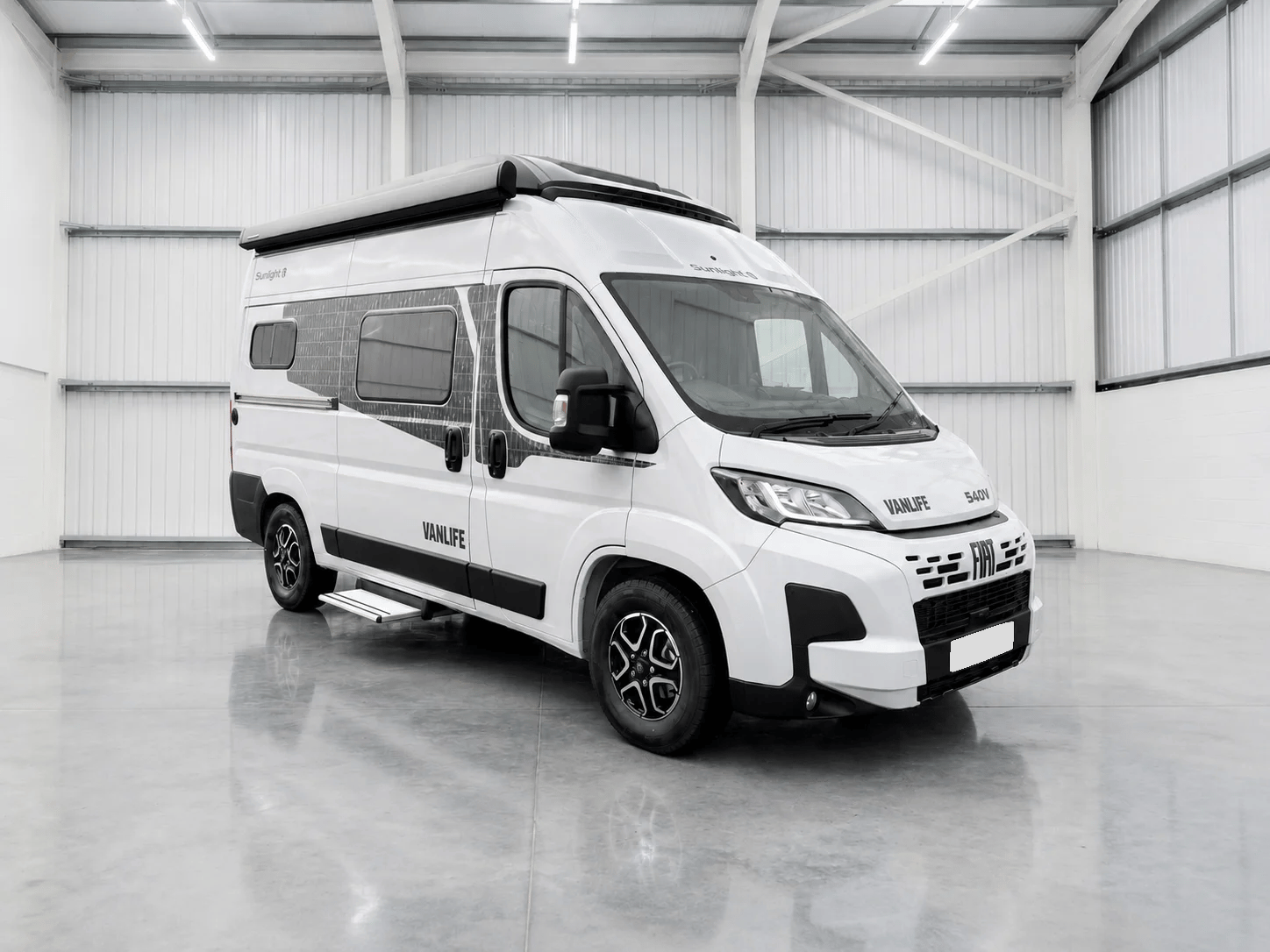
The camper you fall for is rarely the one you can afford. That gap is the whole reason Campervan.win exists. Right now we’re giving away the Sunlight Vanlife, worth around £65,000, and closing that gap is the point: capped entries so the odds stay honest, £10 a ticket, a maximum of five per person, £500 to a UK charity from every full draw, the winner picked by a public randomness beacon anyone can re-check, and one person driving away in the van itself.
Enjoyed this post?
Get more honest campervan guides like this one in your inbox.
You’re in!
Check your inbox. We’ve just sent you a welcome email.

About the author
Oliver
Oliver is the founder of Campervan.win and writes about campervans, travel, and the life-changing freedom that comes with getting out on the road.
Keep Reading
Related Reading
Thoughtful articles that build on what you’ve just read.
New & Noteworthy
12 min read
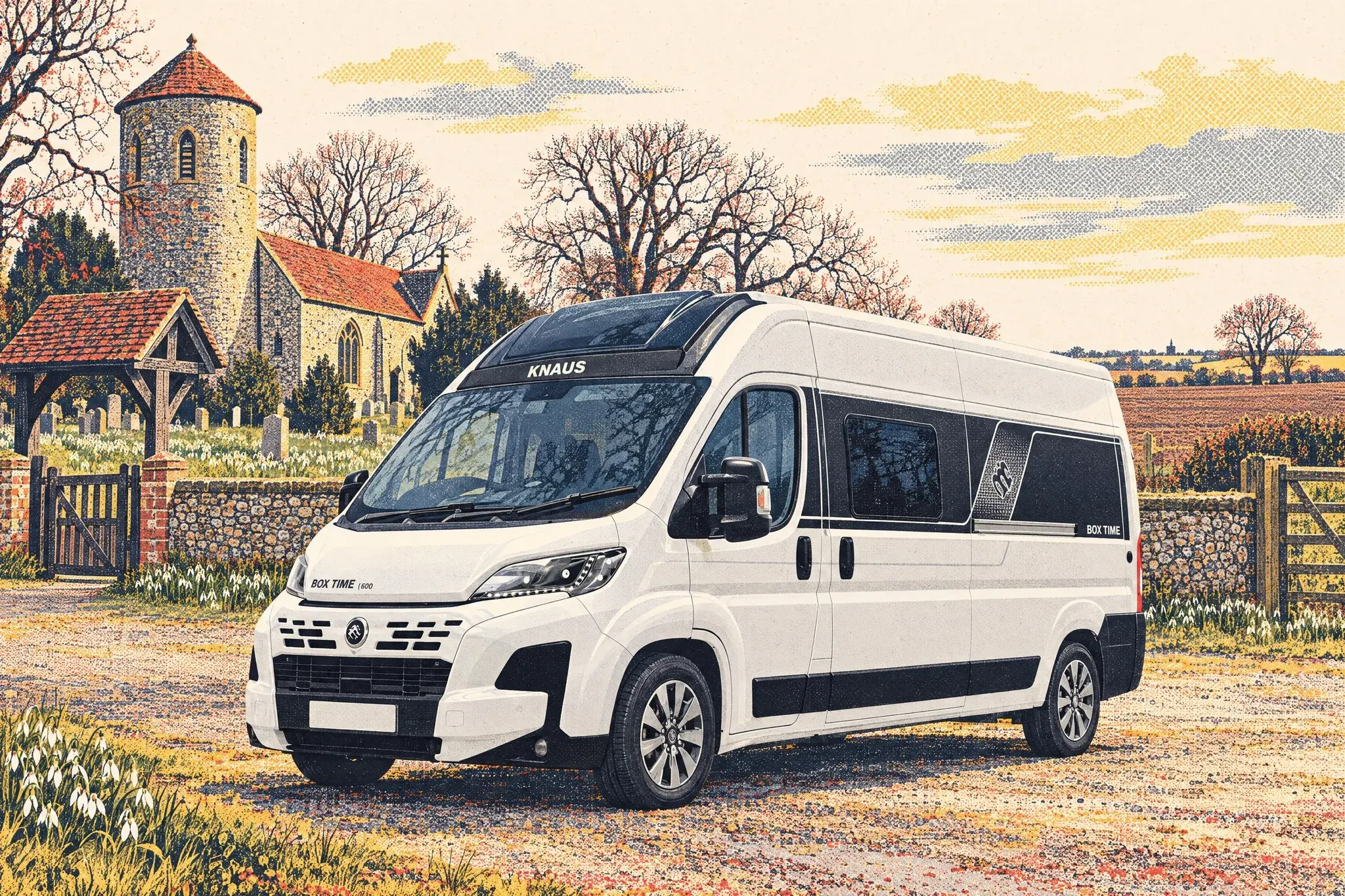
Knaus Boxtime 600 ME (2027): twin singles in 6 m, and the payload figure to question
Knaus's new Boxtime 600 ME squeezes two lengthways single beds into a 5.99 m van from £81,725. We lay out what that layout gives a couple, run the weight sums with Knaus's own figures, and explain why the 211 kg 'maximum payload' line needs a question before you sign.
New & Noteworthy
10 min read
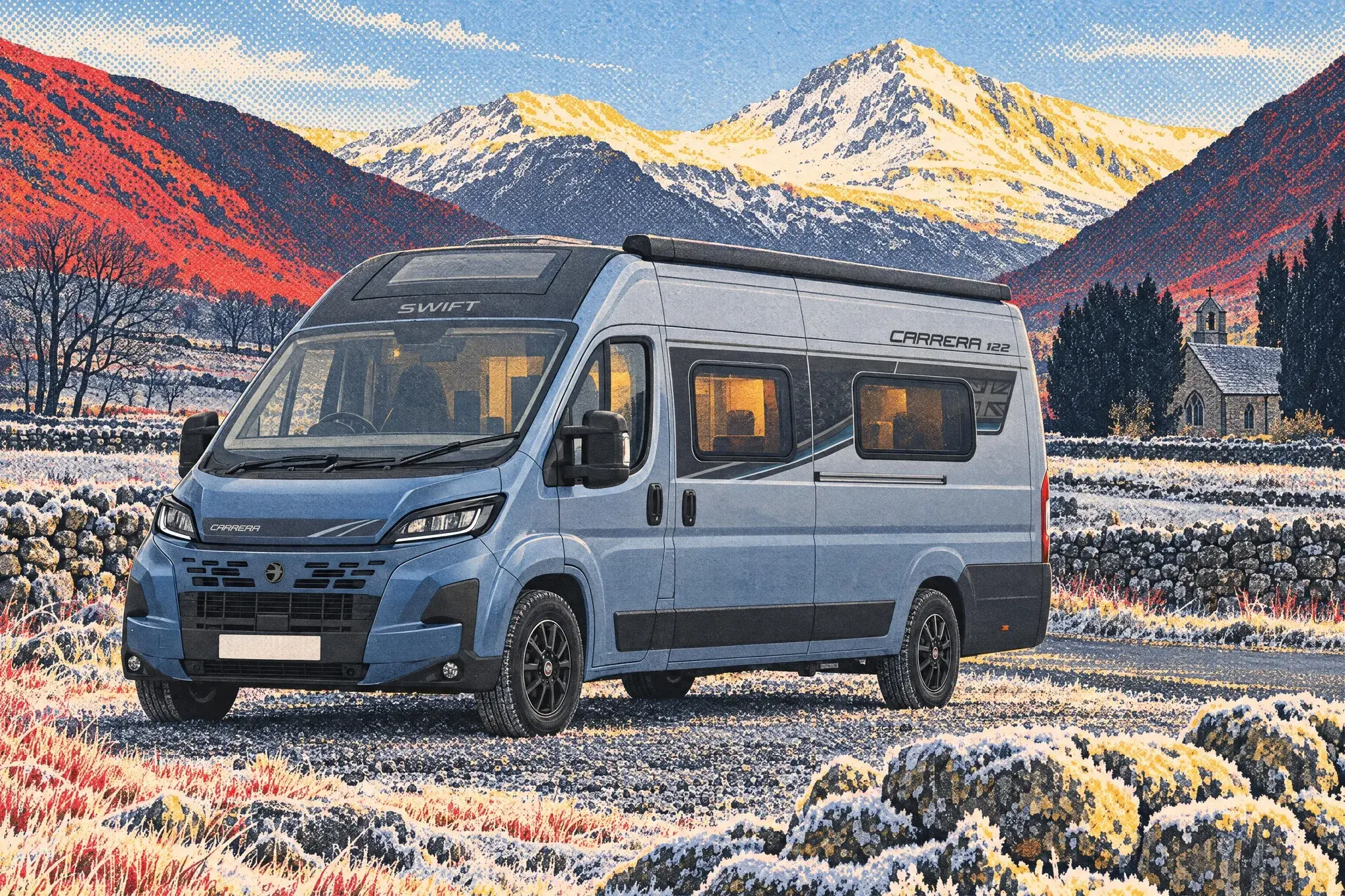
Swift Carrera goes gas-free for 2027: 340Ah lithium, diesel heat and induction cooking
Swift has taken the gas out of its Carrera campervan for 2027, swapping bottles for a 340Ah lithium battery, diesel heating and an induction hob. Here is what that means across a real UK year, how it compares with the cheaper Merlin, and the one question to ask at the NEC.
New & Noteworthy
10 min read
British campervan converters at the NEC 2026: who builds on what, and for how much
A stand-by-stand map of the British campervan converters at the Motorhome and Caravan Show 2026: the vans they build on, their from-prices, seats, roofs and lead times, plus the four questions to put to every one of them.
New & Noteworthy
9 min read
Plug-in hybrid campervans at the NEC: what a PHEV gives you and why full EVs are rare
Four UK converters have hybrid campers at or around the Motorhome and Caravan Show this October, while fully electric campers remain scarce. Here is what a plug-in hybrid camper does well, what the sellers rarely tell you, and the questions to ask on the stand.