
Malibu Van first class two rooms: an honest, in-depth review

Written by
Jasper
Jasper writes campervan reviews, travel guides, and practical advice, with a focus on everyday use and relaxed touring around the UK.
The short answer
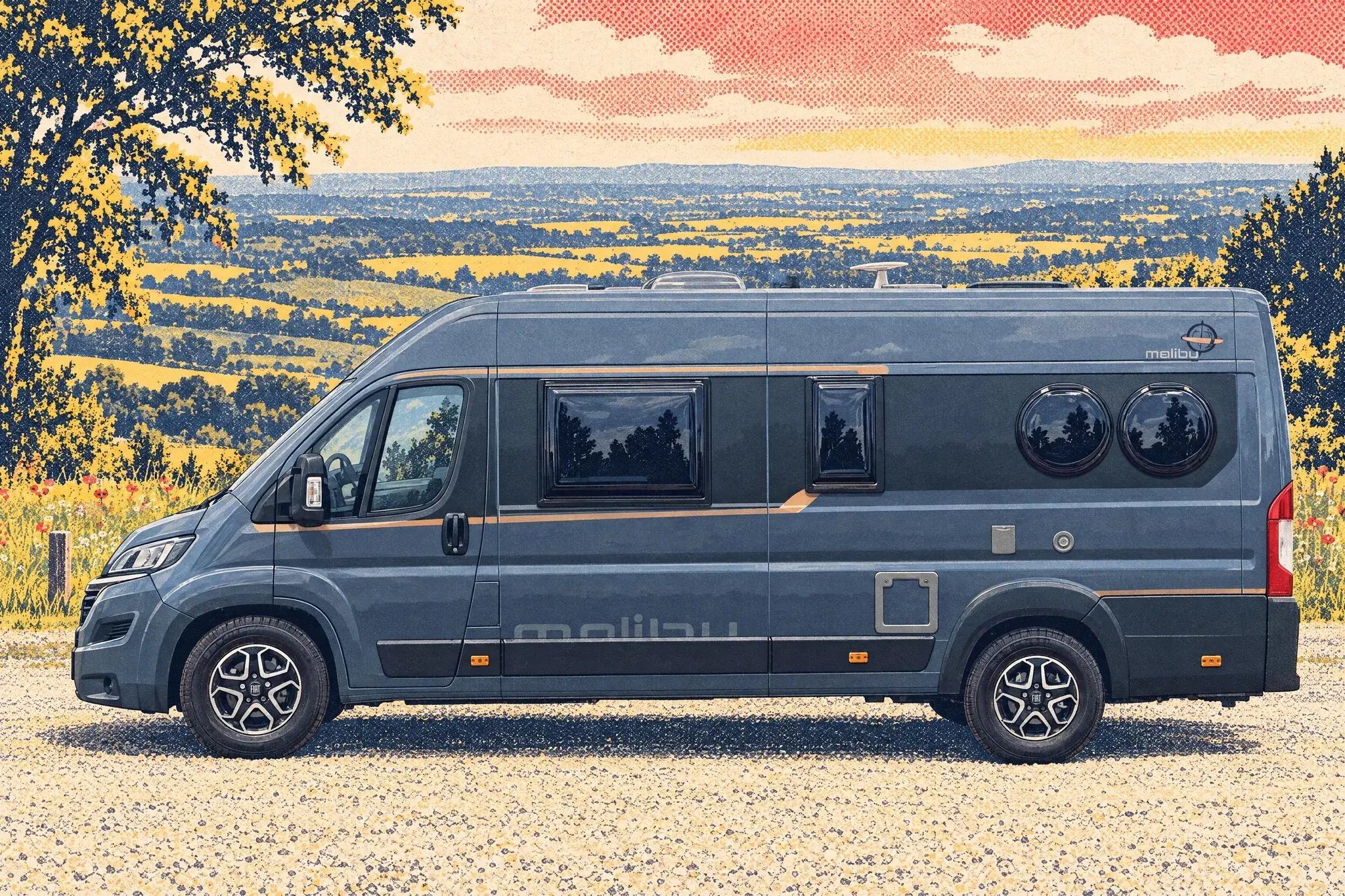
The Malibu Van first class two rooms takes the usually cramped wet room and turns it into a proper second room: slide a panel across and the rear becomes a private bathroom with sink, shower and loo, which on a panel van is genuinely clever. It spans roughly 5.4 to 6.4 metres on a Fiat Ducato base, with capable four-season heating and the kind of build quality you keep for years. The honest catches are British rather than mechanical: the payload maths is tight on a 3,500kg chassis, a six-metre van reshapes where you can squeeze, and the licence rules bite if you uprate. For a couple who tour for real and value quality over the lowest price, it deserves a shortlist spot. Here is the full, honest review, and who it truly suits.

The headline idea behind the Malibu Van first class two rooms is simple enough that a child could grasp it. Most campervans have one cramped little wet room squashed into a corner. This one turns that corner into a proper second room. Pull a panel across, and the back of the van becomes a private space with a sink, a shower and a loo that feels less like a cupboard and more like a small bathroom at home.
That is the marketing line, and it is genuinely clever. But a campervan lives or dies on the boring details: how it drives, how warm it stays in February, what it weighs before you have packed a single thing, and what it costs to keep on the road. So this review goes well beyond the brochure. We will look at the layouts, the chassis, the heating, the water and electrical systems, the payload maths that catches so many buyers out, and the honest question of who this van is really for in a British context of narrow lanes, damp winters and clean-air zones.
If you are weighing up a panel-van conversion at the premium end of the market, this is one of the names you will keep bumping into. Here is what you actually need to know.
What the Malibu Van first class two rooms actually is
The Malibu Van is a panel-van conversion, which means it starts life as a factory van and gets fitted out inside, rather than being a coachbuilt motorhome with a custom box on the back. It is built by Malibu, a brand that sits within the Carthago group, German manufacturers with a reputation for solid, slightly conservative engineering and a focus on insulation and four-season use.
The base vehicle is the Fiat Ducato, by far the most common platform for European motorhomes and large campervans. That matters more than it sounds, because it means parts, servicing knowledge and habitability components are widely understood by UK workshops, even if the Malibu badge is less common on British driveways than some homegrown names.
The "first class two rooms" part is the defining feature. In a normal campervan the washroom is a single sealed pod. In the two rooms concept, a movable wall and a swinging door let you close off the rear of the van so the bathroom area becomes a separate, walk-in room. You can stand up, get changed, dry off and not feel like you are wrestling with a shower curtain in a phone box. When you do not need it, the wall folds away and the space flows back into the living area.
It is a thoughtful answer to one of the genuine frustrations of van life: privacy and dryness. Anyone who has tried to towel off in a tiny combined wet room, dripping on the only set of clothes they brought, will understand the appeal immediately.
The range: lengths, layouts and what changes between them
Malibu offers the Van in several lengths, and the differences are not just about how much space you get. They change how the van drives, where you can park it, and crucially how much you can legally load into it. As a rough guide the range spans from around 5.4 metres up to roughly 6.4 metres, with the most popular family-friendly versions sitting near the longer end.
The compact versions (around 5.4m)
The shortest models are the easiest to live with day to day. At roughly 5.4 metres they are not far off the footprint of a large estate car plus a bit, and they will fit in a standard parking bay with the nose or tail poking out only slightly. They tend to favour couples, with a rear bed and a single washroom, and the two rooms trick is harder to deploy in the same way because there is simply less length to play with.
The mid and long versions (around 6.0m to 6.4m)
This is where the two rooms idea really comes into its own. With more length behind the rear axle, Malibu can fit a transverse double bed across the back, or a pair of longitudinal singles, and still leave room for that genuinely usable rear bathroom. The longer wheelbase also gives a more settled motorway ride. The trade-off is obvious: a van north of six metres is a commitment in a multi-storey car park or a tight Cornish village, and it pushes you towards thinking carefully about height barriers too, since most of these stand around 2.7 metres tall with the roof aerial and any solar.
Bed choices that change everything
The layout decision you will live with most is the bed. The two main options are familiar across the sector:
- Transverse rear double: the bed runs across the van. It is space-efficient and leaves more room for that two rooms washroom, but on narrower body widths a taller person may find foot room snug, so check the actual sleeping length against your height before you fall in love.
- Twin longitudinal singles: two beds down each side, joinable into a large platform with an infill. Brilliant if one of you reads late or gets up at night, and the singles double as long sofas during the day. The cost is a slightly more complex rear layout and a touch less floor space.
There is no universally correct answer. The honest advice is to lie down in both, in your actual clothes, for a few minutes each, before you decide. Beds in vans always look fine and feel different once you are horizontal.
First impressions: build quality and the feel inside
Step inside a well-specified Malibu Van and the first thing you notice is that it does not feel flimsy. The furniture has a substantial, cabinet-maker quality to it, with soft-close drawers, push-catch lockers and edging that is properly finished rather than just iron-on tape that will peel in a year. This is the area where premium German conversions tend to earn their price, and it is not nothing. Cheap interior trim is the thing that rattles, cracks and dates a van fastest.
The design language is calm and a little understated. Expect warm wood tones, soft greys and a generally grown-up, residential feel rather than anything flashy. Lighting is layered, with ambient strips, reading spots and worktop task lighting, so the cabin can feel cosy at night rather than clinically bright.
Headroom is good for a panel van, helped by the high-roof Ducato body. Most adults of average height will stand comfortably in the central aisle and the kitchen. The cab swivel seats integrate into the lounge to give you a proper four-seat dinette in the longer layouts, which is the difference between a van you can actually relax in and one where two people end up perched.
The test of a van interior is not how it photographs. It is whether, on day five of rain in Snowdonia, you still want to be inside it. Space to move, somewhere dry to put wet coats, and good light all matter more than any single gadget.
The two rooms concept in practice
So does the headline feature actually work? Broadly, yes, and it is more than a gimmick. The mechanism uses a sliding or pivoting wall section, usually combined with the washroom door, so that when both are closed the rear becomes its own enclosed room. In the longer layouts this gives you a space where one person can shower and dress in complete privacy while the other makes breakfast at the front, and the two are genuinely separated rather than just hidden behind a curtain.
Where it shines
- Drying off properly: a separate room means the shower steam and splash stay contained and you have somewhere dry to step.
- Privacy for two: couples and friends travelling together get a degree of personal space that single-pod vans simply cannot offer.
- Morning logistics: the classic van bottleneck is two people needing the same metre of floor at 8am. The two rooms layout eases that.
- Changing space: getting in and out of waterproofs, wetsuits or muddy walking kit is far less of a wrestle.
Where to keep expectations realistic
It is still a van. The "second room" is the size you would expect in a vehicle under seven metres, not a hotel ensuite. Deploying and stowing the wall is a small daily ritual, and on the longest trips you will get a feel for whether you actually bother to separate the rooms every time or just leave it open. The mechanism is one more moving part to look after, so when buying used it is worth operating it several times to check it still glides cleanly and seals properly. None of that undermines the idea. It just means you should buy it because the layout suits how you live, not purely because the concept is neat.
The kitchen and living space
The galley in a Malibu Van is a proper working kitchen by van standards. Expect a gas hob, usually with two or three burners, a stainless sink with a glass or steel cover that extends the worktop, and a compressor fridge that runs efficiently off the leisure battery. Depending on spec and length you may get a separate freezer compartment or a larger combined unit.
Storage that is actually thought through
This is where the German approach tends to pay off. There are deep drawers under the hob, overhead lockers along the side, and clever use of the spaces around the wheel arches and under the bed. In the rear-bed layouts the area beneath the mattress is a garage, accessible both from inside and through the back doors, big enough for camping chairs, a barbecue, folding bikes or a couple of paddleboards depending on the model. Tie-down points and a robust floor in the garage are worth checking, because a heavy load sliding around behind you is both dangerous and noisy.
Dining and lounging
The dinette converts between travel mode, dining mode and lounge mode. With the cab seats swivelled and a pedestal table in place, four can eat in comfort in the longer vans. The seating is generally well-padded, which sounds obvious but is the sort of thing that gets skimped on lower down the market. For two people touring, the lounge becomes the heart of the van: somewhere to read, work on a laptop, or simply watch the weather do its worst through the big side window.
Sleeping: how good are the beds really?
A van that sleeps badly is a van you will not keep. The Malibu fixed beds, whether transverse or twin, sit on slatted or sprung bases with a decent thickness of mattress, which is a meaningful step up from the thin cushions of a make-do bed. Fixed beds are the single biggest comfort upgrade over the rock-and-roll convertibles you find in smaller campers, because you are not building and dismantling your bed every night.
Points worth checking in person:
- Length: transverse doubles can be tight for anyone over about six foot. Measure it. Some models offer a bolster or extension to reclaim a few centimetres.
- Access: climbing into a high transverse bed in the dark is a different experience to stepping into a low single. Think about whether you get up in the night.
- Ventilation: condensation is the enemy of every van. Look for a roof light over the bed and check the airflow under the mattress to keep it dry.
The front dinette can usually be made into an additional bed in some layouts, which gives flexibility for an occasional extra guest or a child, but the fixed rear beds are the ones you will use night after night and where comfort really counts.
The chassis, engines and how it drives
Underneath, the Malibu Van is Fiat Ducato, and that means a familiar set of choices. UK buyers will typically encounter a 2.2-litre turbo diesel in several power outputs, commonly around 120, 140 and 180 horsepower, paired with either a six-speed manual or an eight-speed automatic gearbox depending on the year and spec.
Which engine makes sense
For a van of this size and weight, the lower-powered options can feel a little stretched on long climbs when fully loaded, especially with bikes on the back and a full water tank. The mid and higher outputs are the sweet spot for relaxed touring, and the automatic gearbox is genuinely transformative for stop-start driving, ferry queues and mountain passes. If you are buying used and have the choice, many owners find the auto worth seeking out, particularly anyone who tows or does a lot of town driving.
What it is like on a British road
A van of around six metres is wider and longer than anything most people drive daily, and the first few hours are an adjustment. But the Ducato is a known quantity: the driving position is high and commanding, visibility forward is good, and the turning circle is better than the length suggests. Wing mirrors are large and essential. On the motorway it cruises happily, though crosswinds and the wash from large lorries will move you around more than a car, so you drive with a relaxed grip and a bit of anticipation rather than fighting it.
Where it asks for care is the British minor road: single-track lanes with passing places, low-hanging tree branches, tight village pinch points and the eternal supermarket car park with a 2.1-metre height barrier. None of this is a problem, but it does shape how and where you travel. Plan routes with the van's size in mind and the country opens up. Wing it, and you will eventually find yourself reversing half a mile down a Devon lane with a hedge in each mirror.
Heating, insulation and four-season use
This is an area where the Carthago group genuinely focuses its engineering, and it is one of the strongest reasons to look at a Malibu over a cheaper conversion. British weather is not really about extreme cold so much as relentless damp, and a van that handles damp well is a van you can use eleven or twelve months a year rather than four.
The heating system
Most are fitted with a diesel or gas heating system that warms both the cabin air and the hot water, with ducting to push warm air around the living space and, importantly, into lockers and the washroom to keep them dry and frost-free. A well-set-up system will hold a comfortable temperature on a frosty night without drama. Diesel heating has the advantage of running off the main tank, so you are not constantly swapping gas bottles in winter, though gas systems are simple and proven too.
Insulation and the cold spots
Panel vans have inherent cold bridges: the metal body conducts heat out, and the cab area with its large glass is always the weak point. Look for good thermal blinds or external silver screens for the windscreen and cab windows, because that single accessory makes a bigger difference to overnight warmth and condensation than almost anything else. The Malibu bodyshell is well-insulated by class standards, but no van escapes physics, so a little kit and good habits do the rest.
Managing condensation
- Crack a roof vent even in cold weather to let moisture escape.
- Use the external screens to stop the windscreen streaming.
- Wipe down cold surfaces in the morning and keep wet kit in the garage, not the living space.
- Run the heating to keep surfaces above dew point rather than blasting it then switching off.
Do these things and a four-season van stays dry and pleasant. Ignore them and even the best-insulated van will sprout damp in the corners.
Water, electrics and going off-grid
How long you can stay away from hookup depends on three tanks and one battery: fresh water, waste water, the toilet cassette, and your leisure electrical system.
Water capacity
Fresh water tanks on vans this size typically sit in the region of 100 to 120 litres, with a grey waste tank to match. For two people being sensible, that is comfortably a few days of cooking, washing up and short showers. The two rooms washroom encourages slightly more generous showering, so if off-grid endurance matters to you, factor in how quickly you will get through fresh water and fill the grey tank. The toilet is a cassette type, easy to empty at any campsite or service point, and a spare cassette is a cheap way to extend your independence.
The electrical system
Standard fit usually centres on a leisure battery, a mains charger for when you are on hookup, and a control panel showing tank levels and battery state. Where modern vans differ enormously is the upgrade path. Many buyers now specify or retrofit:
- Lithium leisure batteries: far more usable capacity and faster charging than traditional lead-acid, at a price.
- Solar panels: roof-mounted panels that trickle power back during daylight, hugely useful for keeping the fridge and lights going without hookup.
- A battery-to-battery charger: charges the leisure system properly from the engine while you drive, which modern smart alternators otherwise make inefficient.
- An inverter: to run mains items like a laptop charger or a small appliance off the battery.
For UK touring, a sensible setup of a decent lithium battery, a solar panel or two and a battery-to-battery charger turns a van from "needs a campsite every night" into "can happily spend several days off-grid". If you are buying used, ask exactly what has been fitted and by whom, because the quality of an electrical upgrade varies wildly and a tidy, properly-fused installation is worth paying for.
The payload problem nobody enjoys talking about
Here is the single most important practical section in this review, and the one most likely to be skipped in a showroom. Every motorhome and campervan has a maximum legal weight, the gross vehicle weight (MTPLM in motorhome speak). The difference between that figure and the van's actual unladen weight is your payload: everything you are allowed to add, including water, gas, passengers, food, clothes, bikes, awning, and every other thing you carry.
Why it matters so much
Premium vans are heavy. The solid furniture, the thick insulation, the larger water tanks and the long bodies all add kilograms. Many panel-van conversions of this size leave the factory weighing a substantial proportion of their legal limit before you have loaded anything. Once you add a full tank of fresh water (that is over 100kg right there), two adults, full gas, and the normal clutter of a touring trip, you can be alarmingly close to, or over, the legal weight.
Driving overweight is not a technicality. It affects your insurance, your braking, your tyre safety and your legal standing, and the DVSA does carry out roadside weight checks. An overloaded van that gets stopped is an expensive and stressful day.
What to do about it
- Check the real numbers: ask for the actual weighbridge figure for the specific van, ideally with its fitted options, not the optimistic brochure unladen weight.
- Consider the 3,650kg or chassis uprating: the Ducato can often be plated at a higher weight, and some vans are offered or can be uprated to give more payload. This may have licence implications (see below).
- Weigh it loaded: once you own it, take it to a public weighbridge fully loaded as you would travel. It is the only way to know for sure, and it costs a few pounds.
- Pack light and travel with tanks part-full: you do not need 120 litres of water to drive to a campsite that has a tap.
This is not a criticism unique to Malibu. It is a structural reality of building a comfortable, well-equipped van within the constraints of a 3,500kg chassis. But it is the thing that catches more buyers out than any other, so go in with your eyes open.
Driving licence and weight: the UK rules
Your driving licence determines what you can legally drive, and the cut-off is 3,500kg gross weight for the standard category B car licence. Anyone who passed their car test before 1 January 1997 generally has "grandfather rights" (category C1) allowing them to drive up to 7,500kg. Anyone who passed after that date is, by default, limited to 3,500kg unless they take an additional test.
Why this connects to the payload discussion: if you uprate the van above 3,500kg to gain payload, a post-1997 licence holder may no longer be able to drive it without the extra C1 entitlement. So the choice becomes a balance:
- Stay at 3,500kg and live within a tighter payload, packing carefully.
- Uprate for more payload, but only if your licence allows it, or be prepared to sit the C1 test.
It is worth knowing that a van over 3,500kg also faces a lower national speed limit on some roads and different rules in places. None of this is a reason to avoid these vans, but it is essential homework before you buy, and it is far better to sort it out at the point of purchase than to discover it on a roadside check.
Running costs: the honest figures
Let us talk money, because a van like this is a serious purchase and the ongoing costs are real. These are structural realities of owning a large, well-built vehicle, not anyone's fault, and being clear-eyed about them is part of enjoying ownership rather than resenting it.
Fuel
A van of this size and weight, with a diesel engine, will realistically return somewhere in the region of 28 to 34 miles per gallon in mixed touring, dropping when fully loaded, towing or driving in hills, and improving a little on a gentle motorway cruise. At current UK diesel prices, budget accordingly for the kind of mileage a touring year involves. It is not a cheap vehicle to fuel, but it is comparable to other vans of similar size and far better than a large coachbuilt motorhome.
Insurance
Specialist motorhome and campervan insurance is generally reasonable compared to a car of similar value, because these vehicles are used seasonally, looked after, and parked carefully by people who do not want to crash their home. Limited annual mileage policies, secure storage and a tracker all help. Get quotes for the specific model and value, and declare any modifications honestly.
Servicing and habitation checks
There are two strands of maintenance:
- The base vehicle needs servicing like any Ducato, and an MOT once it is three years old. Parts and labour are widely available.
- The habitation side needs an annual habitation service: checking for water ingress (the big one), testing the gas system and appliances, inspecting the electrics, and verifying damp readings. This is what keeps the van watertight and safe, and it protects resale value. Budget for it every year without fail.
Depreciation
Quality conversions from established brands tend to hold their value relatively well, especially when looked after with a full habitation service history. That does not mean they do not depreciate, but a premium German van with good provenance is generally a more stable asset than a cheaper conversion. Buy a well-cared-for used example a couple of years old and you let the first owner absorb the steepest part of the curve.
Clean-air zones and emissions
A modern Euro 6 diesel Ducato is compliant with the UK's Clean Air Zones and the London ULEZ, so you can drive into most city centres without a daily charge. Older vans may not be, so if you are buying used, check the emissions standard of the specific vehicle against the zones you are likely to enter. This is increasingly important as more cities introduce charging schemes.
Who this van is really for
Every van suits some people and frustrates others. The Malibu Van first class two rooms is, in honest terms, aimed at a fairly specific kind of buyer.
It is a great fit if you are
- A couple who tour seriously and for long stretches: the comfort, the proper beds and the two rooms washroom reward extended trips where a cramped van would wear thin.
- Someone who values build quality over headline price: if you want furniture that still feels solid after five years and insulation that copes with a damp British winter, this is the right end of the market.
- A four-season user: the heating and insulation focus means this is a van for spring storms and autumn mists, not just July.
- Someone who wants privacy and dryness: the two rooms layout solves a genuine, daily frustration of van life.
It is the wrong van if you are
- Mainly doing short city breaks and tight urban parking: a smaller, more compact campervan will be far less stressful to manoeuvre and store.
- On a tight budget: this is a premium product, and the value is real, but so is the price.
- Carrying a big family with lots of kit: the payload and seatbelt count make these vans better suited to two, or two plus an occasional guest, than a full household.
- After a daily driver: at six metres it is a touring vehicle, not a runaround.
What to check before you buy
Whether new or used, walk through this checklist before you commit. It will save you money and disappointment.
For any example
- Lie on the bed you will actually use, for real, in your clothes, and check the length.
- Operate the two rooms mechanism several times to confirm it glides and seals.
- Sit in the lounge and imagine a wet afternoon. Is there room, light and somewhere to put wet coats?
- Test the driving position and check you are comfortable with the size on the road, ideally with a proper test drive.
- Confirm the engine and gearbox suit your driving, and seek out the automatic if town and hills feature heavily in your plans.
- Get the real weight and work out your true payload with the options fitted. This is non-negotiable.
- Check the licence implications against your own entitlement and the van's plated weight.
- Confirm emissions compliance for the clean-air zones you will drive into.
For a used example specifically
- Demand a full habitation service history and recent damp readings. Water ingress is the silent killer of van value.
- Inspect around windows, roof lights, the awning rail and the rear corners for any staining or soft spots.
- Test every appliance: hob, fridge, heating, hot water, lights, water pump, toilet flush.
- Check the electrical upgrades if any have been fitted, and confirm who did the work and whether it is tidy and fused.
- Look at the tyres' age, not just the tread. Motorhome tyres often perish from age and standing before they wear out, and should generally be replaced regardless of tread after several years.
- Check the cambelt or service intervals on the Ducato engine.
Living with it: the small realities
Beyond the spec sheet, a few honest observations about life with a van of this type that rarely make it into reviews.
You will become fluent in the daily rhythm of van life: filling fresh water, emptying grey and the cassette, deploying and stowing the two rooms wall, putting up the external screens at night. None of it is hard, but it is a routine, and the people who love van life are the ones who find that routine calming rather than tedious.
You will plan around height barriers, and you will get good at reading the road ahead for pinch points. You will learn which supermarkets and car parks accommodate a six-metre van and which do not. Apps and a bit of forethought handle almost all of it.
You will discover that the storage, generous as it is, fills up fast, and that the discipline of packing light directly affects your payload safety. Couples who tour long-term tend to settle into a surprisingly minimal kit list, and they are happier for it.
And you will find, on the good days, exactly why people buy vans like this. Waking up somewhere quiet with the kettle on, the heating taking the edge off a cold morning, a proper bathroom to get yourself sorted, and the whole day and the open road ahead. That is the payoff, and a well-built van like the Malibu delivers it with very little fuss.
The best vans are the ones you stop thinking about. When the heating just works, the bed is genuinely comfortable, and nothing rattles or leaks, you are free to enjoy where you are. That freedom, not any single feature, is what you are really buying.
How it compares within the wider market
Without naming or ranking rivals, it is fair to place the Malibu Van in context. It sits at the premium end of panel-van conversions, competing on build quality, insulation and clever layout thinking rather than on price. Buyers cross-shopping in this bracket are generally choosing between conversions that all offer fixed beds, proper kitchens and four-season heating, and the decision comes down to the details: the specific layout that suits you, the feel of the interior, the dealer and service support near you, and the all-important payload figure for the exact model you want.
The two rooms washroom is the Malibu's distinctive calling card, and for anyone who has felt the daily frustration of a single cramped wet pod, it is a genuinely compelling reason to look. But it should sit alongside, not above, the fundamentals of weight, driving suitability and running costs in your decision-making. A clever feature on a van that does not suit your life is no bargain. The same feature on a van that fits how you actually travel is a quiet daily pleasure.
The bottom line
The Malibu Van first class two rooms is a thoughtfully engineered, well-built premium campervan whose headline feature is more than marketing. The ability to turn a cramped washroom into a proper, private second room solves a real problem of van life, and it does so within a package that emphasises the things that matter most for British touring: solid furniture, serious insulation, a capable heating system and a familiar, well-supported Fiat Ducato underneath.
It is not cheap, and it is not small. The payload maths demands genuine attention, the licence rules matter if you uprate, and a six-metre van reshapes how and where you travel. But none of those are flaws so much as the honest terms of owning a comfortable, four-season van for two.
If you are a couple or a pair of friends who tour for real, value quality over the lowest price, and want to be warm and dry from March to November, this is a van that deserves a place on your shortlist. Go and see one, lie on the bed, work the two rooms wall a few times, get the real weight figure, and drive it. If it fits your life, it is the kind of van you keep for years and remember fondly long after.
And if you are at the start of the journey, still working out whether a panel van or a coachbuilt motorhome suits you, vans like this one are a useful benchmark for what the premium end of the conversion market does well. Use it to calibrate your expectations, then buy the van that matches how you genuinely intend to travel, not the one with the cleverest brochure. That is the route to years of happy miles.
Common questions
What is the Malibu Van first class two rooms?
It is a premium panel-van conversion built around one clever idea: instead of a cramped corner wet room, a sliding panel turns the rear of the van into a proper separate bathroom with a sink, shower and toilet that feels more like a small home bathroom. It is built on a Fiat Ducato base and aimed at the premium end of the conversion market.
What sizes does the Malibu Van two rooms come in?
The range spans from around 5.4 metres up to roughly 6.4 metres, with the popular versions near the longer end. A 5.4-metre version fits a standard bay with a slight overhang, while a van over six metres is a real commitment in multi-storeys and tight villages, and most stand around 2.7 metres tall so height barriers matter too.
What is the Malibu Van built on and how does it drive?
It uses a Fiat Ducato base, with UK buyers typically seeing a 2.2-litre turbo diesel in around 120, 140 or 180 horsepower, paired with a six-speed manual or nine-speed automatic depending on year and spec. It drives well on main roads; where it asks for care is the British minor road, with single-track lanes, low branches, tight pinch points and 2.1-metre car park height barriers.
What is the payload like on the Malibu Van two rooms?
Tight, as on any well-equipped 3,500kg van. Fresh water tanks sit around 100 to 120 litres, and a full tank alone is over 100kg, so once you add two adults, full gas and normal touring kit you can be close to or over the legal weight. Get the real payload figure for the specific van and do the sum before you buy.
What licence do I need for the Malibu Van, and what are the running costs?
A standard category B licence covers up to 3,500kg; uprating above that to gain payload needs category C1, which post-1 January 1997 drivers do not hold automatically. Expect roughly 28 to 34 miles per gallon in mixed touring, plus specialist insurance, servicing and habitation checks. As a Euro 6 Ducato it meets the UK Clean Air Zones and London ULEZ.
Who is the Malibu Van first class two rooms for?
A couple or a pair of friends who tour for real, value quality over the lowest price, and want to be warm and dry across the seasons rather than just in summer. It is the wrong van if you need lots of berths and belted seats for a family, are tight on budget, or mostly drive tight lanes where a six-metre van is awkward.
The reachable bit
The camper you fall for is rarely the one you can afford. That gap is the whole reason Campervan.win exists. Right now we’re giving away the Sunlight Vanlife, worth around £65,000, and closing that gap is the point: capped entries so the odds stay honest, £10 a ticket, a maximum of five per person, £500 to a UK charity from every full draw, the winner picked by a public randomness beacon anyone can re-check, and one person driving away in the van itself.
Enjoyed this post?
Get more honest campervan guides like this one in your inbox.
You’re in!
Check your inbox. We’ve just sent you a welcome email.

About the author
Jasper
Jasper writes campervan reviews, travel guides, and practical advice, with a focus on everyday use and relaxed touring around the UK.
Keep Reading
Related Reading
Thoughtful articles that build on what you’ve just read.
Campervan Reviews
10 min read
Coachman Veloce (2027): a UK-built Fiat Ducato campervan at £86,500, and who it is for
Coachman has built its first Fiat Ducato campervans in the UK, the Veloce VL65 and VR65, at £86,500 each. We go through what that price includes, the payload sums for four seats, the heating and power kit, and who a premium British panel van like this suits.
Campervan Reviews
27 min read
VW Grand California 680 Dune deep dive: the long two-berth tourer, the C1 licence, and FWD or 4MOTION
A full look at the Volkswagen Grand California 680 Dune as a two-person long-distance tourer: dated UK prices, why the 3,880 kg weight means a C1 licence for many drivers, the real payload sums for front-wheel drive against 4MOTION, the lengthways bed, four-season kit and a viewing checklist.

Campervan Reviews
35 min read
Carado CV595 X-Edition explained: the £87,890 4x4 VW Crafter campervan, for UK buyers
A long, honest look at Carado's first VW Crafter campervan: what 4MOTION and the off-road pack really do, how the 3,500 kg payload works out, what the 200 cm transverse bed and no-solar spec mean for British touring, and what to confirm before you order one at £87,890.
Campervan Reviews
13 min read
Coachman Affinity One explained: who the Polish-built 6.36 m Fiat Ducato campervan really suits
The Coachman Affinity One is a long, tall Fiat Ducato campervan built in Poland and sold in the UK under the Coachman name. Here is what the fixed French bed, front bunk, washroom, 3,500 kg weight and 6.36 m length really mean for the people who might buy one.