
Sunlight Ibex review: is this really the best-value 4x4 campervan?

Written by
Arthur
Arthur writes buying guides, comparisons, and in-depth explainers to help readers choose the right campervan or motorhome with confidence.
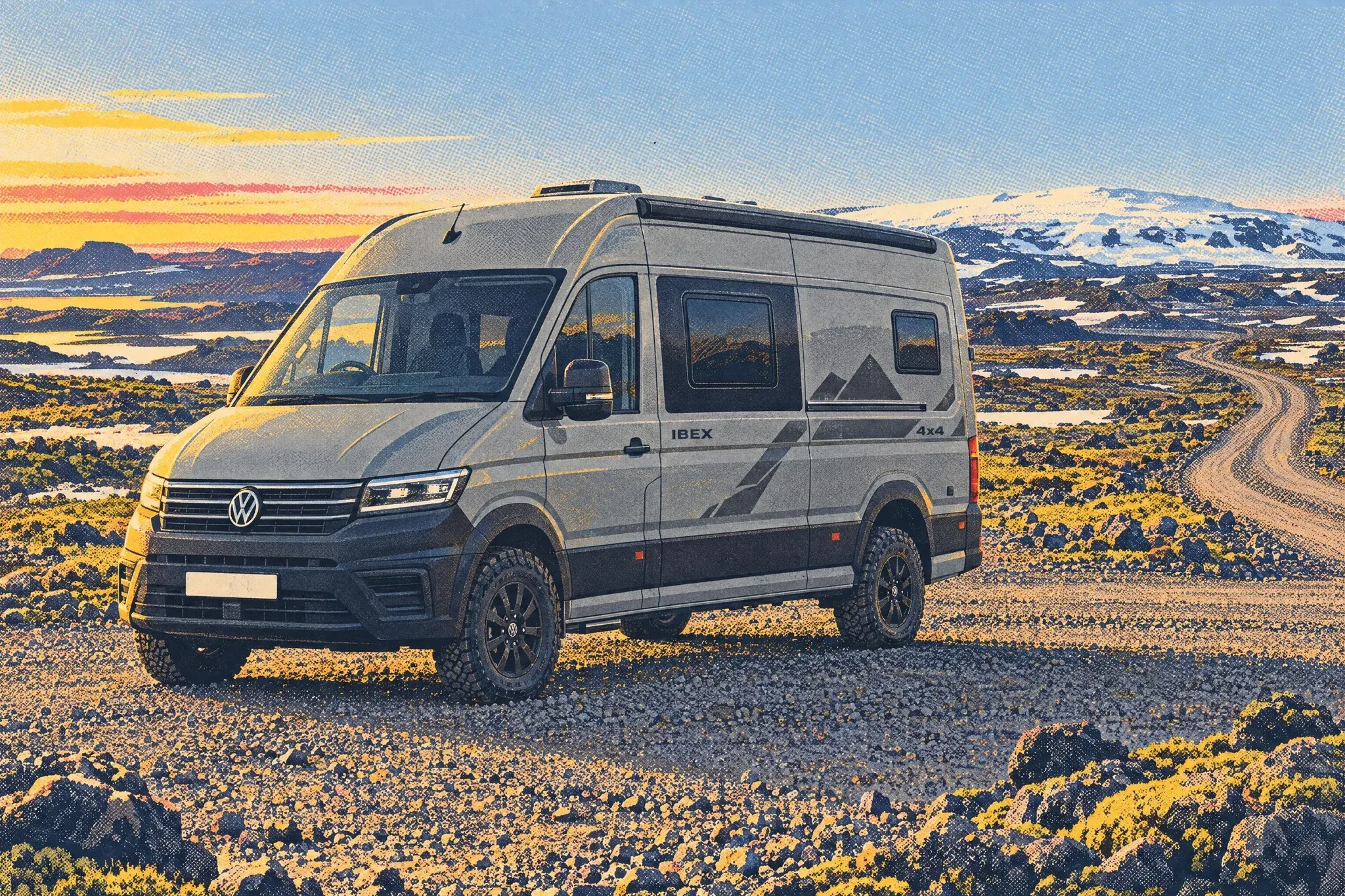
The short answer
The Sunlight Ibex makes a genuinely strong case as the best-value real 4x4 campervan, judged against the vans that do the same job rather than cheaper two-wheel-drive ones. At £86,690, with the off-road pack £6,280 more, it undercuts the Bürstner Habiton X and sits well below the Hymer Grand Canyon S 4x4, and, unusually for a proper 4x4, it stays on a 3,500kg category B licence as standard. The hardware is the real thing, not cosmetic. The honest caveats are worth knowing: the payload is 438kg before options, the snorkel and bull bar seen on show vans are not in the factory lists, there is no factory solar, and it sleeps two plus one. Exciting, then, but one to go into with eyes open. Here is the full review, and whether it really is the value pick.

Updated 6 October 2026: Sunlight has published the production IBEX 604D's UK price and specification, so we have corrected the figures below.
There's a particular kind of campervan that almost nobody builds and quite a lot of people quietly dream about: a genuine, go-anywhere 4x4, big enough to live in, drivable enough to use every day, and capable of taking you down the track that the normal vans turn back from. The trouble is that this kind of van is almost always astronomically expensive. The established 4x4 campers cost well north of £100,000, which puts them firmly in the territory of the comfortably wealthy or the seriously committed.
So when a value brand like Sunlight turns up with the Ibex, a real 4x4 campervan on the VW Crafter, and prices it at £86,690 in the UK, the obvious question writes itself. Is this the bargain it looks like? Is the Ibex actually the best-value 4x4 campervan you can buy? That's the question this review sets out to answer, as honestly as we can.
A word on what this review is, and isn't, because honesty is the whole point of this site. We haven't driven the Ibex. When we first wrote this, nobody had driven a customer one; one UK dealer now says deliveries start in September or October 2026, and Sunlight has published the UK price and full specification for the IBEX 604D, as it calls the VW version. So this is not a road test, and we won't pretend otherwise. What it is, is a clear-eyed assessment of the proposition: the value case, the published specification, the rivals, and the honest caveats, weighed up by someone whose job is helping people spend large sums of money wisely. When we can drive it, we'll road-test it properly. For now, the value question is one we can actually answer on the facts, and it's the question most people are asking.
What "best-value 4x4" actually has to mean
Before we can crown anything the best value, we need to be honest about what we're measuring, because "value" is the most abused word in vehicle marketing. Cheap isn't the same as good value. Value is what you get for what you pay, judged against the genuine alternatives, for the job you actually need doing. So the test isn't "is the Ibex the cheapest van?", it plainly isn't, a standard camper costs far less. The test is "among vehicles that do this specific job, a real 4x4 camper you can live in, does the Ibex give you the most for your money?"
That means we're comparing it against a small, expensive field. The genuine rivals, the vans that actually do the same job, are things like the Bürstner Habiton X (a Mercedes Sprinter 4x4, also from the Erwin Hymer Group), the Hymer Grand Canyon S 4x4, the larger VW Grand California 4Motion, and a handful of specialist expedition builds. It does not mean comparing the Ibex to a £60,000 two-wheel-drive van, because that van can't do what the Ibex is for. If you don't genuinely need all-wheel drive, the most honest value advice in the world is to buy the cheaper van, and we'll say so again later. But if you do need it, this is the field, and these are the prices.
The criteria that decide value in this class, in roughly the order that matters to most buyers, are: the price you actually pay; the licence you need to drive it; how capable it genuinely is off the road; how well-equipped it is for living off-grid; the quality and ownership reassurance behind it; and how well it suits you specifically. Let's take the Ibex through each.
What a 4x4 campervan is actually for
It's worth being concrete about what all-wheel drive actually does for you, because the honest value of the Ibex depends entirely on whether you'll use what you're paying for. A 4x4 campervan isn't about crawling over boulders like a stripped-out off-roader on a course; very few owners ever do anything that extreme, and a six-metre van full of furniture isn't the tool for it anyway. What all-wheel drive genuinely buys you is confidence and reach in the conditions a touring camper actually meets.
Think of the wet grass field that doubles as event parking, the kind that swallows two-wheel-drive vans up to their axles after a weekend of rain. Think of the unsurfaced track to a remote bothy, a Scandinavian lakeside, a Welsh hill farm or a wild Atlantic beach, the places that are the whole point of owning a van like this, and that a normal camper turns back from. Think of a steep, loose gravel campsite, a snow-dusted Alpine pass in the shoulder season, a slipway, a forest road. In all of those, the difference between all-wheel drive and front-wheel drive is the difference between going and not going, or between getting stuck and getting home. That's the value, and for the right person it's enormous: it's the freedom to point the van at the interesting places rather than only the convenient ones.
But, and this is the part a value review has to be honest about, most people who buy campervans never go to those places. They tour Cornwall and the Lakes on tarmac, they book hardstanding pitches, and the wildest surface they meet is a slightly soft field that a normal van handles fine nine times out of ten. For them, all-wheel drive is insurance they'll rarely cash in, and paying a premium of roughly £25,000 for it over a standard Sunlight is poor value however good the van. So the first question isn't "is the Ibex the best 4x4?", it's "am I genuinely going to use a 4x4?". Be ruthlessly honest about where you actually travel, not where you imagine you might. If the answer is the wild stuff, read on, the Ibex is built for you. If it's mostly tarmac, the kindest value advice we can give is to buy a cheaper two-wheel-drive van and spend the difference on trips.
The case for the Ibex as the value pick
Price: it undercuts the field
Start with the headline, because it's the strongest part of the argument. Sunlight's UK price list puts the Ibex at £86,690, the off-road pack is £6,280 more, and one UK dealer lists a right-hand-drive UK-specification van with packs at £101,070. We go through that pricing in detail, with the sources, in our Ibex price and spec guide, and the short version is that £86,690 is the official list price, which Out and About Live calls the on-the-road RRP.
Now set that against the field. The Bürstner Habiton X, the most directly comparable rival, lists in the UK at roughly £102,000 to £107,000. The Hymer Grand Canyon S 4x4 sits around £119,950. So even at the loaded end, £101,070 for one dealer's van with packs, the Ibex matches or undercuts the Habiton X, and it's some £19,000 below the Hymer. At the £86,690 list price, the gap to the Habiton X is more like £15,000 to £20,000. That's not a rounding error; it's a meaningful saving on a vehicle that does the same job. On raw price against genuine rivals, the Ibex is clearly the value option, and that's exactly what you'd expect from the Erwin Hymer Group's value brand even at the top of its range.
Licence: a B-licence 4x4 is rarer than it sounds
Here's the part of the value case that buyers often miss, and it might be the most important. The Ibex is plated at 3,500 kilograms as standard, which keeps it on an ordinary category B car licence (Sunlight also offers a 3.88-tonne uprating for £1,950, but at that weight drivers who passed their test on or after 1 January 1997 need C1). Its nearest rival, the Habiton X, is plated at 4,100 kilograms in 4x4 form, which pushes it into C1 territory, an additional licence entitlement that a great many drivers, especially anyone who passed their test after 1997, simply don't hold.
This matters enormously to the value question, because a vehicle you can't legally drive is worth nothing to you, however good it is. Getting a C1 licence means an additional test and a medical, which is a real barrier of time, cost and, for some, eligibility. The Ibex sidesteps all of that. For a huge slice of potential buyers, the practical choice isn't "Ibex versus Habiton X on equal terms", it's "an Ibex I can drive today versus a Habiton X I'd need to pass another test to drive at all". On that basis, the Ibex's value lead widens considerably. The one honest caveat, and we'll return to it, is that staying on a 3,500-kilogram plate while carrying heavy 4x4 hardware puts pressure on payload, so the licence win comes with homework attached.
Capability: the hardware is real, not cosmetic
A value 4x4 would be poor value if the "4x4" turned out to be styling. It isn't. The Ibex has factory permanent all-wheel drive on the Crafter, and Sunlight's optional off-road pack (£6,280) includes a rear locking differential, which is a genuine traction feature, the sort fitted to serious off-roaders, not to vans that only look the part. Add the pack's hill start and descent assist, 18-inch all-terrain tyres and LED light bar, plus the standard electric off-road step, and you have a comprehensively equipped go-anywhere van, though the snorkel, bull bar, rear ladder and spare-wheel carrier seen on show and concept vans aren't in Sunlight's factory lists. Sunlight tested the prototypes in Iceland, the Faroes and Morocco, which is the right sort of homework for a vehicle making these claims.
For the kind of off-roading most owners actually do, forest tracks, beach approaches, rutted field gateways, snowed-in passes, that package is more than enough. The one thing to know is suspension: the concept was shown raised, but the production van has no lift, as standard or as an option. For all but the most extreme users it won't change much, the all-wheel drive, the diff lock and the tyres are what get you through, but if hardcore technical off-roading is your aim, confirm the ground clearance. As a value proposition, though, you're getting real capability, not a costume.
The base, and the clever touches
The VW Crafter is a strong, well-supported base with a good safety record and a wide service network, and choosing it makes the Ibex one of very few six-metre 4x4 campers on the Volkswagen rather than the usual Mercedes Sprinter. That's a point of difference, and for VW loyalists, a positive one. The 2.0-litre 163 PS diesel and eight-speed automatic are a smooth, capable combination on and off the tarmac.
Then there are the details that suggest the van was designed by people who actually camp off-grid. The pull-out drawer fridge can be reached from inside and from outside the van, which is genuinely useful when you're parked somewhere wild with the door shut against the weather. The awning is recessed into the moulded roof rather than bolted on. Sunlight lists a 70 x 50 cm panoramic roof light, rather than the Skyview window seen on show vans. And the packaging itself is an achievement: a proper wet washroom, a full kitchen and a permanent transverse double bed, all inside under six metres. None of these are headline features, but together they're the difference between a van that looks the part and one that works, and they add real value to the everyday experience.
The standard kit
Sunlight's price list shows Truma Combi 4 diesel heating as standard. That's the right kit for an adventure van: diesel heating draws from the fuel tank so there's no gas bottle to run dry mid-trip. The Combi 6 DE, which adds an electric element for cheap warmth when you are plugged in, is a £630 option, the standard battery is a 95 Ah AGM with lithium a £900 option, and despite a June dealer listing saying otherwise, there's no solar panel in Sunlight's UK or German lists. Getting diesel heating as standard supports the value story, but the electric element, lithium and solar aren't part of the base package.
Where the value case wobbles
A fair review names the weaknesses as clearly as the strengths, and the Ibex's value argument has some real soft spots. None is fatal, but each one is a reason to keep your enthusiasm in check until the full picture lands.
The off-road kit is extra
The biggest caveat is that the serious off-road hardware is a paid package rather than standard, as the June dealer listings suggested. Sunlight's off-road pack, with the diff lock, hill start and descent assist, 18-inch tyres and light bar, costs £6,280, and one dealer's right-hand-drive van with packs is listed at £101,070. So if you want the kit that makes the Ibex an Ibex, compare rivals against the price with the pack, not the £86,690 headline, and the value lead narrows. It doesn't disappear, the Habiton X is still dearer, but it's smaller than the headline implies.
The payload is the worry on a 4x4
We keep coming back to this because it's the figure that could most change the verdict. A 3,500-kilogram plate is generous on a normal van but tight once you've added all-wheel drive and off-road kit. Sunlight quotes a mass in running order of 3,062 kilograms, which already includes a 75-kilogram driver and 20 litres of water, so the real usable payload, the weight you have left for water, kit and people, is 438 kilograms before options and packs such as the 37.5-kilogram off-road pack. If that suits how you travel, the Ibex is brilliant value. If it's tight, the value is conditional on you travelling light and weighing the van loaded at a weighbridge. Good off-grid travellers pack light anyway, and at least the number is now published.
It sleeps two, plus one, and that limits who it's for
The Ibex sleeps two to three: Sunlight lists it as 2 + 1 berths. It has four belted seats, so four can travel, but as a sleeping proposition it's a couple's or solo adventurer's van. For a family of four, that's not a value question, it's a deal-breaker: no amount of saving makes it work for four people sleeping aboard. So the "best value" claim only applies to the people the van actually suits. For them it's a strong case; for a family needing four berths and four belts, the Ibex isn't in the running at any price, and a different layout, or a different kind of vehicle entirely, is the answer.
It's unproven
Value isn't only about the spec sheet; it's about the ownership years that follow. The Ibex is a brand-new model from a brand that's never built anything quite like it. We can't yet speak to its real-world reliability, its long-term durability off the road, its dealer and warranty experience as a flagship, or its resale values, because there's no track record. Rarity might hold values up; an unproven newcomer might not. And one UK dealer says deliveries start in September or October 2026, so there's little owner experience to go on yet. None of this is a mark against the van as such, it's the normal risk of buying first, but it's a real part of the value equation, and pretending otherwise would be dishonest.
If you don't truly need 4x4, none of this is your best value
The most important value caveat is the one the whole class has to face. All-wheel drive is expensive, and most campervan buyers never need it. If your touring is tarmac, hardstanding pitches and the occasional grassy field, a standard two-wheel-drive camper will do everything you ask for tens of thousands of pounds less. The Sunlight Vanlife does the ordinary job from around £61,690. So before you weigh the Ibex against other 4x4s, weigh whether you need a 4x4 at all. If the honest answer is no, your best value lies elsewhere, and the most useful thing a review can do is say so. The Ibex is the value pick among genuine 4x4 campers, not the value pick among all campers, and the distinction matters.
On the road: what to expect
We haven't driven it, so treat this as informed expectation rather than a verdict, but the ingredients are known and they're good. The Crafter is a comfortable, stable, quiet van to drive by class standards, and the 2.0-litre 163 PS diesel has ample pull for a vehicle of this size and weight. The eight-speed automatic is the part we're most confident will please: smooth and unobtrusive on the motorway, and genuinely useful off it, where slow, precise control on a loose descent or a tricky gateway is exactly what an automatic does best. Long hauls to wherever the adventure starts should be relaxed rather than wearing.
The thing you'll feel most is the height. At 2.72 metres tall, the Ibex is a big presence in crosswinds on exposed motorways, and it rules out the lower car-park height barriers, so you plan your parking and ease off in a strong side wind. That's true of any tall van and isn't a criticism, just a characteristic to live with. The all-terrain tyres will add a little road noise and take the edge off ultimate ride comfort compared with road rubber, the trade for their grip off the tarmac. And the all-wheel-drive system and rugged shape will cost some fuel economy against a sleek two-wheel-drive camper, so budget for thirstier motorway miles. None of this is unusual for the type, and the Crafter base means the fundamentals, the seat, the visibility, the assistance systems, the refinement, are a strong starting point. When we can drive a production van, this is the section we'll replace with a proper road-test verdict.
Off-grid: what the spec promises, and what it doesn't
An adventure van lives or dies by how long it can stay away from facilities, so this is where the value case will ultimately be won or lost, and where the published picture is mixed. Some of it is encouraging: Truma Combi 4 diesel heating is standard, drawing from the vehicle's own fuel tank so there's no gas bottle to run dry on a cold night miles from a refill, and the Combi 6 DE adds an electric element for cheap warmth on a hook-up as a £630 option. Some of it isn't: despite a June dealer listing, there's no solar panel in Sunlight's UK or German lists, as standard or as an option, so there's no factory solar to top up the battery through the day. The dual-access pull-out fridge keeps food properly cold off 12 volts, and the wet washroom means a real indoor loo and a hot shower wherever you stop. That's a sound off-grid foundation.
The detail that turns a foundation into a number of days is now published too. There's 90 litres of fresh water and 70 litres of waste, which set how long you can wash, cook and flush before you need a tap and a drain. The standard leisure battery is a 95 Ah AGM, with lithium a £900 option, and that decides how long the lights, fridge and pump keep running between charges. For a van whose entire identity is independence, these are the figures that matter most. With an AGM battery as standard and no solar in the factory lists, you may want to upgrade, and the real cost creeps up.
Living with the layout
Beyond the spec and the price, a review should picture the day-to-day, so here's what living in an Ibex would actually be like for the couple it's built for. The rear transverse double is a permanent, always-made-up bed, which is the convenient kind: roll in late after a long drive to a remote spot and you fall straight into it, no shuffling cushions. At around 200 centimetres long it takes a taller adult comfortably. The trade-off of a fixed rear bed, as ever, is that it occupies the back of the van all day, so your living space is the area forward of it, around the cab and kitchen. In a two-person van that's a fair deal; you're not fighting for lounge space the way a family would.
The middle of the van does the work. Kitchen and wet washroom face each other, with a sliding partition that closes the rear off, so one person can wash while the other cooks without the whole van feeling like a corridor. The wet room is the right answer at this size: the cubicle is the shower, which keeps the footprint tight while still giving you a proper indoor loo and hot water wherever you've stopped, which is exactly the point of an off-grid van. The galley's dual-access fridge comes into its own in real use, a cold drink handed out to someone sitting by the fire without anyone traipsing back inside, or a quick raid from outside with muddy boots on rather than tracking through the living space.
It is, unmistakably, a van for two who travel light and like their own company in wild places. There's no pretending it's flexible for a family or a crowd; the whole layout is optimised around a couple living comfortably and self-sufficiently in a compact, capable van. For that buyer, the daily rhythm, wake in the fixed rear bed, breakfast from the inside-outside fridge, a hot shower before driving on to the next track, is close to the off-grid ideal. For anyone needing more beds, no amount of cleverness in this layout changes the fact that it's built mainly for two.
How it stacks up against the rivals
Value only means something next to the alternatives, so here's the Ibex against the field it actually competes with. We go deeper on the closest rival in our dedicated Ibex versus Bürstner Habiton X comparison, but here's the value-lens summary.
| Model | Base / drive | UK price (indicative) | Licence | Value note |
|---|---|---|---|---|
| Sunlight Ibex | VW Crafter 4x4 | £86,690 (official list price) | B (3,500 kg) | The value pick: undercuts on price, friendlier licence |
| Bürstner Habiton X | Mercedes Sprinter 4x4 | approx. £102,000 to £107,000 | C1 (4,100 kg) | Dearer and needs C1, but a clever sliding bathroom and the Mercedes badge |
| Hymer Grand Canyon S 4x4 | Mercedes Sprinter AWD | approx. £119,950 | Check plating | A tier above on price and luxury, not a value rival |
| Westfalia Sven Hedin | MAN TGE | approx. €95,700 | Check plating | Well regarded, but no 4x4 option, so not a true rival |
| VW Grand California 4Motion | VW Crafter 4x4 | £95,050 (680 4MOTION) | C1 (3,880 kg) | Closest VW-on-VW alternative; larger, and needs C1 |
Against the Habiton X, the Ibex's case is price plus licence: cheaper, and drivable on a B licence where the Habiton X needs C1. The Habiton X answers with its genuinely clever patented sliding bathroom, an award-winning bit of design, and the cachet and engineering of the Mercedes Sprinter. So it's value-and-accessibility versus design-and-badge, and which wins depends on what you weigh most, though on pure value the Ibex has the clearer hand.
Against the Hymer Grand Canyon S, the honest answer is that they're not really in the same fight. The Hymer is a tier up in price and luxury, with permanent all-wheel drive and a premium fit-out to match its near-£120,000 price. Saying the Ibex "beats" it on value is comparing different segments; the fairer line is that the Ibex offers most of the go-anywhere capability for a lot less money, which is the value brand doing precisely what it's meant to.
The Westfalia Sven Hedin is well regarded but doesn't offer a true 4x4, so it isn't a direct rival for this job. And the VW Grand California 4Motion is the most intriguing comparison, VW-on-VW, but in the UK it only comes as the larger 680, from £95,050, and at 3,880 kilograms it needs C1 for anyone who passed their test on or after 1 January 1997.
What about smaller, cheaper 4x4 campers?
It's fair to ask whether a smaller, cheaper all-wheel-drive camper would be better value still, and for some buyers it might. Volkswagen offers all-wheel drive (4Motion) on the compact California camper based on its smaller bus, and there are Ford-based and aftermarket 4x4 conversions of compact campers too. These can cost meaningfully less than the Ibex, and if your priority is squeezing a bit of go-anywhere ability into a van you can also use as a daily car, they're well worth a look.
But they're a different proposition, not a direct rival, and the value comparison has to be honest about that. A compact 4x4 camper trades away exactly what the Ibex is built to provide: the standing height, the fixed transverse double, the full wet washroom and the serious expedition hardware. You can't stand up and shower in most of the small ones, and you certainly don't get a diff lock and an integrated awning. So if what you want is a true, livable, go-anywhere van for a couple, with a real bathroom and a permanent bed, the small alternatives don't actually do that job, and comparing them to the Ibex on price alone misses the point. If a compact 4x4 with a pop-top and a basic kitchen genuinely suits how you travel, it'll be better value for you. If you want the full off-grid van, the Ibex is the cheaper way into that specific, larger thing, which is the value claim that matters here.
Why the Ibex can undercut the field
It's worth understanding why the Ibex can come in cheaper than its rivals, because it tells you what kind of value you're getting. Sunlight is the value-and-design brand within the Erwin Hymer Group, the same group that owns the premium Hymer and Bürstner badges. The group's approach with Sunlight has always been to share the serious engineering, the chassis expertise, the build quality, the systems, and then build down to a sharper price by being smart about specification and trim rather than by cutting the things that matter. We explain the whole family in our guide to who makes Sunlight campervans, and it's the key to the Ibex's pricing.
What that means in practice is that the Ibex's lower price probably isn't a sign of a worse vehicle, it's a sign of the value brand doing its job. The Crafter base, the factory all-wheel drive, the diff lock and the off-road hardware are real and backed by the group's know-how; the saving comes from Sunlight's positioning, not from corner-cutting on the parts that keep you safe and dry. That's the most reassuring kind of value: much the same fundamental capability as a dearer rival, priced to undercut it on purpose. The risk, as with any value play, is that the savings show up in the softer touches, the trim, the fit and finish, the options you end up adding, so it's worth seeing a finished van in person before deciding the value is as good as the price suggests. But the underlying proposition, group engineering at a value-brand price, is a genuinely strong basis for a value verdict.
The verdict: is it the best-value 4x4?
On the evidence available today, the Sunlight Ibex is shaping up to be the value leader in the genuine-4x4 campervan class, and the licence point is what clinches it. A real, factory all-wheel-drive camper, with a serious optional off-road package that includes a locking differential, on a strong VW base, from £86,690, and drivable on an ordinary car licence, has no exact equal right now. Its closest rival is dearer and needs a licence many buyers don't have; the next one up is a tier above on price. If you want a go-anywhere camper and you want the most capability for the least money, the Ibex is the one to beat.
But the verdict comes with caveats, and we'd be doing you a disservice to dress it up as final. The off-road kit is a £6,280 extra that narrows the gap, the payload is 438 kilograms before options on a van where it matters most, the standard battery is AGM and there's no factory solar, it sleeps only two plus one, and it's an unproven model, with deliveries starting in September or October 2026 according to one UK dealer. So the honest verdict is this: on the published facts, the Ibex looks like the best-value real 4x4 campervan you can buy, by a clear margin, and especially so for anyone without a C1 licence. The official price came in below the early dealer figures, but the off-road pack is extra and the off-grid kit is plainer than the June dealer listings suggested, so check the options you need before deciding how far ahead it stays.
Who should buy it: the couple or solo adventurer who genuinely wants to leave the tarmac, values a B-licence plate, and wants real capability without paying Hymer money. Who shouldn't: families needing four berths, anyone who doesn't truly need all-wheel drive, and buyers who can't accept the uncertainty of an unproven, brand-new model. Know which of those you are, and the value question answers itself.
What we'd confirm before signing
Sunlight has now published most of the answers, but here's the short list we'd put to a dealer before parting with anything more than a refundable deposit. Treat it as your due-diligence checklist.
- The on-the-road price for your exact specification, and exactly what it includes.
- Which options you need, such as the £6,280 off-road pack, and what they add to the price and the weight.
- How much of the 438-kilogram payload your chosen options use.
- Whether 90 litres of fresh water and 70 of waste suit how you travel.
- Whether you need the £900 lithium battery, given there's no factory solar.
- That four belted seats and two to three berths suit your group.
- The ground clearance, since no suspension lift is offered.
- The firm delivery date and the drive side for your build, since Sunlight's own UK list doesn't state the drive side, and what the deposit commits you to.
- The warranty terms, and where you'd have the van serviced.
If those answers come back strong, the value case we've laid out holds, and the Ibex is the one to beat. If several come back disappointing, the headline price matters less than it looks. Either way, you'll be buying with your eyes open, which on a van of this price, and this new, is exactly how it should be done.
Frequently asked questions
Is the Sunlight Ibex good value?
On the published facts, yes, for the right buyer. Among genuine 4x4 campervans, it undercuts its closest rival, the Bürstner Habiton X, by something like £15,000 to £20,000 at its £86,690 list price, and at its standard 3,500 kilograms it stays on an ordinary B licence where the Habiton X needs a C1. That combination of lower price and friendlier licence makes it the value pick in its class. The caveats are that the £6,280 off-road pack narrows the gap, the payload is 438 kilograms before options, and it has no track record with owners yet.
Is the Sunlight Ibex the cheapest 4x4 campervan?
It's among the most keenly priced genuine 4x4 campers from an established maker, listed in the UK at £86,690, which undercuts rivals like the Bürstner Habiton X and the Hymer Grand Canyon S. But "cheapest" depends on how you specify it, since the off-road pack costs £6,280 more. It is emphatically not the cheapest campervan overall, a two-wheel-drive camper costs far less, so it's only the value choice if you genuinely need all-wheel drive.
Has the Sunlight Ibex been road-tested?
Not by us. The German magazine CamperVans has published a test of the IBEX 604D, and one UK dealer says customer deliveries start in September or October 2026. Sunlight has run prototypes through Iceland, the Faroe Islands and Morocco. This review is an assessment of the proposition and the published specification, not a road test. We'll test it properly when we can.
Do you need a C1 licence for the Sunlight Ibex?
Not as standard. The Ibex is plated at 3,500 kilograms, so it's drivable on a standard category B car licence; Sunlight's optional 3.88-tonne uprating would need C1 for drivers who passed their test on or after 1 January 1997. At 3,500 kilograms, this is a genuine advantage over its closest rival, the Bürstner Habiton X, which in 4x4 form is plated at 4,100 kilograms and needs a C1 licence. The trade-off is that a 3,500-kilogram plate plus 4x4 hardware makes payload tighter: Sunlight's figures leave 438 kilograms before options.
What is the Sunlight Ibex's main rival?
The Bürstner Habiton X, another Erwin Hymer Group 4x4, built on the Mercedes Sprinter. It's dearer (around £102,000 to £107,000 in the UK) and needs a C1 licence, but it counters with a patented sliding bathroom and the Mercedes base. The Hymer Grand Canyon S 4x4 sits a tier above on price and luxury. Our full Ibex versus Habiton X comparison weighs the two in detail.
Is the Sunlight Ibex better value than the Hymer Grand Canyon S?
They're not really in the same class. The Hymer Grand Canyon S 4x4 is a tier above on price, around £119,950, and luxury, with a premium fit-out to match. The Ibex offers much of the same go-anywhere capability for over £30,000 less at its list price, so on pure value it's the stronger buy, but you're giving up the Hymer's plusher finish and badge. If your budget stretches to the Hymer and you want the luxury, it's a different proposition; if value is the priority, the Ibex makes the Hymer hard to justify.
Will the Sunlight Ibex hold its value?
It's genuinely too early to say. Rarity and a distinctive, sought-after niche can support strong residuals, and the Ibex has little direct competition, which helps. But it's an unproven new model with no resale track record, so any confident prediction would be guesswork. We'd treat resale as an unknown in the value sum rather than a point for or against, and we'd be wary of anyone claiming certainty either way on a model this new.
Is the Sunlight Ibex worth waiting for?
If it's the right van for you, quite possibly, and the wait may be short: Sunlight has published the price and specification, and one UK dealer says deliveries start in September or October 2026. Go in clear-eyed, though: it's a new model with little owner experience behind it, so confirm the delivery date, the drive side and the payload left after your options before committing fully.
Common questions
Is the Sunlight Ibex good value?
Judged against vehicles that do the same job, a real 4x4 camper you can live in, it makes a strong value case. At £86,690, with the off-road pack 6,280 more, it undercuts the Bürstner Habiton X (102,000 to £107,000) and sits well below the Hymer Grand Canyon S 4x4 (around 119,950), while uniquely staying on an ordinary category B licence at its standard 3,500kg. Whether it is your best value depends first on whether you genuinely need 4x4.
Has the Sunlight Ibex been road-tested?
Not by us. The German magazine CamperVans has published a test of the IBEX 604D, and one UK dealer says customer deliveries start in September or October 2026. Sunlight has now published the full price and specification, so this review is a clear-eyed assessment of the proposition, the value case, the published spec and the rivals, rather than a road test.
Do you need a C1 licence for the Sunlight Ibex?
Not as standard. The Ibex is plated at 3,500 kilograms, which keeps it on a standard category B car licence, a genuinely rare thing for a real 4x4 camper. Sunlight's optional uprating to 3.88 tonnes would need C1 for drivers who passed their test on or after 1 January 1997. Its nearest rival, the Bürstner Habiton X, is plated at 4,100kg in 4x4 form and needs a C1 entitlement that many drivers, especially anyone who passed after 1997, do not hold.
What is the catch with a 3,500kg 4x4 campervan like the Ibex?
Payload. Staying under 3,500 kilograms while carrying 4x4 hardware puts pressure on what you can then load. Sunlight quotes a running weight of 3,062kg, including a 75kg driver and 20 litres of water, which leaves 438kg before options such as the 37.5kg off-road pack. The licence win is real, but it comes with homework attached, so check that figure against how you travel before committing.
Do you need to wait for the Sunlight Ibex?
You should not need to. Sunlight has published the price and specification, UK dealers list the Ibex from £86,690, and one dealer says deliveries start in September or October 2026. It is still a new model, so confirm the delivery date, the drive side and the payload left after your options before committing.
Who is the Sunlight Ibex for, and who should skip it?
It suits people who genuinely need or want a real go-anywhere 4x4 camper drivable on a normal licence. It has four belted seats but sleeps two, plus one, so it is not for families needing four berths, and if you do not truly need 4x4, paying roughly a 25,000-pound premium over a standard Sunlight is poor value however good the van.
The reachable bit
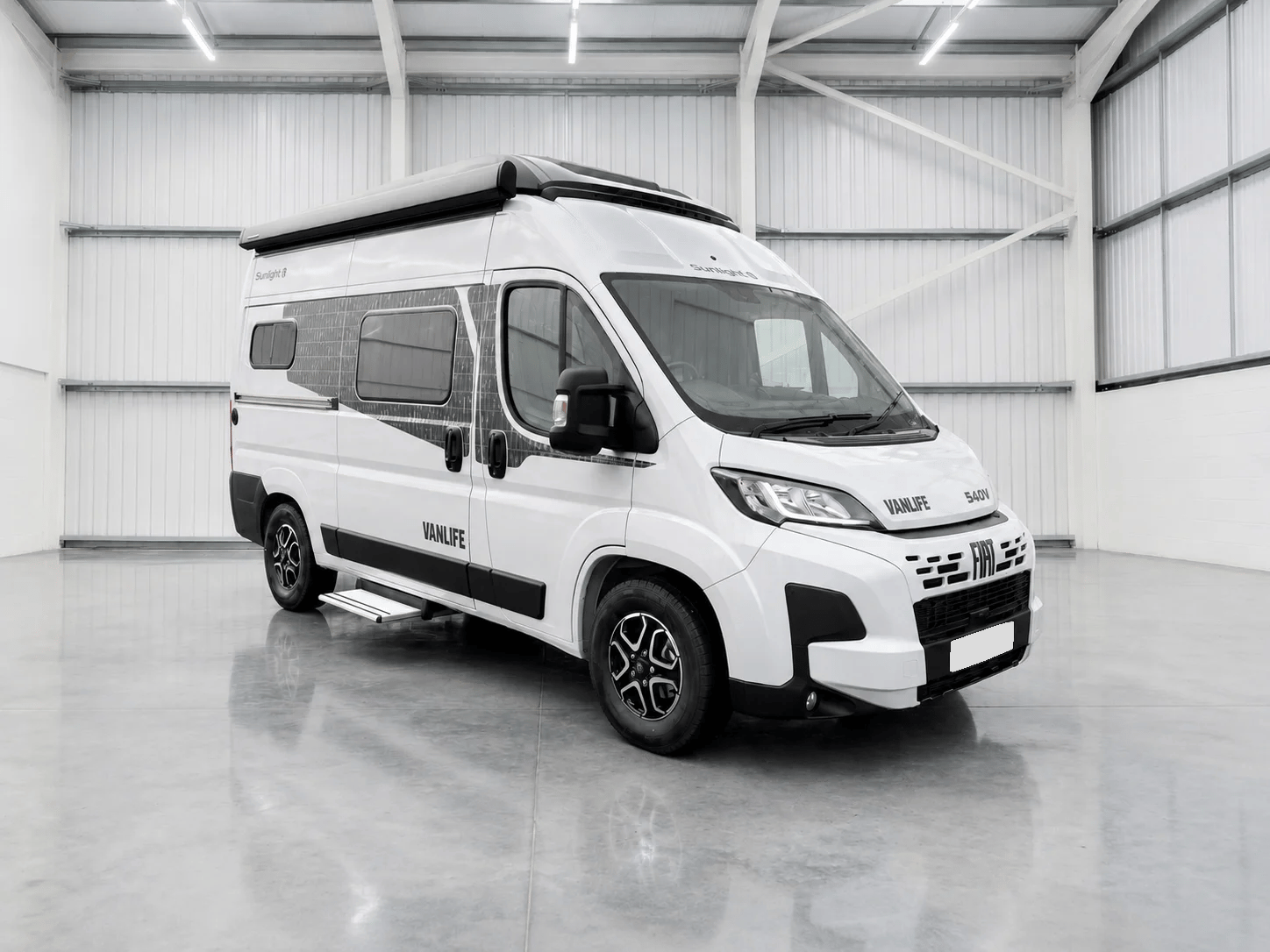
The camper you fall for is rarely the one you can afford. That gap is the whole reason Campervan.win exists. Right now we’re giving away the Sunlight Vanlife, worth around £65,000, and closing that gap is the point: capped entries so the odds stay honest, £10 a ticket, a maximum of five per person, £500 to a UK charity from every full draw, the winner picked by a public randomness beacon anyone can re-check, and one person driving away in the van itself.
Enjoyed this post?
Get more honest campervan guides like this one in your inbox.
You’re in!
Check your inbox. We’ve just sent you a welcome email.

About the author
Arthur
Arthur writes buying guides, comparisons, and in-depth explainers to help readers choose the right campervan or motorhome with confidence.
Keep Reading
Related Reading
Thoughtful articles that build on what you’ve just read.
Campervan Reviews
10 min read
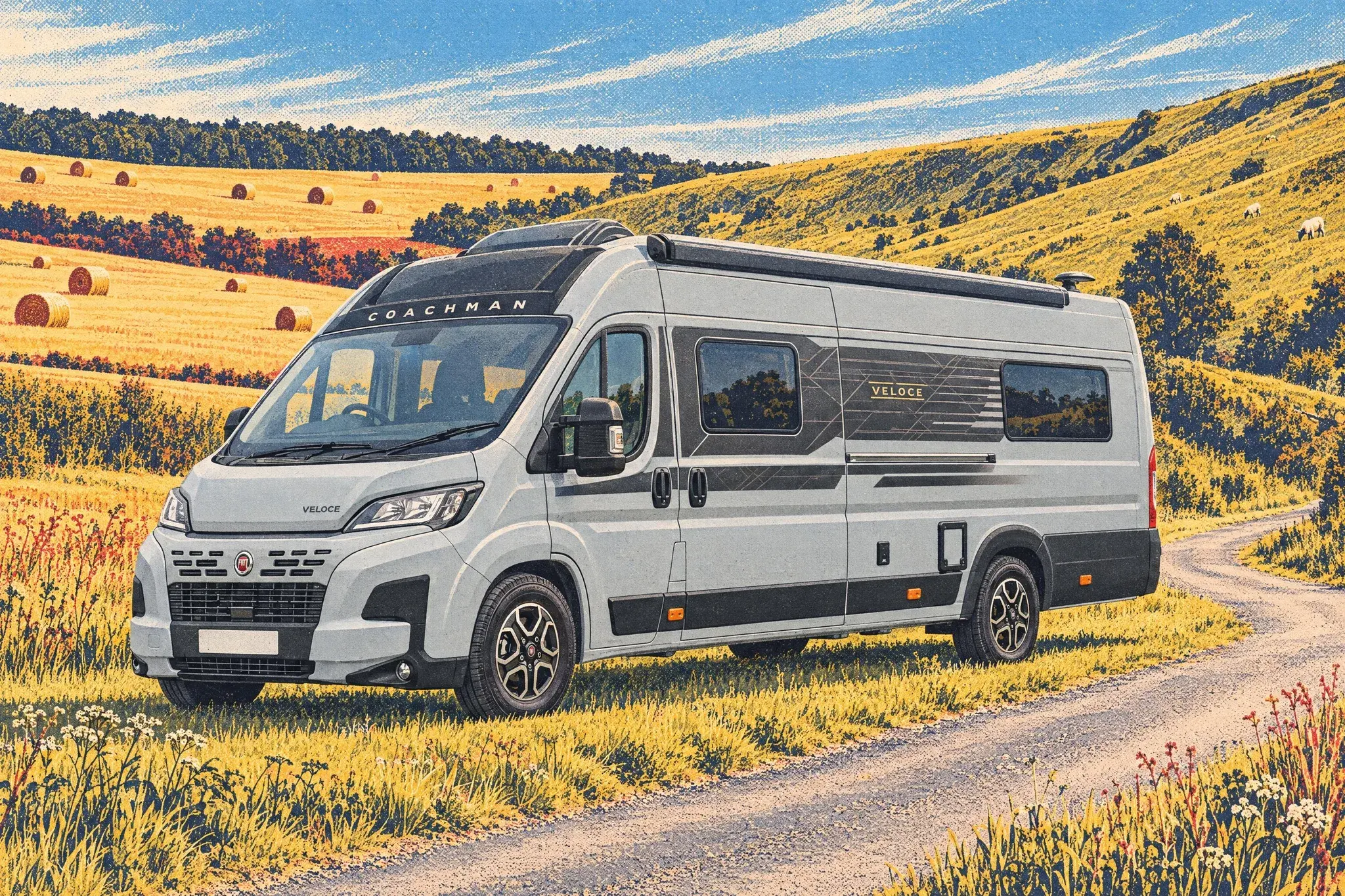
Coachman Veloce (2027): a UK-built Fiat Ducato campervan at £86,500, and who it is for
Coachman has built its first Fiat Ducato campervans in the UK, the Veloce VL65 and VR65, at £86,500 each. We go through what that price includes, the payload sums for four seats, the heating and power kit, and who a premium British panel van like this suits.
Campervan Reviews
27 min read
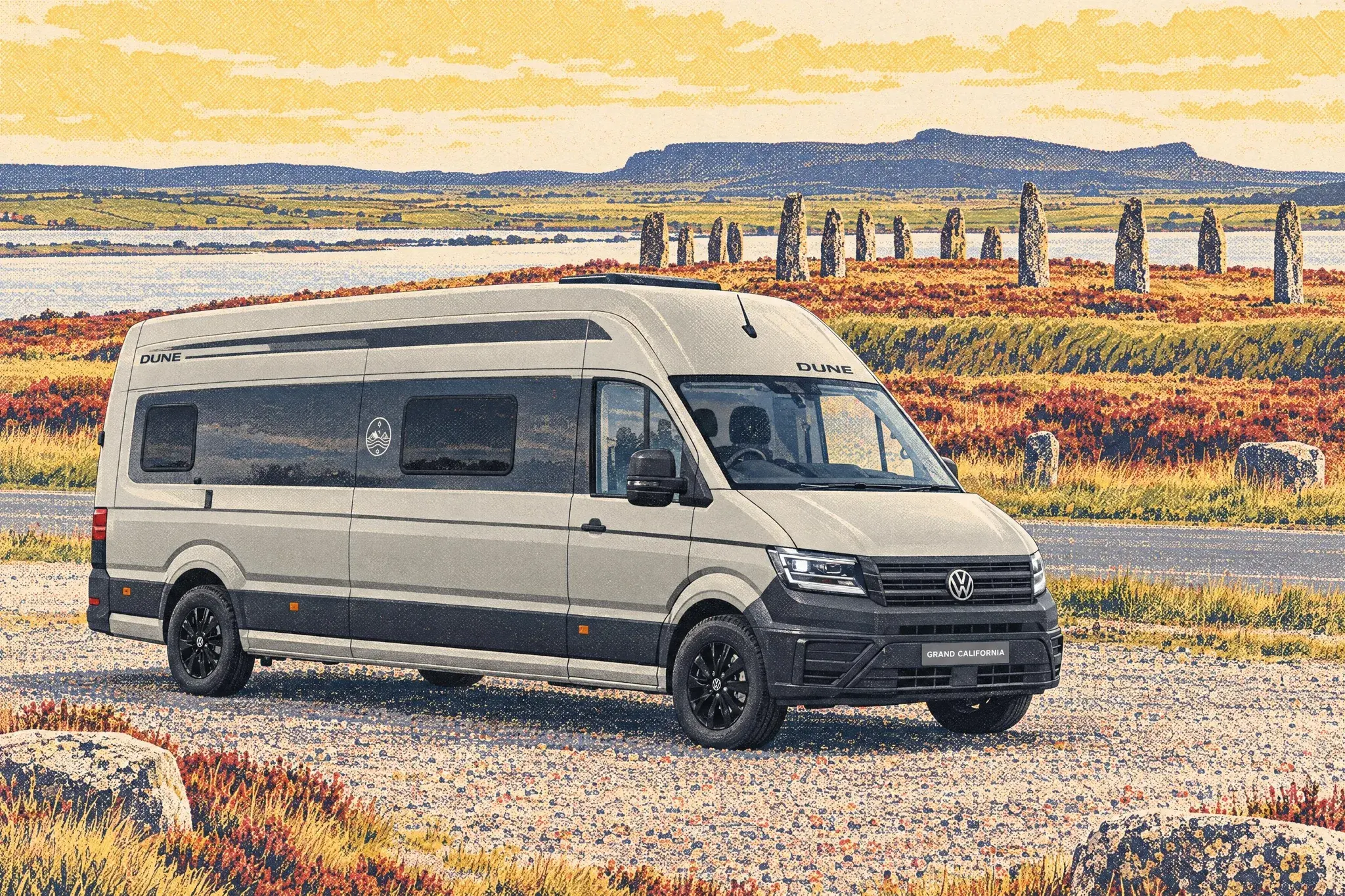
VW Grand California 680 Dune deep dive: the long two-berth tourer, the C1 licence, and FWD or 4MOTION
A full look at the Volkswagen Grand California 680 Dune as a two-person long-distance tourer: dated UK prices, why the 3,880 kg weight means a C1 licence for many drivers, the real payload sums for front-wheel drive against 4MOTION, the lengthways bed, four-season kit and a viewing checklist.
Campervan Reviews
35 min read
Carado CV595 X-Edition explained: the £87,890 4x4 VW Crafter campervan, for UK buyers
A long, honest look at Carado's first VW Crafter campervan: what 4MOTION and the off-road pack really do, how the 3,500 kg payload works out, what the 200 cm transverse bed and no-solar spec mean for British touring, and what to confirm before you order one at £87,890.
Campervan Reviews
13 min read
Coachman Affinity One explained: who the Polish-built 6.36 m Fiat Ducato campervan really suits
The Coachman Affinity One is a long, tall Fiat Ducato campervan built in Poland and sold in the UK under the Coachman name. Here is what the fixed French bed, front bunk, washroom, 3,500 kg weight and 6.36 m length really mean for the people who might buy one.