
Twin beds vs island bed: which motorhome layout really suits UK touring couples?

Written by
Arthur
Arthur writes buying guides, comparisons, and in-depth explainers to help readers choose the right campervan or motorhome with confidence.
The short answer
For UK touring couples the bed choice usually comes down to twin singles across the back or an island bed you can walk around, and there is a genuinely happy answer in here for everyone. Twin beds tend to give better undisturbed sleep, double as daytime seating, and leave a bigger garage and more payload headroom on a 3,500kg plate. An island bed gives a big, home-like double with easy access down both sides, though it is usually longer and heavier and eats into daytime space. A French bed is often the quiet best-of-both. The honest truth is that the right layout is simply the one that fits how you two travel and sleep, and once it does you barely think about the bed again. Here is how each really lives, day and night.

Two people, one motorhome, and one decision that quietly shapes everything else: how do you want to sleep? Get the bed right and the rest of the layout tends to fall into place. Get it wrong and you will notice every single night, plus most mornings, and probably a few rainy afternoons too.
For touring couples in the UK, the choice almost always comes down to two layouts. Twin single beds across the back, or a big island bed you can walk around. Both sell in huge numbers. Both have devoted fans. And both have downsides that nobody mentions until you have lived with them.
This guide gives you the honest picture. We will go through space, sleep quality, daily routine, storage, heating, weight, resale, and the small practical things that make or break a layout when you actually live in it. No hype, no nudging you toward one answer. By the end you should know which one suits how you two travel, not how a brochure says you should.
What these two layouts actually are
Before we compare anything, it helps to be precise about what we mean, because showroom language can blur the lines.
Twin beds (also called twin singles or fixed singles)
Two separate single beds, usually fitted along each side at the rear of the motorhome, running front to back. Between them is a gap, and at the foot of each bed there is often a washroom or a wardrobe. The two beds are typically narrower than a domestic single, and they each have their own access from the central aisle.
In most British coachbuilts and many imported A-class vans, the twin beds sit over a large garage. That is the big external locker at the rear that you load from outside. So the beds are usually higher off the floor, with steps or a fixed step to climb in.
Many twin-bed layouts include an infill: a cushion or slatted board that drops between the two beds to turn them into one large sleeping platform if you want it. Whether that infill is comfortable, quick to fit, and worth using varies enormously from model to model. We will come back to that, because it matters a lot.
Island bed (and the French bed, its close cousin)
A double bed you can access from both sides and usually from the foot as well, with a walkway around it. A true island bed sits central or near central at the rear, with space down both flanks. A French bed is a close cousin: a fixed double tucked into one rear corner, often with a cut corner so you can squeeze past to the washroom. Strictly they are different, but for couples the daily experience overlaps, so we will treat the French bed as the island bed's smaller sibling and flag the differences where they count.
The island bed is the layout that feels most like home. You both have your own side, you get in and out without climbing over each other, and the mattress is one continuous double. That domestic familiarity is a big part of why it sells so well.
The honest headline: twin beds win on flexibility, storage, and not disturbing each other. Island beds win on that one-mattress, walk-round, feels-like-home comfort. Almost everything else is detail. Useful, decision-making detail, but detail.
Sleep quality: the thing you came for
You will spend roughly a third of every trip asleep, so let us start where it counts.
Why twin beds can give better sleep
The single biggest sleep advantage of twins is independence. If one of you reads late, gets up for the loo at 3am, runs warm, runs cold, or fidgets, the other barely notices. There is no shared mattress transmitting movement, no duvet tug-of-war, no negotiating who gets the cold edge.
That matters more than couples expect. At home you have a big bed and thick walls. In a motorhome you are in a small metal box with thin curtains, so small disturbances feel larger. Couples with very different body clocks, or where one person snores or has restless legs, often sleep noticeably better in twins. It is not romantic to admit, but rested people are nicer to travel with.
Twin mattresses are also usually a proper rectangular shape with even support along their whole length, because they sit over a flat garage. No awkward tapering, no soft corner.
Why island beds can give better sleep
The island bed gives you a continuous double, so if you are a couple who likes to sleep close, share a duvet, and not feel like you are in a hotel twin room with your partner across the gap, the island wins easily. There is no canyon down the middle.
It also tends to sit lower to the floor, which some people find more reassuring and easier to get into, especially later at night. And because it is one big mattress, you can sleep diagonally, sprawl, or shuffle around as a couple in ways a single simply does not allow.
The catch is movement transfer and access. On a French bed in particular, the person sleeping on the inside, against the wall, has to climb over or wake the outer person to get out. For a 3am trip to the washroom, that is a genuine nightly friction point. A true central island bed solves this because both sides are open, which is exactly why island beds tend to command a premium and need longer vans.
Mattress quality matters more than layout
Here is the thing nobody tells you in the bed-layout debate: the mattress itself often matters more than whether it is twin or double. Many factory mattresses are thin foam on a slatted base, and they are fine for a fortnight but tiring over months. Whichever layout you choose, budget for a decent topper or a mattress upgrade. A good pocket-sprung or quality foam mattress, plus a breathable topper to help stop condensation underneath, will improve your sleep more than the twin-versus-island decision ever will.
Getting in and out, and the 3am test
Run every layout through what we call the 3am test. It is the middle of the night, it is dark, you need the loo, and your partner is asleep. What happens?
- Twin beds: you slide out of your own bed straight into the aisle. Nobody is disturbed. This is the best layout in the business for nighttime independence. The only downside is the height: twins over a garage can be a climb, so if knees or hips are a concern, check the step arrangement carefully.
- Central island bed: you slide out your own side into the walkway. Also excellent, provided the walkways are wide enough to actually use. Some island layouts look open in photos but leave only a narrow strip down each side.
- French bed: fine for the outer sleeper, awkward for the inner one. If you take the wall side, you will be climbing over your partner or shuffling down to the cut corner. Couples sometimes solve this by agreeing who sleeps where, but it is worth being honest about how often you each get up in the night.
If either of you is a frequent nighttime riser, twins or a true island bed will save a lot of grumbling. A French bed can still work beautifully, but go in with your eyes open about that inner-side climb.
Daytime living: the bit the brochures skip
You do not just sleep in a motorhome. You live in it, often for hours, often when it is raining sideways and you are not going anywhere. This is where the two layouts really separate.
Twin beds as daytime seating and lounging
One of the underrated joys of a twin-bed layout is that each bed becomes a sofa or a daybed during the day. You can lie down with a book on one, leave the other for your partner, prop yourself up against the wall, and use the space without making or unmaking anything. Many couples end up using the rear twins as their main relaxing spot, with the front lounge reserved for meals.
That gives a twin-bed van two distinct living zones, front and back. On a wet afternoon, one of you can read at the back while the other cooks or works at the front. In a small space, having two zones genuinely reduces friction.
The gap between the twins, with the washroom often at the rear, also creates a natural changing and circulation space. It feels open and airy because you can see straight through to the back windows.
Island beds as daytime dead space
Here is the honest trade-off. An island bed is, during the day, a bed. It is hard to repurpose a made double bed into anything else. You can sit on the edge, you can perch, but you cannot really lounge on it the way you can sprawl on a twin without it feeling like you have gone back to bed. So in daytime hours, the rear of an island-bed van is largely committed to that one function.
That is not a disaster. The island bed almost always comes with a generous front lounge, often an L-shaped or wraparound dinette, and that is where you spend daytime hours. But it does mean an island-bed van effectively has one main living zone at the front, plus a bedroom you do not really use until night. For couples who like to retreat from each other during the day, that can feel tighter than it looks.
Storage: the quiet decider
Storage is where a lot of buyers think they have no preference and then discover, three trips in, that they care enormously.
The garage advantage of twin beds
Because twin beds sit high over the rear floor, they almost always sit above a large garage. This is one of the most useful storage features in a motorhome. You can carry folding bikes, golf clubs, camping chairs, an awning, a barbecue, a portable solar panel, wetsuits, and a generous food box, all loaded from outside without traipsing mud through the living space.
For couples with hobbies, dogs, or anyone who travels with bulky kit, the twin-bed garage is transformative. It keeps the dirty, heavy, awkward stuff out of your living area and low down, which is good for the handling of the van too. Many twin-bed garages will take an electric bike or two, and some are tall enough to stand a road bike upright.
The beds themselves usually lift on gas struts to reveal the top of the garage from inside, so you get internal access as well. That is handy for grabbing something without going outside in the rain.
Island bed storage: good, but different
An island bed also has under-bed storage, and because the bed lifts, you can usually get a decent volume under there. But it sits lower, so the storage is shallower and less suited to tall items. You will fit bedding, clothes, and soft bags comfortably, but two electric bikes and a folded awning is asking a lot.
French beds in particular can have slightly compromised under-bed storage because of the angled corner and the wheel arch intrusion. It varies model to model, so always lift the bed in the showroom and look, do not assume.
Island-bed vans often compensate with bigger wardrobes, more overhead lockers around the bed, and sometimes a small external locker, but they rarely match the sheer capacity of a proper twin-bed garage.
What this means in practice
- If you carry bikes, sports kit, or a lot of outdoor gear, twins and their garage are hard to beat.
- If you travel light, with clothes and a few bits, the island bed's storage is perfectly adequate and the lower floor is easier to load by hand.
- Dog owners often lean toward twins, because the garage swallows muddy gear and the lower aisle suits an older dog, but plenty of dogs travel happily in island-bed vans too.
Bed size and comfort for two adults
Let us talk actual dimensions, because this is where disappointment hides.
Twin bed dimensions
Twin singles in a motorhome are often narrower than a domestic single. Widths and lengths vary a lot between models, and some twins are noticeably short. That width is fine for most people sleeping alone, but if you are broad-shouldered or you like to starfish, a narrow single can feel mean. Always lie down in the showroom. Spend a proper few minutes there. Do not be shy about it.
The lengths matter for taller people. If either of you is over about six feet, check the bed length specifically, because some twins are short. A few models have one longer bed and one shorter, which is worth knowing if one of you is much taller.
Island bed dimensions
Island doubles are usually generous, often close to a domestic double, which is exactly why they feel so homely. The width is the real luxury here. You get room to move without rolling into each other.
French beds are narrower at the foot because of the cut corner, so a tall sleeper's feet can end up in the narrow bit. Again, lie in it, feet to the corner, and see how it feels.
The twin-bed infill question
Most twin layouts offer an infill to join the beds into one double. In theory this gives you the best of both: singles most nights, double when you want it. In practice, it depends entirely on the design.
- Good infills are a single fitted cushion or a sprung board that drops in level with both beds in under a minute, giving a flat, continuous surface. If a model has this, twins genuinely become a flexible layout.
- Poor infills are fiddly boards and loose cushions that never sit quite level, leave a ridge down the middle, and take an age to fit. Couples who buy expecting to use the infill nightly often give up after a week.
If the infill matters to you, test it in the showroom. Make the bed up. Feel the join. A salesperson will happily demonstrate, and if they are reluctant, that tells you something.
Heating, condensation and staying warm
The UK touring season is long, wet, and often cold. How a layout handles warmth matters for year-round comfort.
Twin beds and heat
Twin beds over a garage sit higher in the van, where warm air collects, so the sleeping surface can feel cosier on a cold night. But the garage below is usually a cold void, so the underside of the mattress can get chilly and condensation can form between mattress and base. A breathable mattress topper, the kind with an air-gap underlay, helps a lot here.
Heating outlets are usually well distributed in twin layouts, with vents near each bed. The open gap between the beds lets warm air circulate to the rear, so twins tend to warm up evenly.
Island beds and heat
Island beds sit lower, closer to the heated floor in many modern vans, and that low-level warmth is lovely on a cold morning. The bed often backs onto an outside wall on more than one side, though, so condensation against the rear and side walls is something to watch. Pull the mattress forward occasionally and let it breathe, and use a topper.
Whichever you choose, ventilation beats heating for managing condensation. Crack a roof vent, even in winter. Two adults breathing overnight put out a surprising amount of moisture, and a sealed van turns that into streaming windows by morning.
Washroom layout: it is connected to the bed
You cannot separate the bed decision from the washroom, because they usually share the rear of the van.
Twin beds plus rear washroom
Many twin layouts put a full-width rear washroom across the back, between and behind the two beds, or a washroom at the foot of one bed. The full-width rear washroom is a genuine highlight: a proper separate shower cubicle, a decent basin, room to dry off without elbowing the toilet. For couples who shower on board regularly, this is one of the best washroom arrangements you can get.
Island bed plus mid washroom
Island beds usually push the washroom forward, often a combined or split washroom on one side mid-van, with a wardrobe opposite. These are often very good too, with split designs giving a separate shower across the aisle from the toilet and basin. But the rear of the van is given to the bed, so you do not get that luxurious full-width rear washroom feel.
If on-board showering is a priority, look hard at the washroom in any layout you consider. A cramped wet-room where the loo gets soaked every time you shower will annoy you for years. A proper separate shower cubicle is worth a lot.
Weight, length and the licence question
This is the practical reality that catches people out, and it is genuinely important in the UK.
Why island beds tend to be longer and heavier
A walk-round island bed needs length. To fit a double bed with usable walkways on both sides, plus a lounge, kitchen and washroom, the van has to be long, often well over seven metres. That length means more vehicle, more weight, and a bigger footprint to park and manoeuvre.
French beds are more space-efficient because they tuck into a corner, so French-bed vans can be shorter. That makes the French bed a sensible middle path for couples who want a fixed double but a more manageable van.
Twin-bed layouts are also relatively space-efficient and come in a wide range of lengths, including some fairly compact models, because the beds use the rear width neatly.
The 3,500kg licence cliff edge
Here is the bit that really matters. If you passed your car test in Great Britain on or after 1 January 1997, your standard category B licence lets you drive a vehicle up to 3,500kg maximum authorised mass (MAM). To drive heavier than that, up to 7,500kg, you need the older C1 entitlement, which many people who passed after that date do not automatically have and would need to take a separate test for.
Why does this connect to beds? Because longer, heavier island-bed vans are more likely to push toward or over 3,500kg once you add passengers, a full water tank, gas, an awning, bikes and your gear. A long island-bed coachbuilt with a generous payload can be tight on weight. Some can be specced to a 3,500kg plate with a usable payload, but you must check the numbers carefully, because the payload, the difference between the empty weight and the MAM, is what you actually have to play with.
Always ask for the real-world unladen mass of the specific van, including the options fitted, not the brochure's optimistic base figure. Then subtract that from the plated MAM. What is left is everything you carry: people, water, gas, food, bikes, clothes, the lot. If that number leaves little headroom for a couple touring properly, think hard.
Twin-bed vans are not automatically lighter, but their typical layouts and lengths often leave more payload headroom on a 3,500kg plate. If you have only a category B licence, weight should be near the top of your checklist, and it nudges some couples toward twins or a shorter French-bed van.
Length, parking and where you can go
A long island-bed van is a lovely thing on a motorway and on a spacious site. It is less lovely in a tight Cornish lane, a height-and-length-restricted car park, or a small rural campsite pitch. Twin-bed and French-bed vans, being often shorter, open up more places and feel less stressful on narrow roads. If your idea of UK touring involves the Highlands, the West Country lanes, or quiet coastal villages, length is a real consideration, not a vanity stat.
Daily routine: making and unmaking
Both twin and island beds are fixed beds, which is their great advantage over a van where you convert the dinette every night. With either layout, you do not build your bed. You just get in. That alone is a huge quality-of-life win over rock-and-roll or drop-down beds for couples touring for more than a few nights.
The small differences:
- Making the bed: twins are easy to make because you can stand in the aisle and reach across each narrow bed. An island bed is easy from both sides if it is central, but a French bed against the wall is awkward to tuck in on the inside, so fitted sheets and a duvet rather than tucked bedding make life easier.
- Airing: twins air easily because each is open and you can flip the topper. Island beds need a bit more effort to lift and breathe, especially against the cold outer walls.
- Stripping for departure: roughly equal, though some couples leave island beds made and just smooth them, whereas twins double as seating so they tend to get tidied daily anyway.
Who twin beds genuinely suit
Based on how couples actually use these vans, twin beds tend to suit you if:
- One or both of you sleeps lightly, gets up in the night, snores, or runs at a different temperature. The independence is a real, nightly benefit.
- You carry bikes, sports gear, an awning, or a lot of outdoor kit and want a big garage.
- You like having two living zones so you can do different things at opposite ends of the van.
- You want a full-width rear washroom with a proper separate shower.
- You travel with a dog and value the garage and the lower aisle.
- You are on a category B licence and want more payload headroom on a 3,500kg plate.
- You tour off the beaten track and value a slightly shorter, more manageable van.
The compromise you accept: you sleep apart most nights unless you have a good infill, and the higher beds are a climb.
Who island beds genuinely suit
The island bed tends to suit you if:
- You both sleep well together, share a duvet, and would feel oddly separated in twins.
- You want the most home-like sleeping experience, with a big continuous mattress.
- You both can get in and out easily down your own side, with a true central island, and value that.
- You are happy with one main daytime living zone at the front and do not need the rear as a daytime space.
- You travel relatively light and do not need a cavernous garage.
- You are comfortable driving and parking a longer van, and your licence and payload sums work at that length.
The compromise you accept: a longer, heavier van, less convertible daytime space at the rear, and, on a French bed, the inner-sleeper climb.
The French bed as the sensible middle ground
It is worth pausing on the French bed, because for a lot of UK couples it is the quiet sweet spot. You get a fixed double, the home-like feel, often a good front lounge and a tidy mid washroom, all in a van that can be shorter and a fair bit lighter than a full walk-round island. The price you pay is the cut corner and the inner-sleeper access.
If you like the idea of a double but the length and weight of a true island bed worry you, test a French-bed layout properly. Many couples who start out convinced they want an island bed end up choosing a French bed because the whole van is easier to live with and to drive, and the bed is only marginally less perfect.
Resale and desirability
This should never be the main reason you choose a layout, because you are the one living in it. But it is worth knowing.
Both twin and island layouts are popular and sell well used, so neither is a risky choice. Fixed-bed layouts in general tend to hold their appeal better than fully convertible ones, because most buyers want a permanent bed. Among couples, island and French beds have very broad appeal because of the home-like feel. Twin beds have a slightly more specific audience, but a strong one, especially among active couples and dog owners, so good twin-bed vans sell readily too.
The practical takeaway: choose the layout that suits your life, keep the van in good condition, and resale will look after itself. Do not buy a layout you will not enjoy just because you think it might sell marginally faster.
The mistakes couples make when choosing
Having seen how these decisions play out, here are the traps worth avoiding.
Choosing in a showroom on a sunny afternoon
A van feels enormous and airy in a bright, warm showroom with the doors open. The same van on a dark, wet October evening with the blinds down and the heater on feels much smaller. Try to imagine, or better still hire, the layout in real conditions before committing.
Not lying down on the bed
People spend an hour discussing the kitchen and thirty seconds on the bed they will sleep in for years. Get on the bed. Both of you. Lie down properly. Roll over. Sit up against the wall. Pretend it is 3am. The bed is the most important surface in the van.
Forgetting the payload sum
As covered above, the brochure weight is not the weight you drive. Get the real figure for the actual van and do the subtraction. This catches more couples out than any other single thing, especially with longer island-bed vans on a 3,500kg plate.
Assuming the infill will save you
If you are buying twins but secretly want to sleep as a double most nights, do not assume the infill will be good enough. Test it. If it is fiddly, you will not use it, and you will effectively be sleeping in singles. That is fine if you are happy with that, but be honest with yourselves.
Ignoring how you actually spend rainy days
UK touring includes weather. A lot of it. Think about a full wet day stuck inside. Do you want two zones to retreat into, which means twins, or are you happy in one good front lounge while the bed sits unused at the back, which means island? This single question sorts a lot of couples cleanly.
Buying for the holiday you imagine, not the trips you take
Couples picture long Continental tours and big adventures, then mostly do long weekends and a couple of UK fortnights. Buy for your real pattern. If most of your trips are short UK breaks in varied locations, a manageable, flexible van often beats a big luxurious one that is a chore to park.
A practical viewing checklist
When you go to look at either layout, work through this list in person. It will tell you more than any spec sheet.
- Lie on the bed for several minutes. Both of you. Check width, length, firmness, and the head and foot space.
- Run the 3am test. Get out as if it is the middle of the night. How easy is it without disturbing your partner?
- Open and load the storage. Lift the bed. Open the garage. Picture your actual kit going in. Bring a folding chair or a bag to test if you can.
- Fit the infill on twins and make the bed up fully. Time it. Feel the join.
- Use the washroom. Sit on the loo. Stand in the shower. Check you can dry off without soaking everything.
- Sit in the lounge and imagine a wet day. Where do you each go? Is there a comfortable spot for both of you at once?
- Check the heating outlets near the bed and around the floor. Ask how the van performs in winter.
- Get the real unladen weight for that van with its options, and do the payload sum on the spot.
- Walk the length outside. Picture it on a narrow lane and in a tight car park. Be honest about your confidence driving it.
- Open every blind and then close them. A van feels very different with everything shut, which is how you will spend evenings.
Real-world scenarios to help you decide
Sometimes the clearest way to choose is to see yourself in an example.
The active couple with bikes and a dog
Two people who tour to cycle, walk, and explore, with a Labrador along for the ride. Twins almost always suit them. The garage takes two e-bikes and the muddy gear, the dog has a clear lower aisle, and the independence helps after long active days. The full-width rear washroom rinses off the day nicely, and length stays manageable for rural sites.
The couple who love long, slow tours and sleeping in
Two people who enjoy unhurried touring, lazy mornings, breakfast in bed, and feeling at home. The island or French bed suits them. The big continuous mattress is the heart of how they like to travel, and they do not mind a longer van because they pitch up and stay put for days at a time. They pack moderately, so storage is fine.
The couple on a category B licence who tour widely in the UK
Two people who want to explore Wales, Scotland and the West Country, on a standard licence, with payload headroom for whatever they fancy bringing. A twin-bed van or a shorter French-bed layout keeps weight and length sensible while still giving a fixed bed. They avoid the longest island-bed vans precisely because the payload and parking sums get tight.
The couple where one snores and one does not sleep well
This is more common than anyone admits, and it is the clearest case of all. Twins. The independence will do more for your relationship than any feature in the brochure. You can love each other dearly and still sleep far better a metre apart.
Cost and running reality
Layout choice has a modest but real effect on cost and running, and it is worth being clear-eyed about it. None of this is anyone's fault. It is just how bigger, heavier vehicles work.
- Purchase: within a given range, island-bed models are often longer and higher-spec, so they can sit at the pricier end. Twins and French beds span a wider price range. But equipment and brand matter far more than layout, so do not assume.
- Fuel: a longer, heavier van uses a little more fuel and is a touch slower. The difference is real but not dramatic, and driving style and roof kit matter more.
- Tolls and ferries: some ferries and Continental tolls charge by length, so a longer island-bed van can cost more on crossings. If you tour abroad regularly, factor it in.
- Sites and parking: longer vans occasionally cost more on length-priced pitches and rule out some smaller sites entirely. Shorter vans give you more options.
- Insurance and servicing: driven mostly by value, weight and base vehicle rather than bed layout, so the difference is usually small.
The honest summary: an island-bed van is often a slightly bigger, slightly more expensive thing to buy and run, mostly because of size, not because of the bed itself. If budget is tight, a well-specced twin or French-bed van usually stretches further.
So, which one actually suits UK touring couples?
There is no universal winner, and anyone who tells you otherwise is selling something. But here is the genuinely useful way to land the decision.
Choose twin beds if independence at night, big garage storage, two daytime zones, a full-width rear washroom, and a more manageable van matter most to you. Accept that you will sleep apart unless the infill is genuinely good, and that the beds are a climb.
Choose an island bed if a big, home-like double, sleeping close, and easy access down both sides matter most, and you are happy with a longer, heavier van and one main daytime zone. Make sure your licence and payload sums work at that length.
Choose a French bed if you want the double but a shorter, lighter, easier van, and you can live with the cut corner and the inner-sleeper climb. For a lot of couples, this is the quiet best-of-both answer.
Then ignore all of that for a moment and do the one thing that actually decides it: borrow, hire, or thoroughly view the layouts in real conditions, lie on the beds, run the 3am test, do the payload sum, and picture a wet Tuesday inside. The right layout is the one that fits how you two really travel, sleep, and spend a rainy afternoon. Get that right and you will barely think about the bed again, which is exactly how it should be. You will just be out there, somewhere good, enjoying it.
Common questions
Are twin beds or an island bed better in a motorhome?
Neither is simply better; it depends how you travel. Twin singles often give better undisturbed sleep, double as daytime seating and leave more storage and payload, while an island bed gives a bigger home-like double with easy access down both sides but takes more length, weight and daytime space. A French bed sits in between and suits many couples.
Do twin beds give better sleep than an island bed?
They can. With separate single beds, one of you reading late, running warm or cold, or getting up at 3am barely disturbs the other. An island bed feels more like home and lets both people get in and out easily without climbing over a partner. Mattress quality matters more than the layout, so test the actual beds.
Which bed layout is better for storage?
Twin beds usually win. Because the two single beds sit higher at the rear, they leave a large garage beneath for bikes, chairs and bulky kit, and their typical layouts leave more payload headroom on a 3,500kg plate. Island beds offer good storage too, but it is arranged differently and the layout tends to be longer and heavier.
Does the bed layout affect weight and your licence?
Yes. Island-bed vans tend to be longer and heavier, so once you add passengers, a full water tank, gas, an awning and bikes they are more likely to push toward or over 3,500kg, the limit of a standard category B licence. Twin-bed layouts often leave more payload headroom. Do the payload sum at the length you are considering before you buy.
What is a French bed, and is it a good compromise?
A French bed is a fixed double with one bottom corner cut away to ease access past it, the close cousin of the island bed. It gives you a proper double in a shorter, lighter, easier-to-drive van, at the cost of that cut corner and an inner-sleeper having to climb past their partner. For a lot of couples it is the quiet best-of-both choice.
How should a couple choose a motorhome bed layout?
Do not decide in a sunny showroom. Borrow, hire or thoroughly view both layouts, lie on the actual beds, run the '3am test' of getting in and out at night, do the payload sum at that length, and picture a wet Tuesday inside. The right layout is the one that fits how you genuinely travel, sleep and spend a rainy afternoon.
The reachable bit
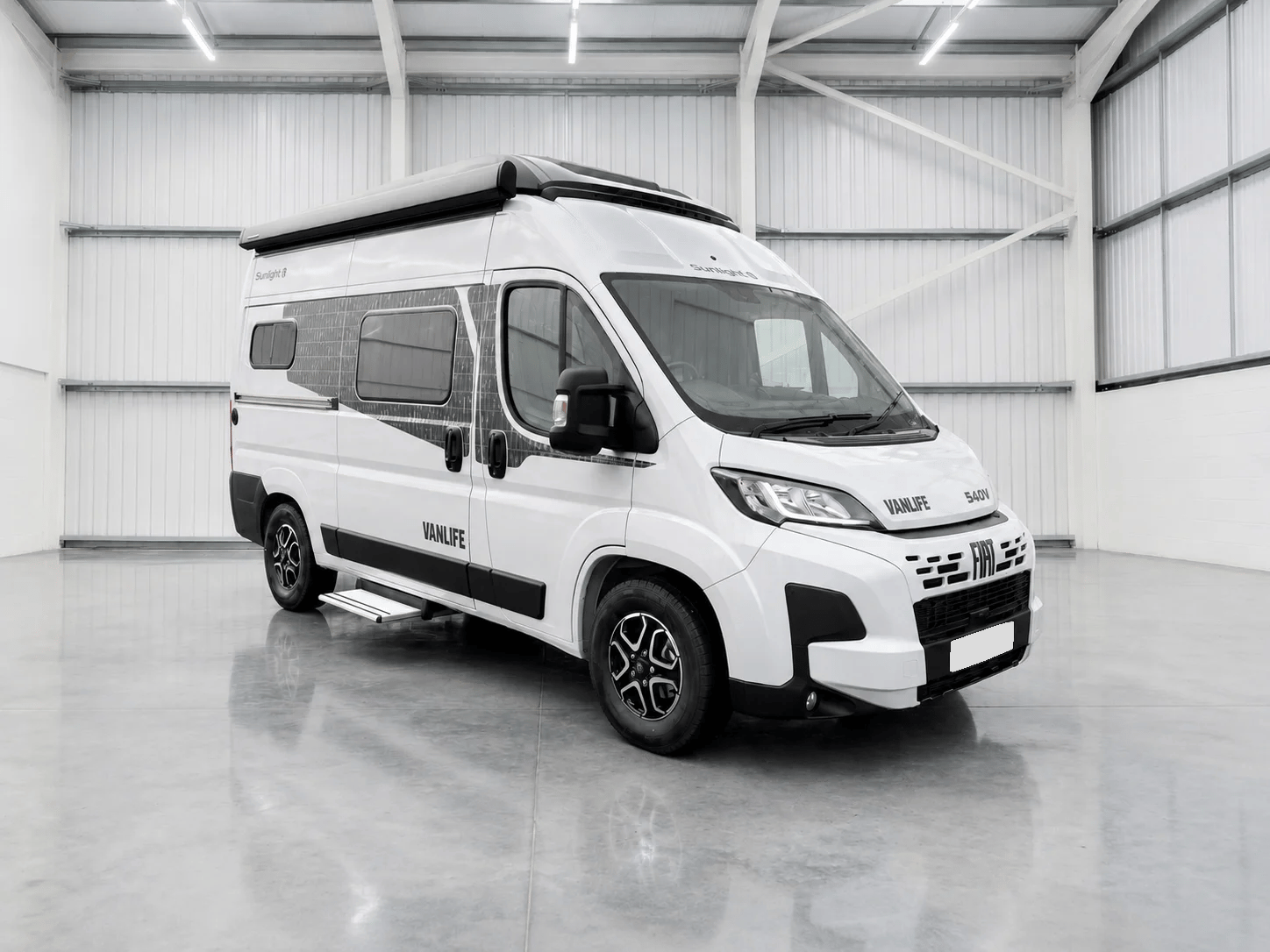
The camper you fall for is rarely the one you can afford. That gap is the whole reason Campervan.win exists. Right now we’re giving away the Sunlight Vanlife, worth around £65,000, and closing that gap is the point: capped entries so the odds stay honest, £10 a ticket, a maximum of five per person, £500 to a UK charity from every full draw, the winner picked by a public randomness beacon anyone can re-check, and one person driving away in the van itself.
Enjoyed this post?
Get more honest campervan guides like this one in your inbox.
You’re in!
Check your inbox. We’ve just sent you a welcome email.

About the author
Arthur
Arthur writes buying guides, comparisons, and in-depth explainers to help readers choose the right campervan or motorhome with confidence.
Keep Reading
Related Reading
Thoughtful articles that build on what you’ve just read.
Motorhome Layouts & Berths
12 min read
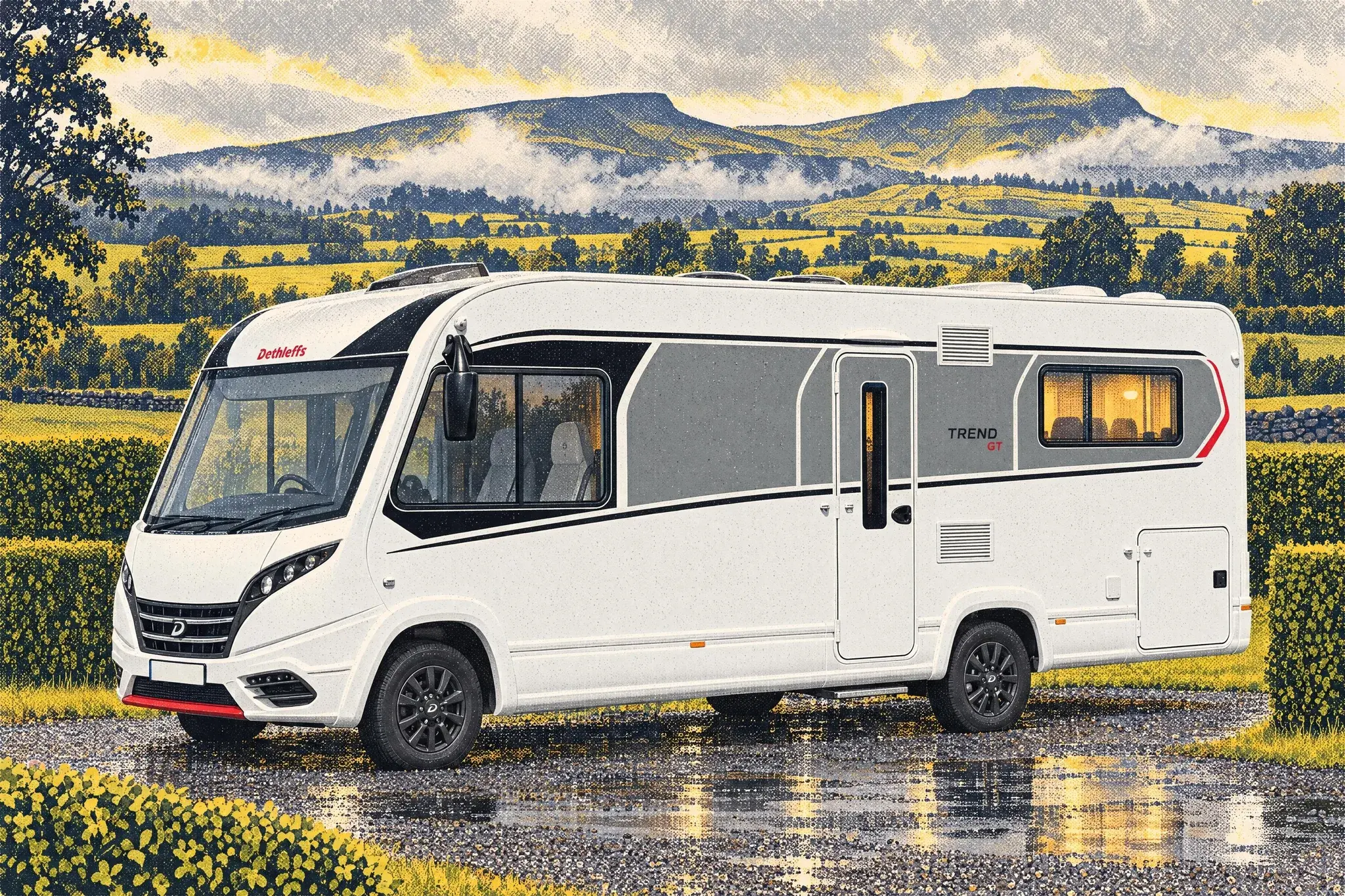
Dethleffs Trend I 7027: a six-seat rear lounge but only two seatbelts
Dethleffs has turned the A-class layout back to front for 2027: a big U-shaped lounge at the rear, twin beds that drop down over the cab, and just two belted seats as standard. We look at who that suits, and who should walk past it.
Motorhome Layouts & Berths
10 min read
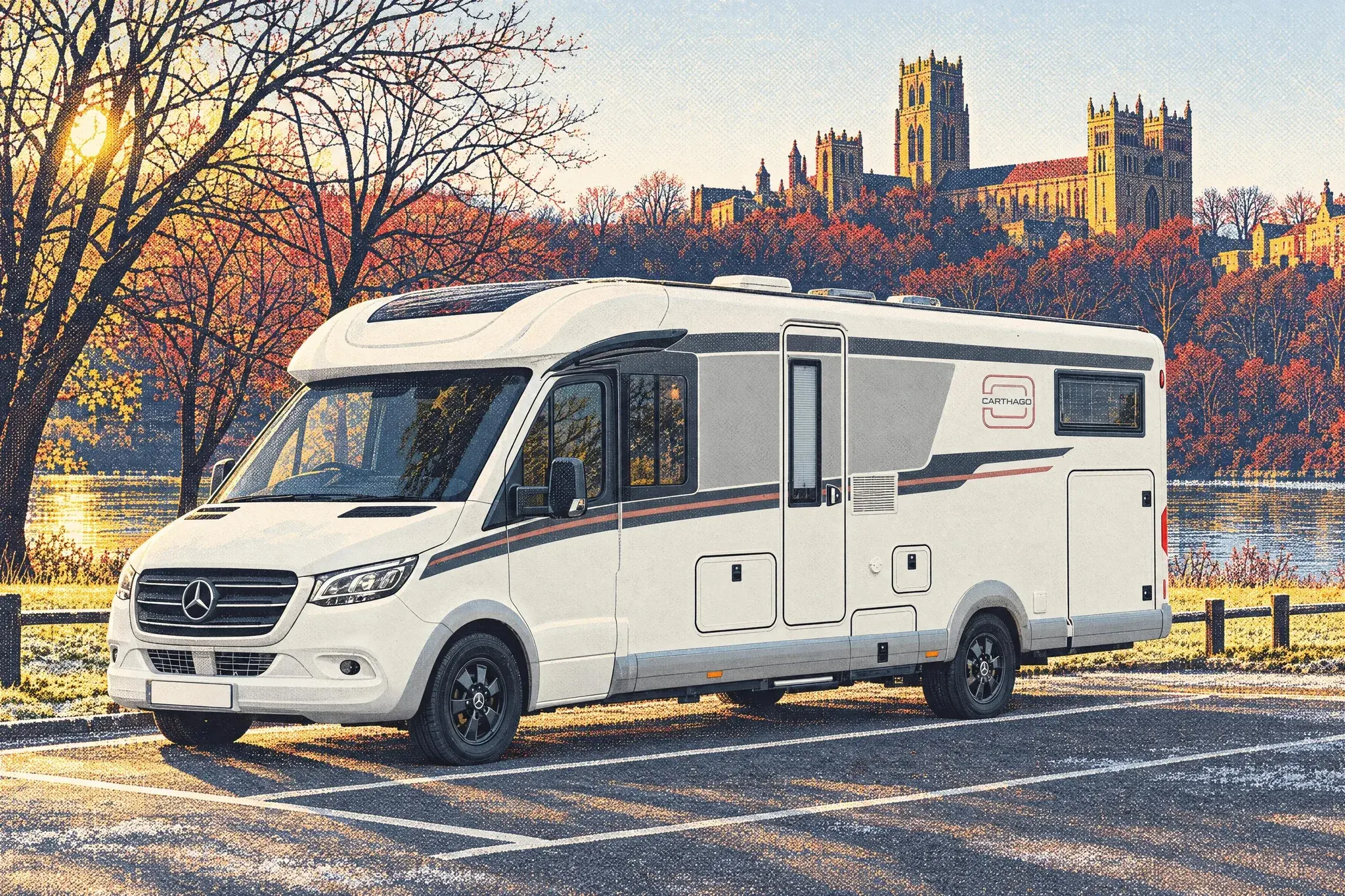
Carthago chic c-line T 4.9 LE: how a 7.5m Sprinter motorhome fits a full-size fixed bed for two
A close look at the Carthago chic c-line T 4.9 LE, a 7.5m low-profile motorhome on a Mercedes Sprinter base, and the layout thinking that lets two people have a proper fixed double bed without giving up the living space.
New & Noteworthy
12 min read
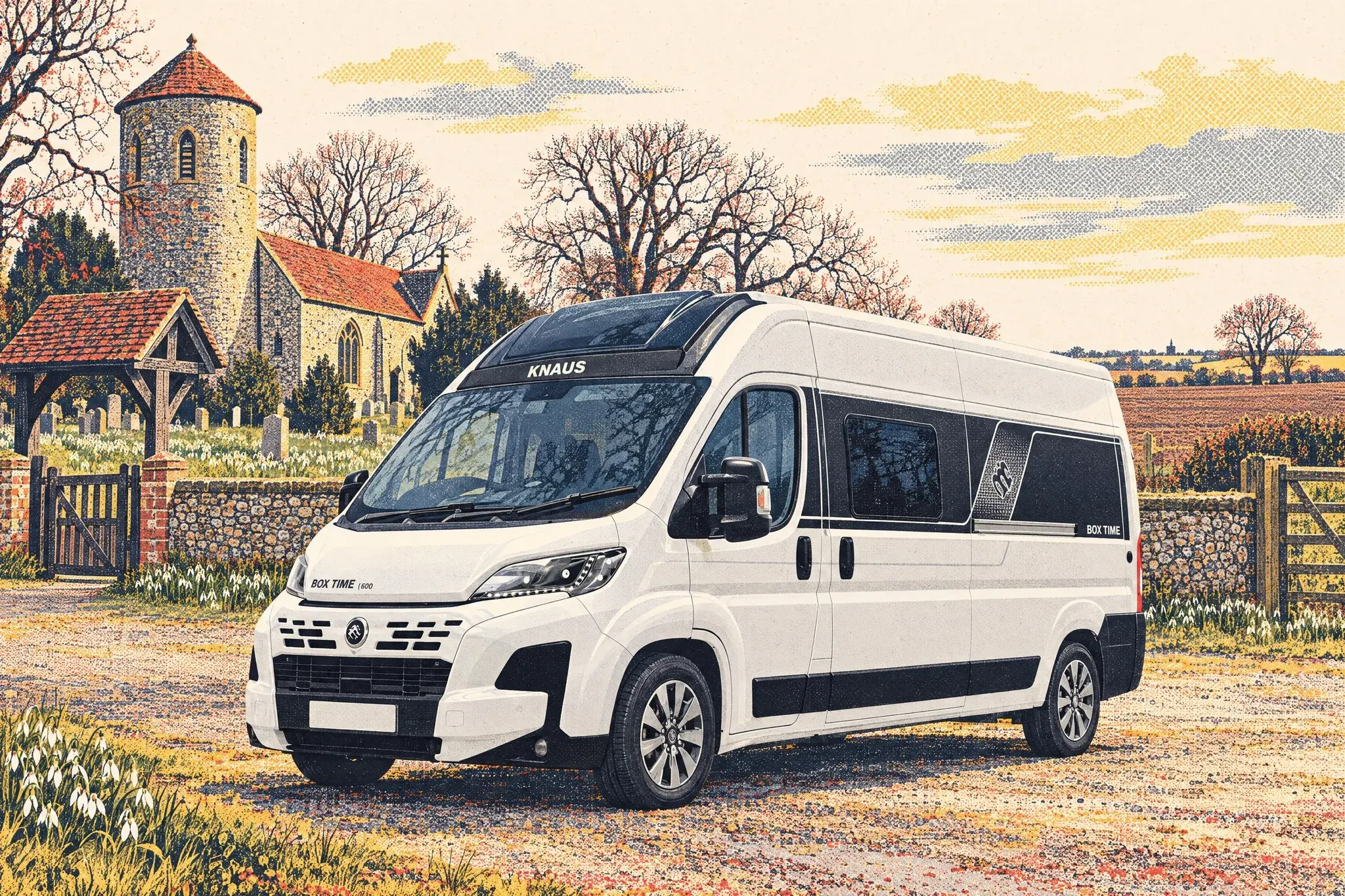
Knaus Boxtime 600 ME (2027): twin singles in 6 m, and the payload figure to question
Knaus's new Boxtime 600 ME squeezes two lengthways single beds into a 5.99 m van from £81,725. We lay out what that layout gives a couple, run the weight sums with Knaus's own figures, and explain why the 211 kg 'maximum payload' line needs a question before you sign.

New & Noteworthy
10 min read
Swift Carrera goes gas-free for 2027: 340Ah lithium, diesel heat and induction cooking
Swift has taken the gas out of its Carrera campervan for 2027, swapping bottles for a 340Ah lithium battery, diesel heating and an induction hob. Here is what that means across a real UK year, how it compares with the cheaper Merlin, and the one question to ask at the NEC.