
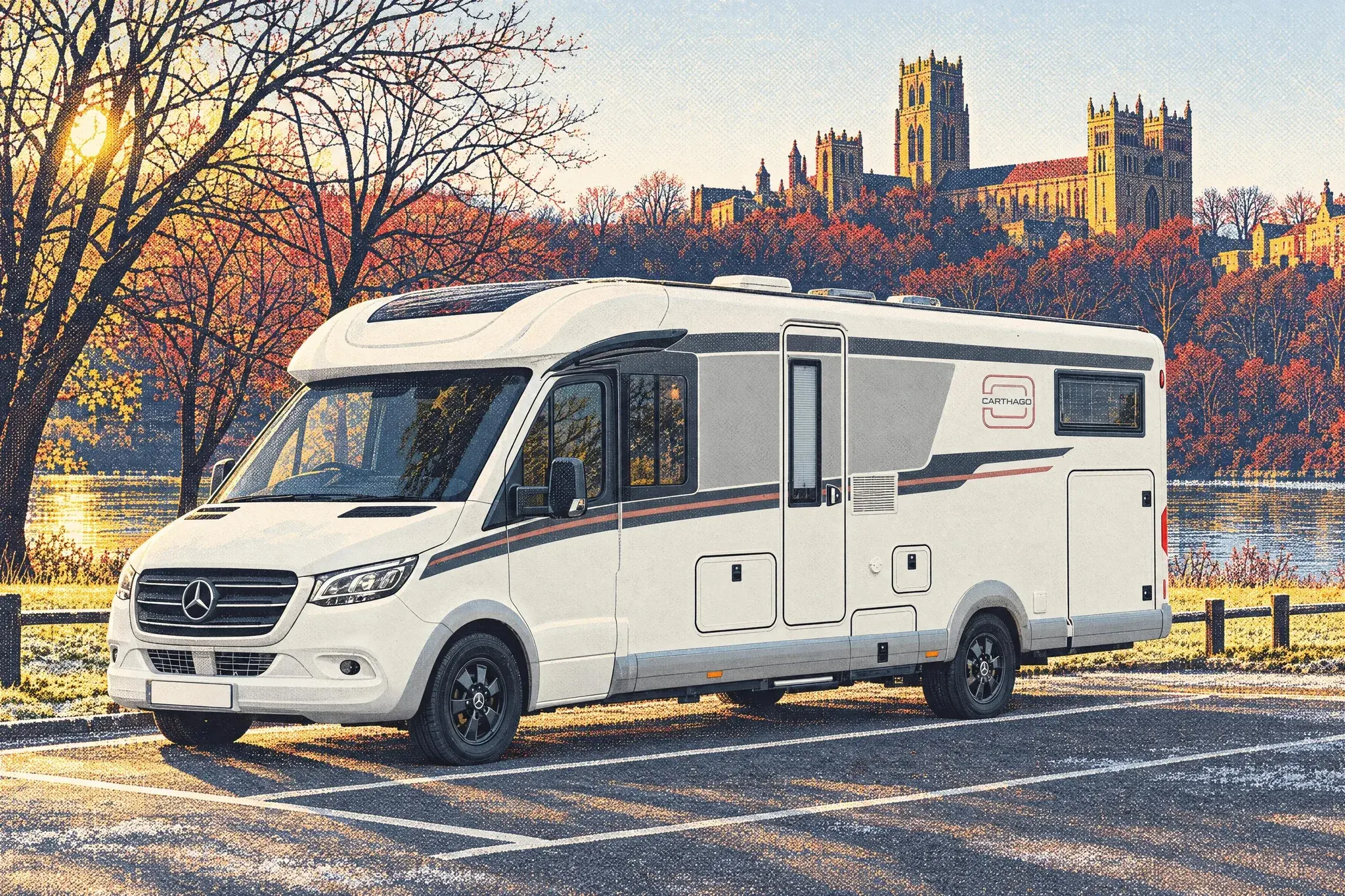
Carthago chic c-line T 4.9 LE: how a 7.5m Sprinter motorhome fits a full-size fixed bed for two

Written by
Felix
Felix covers campervan technology, layouts, and modern conversions, with a focus on design-led thinking and practical performance
The short answer
The Carthago chic c-line T 4.9 LE is a roughly 7.5m low-profile motorhome built on a Mercedes-Benz Sprinter base. It fits a generous fixed double bed for two by placing it at the rear over a raised, insulated double floor and garage, freeing the mid-section for a full lounge, kitchen and washroom. In the UK most examples are plated above 3,500kg, so you will usually need C1 licence entitlement.

Most people who tour as a couple want two things that pull against each other: a proper bed they never have to make up, and a living space they can actually relax in. In a motorhome shorter than about eight metres, something usually gives. Either you accept twin single beds, or you fold the dinette into a bed every night, or you settle for a double that is a bit short for a tall person. The Carthago chic c-line T 4.9 LE is interesting because it tries to give a couple a full-size fixed double bed and keep a generous lounge, all inside a low-profile body of around 7.5m.
This piece looks at how the layout pulls that off, what the Mercedes-Benz Sprinter base brings to it, and the honest UK realities of weight, licensing and living with a vehicle this long. It is not a sales pitch. It is the kind of run-through you would want from a friend who has read the spec sheet and stood inside one.
What the chic c-line T 4.9 LE actually is
Carthago is a premium German manufacturer, and the chic c-line sits as one of its core ranges. A few of the letters and numbers are worth decoding because they tell you most of what you need to know:
- The T means low-profile, what the Germans call teilintegriert, or semi-integrated. There is no big overcab pod. The cab roof stays low, the body sits behind it, and the whole thing is more car-like to drive and park than a coachbuilt with a Luton bed up front.
- The 4.9 is Carthago's internal model code, not the length. The actual body comes in at around 7.5m, so do not confuse the two.
- The LE denotes the rear bed layout, in this case a fixed double for two at the back rather than twin singles.
The headline, then, is a couples' van: one big fixed bed, a full lounge, a real kitchen and a separate washroom, on a chassis with a strong reputation for refinement. The trade-off is length and weight, and we will be straight about both.
How it fits a full-size fixed bed for two
The clever bit is geometry. In a low-profile there is no bed in the roof, so the sleeping space has to come from the floor plan. The 4.9 LE puts a generous fixed double across the rear of the van and lifts it up onto Carthago's raised double floor and rear garage. That height does two jobs at once. It creates a large, lockable storage area underneath for bikes, chairs and an awning, and it lets the bed sit at a comfortable, easy-to-climb height without eating into the living area further forward.
Because the bed is fixed, you never build it or take it apart. You make it once and it stays made. For a lot of couples that single fact changes how a tour feels. There is no nightly furniture shuffle, no cushions to wrestle, and you can nap in the afternoon without a fifteen-minute setup.
On dimensions, treat the exact figures as something to confirm in person, but the design intent is a bed long enough for taller adults, which in this class usually means somewhere around 1.9 to 2.0m, with a width that two people can genuinely share rather than tolerate. When you view one, take a tape measure and, honestly, lie down on it. Bed comfort is the thing most owners care about most and the thing most rushed buyers forget to test.
If you only do one thing at a viewing, get into the bed properly and check the length, the headroom above it, and how easy it is to get in and out at night.
The double floor, and why Carthago keeps banging on about it
The raised double floor is central to how this whole layout works, and it is a genuine engineering feature rather than marketing. Instead of one floor, there is a sealed cavity between an inner and outer floor. That space does several useful things:
- Storage that does not steal living space. Long, flat items and service equipment live in the floor, keeping cupboards free.
- Warmth in cold weather. Tanks and pipework sit inside the heated envelope rather than hanging underneath in the wind, which is exactly what you want for shoulder-season and winter touring.
- A flat, single-level interior. No step up into the back, which makes the cabin feel bigger and is kinder on the knees.
This is one of the reasons a van like this carries the weight it does, and it is a fair trade for couples who plan to use it across the year rather than just in July.
The living space, kitchen and washroom
With the bed parked at the rear, the middle of the van is freed up for daytime living. Expect a proper lounge built around the cab seats and a side dinette, a kitchen with a decent worktop, a three-burner hob and a tall fridge, and a separate washroom with a shower. In a van of this length the washroom is usually a real room rather than a wet-everything cubicle, which matters when two people are getting ready in the morning.
The point of the 4.9 LE is balance. You are not cramming a fixed bed in and accepting a token sofa. The lounge is sized for two people to spend a wet afternoon in without climbing over each other, and the kitchen is sized for cooking actual meals rather than reheating. That is the dividend you get from the extra length over a six-metre van, and it is the reason this layout exists.
The Mercedes-Benz Sprinter base
This version sits on a Mercedes-Benz Sprinter chassis, which is a big part of its character. A few things are worth knowing without overstating them:
- Drivetrain. The Sprinter motorhome chassis is typically rear-wheel drive, which many drivers prefer for grip when fully loaded and for a planted feel on the motorway. Confirm the exact configuration on the vehicle in front of you, as options change.
- Gearbox. An automatic gearbox is commonly available on the Mercedes base, and for a heavy van of this size an auto takes a lot of effort out of town driving and hill starts. If automatic matters to you, check the individual spec.
- Refinement. The cab is comfortable and quiet by the standards of this class, with the kind of driver assistance features you would expect from a modern commercial base.
On real-world economy, do not expect car figures. A loaded 7.5m motorhome of around four tonnes is realistically going to return somewhere in the mid to high 20s mpg, depending on terrain, load and how you drive it. Treat that as the planning number rather than a worst case.
The weight and licence reality in the UK
This is the part to read twice, because it catches people out. A premium 7.5m motorhome with a double floor, a fixed bed, a garage and a full complement of kit is heavy. Many examples in this class are plated with a maximum weight (MTPLM) above 3,500kg, often around 4,250kg or higher, precisely so there is enough payload left for two people, water, gas, an awning and bikes.
That has a direct consequence for who can legally drive it:
- A standard car licence (category B) covers vehicles up to 3,500kg. If the van is plated above that, a B licence is not enough.
- Category C1 covers 3,500kg to 7,500kg. Drivers who passed their car test before 1 January 1997 generally have C1 entitlement automatically, often shown with an expiry that requires a medical to renew past a certain age.
- Anyone who passed after that date holds B only by default and would need to take an additional C1 test to drive a vehicle this heavy.
So before you fall in love with the layout, check the plated weight of the specific vehicle and check your own licence. It is entirely possible to spec or find a van plated at 3,500kg, but you then have to be realistic about payload. Once you load two adults, a full fresh water tank, gas, food and the usual touring gear, a 3,500kg plate disappears fast. For many couples, having C1 entitlement and a higher plate is the comfortable, legal answer, and it is far better to know this up front than to discover it at a weighbridge.
Payload, in plain terms
Payload is simply the plated maximum minus what the van weighs empty in running order. The honest advice is the same as for any large motorhome: get it weighed loaded as you actually travel, fluids and people included, and keep a margin. An overweight motorhome is an insurance and legal problem, not just a number on a ticket.
Living with 7.5m in the UK
A van this long is lovely on the open road and on a serviced pitch. It asks more of you everywhere else, and that is just honest.
- Parking and town driving. Forget most multi-storey car parks and a lot of supermarket bays. You will plan around longer parking bays, retail parks and dedicated motorhome stops. A reversing camera and good mirrors are not luxuries here.
- Campsites and pitches. Most UK club and commercial sites take vans this size happily, but a few smaller or older sites have tight access or shorter pitches. It is worth a quick phone call before booking somewhere new.
- Ferries and tolls. Length and sometimes height push you into a larger vehicle category, so factor that into crossing costs.
- Country lanes. A 7.5m body and rear overhang need respect on narrow Cornish or Highland lanes. None of this is a problem, it just rewards planning your routes rather than following a car sat-nav blindly.
Clean-air and low-emission zones are also worth a thought. A modern Euro 6 diesel base will meet the current requirements in most UK zones, but always check the specific vehicle's emissions standard and the rules of any city you intend to drive into.
Who the 4.9 LE suits, and who it doesn't
This layout makes most sense for a couple who tour seriously, often for weeks at a time and across more than just the warm months, and who value a fixed bed and a comfortable lounge over the ability to squeeze into tight car parks. The double floor, the year-round insulation and the Mercedes base all point at people who want a long-term, do-it-properly motorhome rather than an occasional weekender.
It suits you less well if you mostly want short, spontaneous trips, need to park in towns regularly, or are firmly on a category B licence and unwilling to either add C1 or accept a tight payload. There is no shame in any of that. It just means a shorter, lighter van might serve you better, and matching the vehicle to how you really travel is the whole game.
The bottom line
The Carthago chic c-line T 4.9 LE is a thoughtful answer to a real problem. By lifting a full-size fixed double onto a raised double floor and garage at the rear, it gives two people a permanent bed and still leaves room for a proper lounge, kitchen and washroom inside a 7.5m low-profile body. The Mercedes-Benz Sprinter base adds refinement, and the double-floor construction makes it a credible all-year tourer.
The catch is the same as the appeal: size and weight. Check the plated weight, check your licence, weigh it loaded, and be honest about where you will park it. Get those four things right and this is the kind of layout couples keep for years. Get them wrong and even the cleverest bed will not save the experience.
Common questions
Do I need a C1 licence to drive the Carthago chic c-line T 4.9 LE?
Usually yes. Many examples are plated above 3,500kg to leave enough payload for a couple and their kit, which puts them in the C1 category (3,500 to 7,500kg). Drivers who passed before 1 January 1997 generally have C1 automatically, while newer licence holders would need to take an additional C1 test. Always check the specific vehicle's plated weight and your own entitlement.
How long is the chic c-line T 4.9 LE, and is the 4.9 the length?
No. The 4.9 is Carthago's internal model code, not the length. The body is around 7.5m long. That length is what allows the fixed double bed and a full lounge to coexist, but it also means you need to plan parking and some campsite bookings around the size.
What is the double floor and why does it matter?
The double floor is a sealed cavity between an inner and outer floor. It creates extra storage without taking up living space, keeps tanks and pipework inside the heated envelope for better cold-weather performance, and gives a flat, single-level interior. It is one of the reasons this motorhome works as a year-round tourer.
What base vehicle and drivetrain does it use?
This version uses a Mercedes-Benz Sprinter base, which is typically rear-wheel drive on the motorhome chassis, with an automatic gearbox commonly available. Configurations and options vary, so confirm the drivetrain and gearbox on the individual vehicle you are looking at.
What fuel economy should I expect?
Plan for somewhere in the mid to high 20s mpg in real-world UK driving. A loaded 7.5m motorhome of around four tonnes will never match car figures, and your actual number depends on terrain, load and driving style.
The reachable bit
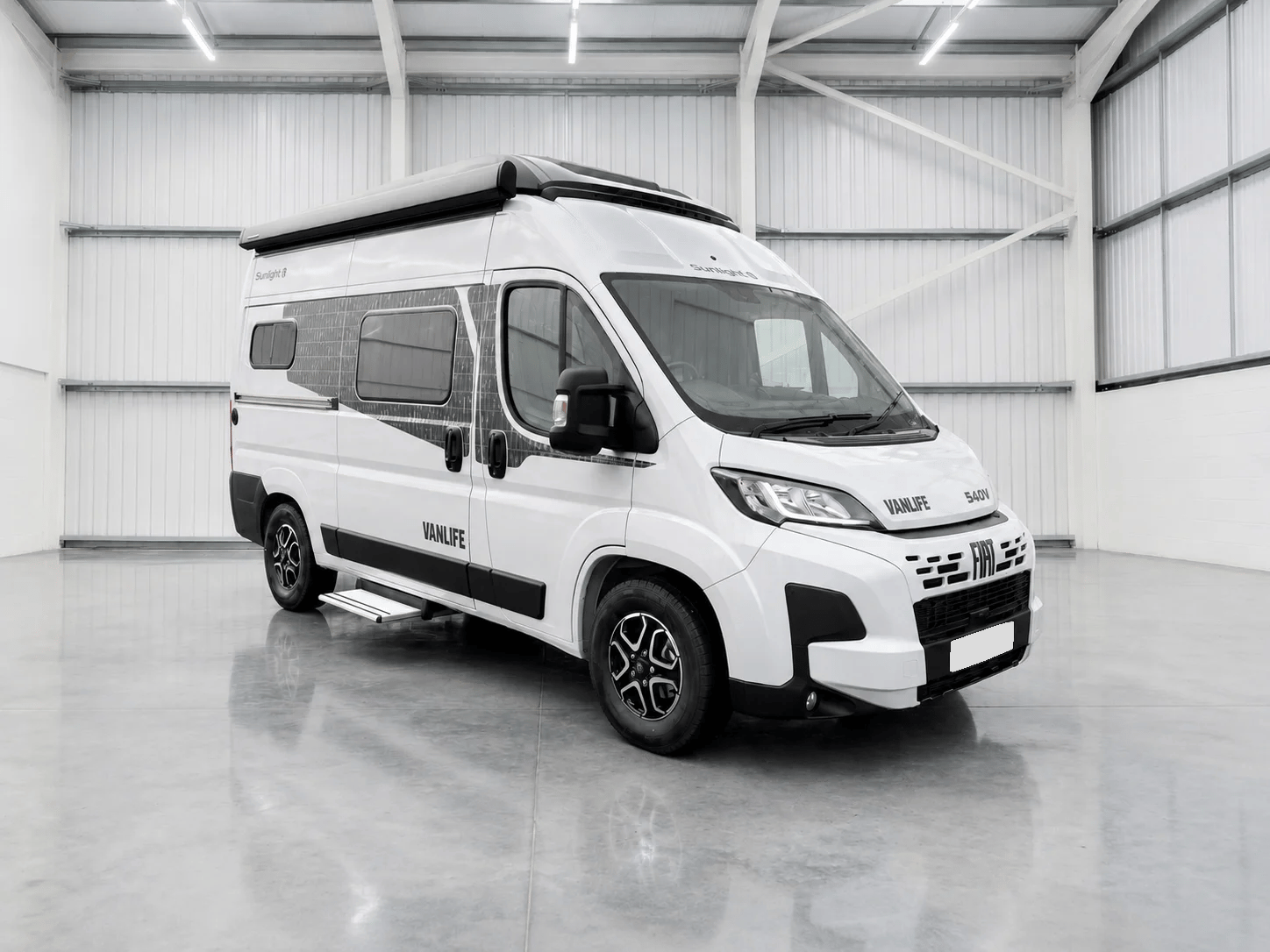
The camper you fall for is rarely the one you can afford. That gap is the whole reason Campervan.win exists. Right now we’re giving away the Sunlight Vanlife, worth around £65,000, and closing that gap is the point: capped entries so the odds stay honest, £10 a ticket, a maximum of five per person, £500 to a UK charity from every full draw, the winner picked by a public randomness beacon anyone can re-check, and one person driving away in the van itself.
Enjoyed this post?
Get more honest campervan guides like this one in your inbox.
You’re in!
Check your inbox. We’ve just sent you a welcome email.

About the author
Felix
Felix covers campervan technology, layouts, and modern conversions, with a focus on design-led thinking and practical performance
Keep Reading
Related Reading
Thoughtful articles that build on what you’ve just read.
Motorhome Layouts & Berths
12 min read
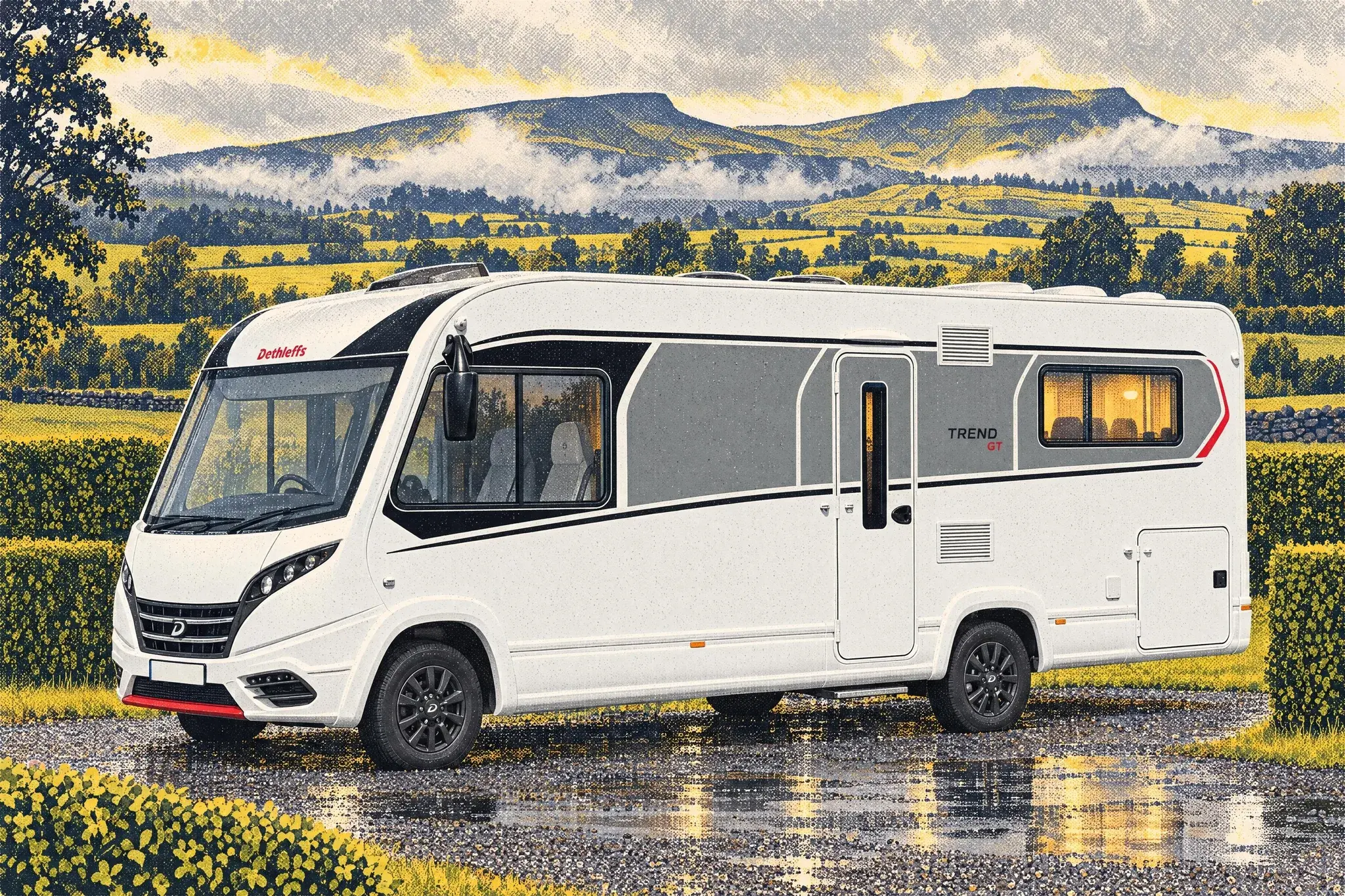
Dethleffs Trend I 7027: a six-seat rear lounge but only two seatbelts
Dethleffs has turned the A-class layout back to front for 2027: a big U-shaped lounge at the rear, twin beds that drop down over the cab, and just two belted seats as standard. We look at who that suits, and who should walk past it.
Motorhome Layouts & Berths
27 min read
Twin beds vs island bed: which motorhome layout really suits UK touring couples?
An honest, detailed look at the two most popular motorhome bed layouts for couples, with real UK figures, daily-living trade-offs, and how to choose the one that fits your touring style.
Campervan Reviews
12 min read
Rolling Homes Darwin review: the long Crafter camper with a proper washroom
The Darwin is Rolling Homes' step up from the Transporter: a long-wheelbase VW Crafter two-berth with an enclosed washroom. We set out what is published, what the price does, and who it suits.

Campervan Buying Guides
13 min read
Rolling Homes of Shrewsbury: VW-qualified campers from the Columbus to the Crafter Darwin
A plain-English profile of Rolling Homes, the Shrewsbury family converter with Volkswagen's Motorhome Qualified Converter status: what it builds on, what each model in the range is for, the 13 October 2026 prices, and what to ask before you put a deposit down.