
Why dealer networks matter when you buy a coachbuilt motorhome

Written by
Arthur
Arthur writes buying guides, comparisons, and in-depth explainers to help readers choose the right campervan or motorhome with confidence.
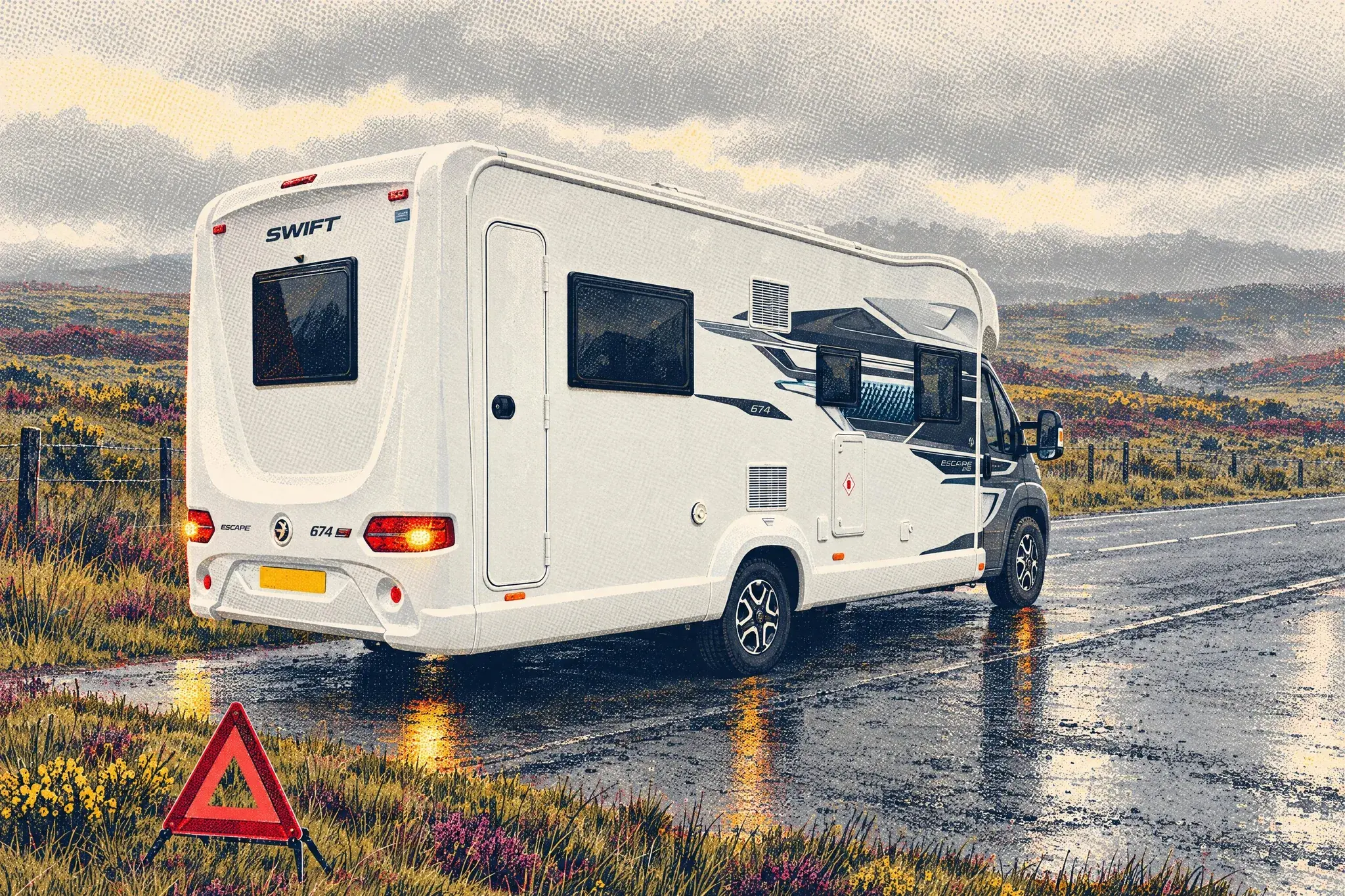
The short answer
Buying a coachbuilt motorhome is really buying into a long relationship, not just a vehicle, which is why the dealer and the network behind them matter more than they would for an ordinary car. A coachbuilt is two products in one, a base vehicle and a converter-built body, with two separate warranties that stay valid only with annual approved habitation servicing. A good network gives you trained technicians, genuine parts, cover when you are far from home and real goodwill when something needs sorting. The happy news is that this is entirely within your control: give the aftersales as much attention as the floorplan, and weigh any saving from buying far away against the support you would lose. Here is what a strong dealer network actually gives you, and the questions to ask before you sign.

When you buy a coachbuilt motorhome, you are not just buying a vehicle. You are buying into a relationship that can last a decade or more. The dealer you choose, and the wider network behind that dealer, will shape how your warranty claims go, how quickly a habitation fault gets fixed, how easy it is to book a service in August, and how much your van is worth when you sell it. Most buyers spend weeks comparing layouts and almost no time comparing the people who will look after the thing afterwards. That is the wrong way round.
This guide explains, in plain terms, why dealer networks matter so much for coachbuilt motorhomes specifically, what good support actually looks like, and how to judge a dealer before you hand over a deposit. None of this is about pressure or fear. It is about understanding how the ownership experience really works so you can make a calm, confident choice.
What a coachbuilt motorhome actually is, and why it changes the maths
It helps to start with the thing itself. A coachbuilt motorhome is built in two halves by two different worlds. There is the base vehicle, usually a Fiat Ducato, a Peugeot Boxer, a Citroen Relay, a Ford Transit or a Mercedes Sprinter chassis cab. Then there is the habitation body, the living box, which is built on top by a converter. The converter bonds together a floor, walls and roof, fits the windows, the door, the furniture, the gas system, the electrics, the water, the heating and everything that makes it a home.
That two-world structure is the whole reason dealer networks matter more here than for almost any other vehicle you can buy. When something goes wrong, the fault could sit with the chassis, with the habitation build, or in the grey area where the two meet. A normal car dealer only has to think about the car. A motorhome dealer has to be fluent in both, and able to talk to both manufacturers on your behalf.
Coachbuilt vans are also the most popular family motorhome format in the UK. They give you a fixed bed, a proper washroom, a kitchen with real worktop, and a payload that can carry a family and its luggage. Prices run from roughly £55,000 for an entry coachbuilt up to well over £100,000 for a large A-class or a premium overcab. That is a serious sum, and it deserves serious thought about who stands behind it.
The two warranties you are actually buying
This is the single most misunderstood part of motorhome ownership, so it is worth slowing down. A coachbuilt motorhome comes with two separate warranties.
- The base vehicle warranty covers the chassis, engine, gearbox, driving electrics and everything the chassis manufacturer is responsible for. This typically runs two to three years depending on the manufacturer, and it is honoured through the chassis maker's commercial vehicle network, not your motorhome dealer.
- The habitation warranty covers the converter's work: the body, the furniture, the appliances, the water ingress guarantee and the build quality. This is usually two to five years on the build, and longer, often six to ten years, specifically on water ingress, but only if you keep up an annual habitation service.
Two warranties, two sets of rules, two sets of paperwork, and two organisations who each have an interest in saying the other one is responsible. Your dealer is the person who sits in the middle of that and sorts it out for you. A good one shields you from the back and forth entirely. A weak one leaves you on the phone, repeating yourself, while a fault you did not cause goes unfixed.
Why the dealer is the centre of gravity for years, not weeks
People imagine the dealer matters most on the day of purchase. In reality the purchase is the smallest part of the relationship. The dealer matters most in the years afterwards, and here is why.
Habitation servicing is not optional
To keep that valuable water ingress warranty alive, you must have an annual habitation service, usually within a set window each year. This is not the same as the engine service. A habitation service checks the damp readings on every wall, the gas system for leaks and correct operation, the 12V and 230V electrics, the smoke and carbon monoxide alarms, the water system, the heating, the fridge, the seals and the bodywork. A qualified engineer signs it off and stamps your service book.
Miss a service, or have it done by someone who is not approved, and you can void the part of the warranty that matters most. So from the moment you buy, you are tied to a calendar that requires a competent, approved workshop once a year. The dealer network is what makes that possible. If the workshop is two hours away, or booked solid for three months, or staffed by one overworked engineer, that calendar becomes a yearly headache.
Habitation faults are common and rarely dramatic
Coachbuilt motorhomes are wonderful, but they are also hand finished products with dozens of systems crammed into a moving box. Niggles are normal, especially in the first year. A fridge that trips on gas. A blind that jams. A skylight that drips. A heating control board that throws an error. A drawer runner that works loose after a thousand miles of vibration. None of these are disasters. All of them need a workshop, parts, and someone who knows the model.
This is where a strong dealer network earns its keep quietly, week after week. The faults are small, but the difference between a dealer who books you in next week and one who cannot see you until the autumn is the difference between a great ownership experience and a frustrating one.
A motorhome is not a problem-free object. The question is never whether something will need attention. It is how painless that attention will be when it does.
What a dealer network gives you that a single trader cannot
There is nothing wrong with a good independent. Many small specialists do superb work and treat customers brilliantly. But there are structural things a proper network provides that are worth understanding before you decide.
Coverage when you are away from home
The whole point of a motorhome is to travel. If a habitation fault appears while you are touring Cornwall and you live in Yorkshire, a national network means there may be an approved workshop near you that can help under warranty. A single-site trader simply cannot offer that. Some manufacturers run their own approved workshop schemes precisely so that warranty work can be carried out by any approved site, not only the one that sold the van. Ask whether the brand you are looking at runs such a scheme and how many sites it has.
Manufacturer backing and direct lines
Approved dealers have direct technical lines to the converter and the chassis maker. They can escalate a stubborn fault, order genuine parts through the proper channel, and get goodwill applied when a fault sits just outside the strict warranty terms. An unconnected workshop can fix things, but it cannot lean on the manufacturer the way an approved dealer can, and it cannot authorise warranty work on a van it did not sell.
Trained technicians and the right diagnostics
Modern coachbuilts have multiplexed wiring, lithium battery systems, sophisticated heating controllers and complex charging setups. Diagnosing these needs the right training and sometimes brand-specific diagnostic tools. A dealer tied into the network gets technician training, software updates and the kit to read fault codes properly. That matters more every year as vans get more electronically complex.
Parts supply and stock
When a part is needed, an approved dealer orders it through the manufacturer's parts system. They often hold common consumables and know the lead times. Habitation parts can be slow, especially for appliances sourced from European suppliers. A dealer plugged into the supply chain will give you realistic timescales and can chase. Someone outside it is at the mercy of whatever they can find.
The warranty reality, explained without the spin
Let us be honest about how warranties actually behave, because the brochure version and the real version are not always the same.
Where you bought it usually decides where it gets fixed
Many habitation warranties are strongest at the selling dealer. Some converters operate a network where any approved dealer can carry out warranty work, but in practice the dealer who sold the van is the one with the clearest obligation and the strongest incentive to look after you. If you buy from a dealer 200 miles away because the price was a little keener, you may find your local approved dealer prioritises its own customers first. That is human, and it is worth weighing before you chase the lowest sticker price.
The annual service is the key that keeps the warranty alive
This bears repeating because it catches people out. The long water ingress guarantee, the one that can run to ten years, is conditional. You must have the habitation service done every year, on time, by an approved workshop, and keep the stamped record. Skip a year and you can lose the protection entirely. So the warranty is only as good as your access to a workshop that can reliably book you in within the window every single year for a decade. The dealer network is what underpins that.
Goodwill is real and it is human
Plenty of repairs happen just outside the strict warranty rules through goodwill. A fault that appears a month after the warranty ends, or a part that fails earlier than it should, often gets sorted at no cost or reduced cost when a dealer chooses to advocate for you. Goodwill flows toward customers the dealer values. Buy from a dealer you have a relationship with, service the van with them, treat the staff like human beings, and you are far more likely to benefit from goodwill when you need it. This is one of the quiet, real reasons the relationship matters.
How to judge a dealer before you commit
You do not have to guess. There are concrete things you can check and questions you can ask that reveal a great deal about how ownership will feel. Treat this as your checklist.
Look at the workshop, not just the showroom
Showrooms are designed to impress. The workshop tells the truth. When you visit, ask to see the service department. Is it busy in a calm, organised way or chaotic? How many habitation bays are there? How many qualified habitation engineers do they employ? A glossy forecourt with two technicians and a six-week service backlog is a worse bet than a modest site with a deep, well-run workshop.
Ask about service lead times honestly
Ask the direct question: if I need a habitation service in July or August, how far ahead do I need to book? Summer is peak season and workshops fill up. A good dealer will give you a straight answer and may offer winter service slots at a discount to spread the load. A vague answer is a flag.
Ask how warranty claims are handled day to day
Ask them to walk you through what happens if you find a damp reading or a faulty appliance in year two. Who do you call? Do they handle the manufacturer paperwork, or do you? Do they offer a courtesy vehicle or a loan unit while yours is in? How do they handle a fault that appears while you are touring far from home? The confidence and detail of the answer tells you everything.
Check the approvals
Find out whether the dealer is an approved dealer for the brand you want, and whether they are members of the relevant trade bodies. In the UK, look for membership of a recognised trade association and check whether their engineers hold the appropriate habitation qualifications. Approved status is not a marketing badge. It is the thing that lets them carry out warranty work and order genuine parts.
Read the reviews for the service department specifically
Online reviews of motorhome dealers skew heavily toward the sale. What you want is reviews about aftersales: warranty handling, service quality, how complaints were resolved. Search specifically for comments about the workshop and the response when something went wrong. Every dealer has the odd unhappy customer. What matters is the pattern, and how they responded when things were not perfect.
Talk to existing owners
Owner forums and brand-specific groups are gold. People are candid about which dealers look after them and which leave them hanging. Ask in those communities about the specific dealer and the specific brand. You will get an unvarnished picture in an afternoon that no amount of showroom time would reveal.
What good aftersales actually looks like
It is easy to say a dealer should be good at aftersales. Here is what that means in concrete terms, so you know what to look for and what to expect.
- A clear booking system. You can get a habitation service scheduled within the warranty window without a fight, ideally with reminders sent to you.
- Honest timescales. If a part will take three weeks, they tell you three weeks, not next Tuesday followed by silence.
- They own the manufacturer conversation. When a claim crosses the line between chassis and habitation, they sort out who pays. You should never be the messenger between two manufacturers.
- Sensible loan arrangements. For longer jobs, especially in peak season, a courtesy van or at least a fair plan so your holiday is not wrecked.
- They keep your van usable. A good workshop tries to fix safety and habitability faults quickly even when full repairs need parts, so you are not stuck with an unusable van for weeks.
- They remember you. Continuity of staff means someone knows your van and your history. That is worth more than a fancy waiting room.
The hidden cost of buying far away to save money
It is tempting to drive across the country for a saving of a few thousand pounds. Sometimes that is the right call. But run the full sum honestly before you do.
The maths people forget
Say you save £3,000 buying 200 miles away. Now think about the next eight years. Every habitation service, every warranty visit, every niggle that needs the selling dealer involves either a long round trip or a local dealer who, quite reasonably, puts its own customers first. A round trip of 400 miles costs fuel, a day or two of your time, and the hassle of being without the van. Do that several times and the saving evaporates. Worse, in peak season your distant dealer may struggle to fit you in around its local commitments.
When buying away does make sense
Sometimes the local dealer simply does not sell the brand or layout you want, or the local aftersales reputation is poor. In that case, buying away can be the right choice, but go in with eyes open. Check whether any approved dealer nearer home will carry out warranty and service work on a van they did not sell, and confirm that before you buy, not after. Some networks make this easy. Some do not. Knowing which you are dealing with changes the decision.
The cheapest van to buy is not always the cheapest van to own. Aftersales is a cost too, paid in time, fuel and frustration rather than pounds on the invoice.
New versus used, and how the dealer question changes
The dealer relationship matters whether you buy new or used, but it works differently.
Buying new
With a new coachbuilt, you get the full two warranties and the long water ingress guarantee, all tied to keeping up the approved annual service. Here the dealer network is central from day one. You want the selling dealer to be your servicing dealer, close enough to use easily, with a workshop that can handle the warranty period without drama. New vans almost always have a few first-year niggles to iron out, so the early relationship with the workshop sets the tone for the whole ownership.
Buying used from a dealer
A used coachbuilt from an approved dealer often comes with a dealer-backed warranty and a fresh habitation service. Crucially, the remaining manufacturer water ingress guarantee can sometimes transfer to you, but only if the service history is unbroken and the work was done by approved workshops. So when buying used, the service history is everything. Ask to see every habitation service stamp. A gap in the record can mean the long ingress protection is already void, which materially changes the van's value and your risk.
Buying used privately
Buy privately and you save on dealer margin but lose the dealer relationship and most consumer protection. You can still use an approved workshop for servicing afterwards, and you may be able to keep the ingress guarantee alive if the history is clean and you continue approved servicing. But you take on more risk and you have no selling dealer to advocate for you. For a first motorhome especially, the support of a dealer is often worth the premium.
Damp, the slow problem the network protects you from
Water ingress deserves its own section because it is the defining long-term risk of a coachbuilt and the reason the dealer relationship exists in the form it does.
Why damp is the big one
A coachbuilt body is made of bonded panels with many seams, joints, windows, roof fittings and a habitation door, all of which rely on sealant and good construction to keep water out. Over years, seals age, vibration works at joints, and a tiny gap can let water creep into the structure. Caught early, damp is a cheap seal repair. Caught late, it can rot the timber or saturate the insulation behind the walls and become a major, expensive repair that can write off an older van.
How the annual service catches it
The habitation service includes a damp test, where the engineer takes moisture readings at fixed points around the body and records them. Year on year, those readings tell a story. A reading creeping upward in one corner flags a seal that needs attention before it becomes structural. This early-warning system only works if the service is done every year by someone competent who records the readings properly. That is the network doing its job. It is also exactly why the manufacturer ties the long ingress guarantee to keeping up that service. They are protecting themselves, and in doing so they protect you.
What this means for your choice of dealer
You need a dealer whose workshop you can reach reliably every year for as long as you own the van. If that is hard, the ingress protection is theoretical rather than real. So when you weigh up a dealer, picture the tenth annual service, not just the first. Can you still get booked in easily then? Is the workshop likely to still be there and well staffed? Longevity and stability of the dealer matter when the relationship is meant to last a decade.
Questions to ask, all in one place
Take this list with you. Asking these out loud, and watching how confidently they are answered, will tell you most of what you need to know.
- Are you an approved dealer for this brand, and what does that approval allow you to do?
- How many qualified habitation engineers do you employ, and how many service bays do you have?
- If I need a habitation service in peak summer, how far ahead must I book?
- Walk me through exactly what happens if I find a fault in year two. Who handles the manufacturer paperwork?
- Do you offer a courtesy vehicle or loan unit for longer repairs?
- What happens if a habitation fault appears while I am touring far from home?
- Can another approved dealer carry out warranty and service work if I move or am away?
- For this used van, can I see the full habitation service history, and does the remaining water ingress guarantee transfer to me?
- What do your winter service slots cost, and do you offer reminders?
- How long have your workshop staff been with you?
Common mistakes buyers make about dealers
After watching how people buy motorhomes, the same avoidable errors come up again and again. Here are the big ones.
Falling for the layout and forgetting the support
It is natural. You walk in, the layout is perfect, the lighting in the showroom is flattering, and you fall for the van. The aftersales is invisible at that moment, so it gets ignored. Then year two arrives and the support, or the lack of it, becomes the thing you live with. Give the dealer at least as much scrutiny as the floorplan.
Assuming all warranties are the same
They are not. Read the actual terms. Find out the exact service window, what counts as approved, what the ingress guarantee requires, and what is excluded. Two vans with similar headline warranties can have very different small print. The dealer should be able to explain all of it clearly. If they cannot, that is itself useful information.
Chasing the lowest price across the country
Covered above, but it is the most common expensive mistake. The headline saving rarely survives contact with the real cost of distant aftersales. Factor in the whole ownership, not just the invoice.
Skipping the workshop tour
Buyers spend an hour in the showroom and zero minutes in the workshop. Reverse that emphasis. The workshop is where you will actually spend time over the years.
Not checking the service history on a used van
A used coachbuilt with gaps in its habitation service record is a different and riskier proposition than one with an unbroken history. The history is not paperwork pedantry. It is the proof that damp has been monitored and that the long guarantee is still alive. Treat a missing stamp as a real warning, and price the risk accordingly.
Treating the dealer as an adversary
Negotiate hard on price by all means, but remember you are about to spend years working with these people. The relationship is an asset. Goodwill flows toward customers the dealer likes and respects. Starting the relationship as a battle does you no favours later.
How the dealer network affects resale value
The relationship even follows you to the day you sell. A coachbuilt with a complete, stamped habitation service history from approved workshops sells faster and for more. Buyers and dealers know the damp has been monitored and the guarantee chain is intact. A van with patchy history is harder to sell and fetches less, because the buyer is taking on unknown risk.
If you sell or part-exchange back through a dealer who knows the van, that continuity helps too. They know its history, they trust the records, and they can offer a sensible figure rather than pricing in the uncertainty they would apply to an unknown van off the street. So the dealer relationship that protected you during ownership also protects your money when you exit.
The chassis side of the equation
We have focused on the habitation side because that is where motorhome dealers are unique. But do not forget the chassis. The base vehicle is serviced and warranted through the chassis manufacturer's commercial vehicle network, and that is a different set of locations from your motorhome dealer. Some motorhome dealers can do basic chassis servicing in-house; others send it to the chassis network. Find out which, because it affects how many trips and how many separate appointments your ownership involves.
For the engine warranty and any recalls, you will be dealing with the chassis maker's network. A good motorhome dealer will help coordinate this so a fault that touches both halves does not leave you bouncing between two organisations. This coordination is one of the most valuable things a strong dealer does, and it is invisible until you need it.
Why the meeting point of the two halves is the tricky bit
The hardest faults to resolve are the ones that live where the chassis and the habitation meet. The leisure battery charging from the engine. The reversing camera wired into the habitation system. The fridge that runs off the vehicle electrics while driving. When one of these misbehaves, each manufacturer can point at the other. A dealer with strong relationships on both sides cuts through that. Without one, you can spend months stuck in the middle of a dispute you did not create and cannot resolve alone.
A realistic picture of the first year of ownership
To make all this concrete, here is how a typical first year tends to go with a well-supported coachbuilt, so you know what normal looks like.
In the first few weeks you discover the small things. A cupboard catch that needs adjusting, a blind that does not sit quite right, maybe a control panel quirk. You note them down. Rather than rushing in for each one, you let a short list build and book a first visit. A good dealer expects this and handles a snagging list as routine. These are not signs of a bad van. They are normal for a hand-finished product that has just done its first few hundred miles.
Around the year mark, your first habitation service falls due. You book it within the window, the engineer runs through the full checklist, takes the baseline damp readings, checks the gas and electrics, and stamps the book. If anything is found, it gets logged and sorted. You leave with a clean bill of health and a record that protects your guarantee.
Somewhere in there, something slightly bigger might happen. An appliance fault, a heating glitch, a leak from a roof fitting after heavy rain. This is where the dealer relationship proves itself. With a strong dealer, you call, you get booked in, the part is ordered through the proper channel, the manufacturer covers it, and you are back on the road. With a weak one, the same fault becomes weeks of chasing. Same van, completely different experience, and the difference is the network.
The bottom line
A coachbuilt motorhome is two products in one, built by two different worlds, carrying two separate warranties, and depending on annual approved servicing to stay protected for as long as you own it. That structure is exactly why the dealer, and the network behind them, matters far more than for any ordinary vehicle. The dealer is your translator between chassis and habitation, your route to genuine parts and trained technicians, your advocate for goodwill, and the keeper of the service record that protects both your safety and your money.
So when you go shopping, give the aftersales as much attention as the floorplan. Tour the workshop. Ask the hard questions about lead times and warranty handling. Read reviews of the service department, not just the sale. Talk to existing owners. Weigh the true cost of buying far away against a modest saving. And picture not the day you collect the van, but the tenth annual service, the touring breakdown 150 miles from home, and the day you eventually sell.
Choose the layout you love, of course. But choose the people who will look after it with at least as much care. Do that, and a coachbuilt motorhome becomes exactly what it should be: years of easy, confident travel, with someone reliable standing behind you when you need them. Get it wrong, and even a beautiful van can become a source of quiet, recurring frustration. The good news is that the difference is entirely within your control, and it starts with the questions you ask before you ever sign.
Common questions
Why does the dealer matter so much when buying a coachbuilt motorhome?
Because a coachbuilt is two products in one, a base vehicle and a converter-built habitation body, carrying two separate warranties that depend on annual approved servicing to stay valid. The dealer is your translator between chassis and habitation, your route to genuine parts and trained technicians, and the keeper of the service record, for as long as you own the van, not just the day you buy it.
What is a habitation service and why does it matter?
It is an annual check of the living side of the van: damp readings on every wall, the gas system for leaks and correct operation, the 12V and 230V electrics, the smoke and carbon monoxide alarms, the water system, the heating, the fridge, the seals and the bodywork. It keeps your habitation warranty alive and catches the slow problem of damp before it becomes expensive.
Is it worth buying a motorhome from a dealer far away to save money?
Often not, once you do the full sum. If you save, say, 3,000 pounds by buying 200 miles away, a 400-mile round trip for warranty work costs fuel, a day or two of your time, time without the van, and your local approved dealer may prioritise its own customers first. Buying away makes sense only when the saving is large and you have a plan for local servicing.
How do I judge a motorhome dealer before buying?
Look at the workshop, not just the showroom. Ask honestly about service lead times, especially in peak season, and how warranty claims are handled day to day. Check the manufacturer approvals, read reviews of the service department specifically rather than the sale, and talk to existing owners. Picture the tenth annual service and a breakdown 150 miles from home, not just collection day.
Why is damp such a big deal on a coachbuilt motorhome?
Because the habitation body is bonded together and water ingress can quietly rot it from the inside, destroying value before you notice. The annual habitation service is what catches it early, through damp readings on every wall, which is a major reason to keep up approved servicing and to buy from a dealer who does it properly.
Does the dealer network affect a motorhome's resale value?
Yes. A van with a complete, approved habitation service history and a clean damp record is far easier to sell and holds its value better, because the next buyer can trust it. A well-supported brand with a real network also reassures buyers, so the support you choose at purchase pays you back when you eventually sell.
The reachable bit
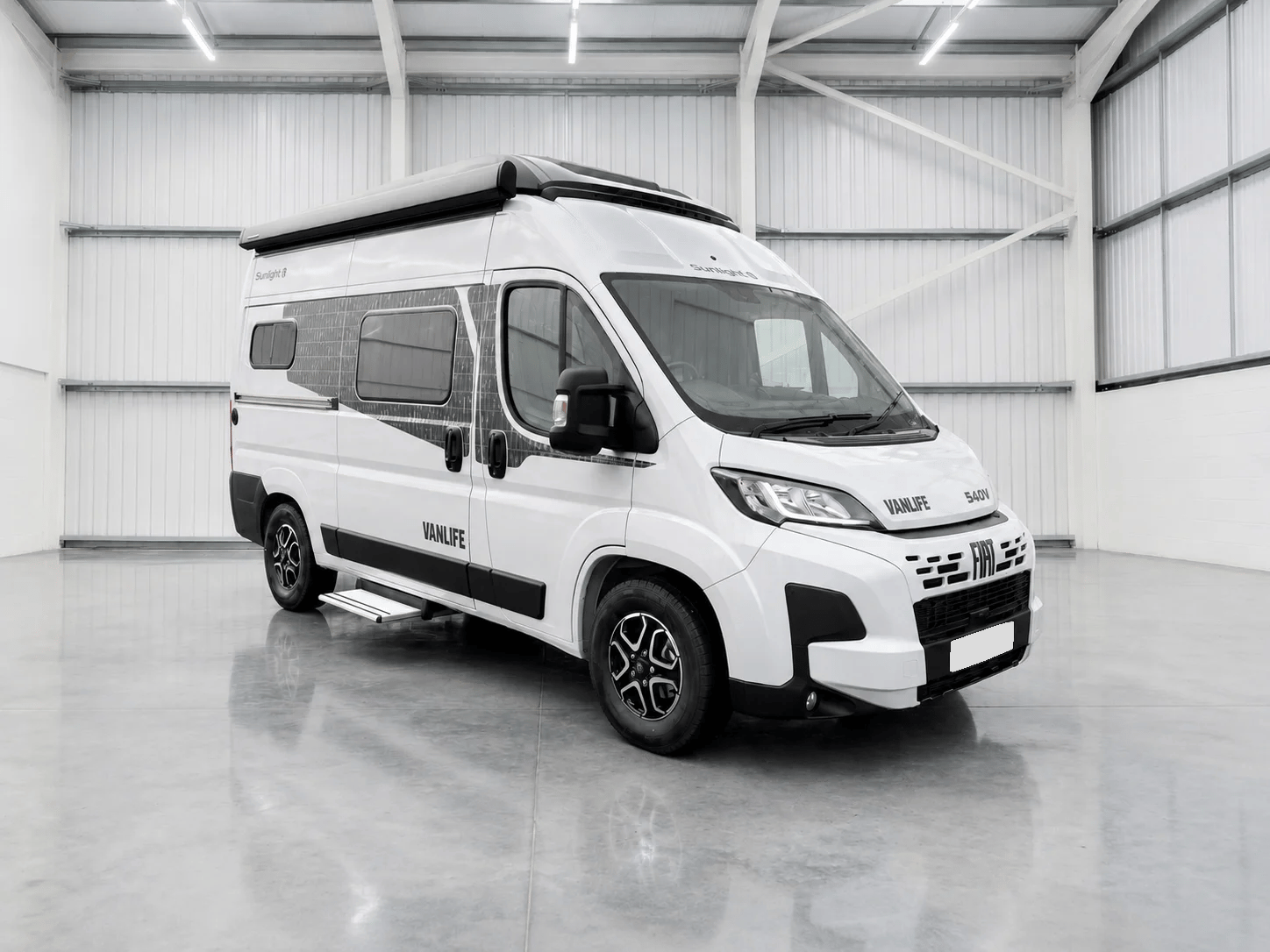
The camper you fall for is rarely the one you can afford. That gap is the whole reason Campervan.win exists. Right now we’re giving away the Sunlight Vanlife, worth around £65,000, and closing that gap is the point: capped entries so the odds stay honest, £10 a ticket, a maximum of five per person, £500 to a UK charity from every full draw, the winner picked by a public randomness beacon anyone can re-check, and one person driving away in the van itself.
Enjoyed this post?
Get more honest campervan guides like this one in your inbox.
You’re in!
Check your inbox. We’ve just sent you a welcome email.

About the author
Arthur
Arthur writes buying guides, comparisons, and in-depth explainers to help readers choose the right campervan or motorhome with confidence.
Keep Reading
Related Reading
Thoughtful articles that build on what you’ve just read.
Motorhome Buying Guides
12 min read
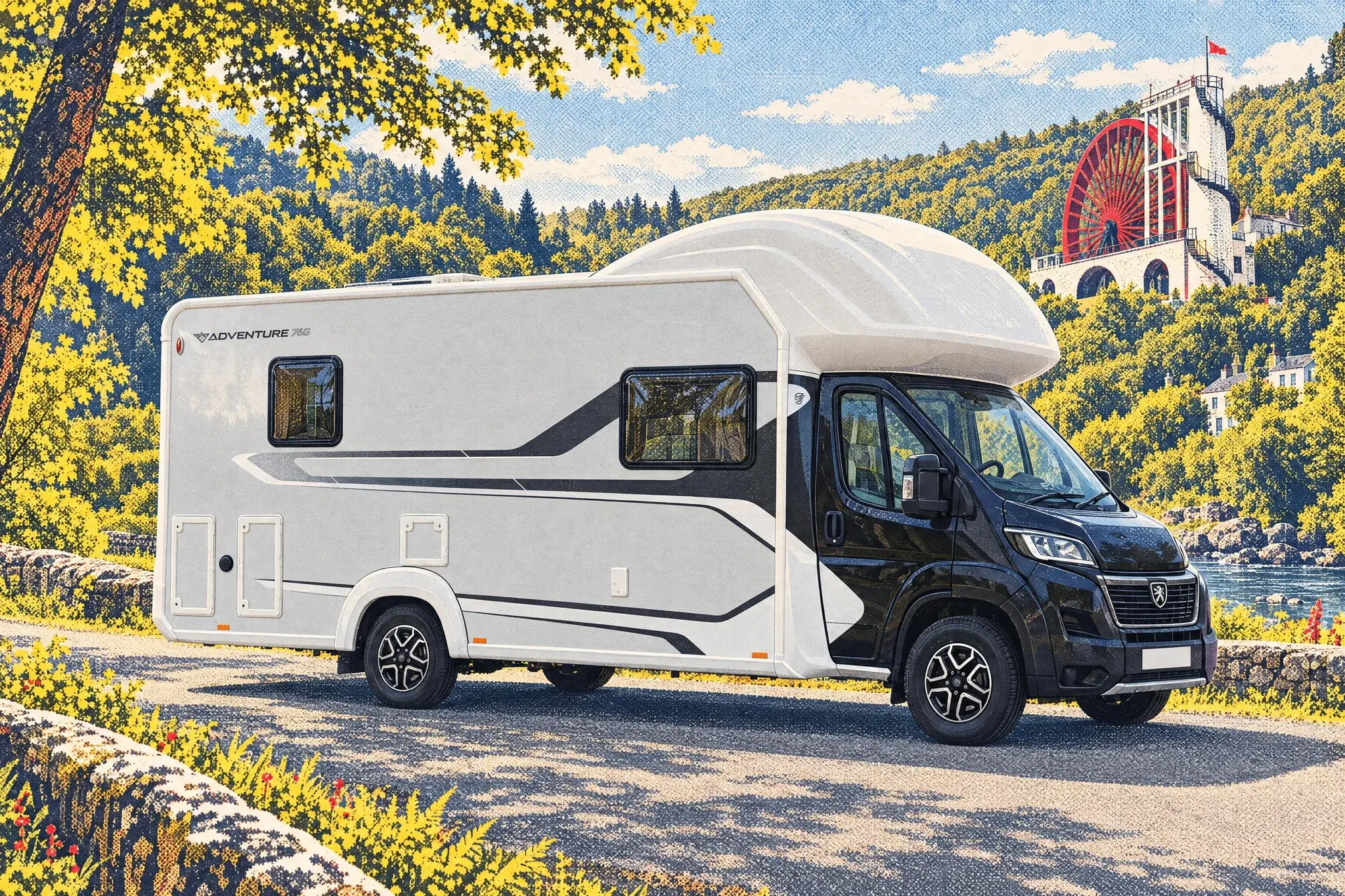
Auto-Trail Adventure 2027: the overcab is back, and two options change your licence
Auto-Trail's new Adventure coachbuilt puts a permanent bed over the cab of a Peugeot Boxer and prices the long models at £71,000 ex-works. Here is why that layout suits a family of four, and the weight, licence and payload questions to settle before you sign.
Motorhome Buying Guides
14 min read
Family motorhomes at the NEC for 2027: belts, beds and the payload sum that decides them
The 2027 family layouts at the NEC sleep four to seven, but the numbers that decide whether they work for your family are the belted seats, the Isofix points and the weight left once everyone is aboard. We do the sums model by model.
Motorhome Buying Guides
10 min read
Buying a motorhome at the NEC: what you commit to when you sign on the stand
A plain-English explainer on what a signature on a show stand at the NEC commits you to: cancellation rights that are not as clear as people think, what happens to a deposit, why withdrawing from finance does not cancel the van, why Section 75 rarely covers a motorhome deposit, and your rights if the van arrives faulty.
Motorhome Buying Guides
9 min read
NEC show offers 2026: how to judge the Auto-Sleepers, Auto-Trail and Marquis deals
The October 2026 NEC show offers from Auto-Sleepers, Auto-Trail dealers and Marquis Leisure, decoded: what each free pack is worth to you, what it weighs, what a heavier plate means for your licence and tax, and the questions to settle before you sign.