
Hiring a campervan in the UK: costs, tips and what to check first

Written by
Jasper
Jasper writes campervan reviews, travel guides, and practical advice, with a focus on everyday use and relaxed touring around the UK.

The short answer
Hiring a campervan is the cheapest way to test whether van life lives up to the daydream, and a lovely holiday in its own right, without the cost, storage and depreciation of owning one. Off-peak, a small two-berth might be around £70 to £110 a night, roughly doubling in the school summer holidays, and a peak-season week can run well over £1,000 once bedding packs, excess-reduction insurance and extras are added. The details are what catch first-timers out, so check the mileage limit, the insurance excess and exactly what is included, and never rush the handover. A standard car licence covers campers up to 3.5 tonnes. Done right, a hire is both a brilliant trip and the best research money can buy. Here are the costs, the tips, and what to check first.

There's a strong case that nobody should buy a campervan before they've hired one. It's the cheapest way to find out whether the reality matches the daydream, whether you actually enjoy the routine of levelling the van, filling the water, emptying the loo and cooking in a small space, or whether the romance wears off somewhere around the second rainy morning. And even if you never intend to buy, hiring is simply a lovely way to have a holiday: the freedom of a campervan trip without the cost, the storage and the depreciation of owning one that sits on the drive for fifty weeks a year.
The trouble is that campervan hire is less straightforward than hiring a car, and the details, the minimum periods, the mileage limits, the insurance excess, what's actually included, can catch first-timers out and turn a great-value trip into an expensive one. So this is the honest, practical guide: why hiring makes sense, how it actually works in the UK, what it really costs once you add everything up, where to book and the difference between the options, and the specific things to check before you part with a deposit. Get the details right and a hire is one of the best holidays going. Get them wrong and you'll feel it in the final bill.
Why hire a campervan
The most common reason is the simplest: a holiday. A campervan trip is a wonderful thing, and hiring lets you have one without owning the van, which for most people makes complete financial sense. A campervan that you'd use for a couple of weeks and the odd weekend spends the vast majority of its life parked, losing value and costing money in insurance, tax, servicing and storage. Hiring puts all of that onto someone else and lets you pay only for the days you actually use, which, for occasional trips, is far cheaper than ownership however you do the sums. We dig into exactly where that line falls in our guide to renting versus buying a campervan, but for anyone who travels a handful of weeks a year, hiring usually wins comfortably.
The second great reason is to try before you buy, and it might be the most valuable few hundred pounds you ever spend. A campervan is a big purchase, often a very big one, and the gap between imagining van life and living it is real. Hiring the kind of van you think you want, for a proper trip rather than a test drive, teaches you things no amount of research can: whether the bed is comfortable, whether the layout works for your family, whether you actually like the lifestyle, and which features you'd insist on or avoid next time. The third reason follows from that: hiring lets you try different types, a pop-top one trip, a bigger coachbuilt the next, so that if you do buy, you buy the right thing. It's the cheapest possible education in what suits you, and our guide to the types of campervan conversion is a good companion to it.
How campervan hire works
Campervan hire runs on a few conventions that are worth knowing before you start, because they shape both the price and the practicality. Hire is priced by the night or the day, with weekly rates usually working out cheaper per night than short stays, and prices swing enormously with the season, which we'll come to. Most hirers set a minimum hire period, often three or four nights, rising to a full week in peak summer, so the spontaneous single night away isn't always possible, especially in August.
Mileage is the next thing to understand. Some hires come with unlimited mileage, while others include a daily or weekly allowance, say 100 or 150 miles a day, and charge for miles beyond it, which matters a great deal if you're planning a big touring trip rather than a base-camp holiday. Then there's the deposit or security hold: expect the hirer to place a refundable hold on your card, often several hundred to a couple of thousand pounds, against damage or the insurance excess, which is released after the van comes back in good order. Insurance is usually included in the hire price, but with an excess, the amount you'd pay towards any claim, that can run to four figures, and most hirers offer an excess-reduction product to bring it down for a daily fee. Finally, there are the practical eligibility rules: you'll generally need to be over a minimum age, often 25, sometimes 21, with an upper limit too, to have held a full licence for a year or two, and to have a reasonably clean record. A standard car licence covers vans and campers up to 3.5 tonnes, which is the great majority of hire stock.
What it costs
Prices vary by van, by hirer and, above all, by season, so treat these as broad ranges rather than quotes, but the shape is consistent and worth knowing so you can spot a fair deal.
| Type of van | Off-peak, per night | Peak summer, per night |
|---|---|---|
| Small campervan (VW-style, two-berth) | ~£70 to £110 | ~£130 to £200 |
| Larger campervan / four-berth | ~£90 to £140 | ~£150 to £230 |
| Coachbuilt motorhome (four to six berth) | ~£100 to £160 | ~£170 to £280 |
The single biggest factor is when you go. A van that's £90 a night in spring or autumn can be double that in the school summer holidays, when demand peaks and minimum hire periods lengthen. If your dates are flexible, going outside the school holidays can roughly halve the cost and is one of the best money-saving moves available, with the bonus of quieter sites and roads. On top of the nightly rate, watch for the extras that add up: bedding and kitchen packs (sometimes included, sometimes a chargeable add-on), additional named drivers, a bike rack, the excess-reduction insurance, a pet-friendly supplement, and a surcharge or restriction if you want to take the van abroad. A week's hire that looked like £900 can quietly become £1,200 once the packs, the excess reduction and the second driver are added, so always price the whole thing, not just the headline nightly rate.
Where to hire: peer-to-peer versus professional fleets
There are broadly two worlds of campervan hire, and they offer different things. The first is peer-to-peer, platforms that connect you with individual owners renting out their own campervans, much as you'd book a holiday flat through a home-sharing site. The appeal is variety and character: you can hire everything from a lovingly restored classic to a quirky hand-built conversion, often at a slightly lower price, and you get an owner who genuinely cares about the van and knows it inside out. The trade-offs are consistency and backup, you're dealing with one person and one vehicle, so if something goes wrong the support may be less slick than a professional operation, and standards vary from van to van.
The second world is the professional rental fleet, companies that own a fleet of broadly similar campers and rent them out as a business. Here you get consistency, a known standard, proper handover procedures, roadside backup and a replacement if a van fails, which buys peace of mind, especially for a first hire. The trade-off is less character and sometimes a higher price, and the vans tend to be more uniform and modern rather than charming and individual. Neither is better in the abstract; for a first-time hirer wanting reassurance, a professional fleet is the safer start, while for someone after a particular kind of van or a bit of soul, peer-to-peer opens up far more interesting options. Whichever you choose, read the reviews carefully, they tell you more than any listing.
What's included, and what to check before you book
This is where first-timers get caught out, so it pays to be methodical before you book. The headline price often isn't the whole story, and two hires at the same nightly rate can differ a lot once you read the detail. Before you commit, get clear answers on the following.
First, the insurance and the excess: what's the excess if you have a bump, and how much does reducing it cost? A low headline price with a £2,000 excess and no reduction option is a different proposition from a slightly dearer one with the excess already low. Second, the mileage: is it unlimited, and if not, what's the allowance and the per-mile charge beyond it? For a touring trip this can be the difference between a good deal and a bad one. Third, what's actually included in the van: bedding, towels, a kitchen kit with pots and crockery, gas for the hob, the electric hook-up lead, a levelling kit, an awning? Some hirers include all of it, others charge for packs. Fourth, the cancellation policy and what happens if your plans change or you're ill. Fifth, breakdown cover and what happens if the van fails mid-trip, who you call and whether you get a replacement. And sixth, the return rules: the expected cleanliness, whether you must empty the toilet and waste and return it with a full tank, and the penalties if you don't. None of these is hard to check, but checking all six is the difference between a hire with no surprises and a nasty line on the final invoice.
The handover: don't rush it
When you collect the van, you'll get a handover, a walkthrough of how everything works, and the single best piece of advice for a first hire is to slow this down and pay proper attention, even when you're itching to get going. A campervan has systems a car doesn't, and being shown them once, calmly, saves a great deal of grief later. Make sure you understand the fresh water (filling it and the pump), the waste water (where it drains), the leisure battery and 12-volt electrics, the mains hook-up (how to connect at a site), the gas (turning it on and off, and safety), the fridge, the heating, and, crucially, the toilet, how to use it and how to empty it, which is nobody's favourite topic but is much better learned in the yard than in a panic on a campsite.
Take your time, ask every question that occurs to you, and don't be embarrassed; a good hirer would far rather spend an extra twenty minutes at handover than get a distressed phone call on day two. Take photos or a quick video of the walkthrough so you can remind yourself later, and photograph the van's existing condition, inside and out, so there's no dispute about pre-existing marks when you return it. The handover is also where you confirm the practical bits: where the spare wheel and tools are, what to do in a breakdown, and how the bed actually makes up, which is always fiddlier than it looks the first time.
Tips for a first-time hire
A few hard-won pointers to make a first campervan holiday a joy rather than a baptism. Go off-peak if you possibly can, for the lower price, the quieter sites and the gentler introduction. Start with a long weekend or a short trip rather than a fortnight, so that if van life turns out not to be quite for you, you've not committed to two weeks of it. Book campsites with electric hook-up for your first trip, rather than going off-grid straight away, because mains power removes a whole layer of things to worry about while you find your feet. Don't over-plan the driving; a relaxed trip with short hops and time to enjoy each place beats a frantic dash, and big mileage in an unfamiliar van is tiring. And resist the urge to cram every gadget and bit of kit in; you need far less than you think, and a cluttered small van is a stressful one.
It's also worth being realistic about the rhythm of campervan life, because it's part of the charm but it's work. There's a daily routine of setting up and packing down, of water and waste and levelling, that a hotel doesn't have, and the joy of waking up somewhere beautiful is balanced by the small chores of doing it. Most people find that rhythm soothing once they're into it, but going in expecting it, rather than expecting a hotel that moves, is the key to enjoying the first trip. If you can, learn the toilet and waste routine early and without squeamishness; making peace with it quickly is genuinely the thing that separates people who love van life from people who don't.
Taking a hire campervan abroad
Plenty of people dream of taking a campervan across the Channel and touring France, Spain or beyond, and many hirers do allow it, but it needs checking and planning rather than assuming. Not every hire van can go abroad, and those that can usually carry a surcharge and stricter terms, so confirm it's allowed before you book if a European trip is the plan. The things to nail down are the insurance territory, that you're genuinely covered to drive in the countries you're visiting, and to what excess, breakdown cover that works abroad and not just in the UK, and any paperwork the hirer needs to provide, such as a letter authorising you to take the vehicle out of the country.
There are practical extras too. Many European cities have low-emission zones that require a sticker or registration to enter, and the rules differ by country, so check what your route needs. You'll want to understand the ferry or tunnel booking, whether the height and length of the van affect the fare, and the driving-abroad basics that some countries require you to carry. None of it is difficult, but a European hire has more moving parts than a domestic one, and a first-time hirer is usually better served by a UK trip to learn the van before adding foreign roads, unfamiliar campsites and driving on the right to the mix. Walk before you run, then go and enjoy the continent once the van holds no surprises.
Returning the van
Bringing the van back is simple if you've understood the rules at booking. Generally you'll be expected to return it reasonably clean inside, with the toilet cassette and waste water emptied, the rubbish removed, and the fuel tank filled to wherever it started, often full. Allow time for this rather than leaving it to a frantic last hour, particularly emptying the toilet, which needs doing at a proper disposal point on a campsite, not in a hurry in a layby. Return on time, because late-return fees can be steep and the van may be booked out to someone else straight after you.
The deposit or security hold is released after the van is checked back in and confirmed undamaged, which is where those condition photos you took at the start earn their keep. If you've looked after the van, emptied what needed emptying, refuelled and returned it on time, getting your deposit back is a formality. Most of the disputes that do arise come down to one of those return rules being missed, so a calm, unhurried return is the final piece of a good hire.
Hiring as try-before-you-buy
It's worth coming back to this, because it's the smartest possible use of a hire and the one most people skip. If you're seriously considering buying a campervan, hiring first is the best money you can spend, and set against the price of buying the wrong van, it's almost free. Hire the type you think you want, ideally for a real trip in conditions like the ones you'd actually use it in, and treat it as research. Does the layout work when there are four of you and it's raining? Is the bed actually comfortable for two adults? Do you love the lifestyle, or do the chores grind you down? Is the van the right size, or did you spend the week wishing it were smaller and easier to park, or larger and easier to live in?
People who hire before they buy make far better buying decisions, because they're choosing from experience rather than imagination. Many discover that a smaller, cheaper van suits them better than the big one they were drawn to, or that they want a fixed bed they don't have to make up, or that they prefer the simplicity of a pop-top to the bulk of a coachbuilt. Some discover they don't want to buy at all, and that hiring two or three times a year is exactly enough, which is itself a valuable and money-saving conclusion. Whatever you learn, you learn it for the price of a holiday rather than the price of a mistake.
The honest downsides
Hiring isn't perfect, and it's worth being straight about its limits. In peak season it's genuinely expensive, a week in a decent van in the school holidays can run well over £1,000 once everything's added, which is a lot for a week's holiday, even if it's a fraction of owning. The minimum hire periods can be inconvenient if you only want a night or two, and the deposits, while refundable, mean having a meaningful sum tied up for the trip. There's a faff to it, the packing, the handover, the unfamiliarity of someone else's systems, that owners don't have. And of course you build no equity and have nothing to show at the end; the money is gone, in exchange for the trip.
For all that, the maths still favours hiring for anyone who travels only occasionally, and the flexibility, never servicing it, never storing it, never watching it depreciate, is worth a great deal. The downsides are real but they're the downsides of a holiday, not of a liability that sits on your drive all year. For most people, most of the time, that's a trade well worth making, and it's why hiring, not buying, is the right first step for almost everyone curious about van life.
Common questions
How much does it cost to hire a campervan in the UK?
Off-peak, a small two-berth campervan might be around 70 to 110 pounds a night, with larger vans more, and in the school summer holidays those figures can roughly double. A week in peak season can run well over 1,000 pounds once you add bedding packs, excess-reduction insurance and any extras, so always price the whole thing rather than the headline nightly rate.
What do I need to hire a campervan?
Usually a full driving licence held for a year or two, an age within the hirer's limits (often 25 and up, sometimes 21, with an upper limit too), and a reasonably clean record. A standard category B car licence covers campers up to 3.5 tonnes, which is the great majority of hire stock, so most people can drive the typical hire van.
Is insurance included when you hire a campervan?
Usually yes, the hire price normally includes insurance, but with an excess, the amount you would pay towards a claim, which can run into four figures. Most hirers offer an excess-reduction option for a daily fee to bring that down. Always check the excess and the cost of reducing it before booking, because a cheap headline price can hide a high excess.
Should I hire a campervan before buying one?
Almost certainly, yes. Hiring the type of van you are considering, for a real trip, is the best research you can do and tiny against the cost of buying the wrong van. You learn whether the layout, size and lifestyle actually suit you, and people who hire first make far better buying decisions, sometimes including the decision that hiring occasionally is all they need.
What is the difference between peer-to-peer and professional campervan hire?
Peer-to-peer means hiring an individual owner's van through a platform, which offers more variety and character and often a lower price, but with backup and standards that vary by van. A professional fleet rents its own consistent vehicles with proper procedures, roadside support and replacements, which is reassuring, especially for a first hire, though often less characterful and sometimes dearer.
What should I check before hiring a campervan?
Price the whole thing, not just the nightly rate, and check the mileage limit (some include 100 to 150 miles a day and charge beyond it), the insurance excess and how much it costs to reduce it, and exactly what is included. Then do not rush the handover: make sure you understand the water, waste, leisure battery, hook-up, gas, fridge, heating and, crucially, the toilet before you drive off.
The reachable bit
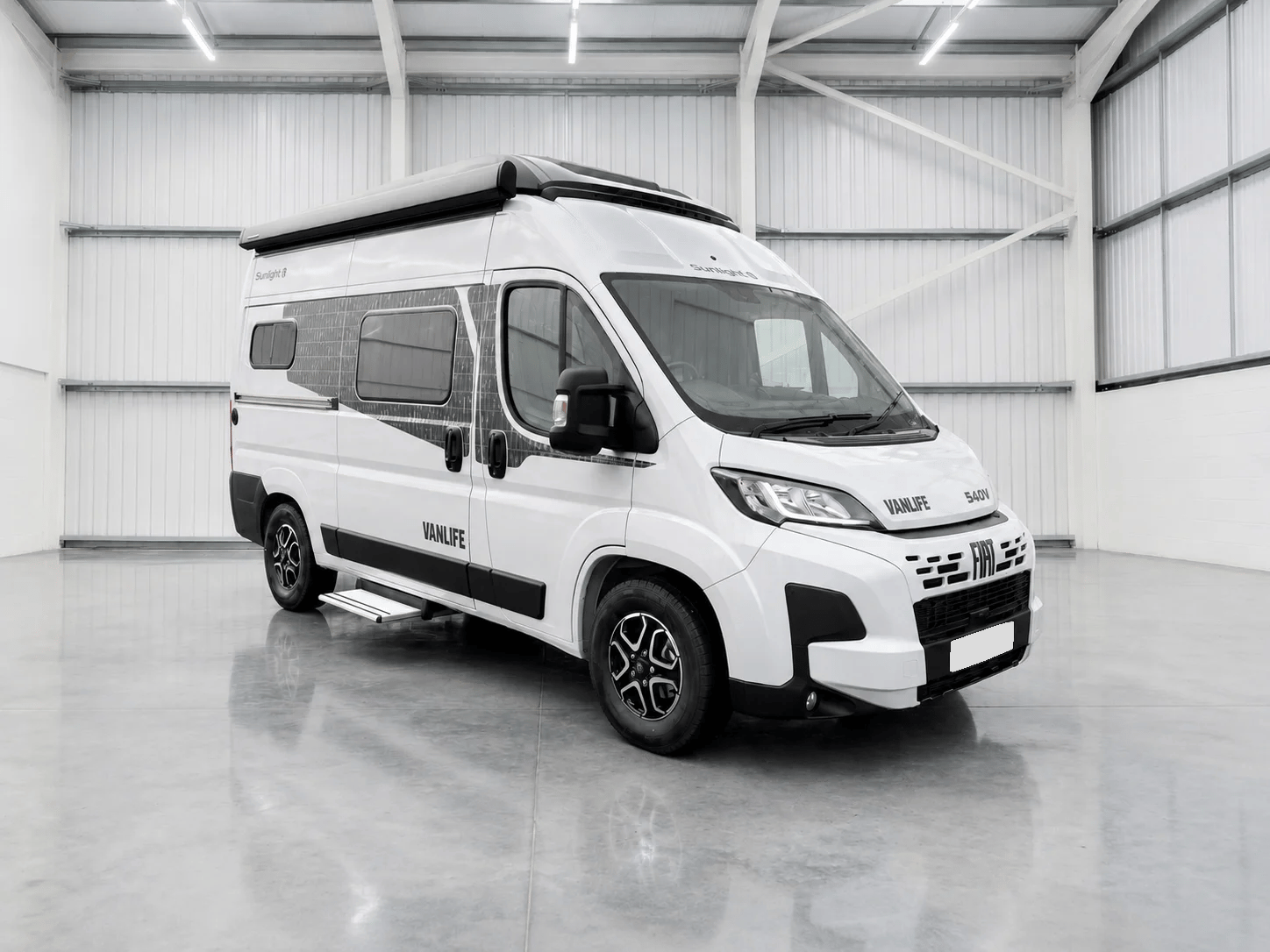
The camper you fall for is rarely the one you can afford. That gap is the whole reason Campervan.win exists. Right now we’re giving away the Sunlight Vanlife, worth around £65,000, and closing that gap is the point: capped entries so the odds stay honest, £10 a ticket, a maximum of five per person, £500 to a UK charity from every full draw, the winner picked by a public randomness beacon anyone can re-check, and one person driving away in the van itself.
Enjoyed this post?
Get more honest campervan guides like this one in your inbox.
You’re in!
Check your inbox. We’ve just sent you a welcome email.

About the author
Jasper
Jasper writes campervan reviews, travel guides, and practical advice, with a focus on everyday use and relaxed touring around the UK.
Keep Reading
Related Reading
Thoughtful articles that build on what you’ve just read.
Van Life How-Tos
28 min read
Building a low-VOC campervan: the honest guide to safer materials
VOCs are the invisible fumes that come off glues, foams, plywood and finishes inside a hot van. Here is how they affect you, why a truly zero-VOC build is almost impossible, and the off-the-shelf materials that get you genuinely close.
New & Noteworthy
12 min read
Knaus Boxtime 600 ME (2027): twin singles in 6 m, and the payload figure to question
Knaus's new Boxtime 600 ME squeezes two lengthways single beds into a 5.99 m van from £81,725. We lay out what that layout gives a couple, run the weight sums with Knaus's own figures, and explain why the 211 kg 'maximum payload' line needs a question before you sign.
New & Noteworthy
10 min read
Swift Carrera goes gas-free for 2027: 340Ah lithium, diesel heat and induction cooking
Swift has taken the gas out of its Carrera campervan for 2027, swapping bottles for a 340Ah lithium battery, diesel heating and an induction hob. Here is what that means across a real UK year, how it compares with the cheaper Merlin, and the one question to ask at the NEC.

New & Noteworthy
10 min read
British campervan converters at the NEC 2026: who builds on what, and for how much
A stand-by-stand map of the British campervan converters at the Motorhome and Caravan Show 2026: the vans they build on, their from-prices, seats, roofs and lead times, plus the four questions to put to every one of them.